

10 Best Lever Standing Chest Press Alternatives for Limited Equipment
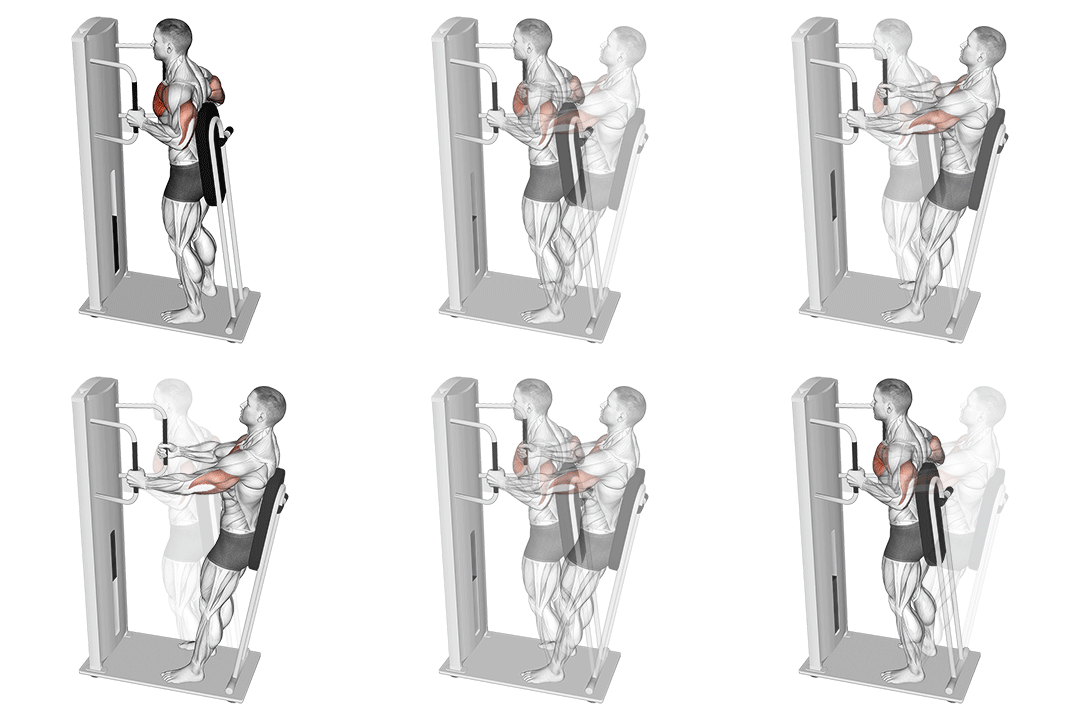
The Lever Standing Chest Press is done standing with a lever machine. Ranked closest by our scoring: the Forward Drag With Press, the Assisted Chest Dip (Kneeling) and the Cable Decline Press.
Updated Ranked by our 12-factor similarity model How it works
Original Exercise: Lever Standing Chest Press
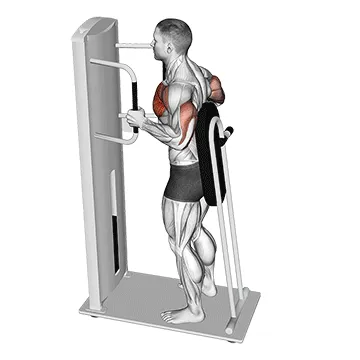
- Primary muscle
- Pectorals
- Equipment
- Lever
- Difficulty
- Intermediate
- Type
- Compound
Secondary muscles: Shoulders, Triceps
How to perform Lever Standing Chest Press
- Adjust the seat height and position yourself on the machine with your feet flat on the ground.
- Grasp the handles with an overhand grip and position your hands at chest level.
- Push the handles forward until your arms are fully extended, keeping your elbows slightly bent.
- Pause for a moment, then slowly bring the handles back towards your chest, maintaining control throughout the movement.
- Repeat for the desired number of repetitions.
Ranked Lever Standing Chest Press Alternatives
10 substitutes, ranked by how closely each one matches the Lever Standing Chest Press on movement pattern, muscles worked, equipment and body position. The higher the score, the less you change. Open "How to perform this exercise" on a card for the steps; every card title links to that exercise's own alternatives page.
Best match 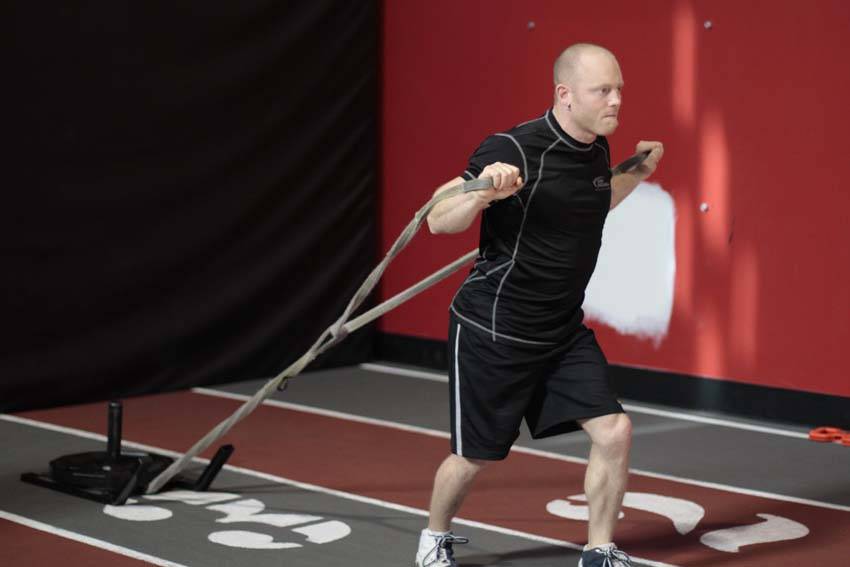
1. Forward Drag With Press
82% match- Pectorals
- Other
- Intermediate
- Compound
Pick this when you want to work the pectorals with more balance to manage.
How to perform this exercise
- Attach a dual handled chain or rope attachment to the sled. You should be facing away from the sled, holding a handle in each hand.
- Begin the movement by moving forward for one step. Leaning forward, extend through the legs and hips to move, pausing with each step to extend through the elbows, pressing your hands forward. Step forward until you return to the start position prepared to press.
Sets and reps: 3 or 4 sets of 6 to 10 reps.
Why this matches
- Primary muscle: pectorals, the same as the Lever Standing Chest Press
- Body position: standing, the same as the Lever Standing Chest Press
- Balance: harder to stay steady on than the Lever Standing Chest Press
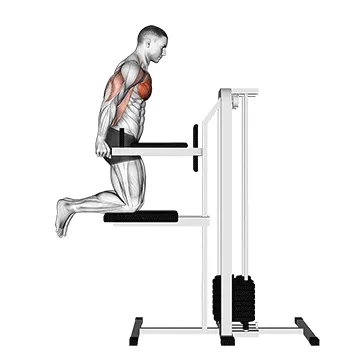
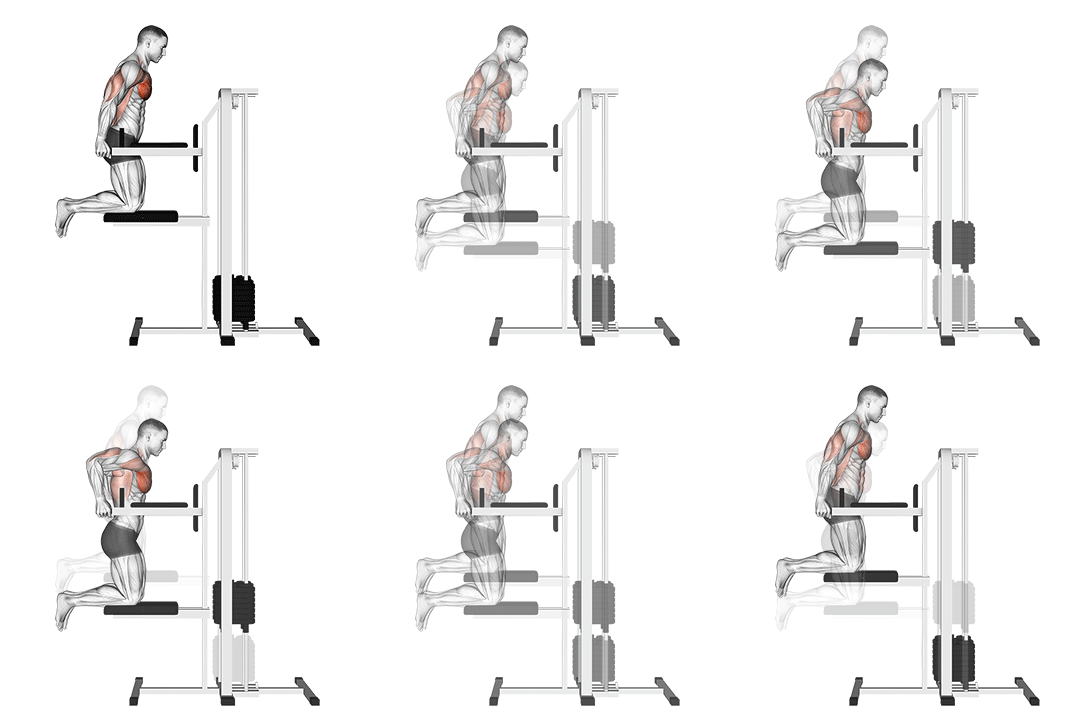
2. Assisted Chest Dip (Kneeling)
82% match- Pectorals
- Lever
- Beginner
- Compound
Pick this when you want an easier version that still works the pectorals.
How to perform this exercise
- Adjust the machine to your desired height and secure your knees on the pad.
- Grasp the handles with your palms facing down and your arms fully extended.
- Lower your body by bending your elbows until your upper arms are parallel to the floor.
- Pause for a moment, then push yourself back up to the starting position.
- Repeat for the desired number of repetitions.
Sets and reps: 3 or 4 sets of 6 to 10 reps.
Why this matches
- Primary muscle: pectorals, the same as the Lever Standing Chest Press
- Equipment: a machine, the same as the Lever Standing Chest Press
- Body position: kneeling, not standing
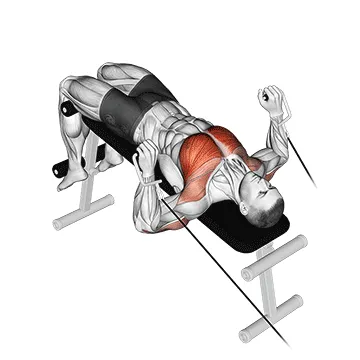
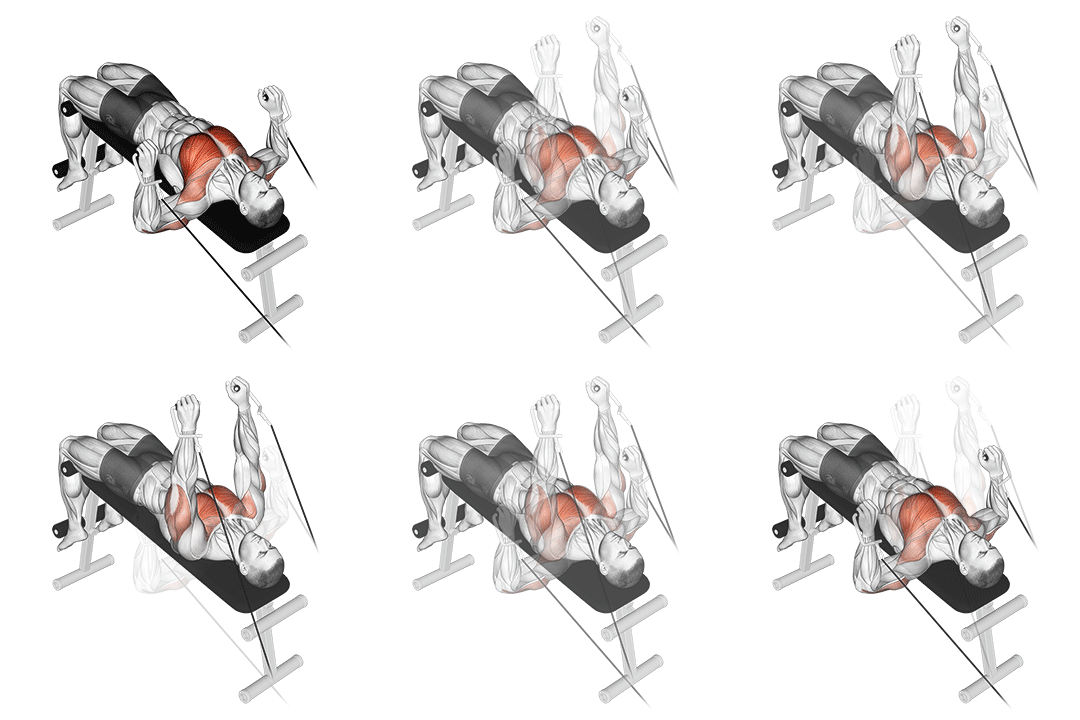
3. Cable Decline Press
81% match- Pectorals
- Cable
- Intermediate
- Compound
A good swap when you have a cable machine to work with, and it still works the pectorals.
How to perform this exercise
- Adjust the cable machine to a decline position.
- Sit on the decline bench facing the cable machine.
- Grasp the handles with an overhand grip and position them at chest level.
- Keep your feet flat on the ground and your back firmly against the bench.
- Exhale and push the handles away from your body, extending your arms fully.
- Pause for a moment at the end of the movement, squeezing your chest muscles.
- Inhale and slowly return the handles back to the starting position.
- Repeat for the desired number of repetitions.
Sets and reps: 3 or 4 sets of 6 to 10 reps.
Why this matches
- Primary muscle: pectorals, the same as the Lever Standing Chest Press
- Equipment: a cable, not a machine
- Body position: lying on your back, not standing
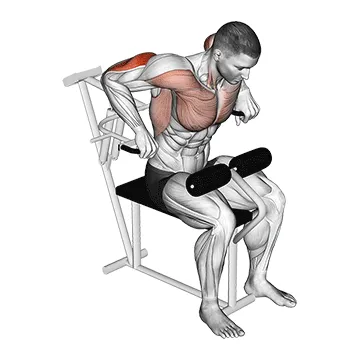
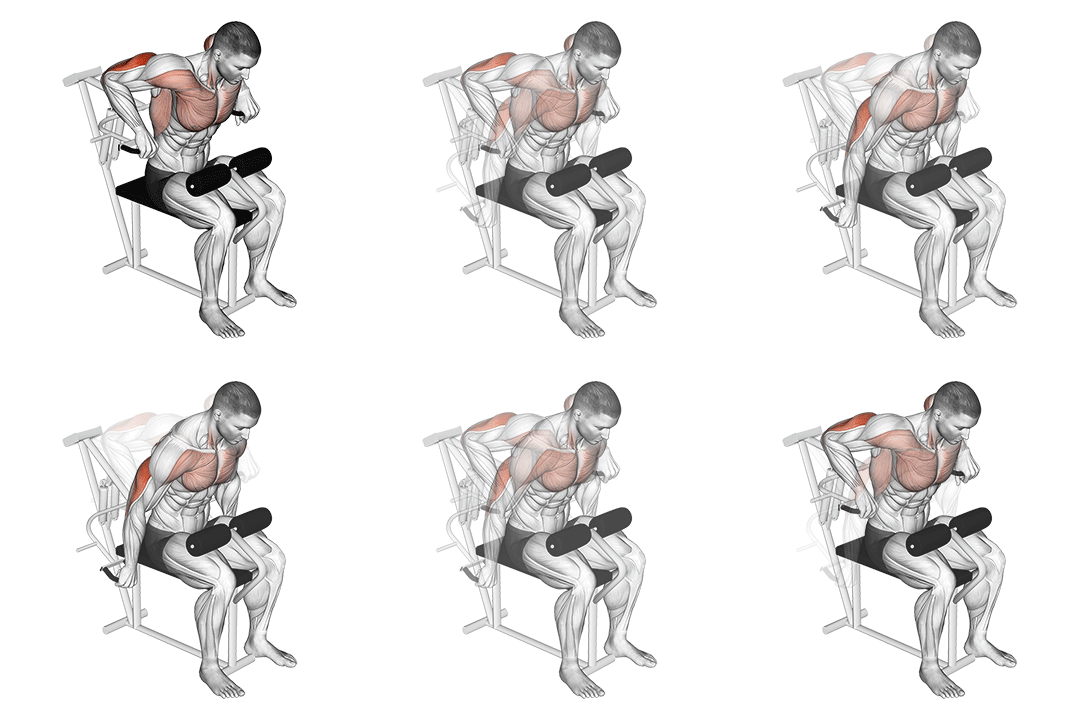
4. Lever Overhand Triceps Dip
80% match- Triceps
- Lever
- Intermediate
- Compound
A looser match: it uses the same equipment, but it works the triceps rather than the pectorals.
How to perform this exercise
- Adjust the machine to the appropriate height and secure your body in position.
- Grasp the handles with an overhand grip and position your body so that your arms are fully extended.
- Lower your body by bending your elbows, keeping your upper arms close to your sides.
- Continue lowering until your upper arms are parallel to the floor.
- Pause for a moment, then push yourself back up to the starting position by extending your elbows.
- Repeat for the desired number of repetitions.
Sets and reps: 3 or 4 sets of 6 to 10 reps.
Why this matches
- Primary muscle: triceps, not pectorals
- Equipment: a machine, the same as the Lever Standing Chest Press
- Body position: standing, the same as the Lever Standing Chest Press
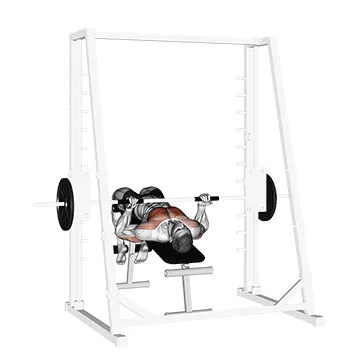
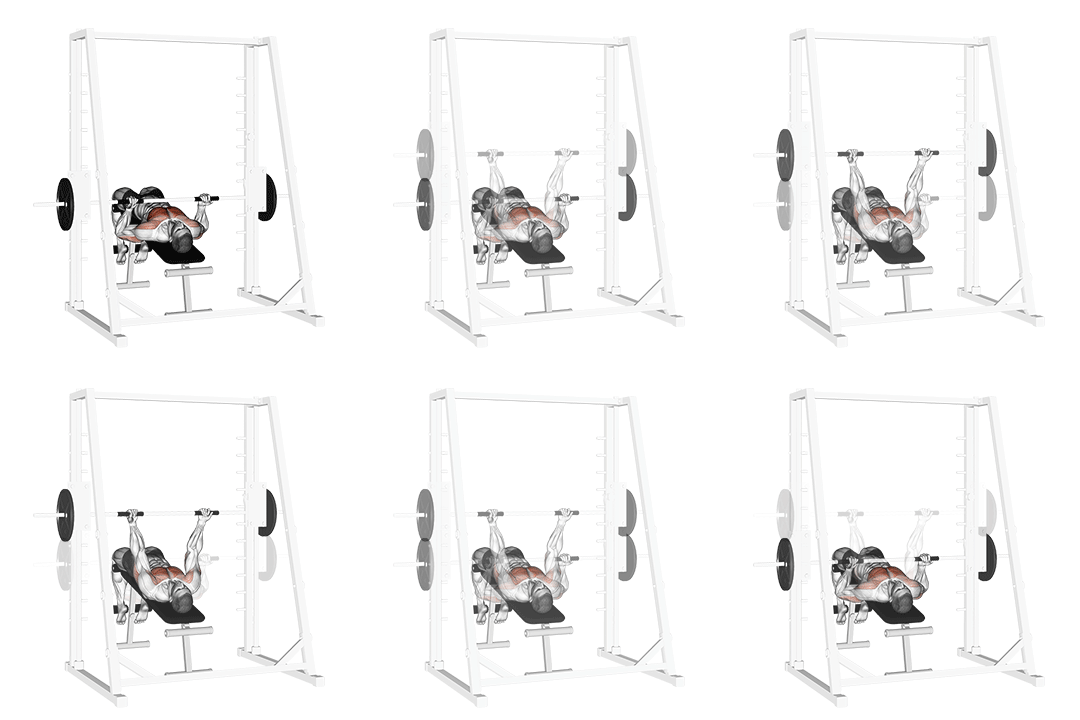
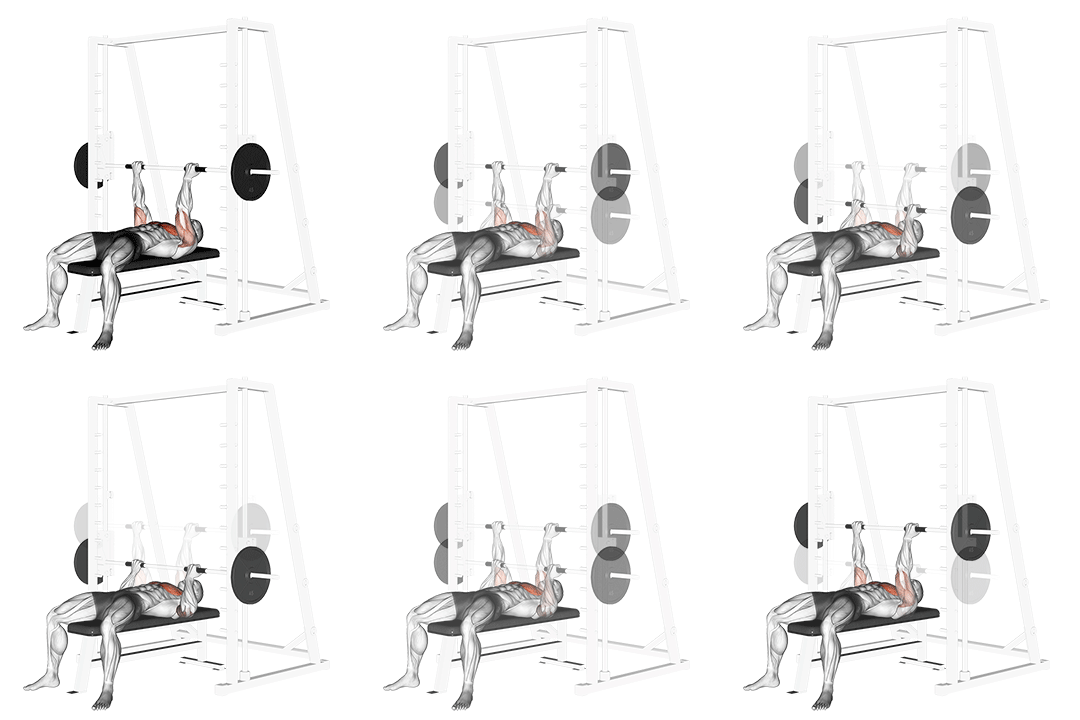
5. Smith Decline Reverse-grip Press
77% match- Pectorals
- Smith-machine
- Intermediate
- Compound
A good swap when you have a Smith machine to work with, and it still works the pectorals.
How to perform this exercise
- Adjust the smith machine to a decline position.
- Lie down on the bench with your feet secured under the foot pads.
- Grasp the barbell with a reverse grip, hands slightly wider than shoulder-width apart.
- Unrack the barbell and lower it towards your chest, keeping your elbows tucked in.
- Pause for a moment at the bottom, then push the barbell back up to the starting position.
- Repeat for the desired number of repetitions.
Sets and reps: 3 or 4 sets of 6 to 10 reps.
Why this matches
- Primary muscle: pectorals, the same as the Lever Standing Chest Press
- Equipment: a machine, the same as the Lever Standing Chest Press
- Body position: lying on your back, not standing
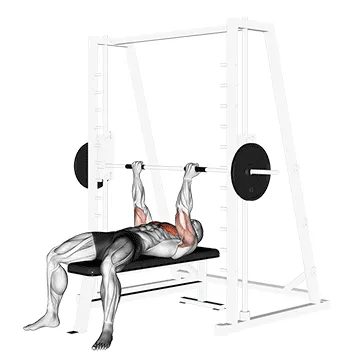
6. Smith Reverse-grip Press
77% match- Pectorals
- Smith-machine
- Intermediate
- Compound
How to perform this exercise
- Adjust the height of the smith machine bar to chest level.
- Stand facing the bar with your feet shoulder-width apart.
- Grasp the bar with an overhand grip, hands slightly wider than shoulder-width apart.
- Step back and position yourself with a slight bend in your knees.
- Keep your chest up and core engaged throughout the exercise.
- Lower the bar towards your chest, keeping your elbows tucked in.
- Pause for a moment at the bottom, then push the bar back up to the starting position.
- Repeat for the desired number of repetitions.
Sets and reps: 3 or 4 sets of 6 to 10 reps.
Why this matches
- Primary muscle: pectorals, the same as the Lever Standing Chest Press
- Equipment: a machine, the same as the Lever Standing Chest Press
- Body position: seated, not standing
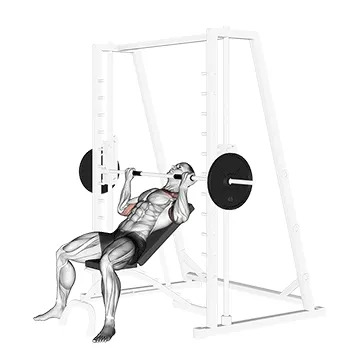
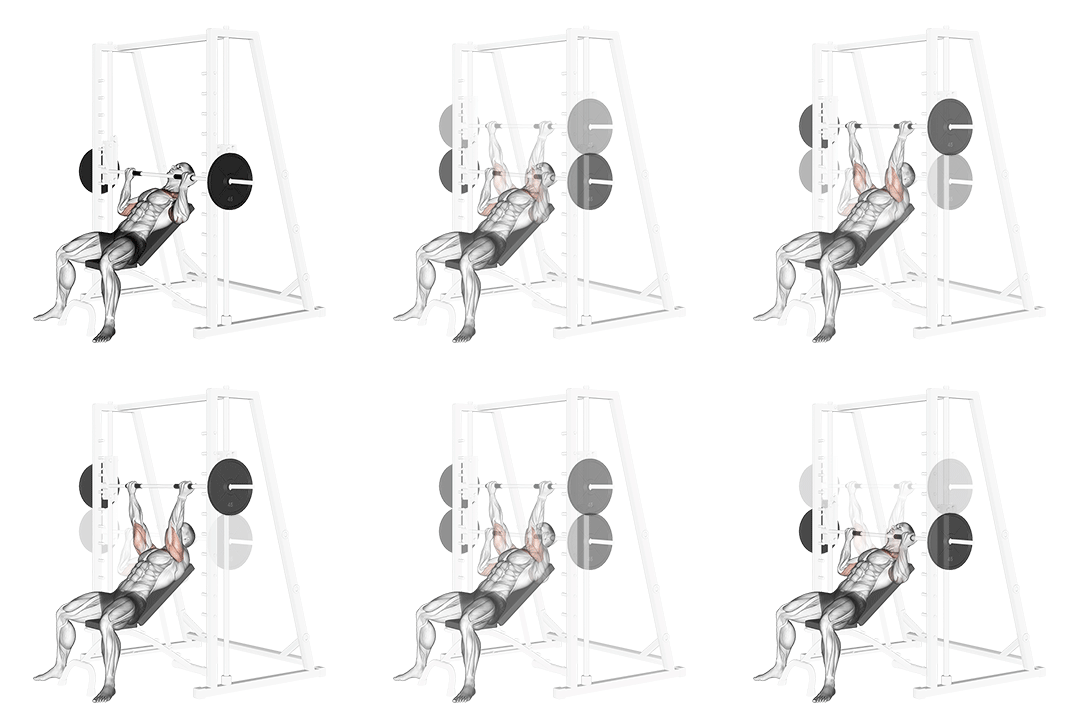
7. Smith Incline Reverse-grip Press
77% match- Pectorals
- Smith-machine
- Intermediate
- Compound
How to perform this exercise
- Adjust the seat of the smith machine to a comfortable incline angle.
- Sit on the machine with your back against the pad and your feet flat on the ground.
- Grasp the bar with an overhand grip that is slightly wider than shoulder-width apart.
- Unrack the bar and lower it slowly towards your chest, keeping your elbows tucked in.
- Pause for a moment when the bar is just above your chest.
- Push the bar back up to the starting position, fully extending your arms.
- Repeat for the desired number of repetitions.
Sets and reps: 3 or 4 sets of 6 to 10 reps.
Why this matches
- Primary muscle: pectorals, the same as the Lever Standing Chest Press
- Equipment: a machine, the same as the Lever Standing Chest Press
- Body position: lying on your back, not standing
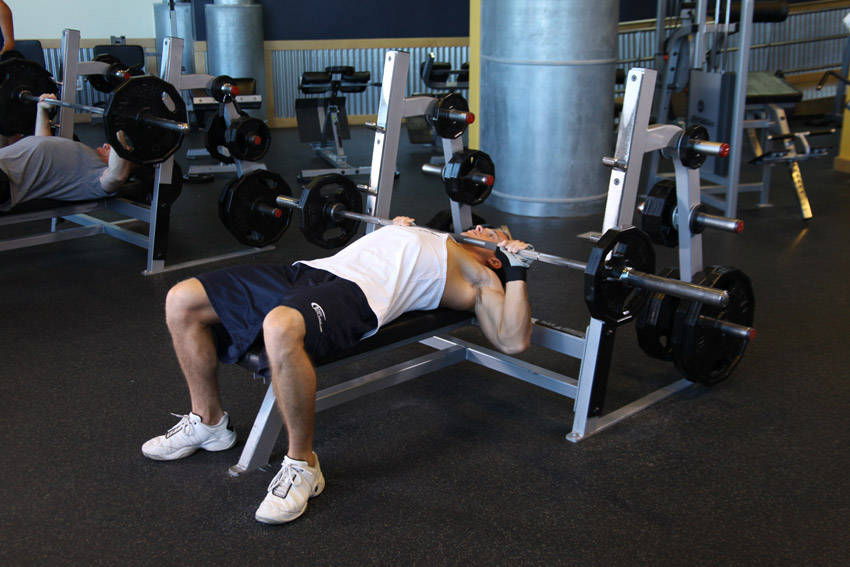
8. Neck Press
77% match- Pectorals
- Barbell
- Intermediate
- Compound
How to perform this exercise
- Lie back on a flat bench. Using a medium-width grip (a grip that creates a 90-degree angle in the middle of the movement between the forearms and the upper arms), lift the bar from the rack and hold it straight over your neck with your arms locked. This will be your starting position.
- As you breathe in, come down slowly until you feel the bar on your neck.
- After a second pause, bring the bar back to the starting position as you breathe out and push the bar using your chest muscles. Lock your arms and squeeze your chest in the contracted position, hold for a second and then start coming down slowly again. Tip: It should take at least twice as long to go down than to come up).
- Repeat the movement for the prescribed amount of repetitions.
- When you are done, place the bar back in the rack.
Sets and reps: 3 or 4 sets of 6 to 10 reps.
Why this matches
- Primary muscle: pectorals, the same as the Lever Standing Chest Press
- Equipment: free weights, not a machine
- Balance: harder to stay steady on than the Lever Standing Chest Press
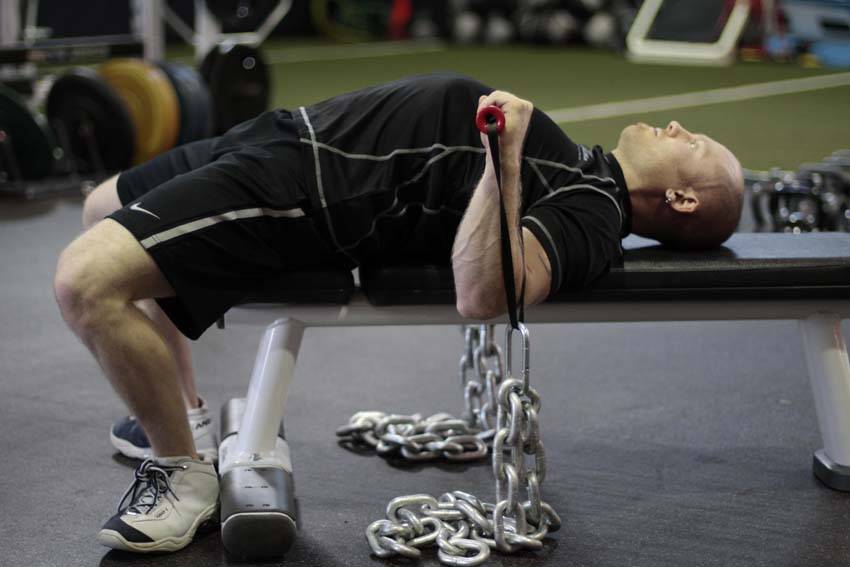
9. Chain Press
75% match- Pectorals
- Other
- Advanced
- Compound
How to perform this exercise
- Begin by connecting the chains to the cable handle attachments. Position yourself on the flat bench in the same position as for a dumbbell press. Your wrists should be pronated and arms perpendicular to the floor. This will be your starting position.
- Lower the chains by flexing the elbows, unloading some of the chain onto the floor.
- Continue until your elbow forms a 90 degree angle, and then reverse the motion by extending through the elbow to lockout.
Sets and reps: 3 to 5 sets of 5 to 8 reps on each side.
Why this matches
- Primary muscle: pectorals, the same as the Lever Standing Chest Press
- Body position: standing, the same as the Lever Standing Chest Press
- Balance: harder to stay steady on than the Lever Standing Chest Press
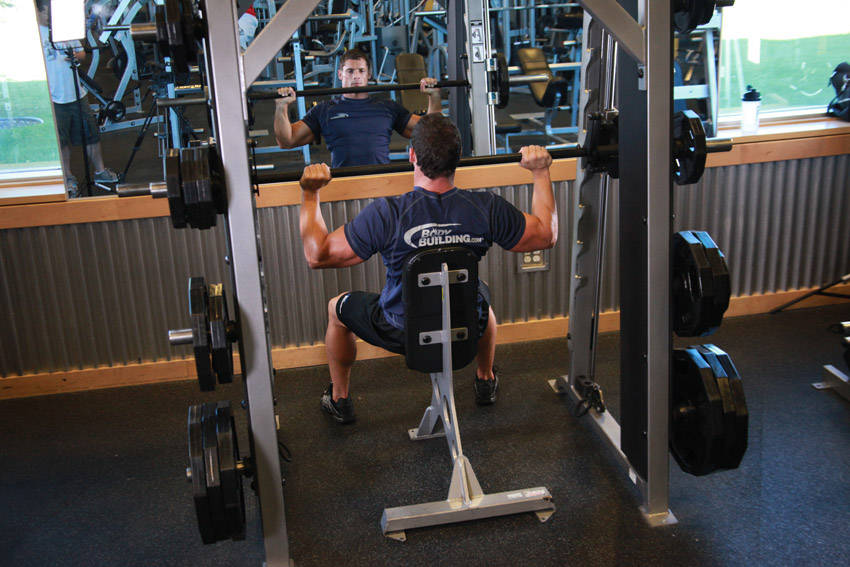
- Delts
- Smith-machine
- Intermediate
- Compound
How to perform this exercise
- To begin, place a flat bench (or preferably one with back support) underneath a smith machine. Position the barbell at a height so that when seated on the flat bench, the arms must be almost fully extended to reach the barbell.
- Once you have the correct height, sit slightly in behind the barbell so that there is an imaginary straight line from the tip of your nose to the barbell. Your feet should be stationary. Grab the barbell with the palms facing forward, unlock it and lift it up so that your arms are fully extended. This is the starting position.
- Slowly begin to lower the barbell until it is level with your chin while inhaling.
- Then lift the barbell back to the starting position using your shoulders while exhaling.
- Repeat for the recommended amount of repetitions.
Sets and reps: 3 or 4 sets of 6 to 10 reps.
Why this matches
- Primary muscle: delts, not pectorals
- Equipment: a machine, the same as the Lever Standing Chest Press
- Body position: standing, the same as the Lever Standing Chest Press
How to Choose the Right Lever Standing Chest Press Substitute
Match the substitute to your goal, equipment, and injury profile. Prioritize movement pattern (horizontal push), loading type (constant vs. variable resistance), and stability demand: machine presses provide fixed path and higher load tolerance, while free weights and cables require greater scapular and core stabilization. For targeted activation, choose incline angles to shift load to the upper pecs or single-arm work to correct unilateral weaknesses. Cue selection: set the scapula back and down, control the descent 2–3 seconds, and finish with a full pec squeeze at lockout to maximize muscle tension and safe biomechanics.
Lever Standing Chest Press FAQ
What muscles does Lever Standing Chest Press work?
The lever standing chest press primarily targets the pectoralis major (sternal and clavicular heads) and also loads the anterior deltoid and triceps brachii. Proper technique, scapular retraction, ~45° elbow tuck, and pressing through the sternum, maximizes pec activation and reduces deltoid dominance.
Find Alternatives for Any Exercise
Search the exercise database and filter the ranked substitutes by the equipment you own.
Similarity scores compare exercise metadata such as movement pattern, muscles, equipment and body position. They are not a safety rating or a check that you own the equipment. Learn about our methodology