

10 Best Smith Incline Reverse-grip Press Alternatives for Chest Growth
The Smith Incline Reverse-grip Press is done lying on your back with a Smith machine. Ranked closest by our scoring: the Smith Decline Reverse-grip Press, the Smith Reverse-grip Press and the Lever Standing Chest Press.
Updated Ranked by our 12-factor similarity model How it works
Original Exercise: Smith Incline Reverse-grip Press
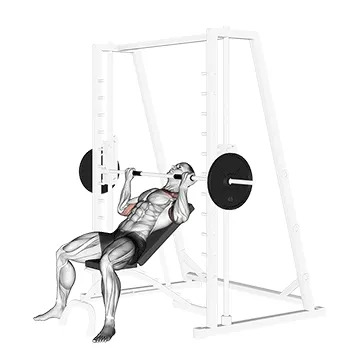
- Primary muscle
- Pectorals
- Equipment
- Smith-machine
- Difficulty
- Intermediate
- Type
- Compound
Secondary muscles: Triceps, Shoulders
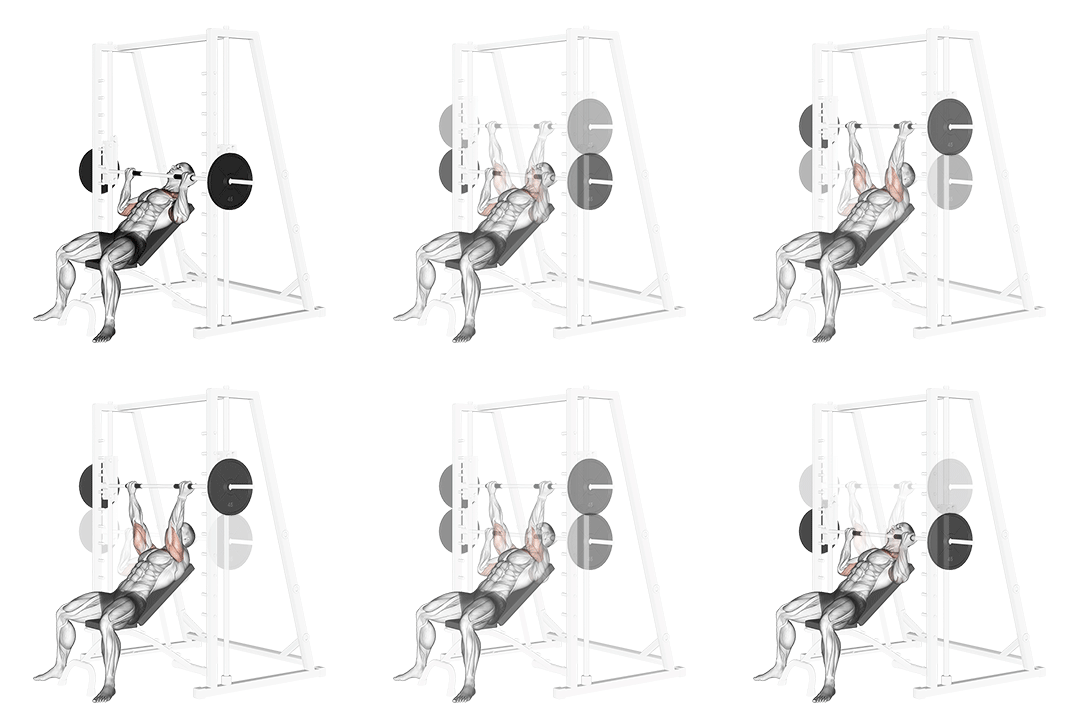
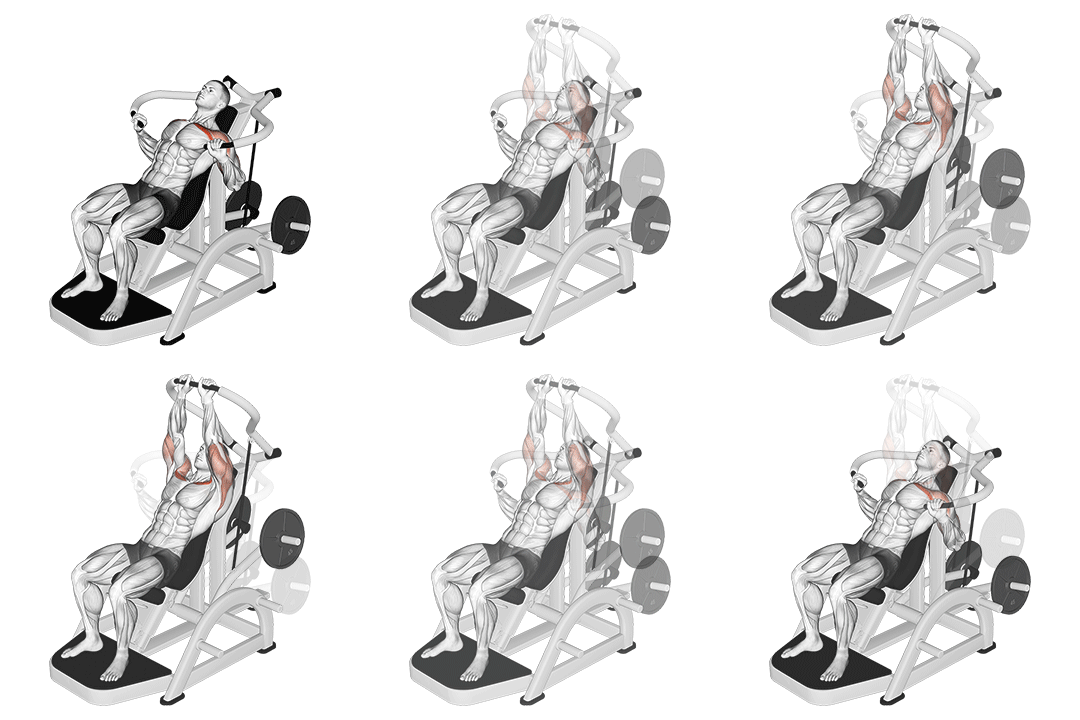
How to perform Smith Incline Reverse-grip Press
- Adjust the seat of the smith machine to a comfortable incline angle.
- Sit on the machine with your back against the pad and your feet flat on the ground.
- Grasp the bar with an overhand grip that is slightly wider than shoulder-width apart.
- Unrack the bar and lower it slowly towards your chest, keeping your elbows tucked in.
- Pause for a moment when the bar is just above your chest.
- Push the bar back up to the starting position, fully extending your arms.
- Repeat for the desired number of repetitions.
Ranked Smith Incline Reverse-grip Press Alternatives
10 substitutes, ranked by how closely each one matches the Smith Incline Reverse-grip Press on movement pattern, muscles worked, equipment and body position. The higher the score, the less you change. Open "How to perform this exercise" on a card for the steps; every card title links to that exercise's own alternatives page.
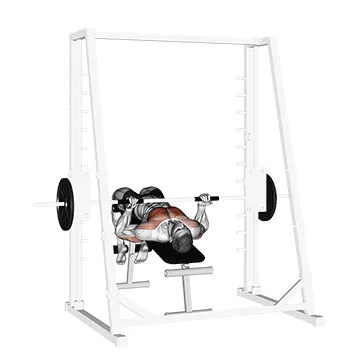
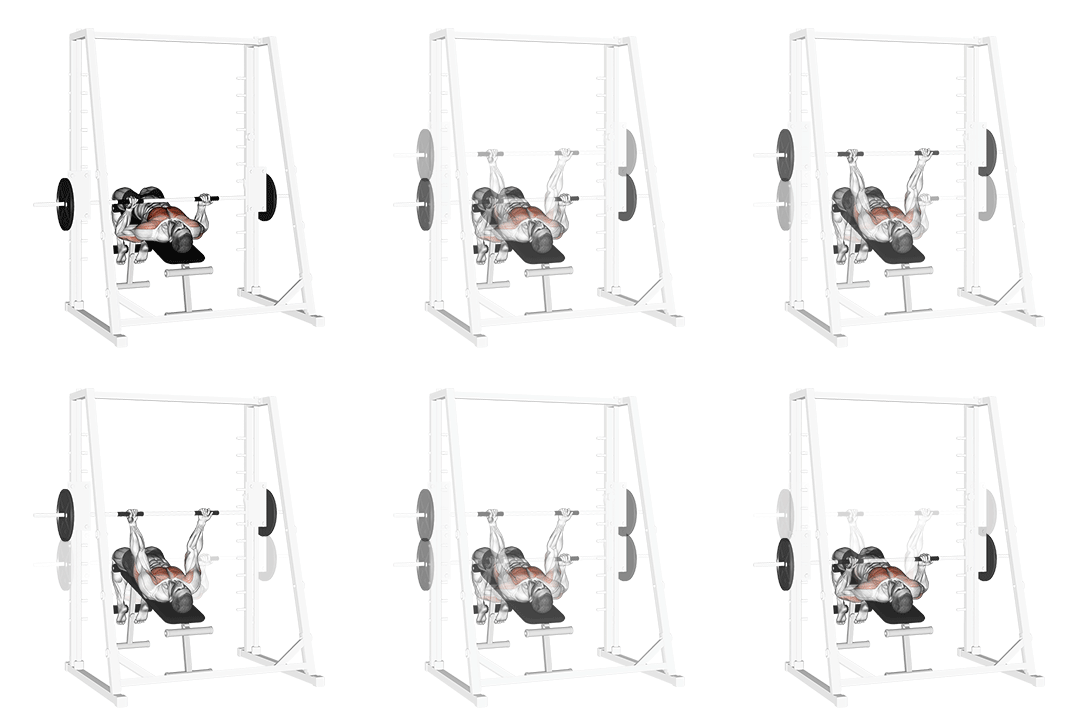
Best match 1. Smith Decline Reverse-grip Press
99% match- Pectorals
- Smith-machine
- Intermediate
- Compound
It uses the same equipment and still works the pectorals.
How to perform this exercise
- Adjust the smith machine to a decline position.
- Lie down on the bench with your feet secured under the foot pads.
- Grasp the barbell with a reverse grip, hands slightly wider than shoulder-width apart.
- Unrack the barbell and lower it towards your chest, keeping your elbows tucked in.
- Pause for a moment at the bottom, then push the barbell back up to the starting position.
- Repeat for the desired number of repetitions.
Sets and reps: 3 or 4 sets of 6 to 10 reps.
Why this matches
- Primary muscle: pectorals, the same as the Smith Incline Reverse-grip Press
- Equipment: a machine, the same as the Smith Incline Reverse-grip Press
- Body position: lying on your back, the same as the Smith Incline Reverse-grip Press
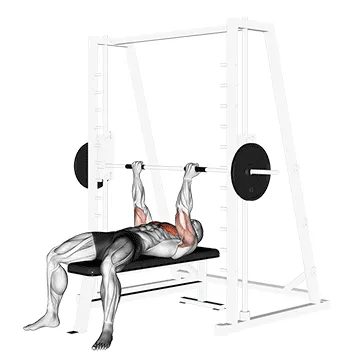
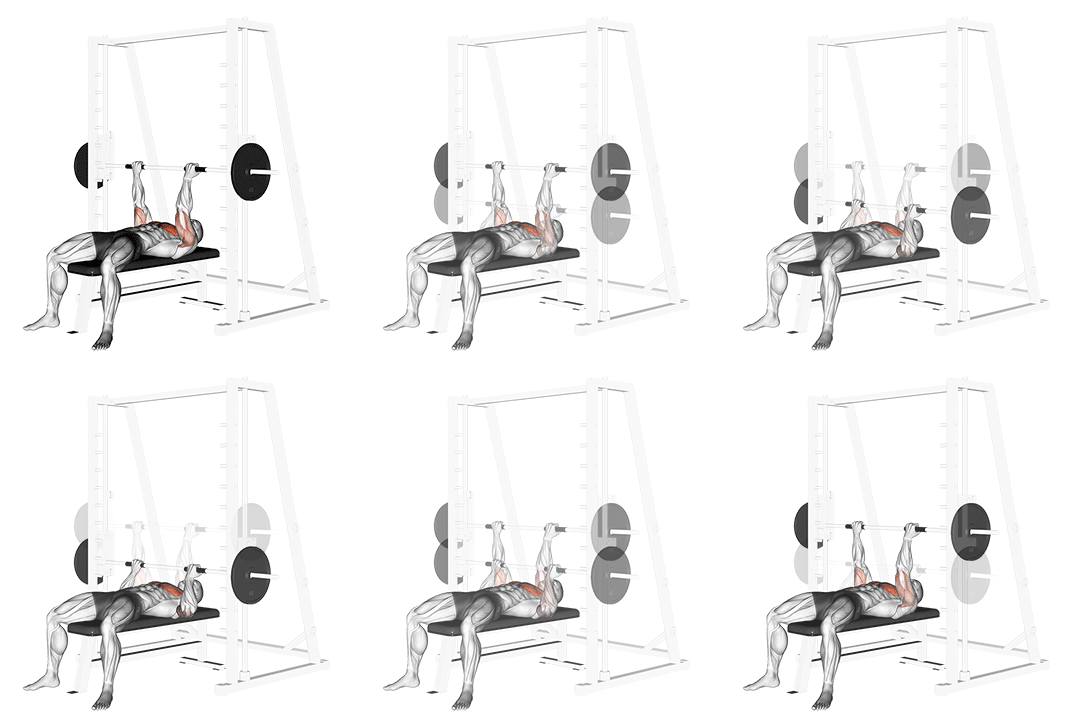
2. Smith Reverse-grip Press
91% match- Pectorals
- Smith-machine
- Intermediate
- Compound
The same equipment, done seated instead.
How to perform this exercise
- Adjust the height of the smith machine bar to chest level.
- Stand facing the bar with your feet shoulder-width apart.
- Grasp the bar with an overhand grip, hands slightly wider than shoulder-width apart.
- Step back and position yourself with a slight bend in your knees.
- Keep your chest up and core engaged throughout the exercise.
- Lower the bar towards your chest, keeping your elbows tucked in.
- Pause for a moment at the bottom, then push the bar back up to the starting position.
- Repeat for the desired number of repetitions.
Sets and reps: 3 or 4 sets of 6 to 10 reps.
Why this matches
- Primary muscle: pectorals, the same as the Smith Incline Reverse-grip Press
- Equipment: a machine, the same as the Smith Incline Reverse-grip Press
- Body position: seated, not lying on your back
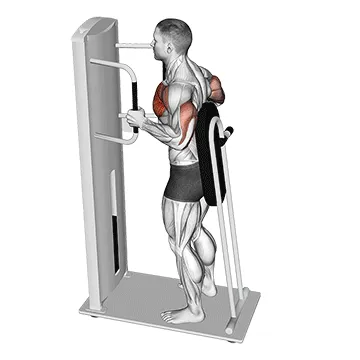
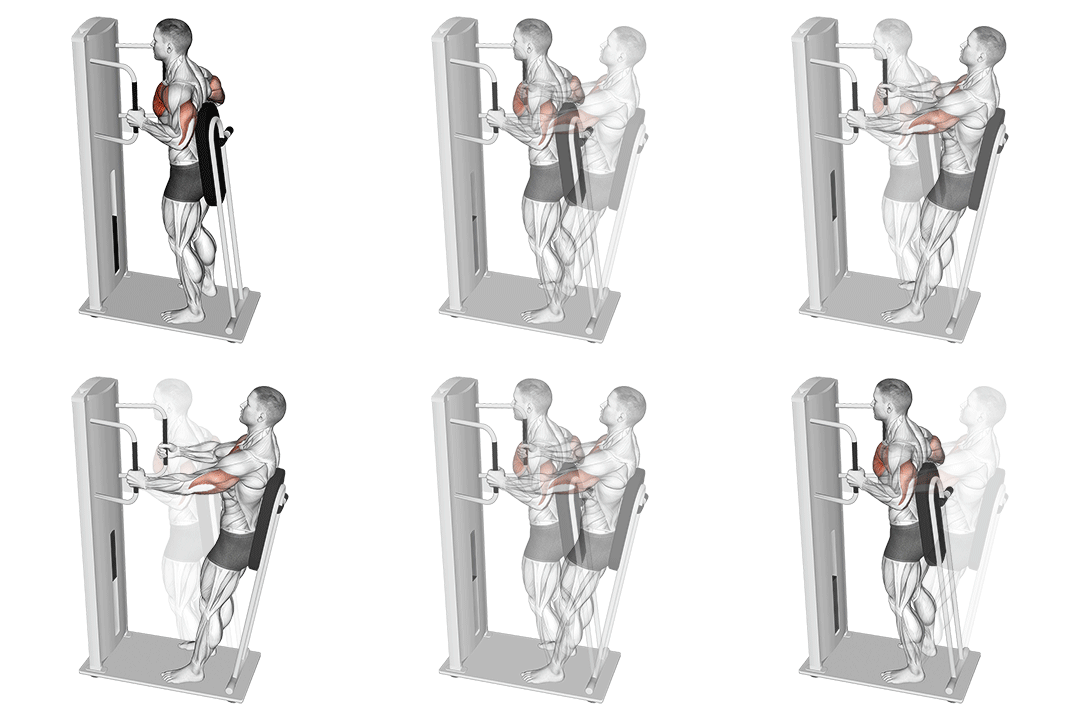
3. Lever Standing Chest Press
77% match- Pectorals
- Lever
- Intermediate
- Compound
A good swap when you have a lever machine to work with, and it still works the pectorals.
How to perform this exercise
- Adjust the seat height and position yourself on the machine with your feet flat on the ground.
- Grasp the handles with an overhand grip and position your hands at chest level.
- Push the handles forward until your arms are fully extended, keeping your elbows slightly bent.
- Pause for a moment, then slowly bring the handles back towards your chest, maintaining control throughout the movement.
- Repeat for the desired number of repetitions.
Sets and reps: 3 or 4 sets of 6 to 10 reps.
Why this matches
- Primary muscle: pectorals, the same as the Smith Incline Reverse-grip Press
- Equipment: a machine, the same as the Smith Incline Reverse-grip Press
- Body position: standing, not lying on your back
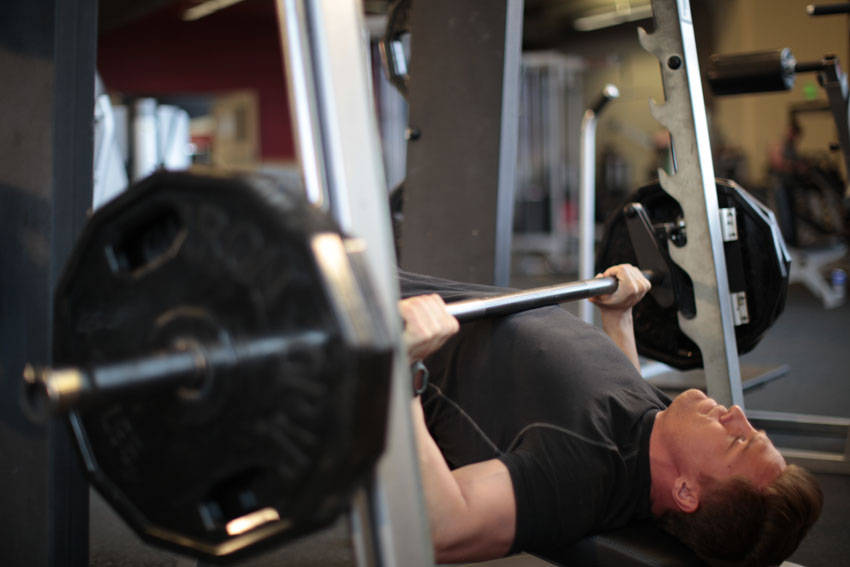
4. Smith Machine Decline Press
75% match- Pectorals
- Smith-machine
- Intermediate
- Compound
How to perform this exercise
- Position a decline bench in the rack so that the bar will be above your chest. Load an appropriate weight and take your place on the bench.
- Rotate the bar to unhook it from the rack and fully extend your arms. Your back should be slightly arched and your shoulder blades retracted. This will be your starting position.
- Begin the movement by flexing your arms, lowering the bar to your chest.
- Pause briefly, and then extend your arms to push the weight back to the starting position.
- After completing the desired number of repetitions, rotate the bar to rack the weight.
Sets and reps: 3 or 4 sets of 6 to 10 reps.
Why this matches
- Primary muscle: pectorals, the same as the Smith Incline Reverse-grip Press
- Equipment: a machine, the same as the Smith Incline Reverse-grip Press
- Body position: lying on your back, the same as the Smith Incline Reverse-grip Press
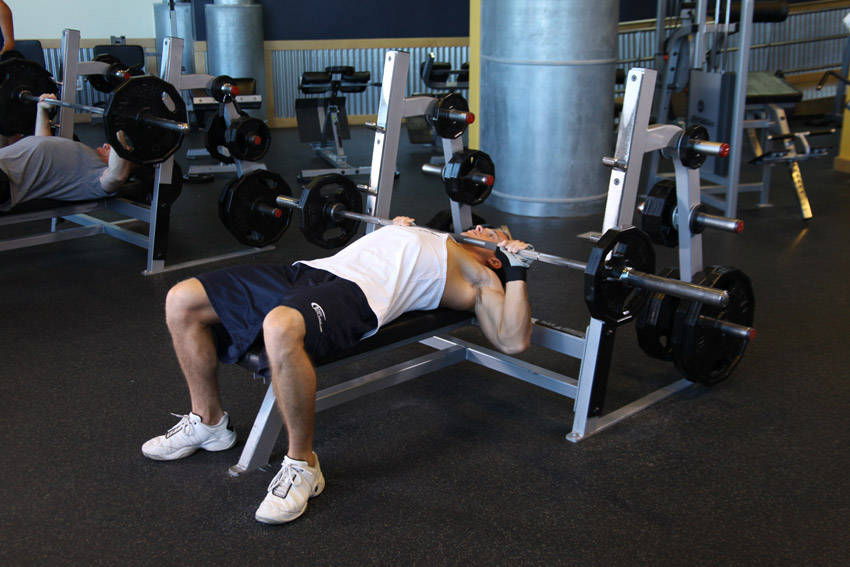
5. Neck Press
74% match- Pectorals
- Barbell
- Intermediate
- Compound
A good swap when you have a barbell to work with, and it still works the pectorals.
How to perform this exercise
- Lie back on a flat bench. Using a medium-width grip (a grip that creates a 90-degree angle in the middle of the movement between the forearms and the upper arms), lift the bar from the rack and hold it straight over your neck with your arms locked. This will be your starting position.
- As you breathe in, come down slowly until you feel the bar on your neck.
- After a second pause, bring the bar back to the starting position as you breathe out and push the bar using your chest muscles. Lock your arms and squeeze your chest in the contracted position, hold for a second and then start coming down slowly again. Tip: It should take at least twice as long to go down than to come up).
- Repeat the movement for the prescribed amount of repetitions.
- When you are done, place the bar back in the rack.
Sets and reps: 3 or 4 sets of 6 to 10 reps.
Why this matches
- Primary muscle: pectorals, the same as the Smith Incline Reverse-grip Press
- Equipment: free weights, not a machine
- Balance: harder to stay steady on than the Smith Incline Reverse-grip Press
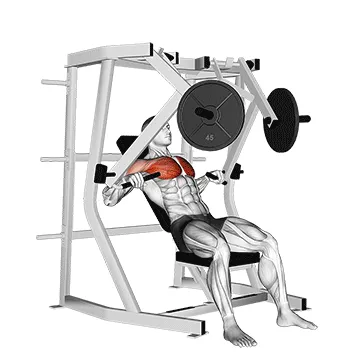
6. Lever Decline Chest Press
74% match- Pectorals
- Lever
- Intermediate
- Compound
How to perform this exercise
- Adjust the seat height and backrest of the leverage machine to a comfortable position.
- Sit on the machine with your back against the backrest and your feet flat on the floor.
- Grasp the handles with an overhand grip and position your hands slightly wider than shoulder-width apart.
- Push the handles forward and away from your body until your arms are fully extended.
- Slowly lower the handles back towards your chest, keeping your elbows slightly bent.
- Pause for a moment at the bottom, then push the handles back to the starting position.
- Repeat for the desired number of repetitions.
Sets and reps: 3 or 4 sets of 6 to 10 reps.
Why this matches
- Primary muscle: pectorals, the same as the Smith Incline Reverse-grip Press
- Equipment: a machine, the same as the Smith Incline Reverse-grip Press
- Body position: lying on your back, the same as the Smith Incline Reverse-grip Press
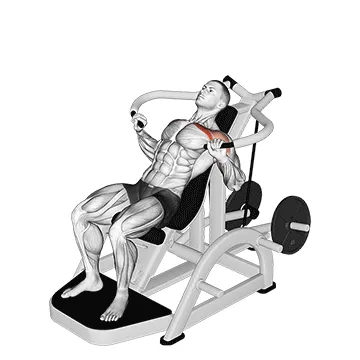
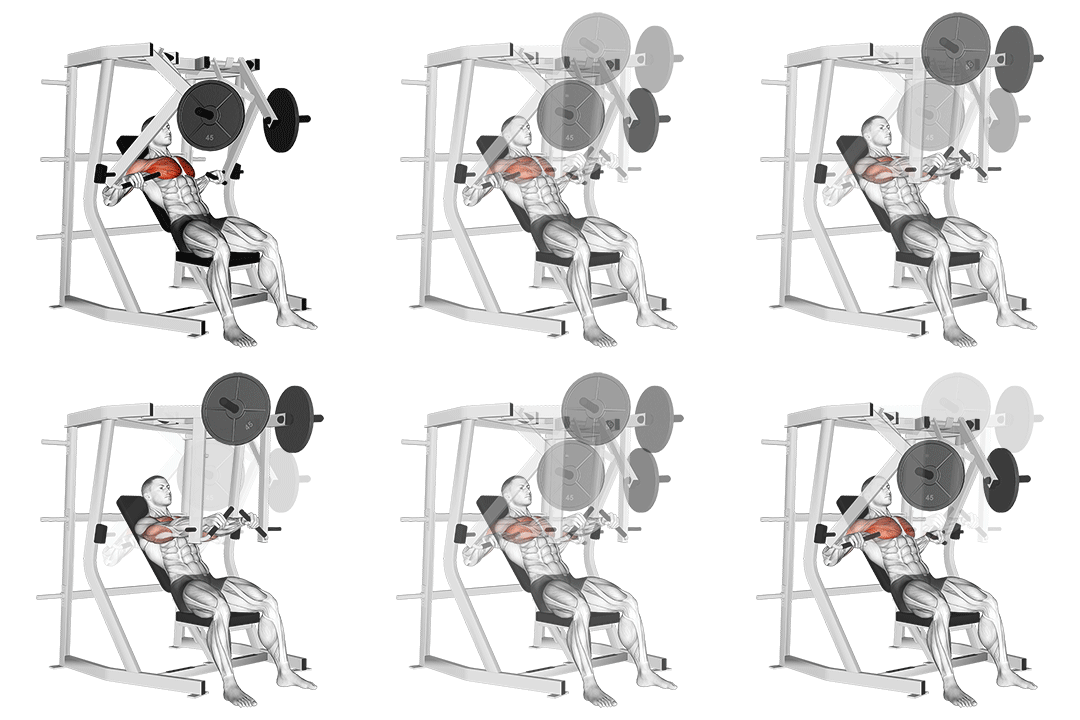
7. Lever Incline Chest Press
74% match- Pectorals
- Lever
- Intermediate
- Compound
How to perform this exercise
- Adjust the seat height and backrest angle on the leverage machine to a comfortable position.
- Sit on the machine with your back against the backrest and your feet flat on the floor.
- Grasp the handles with an overhand grip and position your hands slightly wider than shoulder-width apart.
- Push the handles forward and away from your body until your arms are fully extended, but without locking your elbows.
- Pause for a moment at the fully extended position, then slowly bend your elbows and lower the handles back towards your chest.
- Repeat for the desired number of repetitions.
Sets and reps: 3 or 4 sets of 6 to 10 reps.
Why this matches
- Primary muscle: pectorals, the same as the Smith Incline Reverse-grip Press
- Equipment: a machine, the same as the Smith Incline Reverse-grip Press
- Body position: lying on your back, the same as the Smith Incline Reverse-grip Press
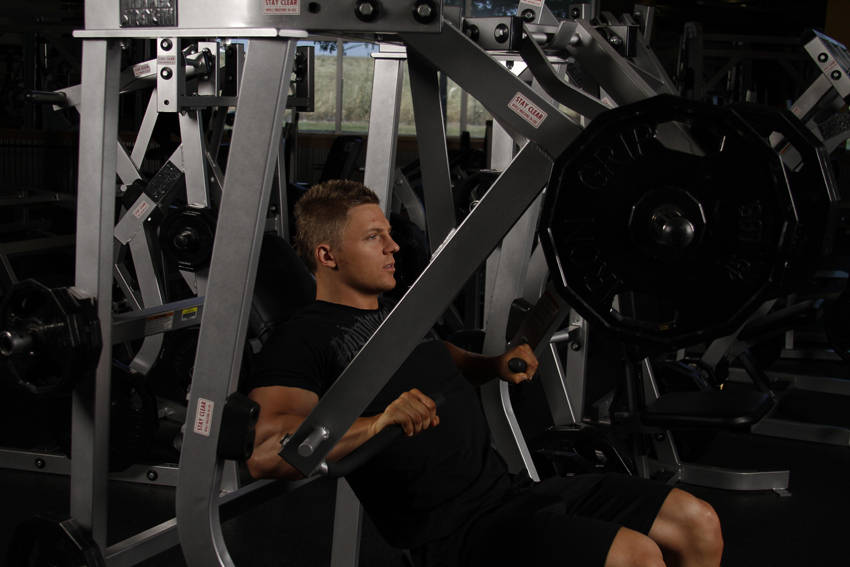
8. Leverage Decline Chest Press
74% match- Pectorals
- Machine
- Beginner
- Compound
How to perform this exercise
- Load an appropriate weight onto the pins and adjust the seat for your height. The handles should be near the bottom of the pectorals at the beginning of the motion. Your chest and head should be up and your shoulder blades retracted. This will be your starting position.
- Press the handles forward by extending through the elbow.
- After a brief pause at the top, return the weight just above the start position, keeping tension on the muscles by not returning the weight to the stops until the set is complete.
Sets and reps: 3 or 4 sets of 6 to 10 reps.
Why this matches
- Primary muscle: pectorals, the same as the Smith Incline Reverse-grip Press
- Equipment: a machine, the same as the Smith Incline Reverse-grip Press
- Body position: lying on your back, the same as the Smith Incline Reverse-grip Press
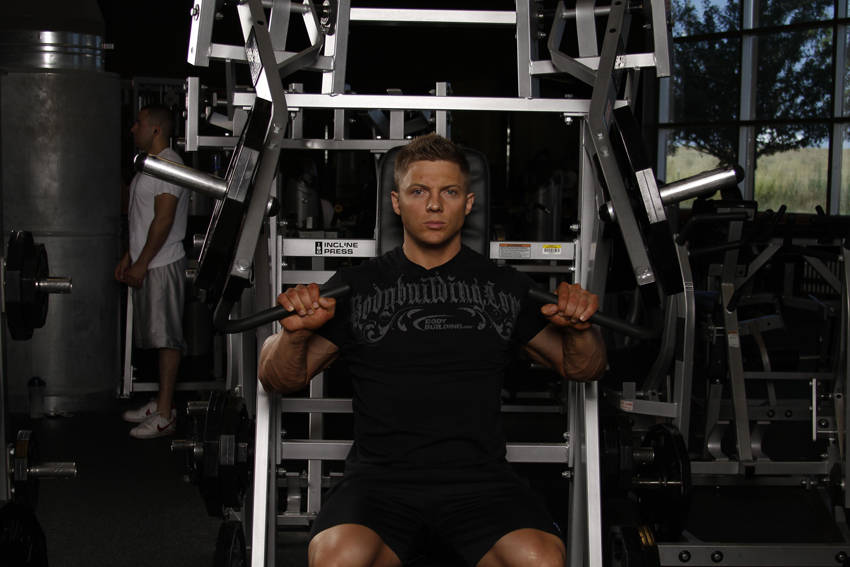
9. Leverage Incline Chest Press
74% match- Pectorals
- Machine
- Intermediate
- Compound
How to perform this exercise
- Load an appropriate weight onto the pins and adjust the seat for your height. The handles should be near the top of the pectorals at the beginning of the motion. Your chest and head should be up and your shoulder blades retracted. This will be your starting position.
- Press the handles forward by extending through the elbow.
- After a brief pause at the top, return the weight just above the start position, keeping tension on the muscles by not returning the weight to the stops until the set is complete.
Sets and reps: 3 or 4 sets of 6 to 10 reps.
Why this matches
- Primary muscle: pectorals, the same as the Smith Incline Reverse-grip Press
- Equipment: a machine, the same as the Smith Incline Reverse-grip Press
- Body position: lying on your back, the same as the Smith Incline Reverse-grip Press
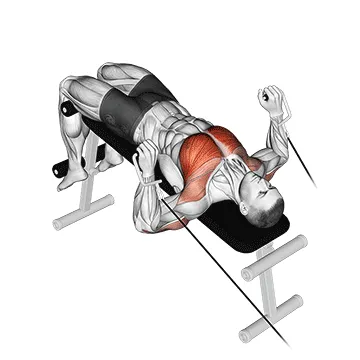
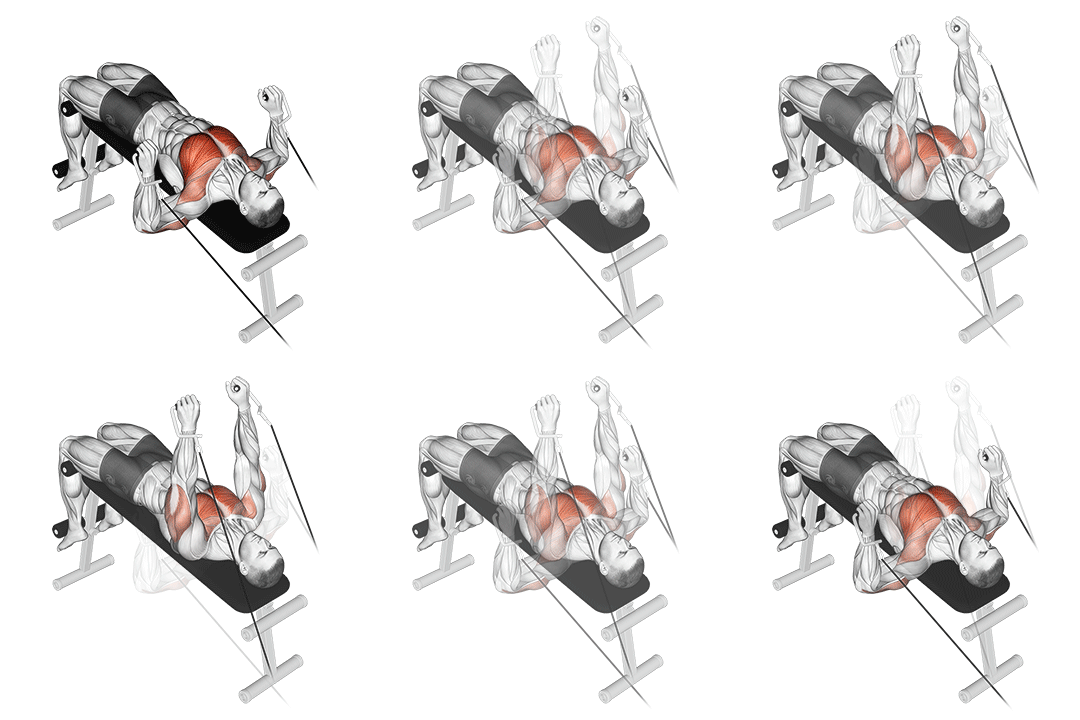
10. Cable Decline Press
74% match- Pectorals
- Cable
- Intermediate
- Compound
How to perform this exercise
- Adjust the cable machine to a decline position.
- Sit on the decline bench facing the cable machine.
- Grasp the handles with an overhand grip and position them at chest level.
- Keep your feet flat on the ground and your back firmly against the bench.
- Exhale and push the handles away from your body, extending your arms fully.
- Pause for a moment at the end of the movement, squeezing your chest muscles.
- Inhale and slowly return the handles back to the starting position.
- Repeat for the desired number of repetitions.
Sets and reps: 3 or 4 sets of 6 to 10 reps.
Why this matches
- Primary muscle: pectorals, the same as the Smith Incline Reverse-grip Press
- Equipment: a cable, not a machine
- Body position: lying on your back, the same as the Smith Incline Reverse-grip Press
- Balance: harder to stay steady on than the Smith Incline Reverse-grip Press
Why You Might Need a Smith Incline Reverse-grip Press Alternative
You might swap the Smith Incline Reverse-grip Press because of limited Smith-machine access, wrist discomfort from the underhand grip, shoulder pain, or a desire for unilateral work and better range of motion. Reverse grip shifts load to the clavicular fibers and alters elbow tracking; if that causes irritation, a neutral-grip dumbbell press or cable incline press lets you adjust wrist rotation and scapular position. For rehab, choose exercises that reduce horizontal shear and allow a natural bar path. Cue: retract the scapula and lower the load slowly to emphasize eccentric control and pec stretch.
How to Choose the Right Smith Incline Reverse-grip Press Substitute
Select a substitute by matching the movement plane, hand position, and stability needs to your goal. For maximal upper-pec hypertrophy prefer an incline angle of 30–45° and a grip that allows a slight under- or neutral rotation to stress the clavicular head. If you need stability training or to fix imbalances, use unilateral landmine or dumbbell presses and focus on a full, controlled ROM. Cue: keep your ribs down, tuck elbows about 45° and pause briefly at the bottom to increase pec time under tension.
Smith Incline Reverse-grip Press FAQ
What muscles does Smith Incline Reverse-grip Press work?
The movement emphasizes the clavicular head of the pectoralis major, with substantial assistance from the anterior deltoid and triceps brachii. The reverse grip shifts elbow tracking closer to the torso, increasing upper-pec activation and changing shoulder joint torque compared with a standard grip.
Can I build muscle without doing Smith Incline Reverse-grip Press?
Yes, you can build upper-chest mass with other incline pressing patterns, cables, and bodyweight variations that produce similar horizontal and upward force vectors. Prioritize progressive overload, 30–45° incline angles, controlled eccentrics, and proper elbow tuck to target the same muscle fibers.
Find Alternatives for Any Exercise
Search the exercise database and filter the ranked substitutes by the equipment you own.
Similarity scores compare exercise metadata such as movement pattern, muscles, equipment and body position. They are not a safety rating or a check that you own the equipment. Learn about our methodology