

10 Best Recumbent Bike Alternatives for Low-Impact Cardio
The Recumbent Bike is done seated with a machine. Ranked closest by our scoring: the Bicycling and the Elliptical Trainer. Five harder versions, among them the Stationary Bicycling and the Step Mill, are listed below as progressions rather than swaps.
The Recumbent Bike sits you down and has you pedal against a resistance you set from a menu. Bicycling is the top swap: you stay seated and pedal the same way, just without the menu of programs and resistance settings, so you sit down and go. If you would rather keep that menu and stay on a machine, Stationary Bicycling gives you the same setup as the Recumbent Bike.
Updated Ranked by our 12-factor similarity model How it works
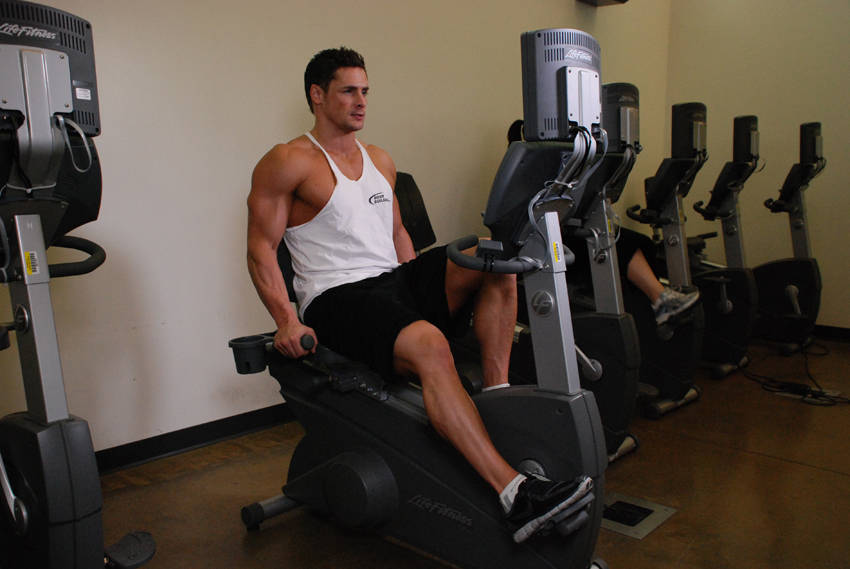
Original Exercise: Recumbent Bike
- Primary muscle
- Quads
- Equipment
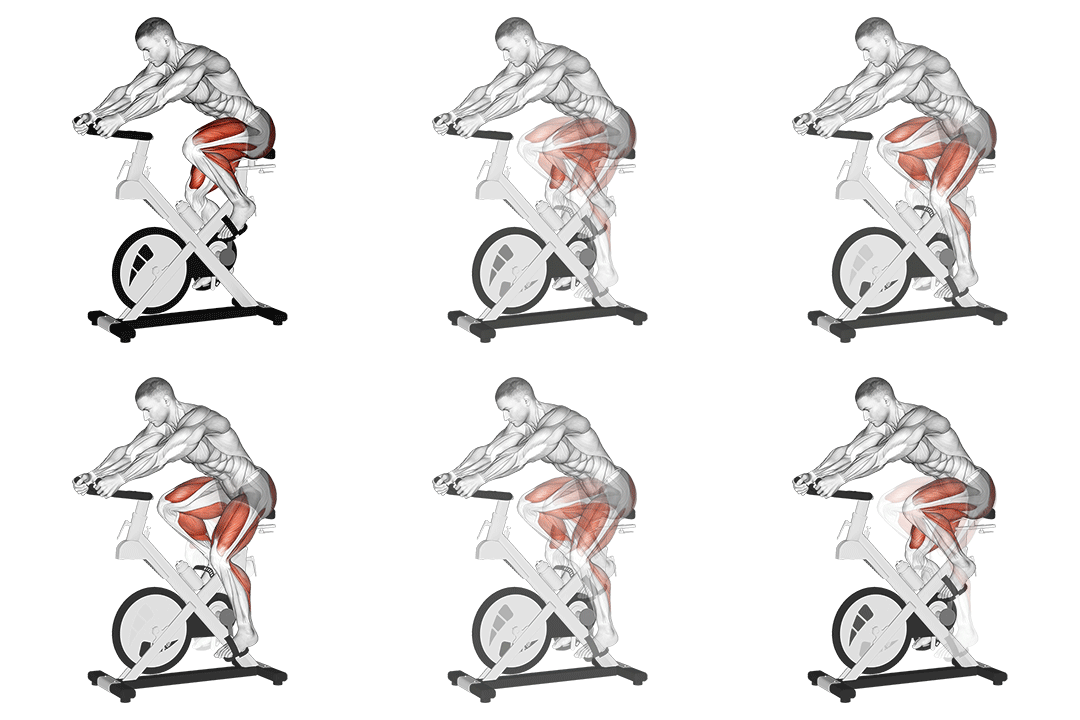
- Machine
- Difficulty
- Beginner
- Type
- Compound
Secondary muscles: Calves, Glutes, Hamstrings
How to perform Recumbent Bike
- To begin, seat yourself on the bike and adjust the seat to your height.
- Select the desired option from the menu. You may have to start pedaling to turn it on. You can use the manual setting, or you can select a program to use. Typically, you can enter your age and weight to estimate the amount of calories burned during exercise. The level of resistance can be changed throughout the workout. The handles can be used to monitor your heart rate to help you stay at an appropriate intensity.
- Recumbent bikes offer convenience, cardiovascular benefits, and have less impact than other activities. A 150 lb person will burn about 230 calories cycling at a moderate rate for 30 minutes, compared to 450 calories or more running.
Ranked Recumbent Bike Alternatives
10 substitutes, ranked by how closely each one matches the Recumbent Bike on movement pattern, muscles worked, equipment and body position. The higher the score, the less you change. Open "How to perform this exercise" on a card for the steps; every card title links to that exercise's own alternatives page. Harder versions are tagged as progressions and kept out of the top spot even when they score higher.
Best match 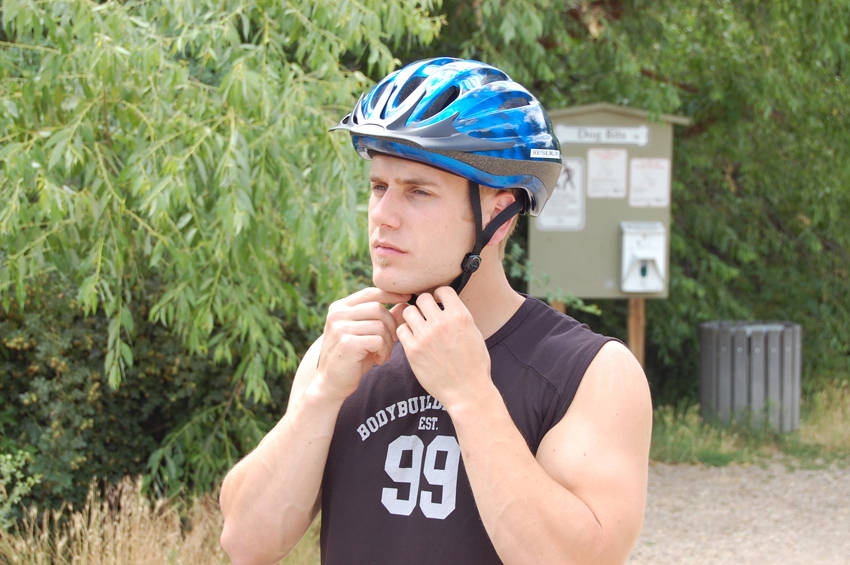
1. Bicycling
88% match- Quads
- Other
- Intermediate
- Compound
Pick this when you want a harder version that works the quads one side at a time.
How to perform this exercise
- To begin, seat yourself on the bike and adjust the seat to your height.
Sets and reps: Work for 30 to 60 seconds, rest as long as you worked, and repeat 6 to 10 times.
Why this matches
- Movement: cycling, the same as the Recumbent Bike
- Primary muscle: quads, the same as the Recumbent Bike
- Equipment: a cardio machine, the same as the Recumbent Bike
- Body position: seated, the same as the Recumbent Bike
Progression
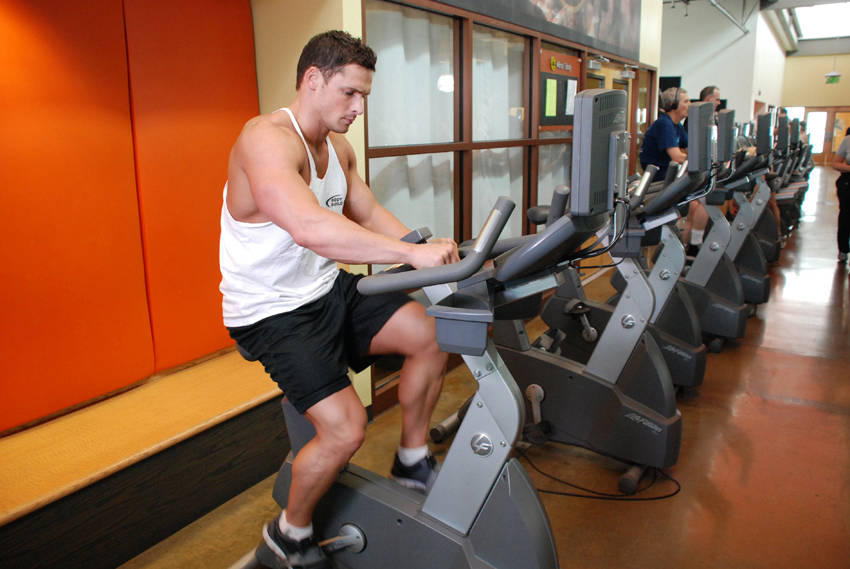
2. Stationary Bicycling
88% match- Quads
- Machine
- Intermediate
- Compound
How to perform this exercise
- To begin, seat yourself on the bike and adjust the seat to your height.
- Select the desired option from the menu. You may have to start pedaling to turn it on. You can use the manual setting, or you can select a program to use. Typically, you can enter your age and weight to estimate the amount of calories burned during exercise. The level of resistance can be changed throughout the workout. The handles can be used to monitor your heart rate to help you stay at an appropriate intensity.
Sets and reps: Work for 30 to 60 seconds, rest as long as you worked, and repeat 6 to 10 times.
Why this matches
- Movement: cycling, the same as the Recumbent Bike
- Primary muscle: quads, the same as the Recumbent Bike
- Equipment: a cardio machine, the same as the Recumbent Bike
- Body position: seated, the same as the Recumbent Bike
Progression
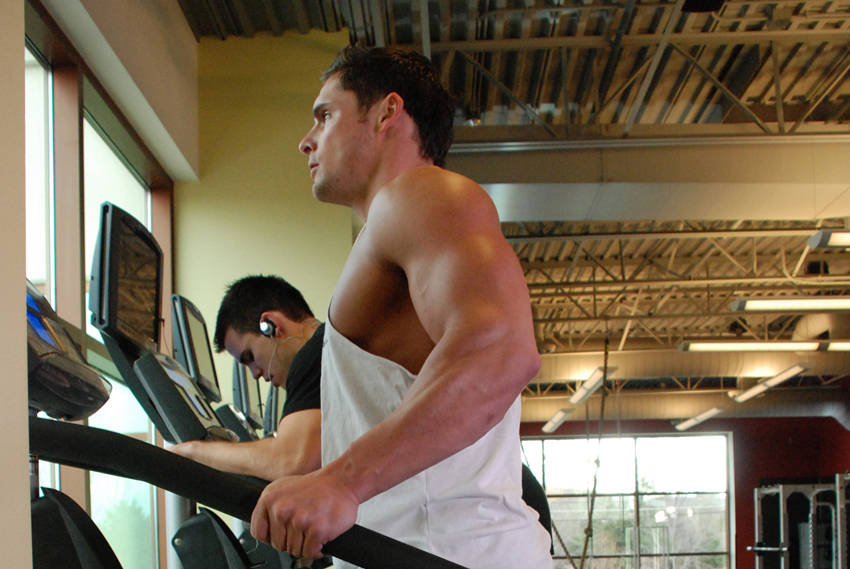
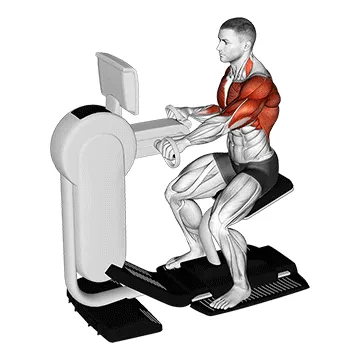
3. Step Mill
86% match- Quads
- Machine
- Beginner
- Compound
Pick this when you want a harder version that still works the quads.
How to perform this exercise
- To begin, step onto the stepmill and select the desired option from the menu. You can choose a manual setting, or you can select a program to run. Typically, you can enter your age and weight to estimate the amount of calories burned during exercise. Use caution so that you don't trip as you climb the stairs. It is recommended that you maintain your grip on the handles so that you don't fall.
- Stepmills offer convenience, cardiovascular benefits, and usually have less impact than running outside while offering a similar rate of calories burned. They are typically much harder than other cardio equipment. A 150 lb person will typically burn over 300 calories in 30 minutes, compared to about 175 calories walking.
Sets and reps: Work for 30 to 60 seconds, rest as long as you worked, and repeat 6 to 10 times.
Why this matches
- Primary muscle: quads, the same as the Recumbent Bike
- Equipment: a cardio machine, the same as the Recumbent Bike
- Body position: standing, not seated
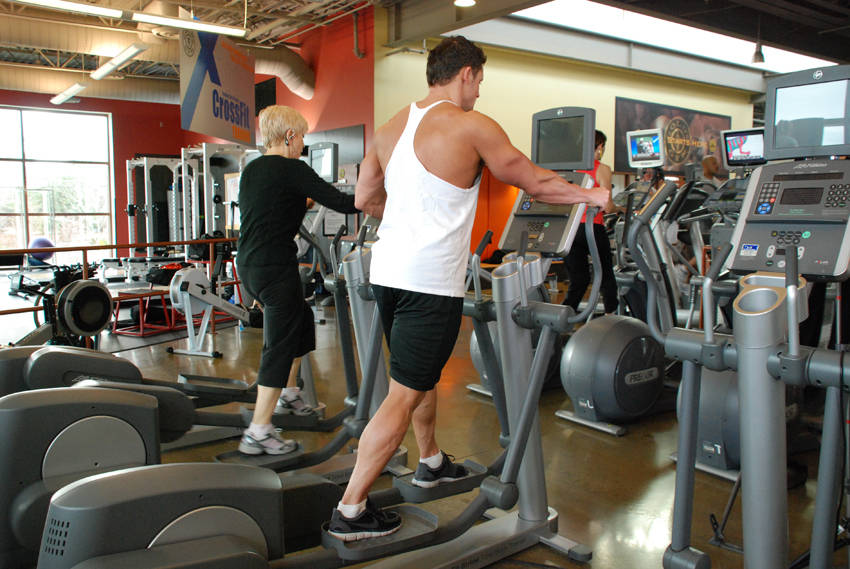
4. Elliptical Trainer
82% match- Quads
- Machine
- Beginner
- Compound
The same equipment, done standing instead.
How to perform this exercise
- To begin, step onto the elliptical and select the desired option from the menu. Most ellipticals have a manual setting, or you can select a program to run. Typically, you can enter your age and weight to estimate the amount of calories burned during exercise. Elevation can be adjusted to change the intensity of the workout.
- The handles can be used to monitor your heart rate to help you stay at an appropriate intensity.
Sets and reps: Work for 30 to 60 seconds, rest as long as you worked, and repeat 6 to 10 times.
Why this matches
- Primary muscle: quads, the same as the Recumbent Bike
- Equipment: a cardio machine, the same as the Recumbent Bike
- Body position: standing, not seated
Progression
5. Stairmaster
82% match- Quads
- Machine
- Beginner
- Compound
How to perform this exercise
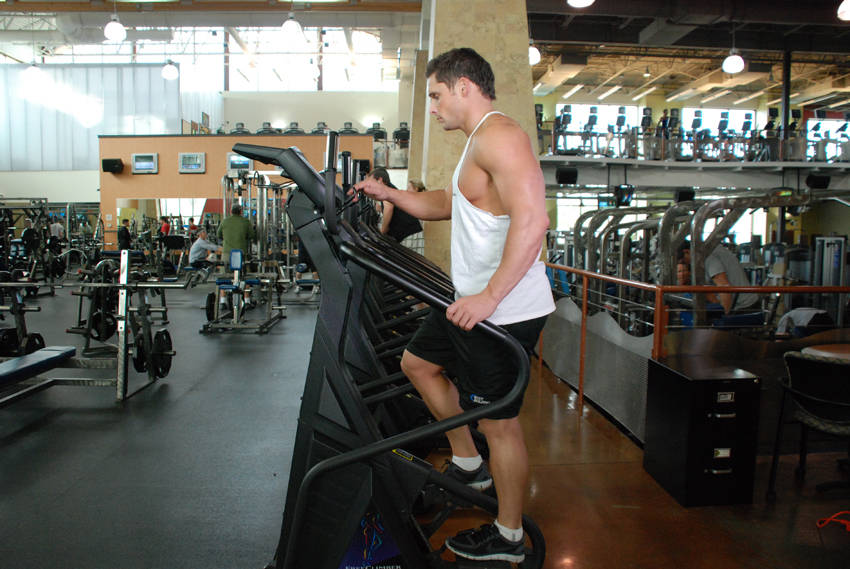
- To begin, step onto the stairmaster and select the desired option from the menu. You can choose a manual setting, or you can select a program to run. Typically, you can enter your age and weight to estimate the amount of calories burned during exercise.
- Pump your legs up and down in an established rhythm, driving the pedals down but not all the way to the floor. It is recommended that you maintain your grip on the handles so that you don't fall. The handles can be used to monitor your heart rate to help you stay at an appropriate intensity.
- Stairmasters offer convenience, cardiovascular benefits, and usually have less impact than running outside. They are typically much harder than other cardio equipment. A 150 lb person will typically burn over 300 calories in 30 minutes, compared to about 175 calories walking.
Sets and reps: Work for 30 to 60 seconds, rest as long as you worked, and repeat 6 to 10 times.
Why this matches
- Primary muscle: quads, the same as the Recumbent Bike
- Equipment: a cardio machine, the same as the Recumbent Bike
- Body position: standing, not seated
Progression
6. Stationary Rowing
80% match- Quads
- Machine
- Intermediate
- Compound
How to perform this exercise
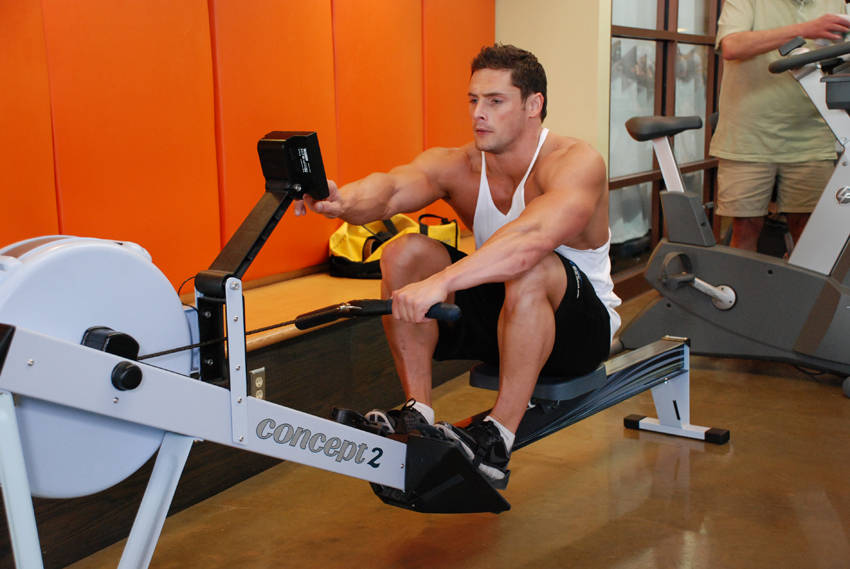
- To begin, seat yourself on the rower. Make sure that your heels are resting comfortably against the base of the foot pedals and that the straps are secured. Select the program that you wish to use, if applicable. Sit up straight and bend forward at the hips.
- There are three phases of movement when using a rower. The first phase is when you come forward on the rower. Your knees are bent and against your chest. Your upper body is leaning slightly forward while still maintaining good posture. Next, push against the foot pedals and extend your legs while bringing your hands to your upper abdominal area, squeezing your shoulders back as you do so. To avoid straining your back, use primarily your leg and hip muscles.
- The recovery phase simply involves straightening your arms, bending the knees, and bringing your body forward again as you transition back into the first phase.
Sets and reps: Work for 30 to 60 seconds, rest as long as you worked, and repeat 6 to 10 times.
Why this matches
- Primary muscle: quads, the same as the Recumbent Bike
- Equipment: a cardio machine, the same as the Recumbent Bike
- Body position: seated, the same as the Recumbent Bike
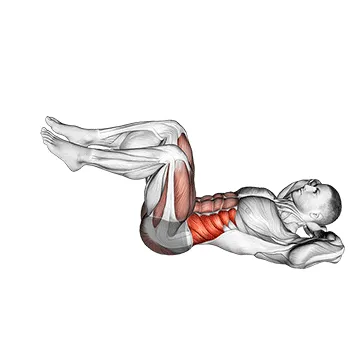
7. Air Bike
76% match- Abs
- Bodyweight
- Intermediate
- Compound
A looser match: it works the abs rather than the quads.
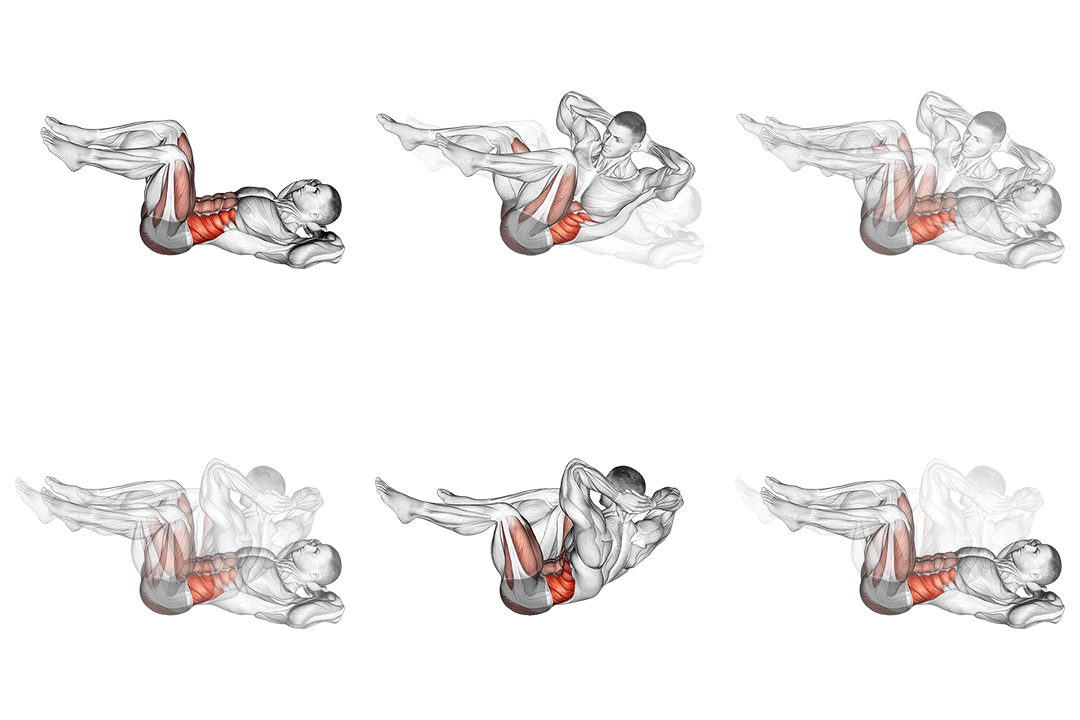
How to perform this exercise
- Lie flat on your back with your hands placed behind your head.
- Lift your legs off the ground and bend your knees at a 90-degree angle.
- Bring your right elbow towards your left knee while simultaneously straightening your right leg.
- Return to the starting position and repeat the movement on the opposite side, bringing your left elbow towards your right knee while straightening your left leg.
- Continue alternating sides in a pedaling motion for the desired number of repetitions.
Sets and reps: Work for 30 to 60 seconds, rest as long as you worked, and repeat 6 to 10 times.
Why this matches
- Movement: cycling, the same as the Recumbent Bike
- Primary muscle: abs, not quads
- Equipment: a cardio machine, the same as the Recumbent Bike
- Body position: seated, the same as the Recumbent Bike
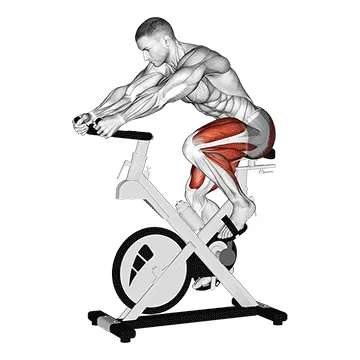
8. Stationary Bike Run
75% match- Cardio
- Other
- Intermediate
- Compound
How to perform this exercise
- Adjust the seat height and position to ensure proper alignment.
- Place your feet on the pedals and secure them with the straps if available.
- Start pedaling at a comfortable pace.
- Maintain a steady rhythm and increase the resistance as desired.
- Engage your core muscles to maintain stability and proper posture.
- Continue pedaling for the desired duration of your workout.
- Gradually decrease the resistance and slow down before coming to a complete stop.
- Stretch your legs and cool down after the workout.
Sets and reps: Work for 30 to 60 seconds, rest as long as you worked, and repeat 6 to 10 times.
Why this matches
- Movement: cycling, the same as the Recumbent Bike
- Primary muscle: your heart and lungs, not quads
- Equipment: a cardio machine, the same as the Recumbent Bike
- Body position: seated, the same as the Recumbent Bike
Progression
9. Treadmill Running
72% match- Quads
- Machine
- Beginner
- Compound
How to perform this exercise
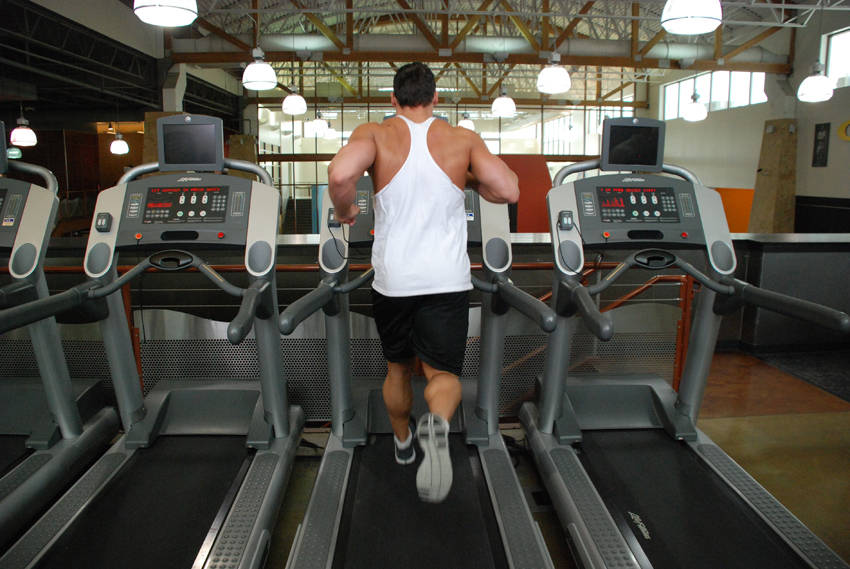
- To begin, step onto the treadmill and select the desired option from the menu. Most treadmills have a manual setting, or you can select a program to run. Typically, you can enter your age and weight to estimate the amount of calories burned during exercise. Elevation can be adjusted to change the intensity of the workout.
- Treadmills offer convenience, cardiovascular benefits, and usually have less impact than running outside. A 150 lb person will burn over 450 calories running 8 miles per hour for 30 minutes. Maintain proper posture as you run, and only hold onto the handles when necessary, such as when dismounting or checking your heart rate.
Sets and reps: Work for 30 to 60 seconds, rest as long as you worked, and repeat 6 to 10 times.
Why this matches
- Primary muscle: quads, the same as the Recumbent Bike
- Equipment: a cardio machine, the same as the Recumbent Bike
- Body position: standing, not seated
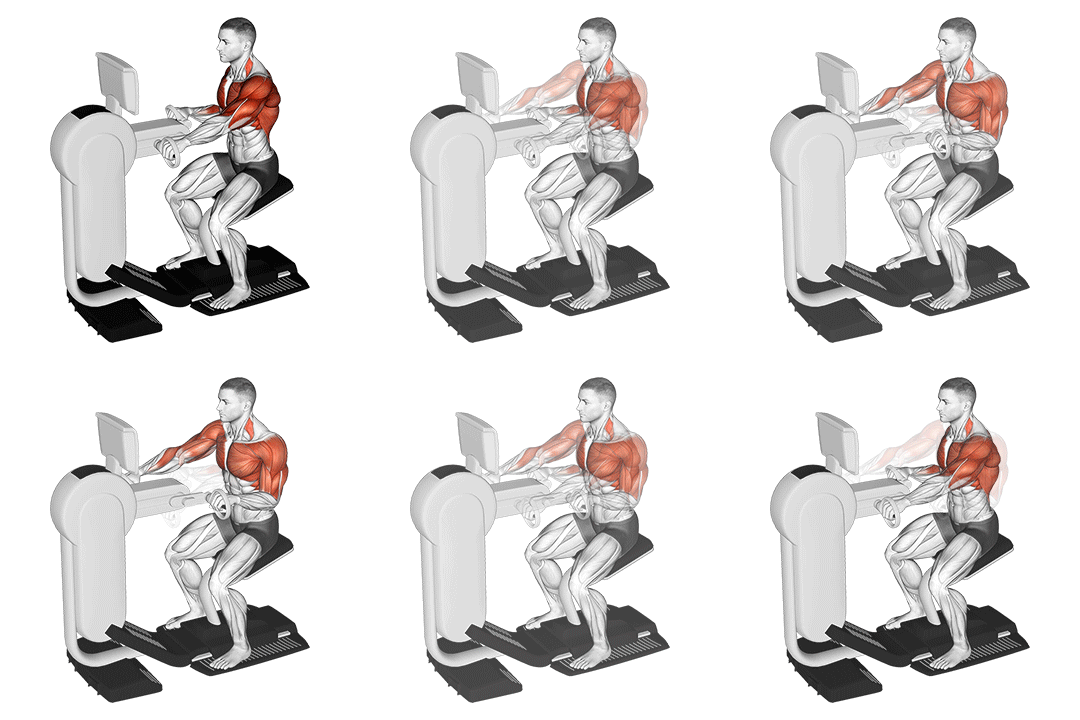
10. Hands Bike
69% match- Pectorals
- Machine
- Beginner
- Isolation
How to perform this exercise
- Adjust the seat height and handlebar position to a comfortable level.
- Sit on the ergometer with your back straight and feet on the pedals.
- Grasp the handles with your hands and position your arms at a 90-degree angle.
- Start pedaling with your hands, pushing and pulling the handles in a controlled motion.
- Continue pedaling for the desired duration or number of repetitions.
Sets and reps: Work for 30 to 60 seconds, rest as long as you worked, and repeat 6 to 10 times.
Why this matches
- Movement: cycling, the same as the Recumbent Bike
- Primary muscle: pectorals, not quads
- Equipment: a cardio machine, the same as the Recumbent Bike
- Body position: seated, the same as the Recumbent Bike
Why You Might Need a Recumbent Bike Alternative
A Recumbent Bike is often the machine people cannot get to: a small gym has one or two, and they are taken during busy hours, or a home setup has no room for one. Others want a harder session than they get from it. Bicycling and Stationary Bicycling keep the same seated pedaling, the second with the same menu of programs and resistance the Recumbent Bike uses. Step Mill, Elliptical Trainer and Stairmaster move that same leg drive onto your feet instead of a seat, and Step Mill and Stairmaster describe themselves as the harder push of the three. Stationary Rowing pulls your back and arms into the work too, and Treadmill Running trades pedaling for a running stride.
How to Choose the Right Recumbent Bike Substitute
If you would rather ride a bike than set up a machine, Bicycling keeps the same seated pedaling with no menu: adjust the seat to your height and go. If you would rather keep that dial and stay seated, Stationary Bicycling matches the Recumbent Bike's own setup almost exactly. Prefer being on your feet? Elliptical Trainer keeps a similarly simple menu but has you standing, while Step Mill and Stairmaster step up the intensity of that same conditioning work. If you are just starting out, Elliptical Trainer and Treadmill Running follow the same step on and go setup as the Recumbent Bike, while Stationary Rowing asks you to learn a three part pulling motion with your back and arms as well as your legs.
Recumbent Bike FAQ
Which Recumbent Bike alternative feels most similar?
Bicycling is the closest match. It keeps the same seated pedaling as the Recumbent Bike, so your legs do the same work. The one real difference is the setup: Bicycling skips the menu of programs and resistance settings the Recumbent Bike uses, so you just sit down and start pedaling.
Which Recumbent Bike alternatives keep you standing?
Step Mill, Elliptical Trainer and Stairmaster all move that same conditioning work onto your feet instead of a seat. Elliptical Trainer is the gentler of the three, while Step Mill and Stairmaster are built for a harder push. All three keep the work in your legs, just with you standing on them.
Which alternative is the simplest way to start?
Stationary Bicycling is the easiest place to start: the same seat, the same menu and the same resistance settings as the Recumbent Bike. Elliptical Trainer and Treadmill Running are just as quick, since you step on, pick a program and go. Stationary Rowing takes longer to learn since it asks you to coordinate your legs, back and arms through a three part pulling motion, so save it for once you are comfortable on a bike or a machine.
Do all these alternatives train the same muscles as the Recumbent Bike?
Most do, working your legs the same way the Recumbent Bike does. Air Bike is the loosest match despite the name: it is a floor exercise where you lie on your back and bring each elbow to the opposite knee, training your abs instead. Stationary Bike Run is seated pedaling against a resistance you set, working your legs the same way. Hands Bike has you pedal with your hands, so your arms and shoulders do the work instead.
Find Alternatives for Any Exercise
Search the exercise database and filter the ranked substitutes by the equipment you own.
Similarity scores compare exercise metadata such as movement pattern, muscles, equipment and body position. They are not a safety rating or a check that you own the equipment. Learn about our methodology