

10 Best Smith Incline Shoulder Raises Alternatives for When You Don't Have a Smith Machine
Smith Incline Shoulder Raises are done standing with a Smith machine. Ranked closest by our scoring: the Incline Scapula Push Up and the Scapula Push-up.
Updated Ranked by our 12-factor similarity model How it works
Original Exercise: Smith Incline Shoulder Raises
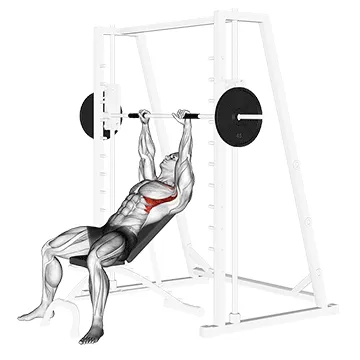
- Primary muscle
- Serratus
- Equipment
- Smith-machine
- Difficulty
- Beginner
- Type
- Isolation
Secondary muscles: Deltoids, Trapezius
How to perform Smith Incline Shoulder Raises
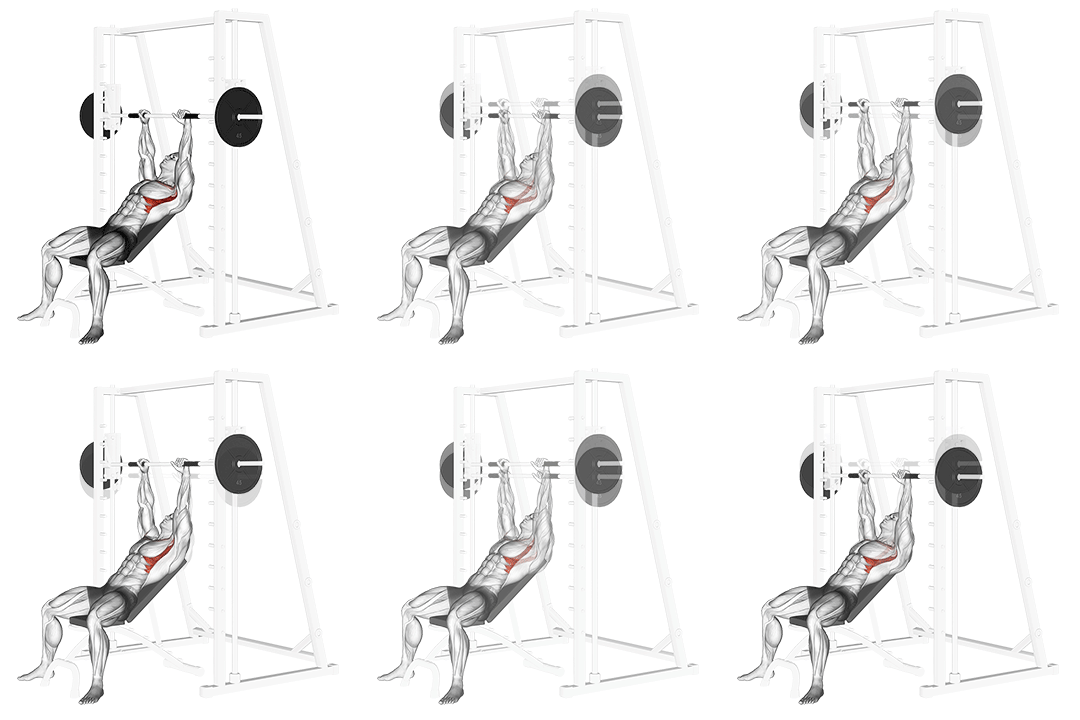
- Adjust the smith machine to an incline position.
- Stand facing the machine with your feet shoulder-width apart.
- Grasp the bar with an overhand grip, slightly wider than shoulder-width apart.
- Keep your back straight and core engaged.
- Raise the barbell up towards the ceiling, leading with your elbows.
- Pause for a moment at the top, then slowly lower the barbell back down to the starting position.
- Repeat for the desired number of repetitions.
Ranked Smith Incline Shoulder Raises Alternatives
10 substitutes, ranked by how closely each one matches Smith Incline Shoulder Raises on movement pattern, muscles worked, equipment and body position. The higher the score, the less you change. Open "How to perform this exercise" on a card for the steps; every card title links to that exercise's own alternatives page.
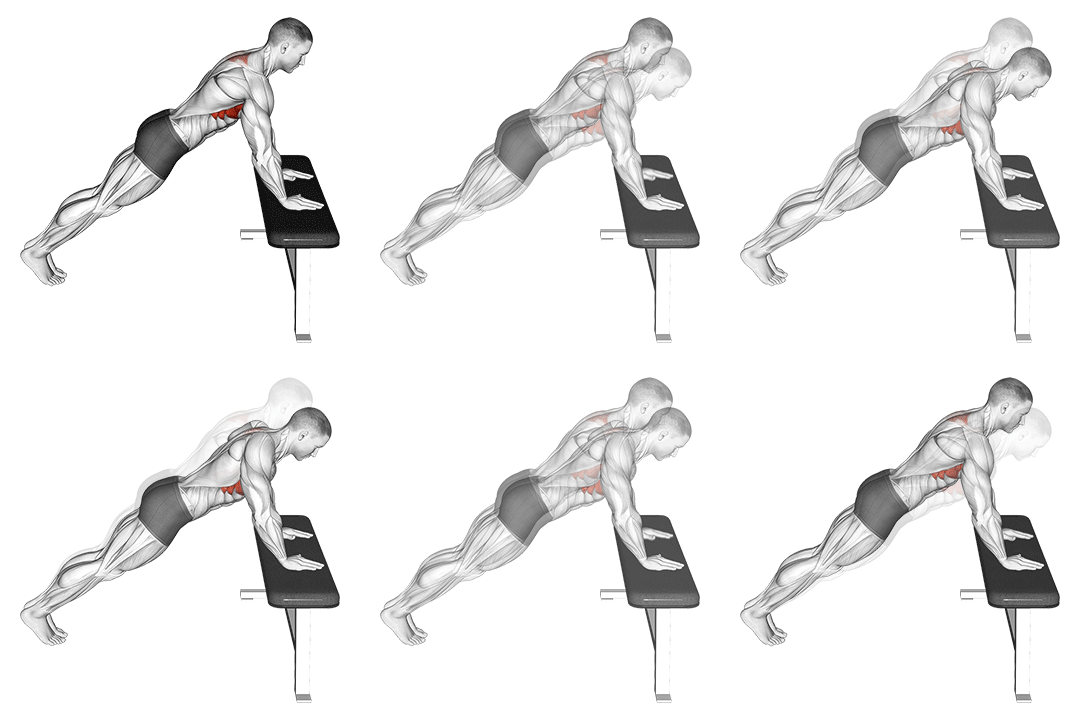
Best match 1. Incline Scapula Push Up
64% match- Serratus
- Bodyweight
- Beginner
- Isolation
Use this when you have nothing to train with, because it works the serratus with bodyweight alone.
How to perform this exercise
- Set up an incline bench at a 45-degree angle.
- Place your hands on the bench slightly wider than shoulder-width apart.
- Position your feet on the ground, hip-width apart.
- Lower your chest towards the bench, keeping your elbows tucked in.
- As you lower, retract your shoulder blades, squeezing your scapulae together.
- Push through your palms to extend your arms and return to the starting position.
- Repeat for the desired number of repetitions.
Sets and reps: 3 sets of 8 to 12 reps, and add reps before you add load.
Why this matches
- Primary muscle: serratus, the same as Smith Incline Shoulder Raises
- Equipment: bodyweight only, not a machine
- Body position: standing, the same as Smith Incline Shoulder Raises
- Balance: harder to stay steady on than Smith Incline Shoulder Raises
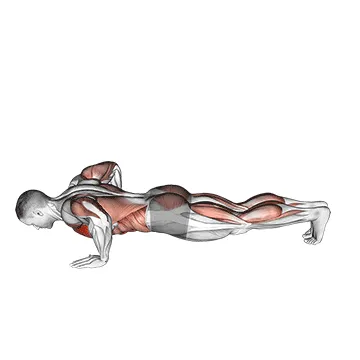
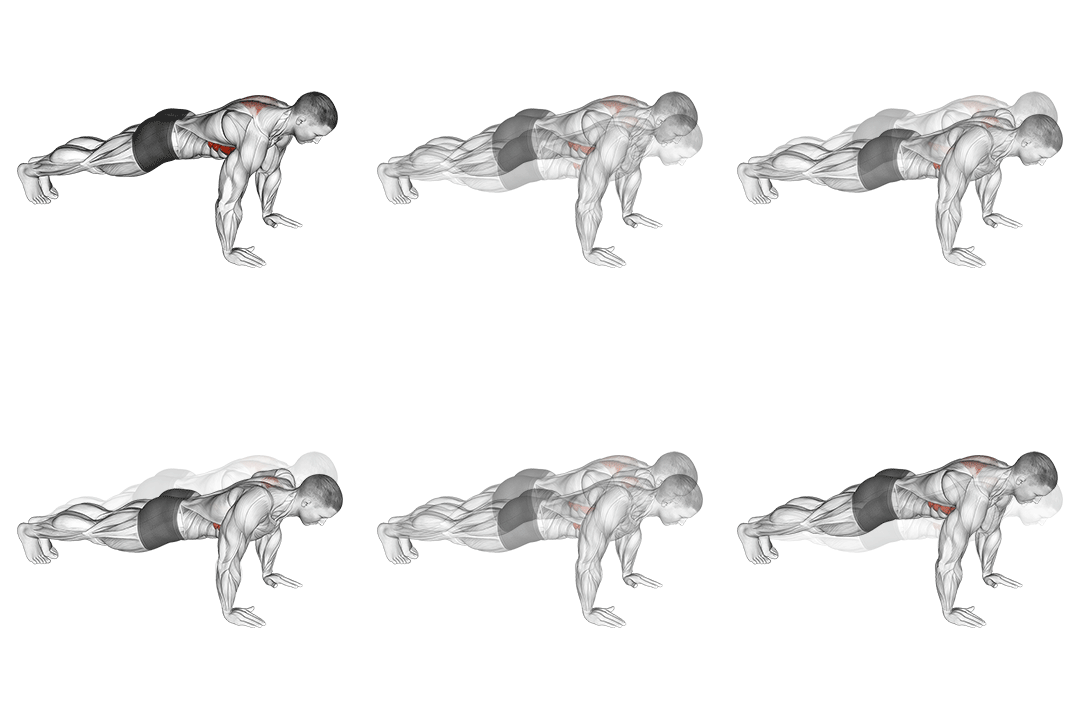
2. Scapula Push-up
50% match- Serratus
- Bodyweight
- Beginner
- Isolation
How to perform this exercise
- Start in a high plank position with your hands directly under your shoulders and your body in a straight line.
- Lower your chest towards the ground, keeping your elbows close to your body.
- As you lower, squeeze your shoulder blades together and push your chest forward.
- Pause for a moment at the bottom, then push back up to the starting position.
- Repeat for the desired number of repetitions.
Sets and reps: 3 sets of 8 to 12 reps, and add reps before you add load.
Why this matches
- Primary muscle: serratus, the same as Smith Incline Shoulder Raises
- Equipment: bodyweight only, not a machine
- Body position: lying face down, not standing
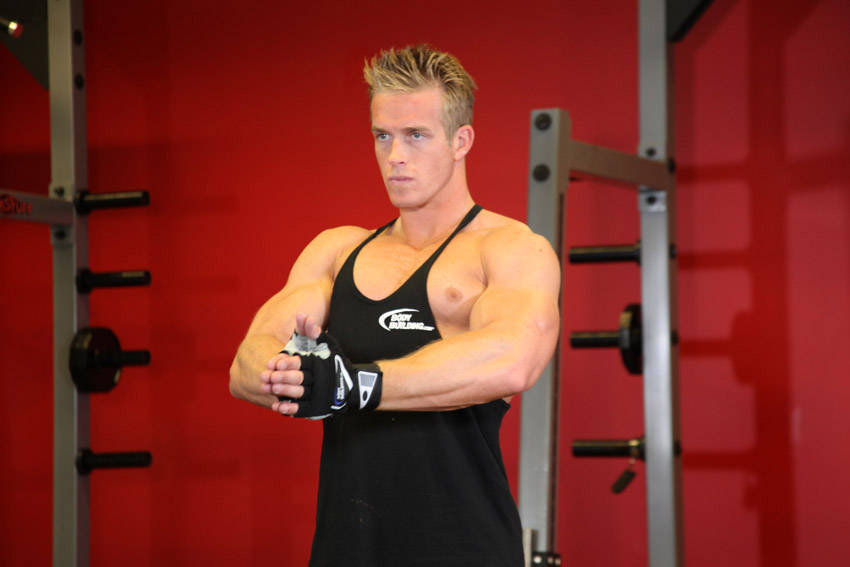
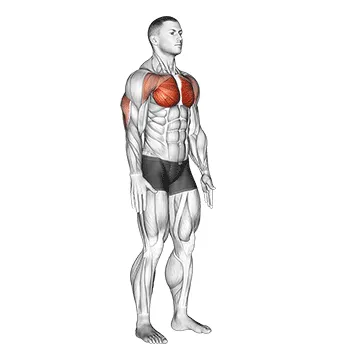
3. Isometric Chest Squeezes
46% match- Pectorals
- Bodyweight
- Beginner
- Isolation
A looser match: it works the pectorals rather than the serratus.
How to perform this exercise
- While either seating or standing, bend your arms at a 90-degree angle and place the palms of your hands together in front of your chest. Tip: Your hands should be open with the palms together and fingers facing forward (perpendicular to your torso).
- Push both hands against each other as you contract your chest. Start with slow tension and increase slowly. Keep breathing normally as you execute this contraction.
- Hold for the recommended number of seconds.
- Now release the tension slowly.
- Rest for the recommended amount of time and repeat.
Sets and reps: Hold for 20 to 30 seconds, 3 sets.
Why this matches
- Primary muscle: pectorals, not serratus
- Equipment: bodyweight only, not a machine
- Body position: standing, the same as Smith Incline Shoulder Raises
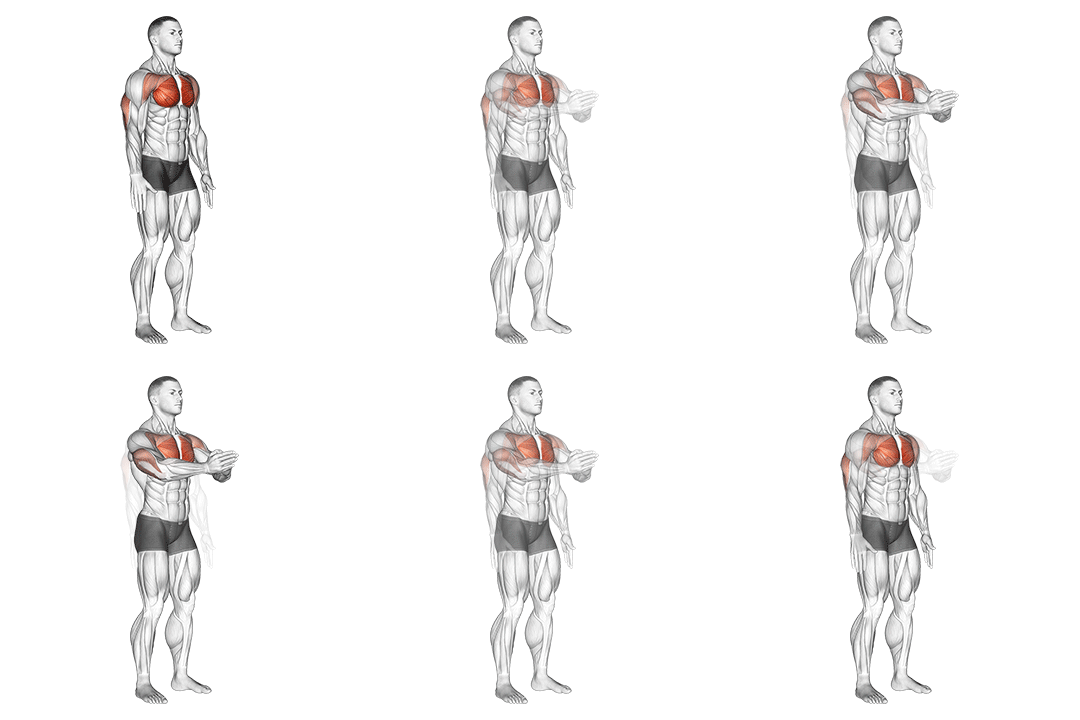
4. Isometric Chest Squeeze
46% match- Pectorals
- Bodyweight
- Beginner
- Isolation
How to perform this exercise
- Stand with your feet shoulder-width apart and your knees slightly bent.
- Extend your arms straight out in front of you, parallel to the ground, with your palms facing each other.
- Squeeze your chest muscles together as hard as you can, while keeping your arms straight.
- Hold this position for a few seconds, focusing on contracting your chest muscles.
- Release the squeeze and relax your chest muscles.
- Repeat for the desired number of repetitions.
Sets and reps: 3 sets of 8 to 12 reps, and add reps before you add load.
Why this matches
- Primary muscle: pectorals, not serratus
- Equipment: bodyweight only, not a machine
- Body position: standing, the same as Smith Incline Shoulder Raises
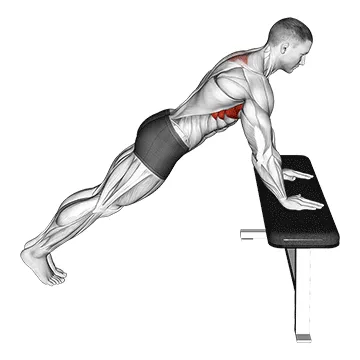
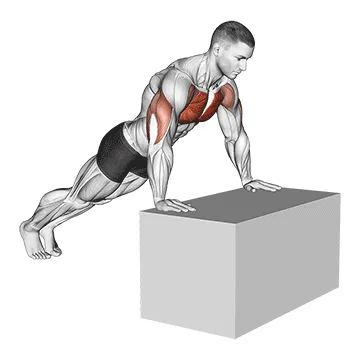
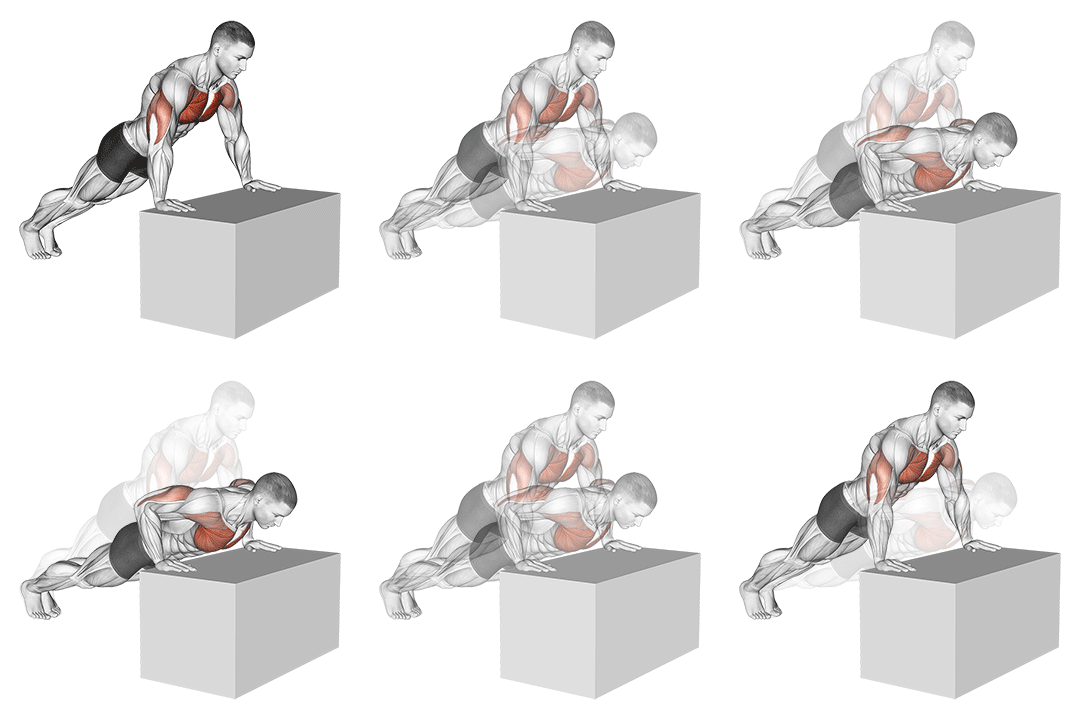
5. Incline Push-up (On Box)
44% match- Pectorals
- Bodyweight
- Beginner
- Compound
How to perform this exercise
- Place your hands on the edge of a box or elevated surface, slightly wider than shoulder-width apart.
- Extend your legs behind you, resting on the balls of your feet, creating a straight line from your head to your heels.
- Lower your chest towards the box by bending your elbows, keeping your body in a straight line.
- Pause for a moment at the bottom, then push yourself back up to the starting position by straightening your arms.
- Repeat for the desired number of repetitions.
Sets and reps: 3 sets of 8 to 12 reps, and add reps before you add load.
Why this matches
- Primary muscle: pectorals, not serratus
- Equipment: bodyweight only, not a machine
- Body position: standing, the same as Smith Incline Shoulder Raises
- Balance: harder to stay steady on than Smith Incline Shoulder Raises
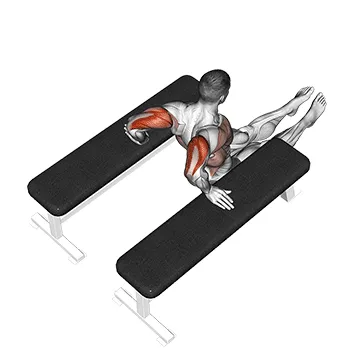
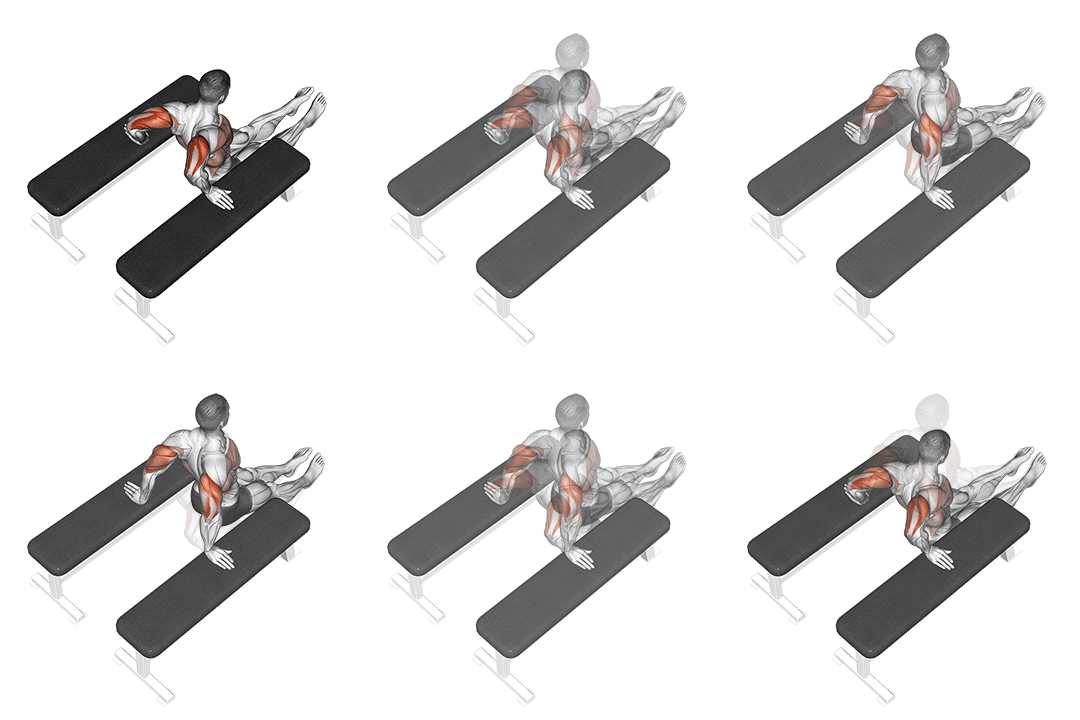
6. Triceps Dip (Between Benches)
43% match- Triceps
- Bodyweight
- Intermediate
- Compound
A looser match: it works the triceps rather than the serratus.
How to perform this exercise
- Sit on a bench with your hands gripping the edge of the bench, fingers pointing forward.
- Slide your butt off the bench, supporting your weight with your hands.
- Bend your elbows and lower your body towards the ground, keeping your back close to the bench.
- Pause for a moment at the bottom, then push yourself back up to the starting position.
- Repeat for the desired number of repetitions.
Sets and reps: 3 or 4 sets of 6 to 10 reps.
Why this matches
- Primary muscle: triceps, not serratus
- Equipment: bodyweight only, not a machine
- Body position: standing, the same as Smith Incline Shoulder Raises
- Balance: harder to stay steady on than Smith Incline Shoulder Raises
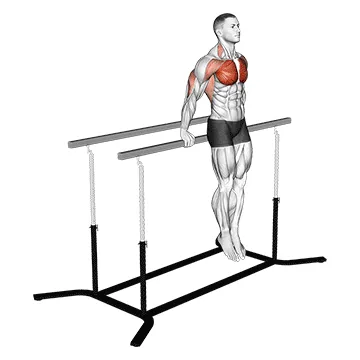
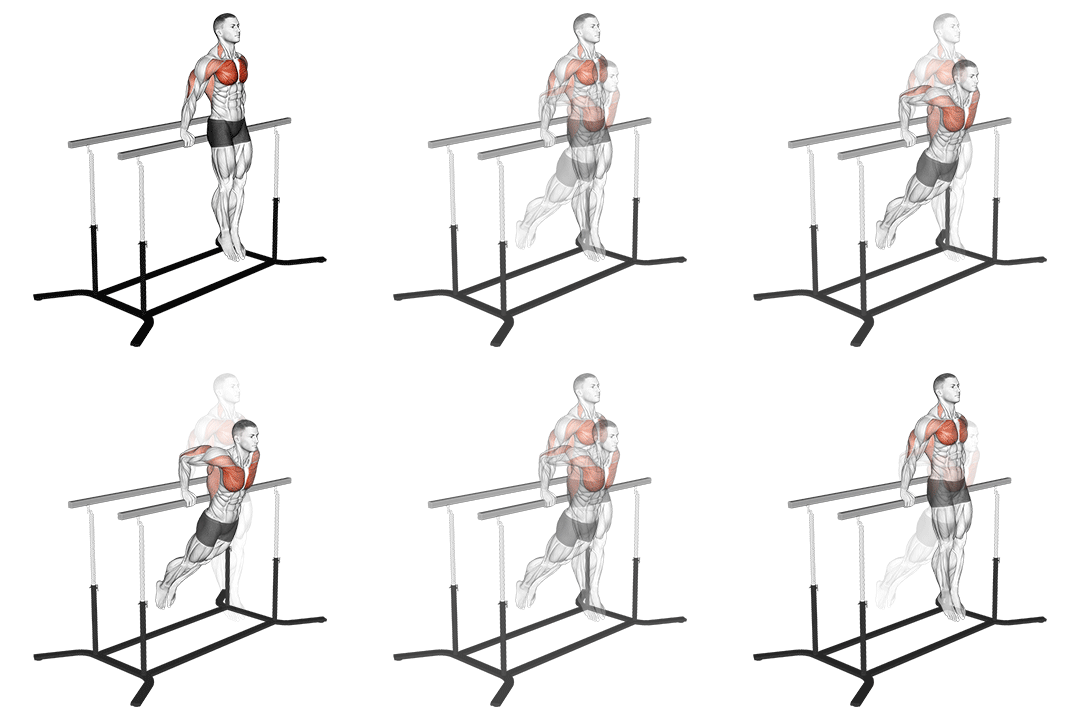
7. Korean Dips
43% match- Pectorals
- Bodyweight
- Advanced
- Compound
How to perform this exercise
- Position yourself between two parallel bars with your arms extended and supporting your body weight.
- Lower your body by bending your elbows until your upper arms are parallel to the ground.
- Pause for a moment, then push yourself back up to the starting position by straightening your arms.
- Repeat for the desired number of repetitions.
Sets and reps: 3 or 4 sets of 6 to 10 reps.
Why this matches
- Primary muscle: pectorals, not serratus
- Equipment: bodyweight only, not a machine
- Body position: standing, the same as Smith Incline Shoulder Raises
- Balance: harder to stay steady on than Smith Incline Shoulder Raises
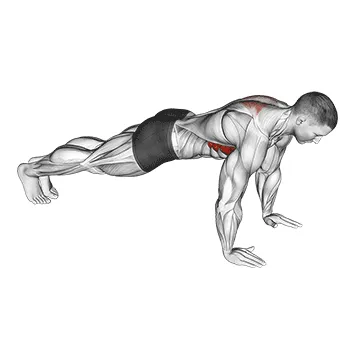
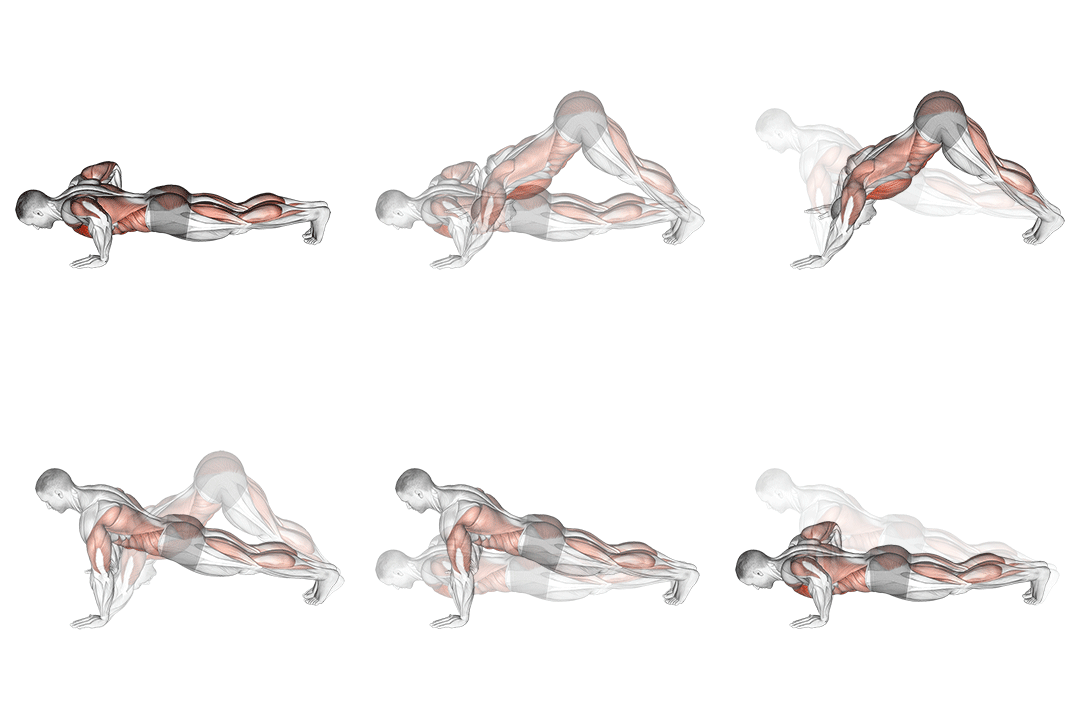
8. Modified Hindu Push-up
42% match- Pectorals
- Bodyweight
- Intermediate
- Compound
How to perform this exercise
- Start in a push-up position with your hands slightly wider than shoulder-width apart and your feet hip-width apart.
- Lower your body towards the ground, bending your elbows and keeping your core engaged.
- As you lower your body, shift your weight back and lift your hips up towards the ceiling, creating an inverted V shape with your body.
- Continue to lower your body until your chest is just above the ground, then reverse the movement, pushing your hips back down and extending your arms to return to the starting position.
- Repeat for the desired number of repetitions.
Sets and reps: 3 or 4 sets of 6 to 10 reps.
Why this matches
- Primary muscle: pectorals, not serratus
- Equipment: bodyweight only, not a machine
- Body position: standing, the same as Smith Incline Shoulder Raises
- Balance: harder to stay steady on than Smith Incline Shoulder Raises
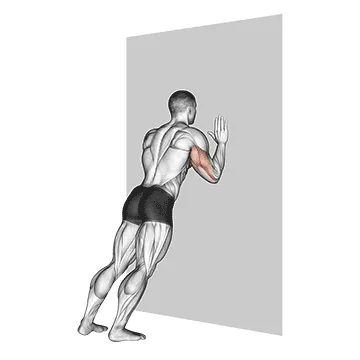
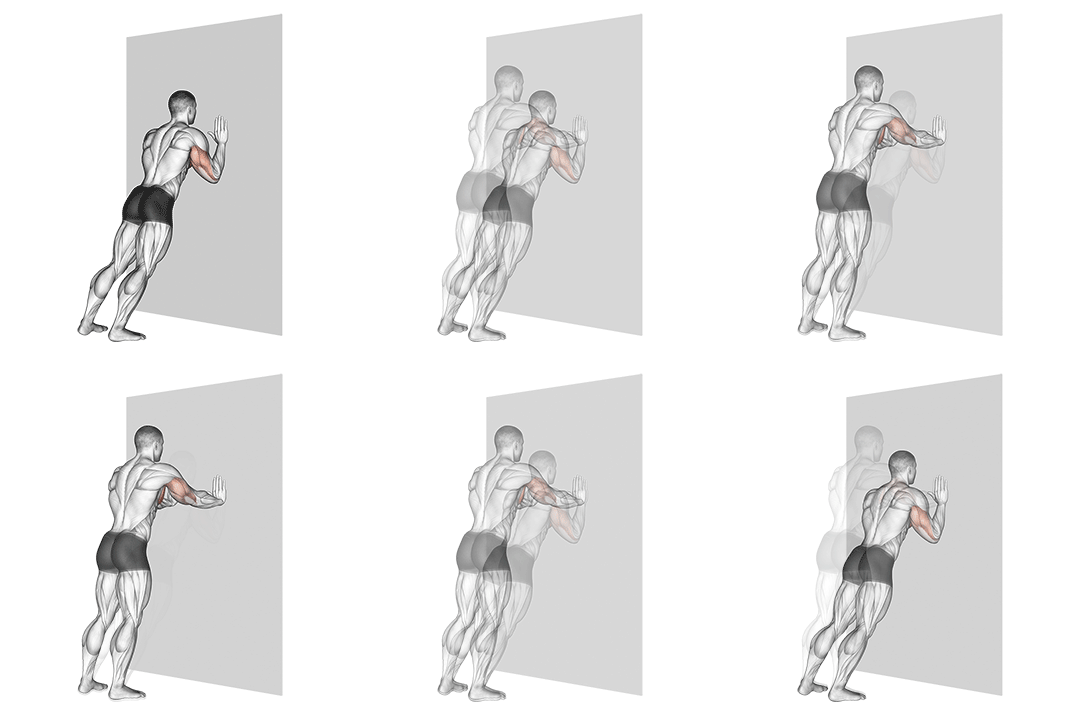
9. Push-up (Wall)
41% match- Pectorals
- Bodyweight
- Beginner
- Compound
How to perform this exercise
- Stand facing a wall, about arm's length away.
- Place your hands on the wall at shoulder height, slightly wider than shoulder-width apart.
- Step back a few feet, keeping your body straight and your feet hip-width apart.
- Bend your elbows and lower your chest towards the wall, keeping your body in a straight line.
- Push back up to the starting position, straightening your arms.
- Repeat for the desired number of repetitions.
Sets and reps: 3 sets of 8 to 12 reps, and add reps before you add load.
Why this matches
- Primary muscle: pectorals, not serratus
- Equipment: bodyweight only, not a machine
- Body position: standing, the same as Smith Incline Shoulder Raises
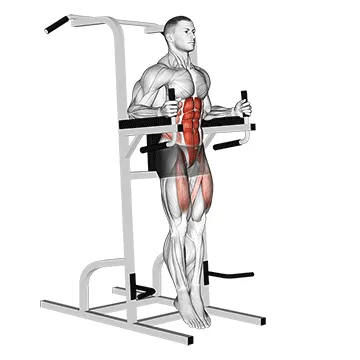
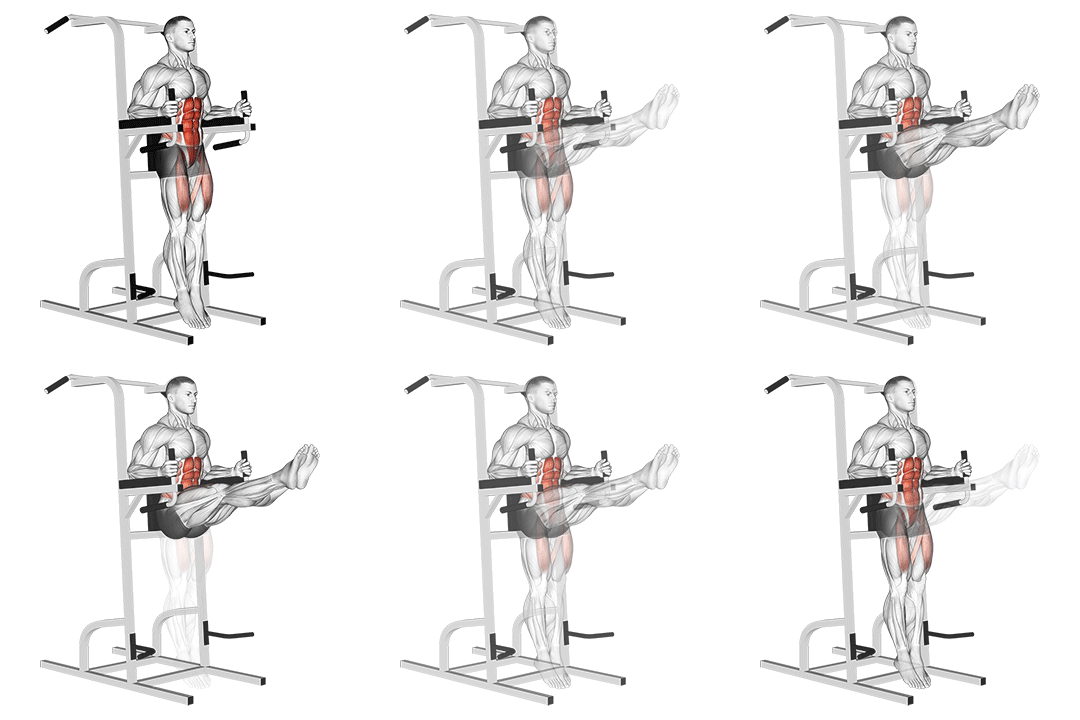
- Abs
- Bodyweight
- Intermediate
- Compound
How to perform this exercise
- Sit on the captain's chair with your back against the backrest and your forearms resting on the arm pads.
- Keep your upper body stable and your back straight.
- Engage your abs and lift your legs up in front of you, keeping them straight.
- Continue lifting until your legs are parallel to the ground or as high as you can comfortably go.
- Pause for a moment at the top, then slowly lower your legs back down to the starting position.
- Repeat for the desired number of repetitions.
Sets and reps: 3 or 4 sets of 6 to 10 reps.
Why this matches
- Primary muscle: abs, not serratus
- Equipment: bodyweight only, not a machine
- Body position: hanging, not standing
- Balance: harder to stay steady on than Smith Incline Shoulder Raises
Why You Might Need a Smith Incline Shoulder Raises Alternative
You might substitute Smith Incline Shoulder Raises because you lack a Smith machine, have shoulder pain with guided bar paths, or need greater scapular mobility and motor control. The serratus anterior responds to protraction and upward rotation of the scapula; poor technique or device constraints can let the upper trap dominate and reduce serratus activation. Use alternatives that free the scapula to protract and avoid excessive shoulder elevation. Technique cue: keep the glenohumeral joint stable, bend the elbow slightly, and emphasize isolated scapular push at end range to load the serratus without shrugging.
Smith Incline Shoulder Raises FAQ
What muscles does Smith Incline Shoulder Raises work?
It primarily targets the serratus anterior by driving scapular protraction and assisting upward rotation. The movement also recruits the anterior deltoid and pectoralis major as secondary movers while the upper traps must remain inactive to avoid compensation; cue: feel the shoulder blades push forward, not shrug up.
Can I build muscle without doing Smith Incline Shoulder Raises?
Yes. You can build serratus strength and hypertrophy with progressive overload via cables, dumbbells, or weighted punches and by increasing time under tension. Use controlled eccentrics, full protraction holds, and gradual load increases while avoiding shrugging to ensure targeted serratus recruitment.
Find Alternatives for Any Exercise
Search the exercise database and filter the ranked substitutes by the equipment you own.
Similarity scores compare exercise metadata such as movement pattern, muscles, equipment and body position. They are not a safety rating or a check that you own the equipment. Learn about our methodology