

10 Best Scapula Push-up Alternatives for Home & Rehab
The Scapula Push-up is done lying face down. Ranked closest by our scoring: the Incline Scapula Push Up. Six harder versions, among them the Push-up Plus and the Chest Tap Push-up, are listed below as progressions rather than swaps.
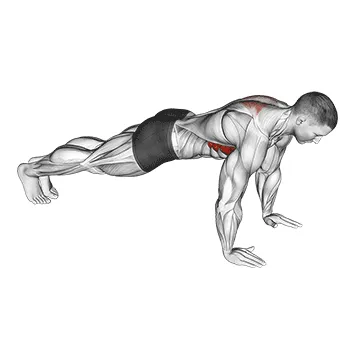
Each substitute is scored on movement pattern, muscles worked, equipment and body position. Read how we rank alternatives
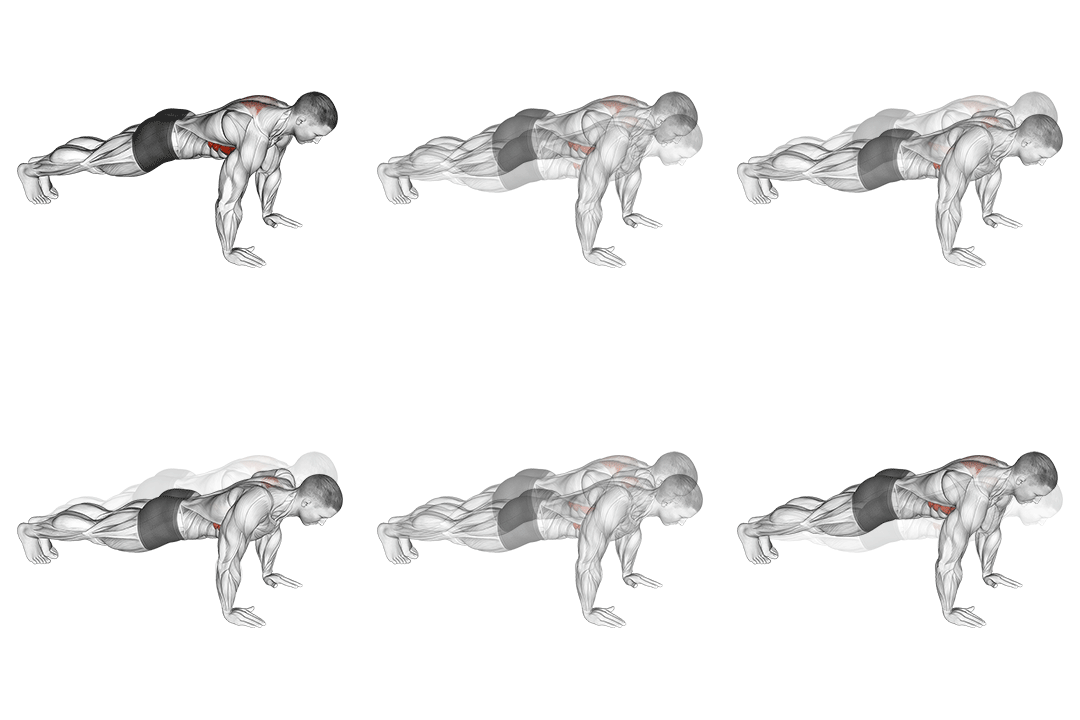
How to Do the Scapula Push-up
The steps for the Scapula Push-up itself, so you can judge how close each substitute below really is.
Serratus, with triceps, shoulders · Bodyweight · Beginner · Isolation
- Start in a high plank position with your hands directly under your shoulders and your body in a straight line.
- Lower your chest towards the ground, keeping your elbows close to your body.
- As you lower, squeeze your shoulder blades together and push your chest forward.
- Pause for a moment at the bottom, then push back up to the starting position.
- Repeat for the desired number of repetitions.
The 10 Best Scapula Push-up Alternatives
10 substitutes, ranked by how closely each one matches the Scapula Push-up on movement pattern, muscles worked, equipment and body position. The higher the score, the less you change. Cards with a "How to perform it" link open to show the steps; every card title links to that exercise's own alternatives page. Harder versions are tagged as progressions and kept out of the top spot even when they score higher.
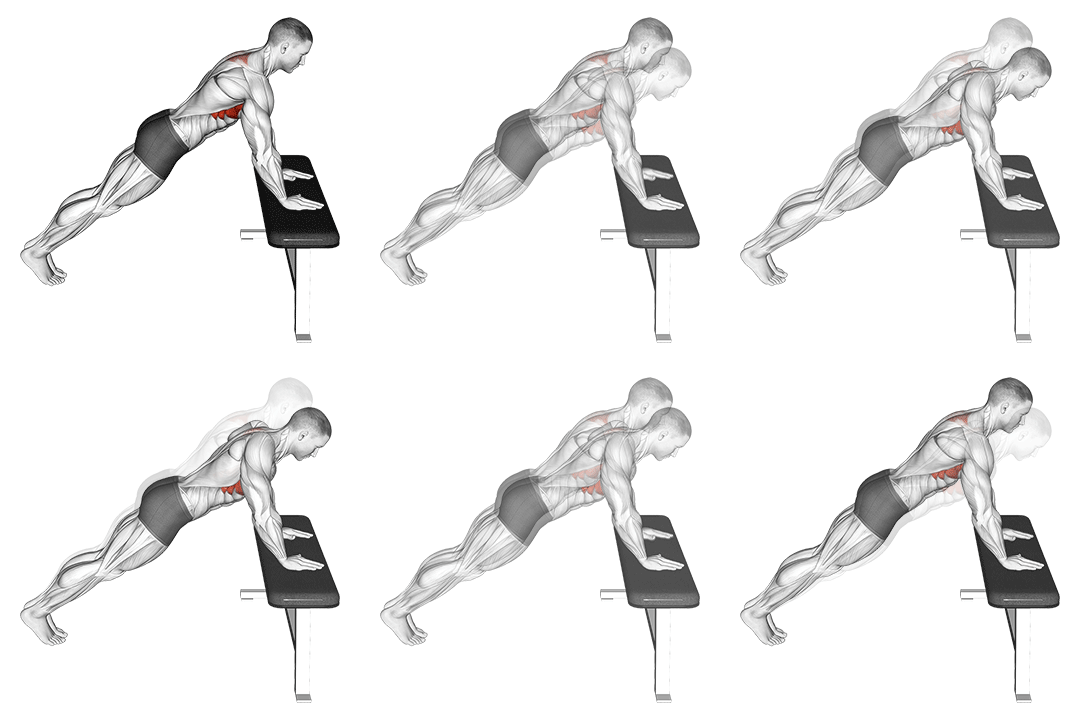
1. Incline Scapula Push Up
75% matchSerratus · Beginner · Isolation
Pick this when you want to work the serratus with less balance to manage.
- Bodyweight
How to perform it
- Set up an incline bench at a 45-degree angle.
- Place your hands on the bench slightly wider than shoulder-width apart.
- Position your feet on the ground, hip-width apart.
- Lower your chest towards the bench, keeping your elbows tucked in.
- As you lower, retract your shoulder blades, squeezing your scapulae together.
- Push through your palms to extend your arms and return to the starting position.
- Repeat for the desired number of repetitions.
Sets and reps: 3 sets of 8 to 12 reps, and add reps before you add load.
Why this matches
- Primary muscle: serratus, the same as the Scapula Push-up
- Equipment: bodyweight only, the same as the Scapula Push-up
- Body position: standing, not lying face down
- Balance: easier to stay steady on than the Scapula Push-up
Progression
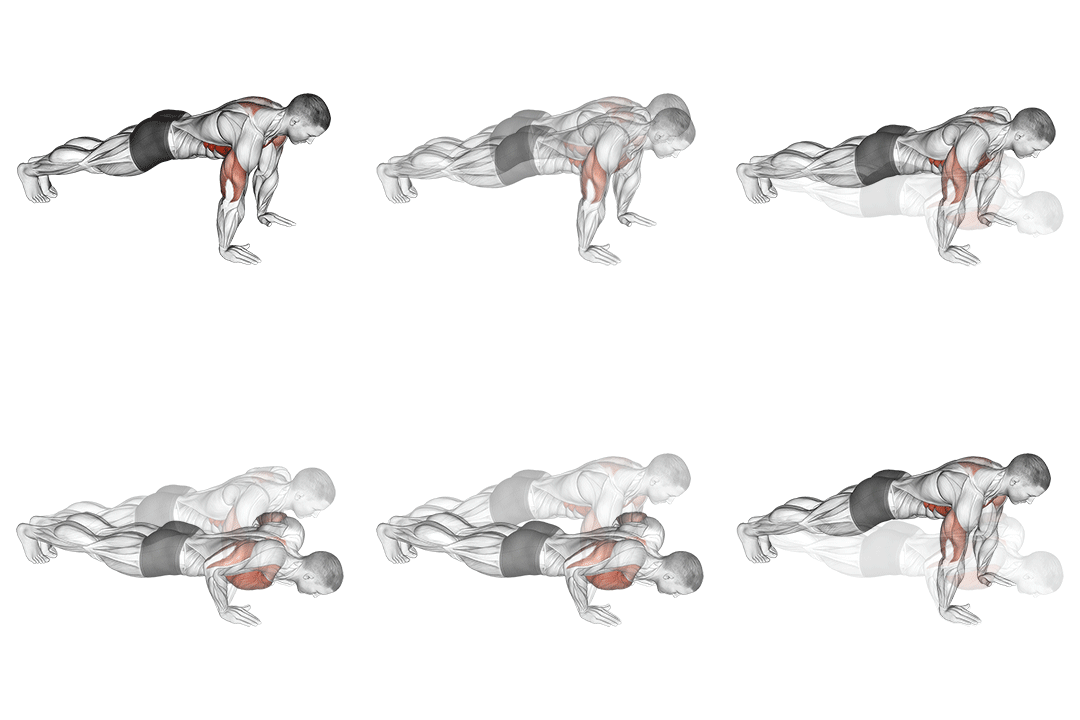
2. Push-up Plus
75% matchPectorals · Intermediate · Compound
A looser match: it uses the same equipment, but it works the pectorals rather than the serratus.
- Bodyweight
How to perform it
- Start in a high plank position with your hands slightly wider than shoulder-width apart and your body in a straight line from head to heels.
- Lower your body towards the ground by bending your elbows, keeping them close to your sides.
- Once your chest is just above the ground, push through your hands to extend your arms and lift your upper body up.
- At the top of the movement, protract your shoulder blades by pushing your upper back towards the ceiling.
- Pause for a moment, then reverse the movement by retracting your shoulder blades and lowering your body back down to the starting position.
- Repeat for the desired number of repetitions.
Sets and reps: 3 or 4 sets of 6 to 10 reps.
Why this matches
- Movement: flat horizontal press, the same as the Scapula Push-up
- Primary muscle: pectorals, not serratus
- Equipment: bodyweight only, the same as the Scapula Push-up
- Body position: lying face down, the same as the Scapula Push-up
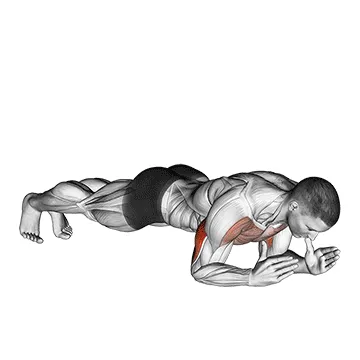
3. Push-up On Lower Arms
75% matchPectorals · Beginner · Compound
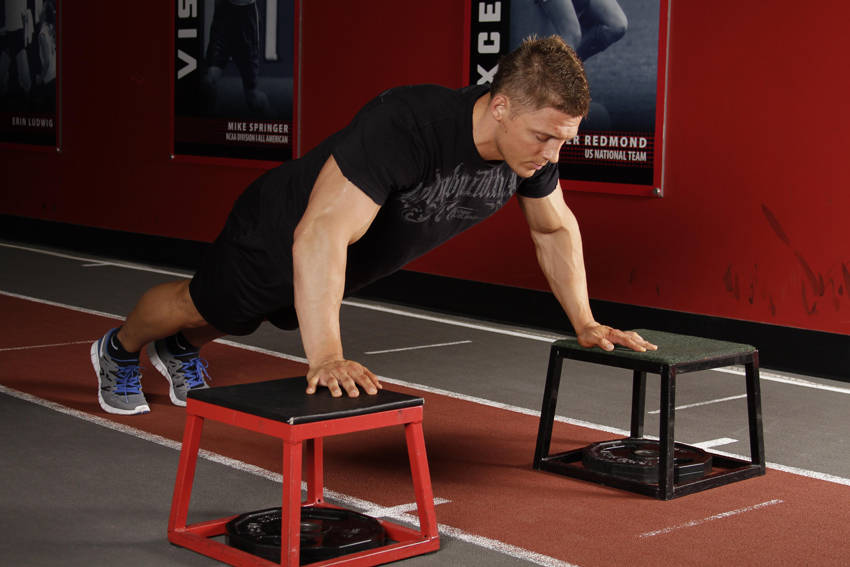
4. Drop Push
75% matchPectorals · Intermediate · Compound
A looser match: it works the pectorals rather than the serratus.
- Other
How to perform it
- Position low boxes or other platforms 2-3 feet apart.
- Move to a pushup position between them, supporting yourself by placing your hands on the boxes.
- With good posture, drop from the platforms by pressing up and moving your hands to shoulder width, cushioning your landing by absorbing the impact through the arm.
Sets and reps: 3 or 4 sets of 6 to 10 reps.
Why this matches
- Primary muscle: pectorals, not serratus
- Equipment: bodyweight only, the same as the Scapula Push-up
- Body position: lying face down, the same as the Scapula Push-up
5. Pushups
74% matchPectorals · Beginner · Compound
Progression
7. Body-up
74% matchTriceps · Intermediate · Compound
A looser match: it uses the same equipment, but it works the triceps rather than the serratus.
- Bodyweight
How to perform it
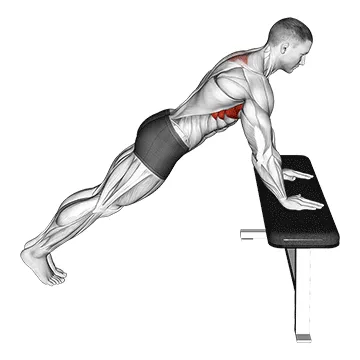
- Start by placing your hands on a raised surface, such as a bench or parallel bars, with your palms facing down and fingers pointing forward.
- Extend your legs out in front of you, keeping your heels on the ground and your body straight.
- Lower your body by bending your elbows, keeping them close to your sides, until your upper arms are parallel to the ground.
- Pause for a moment, then push through your palms to straighten your arms and lift your body back up to the starting position.
- Repeat for the desired number of repetitions.
Sets and reps: 3 or 4 sets of 6 to 10 reps.
Why this matches
- Primary muscle: triceps, not serratus
- Equipment: bodyweight only, the same as the Scapula Push-up
- Body position: lying face down, the same as the Scapula Push-up
- Balance: easier to stay steady on than the Scapula Push-up
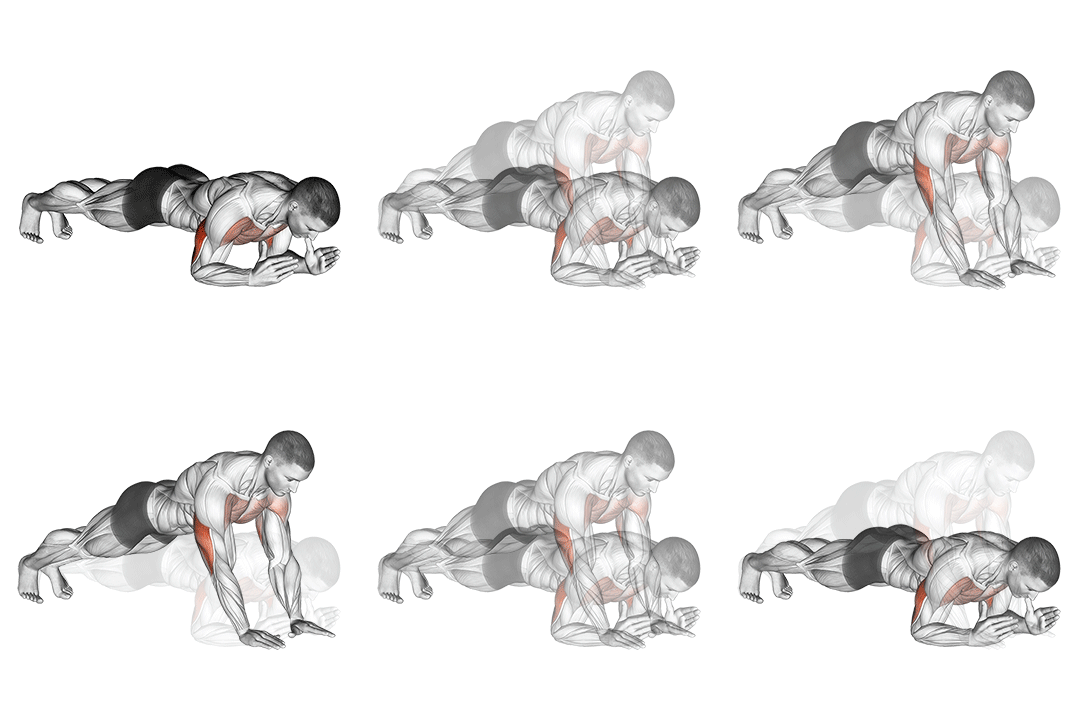
How to Choose the Right Scapula Push-up Substitute
Match the substitute to your goal and constraints. For pain or early rehab pick short-lever, low-compression moves like supine serratus draws or wall slides; cue: keep ribs down and protract without shrugging. For strength and transfer to pressing choose incline scapular push-ups or band-resisted serratus punches to increase time under tension while maintaining scapular rhythm. Assess thoracic extension and scapular upward rotation; if mobility is limited prioritize mobility-first drills, then progress to resisted protraction with slow eccentrics (2–3 seconds) to maximize serratus activation.
Scapula Push-up FAQ
What muscles does Scapula Push-up work?
The Scapula Push-up primarily targets the serratus anterior, which drives scapular protraction and upward rotation to stabilize the shoulder blade. It also recruits lower trapezius and pectoralis minor as synergists; cue: push the shoulder blades forward while keeping the ribs down to emphasize serratus firing.
What is the best bodyweight alternative to Scapula Push-up?
The best bodyweight alternative is the incline scapular push-up (hands on a bench or wall). Keep the arms straight and move only the scapula, protract and retract without elbow flexion, to increase serratus activation with reduced glenohumeral compression.
Find Alternatives for Any Exercise
Search the exercise database and filter the ranked substitutes by the equipment you own.