

10 Best Barbell Incline Shoulder Raise Alternatives for Home Gyms
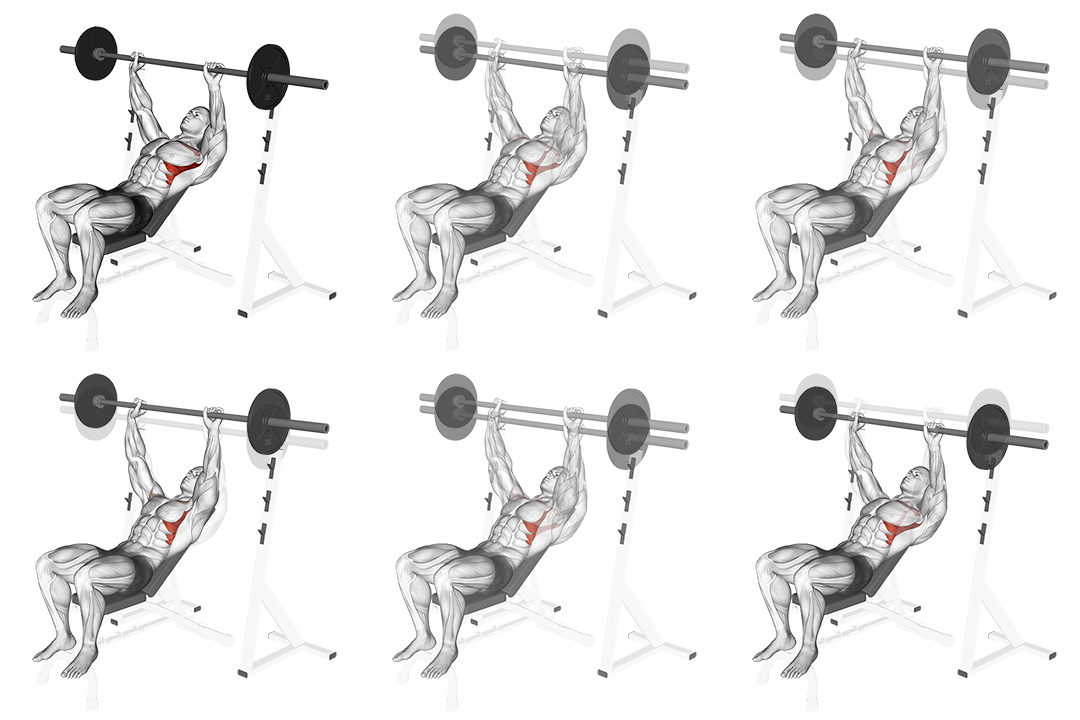
The Barbell Incline Shoulder Raise is done lying on your back with a barbell. Ranked closest by our scoring: the Press Sit-up, the Barbell Seated Overhead Press and the Seated Barbell Military Press.
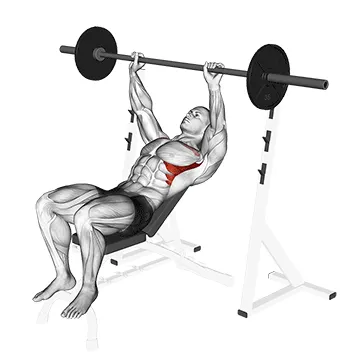
Each substitute is scored on movement pattern, muscles worked, equipment and body position. Read how we rank alternatives
How to Do the Barbell Incline Shoulder Raise
The steps for the Barbell Incline Shoulder Raise itself, so you can judge how close each substitute below really is.
Serratus, with deltoids, trapezius · Barbell · Beginner · Isolation
- Set up an incline bench at a 45-degree angle.
- Sit on the bench with your back against the pad and feet flat on the ground.
- Hold a barbell with an overhand grip, slightly wider than shoulder-width apart.
- Lift the barbell up to shoulder height, keeping your elbows slightly bent.
- Slowly raise the barbell overhead, extending your arms fully.
- Pause for a moment at the top, then slowly lower the barbell back to shoulder height.
- Repeat for the desired number of repetitions.
The 10 Best Barbell Incline Shoulder Raise Alternatives
10 substitutes, ranked by how closely each one matches the Barbell Incline Shoulder Raise on movement pattern, muscles worked, equipment and body position. The higher the score, the less you change. Cards with a "How to perform it" link open to show the steps; every card title links to that exercise's own alternatives page. Harder versions are tagged as progressions and kept out of the top spot even when they score higher.
Each link re-ranks the list below for the kit it names. Pick one to hide the substitutes you cannot set up.
Progression
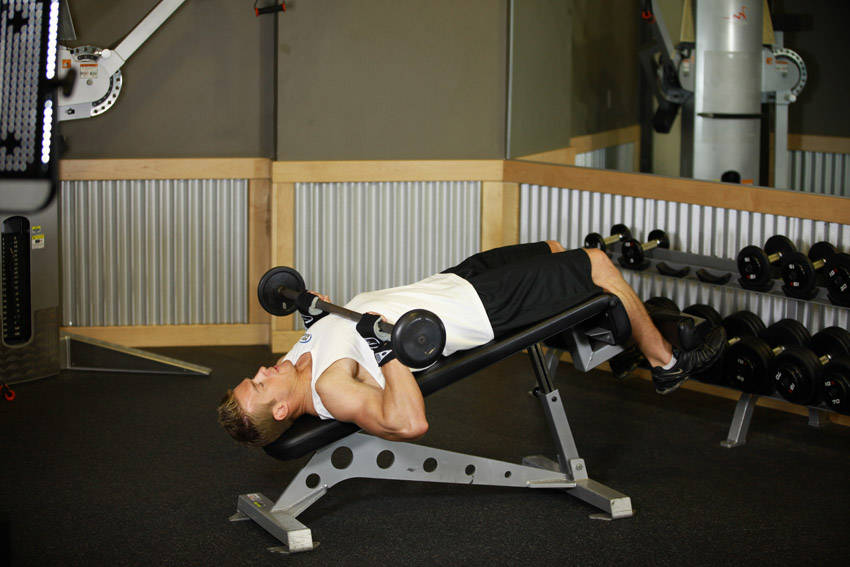
1. Press Sit-up
68% matchAbs · Intermediate · Compound
A looser match: it uses the same equipment, but it works the abs rather than the serratus.
- Barbell
How to perform it
- To begin, lie down on a bench with a barbell resting on your chest. Position your legs so they are secure on the extension of the abdominal bench. This is the starting position.
- While inhaling, tighten your abdominals and glutes. Simultaneously curl your torso as you do when performing a sit-up and press the barbell to an overhead position while exhaling. Tip: Use your arms to push the barbell out as you perform this exercise while still focusing on the abdominal muscles.
- Lower your upper body back down to the starting position while bringing the barbell back down to your torso. Remember to breathe in while lowering the body.
- Repeat for the recommended amount of repetitions.
Sets and reps: 3 to 5 sets of 5 to 8 reps.
Why this matches
- Primary muscle: abs, not serratus
- Equipment: free weights, the same as the Barbell Incline Shoulder Raise
- Body position: lying on your back, the same as the Barbell Incline Shoulder Raise
- Balance: harder to stay steady on than the Barbell Incline Shoulder Raise
Progression
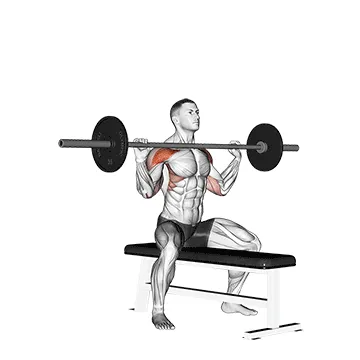
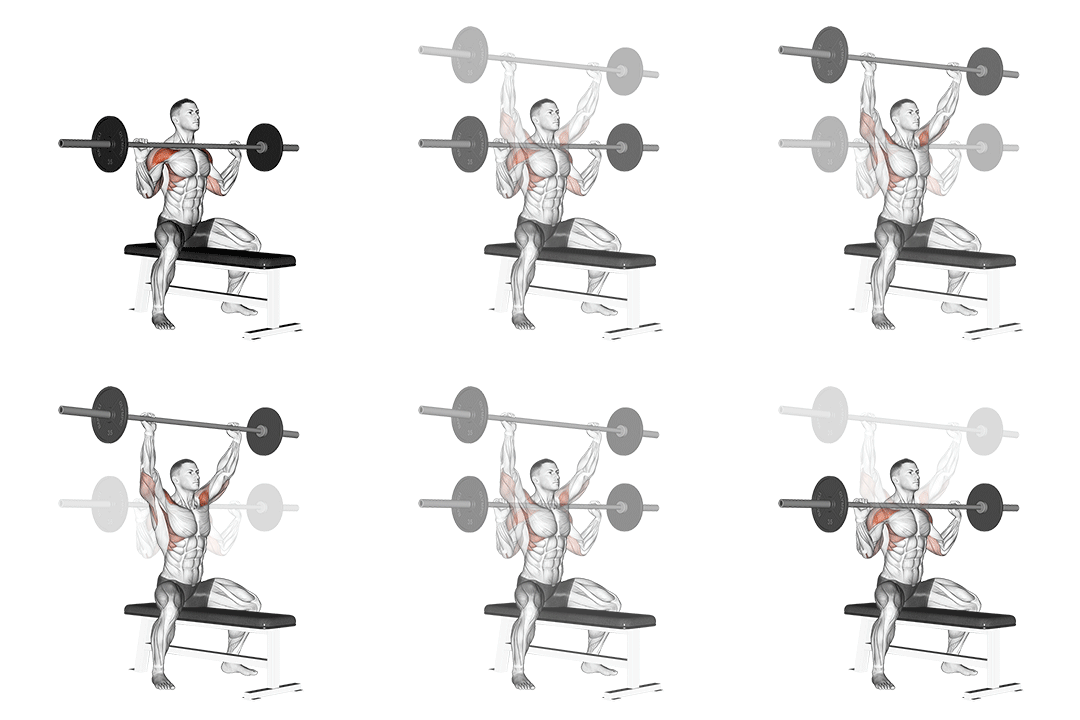
2. Barbell Seated Overhead Press
62% matchDelts · Intermediate · Compound
A looser match: it uses the same equipment, but it works the delts rather than the serratus.
- Barbell
How to perform it
- Sit on a bench with your back straight and feet flat on the ground.
- Hold the barbell with an overhand grip, slightly wider than shoulder-width apart.
- Lift the barbell off the rack and bring it to shoulder level, with your elbows bent and palms facing forward.
- Press the barbell overhead by extending your arms fully.
- Pause for a moment at the top, then slowly lower the barbell back to shoulder level.
- Repeat for the desired number of repetitions.
Sets and reps: 3 to 5 sets of 5 to 8 reps.
Why this matches
- Primary muscle: delts, not serratus
- Equipment: free weights, the same as the Barbell Incline Shoulder Raise
- Body position: seated, not lying on your back
Progression
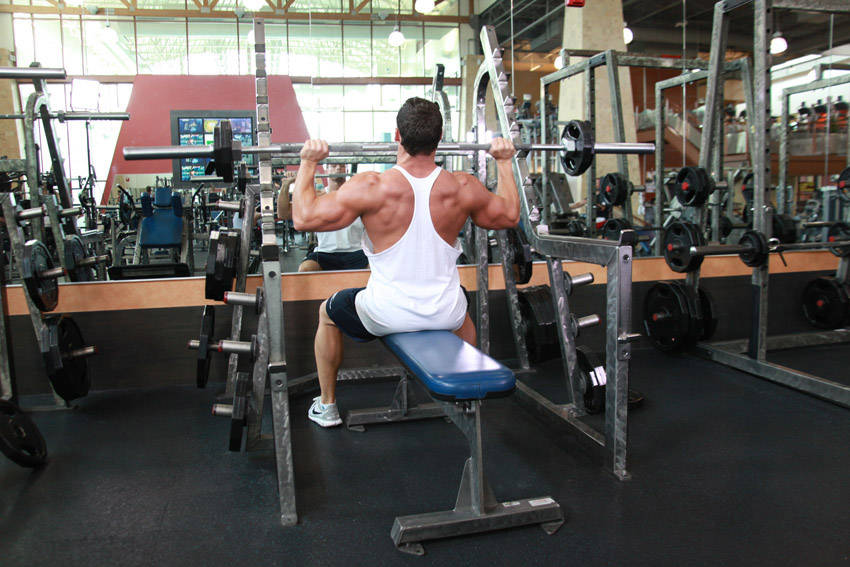
3. Seated Barbell Military Press
62% matchShoulders · Intermediate · Compound
A looser match: it uses the same equipment, but it works the shoulders rather than the serratus.
- Barbell
How to perform it
- Sit on a Military Press Bench with a bar behind your head and either have a spotter give you the bar (better on the rotator cuff this way) or pick it up yourself carefully with a pronated grip (palms facing forward). Tip: Your grip should be wider than shoulder width and it should create a 90-degree angle between the forearm and the upper arm as the barbell goes down.
- Once you pick up the barbell with the correct grip length, lift the bar up over your head by locking your arms. Hold at about shoulder level and slightly in front of your head. This is your starting position.
- Lower the bar down to the collarbone slowly as you inhale.
- Lift the bar back up to the starting position as you exhale.
- Repeat for the recommended amount of repetitions.
Sets and reps: 3 or 4 sets of 6 to 10 reps.
Why this matches
- Primary muscle: shoulders, not serratus
- Equipment: free weights, the same as the Barbell Incline Shoulder Raise
- Body position: seated, not lying on your back
Why You Might Need a Barbell Incline Shoulder Raise Alternative
You might substitute the barbell incline shoulder raise for several practical reasons: limited equipment, shoulder or neck pain, poor shoulder mechanics, or a goal to isolate serratus activation more precisely. Injured athletes often avoid loaded overhead or incline barbell positions because they increase rotator cuff compression; a band or dumbbell alternative reduces shear while preserving protraction. If you feel dominant upper-trap elevation during the barbell variation, choose a movement that keeps the scapula low and emphasizes forward protraction. Always cue the scapula to move forward without shrugging to bias serratus anterior over upper trapezius.
Barbell Incline Shoulder Raise FAQ
What muscles does Barbell Incline Shoulder Raise work?
The exercise primarily targets the serratus anterior by driving scapular protraction and assisting upward rotation. It also involves the anterior deltoid and upper trapezius as secondary movers, so cue protraction rather than elevation to maximize serratus engagement.
Can I build muscle without doing Barbell Incline Shoulder Raise?
Yes. You can hypertrophy the serratus anterior using progressive overload with cable protractions, dumbbell serratus punches, or weighted band protractions. Focus each set on controlled protraction and increase resistance or reps over time to drive muscle growth.
Find Alternatives for Any Exercise
Search the exercise database and filter the ranked substitutes by the equipment you own.