

10 Best Split Jerk Alternatives for When You Can't Jerk
The Split Jerk is done standing with a barbell. Ranked closest by our scoring: the Backward Jump, the Forward Jump and the Rocket Jump.
Updated Ranked by our 12-factor similarity model How it works
Original Exercise: Split Jerk
- Primary muscle
- Quads
- Equipment
- Barbell
- Difficulty
- Advanced
- Type
- Compound
Secondary muscles: Glutes, Hamstrings, Shoulders, Triceps
How to perform Split Jerk
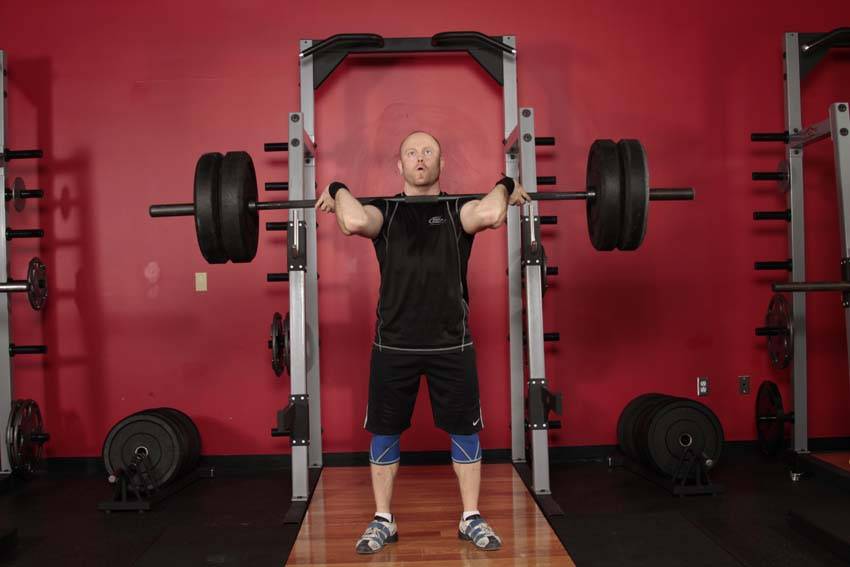
- Standing with the weight racked on the front of the shoulders, begin with the dip. With your feet directly under your hips, flex the knees without moving the hips backward.
- Go down only slightly, and reverse direction as powerfully as possible. Drive through the heels create as much speed and force as possible, and be sure to move your head out of the way as the bar leaves the shoulders. At this moment as the feet leave the floor, the feet must be placed into the receiving position as quickly as possible.
- In the brief moment the feet are not actively driving against the platform, the athlete's effort to push the bar up will drive them down. The feet should be moved to a split stance, one foot forward, one foot back, with the knees partially bent. Receive the bar with the arms locked out overhead.
- Return to a standing position, bringing the feet together.
Ranked Split Jerk Alternatives
10 substitutes, ranked by how closely each one matches the Split Jerk on movement pattern, muscles worked, equipment and body position. The higher the score, the less you change. Open "How to perform this exercise" on a card for the steps; every card title links to that exercise's own alternatives page.
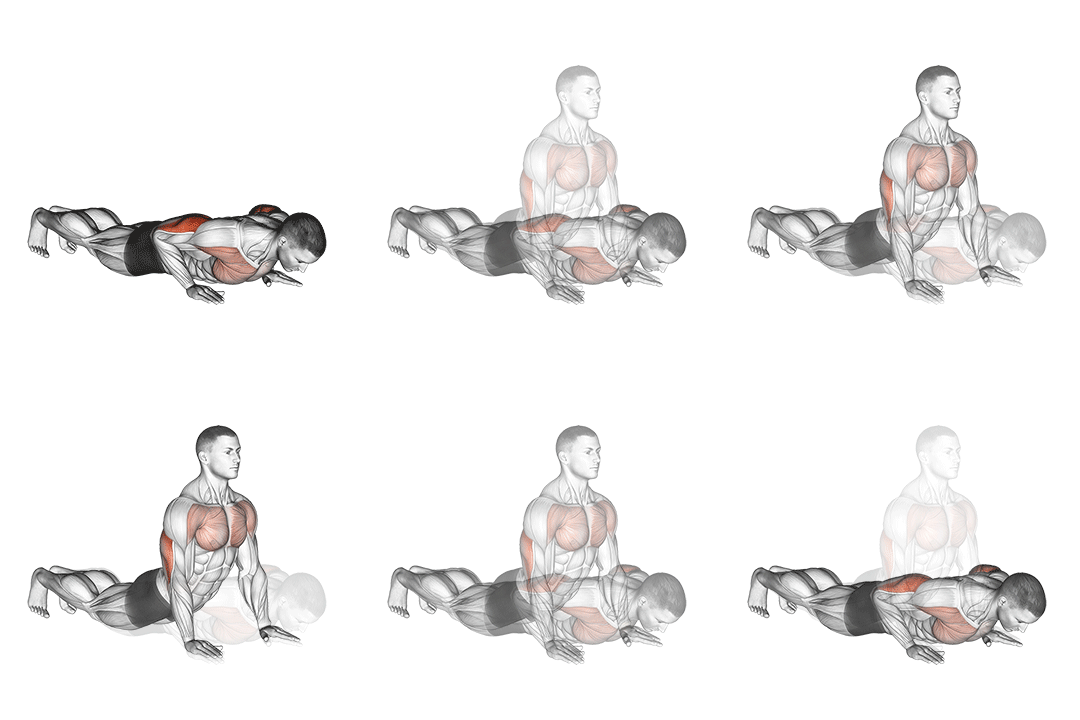
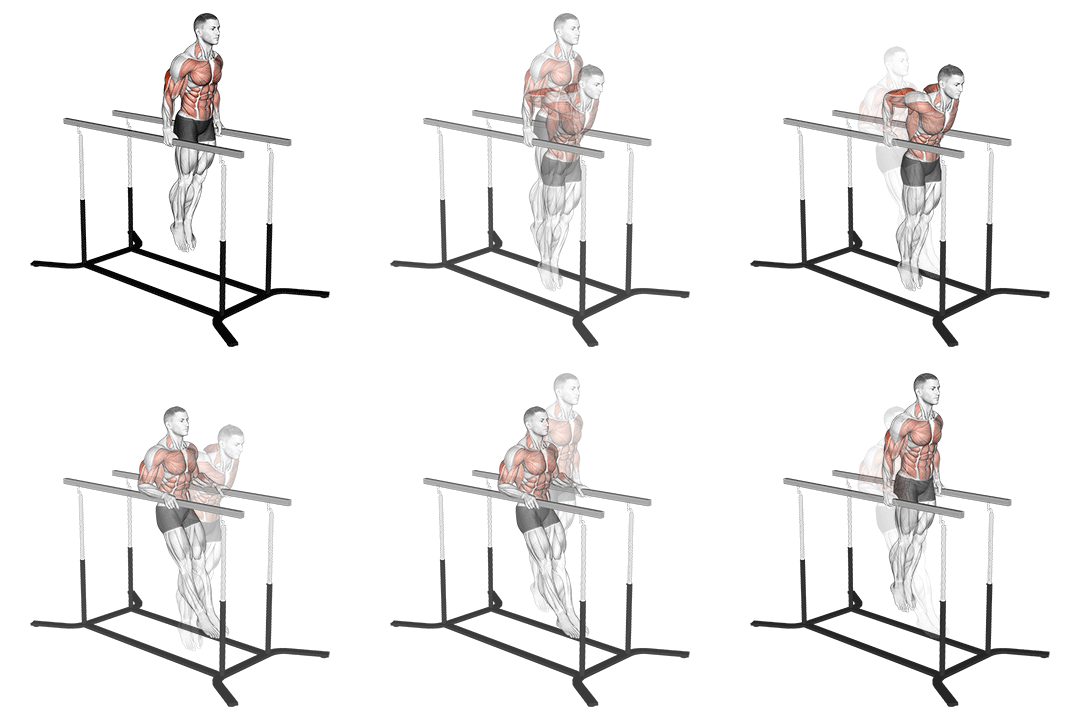
1. Impossible Dips
58% match- Triceps
- Bodyweight
- Advanced
- Compound
A looser match: it works the triceps rather than the quads.
How to perform this exercise
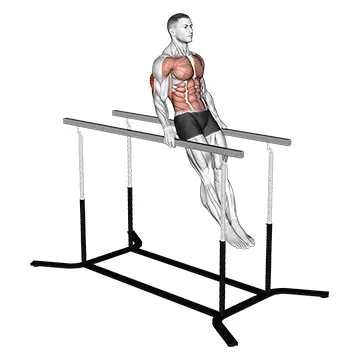
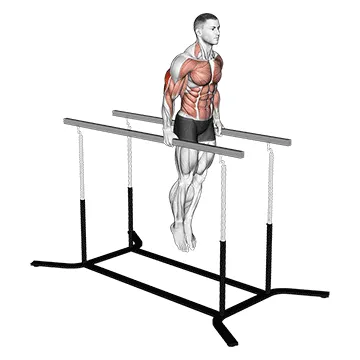
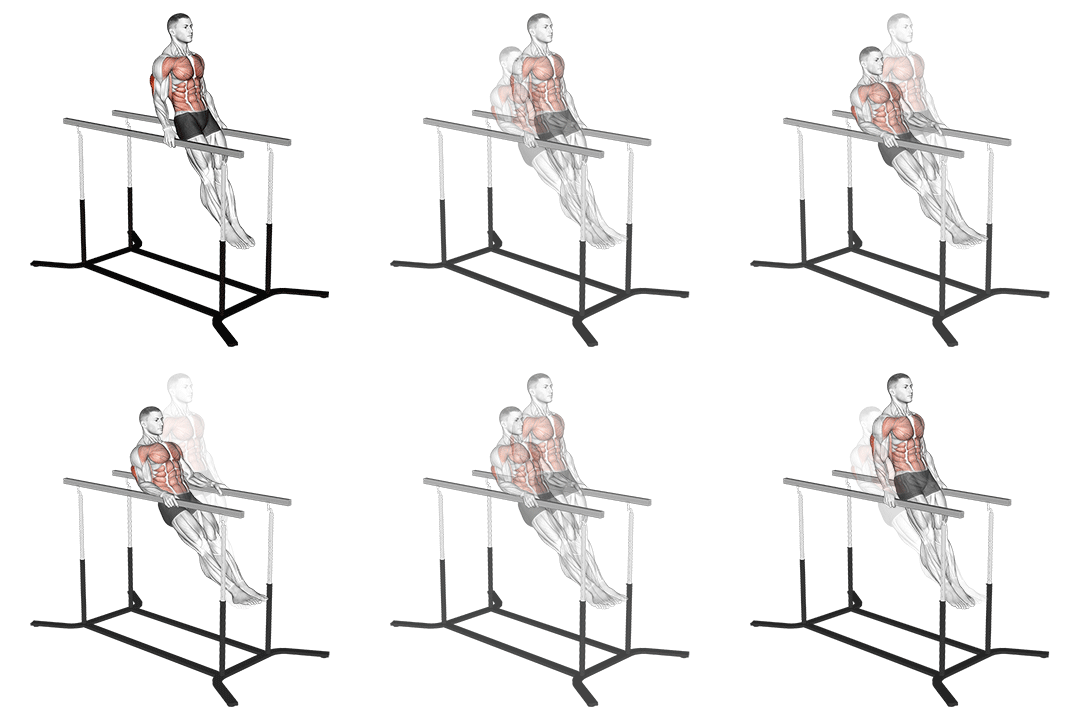
- Position yourself between two parallel bars with your arms fully extended and your body suspended in the air.
- Bend your knees and cross your ankles.
- Lower your body by bending your elbows until your upper arms are parallel to the ground.
- Pause for a moment, then push yourself back up to the starting position by straightening your arms.
- Repeat for the desired number of repetitions.
Sets and reps: 3 or 4 sets of 6 to 10 reps.
Why this matches
- Primary muscle: triceps, not quads
- Equipment: bodyweight only, not free weights
- Body position: inverted, not standing
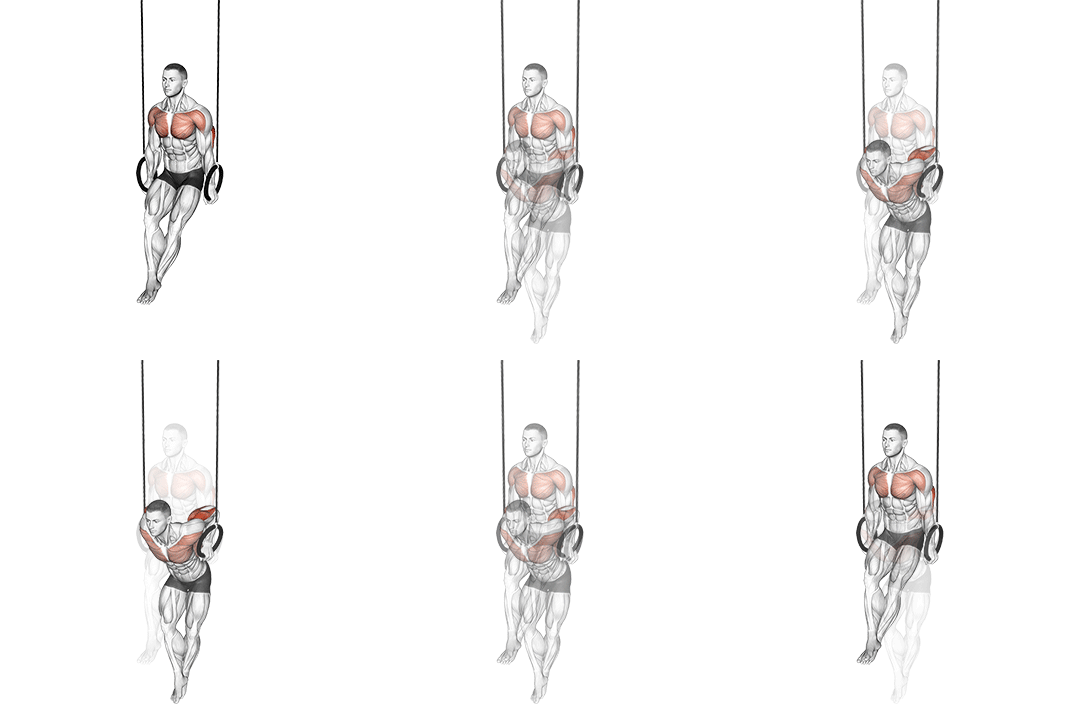
2. Ring Dips
56% match- Triceps
- Bodyweight
- Advanced
- Compound
How to perform this exercise
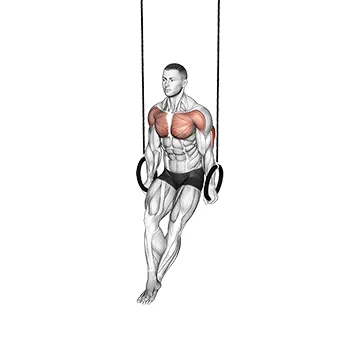
- Start by hanging from the rings with your arms fully extended and your body straight.
- Lower your body by bending your elbows until your shoulders are below your elbows.
- Push yourself back up to the starting position by straightening your arms.
- Repeat for the desired number of repetitions.
Sets and reps: 3 to 5 sets of 5 to 8 reps.
Why this matches
- Primary muscle: triceps, not quads
- Equipment: a suspension trainer, not free weights
- Body position: standing, the same as the Split Jerk
3. Reverse Dip
53% match- Triceps
- Bodyweight
- Intermediate
- Compound
How to perform this exercise
- Position yourself between two parallel bars with your arms fully extended and your body straight.
- Lower your body by bending your elbows until your upper arms are parallel to the ground.
- Pause for a moment, then push yourself back up to the starting position by straightening your arms.
- Repeat for the desired number of repetitions.
Sets and reps: 3 or 4 sets of 6 to 10 reps.
Why this matches
- Primary muscle: triceps, not quads
- Equipment: bodyweight only, not free weights
- Body position: standing, the same as the Split Jerk
- Balance: easier to stay steady on than the Split Jerk
Best match 4. Backward Jump
53% match- Quads
- Bodyweight
- Intermediate
- Compound
Use this when you have nothing to train with, because it works the quads with bodyweight alone.
How to perform this exercise
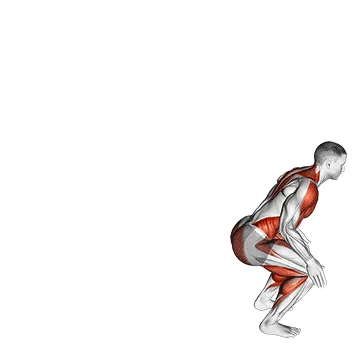
- Stand with your feet shoulder-width apart.
- Bend your knees slightly and jump backwards, pushing off with both feet.
- Land softly on the balls of your feet, bending your knees to absorb the impact.
- Repeat for the desired number of repetitions.
Sets and reps: 3 or 4 sets of 6 to 10 reps.
Why this matches
- Primary muscle: quads, the same as the Split Jerk
- Equipment: bodyweight only, not free weights
- Body position: standing, the same as the Split Jerk
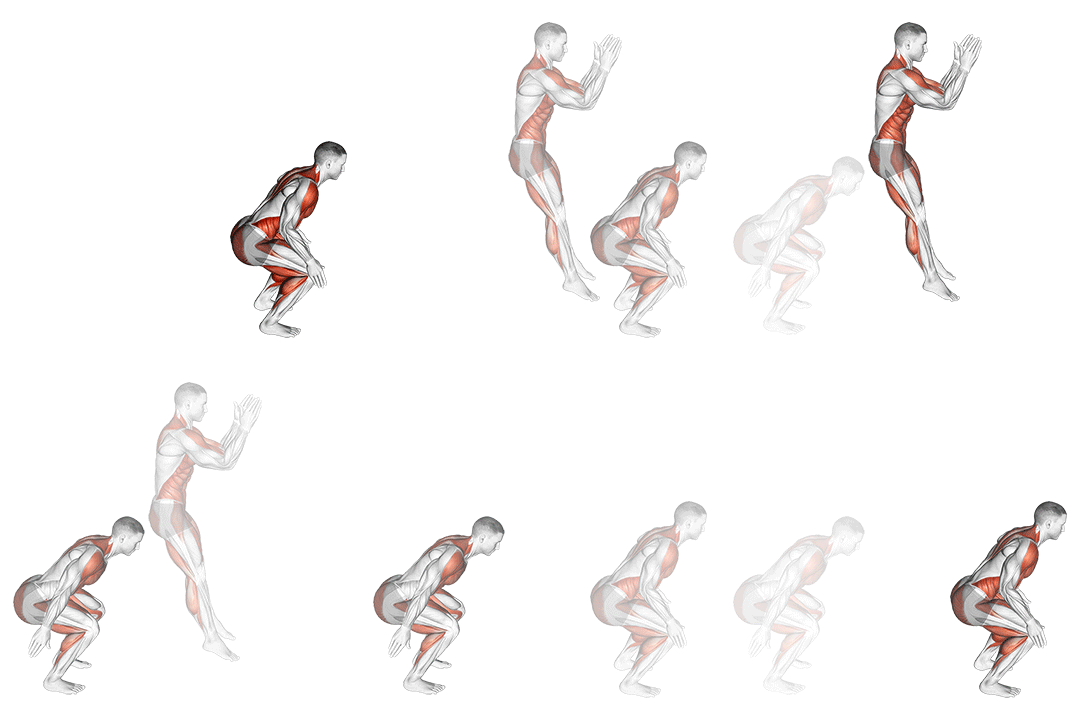
5. Forward Jump
53% match- Quads
- Bodyweight
- Intermediate
- Compound
How to perform this exercise
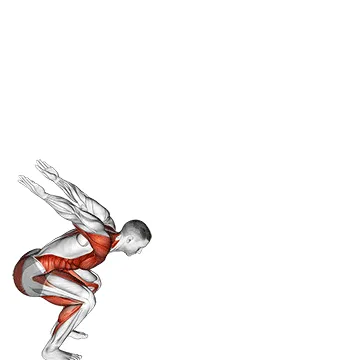
- Stand with your feet shoulder-width apart.
- Bend your knees and lower your body into a squat position.
- Swing your arms back for momentum.
- Jump forward explosively, extending your hips, knees, and ankles.
- Land softly on the balls of your feet and immediately go into the next jump.
- Repeat for the desired number of repetitions.
Sets and reps: 3 or 4 sets of 6 to 10 reps.
Why this matches
- Primary muscle: quads, the same as the Split Jerk
- Equipment: bodyweight only, not free weights
- Body position: standing, the same as the Split Jerk
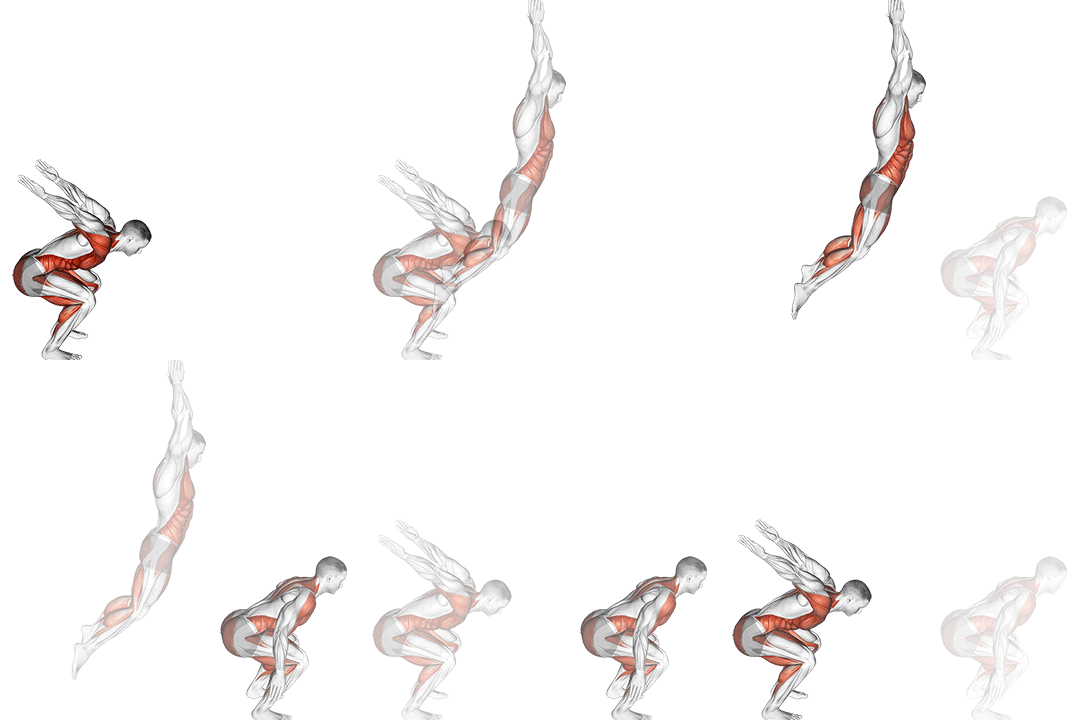
6. Rocket Jump
53% match- Quads
- Bodyweight
- Advanced
- Compound
How to perform this exercise
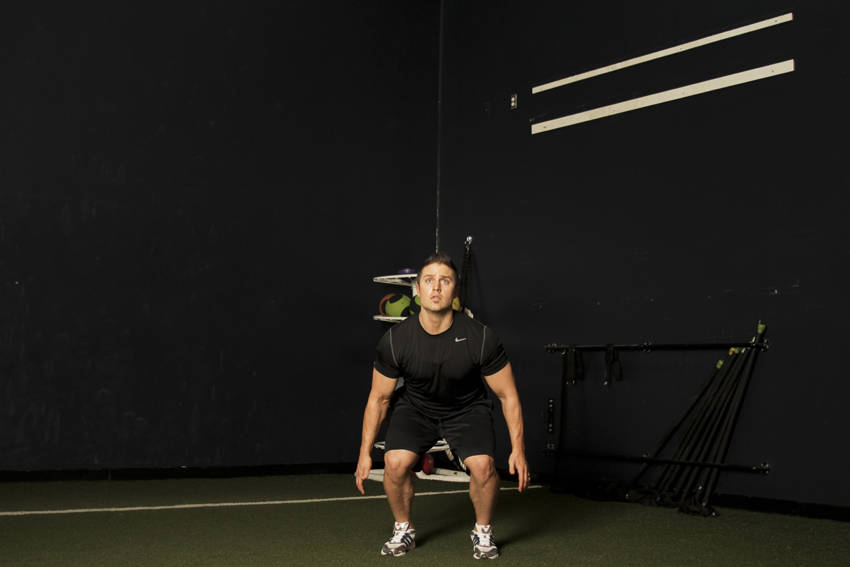
- Begin in a relaxed stance with your feet shoulder width apart and hold your arms close to the body.
- To initiate the move, squat down halfway and explode back up as high as possible.
- Fully extend your entire body, reaching overhead as far as possible. As you land, absorb your impact through the legs.
Sets and reps: 3 or 4 sets of 6 to 10 reps.
Why this matches
- Primary muscle: quads, the same as the Split Jerk
- Equipment: bodyweight only, not free weights
- Body position: standing, the same as the Split Jerk
- Balance: easier to stay steady on than the Split Jerk
7. Bench Jump
52% match- Quads
- Bodyweight
- Intermediate
- Compound
How to perform this exercise
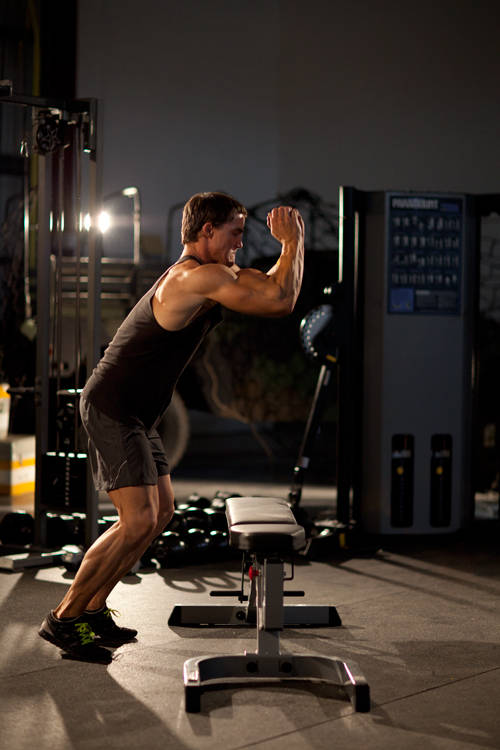
- Begin with a box or bench 1-2 feet in front of you. Stand with your feet shoulder width apart. This will be your starting position.
- Perform a short squat in preparation for the jump; swing your arms behind you.
- Rebound out of this position, extending through the hips, knees, and ankles to jump as high as possible. Swing your arms forward and up.
- Jump over the bench, landing with the knees bent, absorbing the impact through the legs.
- Turn around and face the opposite direction, then jump back over the bench.
Sets and reps: 3 or 4 sets of 6 to 10 reps.
Why this matches
- Primary muscle: quads, the same as the Split Jerk
- Equipment: bodyweight only, not free weights
- Body position: standing, the same as the Split Jerk
- Balance: easier to stay steady on than the Split Jerk
8. Elbow Dips
52% match- Triceps
- Bodyweight
- Intermediate
- Compound
How to perform this exercise
- Sit on the edge of a bench or chair with your hands gripping the edge next to your hips.
- Slide your hips forward off the bench and straighten your legs, keeping your heels on the ground.
- Bend your elbows and lower your body towards the ground, keeping your back close to the bench.
- Pause for a moment at the bottom, then push through your hands to straighten your arms and lift your body back up to the starting position.
- Repeat for the desired number of repetitions.
Sets and reps: 3 or 4 sets of 6 to 10 reps.
Why this matches
- Primary muscle: triceps, not quads
- Equipment: bodyweight only, not free weights
- Body position: standing, the same as the Split Jerk
- Balance: easier to stay steady on than the Split Jerk
9. Frog Hops
50% match- Quads
- Bodyweight
- Intermediate
- Compound
How to perform this exercise
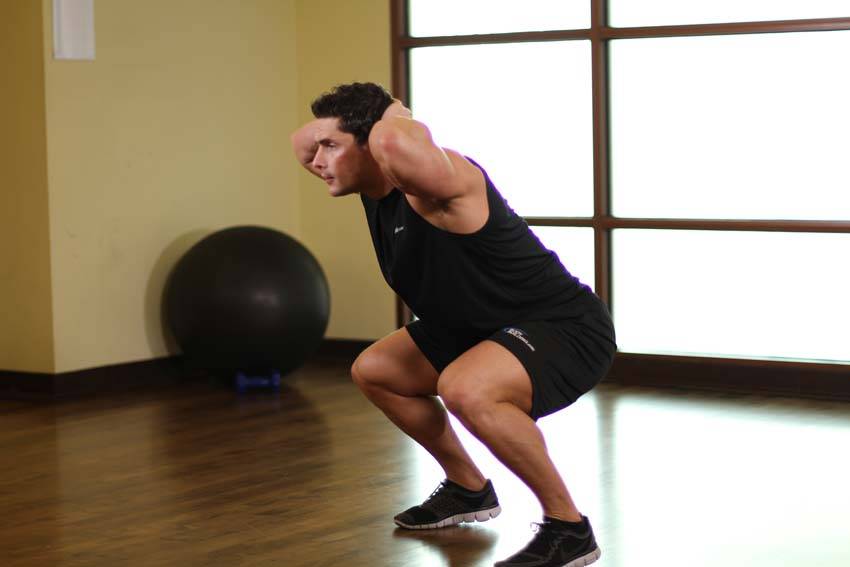
- Stand with your hands behind your head, and squat down keeping your torso upright and your head up. This will be your starting position.
- Jump forward several feet, avoiding jumping unnecessarily high. As your feet contact the ground, absorb the impact through your legs, and jump again. Repeat this action 5-10 times.
Sets and reps: 3 or 4 sets of 6 to 10 reps.
Why this matches
- Primary muscle: quads, the same as the Split Jerk
- Equipment: bodyweight only, not free weights
- Body position: standing, the same as the Split Jerk
- Balance: easier to stay steady on than the Split Jerk
10. Star Jump
50% match- Quads
- Bodyweight
- Intermediate
- Compound
How to perform this exercise
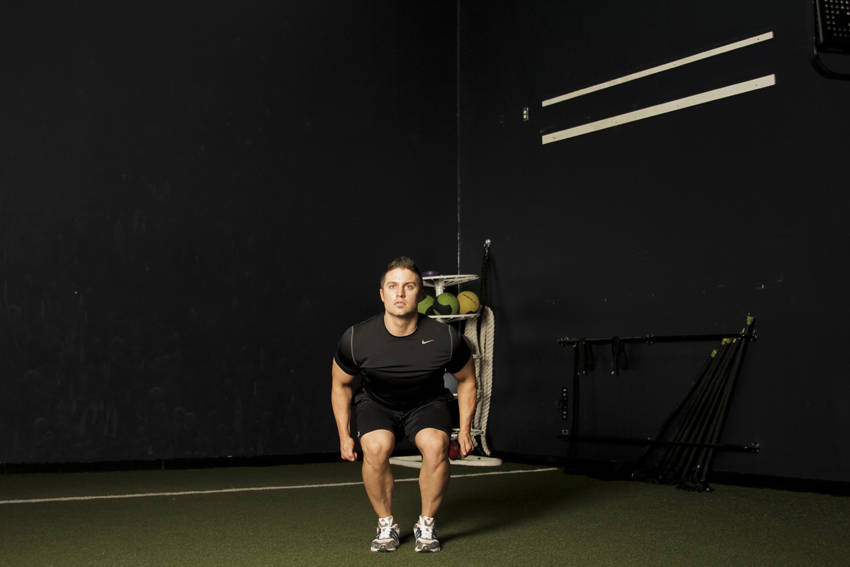
- Begin in a relaxed stance with your feet shoulder width apart and hold your arms close to the body.
- To initiate the move, squat down halfway and explode back up as high as possible. Fully extend your entire body, spreading your legs and arms away from the body.
- As you land, bring your limbs back in and absorb your impact through the legs.
Sets and reps: Work for 30 to 60 seconds, rest as long as you worked, and repeat 6 to 10 times.
Why this matches
- Primary muscle: quads, the same as the Split Jerk
- Equipment: bodyweight only, not free weights
- Body position: standing, the same as the Split Jerk
- Balance: easier to stay steady on than the Split Jerk
Why You Might Need a Split Jerk Alternative
You might substitute the Split Jerk for several reasons: shoulder or wrist limitations that prevent a secure overhead rack, poor overhead mobility, lack of coaching or a safe platform, or program goals that favor pure quad strength over Olympic technique. Replacing the Split Jerk lets you preserve quad recruitment and triple-extension training while reducing joint stress. When substituting, prioritize movements that maintain knee-dominant force (front squat) or unilateral stability (Bulgarian split squat). Cue a tall torso and active knee drive to preserve quad activation and efficient force transfer.
Split Jerk FAQ
What muscles does Split Jerk work?
The Split Jerk drives power through the quads, glutes, and calves via triple extension, while the shoulders and triceps stabilize the bar overhead. You generate force with rapid hip and knee extension and then lockout overhead with scapular and rotator cuff engagement.
What is the best bodyweight alternative to Split Jerk?
A plyometric alternating jump lunge is an effective bodyweight substitute that trains unilateral power and quad drive; land softly and absorb into the hips and quads. Cue a full hip and knee extension on each jump to replicate the explosive leg action of the jerk.
Find Alternatives for Any Exercise
Search the exercise database and filter the ranked substitutes by the equipment you own.
Similarity scores compare exercise metadata such as movement pattern, muscles, equipment and body position. They are not a safety rating or a check that you own the equipment. Learn about our methodology