

10 Best Svend Press Alternatives for Chest Isolation
The Svend Press is done standing. Ranked closest by our scoring: Elbow Dips, Dips - Triceps Version and the Reverse Dip.
Updated Ranked by our 12-factor similarity model How it works
Original Exercise: Svend Press
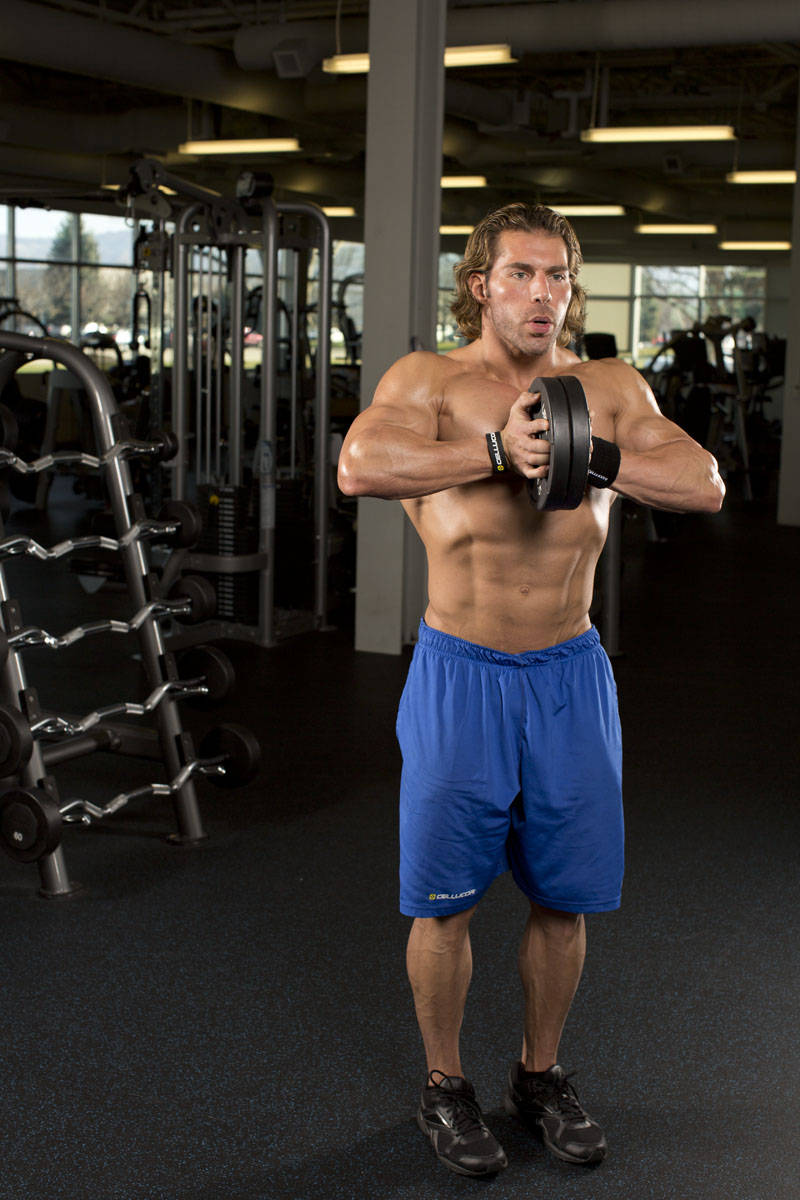
- Primary muscle
- Chest
- Equipment
- Other
- Difficulty
- Intermediate
- Type
- Isolation
Secondary muscles: Forearms, Shoulders, Triceps
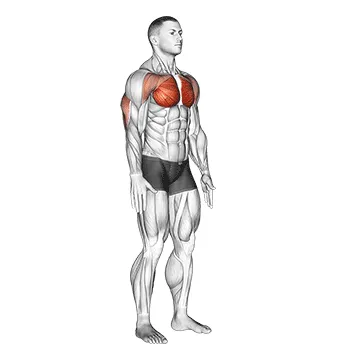
How to perform Svend Press
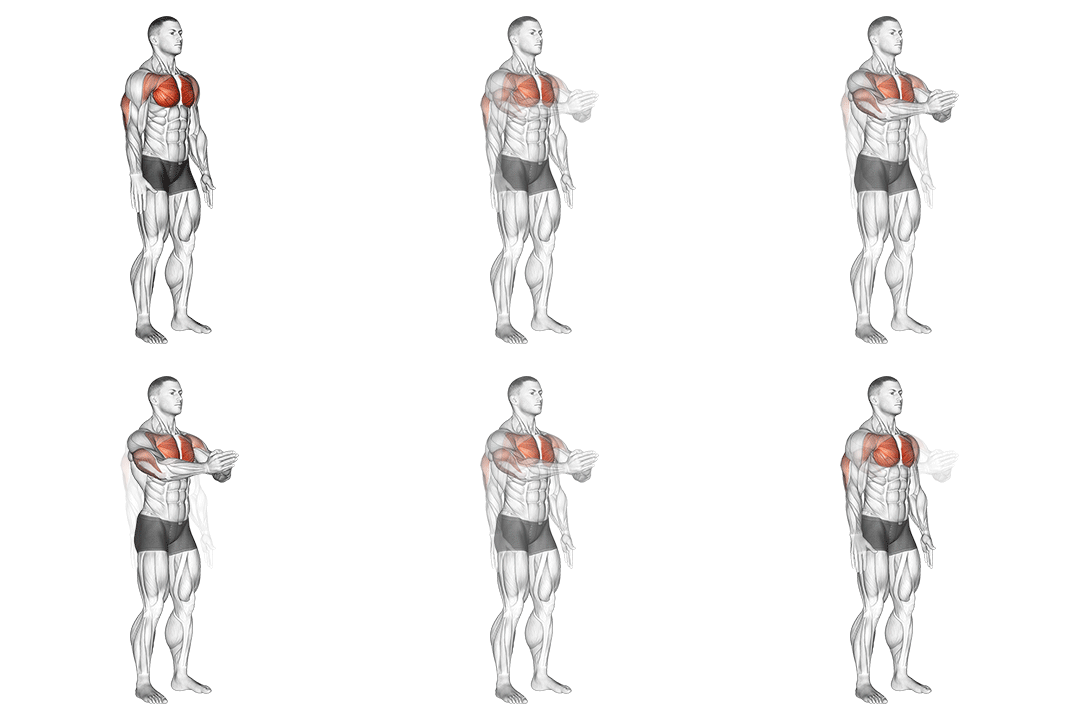
- Begin in a standing position.
- Press two lightweight plates together with your hands. Hold the plates together close to your chest to create an isometric contraction in your chest muscles. Your fingers should be pointed forward. This is your starting position.
- Squeeze the plates between your palms and extend your arms directly out in front of you in a controlled motion.
- Pause at the top of the motion, and then slowly return to the starting position.
Ranked Svend Press Alternatives
10 substitutes, ranked by how closely each one matches the Svend Press on movement pattern, muscles worked, equipment and body position. The higher the score, the less you change. Open "How to perform this exercise" on a card for the steps; every card title links to that exercise's own alternatives page.
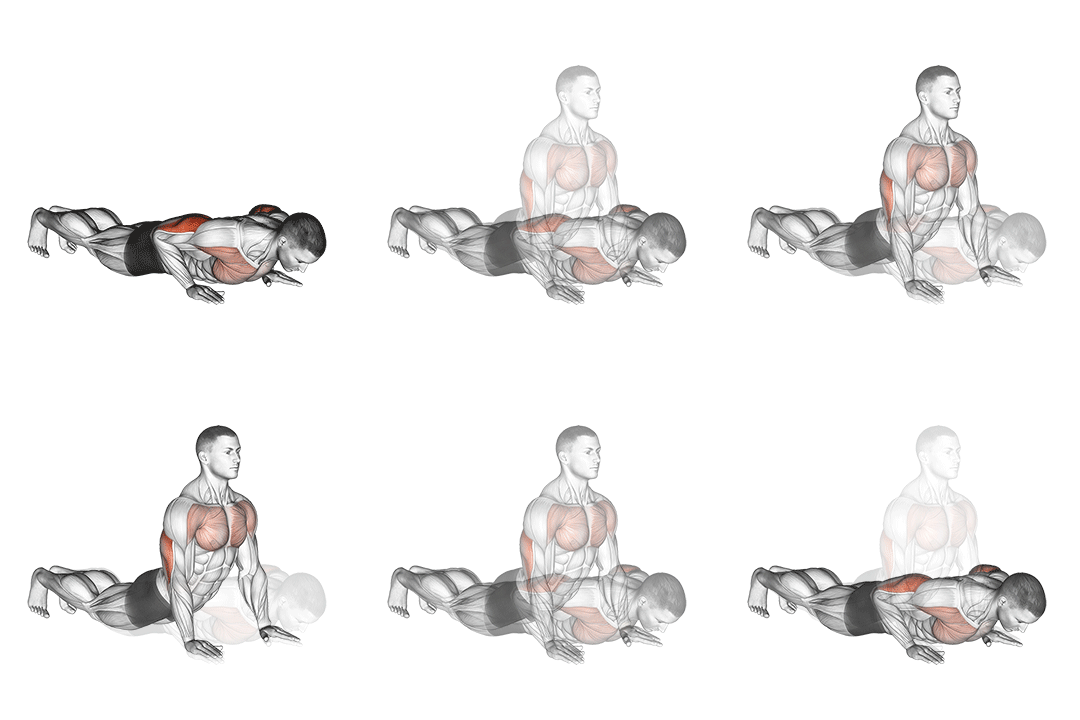
1. Elbow Dips
55% match- Triceps
- Bodyweight
- Intermediate
- Compound
A looser match: it works the triceps rather than the chest.
How to perform this exercise
- Sit on the edge of a bench or chair with your hands gripping the edge next to your hips.
- Slide your hips forward off the bench and straighten your legs, keeping your heels on the ground.
- Bend your elbows and lower your body towards the ground, keeping your back close to the bench.
- Pause for a moment at the bottom, then push through your hands to straighten your arms and lift your body back up to the starting position.
- Repeat for the desired number of repetitions.
Sets and reps: 3 or 4 sets of 6 to 10 reps.
Why this matches
- Primary muscle: triceps, not chest
- Equipment: bodyweight only, not free weights
- Body position: standing, the same as the Svend Press
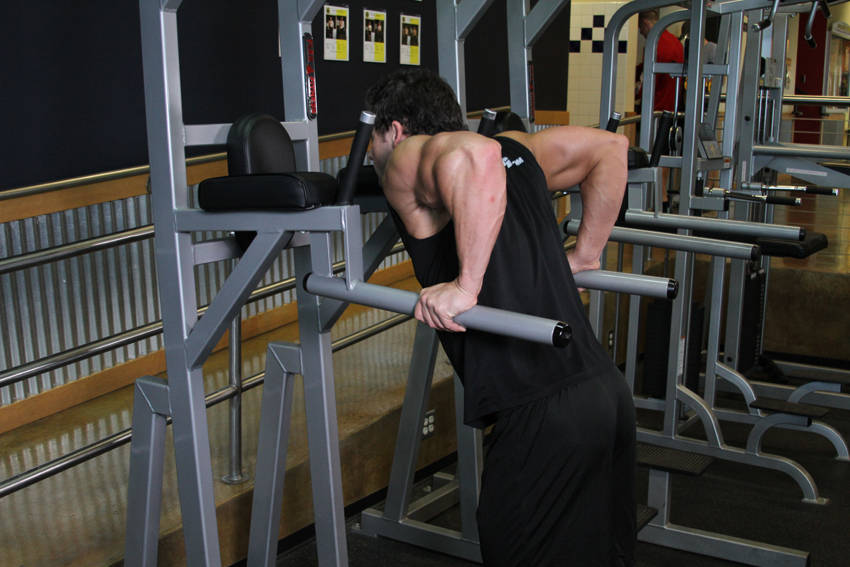
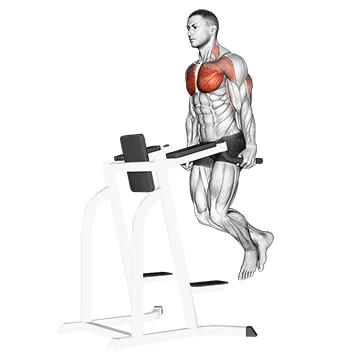
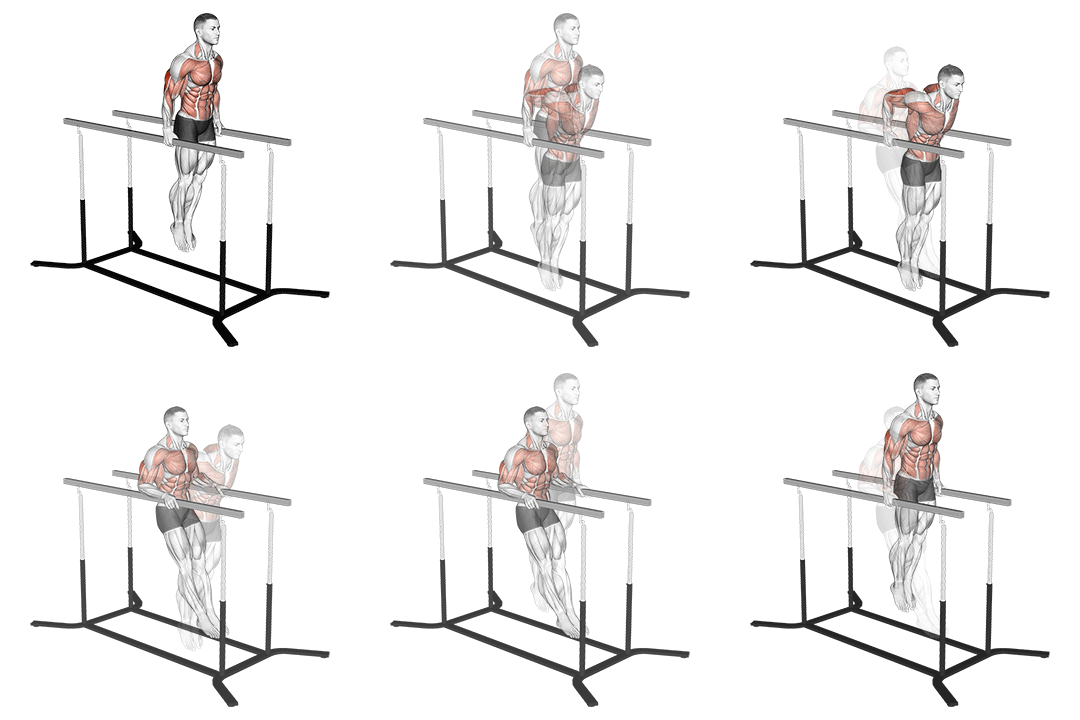
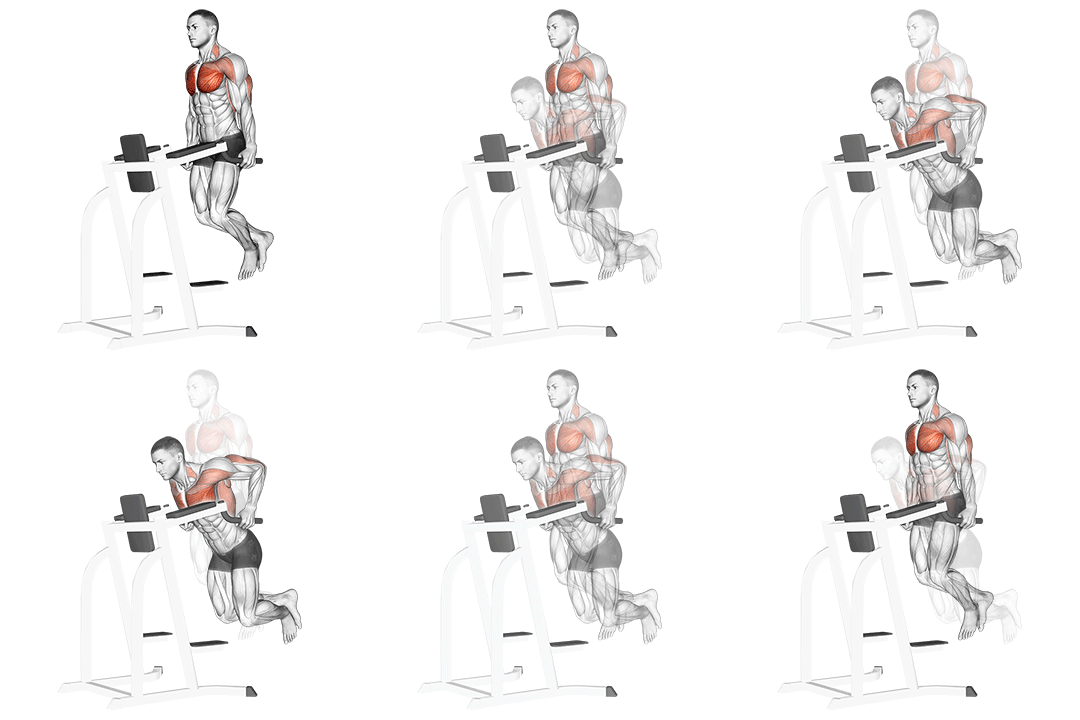
2. Dips - Triceps Version
45% match- Triceps
- Bodyweight
- Intermediate
- Compound
How to perform this exercise
- To get into the starting position, hold your body at arm's length with your arms nearly locked above the bars.
- Now, inhale and slowly lower yourself downward. Your torso should remain upright and your elbows should stay close to your body. This helps to better focus on tricep involvement. Lower yourself until there is a 90 degree angle formed between the upper arm and forearm.
- Then, exhale and push your torso back up using your triceps to bring your body back to the starting position.
- Repeat the movement for the prescribed amount of repetitions.
Sets and reps: 3 or 4 sets of 6 to 10 reps.
Why this matches
- Primary muscle: triceps, not chest
- Equipment: bodyweight only, not free weights
- Body position: hanging, not standing
- Balance: harder to stay steady on than the Svend Press
3. Reverse Dip
44% match- Triceps
- Bodyweight
- Intermediate
- Compound
How to perform this exercise
- Position yourself between two parallel bars with your arms fully extended and your body straight.
- Lower your body by bending your elbows until your upper arms are parallel to the ground.
- Pause for a moment, then push yourself back up to the starting position by straightening your arms.
- Repeat for the desired number of repetitions.
Sets and reps: 3 or 4 sets of 6 to 10 reps.
Why this matches
- Primary muscle: triceps, not chest
- Equipment: bodyweight only, not free weights
- Body position: standing, the same as the Svend Press
- Balance: harder to stay steady on than the Svend Press
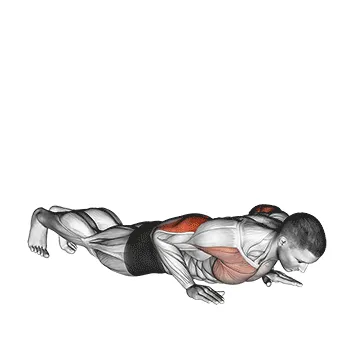
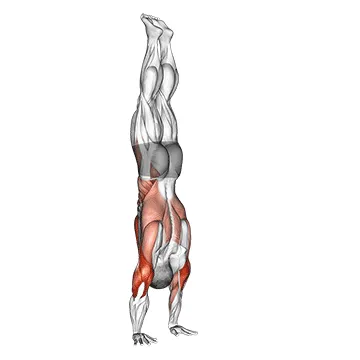
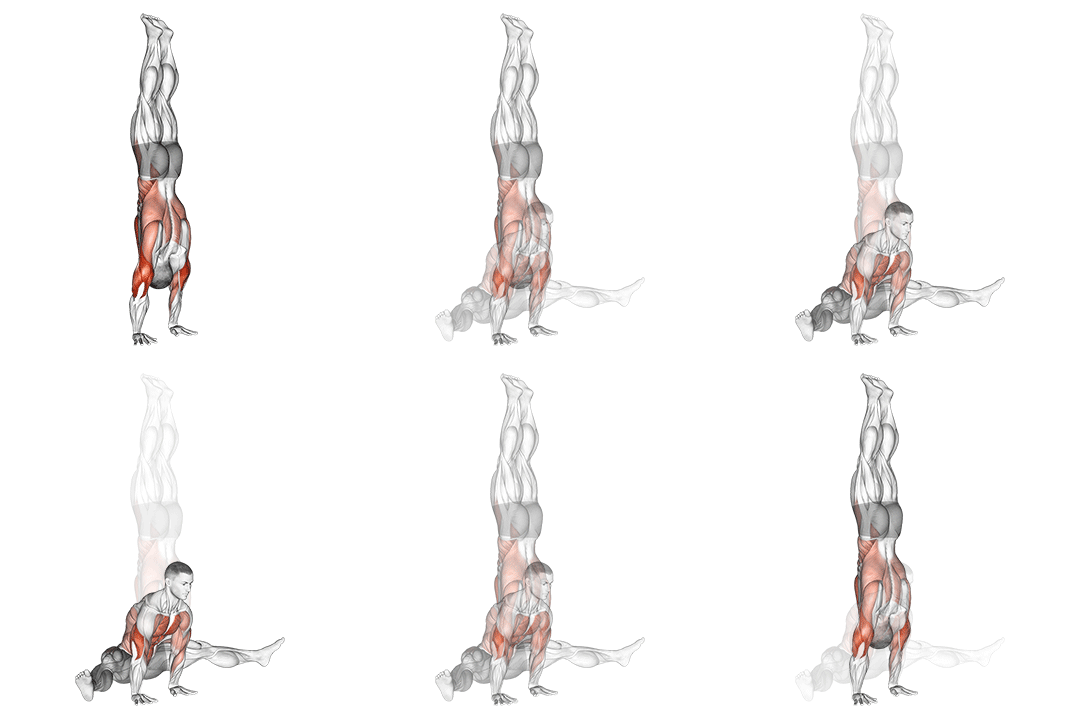
4. Stalder Press
40% match- Triceps
- Bodyweight
- Advanced
- Compound
How to perform this exercise
- Start by standing with your feet shoulder-width apart and your arms extended overhead.
- Bend your knees slightly and engage your core.
- Lower your body down into a squat position while keeping your arms extended overhead.
- As you squat down, press your arms down towards the ground, engaging your triceps.
- Pause for a moment at the bottom of the squat, then push through your heels to stand back up while simultaneously raising your arms back overhead.
- Repeat for the desired number of repetitions.
Sets and reps: 3 or 4 sets of 6 to 10 reps.
Why this matches
- Primary muscle: triceps, not chest
- Equipment: bodyweight only, not free weights
- Body position: inverted, not standing
- Balance: harder to stay steady on than the Svend Press
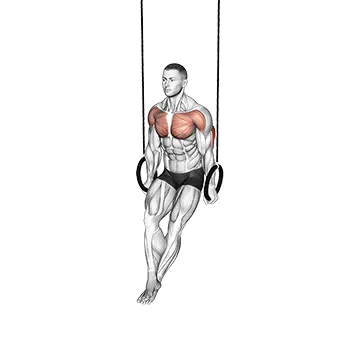
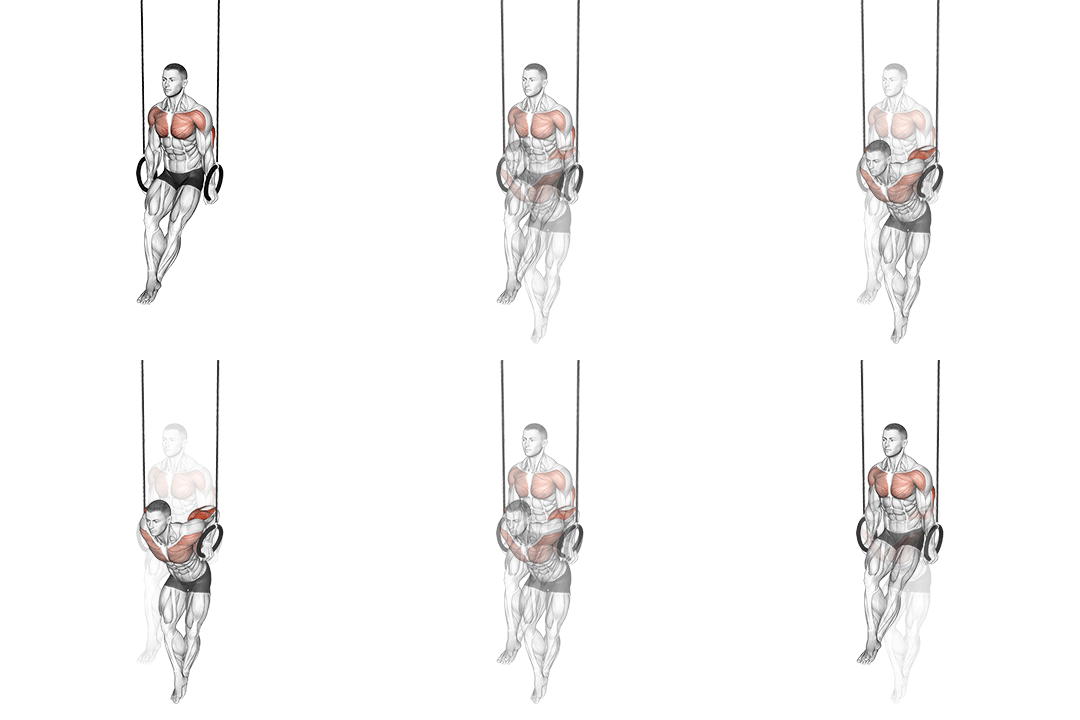
5. Ring Dips
40% match- Triceps
- Bodyweight
- Advanced
- Compound
How to perform this exercise
- Start by hanging from the rings with your arms fully extended and your body straight.
- Lower your body by bending your elbows until your shoulders are below your elbows.
- Push yourself back up to the starting position by straightening your arms.
- Repeat for the desired number of repetitions.
Sets and reps: 3 to 5 sets of 5 to 8 reps.
Why this matches
- Primary muscle: triceps, not chest
- Equipment: a suspension trainer, not free weights
- Body position: standing, the same as the Svend Press
- Balance: harder to stay steady on than the Svend Press
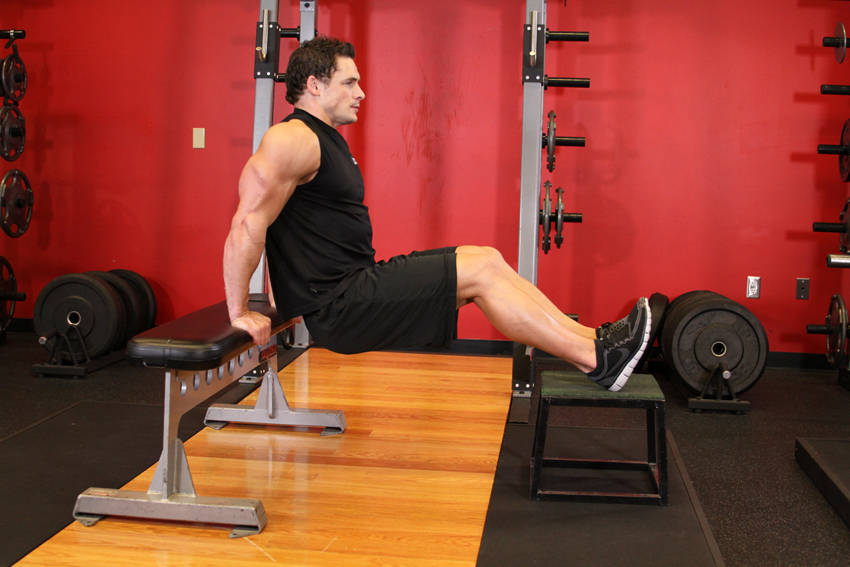
6. Bench Dips
38% match- Triceps
- Bodyweight
- Intermediate
- Compound
How to perform this exercise
- For this exercise you will need to place a bench behind your back. With the bench perpendicular to your body, and while looking away from it, hold on to the bench on its edge with the hands fully extended, separated at shoulder width. The legs will be extended forward, bent at the waist and perpendicular to your torso. This will be your starting position.
- Slowly lower your body as you inhale by bending at the elbows until you lower yourself far enough to where there is an angle slightly smaller than 90 degrees between the upper arm and the forearm. Tip: Keep the elbows as close as possible throughout the movement. Forearms should always be pointing down.
- Using your triceps to bring your torso up again, lift yourself back to the starting position.
- Repeat for the recommended amount of repetitions.
Sets and reps: 3 or 4 sets of 6 to 10 reps.
Why this matches
- Primary muscle: triceps, not chest
- Equipment: bodyweight only, not free weights
- Body position: seated, not standing
7. Chest Dip
36% match- Pectorals
- Bodyweight
- Advanced
- Compound
A looser match: it works the pectorals rather than the chest.
How to perform this exercise
- Position yourself on parallel bars with your arms fully extended and your body straight.
- Lower your body by bending your elbows until your shoulders are below your elbows.
- Push yourself back up to the starting position by straightening your arms.
- Repeat for the desired number of repetitions.
Sets and reps: 3 or 4 sets of 6 to 10 reps.
Why this matches
- Primary muscle: pectorals, not chest
- Equipment: bodyweight only, not free weights
- Body position: hanging, not standing
- Balance: harder to stay steady on than the Svend Press
8. Potty Squat
36% match- Abs
- Bodyweight
- Beginner
- Compound
How to perform this exercise
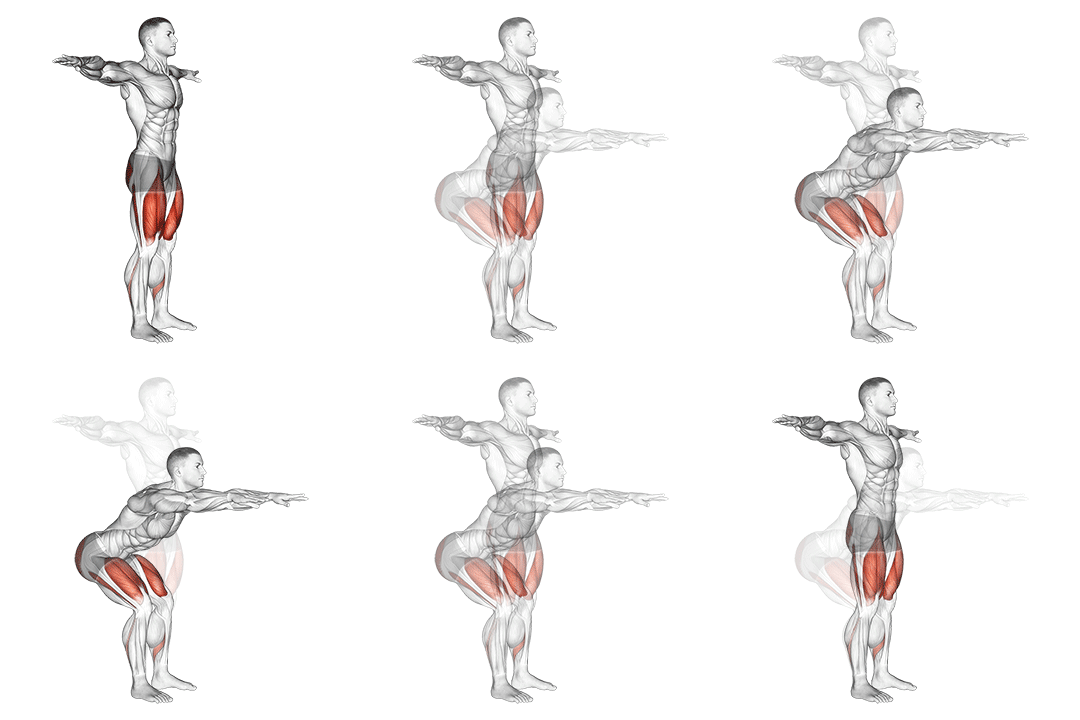
- Stand with your feet shoulder-width apart, toes pointing slightly outward.
- Lower your body down by bending your knees and pushing your hips back as if you were sitting on a chair.
- Keep your chest up and your back straight throughout the movement.
- Lower yourself until your thighs are parallel to the ground or as low as you can comfortably go.
- Pause for a moment at the bottom, then push through your heels to return to the starting position.
- Repeat for the desired number of repetitions.
Sets and reps: 3 sets of 8 to 12 reps, and add reps before you add load.
Why this matches
- Primary muscle: abs, not chest
- Equipment: bodyweight only, not free weights
- Body position: standing, the same as the Svend Press
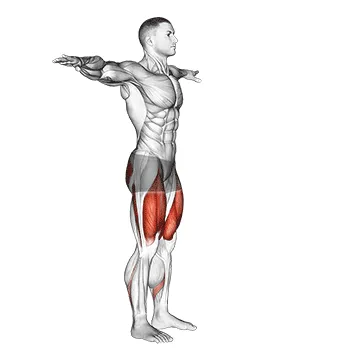
9. Isometric Chest Squeeze
35% match- Pectorals
- Bodyweight
- Beginner
- Isolation
How to perform this exercise
- Stand with your feet shoulder-width apart and your knees slightly bent.
- Extend your arms straight out in front of you, parallel to the ground, with your palms facing each other.
- Squeeze your chest muscles together as hard as you can, while keeping your arms straight.
- Hold this position for a few seconds, focusing on contracting your chest muscles.
- Release the squeeze and relax your chest muscles.
- Repeat for the desired number of repetitions.
Sets and reps: 3 sets of 8 to 12 reps, and add reps before you add load.
Why this matches
- Primary muscle: pectorals, not chest
- Equipment: bodyweight only, not free weights
- Body position: standing, the same as the Svend Press
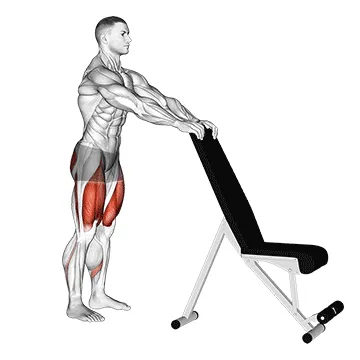
10. Potty Squat With Support
35% match- Glutes
- Bodyweight
- Beginner
- Compound
How to perform this exercise
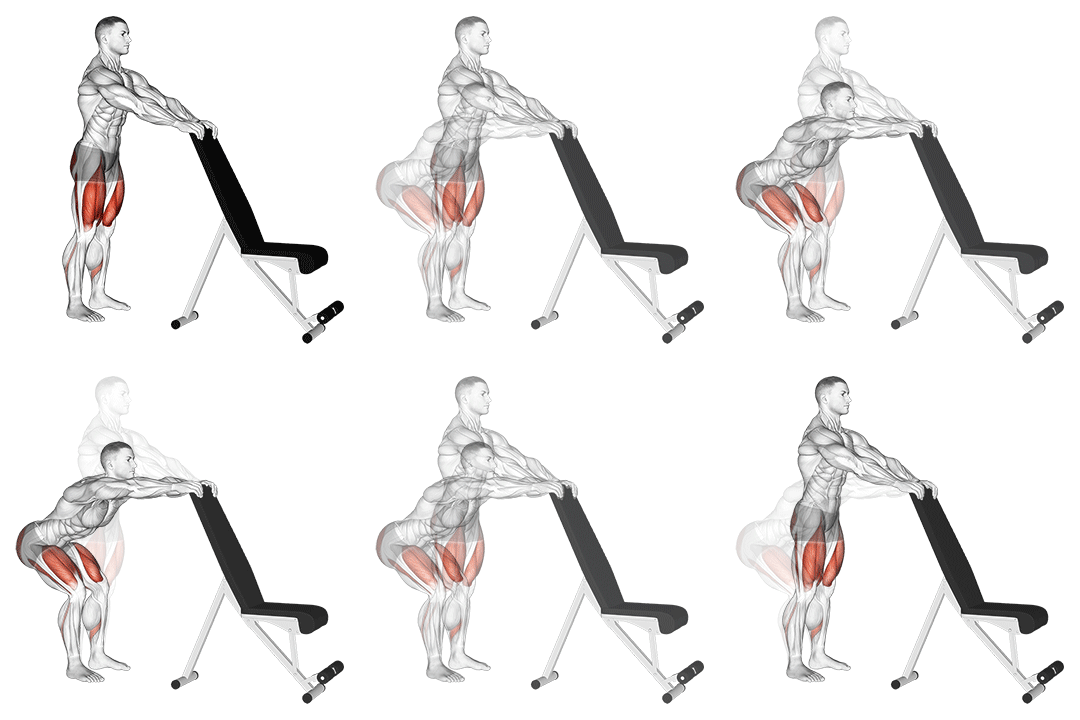
- Stand with your feet shoulder-width apart, toes pointing slightly outward.
- Hold onto a stable support, such as a chair or wall, for balance.
- Lower your body down into a squat position by bending your knees and pushing your hips back.
- Keep your chest up and your back straight throughout the movement.
- Pause for a moment at the bottom, then push through your heels to return to the starting position.
- Repeat for the desired number of repetitions.
Sets and reps: 3 sets of 8 to 12 reps, and add reps before you add load.
Why this matches
- Primary muscle: glutes, not chest
- Equipment: bodyweight only, not free weights
- Body position: standing, the same as the Svend Press
Why You Might Need a Svend Press Alternative
You may substitute the Svend Press because of wrist pain from plate gripping, lack of access to a plate or partner, or a need for greater load progression. Some lifters prefer dynamic resistance (cables) over isometric holds to improve time-under-tension and eccentric control. Choose a replacement that maintains horizontal adduction and medial chest compression; cue a slow 2-3 second eccentric and maintain scapular retraction so the sternal fibers of the pectoralis major remain loaded without excessive anterior deltoid dominance.
Svend Press FAQ
What muscles does Svend Press work?
The Svend Press primarily targets the pectoralis major, especially the sternal fibers, through horizontal adduction and isometric medial compression. It also engages the anterior deltoids, triceps for stabilization, and scapular stabilizers to maintain chest posture.
Can I build muscle without doing Svend Press?
Yes. You can build chest muscle with alternatives that reproduce horizontal adduction and time under tension, such as cable flyes, dumbbell squeeze presses, and pec-deck work. Prioritize progressive overload, strict technique (elbows slightly bent, scapulae stable), and sufficient volume to stimulate growth.
Find Alternatives for Any Exercise
Search the exercise database and filter the ranked substitutes by the equipment you own.
Similarity scores compare exercise metadata such as movement pattern, muscles, equipment and body position. They are not a safety rating or a check that you own the equipment. Learn about our methodology