

10 Best Walking On Stepmill Alternatives for Home & Gym
Use incline treadmill walking, weighted step-ups, Bulgarian split squats, walking lunges, or sled pushes to replicate the glute-focused stepping pattern and cardio stimulus of the stepmill. Drive through the heel on each step, extend the hip fully, and maintain an upright torso to optimize glute maximus activation while keeping knee loading controlled.
Original Exercise: Walking On Stepmill
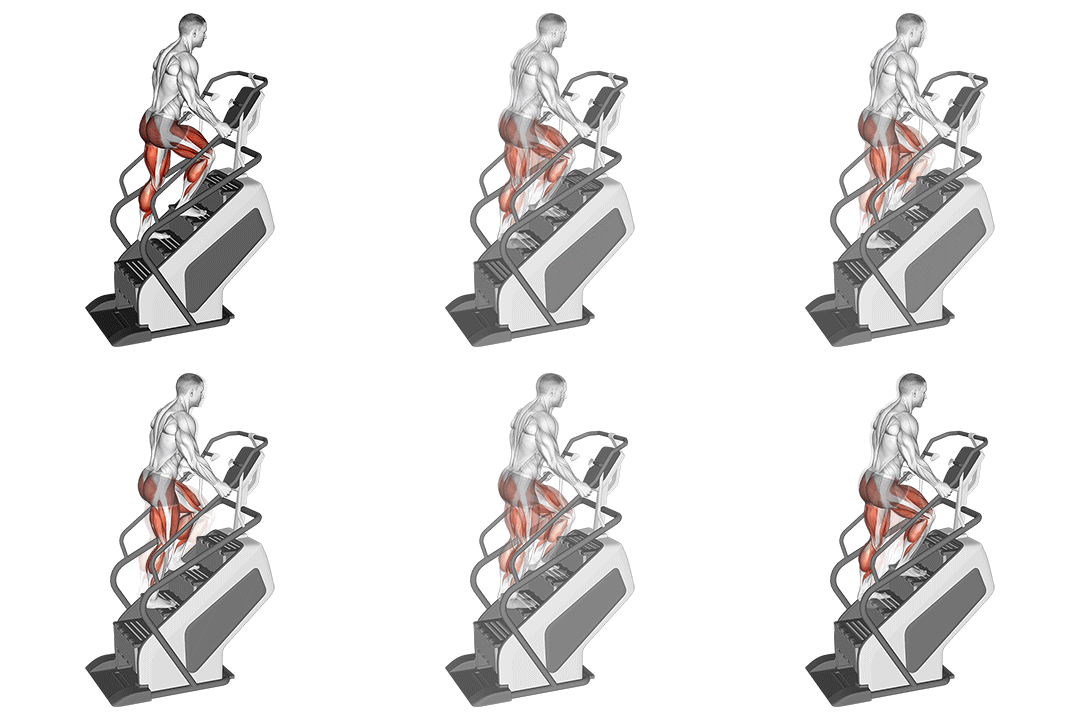
How to Perform Walking On Stepmill
- Adjust the stepmill machine to a comfortable level.
- Step onto the machine and place your hands on the handrails for support.
- Start walking by placing one foot on a step and then the other, alternating between legs.
- Maintain an upright posture and engage your core muscles.
- Continue walking for the desired duration or distance.
- Gradually increase the intensity or speed as you become more comfortable with the exercise.
- Remember to cool down and stretch after completing the exercise.
Ranked Walking On Stepmill Alternatives
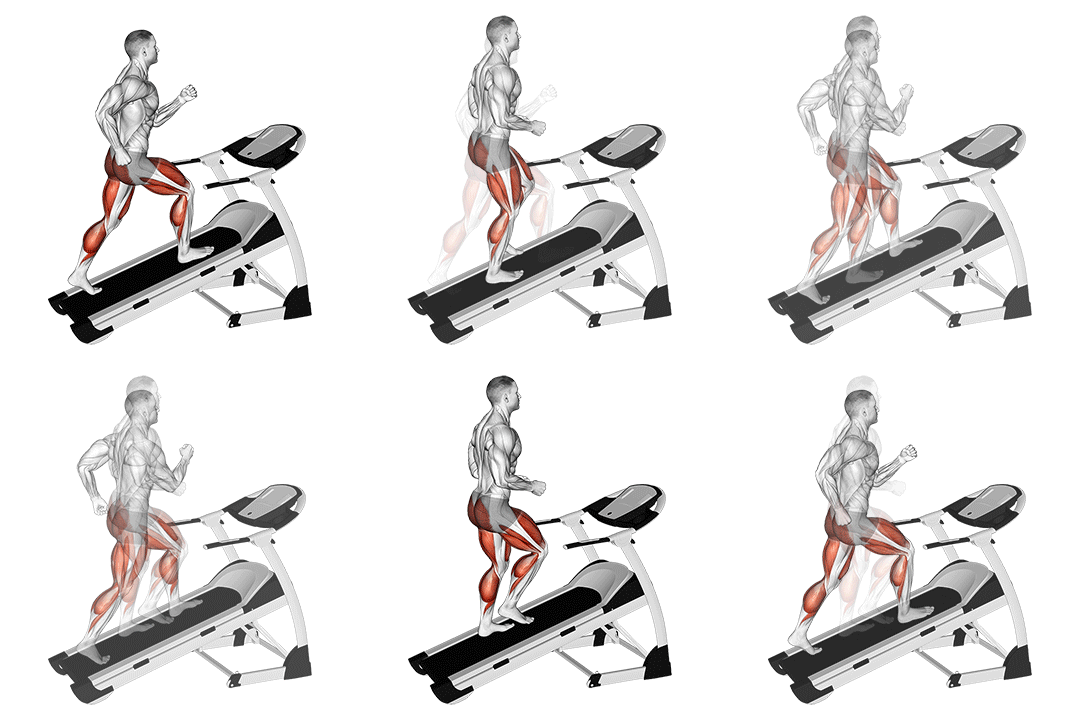
1. Walking On Incline Treadmill
75.4% MatchHow to perform this exercise
- Adjust the incline level on the treadmill to your desired intensity.
- Stand on the treadmill with your feet shoulder-width apart.
- Start walking at a comfortable pace, ensuring that you maintain proper form.
- Engage your core muscles and keep your back straight throughout the exercise.
- Continue walking on the incline treadmill for the desired duration of your cardio workout.
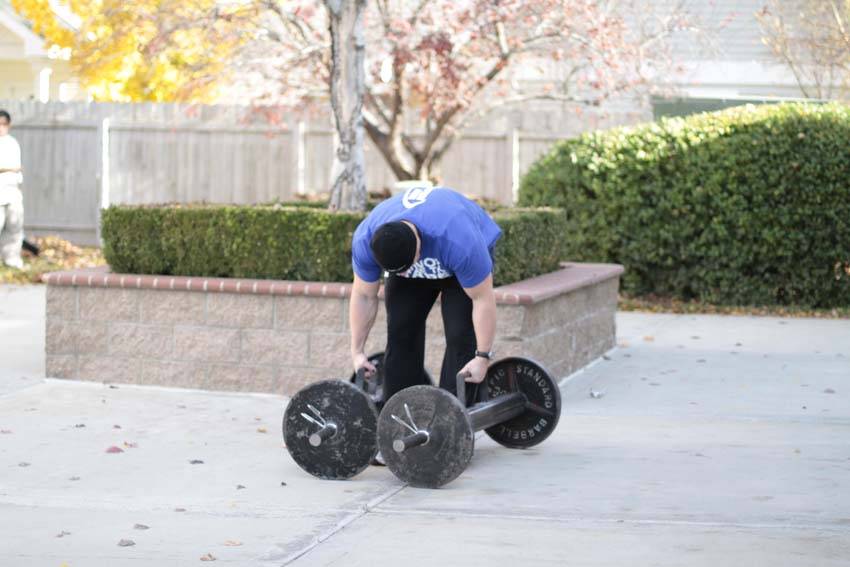
2. Farmer's Walk
67% MatchHow to perform this exercise
- There are various implements that can be used for the farmers walk. These can also be performed with heavy dumbbells or short bars if these implements aren't available. Begin by standing between the implements.
- After gripping the handles, lift them up by driving through your heels, keeping your back straight and your head up.
- Walk taking short, quick steps, and don't forget to breathe. Move for a given distance, typically 50-100 feet, as fast as possible.
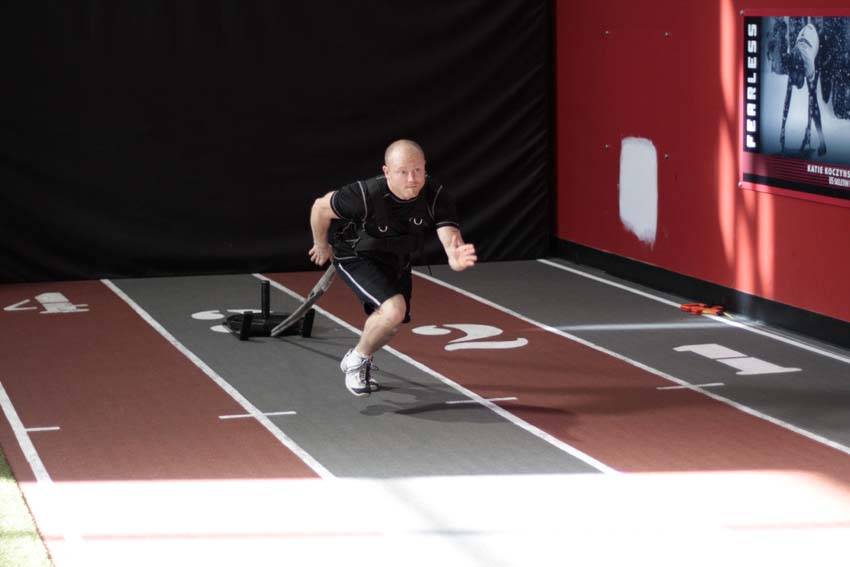
3. Sled Drag - Harness
65.4% MatchHow to perform this exercise
- To begin, load the sled with the desired weight and attach the pulling strap. You can pull with handles, use a harness, or attach the pulling strap to a weight belt.
- Whether pulling forwards or backwards, lean in the direction of travel and progress by extending through the hips and knees.
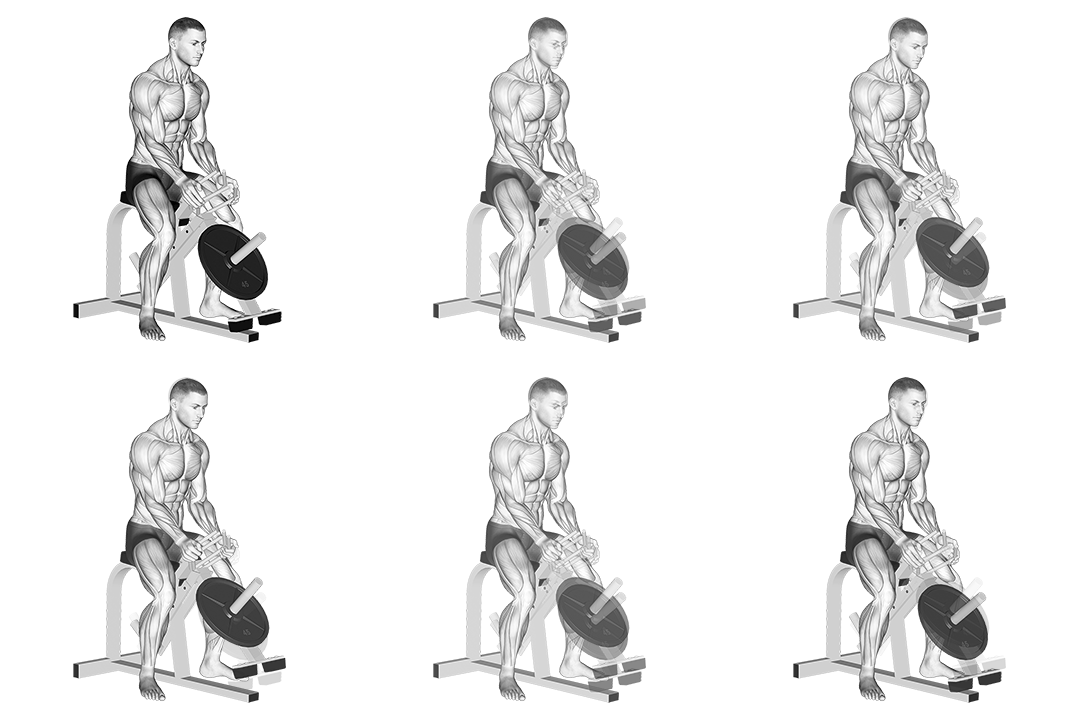
4. Lever Gripper Hands
60.4% MatchHow to perform this exercise
- Adjust the seat height and grip the handles of the leverage machine.
- Keep your back straight and your feet flat on the ground.
- Exhale and squeeze the handles, contracting your forearms.
- Hold the contraction for a second, then slowly release and return to the starting position.
- Repeat for the desired number of repetitions.
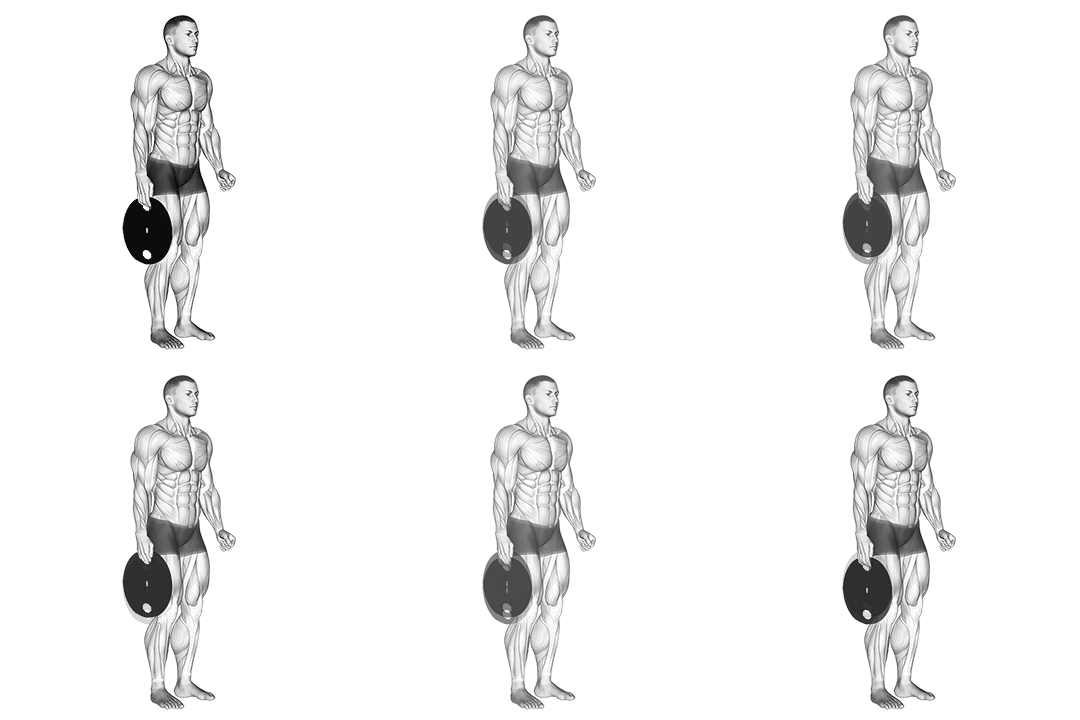
5. Weighted Standing Hand Squeeze
58.3% MatchHow to perform this exercise
- Stand with your feet shoulder-width apart and hold a weight in each hand.
- Extend your arms straight in front of you, palms facing each other.
- Squeeze your hands together as hard as you can, engaging your forearms.
- Hold the squeeze for a few seconds, then release.
- Repeat for the desired number of repetitions.
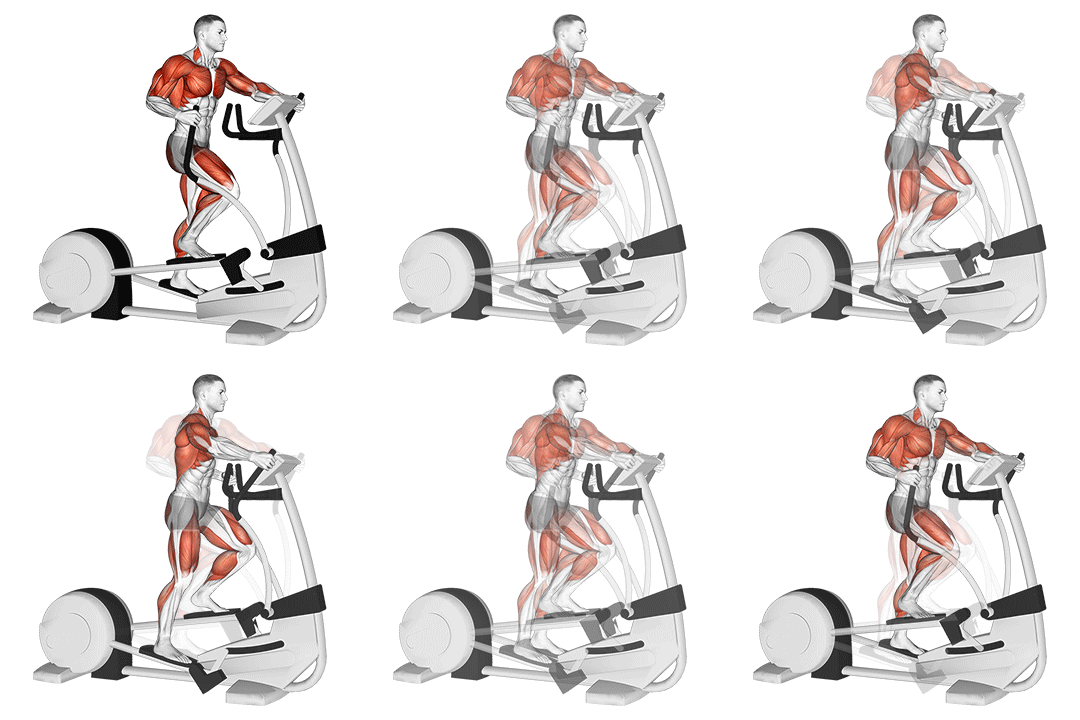
6. Walk Elliptical Cross Trainer
55.2% MatchHow to perform this exercise
- Adjust the resistance level and incline of the elliptical machine to your desired settings.
- Step onto the pedals of the machine and grip the handles lightly.
- Begin by pushing down with your feet and pulling the handles towards your body.
- Continue this motion, alternating between pushing and pulling, to simulate a walking or running motion.
- Maintain a steady pace and keep your core engaged throughout the exercise.
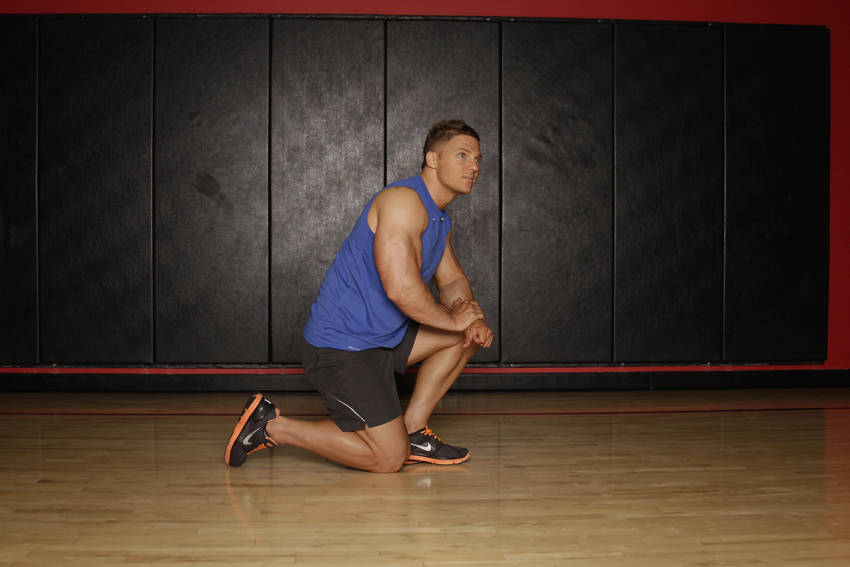
7. Plank
55.1% MatchHow to perform this exercise
- Get into a prone position on the floor, supporting your weight on your toes and your forearms. Your arms are bent and directly below the shoulder.
- Keep your body straight at all times, and hold this position as long as possible. To increase difficulty, an arm or leg can be raised.
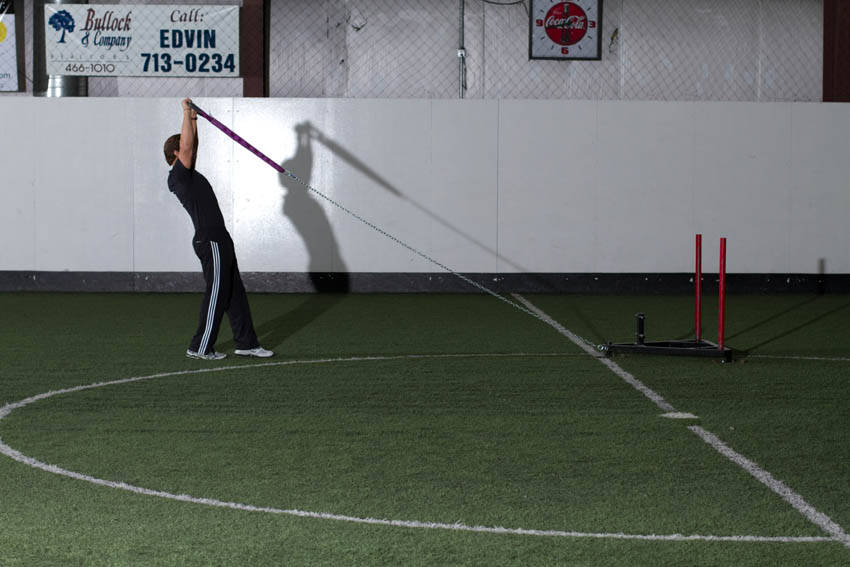
8. Sled Overhead Backward Walk
54.9% MatchHow to perform this exercise
- Attach dual handles to a sled connected by a rope or chain. Load the sled to a light weight.
- Face the sled, backing up until there is some tension in the line. Hold your hands directly above your head with your elbows extended. This will be your starting position.
- Walk backwards, keeping your arms raised above your head. Avoid jerky movements.
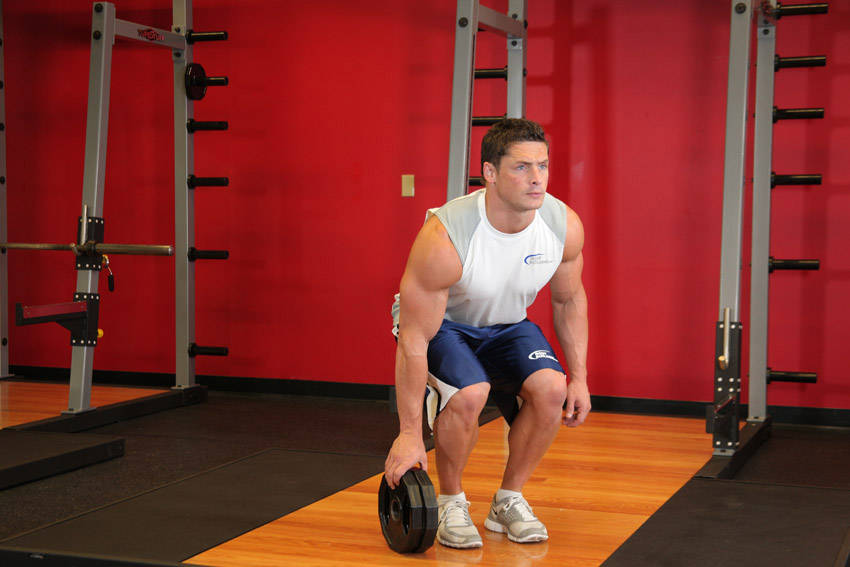
9. Plate Pinch
53.6% MatchHow to perform this exercise
- Grab two wide-rimmed plates and put them together with the smooth sides facing outward
- Use your fingers to grip the outside part of the plate and your thumb for the other side thus holding both plates together. This is the starting position.
- Squeeze the plate with your fingers and thumb. Hold this position for as long as you can.
- Repeat for the recommended amount of sets prescribed in your program.
- Switch arms and repeat the movements.
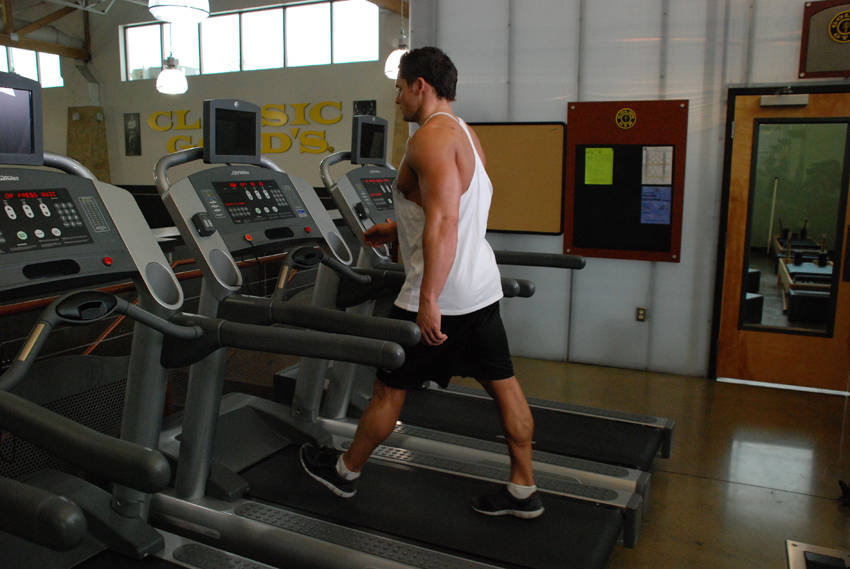
10. Walking, Treadmill
53.4% MatchHow to perform this exercise
- To begin, step onto the treadmill and select the desired option from the menu. Most treadmills have a manual setting, or you can select a program to run. Typically, you can enter your age and weight to estimate the amount of calories burned during exercise. Elevation can be adjusted to change the intensity of the workout.
- Treadmills offer convenience, cardiovascular benefits, and usually have less impact than walking outside. When walking, you should move at a moderate to fast pace, not a leisurely one. Being an activity of lower intensity, walking doesn't burn as many calories as some other activities, but still provides great benefit. A 150 lb person will burn about 175 calories walking 4 miles per hour for 30 minutes, compared to 450 calories running twice as fast. Maintain proper posture as you walk, and only hold onto the handles when necessary, such as when dismounting or checking your heart rate.
Why You Might Need a Walking On Stepmill Alternative
You may replace the stepmill because of knee or low-back pain, lack of access to the machine, travel, or a need for greater strength stimulus. High step heights and repeated impact can increase knee compressive forces; alternatives let you alter step height, load, and tempo to manage joint stress. Choose movements that preserve hip extension and posterior chain recruitment, for example, perform step-ups with a deliberate hip drive, cueing heel pressure and glute squeeze at lockout to emphasize glute maximus activation. For limited space, walking lunges or band-resisted hip thrusts reproduce the eccentric–concentric cycle while reducing axial load. Substitutes also improve unilateral control and glute medius engagement, enhancing biomechanics and transfer to sport-specific tasks.
How to Choose the Right Substitute
Prioritize substitutions based on your goal: cardio endurance, anaerobic intervals, or glute hypertrophy. If your aim is cardio, use incline treadmill intervals with a brisk cadence and a 1–2% forward lean to simulate step rhythm and raise heart rate. For strength or hypertrophy, choose weighted step-ups, Bulgarian split squats, or hip thrusts to maximize hip extension; cue full hip extension and an intentional glute squeeze at the top of each rep. Account for joint tolerance by lowering step height or using sled pushes to limit knee shear. Also check progression options, add load, increase range of motion, or manipulate tempo, and select unilateral work to correct asymmetries and boost glute medius activation.
Frequently Asked Questions
What muscles does Walking On Stepmill work?
Walking on a stepmill primarily targets the gluteus maximus through repetitive hip extension while the gluteus medius stabilizes the pelvis. The quads, hamstrings, and calves assist during the step and push phases, making it a compound, cardio-focused movement.
What is the best bodyweight alternative to Walking On Stepmill?
Walking lunges are the best bodyweight substitute because they reproduce single-leg stepping and the hip extension pattern. Cue long steps, drive through the heel, and actively contract the glutes at lockout to maintain glute-max emphasis and pelvic stability.
Can I build muscle without doing Walking On Stepmill?
Yes, you can build glute and lower-body muscle with loaded resistance movements such as hip thrusts, step-ups, and Romanian deadlifts that target hip extension. Use progressive overload (more load, reps, or range of motion) and prioritize a full glute contraction each rep to drive hypertrophy.
More Exercise Alternatives
Find Alternatives for Any Exercise
Use the exercise substitution finder to compare ranked alternatives for your available equipment and training preference.
Try the Exercise Substitution Finder →