

10 Best Zercher Squats Alternatives for Quad Strength
If your elbows and forearms give out before your quads do, the Zercher Squats hold is the problem, not your legs. The closest swap is the Olympic Squat, a standard back squat with the same barbell and the same quadriceps focus, just without the bar cutting into your arms. Front Squats With Two Kettlebells keeps the load in front, but racks a kettlebell at each shoulder instead of a bar across your elbows.
Original Exercise: Zercher Squats
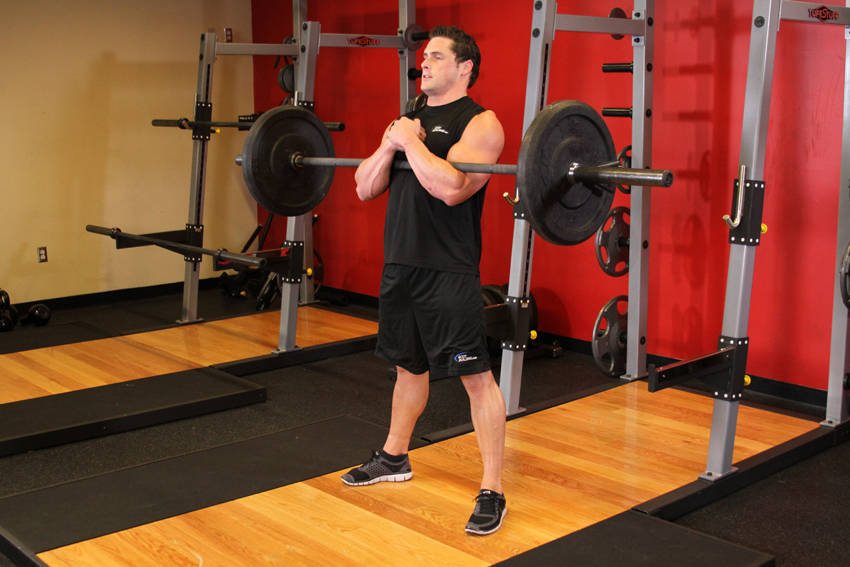
How to Perform Zercher Squats
- This exercise is best performed inside a squat rack for safety purposes. To begin, first set the bar on a rack that best matches your height. The correct height should be anywhere above the waist but below the chest. Once the correct height is chosen and the bar is loaded, lock your hands together and place the bar on top of your arms in between the forearm and upper arm.
- Lift the bar up so that it is resting on top of your forearms. If you are holding the bar properly, it should look as if you have your arms crossed but with a bar running across them.
- Step away from the rack and position your legs using a shoulder width medium stance with the toes slightly pointed out. Keep your head up at all times as looking down will get you off balance and also maintain a straight back. This will be your starting position. (Note: For the purposes of this discussion we will use the medium stance described above which targets overall development; however you can choose any of the three stances discussed in the foot stances section).
- Begin to lower the bar by bending the knees as you maintain a straight posture with the head up. Continue down until the angle between the upper leg and the calves becomes slightly less than 90-degrees (which is the point in which the upper legs are below parallel to the floor). Inhale as you perform this portion of the movement. Tip: If you performed the exercise correctly, the front of the knees should make an imaginary straight line with the toes that is perpendicular to the front. If your knees are past that imaginary line (if they are past your toes) then you are placing undue stress on the knee and the exercise has been performed incorrectly.
- Begin to raise the bar as you exhale by pushing the floor with the ball of your foot mainly as you straighten the legs again and go back to the starting position.
- Repeat for the recommended amount of repetitions.
Pro Tips
- Category: Strength
- Force: Push
- Movement type: Compound
Ranked Zercher Squats Alternatives
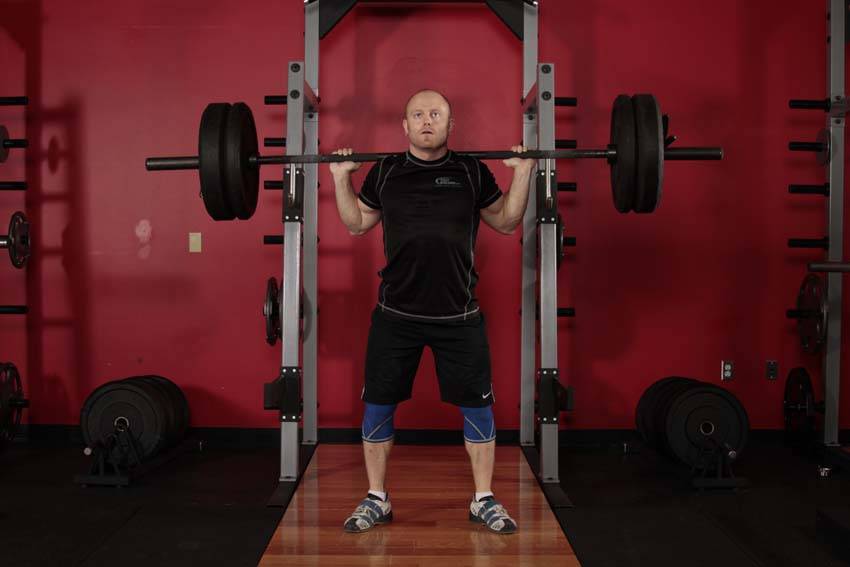
1. Olympic Squat
85.4% MatchHow to perform this exercise
- Begin with a barbell supported on top of the traps. The chest should be up, and the head facing forward. Adopt a hip width stance with the feet turned out as needed.
- Descend by flexing the knees, refraining from moving the hips back as much as possible. This requires that the knees travel forward; ensure that they stay aligned with the feet. The goal is to keep the torso as upright as possible. Continue all the way down, keeping the weight on the front of the heel.
- At the moment the upper legs contact the lower, reverse the motion, driving the weight upward.
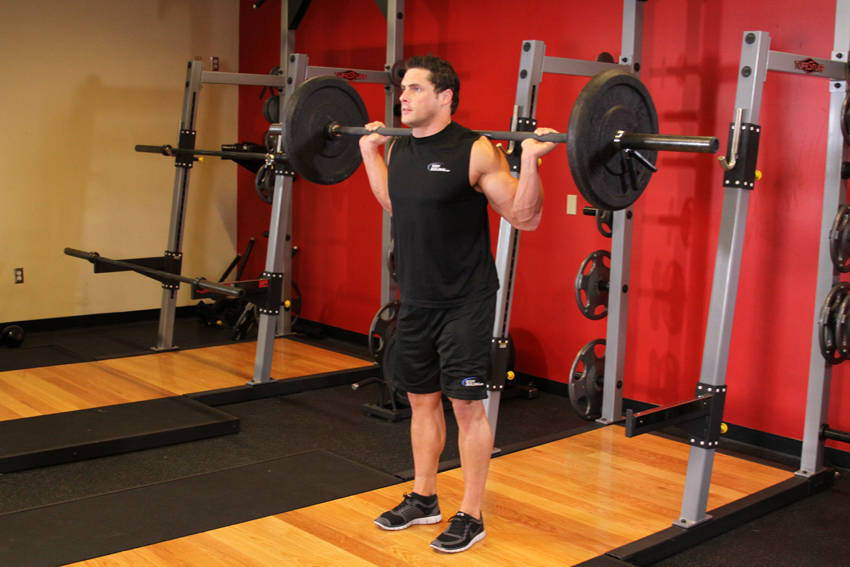
2. Narrow Stance Squats
84.9% MatchHow to perform this exercise
- This exercise is best performed inside a squat rack for safety purposes. To begin, first set the bar on a rack that best matches your height. Once the correct height is chosen and the bar is loaded, step under the bar and place the back of your shoulders (slightly below the neck) across it.
- Hold on to the bar using both arms at each side and lift it off the rack by first pushing with your legs and at the same time straightening your torso.
- Step away from the rack and position your legs using a less-than-shoulder-width narrow stance with the toes slightly pointed out. Feet should be around 3-6 inches apart. Keep your head up at all times (looking down will get you off balance) and maintain a straight back. This will be your starting position. (Note: For the purposes of this discussion we will use the medium stance described above which targets overall development; however you can choose any of the three stances discussed in the foot stances section).
- Begin to slowly lower the bar by bending the knees as you maintain a straight posture with the head up. Continue down until the angle between the upper leg and the calves becomes slightly less than 90-degrees (which is the point in which the upper legs are below parallel to the floor). Inhale as you perform this portion of the movement. Tip: If you performed the exercise correctly, the front of the knees should make an imaginary straight line with the toes that is perpendicular to the front. If your knees are past that imaginary line (if they are past your toes) then you are placing undue stress on the knee and the exercise has been performed incorrectly.
- Begin to raise the bar as you exhale by pushing the floor with the heel of your foot mainly as you straighten the legs again and go back to the starting position.
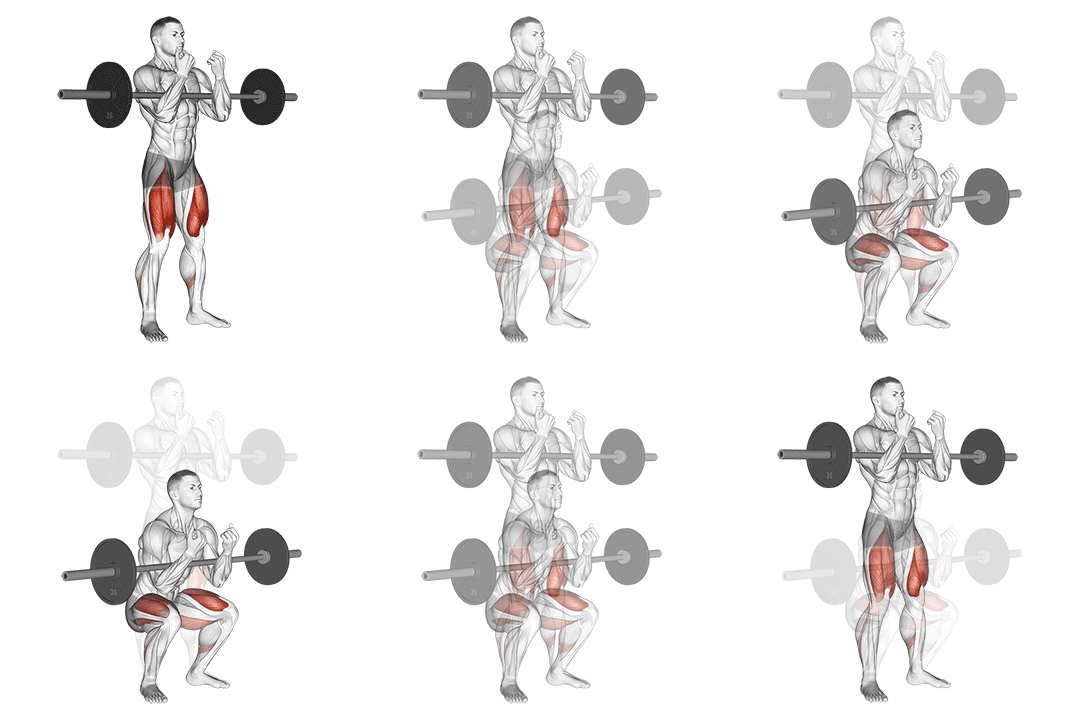
3. Barbell Full Zercher Squat
84.4% MatchHow to perform this exercise
- Stand with your feet shoulder-width apart and toes slightly turned out.
- Hold the barbell in the crooks of your elbows, with your hands gripping the barbell for stability.
- Engage your core and keep your chest lifted as you lower your hips back and down into a squat position.
- Keep your knees in line with your toes and your weight in your heels.
- Lower until your thighs are parallel to the ground, or as low as you can comfortably go.
4. Jefferson Squats
84.1% MatchHow to perform this exercise
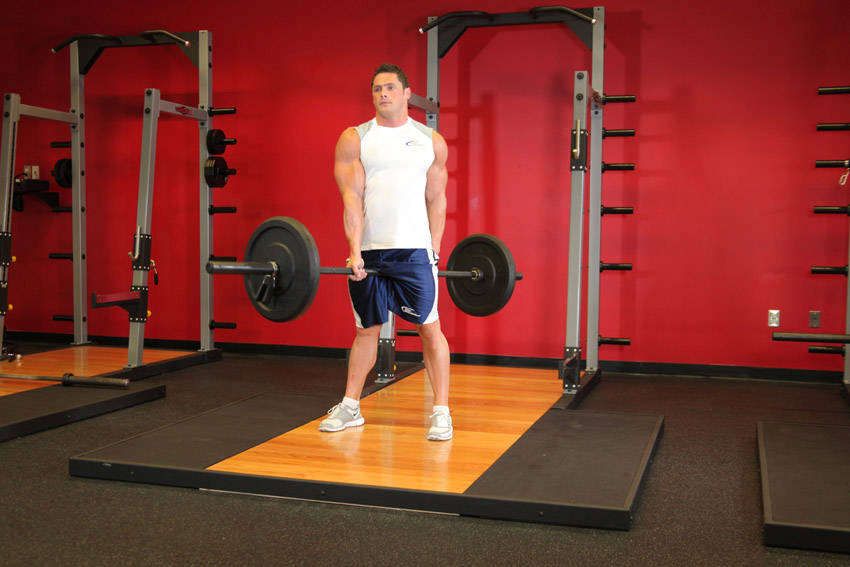
- Place a barbell on the floor.
- Stand in the middle of the bar length wise.
- Bend down by bending at the knees and keeping your back straight and grasp the front of the bar with your right hand. Your palm should be in (neutral grip) facing the left side.
- Grasp the rear of the bar with your left hand. The palm of your hand should be in neutral grip alignment (palms facing the right side). Tip: Ensure that your grip is even on the bar. Your torso should be positioned right in the middle of the bar and the distance between your torso and your right hand (which should be at the front) should be the same as the distance between your torso and your left hand (which should be to your back).
- Now stand straight up with the weight. Tip: Your feet should be shoulder width apart and your toes slightly pointed out.
5. Wide Stance Barbell Squat
84.1% MatchHow to perform this exercise
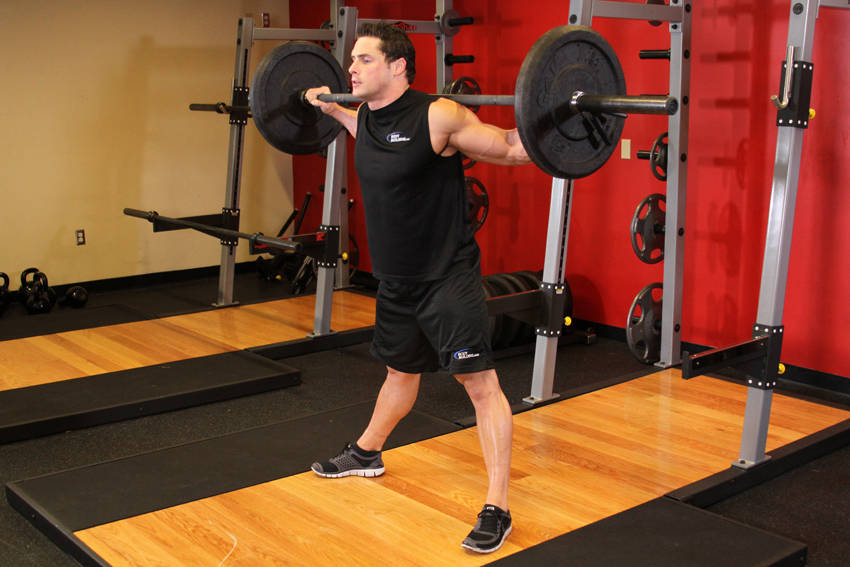
- This exercise is best performed inside a squat rack for safety purposes. To begin, first set the bar on a rack that best matches your height. Once the correct height is chosen and the bar is loaded, step under the bar and place the back of your shoulders (slightly below the neck) across it.
- Hold on to the bar using both arms at each side and lift it off the rack by first pushing with your legs and at the same time straightening your torso.
- Step away from the rack and position your legs using a wider-than-shoulder-width stance with the toes slightly pointed out. Keep your head up at all times as looking down will get you off balance, and also maintain a straight back. This will be your starting position.
- Begin to slowly lower the bar by bending the knees as you maintain a straight posture with the head up. Continue down until the angle between the upper leg and the calves becomes slightly less than 90-degrees (which is the point in which the upper legs are below parallel to the floor). Inhale as you perform this portion of the movement. Tip: If you performed the exercise correctly, the front of the knees should make an imaginary straight line with the toes that is perpendicular to the front. If your knees are past that imaginary line (if they are past your toes) then you are placing undue stress on the knee and the exercise has been performed incorrectly.
- Begin to raise the bar as you exhale by pushing the floor with the heel of your foot as you straighten the legs again and go back to the starting position.
6. Frankenstein Squat
83.9% MatchHow to perform this exercise
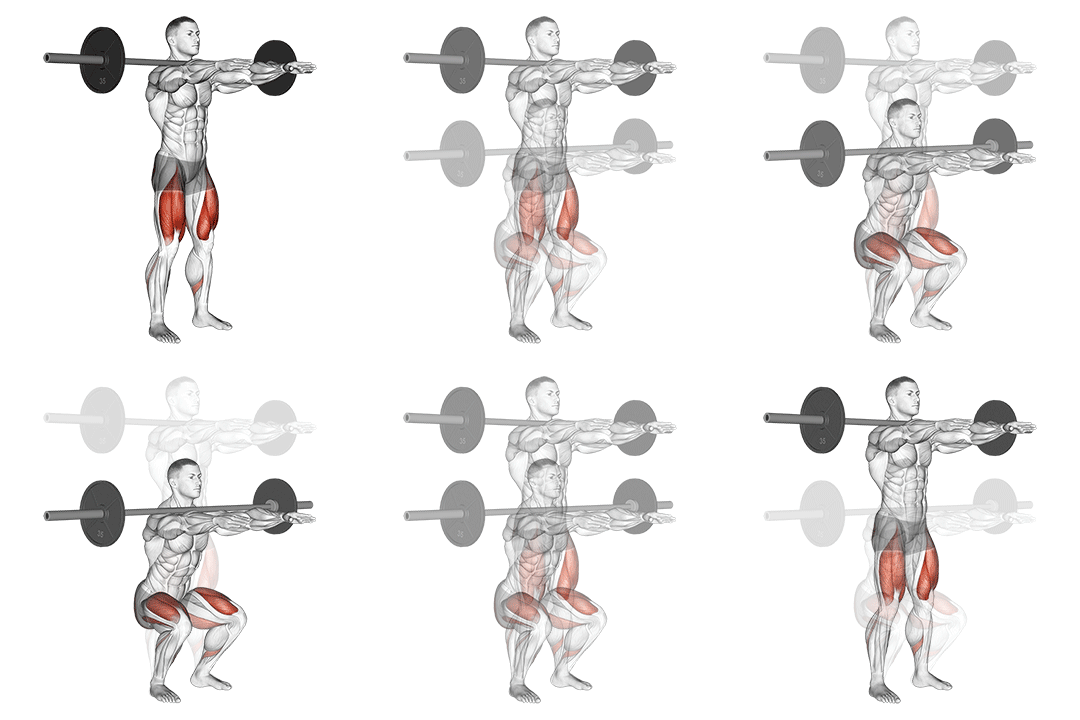
- Stand with your feet shoulder-width apart and hold the barbell in front of your body with straight arms.
- Keeping your back straight, lower your body by bending at the knees and hips, as if sitting back into a chair.
- Continue lowering until your thighs are parallel to the ground, or as low as you can comfortably go.
- Pause for a moment, then push through your heels to return to the starting position.
- Repeat for the desired number of repetitions.
7. Front Squats With Two Kettlebells
83.9% MatchHow to perform this exercise
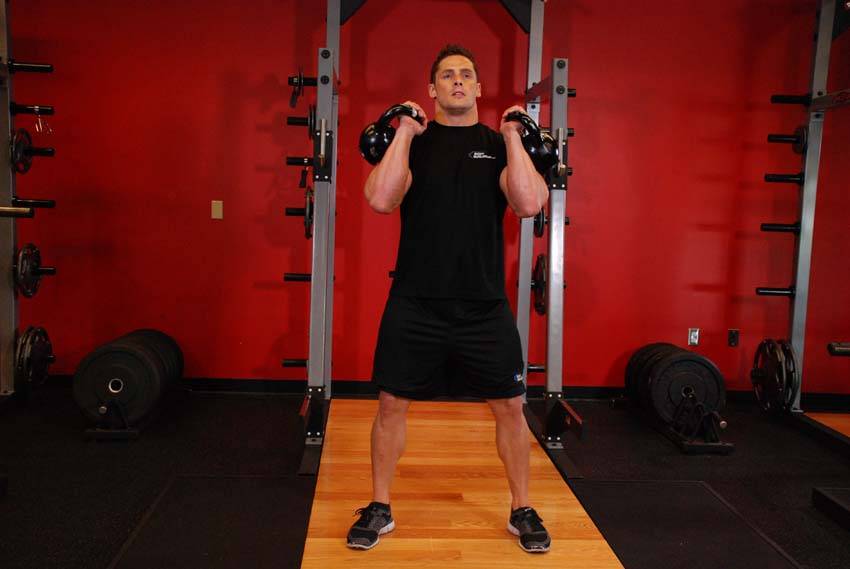
- Clean two kettlebells to your shoulders. Clean the kettlebells to your shoulders by extending through the legs and hips as you pull the kettlebells towards your shoulders. Rotate your wrists as you do so.
- Looking straight ahead at all times, squat as low as you can and pause at the bottom. As you squat down, push your knees out. You should squat between your legs, keeping an upright torso, with your head and chest up.
- Rise back up by driving through your heels and repeat.
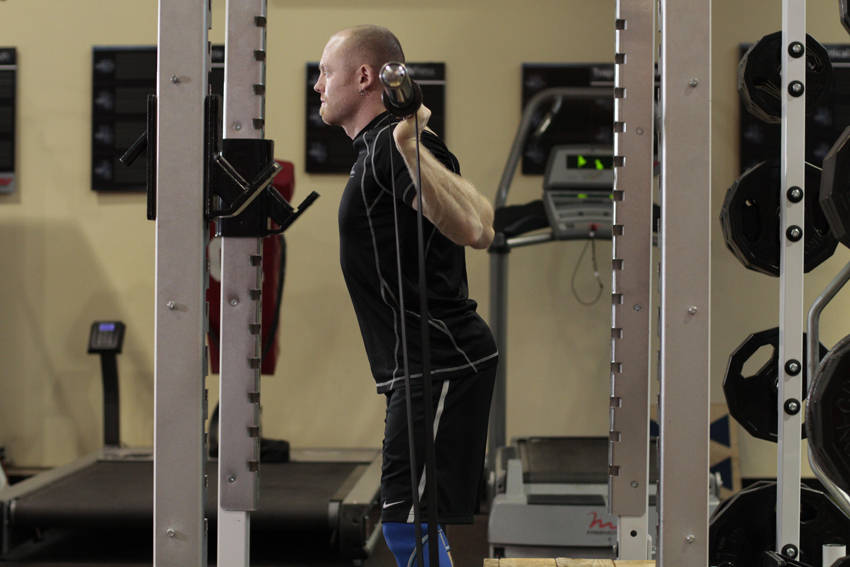
8. Box Squat With Bands
81.4% MatchHow to perform this exercise
- Begin in a power rack with a box at the appropriate height behind you. Set up the bands on the sleeves, secured to either band pegs, the rack, or dumbbells so that there is appropriate tension. If dumbbells are used, secure them so that they don't move. Also, ensure that the dumbbells you are using are heavy enough for the bands that you are using. Additional plates can be used to hold the dumbbells down. If more tension is needed, you can either widen the base on the floor or choke the bands. Typically, you would aim for a box height that brings you to a parallel squat, but you can train higher or lower if desired.
- Begin by stepping under the bar and placing it across the back of the shoulders. Squeeze your shoulder blades together and rotate your elbows forward, attempting to bend the bar across your shoulders. Remove the bar from the rack, creating a tight arch in your lower back, and step back into position. Place your feet wider for more emphasis on the back, glutes, adductors, and hamstrings, or closer together for more quad development. Keep your head facing forward.
- With your back, shoulders, and core tight, push your knees and butt out and you begin your descent. Sit back with your hips until you are seated on the box. Ideally, your shins should be perpendicular to the ground. Pause when you reach the box, and relax the hip flexors. Never bounce off of a box.
- Keeping the weight on your heels and pushing your feet and knees out, drive upward off of the box as you lead the movement with your head. Continue upward, maintaining tightness head to toe. Use care to return the barbell to the rack.
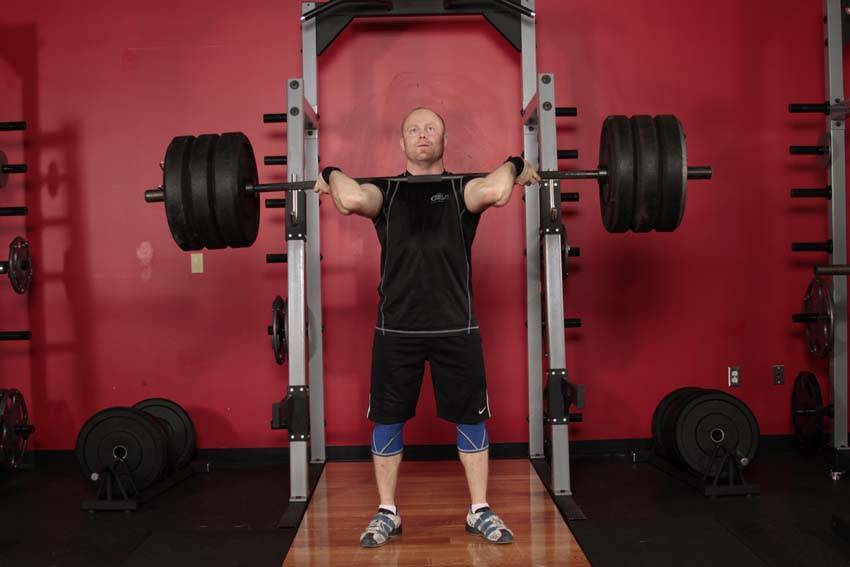
9. Jerk Dip Squat
81.4% MatchHow to perform this exercise
- This movement strengthens the dip portion of the jerk. Begin with the bar racked in the jerk position, with the shoulders forward to create a shelf and the bar lightly contacting the throat. The feet should be directly under the hips, with the feet turned out as is comfortable.
- Keeping the torso vertical, dip by flexing the knees, allowing them to travel forward and without moving the hips to the rear. The dip should not be excessive. Return the weight to the starting position by driving forcefully though the feet.
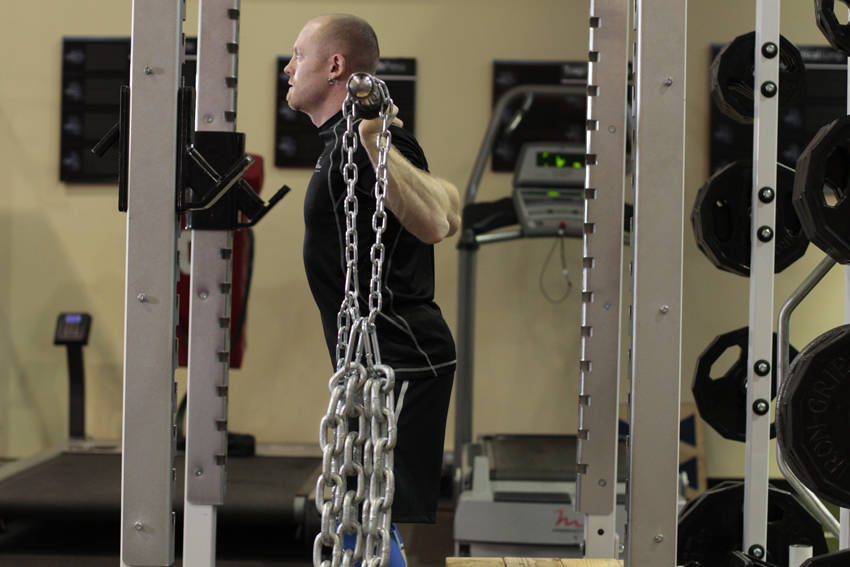
10. Box Squat With Chains
80.9% MatchHow to perform this exercise
- Begin in a power rack with a box at the appropriate height behind you. Typically, you would aim for a box height that brings you to a parallel squat, but you can train higher or lower if desired.
- To set up the chains, begin by looping the leader chain over the sleeves of the bar. The heavy chain should be attached using a snap hook. Adjust the length of the lead chain so that a few links are still on the floor at the top of the movement.
- Begin by stepping under the bar and placing it across the back of the shoulders. Squeeze your shoulder blades together and rotate your elbows forward, attempting to bend the bar across your shoulders. Remove the bar from the rack, creating a tight arch in your lower back, and step back into position. Place your feet wider for more emphasis on the back, glutes, adductors, and hamstrings, or closer together for more quad development. Keep your head facing forward.
- With your back, shoulders, and core tight, push your knees and butt out and you begin your descent. Sit back with your hips until you are seated on the box. Ideally, your shins should be perpendicular to the ground. Pause when you reach the box, and relax the hip flexors. Never bounce off of a box.
- Keeping the weight on your heels and pushing your feet and knees out, drive upward off of the box as you lead the movement with your head. Continue upward, maintaining tightness head to toe.
Why You Might Need a Zercher Squats Alternative
Zercher Squats ask you to lock your hands together and cradle a loaded bar in the crook of your elbows, and that hold is often the first thing to fail before your legs do. A busy squat rack also makes the Zercher setup harder, since you are fighting for a bar everyone else wants for a back squat. Most of these swaps move the bar onto your upper back, hang it from your hands at arm's length, or rack a pair of kettlebells at your shoulders, so your legs still do the squatting and your arms only have to hold on. Two of them put the bar across the back of your shoulders and set your feet closer or wider than the shoulder-width Zercher stance, and one drops the bar for kettlebells.
How to Choose the Right Substitute
Start with the Olympic Squat if the front hold is your main problem. If your elbows are fine but you want a front-loaded feel without a bar across them, the Front Squats With Two Kettlebells racks one kettlebell at each shoulder, so the load stays in front without touching your arms. Narrow Stance Squats and Wide Stance Barbell Squat rack the bar across the back of your shoulders like the Olympic Squat and set your feet closer or wider, so pick whichever stance feels natural under load. The Barbell Full Zercher Squat still cradles the bar in the crooks of your elbows, with your hands on the bar instead of locked together, and has you sit your hips back and squeeze your glutes at the top, so treat it as a variation rather than an escape from the hold.
Frequently Asked Questions
What is the easiest alternative for a beginner?
The Olympic Squat. It uses the same barbell as Zercher Squats, but the bar rests across your shoulders instead of your elbows, so there is no forearm or wrist skill to learn before you can load real weight. Narrow Stance Squats and Wide Stance Barbell Squat use the same back-rack hold and differ only in how wide you set your feet, so they are just as easy on your arms.
Which alternative shifts more work onto the glutes?
The Barbell Full Zercher Squat. The hold is nearly the same, but you sit your hips back and squeeze your glutes at the top, rather than driving off the ball of your foot as in Zercher Squats. The Frankenstein Squat holds the bar in front with straight arms and has you sit back as if into a chair, putting more effort into your hips than the knee-forward Zercher descent.
Do I need a squat rack for these alternatives?
Not always. The Olympic Squat, Narrow Stance Squats, Wide Stance Barbell Squat, Box Squat With Bands and Box Squat With Chains all step in under a racked bar, the same as Zercher Squats. Jefferson Squats sets the bar on the floor and lifts it into place instead, and the Front Squats With Two Kettlebells needs no rack at all.
Can I do Zercher Squats at home?
Not without weight. Zercher Squats and each of these alternatives load a barbell or a pair of kettlebells, so a home setup works only if you keep at least a bar and plates or two kettlebells around. The Front Squats With Two Kettlebells is the easiest to fit in a small space, since two kettlebells take up far less room than a barbell and a rack.
More Exercise Alternatives
Find Alternatives for Any Exercise
Use the exercise substitution finder to compare ranked alternatives for your available equipment and training preference.
Try the Exercise Substitution Finder →