

Band Assisted Wheel Rollerout vs Band Bicycle Crunch: Complete Comparison Guide
Band Assisted Wheel Rollerout vs Band Bicycle Crunch — if you want a targeted core session, you need to know which exercise fits your goal. This comparison walks you through how each movement loads the rectus abdominis and surrounding stabilizers, the secondary muscles involved, the equipment and setup, and clear progression and safety cues. You'll get biomechanics-based technique tips, rep and set ranges, and scenario-based recommendations so you can choose the exercise that best supports your strength, hypertrophy, or home training goals.
Exercise Comparison
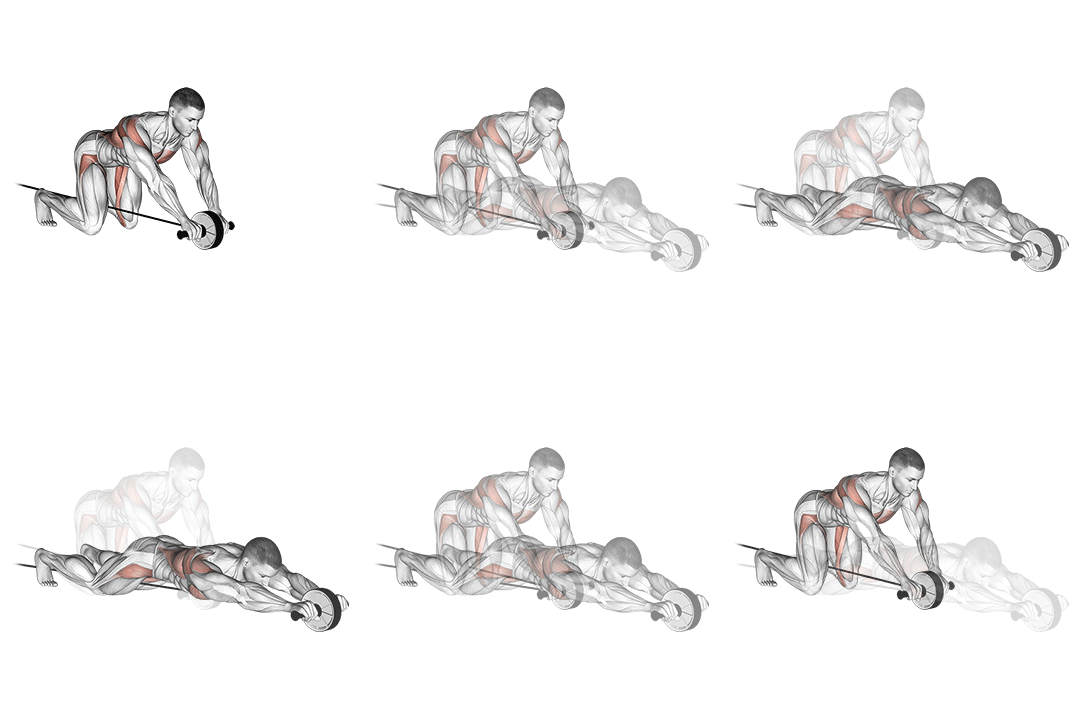
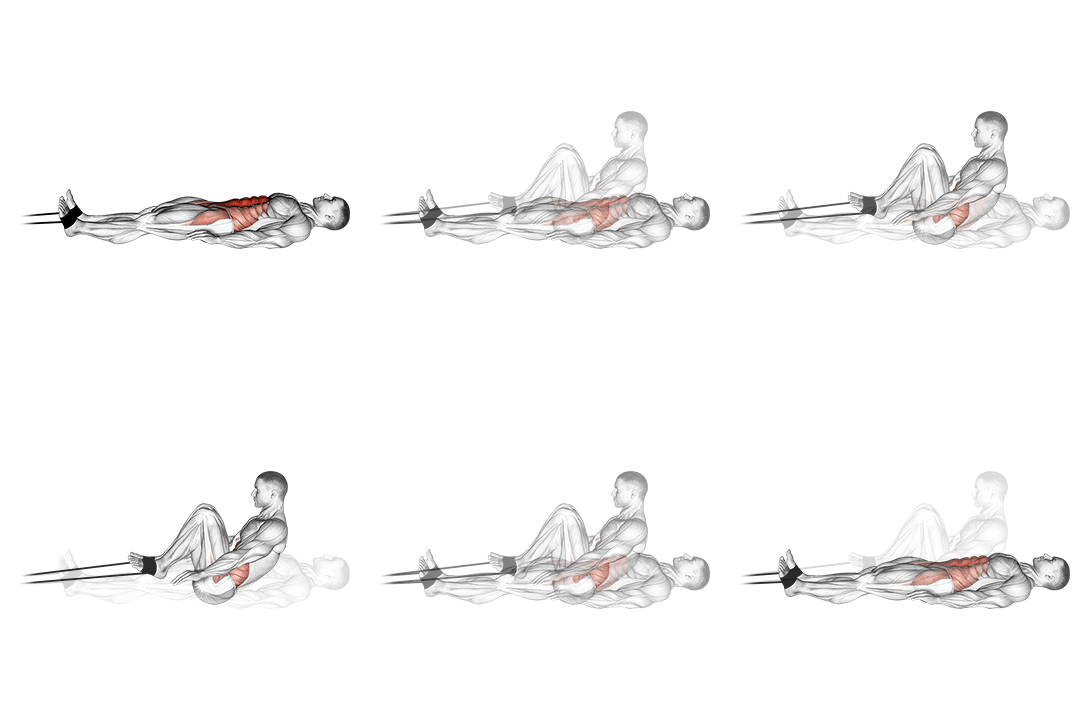
Band Assisted Wheel Rollerout
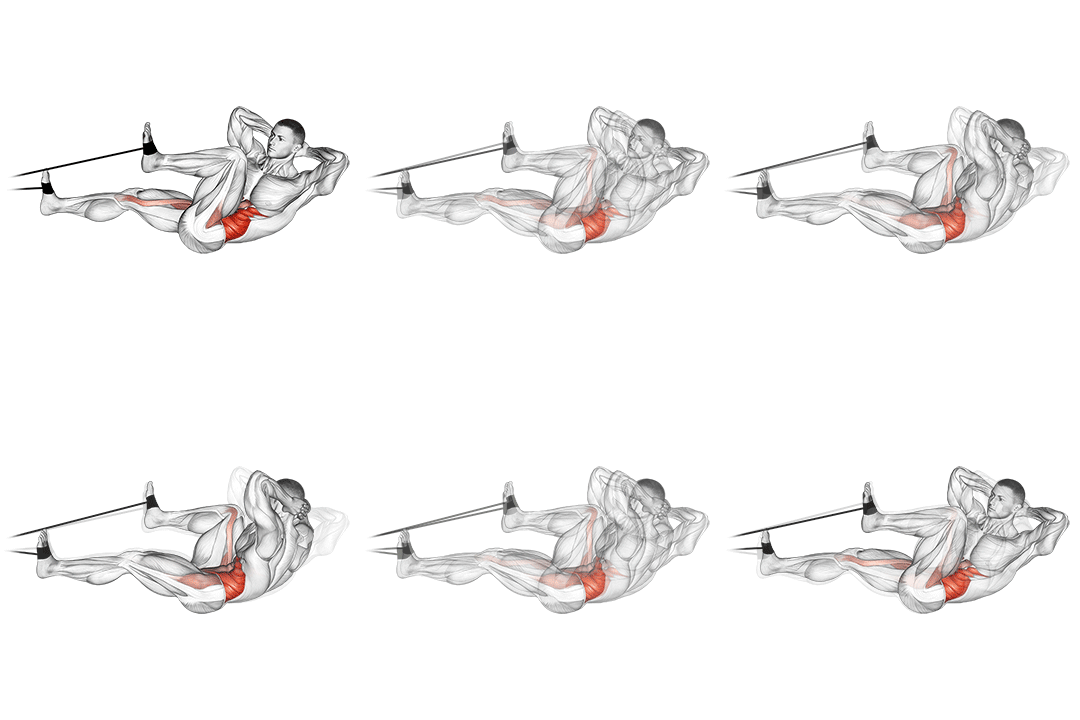
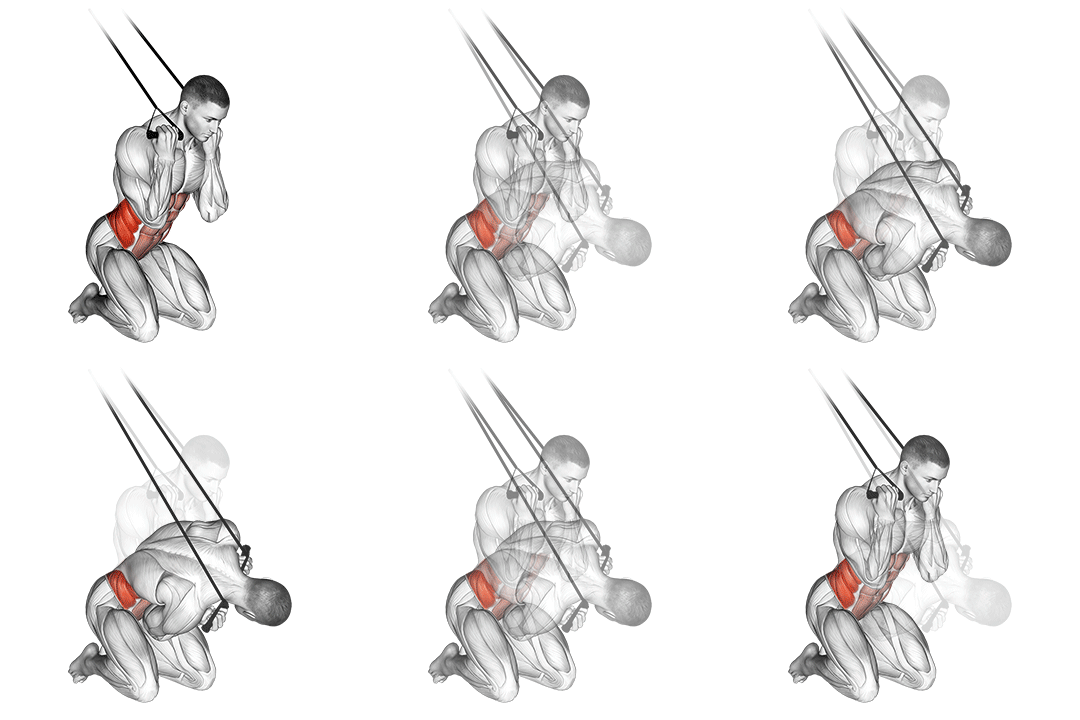
Band Bicycle Crunch
Head-to-Head Comparison
| Attribute | Band Assisted Wheel Rollerout | Band Bicycle Crunch |
|---|---|---|
| Target Muscle |
Abs
|
Abs
|
| Body Part |
Waist
|
Waist
|
| Equipment |
Band
|
Band
|
| Difficulty |
Intermediate
|
Intermediate
|
| Movement Type |
Isolation
|
Isolation
|
| Secondary Muscles |
1
|
2
|
Secondary Muscles Activated
Band Assisted Wheel Rollerout
Band Bicycle Crunch
Visual Comparison
Overview
Band Assisted Wheel Rollerout vs Band Bicycle Crunch — if you want a targeted core session, you need to know which exercise fits your goal. This comparison walks you through how each movement loads the rectus abdominis and surrounding stabilizers, the secondary muscles involved, the equipment and setup, and clear progression and safety cues. You'll get biomechanics-based technique tips, rep and set ranges, and scenario-based recommendations so you can choose the exercise that best supports your strength, hypertrophy, or home training goals.
Key Differences
- Both exercises target the Abs using Band. The main differences are in their movement patterns and muscle activation angles.
Pros & Cons
Band Assisted Wheel Rollerout
+ Pros
- High continuous tension on rectus abdominis for strength and hypertrophy
- Direct anti-extension training transfers to heavy lifts (deadlift/squat stabilization)
- Clear progression ladder: band assistance to full rollerout, tempo control, increased range
- Engages posterior chain stabilizers (lower back, lats) improving core stiffness
− Cons
- Higher technical demand and learning curve
- Greater lumbar stress if performed with poor bracing
- Requires a wheel or reliable anchor setup
Band Bicycle Crunch
+ Pros
- Minimal equipment and easy setup for home workouts
- Strong oblique and hip flexor engagement for torso rotation and athletic carryover
- Lower immediate spinal shear risk when performed correctly
- Easily performed for higher rep ranges (12–30 per side) for metabolic work
− Cons
- Less anti-extension overload—limits maximal core strength development
- Hip flexor domination can reduce abdominal targetting if form slips
- Coordination demands may challenge some beginners
When Each Exercise Wins
Rollerouts provide sustained tension across a long range of motion, creating eccentrically biased loading that stimulates abdominal hypertrophy. Use 6–12 controlled reps, 3–4 sets, with 2–3 second eccentrics and a band for assistance if needed.
The rollerout trains anti-extension strength under load and improves neural drive for core bracing, transferring directly to heavy compound lifts. Progress by reducing band assistance and increasing roll distance, aiming for 3–6 hard sets of 4–8 reps as you advance.
Bicycle crunches are easier to modulate and teach: supine position, smaller ranges, and simple cueing (rib cage down, chin neutral) reduce lumbar stress. Start with 12–20 slow reps per side and light band tension to build coordination and endurance.
Bicycle crunches need only a band and mat and can be done in small spaces with minimal setup time. They allow quick volume work (3 sets of 20–30 reps) for core conditioning without specialized gear.
Frequently Asked Questions
Can I do both Band Assisted Wheel Rollerout and Band Bicycle Crunch in the same workout?
Yes. Pair them in a single session by placing rollerouts earlier when you are freshest for strength (3–6 reps) and bicycle crunches later for volume or oblique focus (12–20 reps per side). Balance total volume to avoid cumulative lumbar fatigue.
Which exercise is better for beginners?
Band Bicycle Crunch is better for most beginners because it’s supine, easier to scale, and has lower immediate lumbar load. Teach bracing, neutral neck position, and light band tension before progressing to standing or anti-extension drills.
How do the muscle activation patterns differ?
Rollerouts create sustained, lengthened loading with large eccentric control, recruiting rectus abdominis and posterior stabilizers for anti-extension. Bicycle crunches produce repetitive concentric flexion and rotation bursts, increasing oblique and hip flexor activation per rep.
Can Band Bicycle Crunch replace Band Assisted Wheel Rollerout?
Not fully. Bicycle crunches can replace rollerouts for conditioning and oblique work, but they don’t provide the same anti-extension overload or direct transfer to maximal core stiffness needed for heavy lifts. Use bicycle crunches when equipment, skill, or recovery demands limit rollerout use.
Expert Verdict
Use the Band Assisted Wheel Rollerout when your goal is to build core strength and targeted abdominal hypertrophy through high continuous tension and anti-extension training. It’s ideal for trainees who have solid bracing and posterior chain stability; program it with low–moderate reps, controlled eccentrics, and progressive reduction of band assistance. Choose the Band Bicycle Crunch when you need accessible core work, oblique and hip flexor conditioning, or a safer option for beginners and limited-space sessions. For general programming, rotate both: prioritize rollerouts for strength phases (3–6 weeks) and bicycle crunches for higher-volume conditioning and recovery sessions.
Also Compare
More comparisons with Band Assisted Wheel Rollerout
More comparisons with Band Bicycle Crunch
Compare More Exercises
Use our free comparison tool to analyze any two exercises head-to-head.
Compare Exercises