

Band Assisted Wheel Rollerout vs Band Kneeling Twisting Crunch: Complete Comparison Guide
Band Assisted Wheel Rollerout vs Band Kneeling Twisting Crunch — you’re comparing two band-based ab isolations that look similar on paper but load your midsection very differently. I’ll walk you through how each movement targets the rectus abdominis and supporting muscles, show the key technique cues to protect your lumbar spine, and give clear programming tips (rep ranges, progressions, and common regressions). Read on to see which exercise suits muscle growth, core strength, beginner-friendly work, and home setups so you can pick the right move for your goals.
Exercise Comparison
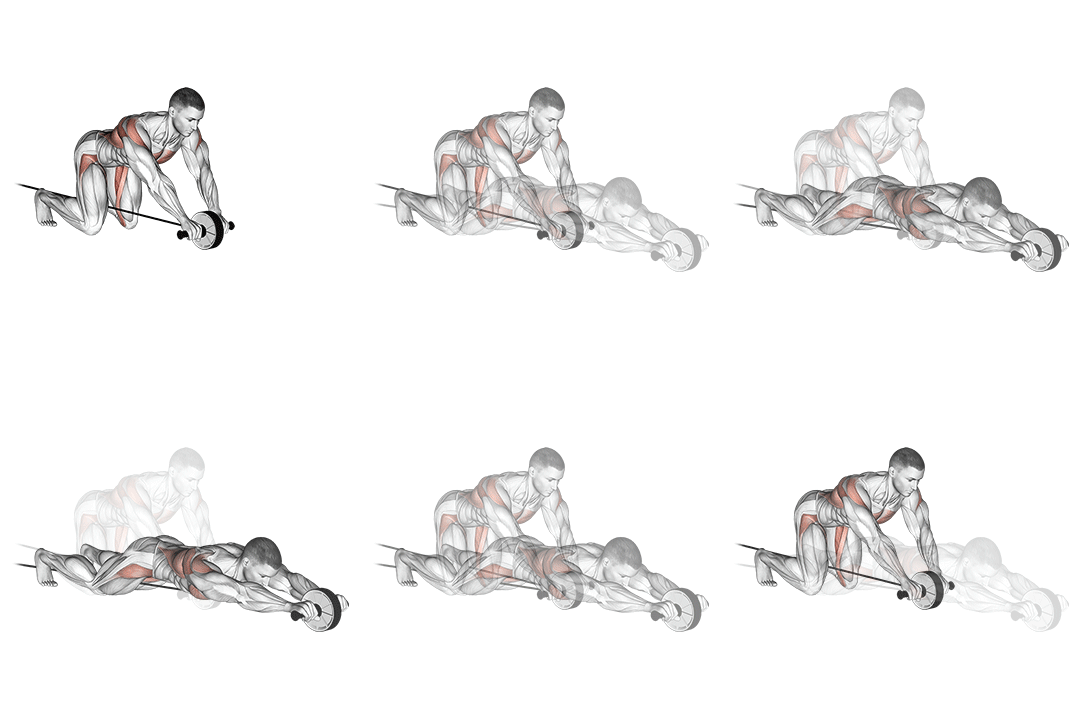
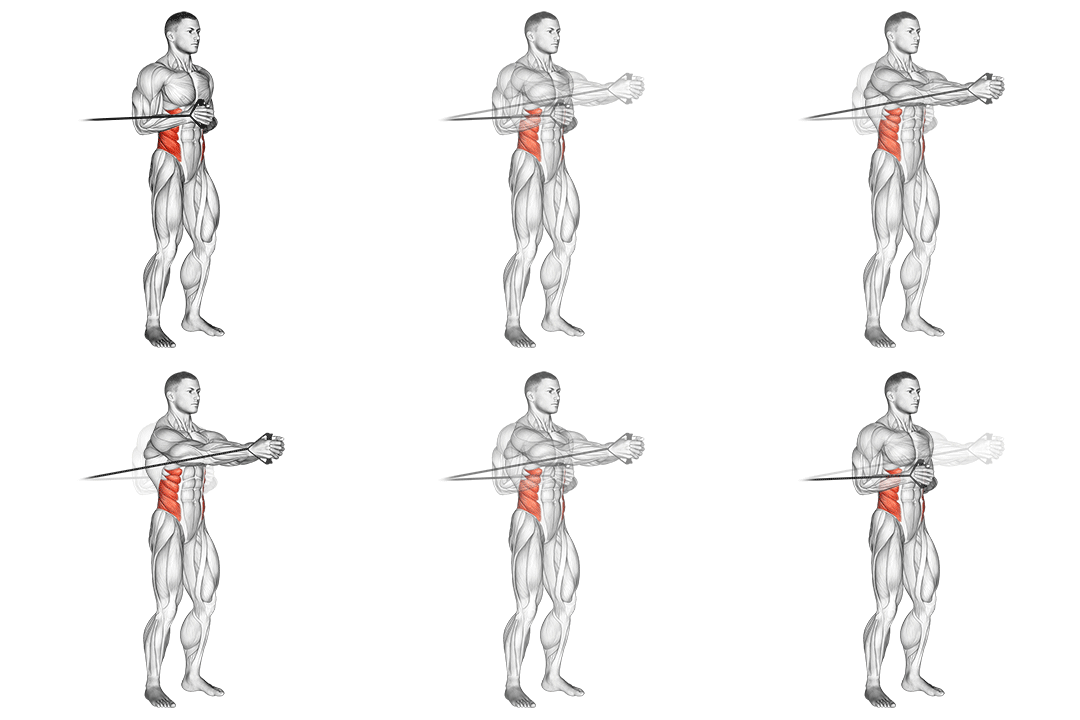
Band Assisted Wheel Rollerout
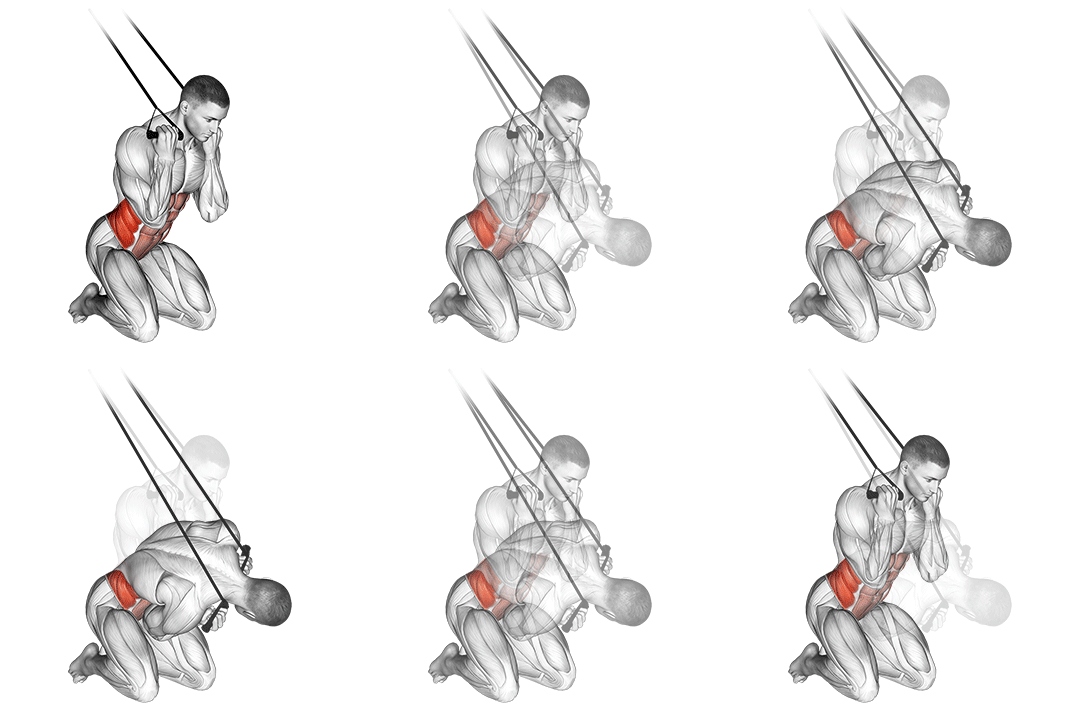
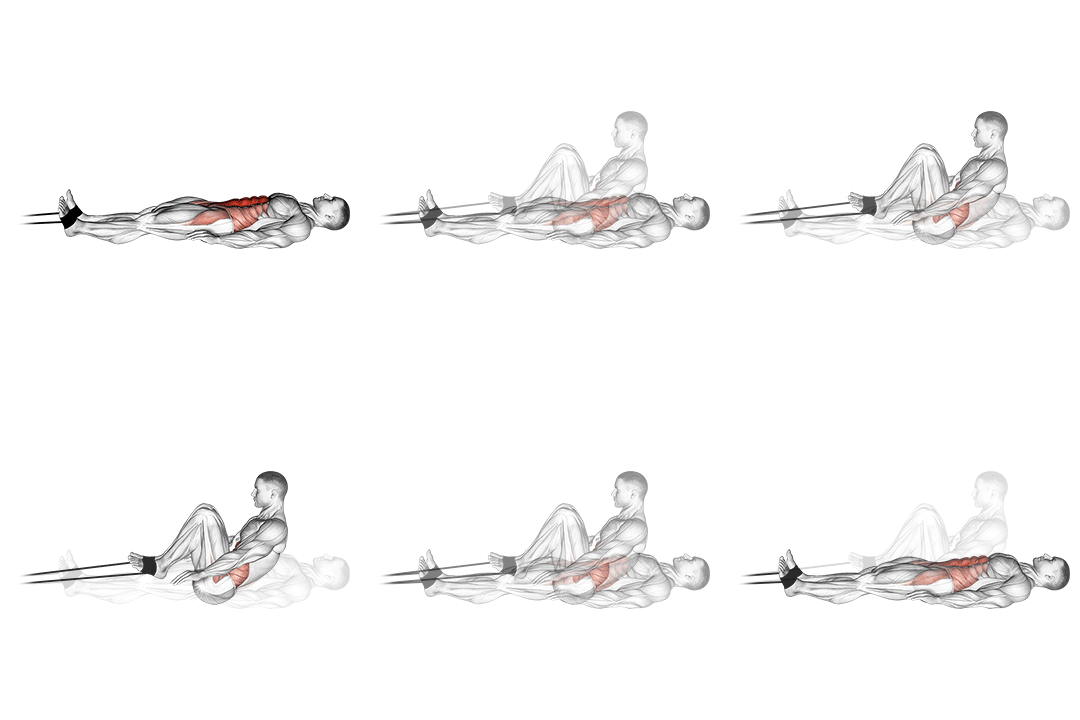
Band Kneeling Twisting Crunch
Head-to-Head Comparison
| Attribute | Band Assisted Wheel Rollerout | Band Kneeling Twisting Crunch |
|---|---|---|
| Target Muscle |
Abs
|
Abs
|
| Body Part |
Waist
|
Waist
|
| Equipment |
Band
|
Band
|
| Difficulty |
Intermediate
|
Intermediate
|
| Movement Type |
Isolation
|
Isolation
|
| Secondary Muscles |
1
|
1
|
Secondary Muscles Activated
Band Assisted Wheel Rollerout
Band Kneeling Twisting Crunch
Visual Comparison
Overview
Band Assisted Wheel Rollerout vs Band Kneeling Twisting Crunch — you’re comparing two band-based ab isolations that look similar on paper but load your midsection very differently. I’ll walk you through how each movement targets the rectus abdominis and supporting muscles, show the key technique cues to protect your lumbar spine, and give clear programming tips (rep ranges, progressions, and common regressions). Read on to see which exercise suits muscle growth, core strength, beginner-friendly work, and home setups so you can pick the right move for your goals.
Key Differences
- Both exercises target the Abs using Band. The main differences are in their movement patterns and muscle activation angles.
Pros & Cons
Band Assisted Wheel Rollerout
+ Pros
- High anti-extension demand that builds core stiffness and transmits force through the anterior chain
- Long time-under-tension for rectus abdominis, favorable for eccentric-driven hypertrophy
- Clear progression path by reducing band assistance or increasing range of motion
- Improves scapular and shoulder stability when performed with proper control
− Cons
- Higher technical demand; poor form quickly increases lumbar shear
- Requires ab wheel and secure anchor, less accessible for home setups without gear
- Limited transverse-plane (rotational) development compared with twisting crunches
Band Kneeling Twisting Crunch
+ Pros
- Simple setup and low equipment needs — ideal for home workouts
- Stronger oblique recruitment through axial rotation, useful for athletic anti-rotation and rotation strength
- Lower lumbar shear risk when performed with controlled pelvic tuck and short range
- Easily modified by changing band tension or rotation angle for reps in the 10–20 range
− Cons
- Lower absolute anti-extension overload, so less carryover to resisting long-lever extension
- Can involve hip flexors and neck if you compensate by pulling with arms instead of rotating the trunk
- Smaller overload ceiling for progressive core strengthening compared with rollout variations
When Each Exercise Wins
The rollout keeps the rectus under tension at longer muscle lengths and offers heavier eccentric loading; use 6–12 reps with slow 3–4 second eccentrics to maximize time under tension and hypertrophy stimulus.
Rollouts demand high anti-extension strength and core stiffness under large moment arms. Progress by reducing band assistance and extending the range to increase torque transfer and absolute strength.
Kneeling twisting crunches let you control rotation angle and band resistance, teach breathing and pelvic tuck, and produce meaningful oblique activation with lower technical risk for learners.
It requires only a single band and minimal setup, scales easily by band tension, and provides solid core stimulus without an ab wheel or complex anchoring.
Frequently Asked Questions
Can I do both Band Assisted Wheel Rollerout and Band Kneeling Twisting Crunch in the same workout?
Yes. Pair them deliberately: use rollouts early as a primary anti-extension stimulus (3–4 sets of 6–12 reps) and finish with twisting crunches as an accessory for oblique hypertrophy (2–3 sets of 12–20 reps). Prioritize form and avoid fatigue-driven lumbar collapse on rollouts.
Which exercise is better for beginners?
Band Kneeling Twisting Crunch is better for most beginners because it lets you control range and resistance and teaches pelvic tuck and breathing. Start with light bands and small rotation angles, then increase rotation or band tension as technique solidifies.
How do the muscle activation patterns differ?
Rollouts create an anti-extension force vector that loads the rectus eccentrically at long lengths while the erector spinae acts isometrically; twisting crunches combine flexion and axial rotation, driving concentric oblique activation and short-range rectus shortening. The result: rollout favors stiffness and eccentric stress, twisting crunches favor transverse-plane torque.
Can Band Kneeling Twisting Crunch replace Band Assisted Wheel Rollerout?
Not completely. If your goal is anti-extension strength and long-lever rectus overload, the kneeling twisting crunch won’t provide the same stimulus. If your focus is oblique development, accessibility, or working around lower-back limits, the twisting crunch can serve as an effective substitute.
Expert Verdict
Choose the Band Assisted Wheel Rollerout when your goal is to build anti-extension strength, longer-lever rectus overload, and progressive core stiffness — especially if you have an ab wheel and can maintain a posterior pelvic tilt through the movement. Use slow eccentrics and 6–12 rep ranges for hypertrophy and strength. Choose the Band Kneeling Twisting Crunch when you want accessible, rotation-heavy core work that emphasizes obliques, easier technical learning, and minimal equipment. Program the twisting crunch for 10–20 reps, heavier bands, or added holds when oblique development or home convenience is the priority.
Also Compare
More comparisons with Band Assisted Wheel Rollerout
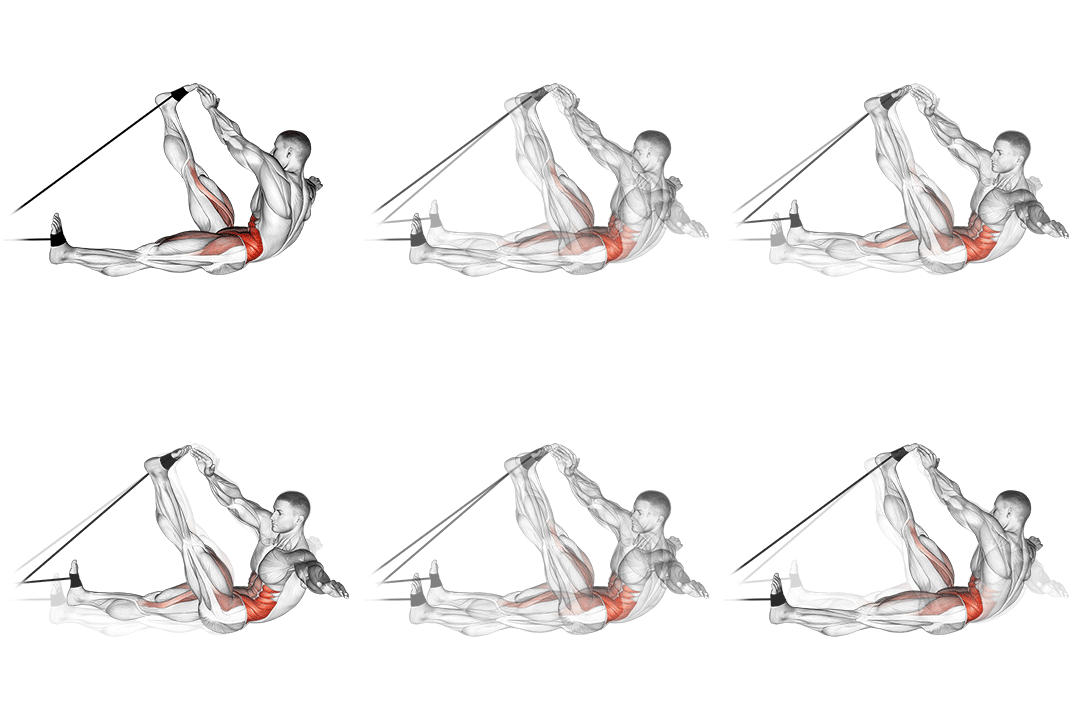
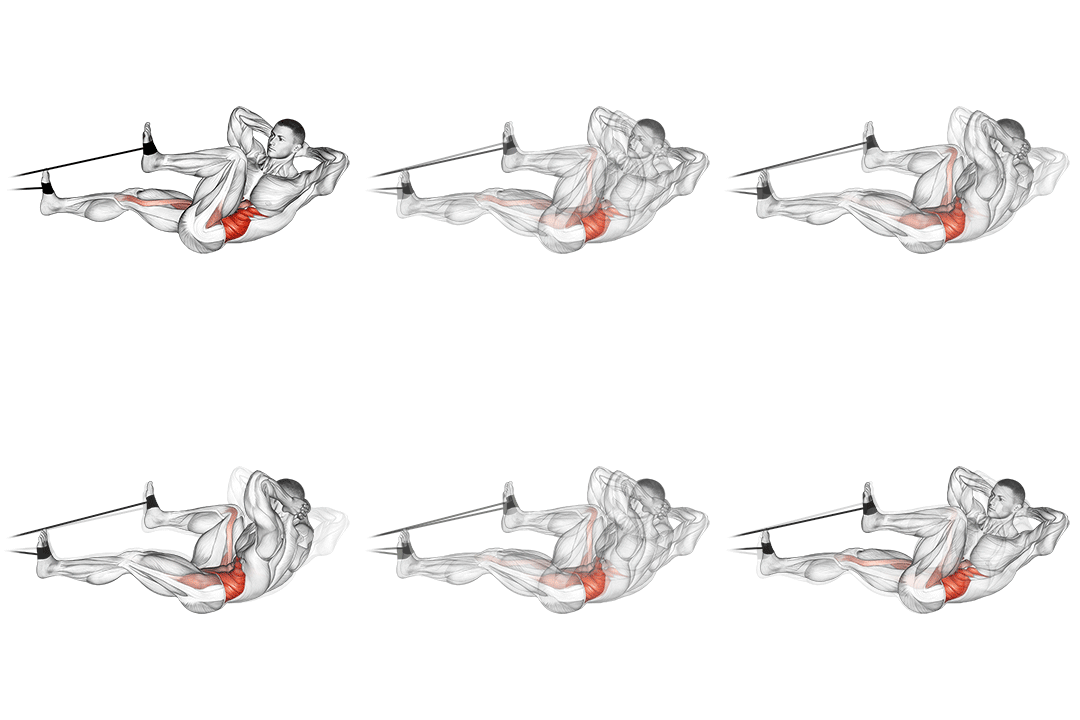
More comparisons with Band Kneeling Twisting Crunch
Compare More Exercises
Use our free comparison tool to analyze any two exercises head-to-head.
Compare Exercises