

Band Bench Press vs Cross Over - With Bands: Complete Comparison Guide
Band Bench Press vs Cross Over - With Bands — if you want a clear choice for chest work with bands, you’re in the right place. I’ll walk you through how each exercise loads the pectorals, which secondary muscles pick up the slack, exact technique cues, and when to use each for hypertrophy, strength, or home training. Expect actionable tips (anchor height, elbow angle, rep ranges) plus biomechanical notes on force vectors and length-tension so you can pick the right move for your program.
Exercise Comparison
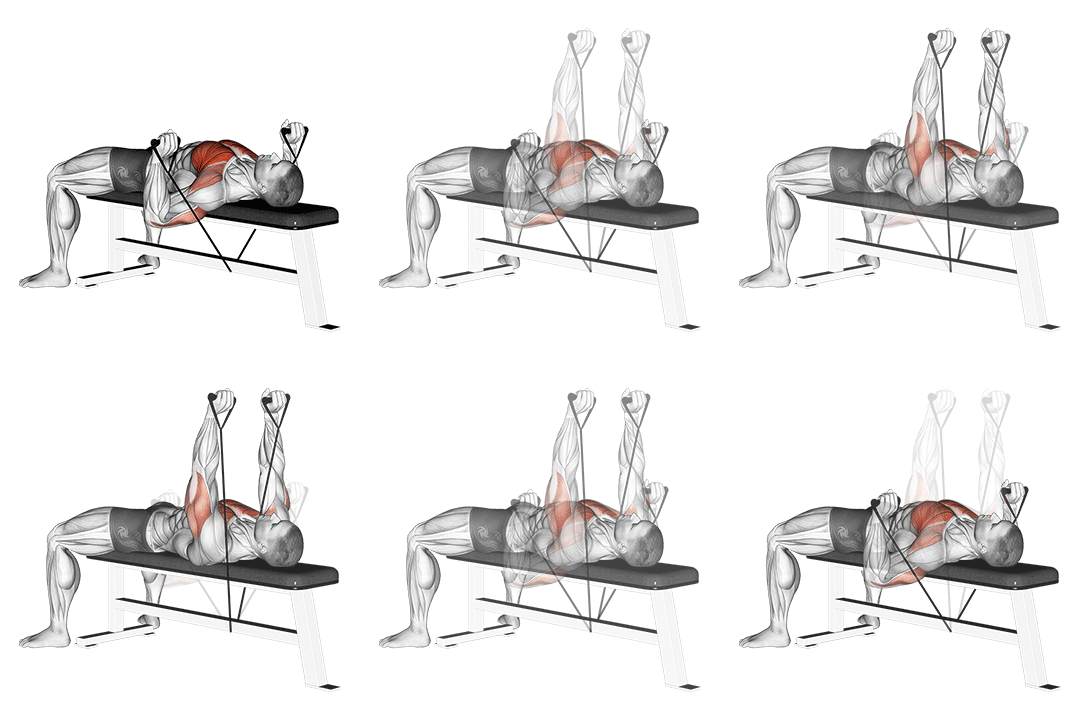
Band Bench Press

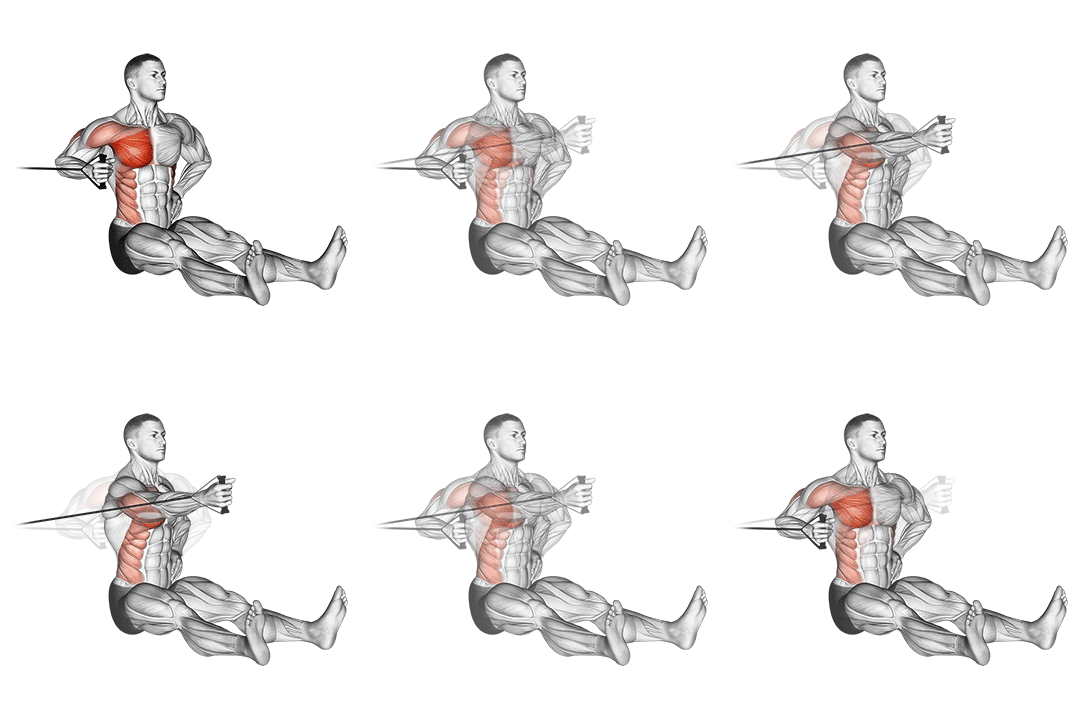
Cross Over - With Bands
Head-to-Head Comparison
| Attribute | Band Bench Press | Cross Over - With Bands |
|---|---|---|
| Target Muscle |
Pectorals
|
Pectorals
|
| Body Part |
Chest
|
Chest
|
| Equipment |
Band
|
Band
|
| Difficulty |
Intermediate
|
Intermediate
|
| Movement Type |
Compound
|
Isolation
|
| Secondary Muscles |
2
|
2
|
Secondary Muscles Activated
Band Bench Press
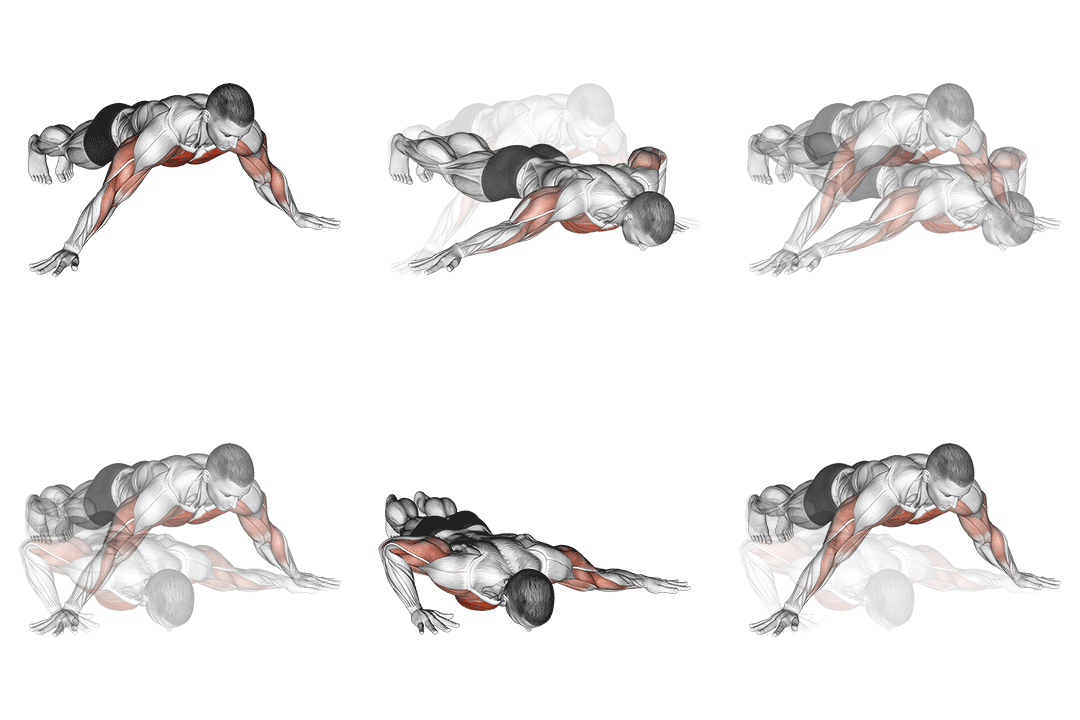
Cross Over - With Bands
Visual Comparison
Overview
Band Bench Press vs Cross Over - With Bands — if you want a clear choice for chest work with bands, you’re in the right place. I’ll walk you through how each exercise loads the pectorals, which secondary muscles pick up the slack, exact technique cues, and when to use each for hypertrophy, strength, or home training. Expect actionable tips (anchor height, elbow angle, rep ranges) plus biomechanical notes on force vectors and length-tension so you can pick the right move for your program.
Key Differences
- Band Bench Press is a compound movement, while Cross Over - With Bands is an isolation exercise.
- Both exercises target the Pectorals using Band. The main differences are in their movement patterns and muscle activation angles.
Pros & Cons
Band Bench Press
+ Pros
- Compound press that loads pecs, triceps, and anterior deltoids for total chest development
- Easier to progressively overload by stacking bands or increasing band tension
- Accommodating resistance improves lockout power and blends strength with hypertrophy
- Simpler single-anchor setup for home or gym use
− Cons
- Less peak pec isolation compared to crossover
- Band tension increases at lockout, reducing eccentric peak stretch on pecs
- Setup can strain shoulders if scapulae and elbow position aren’t maintained
Cross Over - With Bands
+ Pros
- Excellent isolation and peak contraction of the pectorals at midline
- Keeps tension throughout the movement, improving mind-muscle connection
- Great for shaping and inner-pec work and for high-rep hypertrophy sets
- Portable and simple if you have two anchor points
− Cons
- Harder to achieve heavy progressive overload for strength
- Higher demand on shoulder stability; poor setup can cause impingement
- Requires symmetric anchors and precise setup to keep tension even
When Each Exercise Wins
Crossovers produce a stronger midline contraction and constant tension through horizontal adduction, making them ideal for 8–15 rep hypertrophy work and peak pec fiber recruitment. Use slow eccentrics (2–4 s) and 1–2 s peak squeezes to maximize time under tension.
Band Bench Press allows heavier total loading patterns and accommodating resistance that improves lockout strength; pair with low-rep sets (4–6) and heavier band tension to build pressing power and triceps-driven lockout.
The pressing pattern is more intuitive and mirrors barbell mechanics; with simple cues—scapular retraction, 20–30° elbow tuck, and feet braced—beginners can safely learn force production before adding isolated crossover work.
Single-anchor setup makes it easier to perform at home using a bench or floor, and you can scale tension by swapping bands. Crossovers need side anchors and more setup space, which limits practicality in many homes.
Frequently Asked Questions
Can I do both Band Bench Press and Cross Over - With Bands in the same workout?
Yes. Start with Band Bench Press as your main compound move (3–5 sets) to accumulate heavy loading, then use Cross Over - With Bands as a finisher for 2–4 sets of 8–15 reps focused on peak contraction and tempo work.
Which exercise is better for beginners?
Band Bench Press is better for beginners because it follows a simpler pressing pattern and is easier to scale. Teach scapular control, 20–30° elbow tuck, and a steady tempo before adding crossover isolation.
How do the muscle activation patterns differ?
Band Bench Press increases load toward lockout, shifting activation into triceps and reducing peak pec stretch; Cross Over - With Bands maintains constant tension across midline, boosting peak pec contraction and medial fiber recruitment through horizontal adduction.
Can Cross Over - With Bands replace Band Bench Press?
Not if your goal is maximal pressing strength—crossovers can’t match the compound overload and triceps development of the bench press. For hypertrophy and shaping, crossovers can substitute some pressing volume but don’t fully replace compound press strength work.
Expert Verdict
Use Band Bench Press when you want a compound, progressively overloadable press that builds total chest strength and triceps-driven lockout power. Favor heavier bands and low-to-moderate reps (4–8 for strength, 6–12 for mixed strength-hypertrophy) and focus on scapular retraction and a 20–30° elbow tuck. Choose Cross Over - With Bands when your goal is targeted pec hypertrophy, peak contraction, and long eccentrics—use 8–15 reps, slow tempo, and chest-height anchors. For most programs, combine both: primary pressing days with band bench press and finishers or specialization days with crossovers to maximize muscle growth and shape.
Also Compare
More comparisons with Band Bench Press
More comparisons with Cross Over - With Bands
Compare More Exercises
Use our free comparison tool to analyze any two exercises head-to-head.
Compare Exercises