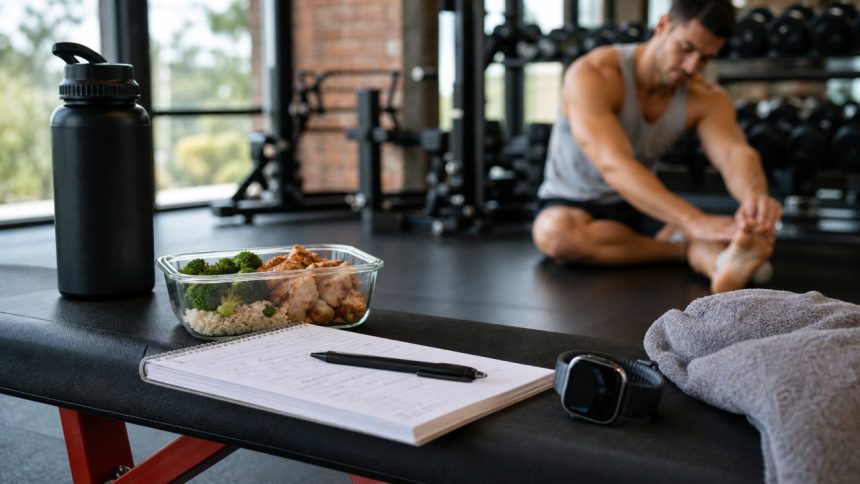
Growth hormone gets marketed like a secret muscle-building switch, but that is not how human physiology works. Your body releases growth hormone in pulses, especially during sleep and after certain kinds of stress. Those pulses matter for metabolism, tissue repair, and growth signaling, but raising a lab value for a few hours is not the same thing as safely building more muscle.
The useful question is narrower: which habits support normal growth hormone output without drifting into illegal HGH claims? The answer is not exotic. Sleep enough, train hard but recover, avoid carrying more body fat than your goal requires, eat enough protein, and treat fasting or meal timing as tools rather than magic. Use this guide as a reality check before chasing expensive hormone hacks.
The best natural ways to support growth hormone are consistent deep sleep, resistance training, short high-intensity conditioning when tolerated, maintaining a healthy body-fat range, and avoiding chronic overeating or severe crash dieting. None of these mimic prescription HGH, and anyone with suspected hormone disease needs medical testing.
What does growth hormone actually do?
Growth hormone is a pituitary hormone involved in growth, substrate use, connective tissue turnover, and insulin-like growth factor 1 signaling. In adults, it is less about getting taller and more about helping regulate repair, fat metabolism, and broader endocrine rhythm. It rises and falls across the day instead of staying at one fixed level.
That pulsatile pattern matters because a single snapshot can mislead readers. A workout, a night of sleep, food intake, illness, stress, and body composition can all change the momentary reading. This is why the FitnessVolt view is practical: chase habits that improve training and health, not isolated growth hormone spikes that do not translate into a real outcome.
Can sleep increase growth hormone naturally?
Sleep is the highest-value lever because a large part of daily growth hormone release occurs around slow-wave sleep. If sleep is short, fragmented, alcohol-disrupted, or constantly shifted, the recovery environment becomes weaker even if your training plan looks perfect on paper. Better sleep does not guarantee more muscle, but poor sleep can make muscle gain harder.
Start with a repeatable sleep window, a dark room, lower evening light, and fewer late caffeine mistakes. The goal is not biohacking. It is protecting the block of night when your body does much of its hormonal and tissue-repair housekeeping.

Does fasting raise growth hormone?
Fasting can raise growth hormone in humans, and classic research by Ho and colleagues documented larger GH pulses during short-term fasting. That fact is real. The mistake is turning it into a muscle-building promise. Fasting also reduces food intake, changes insulin, and can make hard training harder if the plan is too aggressive.
For fat loss, fasting may help some readers control calories. For muscle gain, it can backfire if it makes protein, calories, and training quality inconsistent. If you use fasting, judge it by body composition, gym performance, hunger control, and sleep, not by the idea that a temporary GH rise automatically builds new tissue.
What kind of training helps growth hormone?
Resistance training and intense conditioning can increase growth hormone acutely, especially when sessions use large muscle groups, meaningful effort, shorter rests, and enough total work. Exercise endocrinology research supports this acute response, but acute hormone spikes are not a standalone measure of a productive workout.
For lifters, the better rule is simple: use progressive resistance training as the foundation, then add conditioning only if it supports the goal. A brutal circuit that wrecks your squat for three days is not better just because it felt hormonal. Use our guide to progressive overload to keep the training signal measurable.
Does body fat affect growth hormone?
Higher body fat is commonly associated with a less favorable growth hormone secretion pattern. That does not mean every reader needs to get shredded. It means that moving from overfat toward a healthier range can improve the endocrine environment while also improving blood pressure, insulin sensitivity, sleep apnea risk, and training capacity.
The practical move is not a crash diet. Use a modest calorie deficit, enough protein, resistance training, steps, and sleep. If the goal is muscle gain after fat loss, switch to a controlled surplus with help from the lean bulking guide instead of bouncing between extremes.
Which habits are most worth doing first?
The best growth hormone plan is a priority list, not a supplement stack. Fix sleep duration and timing first. Build a stable lifting plan second. Bring body fat toward a healthier range third. Then adjust meal timing if it helps consistency. That order beats chasing exotic tricks while living on five hours of sleep.
| Lever | Why it matters | Best first action |
|---|---|---|
| Sleep | Supports the largest daily GH pulse | Keep a consistent sleep window for 14 days |
| Training | Creates acute GH and muscle-building stress | Use 3-5 hard lifting sessions per week |
| Body fat | Excess fat can blunt endocrine rhythm | Use a modest calorie deficit if overfat |
| Nutrition | Protects recovery and muscle protein synthesis | Hit protein and calories before timing tricks |
Do supplements raise growth hormone?
Most over-the-counter growth hormone booster claims are stronger than the evidence. Arginine, amino acid blends, sleep aids, and herbal products may affect sleep, training, or a short-term hormone reading in narrow contexts, but that is not the same as clinically meaningful growth hormone therapy or guaranteed muscle gain.
Spend supplement money only after the basics are covered. If energy is the issue, our ginseng guide explains why supplement benefits need limits and safety context. Growth hormone claims deserve the same skepticism.
What should you avoid?
Avoid illegal HGH use, unverified peptide products, imported hormone kits, and clinics that promise anti-aging transformation without proper diagnosis. Prescription growth hormone is medical treatment for specific conditions, not a casual physique shortcut. Misuse can carry real risks, including fluid retention, joint pain, insulin resistance, and symptoms linked to excess growth hormone exposure.
Also avoid chronic sleep restriction, repeated crash diets, all-out conditioning every day, and bulking so aggressively that body fat climbs faster than strength. These are ordinary mistakes, but they do more damage to the hormone environment than most readers want to admit.
What is the best weekly plan?
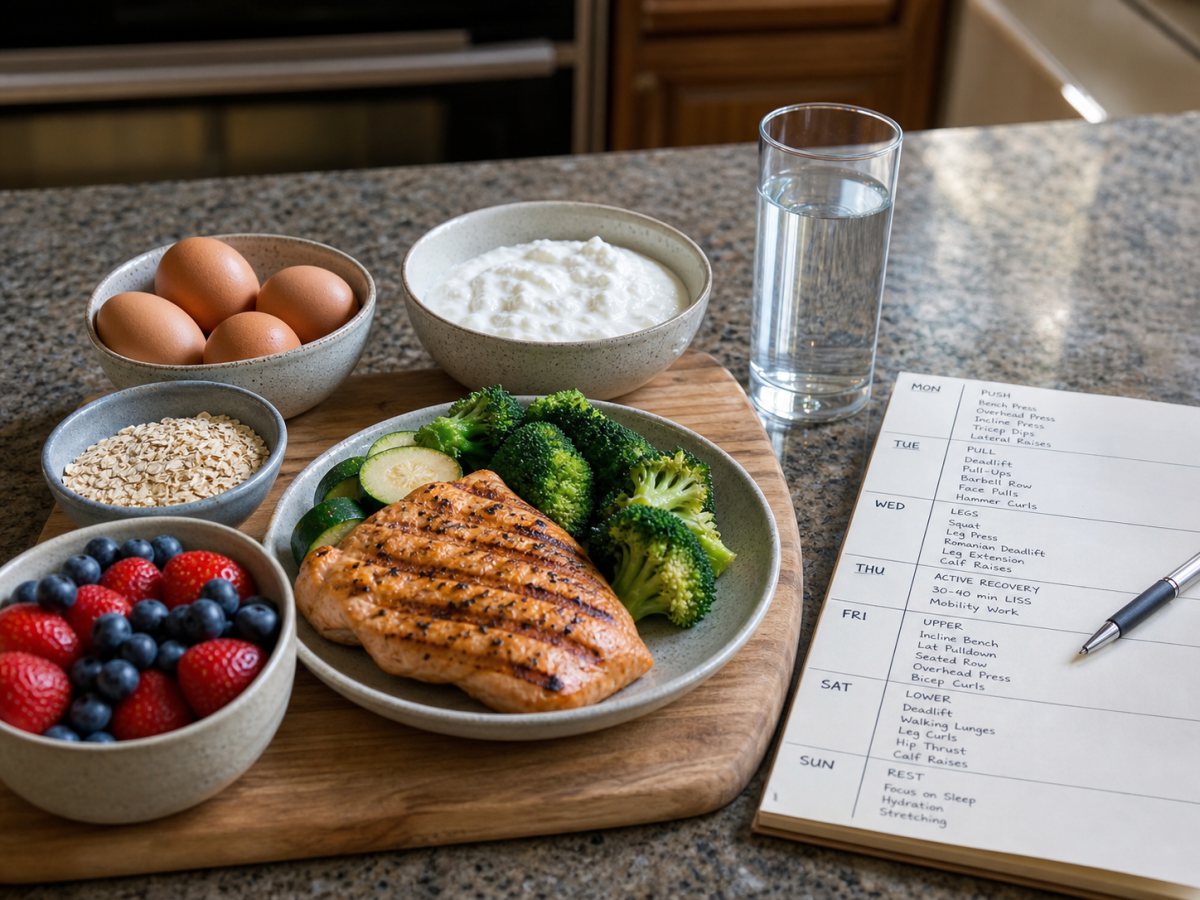
A realistic week has four anchors: seven consistent sleep opportunities, three to five resistance-training sessions, two to four easy cardio or step targets, and protein at every meal. If you are losing fat, set calories with the macronutrient calculator. If you are gaining, use a small surplus and track waist, body weight, and performance.
Do not change ten variables at once. Run the plan for two weeks, then check morning energy, training performance, hunger, waist, body weight trend, and sleep quality. If those move in the right direction, the hormone environment is probably improving enough for the goal.
When should you get medical help?
Get medical evaluation if you have unexplained changes in facial features, hand or foot size, severe headaches, vision changes, abnormal fatigue, erectile dysfunction, infertility concerns, or symptoms that do not match your lifestyle. Growth hormone excess and deficiency are medical issues, not article-comment-section diagnoses.
Bloodwork should be interpreted by a clinician because GH pulses make random testing difficult. IGF-1, medical history, medication use, sleep apnea risk, and other hormone markers may matter. The safe line is clear: lifestyle supports normal physiology; it does not replace diagnosis or treatment.
FitnessVolt bottom line
If you want to increase growth hormone naturally, stop looking for a single lever. The durable plan is boring in the best way: sleep like it matters, train hard enough to progress, manage body fat, eat enough protein, and use fasting only if it helps adherence. That combination beats most HGH booster claims because it improves the actual life pattern your hormones are responding to.
For lifters, the outcome to track is not a temporary hormone spike. Track strength, body composition, recovery, and sleep. Those are the numbers that tell you whether the plan is working.
How do you know your growth hormone plan is working?
Do not judge the plan by a supplement sensation or a single morning. Judge it by trend markers that actually matter: sleep duration, morning energy, waist measurement, training performance, resting soreness, hunger control, and body-weight trend. Those markers tell you whether the lifestyle pattern is improving the environment growth hormone responds to.
Run a 14-day audit. Track sleep opportunity, caffeine cutoff, training session quality, protein, steps, alcohol, and body weight. If sleep is up, waist is stable or moving toward goal, and training performance is not falling, you are probably moving in the right direction. If everything is worse, the plan is too aggressive, even if it includes every hormone-support habit on paper.
What growth hormone myths should lifters ignore?
The first myth is that a temporary growth hormone spike equals more muscle. Acute hormone responses can be interesting, but the muscle-building outcome still depends on mechanical tension, volume, nutrition, and recovery over weeks. A workout that produces a hormone spike but ruins progression is not a better hypertrophy plan.
The second myth is that fasting is automatically anabolic because it raises GH. Fasting can raise GH while reducing the calories and protein you need to build tissue. The third myth is that an over-the-counter booster can mimic prescription HGH. It cannot. If a product implies drug-like results without medical oversight, treat that as a warning sign rather than a selling point.
| Claim | Reality | Better action |
|---|---|---|
| Fasting spikes GH, so it builds muscle | Fasting can raise GH but may reduce training fuel | Use fasting only if calories and protein stay on target |
| More burn means more hormone benefit | Burn is not the same as progression | Track lifts, reps, recovery, and soreness |
| Boosters replace medical HGH | Supplements do not replace diagnosis or therapy | Use bloodwork and medical care for true symptoms |
What should older lifters do differently?
Older lifters should be even more skeptical of aggressive hormone marketing. Growth hormone and other endocrine markers change with age, but training, sleep, protein, and body composition still carry most of the practical value. The goal is to improve function and recovery, not chase the lab profile of a 20-year-old.
Start with joint-friendly progressive resistance training, two to three protein-rich meals, consistent sleep, and enough walking to support cardiometabolic health. If recovery is unusually poor, libido changes, strength collapses, or fatigue is persistent, use medical testing rather than guessing. Age changes the context, but it does not make unsafe shortcuts smarter.
Sources
- Ho, K. Y., et al. (1988). Fasting enhances growth hormone secretion and amplifies the complex rhythms of growth hormone secretion in man. Journal of Clinical Investigation.
- Godfrey, R. J., Madgwick, Z., and Whyte, G. P. (2003). The exercise-induced growth hormone response in athletes. Sports Medicine.
- Leproult, R., and Van Cauter, E. (2011). Effect of 1 week of sleep restriction on testosterone levels in young healthy men. JAMA.
- National Institute of Diabetes and Digestive and Kidney Diseases. (n.d.). Acromegaly. Accessed June 4, 2026.