

10 Best Downward Facing Balance Alternatives for Limited Equipment
The Downward Facing Balance is done standing with a stability ball. Ranked closest by our scoring: the Bodyweight Drop Jump Squat, the Jump Squat and the Potty Squat With Support.
Updated Ranked by our 12-factor similarity model How it works
Original Exercise: Downward Facing Balance
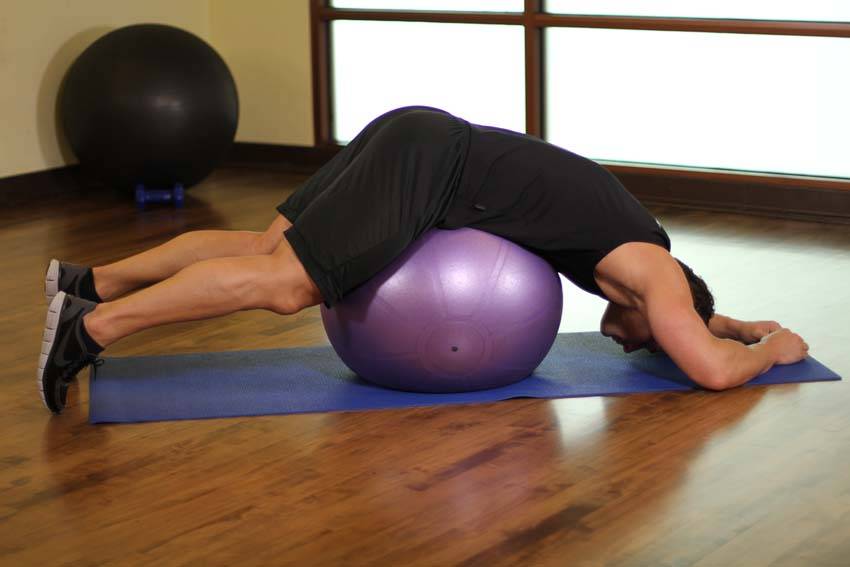
- Primary muscle
- Glutes
- Equipment
- Stability-ball
- Difficulty
- Intermediate
- Type
- Isolation
Secondary muscles: Abdominals, Hamstrings
How to perform Downward Facing Balance
- Lie facedown on top of an exercise ball.
- While resting on your stomach on the ball, walk your hands forward along the floor and lift your legs, extending your elbows and knees.
Ranked Downward Facing Balance Alternatives
10 substitutes, ranked by how closely each one matches the Downward Facing Balance on movement pattern, muscles worked, equipment and body position. The higher the score, the less you change. Open "How to perform this exercise" on a card for the steps; every card title links to that exercise's own alternatives page.
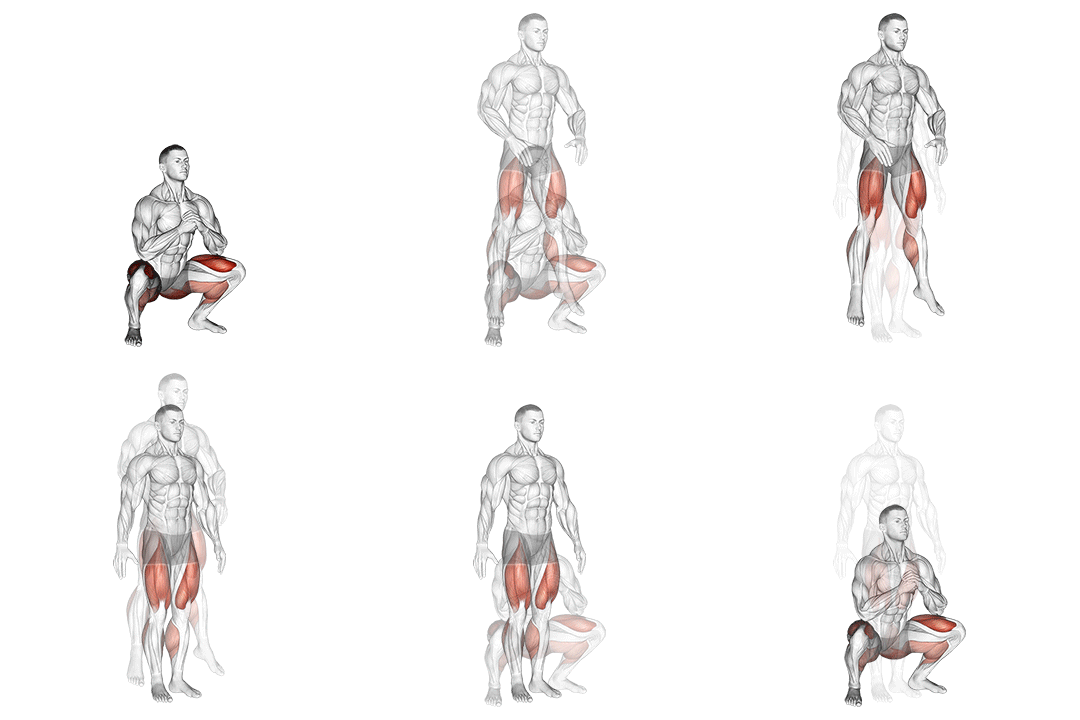
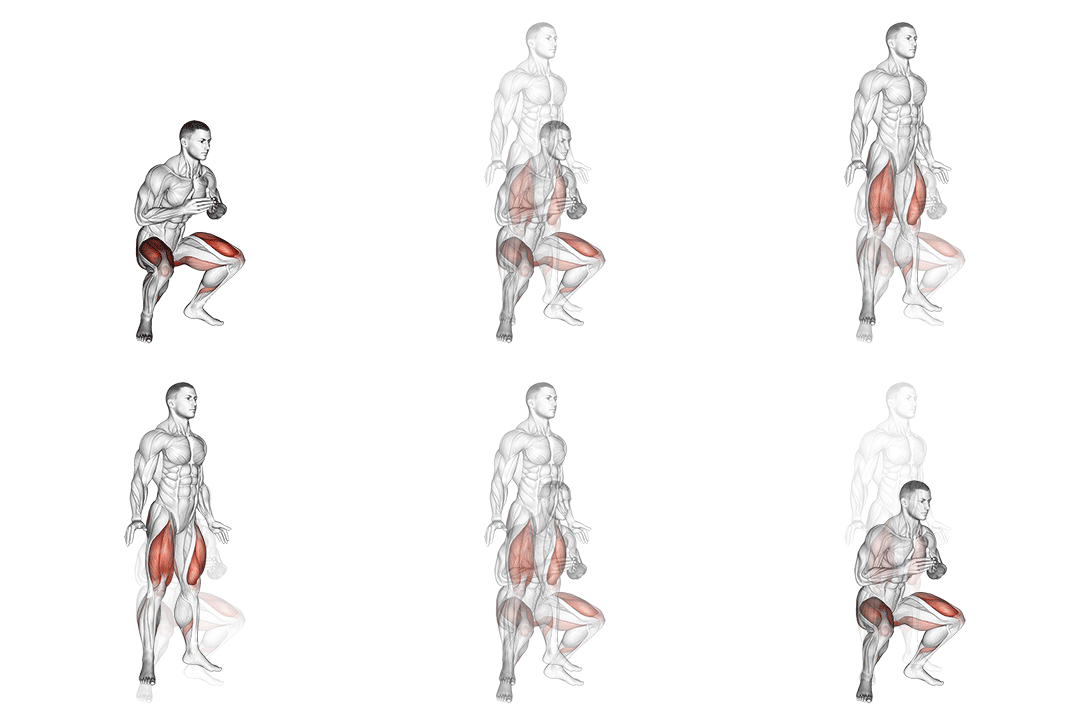
Best match 1. Bodyweight Drop Jump Squat
60% match- Glutes
- Bodyweight
- Intermediate
- Compound
Use this when you have nothing to train with, because it works the glutes with bodyweight alone.
How to perform this exercise
- Stand with your feet shoulder-width apart.
- Lower your body into a squat position by bending your knees and pushing your hips back.
- Jump up explosively, extending your hips, knees, and ankles.
- While in mid-air, quickly bring your feet together.
- Land softly on the balls of your feet and immediately drop back into a squat position.
- Repeat for the desired number of repetitions.
Sets and reps: 3 or 4 sets of 6 to 10 reps.
Why this matches
- Primary muscle: glutes, the same as the Downward Facing Balance
- Equipment: bodyweight only, the same as the Downward Facing Balance
- Body position: standing, the same as the Downward Facing Balance
2. Jump Squat
59% match- Glutes
- Bodyweight
- Intermediate
- Compound
How to perform this exercise
- Stand with your feet shoulder-width apart.
- Lower your body into a squat position by bending your knees and pushing your hips back.
- Jump explosively off the ground, extending your hips, knees, and ankles.
- While in mid-air, quickly bring your arms forward for balance.
- Land softly on the balls of your feet and immediately go into the next repetition.
- Repeat for the desired number of repetitions.
Sets and reps: 3 or 4 sets of 6 to 10 reps.
Why this matches
- Primary muscle: glutes, the same as the Downward Facing Balance
- Equipment: bodyweight only, the same as the Downward Facing Balance
- Body position: standing, the same as the Downward Facing Balance
- Balance: easier to stay steady on than the Downward Facing Balance
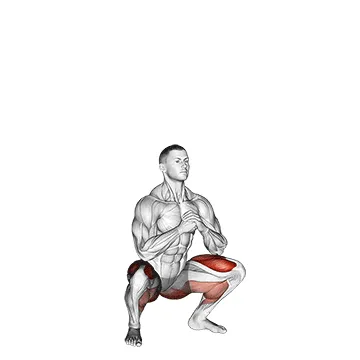
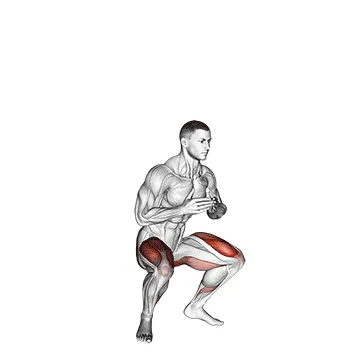
3. Potty Squat With Support
54% match- Glutes
- Bodyweight
- Beginner
- Compound
How to perform this exercise
- Stand with your feet shoulder-width apart, toes pointing slightly outward.
- Hold onto a stable support, such as a chair or wall, for balance.
- Lower your body down into a squat position by bending your knees and pushing your hips back.
- Keep your chest up and your back straight throughout the movement.
- Pause for a moment at the bottom, then push through your heels to return to the starting position.
- Repeat for the desired number of repetitions.
Sets and reps: 3 sets of 8 to 12 reps, and add reps before you add load.
Why this matches
- Primary muscle: glutes, the same as the Downward Facing Balance
- Equipment: bodyweight only, the same as the Downward Facing Balance
- Body position: standing, the same as the Downward Facing Balance
- Balance: easier to stay steady on than the Downward Facing Balance
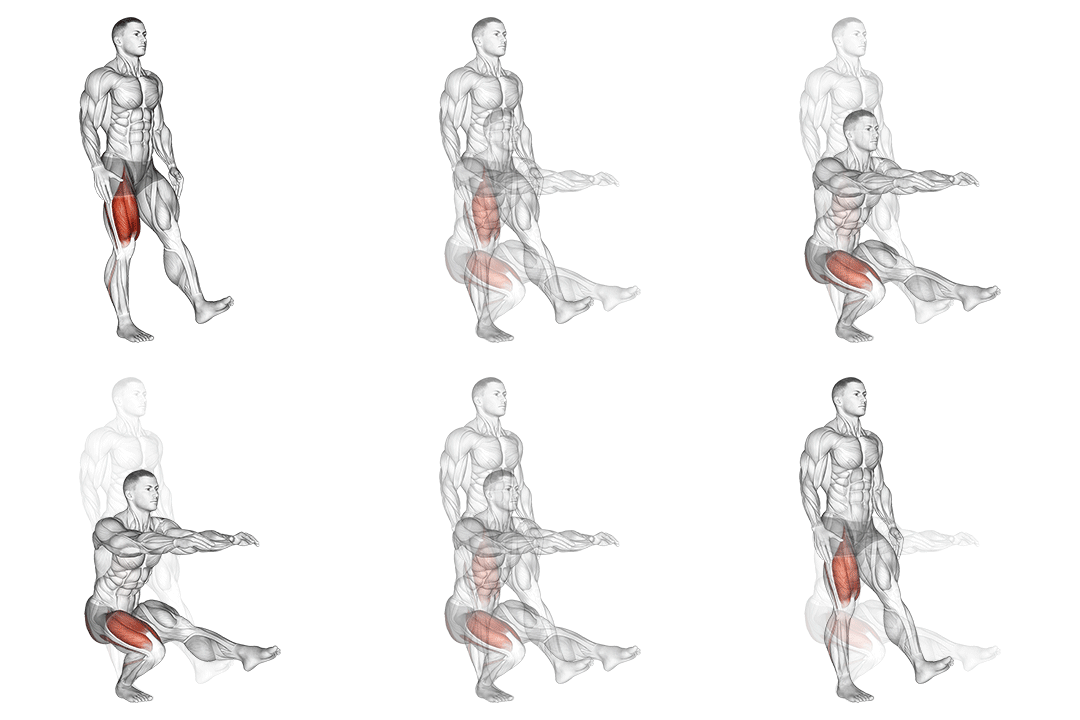
4. Single Leg Squat (Pistol) Male
52% match- Glutes
- Bodyweight
- Advanced
- Compound
How to perform this exercise
- Stand with your feet shoulder-width apart and arms extended in front of you.
- Lift your right foot off the ground and extend it forward.
- Slowly lower your body down by bending your left knee and pushing your hips back.
- Keep your chest up and your back straight as you lower yourself down.
- Lower until your left thigh is parallel to the ground, or as low as you can comfortably go.
- Pause for a moment at the bottom, then push through your left heel to return to the starting position.
- Repeat for the desired number of repetitions, then switch legs.
Sets and reps: 3 or 4 sets of 6 to 10 reps on each side.
Why this matches
- Primary muscle: glutes, the same as the Downward Facing Balance
- Equipment: bodyweight only, the same as the Downward Facing Balance
- Body position: standing, the same as the Downward Facing Balance
5. One Leg Squat
52% match- Glutes
- Bodyweight
- Advanced
- Compound
How to perform this exercise
- Stand with your feet shoulder-width apart.
- Extend one leg forward, keeping it off the ground.
- Bend your standing leg and lower your body down as if sitting back into a chair.
- Keep your chest up and your back straight.
- Push through your heel to return to the starting position.
- Repeat with the other leg.
Sets and reps: 3 or 4 sets of 6 to 10 reps on each side.
Why this matches
- Primary muscle: glutes, the same as the Downward Facing Balance
- Equipment: bodyweight only, the same as the Downward Facing Balance
- Body position: standing, the same as the Downward Facing Balance
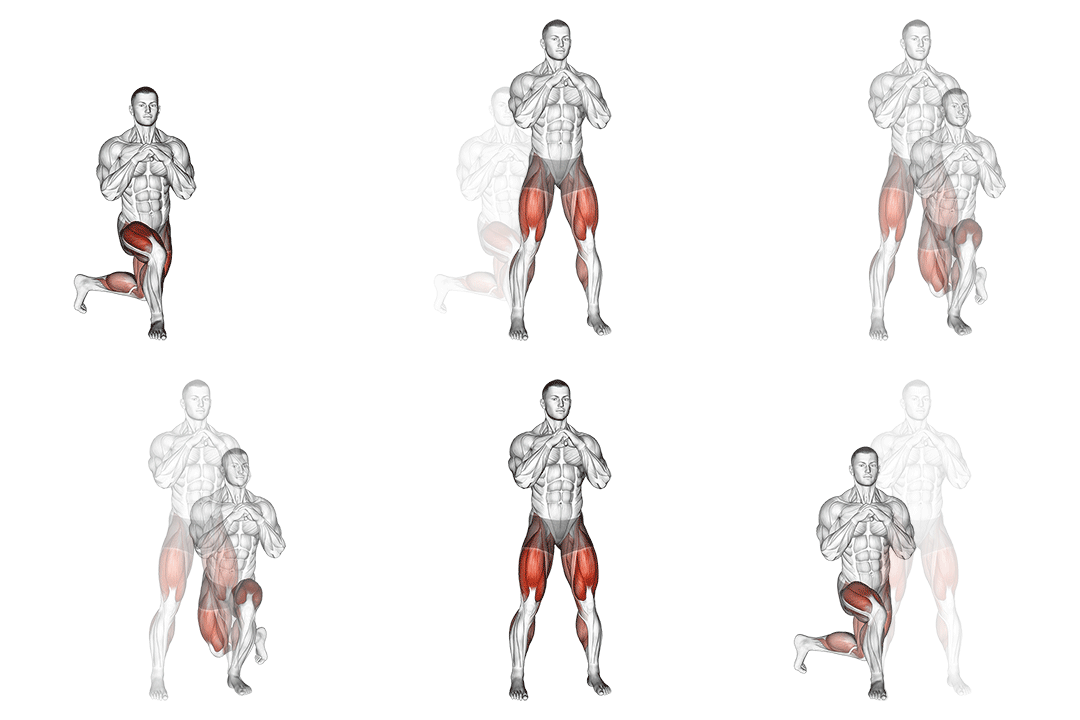
6. Curtsey Squat
52% match- Glutes
- Bodyweight
- Beginner
- Compound
How to perform this exercise
- Stand with your feet shoulder-width apart.
- Take a step diagonally behind and across your body with your right foot, crossing it behind your left leg.
- Bend both knees as if you were curtsying, lowering your body towards the ground.
- Keep your torso upright and your weight on your front foot.
- Push through your front foot to return to the starting position.
- Repeat on the other side, stepping diagonally behind and across your body with your left foot.
Sets and reps: 3 sets of 8 to 12 reps on each side, and add reps before you add load.
Why this matches
- Primary muscle: glutes, the same as the Downward Facing Balance
- Equipment: bodyweight only, the same as the Downward Facing Balance
- Body position: standing, the same as the Downward Facing Balance
- Balance: easier to stay steady on than the Downward Facing Balance
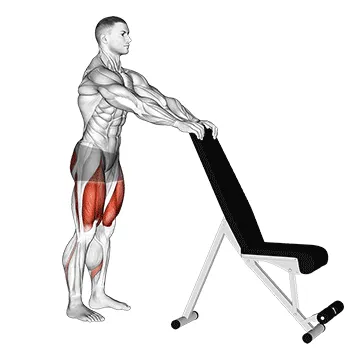
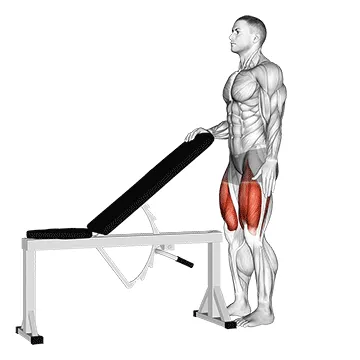
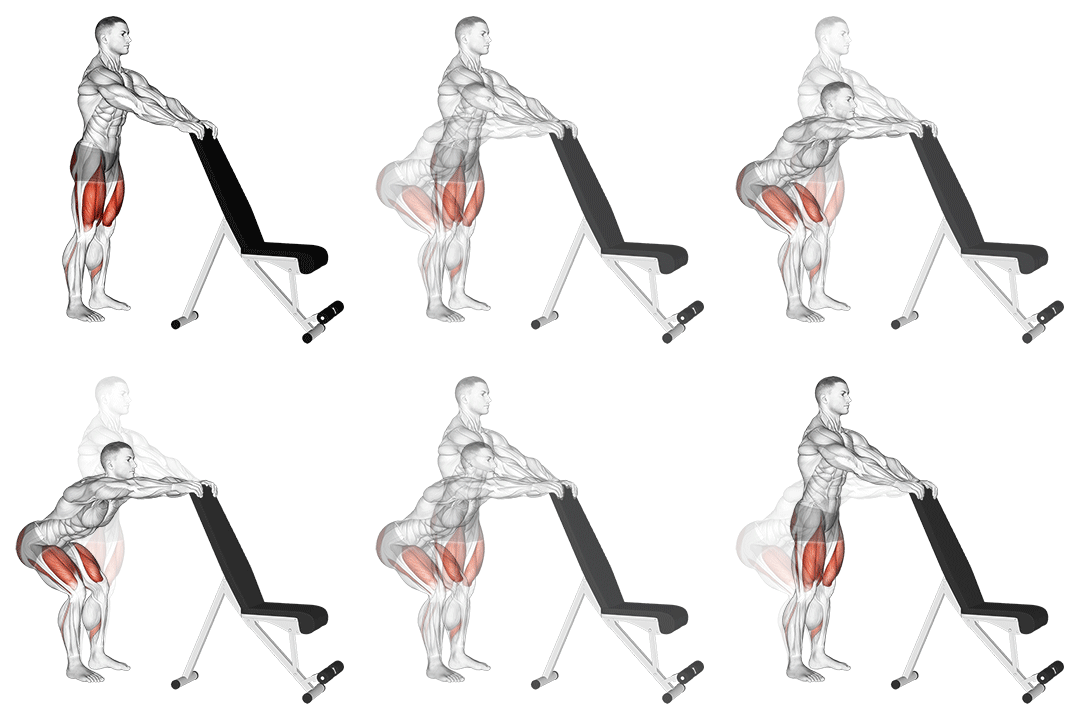
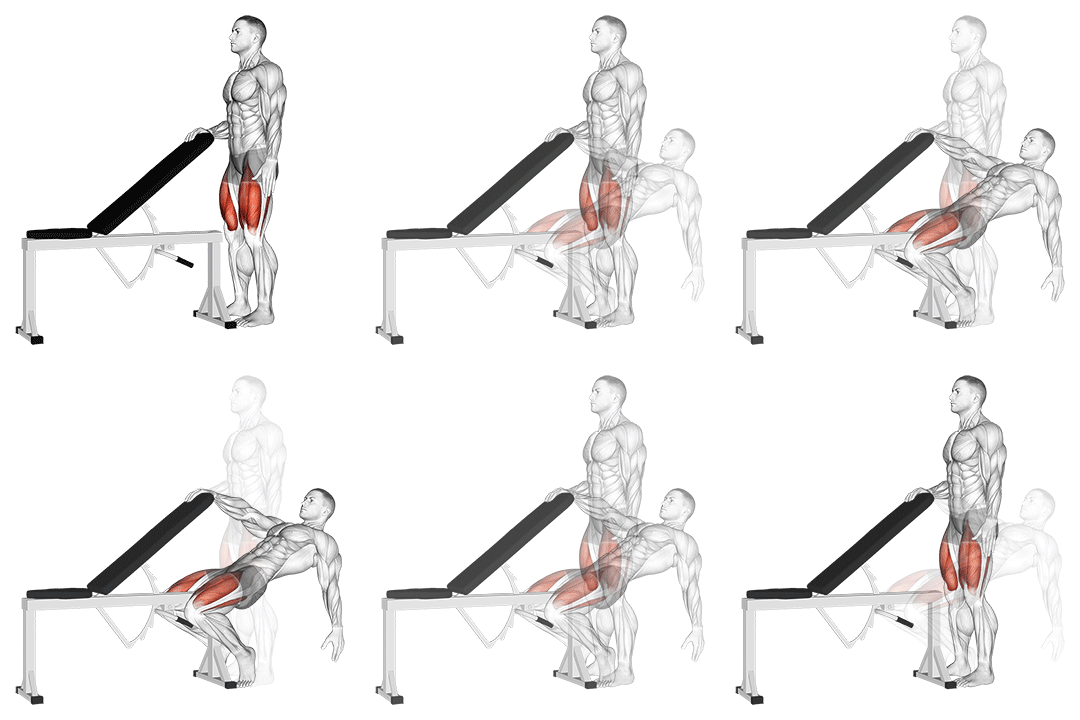
7. Sissy Squat
49% match- Quads
- Bodyweight
- Advanced
- Isolation
A looser match: it works the quads rather than the glutes.
How to perform this exercise
- Stand with your feet shoulder-width apart and your toes pointing slightly outward.
- Hold onto a stable object for balance if needed.
- Slowly lower your body by bending your knees and leaning back, keeping your torso upright.
- Continue lowering until your thighs are parallel to the ground or as far as you can comfortably go.
- Pause for a moment, then push through your heels to return to the starting position.
- Repeat for the desired number of repetitions.
Sets and reps: 3 sets of 10 to 15 reps.
Why this matches
- Primary muscle: quads, not glutes
- Equipment: bodyweight only, the same as the Downward Facing Balance
- Body position: standing, the same as the Downward Facing Balance
- Balance: easier to stay steady on than the Downward Facing Balance
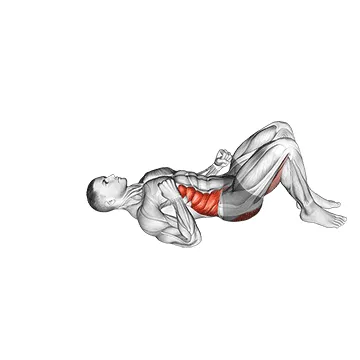
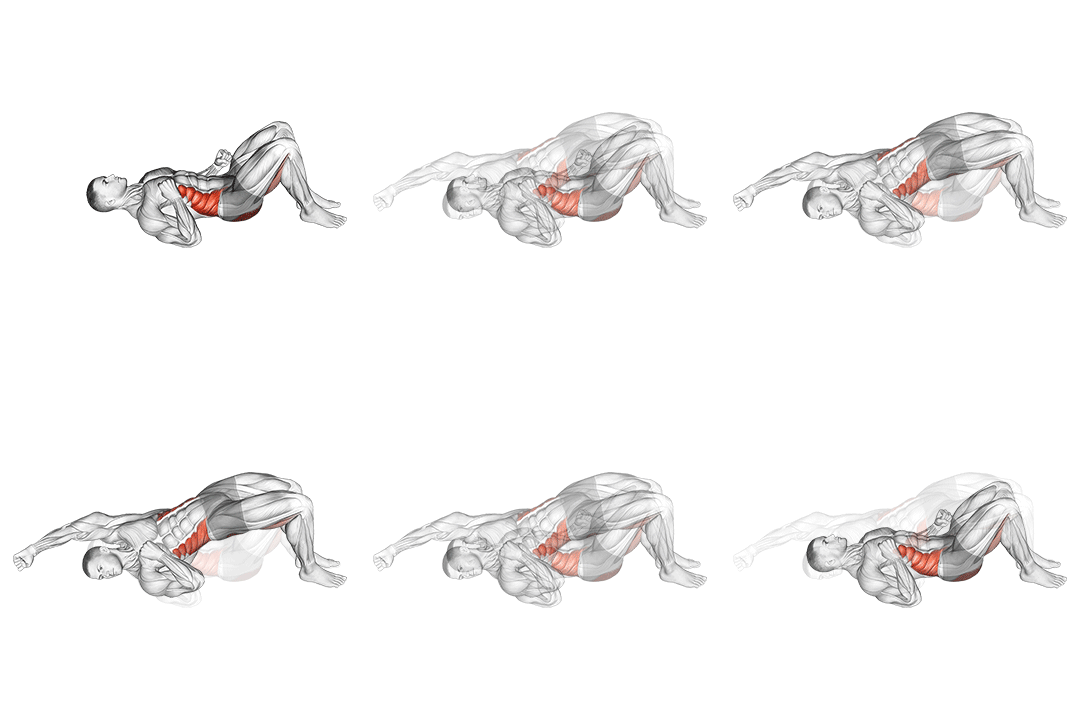
8. Twist Hip Lift
49% match- Glutes
- Bodyweight
- Beginner
- Isolation
How to perform this exercise
- Lie on your back with your knees bent and feet flat on the ground.
- Place your hands by your sides for support.
- Engage your glutes and lift your hips off the ground, forming a straight line from your knees to your shoulders.
- While keeping your hips lifted, twist your lower body to the right side, bringing your knees towards the ground.
- Return to the starting position and repeat the twist to the left side.
- Continue alternating twists for the desired number of repetitions.
Sets and reps: 3 sets of 8 to 12 reps, and add reps before you add load.
Why this matches
- Primary muscle: glutes, the same as the Downward Facing Balance
- Equipment: bodyweight only, the same as the Downward Facing Balance
- Body position: lying on your back, not standing
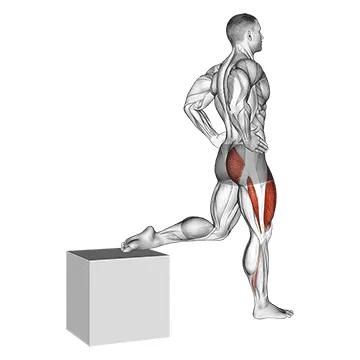
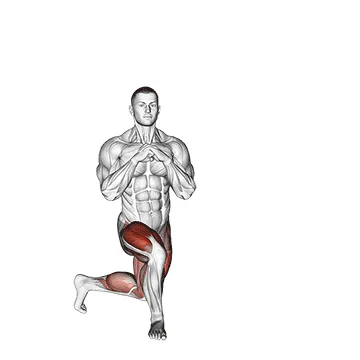
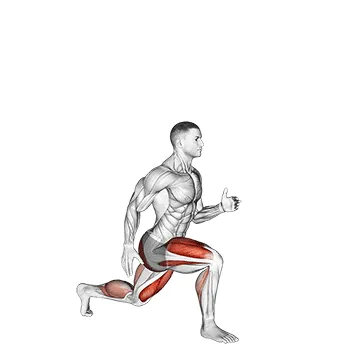
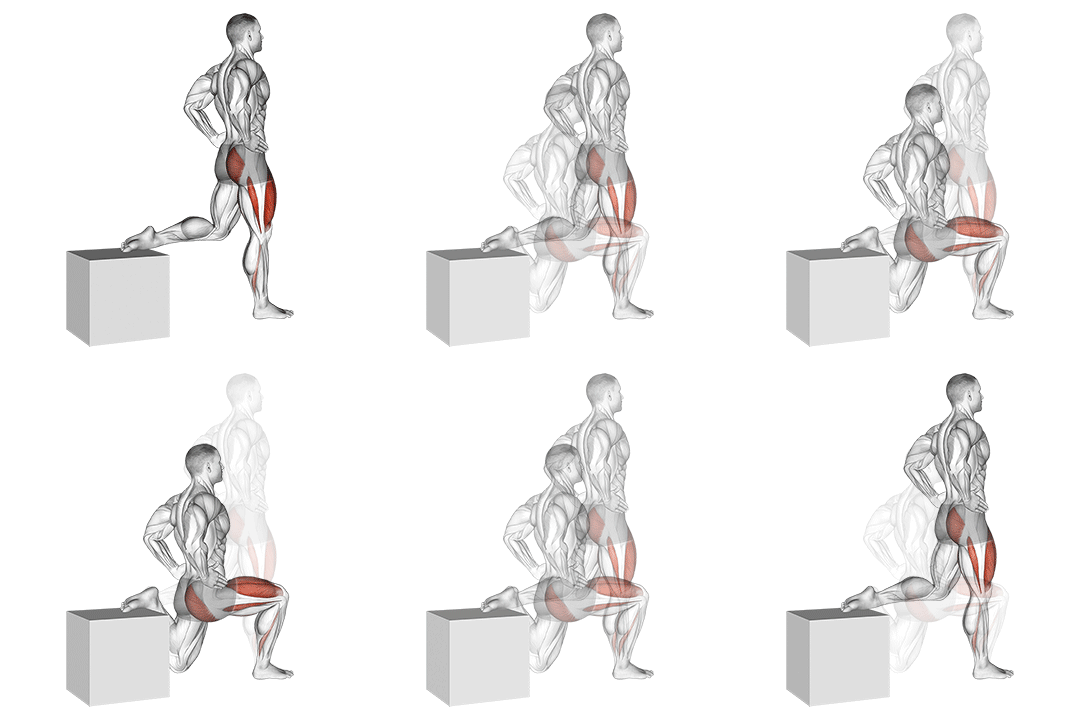
9. Lunge With Jump
48% match- Glutes
- Bodyweight
- Advanced
- Compound
How to perform this exercise
- Start by standing with your feet shoulder-width apart.
- Take a step forward with your right foot, lowering your body into a lunge position.
- Push off with your right foot and jump into the air, switching the position of your feet mid-air.
- Land softly with your left foot forward and immediately lower your body into a lunge position.
- Continue alternating between lunges and jumps for the desired number of repetitions.
Sets and reps: 3 or 4 sets of 6 to 10 reps on each side.
Why this matches
- Primary muscle: glutes, the same as the Downward Facing Balance
- Equipment: bodyweight only, the same as the Downward Facing Balance
- Body position: standing, the same as the Downward Facing Balance
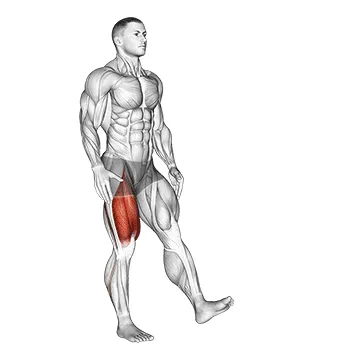
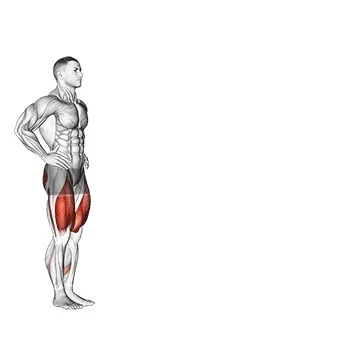
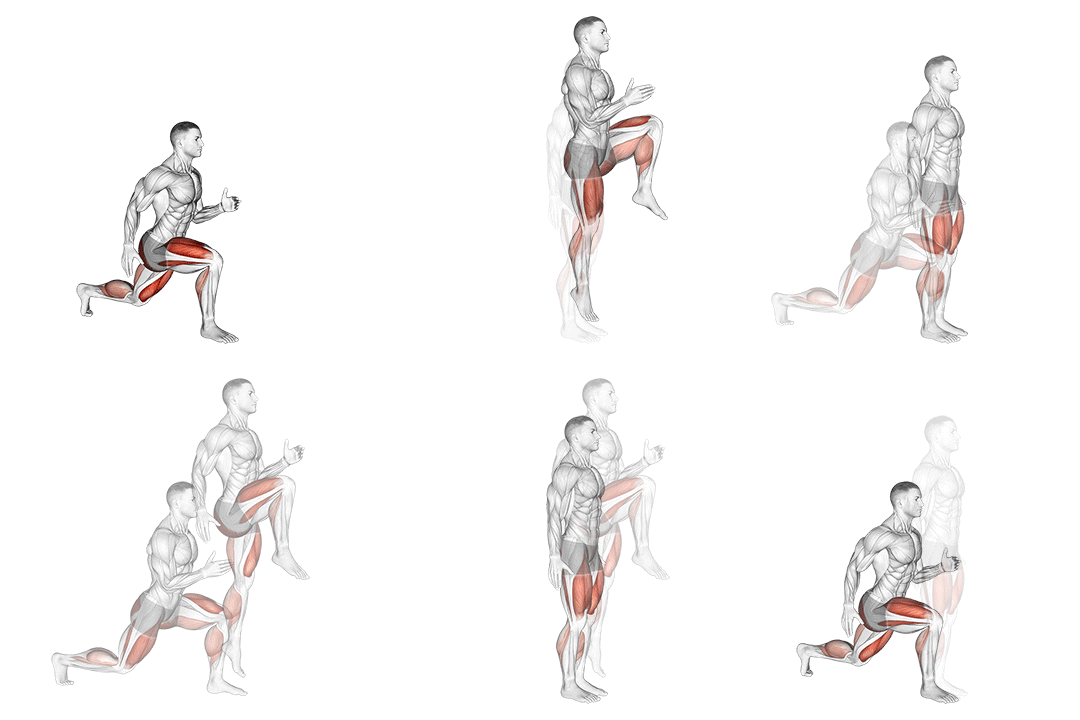
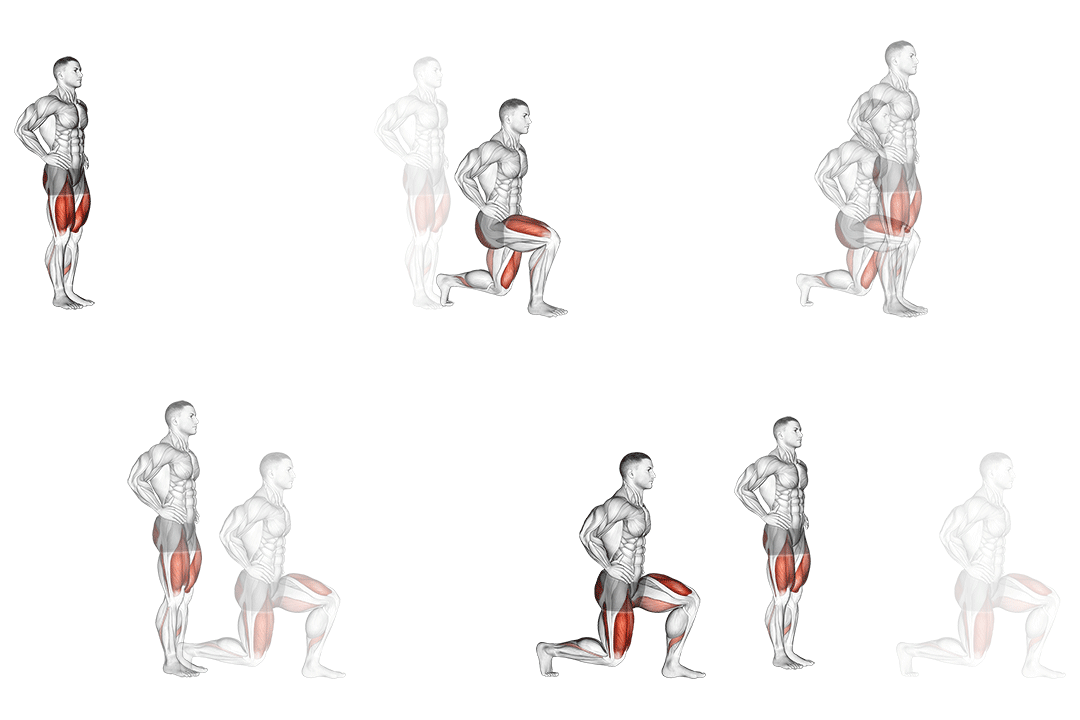
10. Walking Lunge
48% match- Glutes
- Bodyweight
- Intermediate
- Compound
How to perform this exercise
- Stand with your feet shoulder-width apart.
- Take a step forward with your right leg, lowering your body into a lunge position.
- Keep your torso upright and your front knee aligned with your ankle.
- Push off with your right foot and bring your left foot forward, stepping into a lunge position with your left leg.
- Continue alternating legs and walking forward, maintaining a controlled and steady pace.
- Repeat for the desired number of repetitions.
Sets and reps: 3 or 4 sets of 6 to 10 reps on each side.
Why this matches
- Primary muscle: glutes, the same as the Downward Facing Balance
- Equipment: bodyweight only, the same as the Downward Facing Balance
- Body position: standing, the same as the Downward Facing Balance
Why You Might Need a Downward Facing Balance Alternative
You may need substitutes for pain, missing equipment, balance deficits, or to progress load. A stability-ball Downward Facing Balance stresses hip extension with low knee flexion; if you feel sacroiliac pain or ankle instability, swap to alternatives that isolate the glute without requiring dynamic balance. Cue a posterior pelvic tuck and avoid lumbar hyperextension to protect the spine. Substitutes let you emphasize glute max torque (hip extension) or glute medius stabilization (frontal-plane control) and let you load progressively with bands, cables, or weights while maintaining targeted muscle activation.
Downward Facing Balance FAQ
What muscles does Downward Facing Balance work?
Downward Facing Balance primarily targets the gluteus maximus for hip extension and secondary stabilizers like gluteus medius and hamstrings. Maintain a neutral pelvis and squeeze the glute at the top to maximize glute max recruitment and limit lumbar loading.
Can I build muscle without doing Downward Facing Balance?
Yes. You can build glute muscle with hip thrusts, single-leg bridges, and progressive loaded variations that produce sufficient mechanical tension. Focus on full hip extension, controlled eccentric lowering, and progressive overload to drive muscle hypertrophy.
Find Alternatives for Any Exercise
Search the exercise database and filter the ranked substitutes by the equipment you own.
Similarity scores compare exercise metadata such as movement pattern, muscles, equipment and body position. They are not a safety rating or a check that you own the equipment. Learn about our methodology