

10 Best Flat Bench Cable Flyes Alternatives for Home and Gym
Flat Bench Cable Flyes are done lying on your back with a cable machine. Ranked closest by our scoring: the Isometric Chest Squeeze, Isometric Wipers and the Incline Push-up Wide.
Updated Ranked by our 12-factor similarity model How it works
Original Exercise: Flat Bench Cable Flyes
- Primary muscle
- Pectorals
- Equipment
- Cable
- Difficulty
- Intermediate
- Type
- Isolation
How to perform Flat Bench Cable Flyes
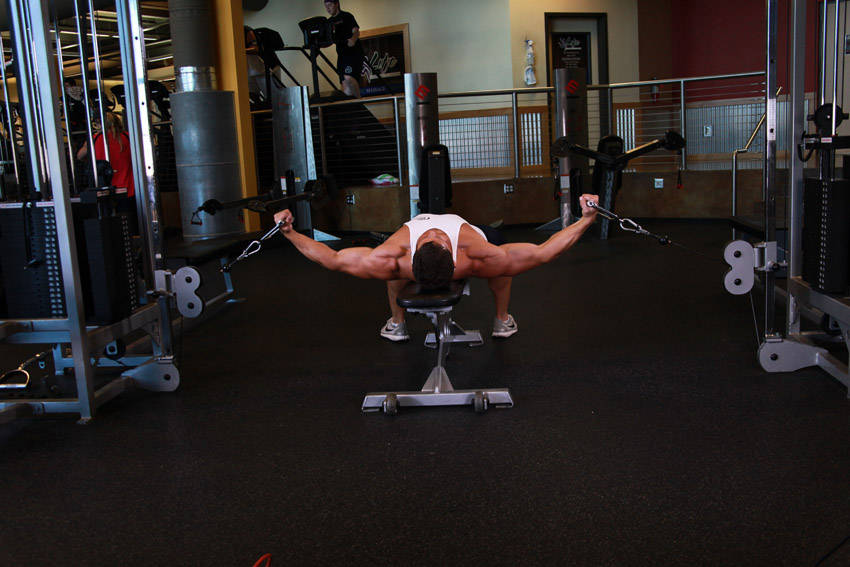
- Position a flat bench between two low pulleys so that when you are laying on it, your chest will be lined up with the cable pulleys.
- Lay flat on the bench and keep your feet on the ground.
- Have someone hand you the handles on each hand. You will grab each single handle attachment with a palms up grip.
- Extend your arms by your side with a slight bend on your elbows. Tip: You will keep this bend constant through the whole movement. Your arms should be parallel to the floor. This is your starting position.
- Now start lifting the arms in a semi-circle motion directly in front of you by pulling the cables together until both hands meet at the top of the movement. Squeeze your chest as you perform this motion and breathe out during this movement. Also, hold the contraction for a second at the top. Tip: When performed correctly, at the top position of this movement, your arms should be perpendicular to your torso and the floor touching above your chest.
- Slowly come back to the starting position.
- Repeat for the recommended amount of repetitions.
Ranked Flat Bench Cable Flyes Alternatives
10 substitutes, ranked by how closely each one matches Flat Bench Cable Flyes on movement pattern, muscles worked, equipment and body position. The higher the score, the less you change. Open "How to perform this exercise" on a card for the steps; every card title links to that exercise's own alternatives page.
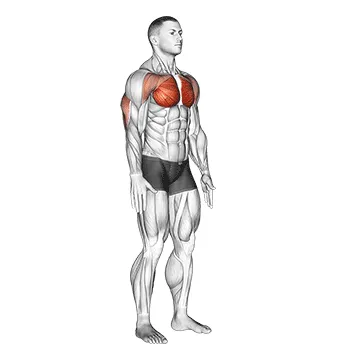
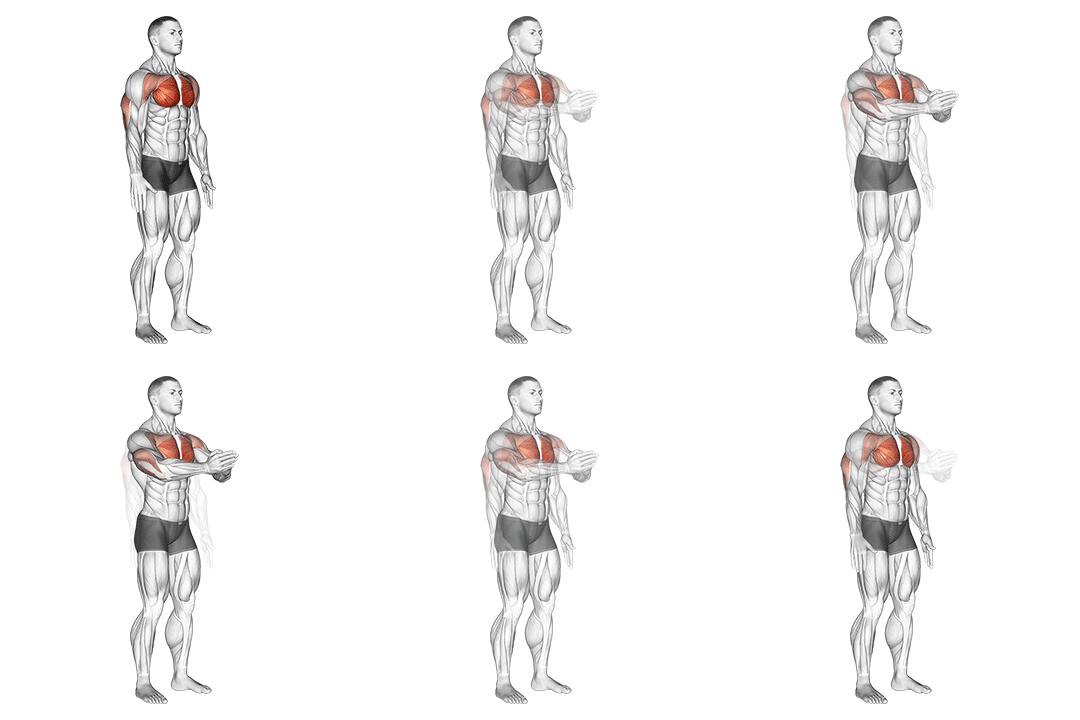
Best match 1. Isometric Chest Squeeze
73% match- Pectorals
- Bodyweight
- Beginner
- Isolation
Use this when you have nothing to train with, because it works the pectorals with bodyweight alone.
How to perform this exercise
- Stand with your feet shoulder-width apart and your knees slightly bent.
- Extend your arms straight out in front of you, parallel to the ground, with your palms facing each other.
- Squeeze your chest muscles together as hard as you can, while keeping your arms straight.
- Hold this position for a few seconds, focusing on contracting your chest muscles.
- Release the squeeze and relax your chest muscles.
- Repeat for the desired number of repetitions.
Sets and reps: 3 sets of 8 to 12 reps, and add reps before you add load.
Why this matches
- Primary muscle: pectorals, the same as Flat Bench Cable Flyes
- Equipment: bodyweight only, not a cable
- Body position: standing, not lying on your back
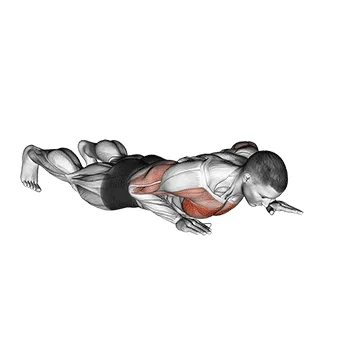
2. Isometric Wipers
66% match- Pectorals
- Bodyweight
- Intermediate
- Compound
How to perform this exercise
- Start by lying flat on your back on a mat or bench.
- Extend your arms straight out to the sides, perpendicular to your body.
- Engage your core and lift both legs off the ground, keeping them together and straight.
- Slowly lower your legs to one side, aiming to touch the ground with your feet while maintaining control.
- Pause for a moment, then use your core to lift your legs back to the starting position.
- Repeat the movement, this time lowering your legs to the opposite side.
- Continue alternating sides for the desired number of repetitions.
Sets and reps: 3 or 4 sets of 6 to 10 reps.
Why this matches
- Primary muscle: pectorals, the same as Flat Bench Cable Flyes
- Equipment: bodyweight only, not a cable
- Body position: lying face down, not lying on your back
3. Incline Push-up Wide
66% match- Pectorals
- Bodyweight
- Beginner
- Compound
How to perform this exercise
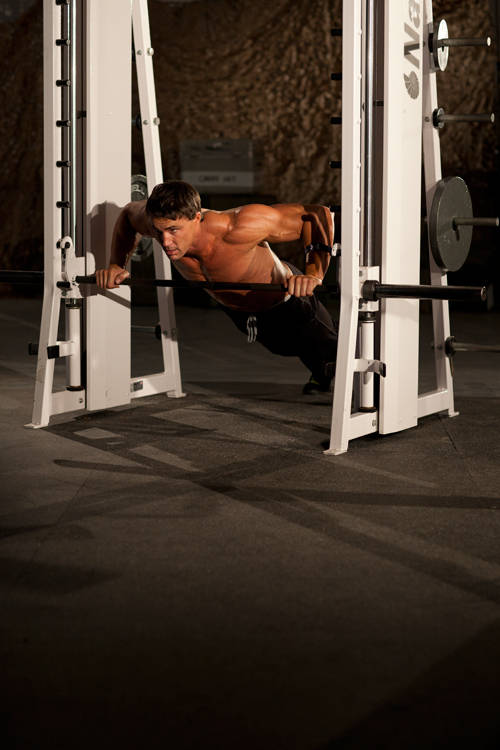
- Stand facing a Smith machine bar or sturdy elevated platform at an appropriate height.
- Place your hands on the bar, with your hands wider than shoulder width.
- Position your feet back from the bar with arms and body straight. Your arms should be perpendicular to the body. This will be your starting position.
- Keeping your body straight, lower your chest to the bar by bending the arms.
- Return to the starting position by extending the elbows, pressing yourself back up.
Sets and reps: 3 sets of 8 to 12 reps, and add reps before you add load.
Why this matches
- Primary muscle: pectorals, the same as Flat Bench Cable Flyes
- Equipment: bodyweight only, not a cable
- Body position: lying face down, not lying on your back
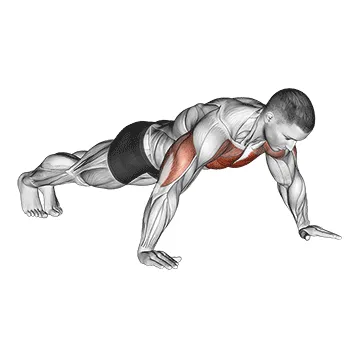
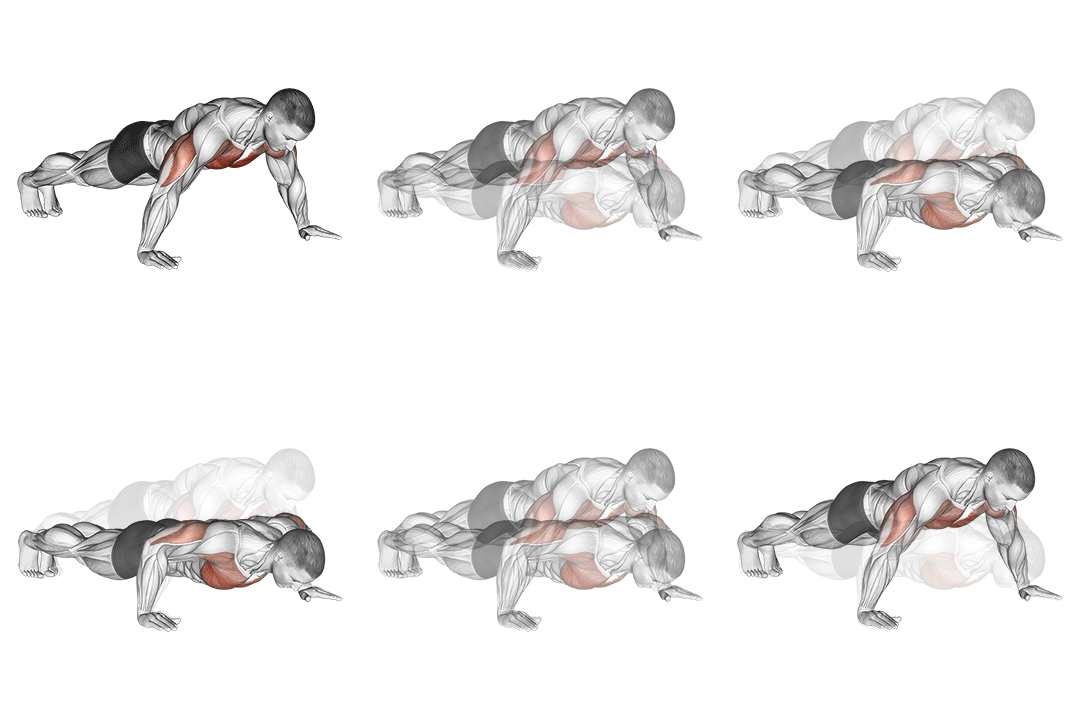
4. Wide Hand Push Up
66% match- Pectorals
- Bodyweight
- Beginner
- Compound
How to perform this exercise
- Start in a high plank position with your hands wider than shoulder-width apart.
- Keep your body in a straight line from head to toe.
- Lower your chest towards the ground by bending your elbows, keeping them close to your sides.
- Push through your palms to extend your arms and return to the starting position.
- Repeat for the desired number of repetitions.
Sets and reps: 3 sets of 8 to 12 reps, and add reps before you add load.
Why this matches
- Primary muscle: pectorals, the same as Flat Bench Cable Flyes
- Equipment: bodyweight only, not a cable
- Body position: lying face down, not lying on your back
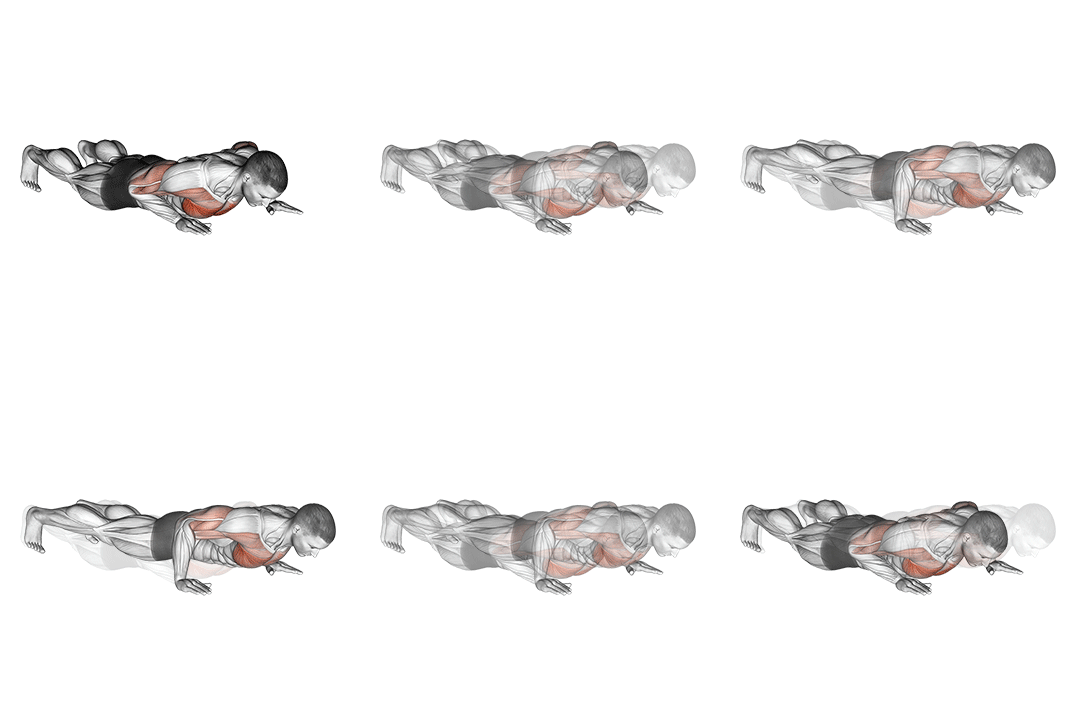
5. Push-up Wide
65% match- Pectorals
- Bodyweight
- Beginner
- Compound
How to perform this exercise
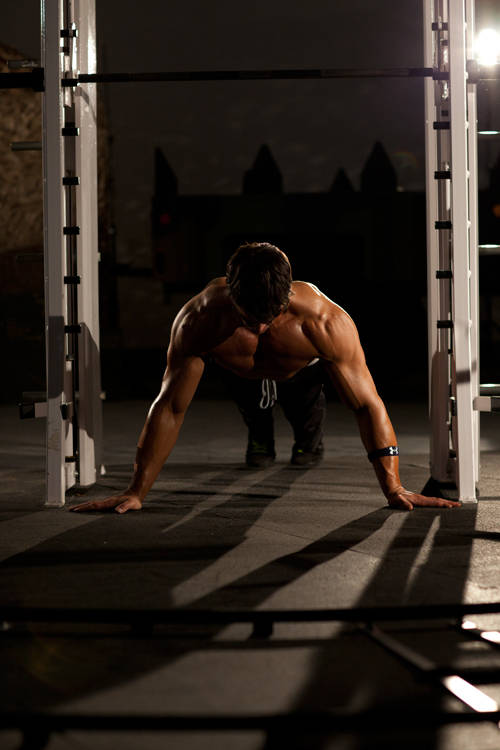
- With your hands wide apart, support your body on your toes and hands in a plank position. Your elbows should be extended and your body straight. Do not allow your hips to sag. This will be your starting position.
- To begin, allow the elbows to flex, lowering your chest to the floor as you inhale.
- Using your pectoral muscles, press your upper body back up to the starting position by extending the elbows. Exhale as you perform this step.
- After pausing at the contracted position, repeat the movement for the prescribed amount of repetitions.
Sets and reps: 3 sets of 8 to 12 reps, and add reps before you add load.
Why this matches
- Primary muscle: pectorals, the same as Flat Bench Cable Flyes
- Equipment: bodyweight only, not a cable
- Body position: lying face down, not lying on your back
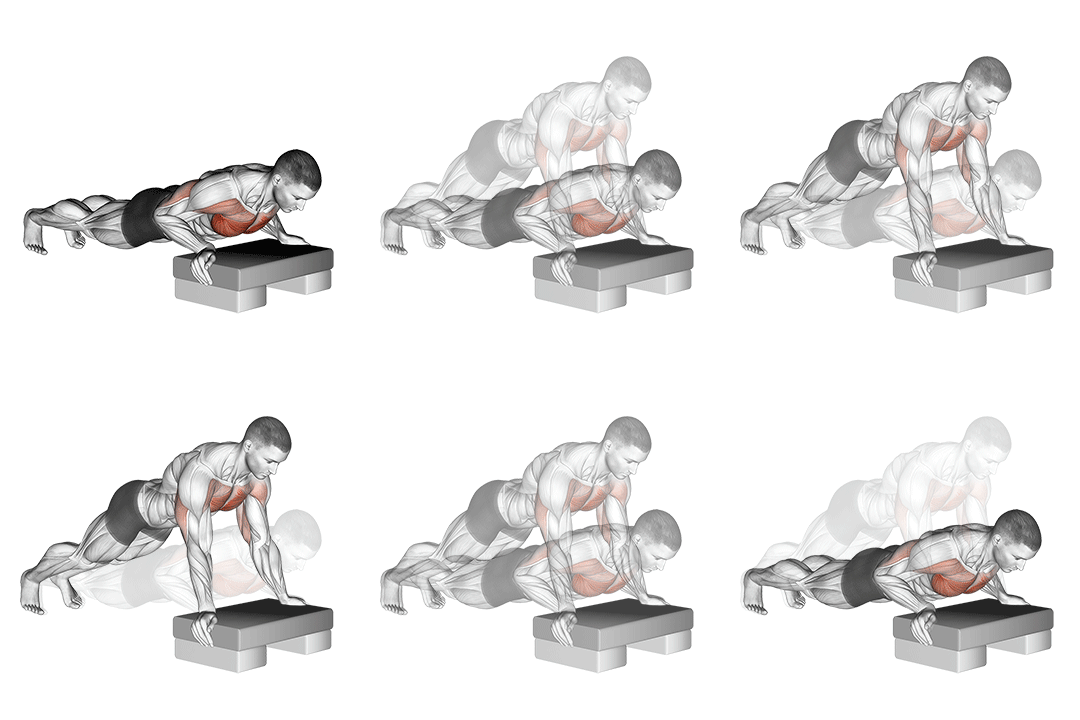
6. Incline Push-up
64% match- Pectorals
- Bodyweight
- Beginner
- Compound
How to perform this exercise
- Place your hands on an elevated surface, such as a bench or step, slightly wider than shoulder-width apart.
- Extend your legs behind you, resting on the balls of your feet, creating a straight line from your head to your heels.
- Lower your chest towards the elevated surface by bending your elbows, keeping your body in a straight line.
- Pause for a moment at the bottom, then push yourself back up to the starting position by straightening your arms.
- Repeat for the desired number of repetitions.
Sets and reps: 3 sets of 8 to 12 reps, and add reps before you add load.
Why this matches
- Primary muscle: pectorals, the same as Flat Bench Cable Flyes
- Equipment: bodyweight only, not a cable
- Body position: lying face down, not lying on your back
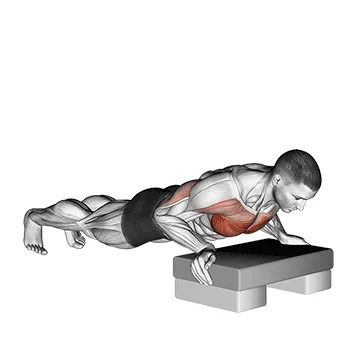
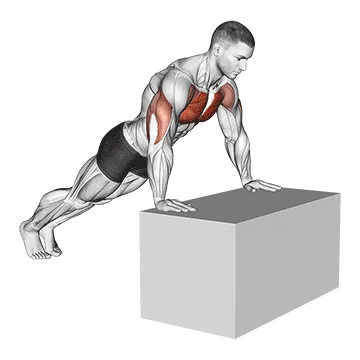
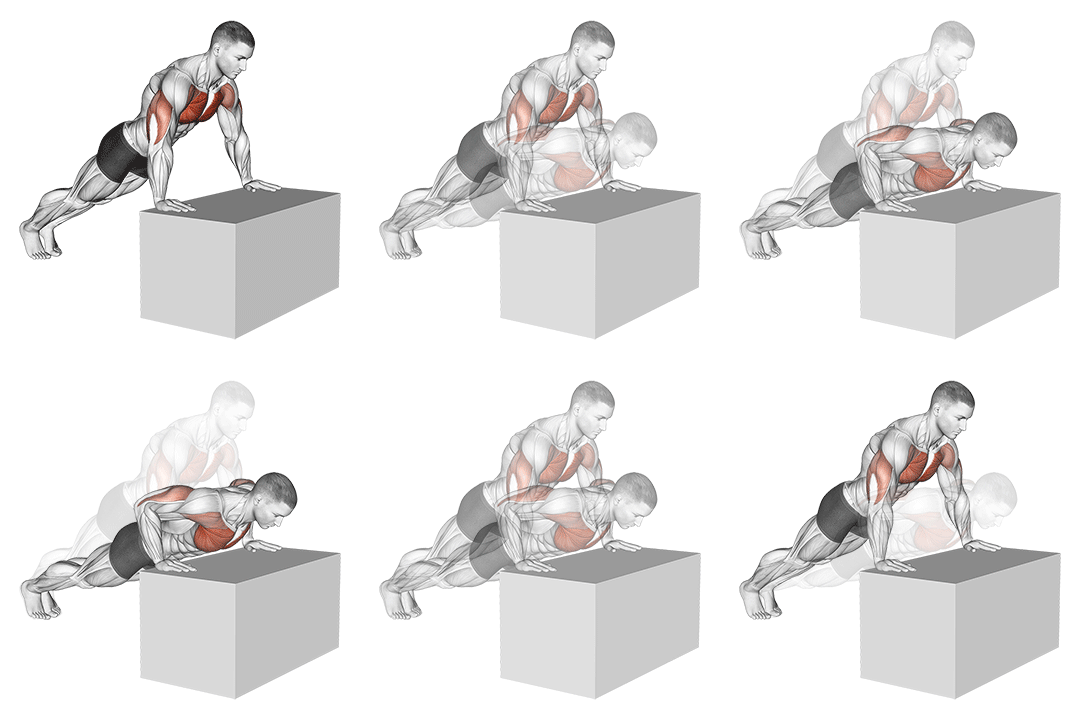
7. Incline Push-up (On Box)
64% match- Pectorals
- Bodyweight
- Beginner
- Compound
How to perform this exercise
- Place your hands on the edge of a box or elevated surface, slightly wider than shoulder-width apart.
- Extend your legs behind you, resting on the balls of your feet, creating a straight line from your head to your heels.
- Lower your chest towards the box by bending your elbows, keeping your body in a straight line.
- Pause for a moment at the bottom, then push yourself back up to the starting position by straightening your arms.
- Repeat for the desired number of repetitions.
Sets and reps: 3 sets of 8 to 12 reps, and add reps before you add load.
Why this matches
- Primary muscle: pectorals, the same as Flat Bench Cable Flyes
- Equipment: bodyweight only, not a cable
- Body position: standing, not lying on your back
8. Incline Push-up Medium
64% match- Pectorals
- Bodyweight
- Beginner
- Compound
How to perform this exercise
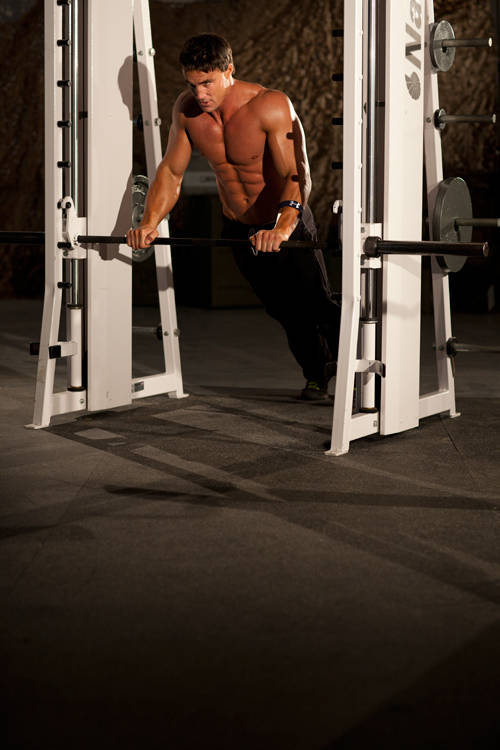
- Stand facing a Smith machine bar or sturdy elevated platform at an appropriate height.
- Place your hands on the bar, with your hands about shoulder width apart.
- Position your feet back from the bar with arms and body straight. This will be your starting position.
- Keeping your body straight, lower your chest to the bar by bending the arms.
- Return to the starting position by extending the elbows, pressing yourself back up.
Sets and reps: 3 sets of 8 to 12 reps, and add reps before you add load.
Why this matches
- Primary muscle: pectorals, the same as Flat Bench Cable Flyes
- Equipment: bodyweight only, not a cable
- Body position: lying face down, not lying on your back
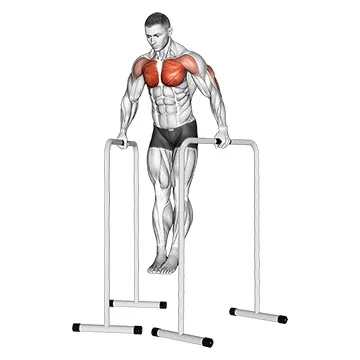
- Pectorals
- Bodyweight
- Advanced
- Compound
How to perform this exercise
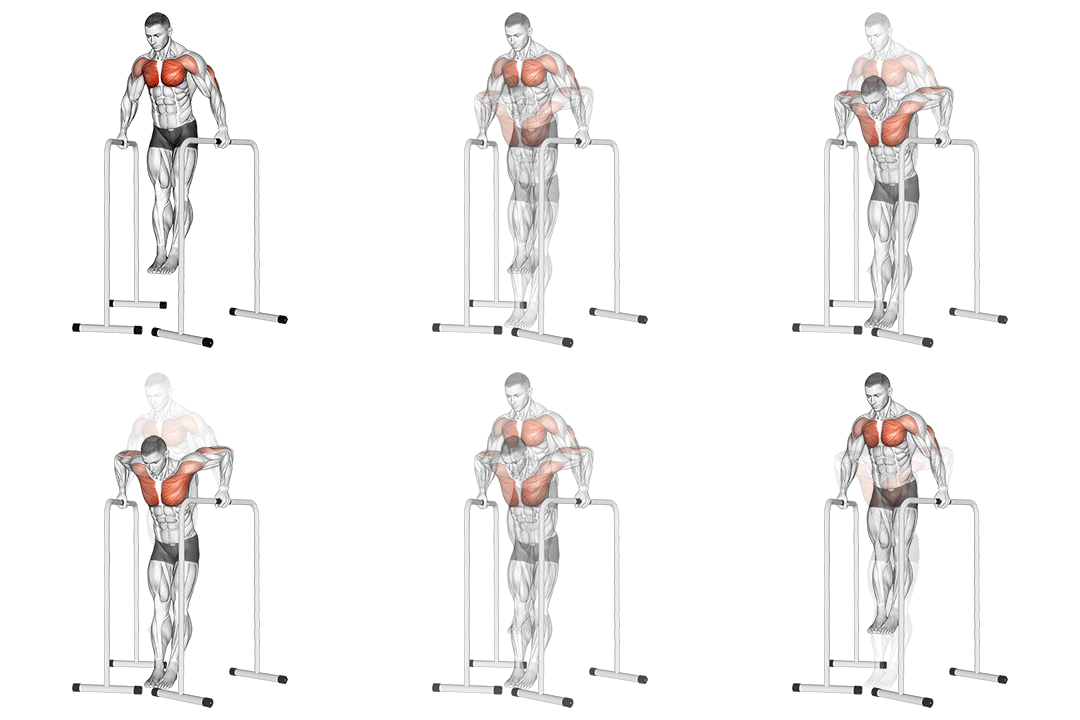
- Position yourself on the parallel bars with your arms fully extended and your body suspended in the air.
- Lean forward slightly and lower your body by bending your elbows until your chest is just above the bars.
- Pause for a moment, then push yourself back up to the starting position by straightening your arms.
- Repeat for the desired number of repetitions.
Sets and reps: 3 or 4 sets of 6 to 10 reps.
Why this matches
- Primary muscle: pectorals, the same as Flat Bench Cable Flyes
- Equipment: bodyweight only, not a cable
- Body position: hanging, not lying on your back
- Balance: harder to stay steady on than Flat Bench Cable Flyes
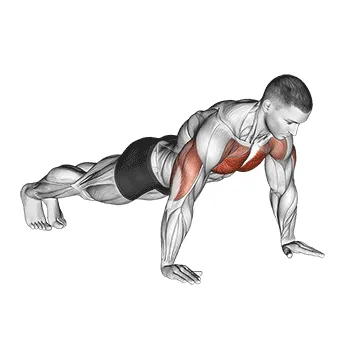
10. Push-up
63% match- Pectorals
- Bodyweight
- Intermediate
- Compound
How to perform this exercise
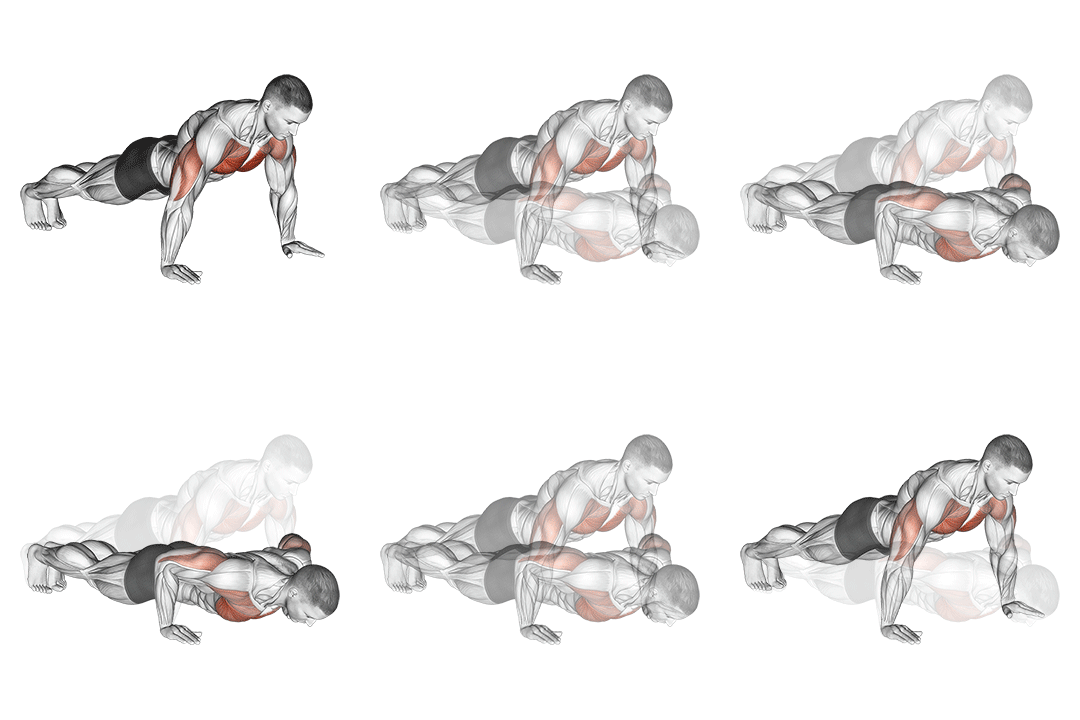
- Start in a high plank position with your hands slightly wider than shoulder-width apart and your feet together.
- Engage your core and lower your body towards the ground by bending your elbows, keeping your body in a straight line.
- Pause for a moment when your chest is just above the ground, then push yourself back up to the starting position by straightening your arms.
- Repeat for the desired number of repetitions.
Sets and reps: 3 or 4 sets of 6 to 10 reps.
Why this matches
- Primary muscle: pectorals, the same as Flat Bench Cable Flyes
- Equipment: bodyweight only, not a cable
- Body position: lying face down, not lying on your back
Why You Might Need a Flat Bench Cable Flyes Alternative
You might substitute flat bench cable flyes for several practical reasons: limited cable machine access, shoulder pain that flares with transverse-plane isolation, or a training phase that favors heavier pressing. Injuries often require reduced end-range horizontal abduction or unilateral work to manage load and pain. Equipment constraints push you toward dumbbells, machines, or bodyweight options that still target the pectorals. Preferences for different muscle activation also matter, some lifters want more sternal or clavicular emphasis, or improved unilateral control to fix strength imbalances. Choosing a substitute lets you preserve pec tension, control range of motion, and continue progressive overload without aggravating joints.
How to Choose the Right Flat Bench Cable Flyes Substitute
Select a substitute by matching movement pattern, tension profile, and available equipment. Prioritize exercises that reproduce horizontal adduction and allow a controlled eccentric to target pec fiber recruitment. If you need joint-friendly options, choose machines or single-arm variations that limit shear at the shoulder. For hypertrophy, pick movements that let you maintain continuous tension and time under tension; for strength, favor heavier compound presses with limited ROM adjustments. Also consider unilateral work to correct asymmetries and exercise variations that permit progressive loading or microloading as you adapt.
Flat Bench Cable Flyes FAQ
What muscles does Flat Bench Cable Flyes work?
Flat bench cable flyes primarily target the pectoralis major (sternal and clavicular heads) through horizontal shoulder adduction. They also recruit the anterior deltoid for stabilization and the serratus anterior and scapular stabilizers to control the range of motion.
Find Alternatives for Any Exercise
Search the exercise database and filter the ranked substitutes by the equipment you own.
Similarity scores compare exercise metadata such as movement pattern, muscles, equipment and body position. They are not a safety rating or a check that you own the equipment. Learn about our methodology