

10 Best Kettlebell Dead Clean Alternatives for Home and Gym
Instead of the kettlebell dead clean, use exercises that restore the same hip-hinge power and hamstring activation: Romanian deadlifts, trap-bar deadlifts, single-leg RDLs, barbell hip thrusts, and kettlebell swings. Focus on hip hinge: push hips back, keep a neutral spine, maintain a slight knee bend, and drive through the heels to load the hamstrings.
Original Exercise: Kettlebell Dead Clean
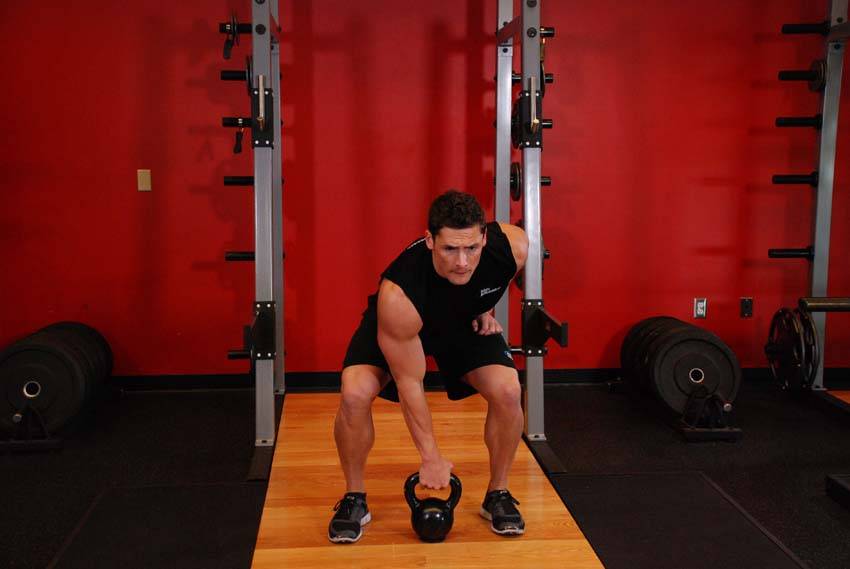
How to Perform Kettlebell Dead Clean
- Place kettlebell between your feet. To get in the starting position, push your butt back and look straight ahead.
- Clean the kettlebell to your shoulder. Clean the kettlebell to your shoulders by extending through the legs and hips as you raise the kettlebell towards your shoulder. The wrist should rotate as you do so.
- Lower the kettlebell, keeping the hamstrings loaded by keeping your back straight and your butt out.
Pro Tips
- Category: Strength
- Force: Pull
- Movement type: Compound
Ranked Kettlebell Dead Clean Alternatives
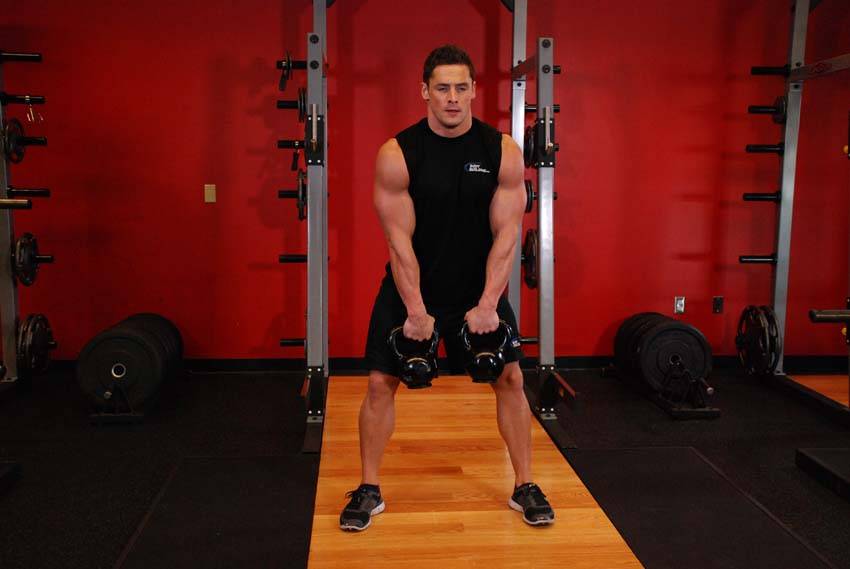
1. Double Kettlebell Alternating Hang Clean
87.7% MatchHow to perform this exercise
- Place two kettlebells between your feet. To get in the starting position, push your butt back and look straight ahead.
- Clean one kettlebell to your shoulder and hold on to the other kettlebell.
- With a fluid motion, lower the top kettlebell while driving the bottom kettlebell up.
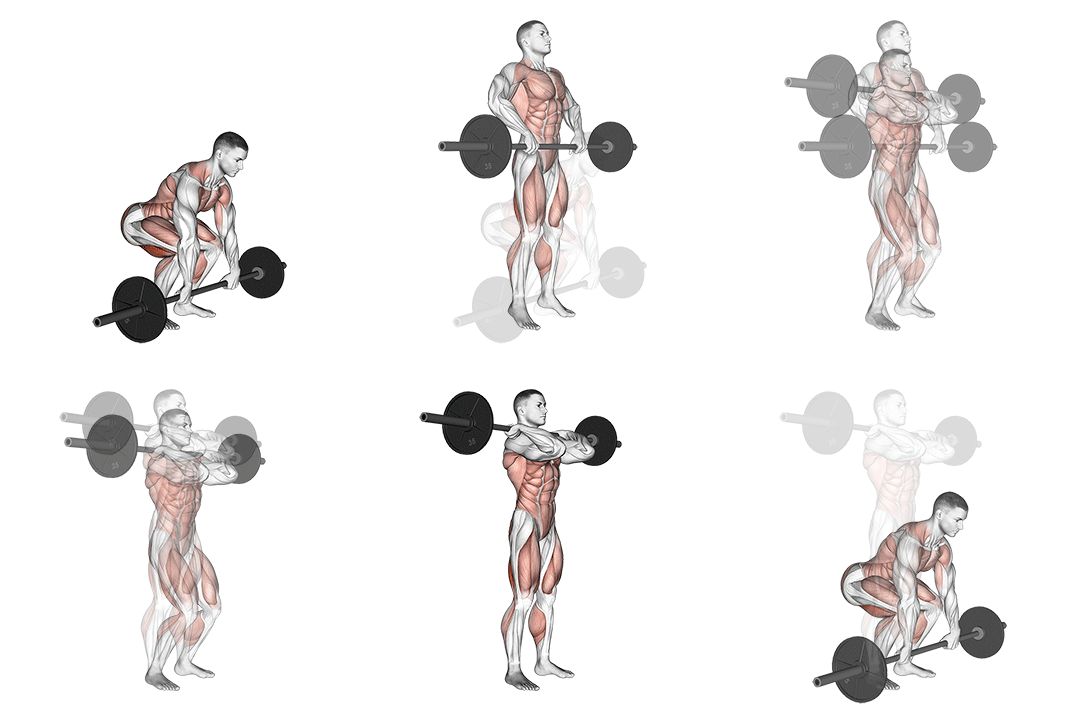
2. Power Clean
86.6% MatchHow to perform this exercise
- Start with the barbell on the ground in front of you, with your feet shoulder-width apart.
- Bend down and grip the barbell with an overhand grip, slightly wider than shoulder-width apart.
- Keep your back straight and chest up as you lift the barbell off the ground, extending your hips and knees.
- As the barbell reaches your mid-thigh, explosively pull it upwards, shrugging your shoulders and pulling your elbows high and to the sides.
- As the barbell reaches its highest point, quickly drop underneath it, rotating your elbows around and catching the barbell on your shoulders in a front squat position.
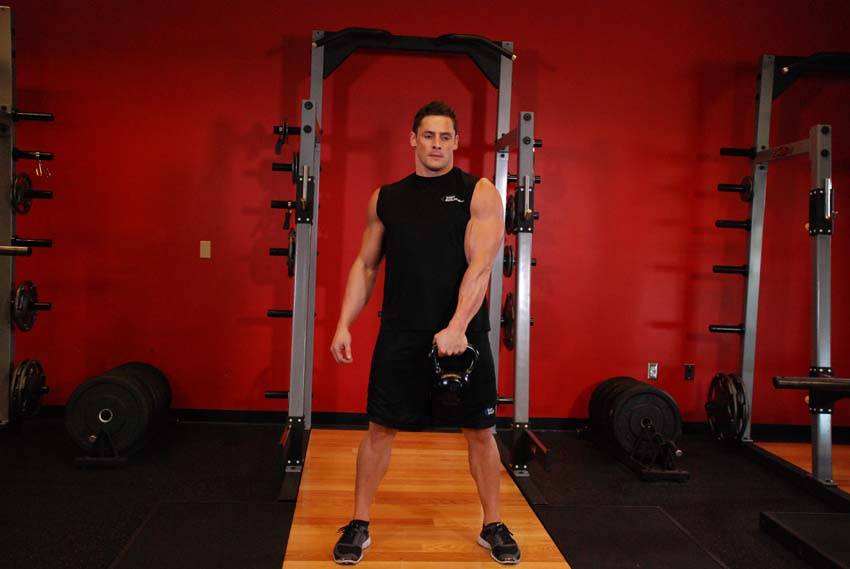
3. One-Arm Kettlebell Swings
84.4% Match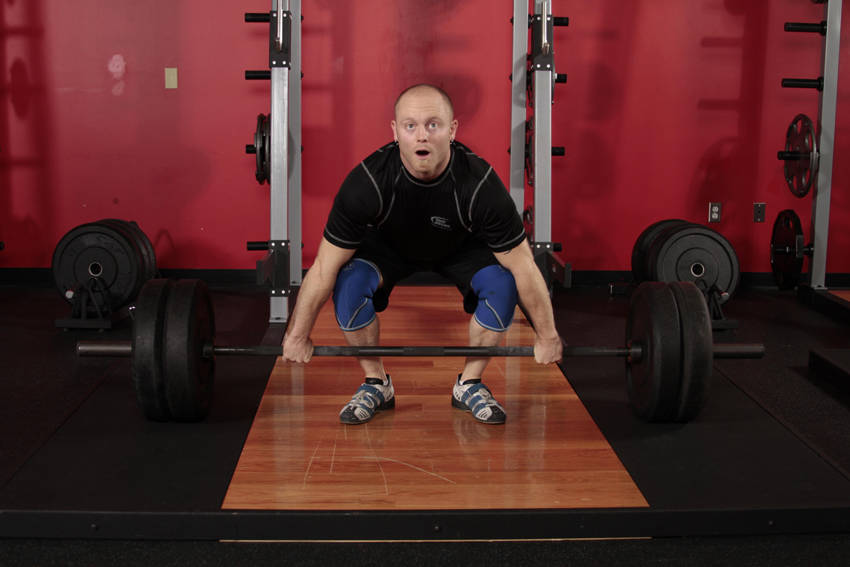
4. Clean
83.1% MatchHow to perform this exercise
- With a barbell on the floor close to the shins, take an overhand (or hook) grip just outside the legs. Lower your hips with the weight focused on the heels, back straight, head facing forward, chest up, with your shoulders just in front of the bar. This will be your starting position.
- Begin the first pull by driving through the heels, extending your knees. Your back angle should stay the same, and your arms should remain straight. Move the weight with control as you continue to above the knees.
- Next comes the second pull, the main source of acceleration for the clean. As the bar approaches the mid-thigh position, begin extending through the hips. In a jumping motion, accelerate by extending the hips, knees, and ankles, using speed to move the bar upward. There should be no need to actively pull through the arms to accelerate the weight; at the end of the second pull, the body should be fully extended, leaning slightly back, with the arms still extended.
- As full extension is achieved, transition into the third pull by aggressively shrugging and flexing the arms with the elbows up and out. At peak extension, aggressively pull yourself down, rotating your elbows under the bar as you do so. Receive the bar in a front squat position, the depth of which is dependent upon the height of the bar at the end of the third pull. The bar should be racked onto the protracted shoulders, lightly touching the throat with the hands relaxed. Continue to descend to the bottom squat position, which will help in the recovery.
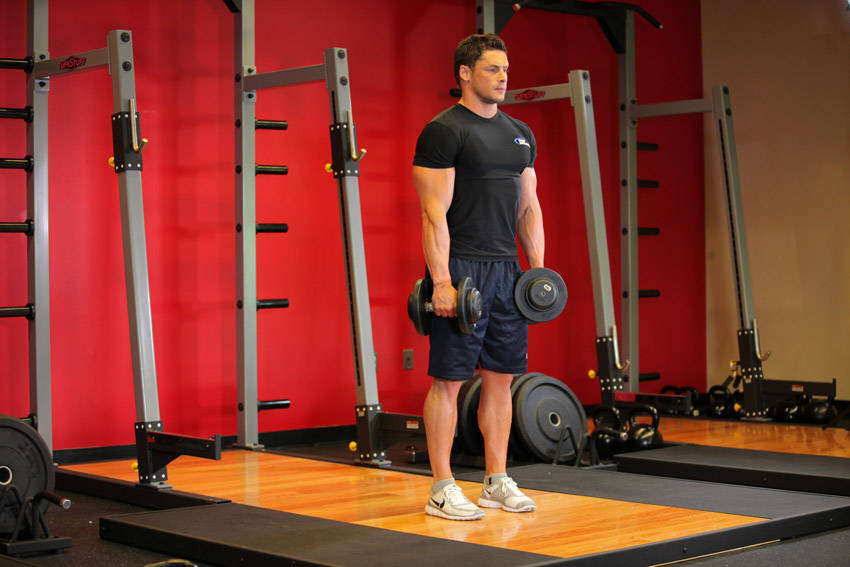
5. Stiff-Legged Dumbbell Deadlift
82.7% MatchHow to perform this exercise
- Grasp a couple of dumbbells holding them by your side at arm's length.
- Stand with your torso straight and your legs spaced using a shoulder width or narrower stance. The knees should be slightly bent. This is your starting position.
- Keeping the knees stationary, lower the dumbbells to over the top of your feet by bending at the waist while keeping your back straight. Keep moving forward as if you were going to pick something from the floor until you feel a stretch on the hamstrings. Exhale as you perform this movement
- Start bringing your torso up straight again by extending your hips and waist until you are back at the starting position. Inhale as you perform this movement.
- Repeat for the recommended amount of repetitions.
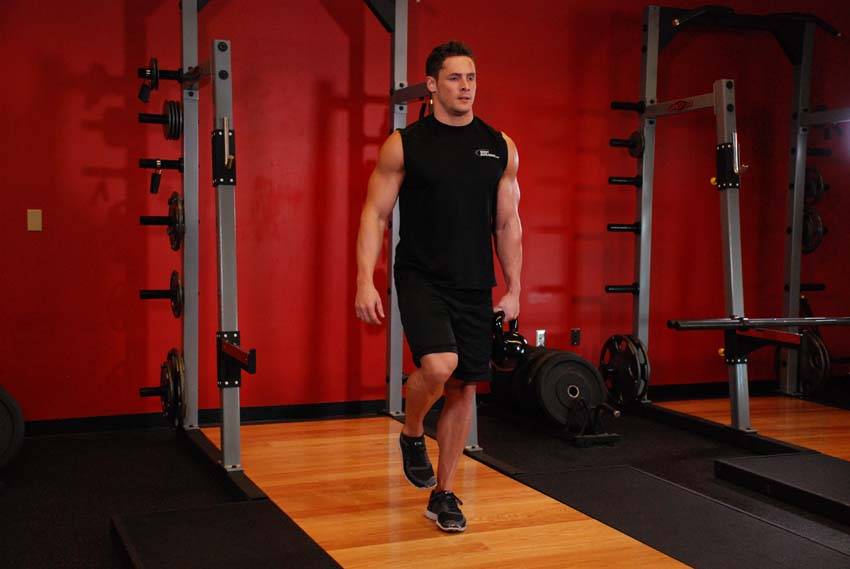
6. Kettlebell One-Legged Deadlift
79.4% MatchHow to perform this exercise
- Hold a kettlebell by the handle in one hand. Stand on one leg, on the same side that you hold the kettlebell.
- Keeping that knee slightly bent, perform a stiff legged deadlift by bending at the hip, extending your free leg behind you for balance.
- Continue lowering the kettlebell until you are parallel to the ground, and then return to the upright position.
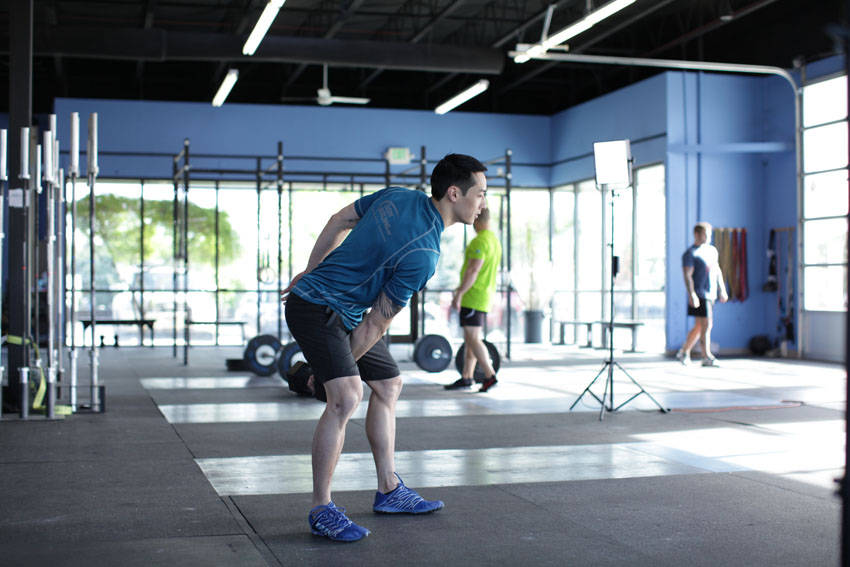
7. Vertical Swing
79% MatchHow to perform this exercise
- Allow the dumbbell to hang at arms length between your legs, holding it with both hands. Keep your back straight and your head up.
- Swing the dumbbell between your legs, flexing at the hips and bending the knees slightly.
- Powerfully reverse the motion by extending at the hips, knees, and ankles to propel yourself upward, swinging the dumbell over your head.
- As you land, absorb the impact through your legs and draw the dumbbell to your torso before the next repetition.
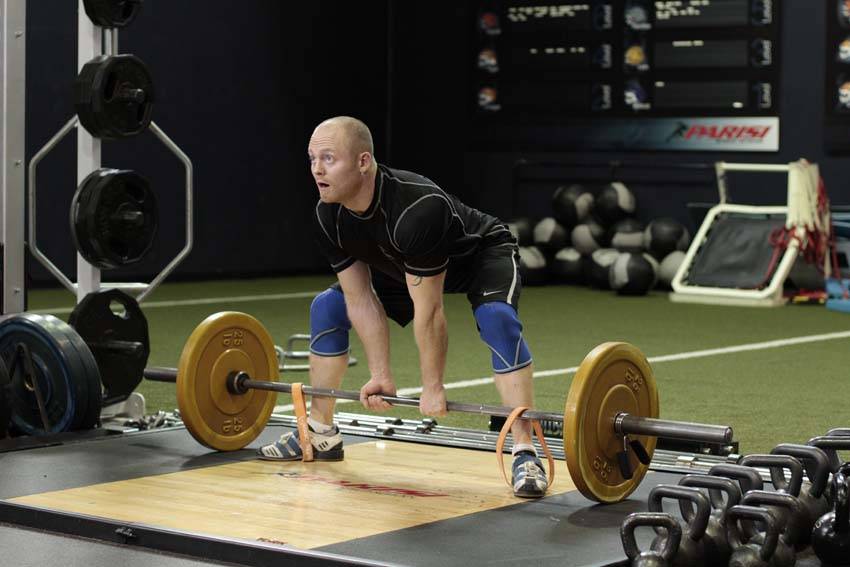
8. Sumo Deadlift With Bands
78.9% MatchHow to perform this exercise
- To deadlift with short bands, simply loop them over the bar before you start, and step into them to set up. Ensure that they under the back half of your foot, directly where you are driving into the floor.
- Begin with a bar loaded on the ground. Approach the bar so that the bar intersects the middle of the feet. The feet should be set very wide, near the collars. Bend at the hips to grip the bar. The arms should be directly below the shoulders, inside the legs, and you can use a pronated grip, a mixed grip, or hook grip.
- Take a breath, and then lower your hips, looking forward with your head with your chest up. Drive through the floor, spreading your feet apart, with your weight on the back half of your feet. Extend through the hips and knees.
- As the bar passes through the knees, lean back and drive the hips into the bar, pulling your shoulder blades together.
- Return the weight to the ground by bending at the hips and controlling the weight on the way down.
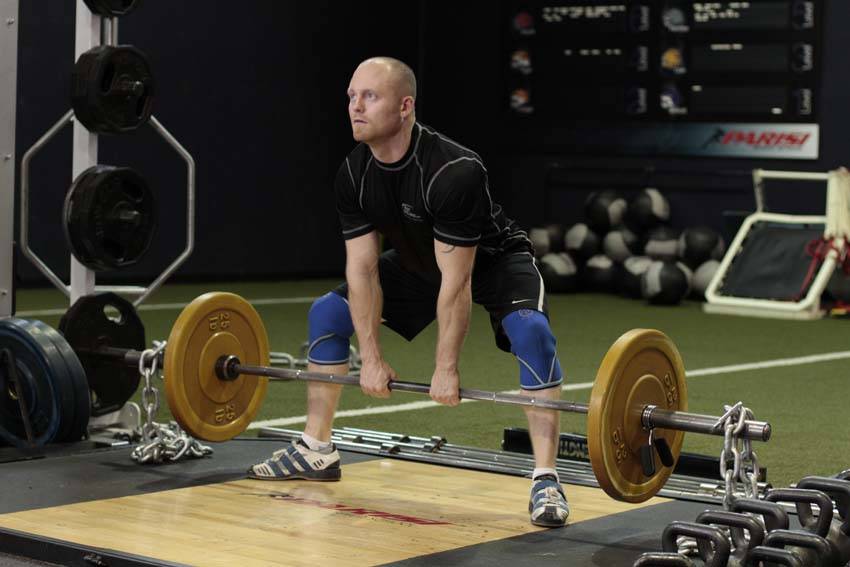
9. Sumo Deadlift With Chains
78.9% MatchHow to perform this exercise
- You can attach the chains to the sleeves of the bar, or just drape the middle over the bar so there is a greater weight increase as you lift. Attempt to keep the ends of the chains away from the plates so you don't hit them when you lower the weight.
- Begin with a bar loaded on the ground. Approach the bar so that the bar intersects the middle of the feet. The feet should be set very wide, near the collars. Bend at the hips to grip the bar. The arms should be directly below the shoulders, inside the legs, and you can use a pronated grip, a mixed grip, or hook grip. Relax the shoulders, which in effect lengthens your arms.
- Take a breath, and then lower your hips, looking forward with your head with your chest up. Drive through the floor, spreading your feet apart, with your weight on the back half of your feet. Extend through the hips and knees.
- As the bar passes through the knees, lean back and drive the hips into the bar, pulling your shoulder blades together.
- Return the weight to the ground by bending at the hips and controlling the weight on the way down.
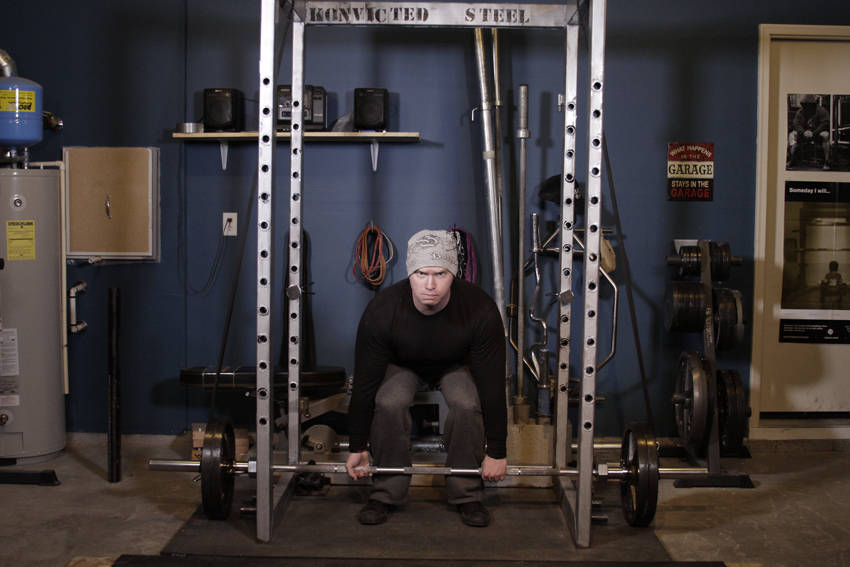
10. Reverse Band Deadlift
78.7% MatchHow to perform this exercise
- Set the bar up in a power rack. Attach bands to the top of the rack, using either bands pegs or the frame itself. Attach the other end of the bands to the bar.
- Approach the bar so that it is centered over your feet. You feet should be about hip width apart. Bend at the hip to grip the bar at shoulder width, allowing your shoulder blades to protract. Typically, you would use an overhand grip or an over/under grip on heavier sets.
- With your feet, and your grip set, take a big breath and then lower your hips and bend the knees until your shins contact the bar. Look forward with your head, keep your chest up and your back arched, and begin driving through the heels to move the weight upward.
- After the bar passes the knees, aggressively pull the bar back, pulling your shoulder blades together as you drive your hips forward into the bar.
- Lower the bar by bending at the hips and guiding it to the floor.
Why You Might Need a Kettlebell Dead Clean Alternative
You might swap the kettlebell dead clean because of limited equipment, poor shoulder tolerance, grip issues, or a rehab need that reduces explosive loading. Alternatives let you train the same posterior chain movement pattern while altering load, spinal shear, and range of motion. For example, a trap-bar deadlift preserves the hip-hinge but reduces lumbar shear; set your feet under the handles, keep the chest tall, and hinge from the hips to feel hamstring drive. Single-leg RDLs reduce axial load while increasing unilateral control and glute-hamstring activation; keep hips square and a micro-bend in the knee as you reach the weight toward the shin.
How to Choose the Right Substitute
Choose a substitute based on your limiting factor: if grip or shoulders limit you, pick the trap-bar deadlift or barbell hip thrusts; set your feet hip-width, brace the core, and drive through the heels. If you need less axial load, use single-leg RDLs or supported RDLs, cue: hinge from the hips, lead with the chest, and keep the weight close to the thigh. If you want power and posterior-chain speed, use kettlebell swings with a hard hip snap and chest-up posture. Match the movement pattern (hip hinge vs. knee-dominant), loading method, and eccentric control to your goal.
Frequently Asked Questions
What muscles does Kettlebell Dead Clean work?
The kettlebell dead clean primarily targets the hamstrings and glutes via the hip hinge, plus the erector spinae for spinal stability and the upper back for the pull. Cue a full hip extension and drive through the heels to maximize hamstring and glute activation.
What is the best bodyweight alternative to Kettlebell Dead Clean?
A loaded-free single-leg Romanian deadlift or rear-foot-elevated hip thrust are the best bodyweight-style options to mimic the hip hinge and unilateral control. For the single-leg RDL, hinge at the hips, keep hips square, and push the non-working leg back as you lower to feel hamstring lengthening and tension.
Can I build muscle without doing Kettlebell Dead Clean?
Yes. You can build hamstring and glute mass with exercises like Romanian deadlifts, barbell hip thrusts, and single-leg RDLs while applying progressive overload and controlled eccentrics. Focus on full hip extension, slow eccentric control, and incremental load increases to drive hypertrophy.
More Exercise Alternatives
Find Alternatives for Any Exercise
Use the exercise substitution finder to compare ranked alternatives for your available equipment and training preference.
Try the Exercise Substitution Finder →