

10 Best Kettlebell Two Arm Clean Alternatives for Shoulder Strength
The Kettlebell Two Arm Clean is done standing with a kettlebell. Ranked closest by our scoring: the Left Hook. Boxing, the Handstand Push-up and Handstand Push-ups.
Updated Ranked by our 12-factor similarity model How it works
Original Exercise: Kettlebell Two Arm Clean
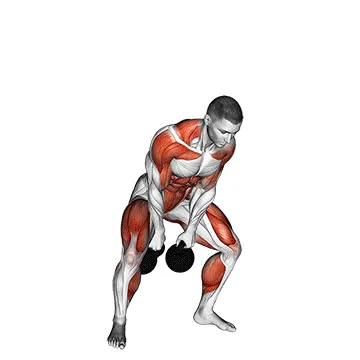
- Primary muscle
- Delts
- Equipment
- Kettlebell
- Difficulty
- Intermediate
- Type
- Compound
Secondary muscles: Traps, Forearms
How to perform Kettlebell Two Arm Clean
- Stand with your feet shoulder-width apart, holding a kettlebell in front of your thighs with both hands, palms facing towards you.
- Bend your knees slightly and hinge at the hips, lowering the kettlebell towards the ground.
- Explosively extend your hips and knees, using the momentum to pull the kettlebell up towards your shoulders.
- As the kettlebell reaches shoulder height, rotate your wrists and catch the kettlebell in the rack position, with your elbows tucked in and the kettlebell resting on the back of your forearm.
- Lower the kettlebell back down to the starting position and repeat for the desired number of repetitions.
Ranked Kettlebell Two Arm Clean Alternatives
10 substitutes, ranked by how closely each one matches the Kettlebell Two Arm Clean on movement pattern, muscles worked, equipment and body position. The higher the score, the less you change. Open "How to perform this exercise" on a card for the steps; every card title links to that exercise's own alternatives page.
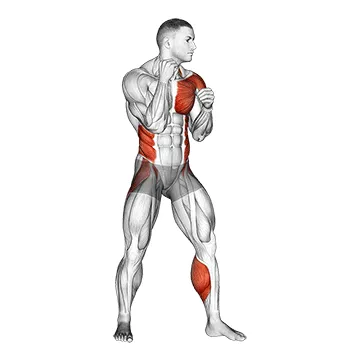
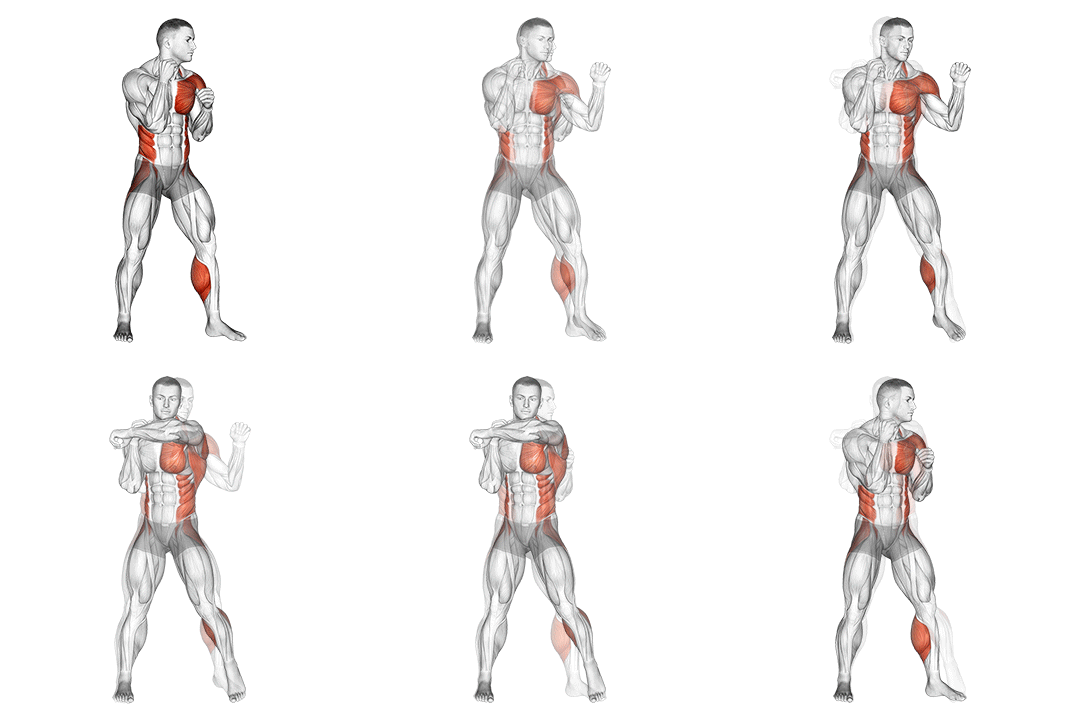
Best match 1. Left Hook. Boxing
61% match- Delts
- Bodyweight
- Intermediate
- Compound
Pick this when you want to work the delts one side at a time.
How to perform this exercise
- Stand with your feet shoulder-width apart and your knees slightly bent.
- Keep your left hand up to protect your face and your right hand by your chin.
- Rotate your hips and pivot on your left foot as you extend your left arm forward in a punching motion.
- Twist your torso and engage your core muscles to generate power in the punch.
- Snap your arm back to the starting position and repeat for the desired number of repetitions.
Sets and reps: 3 or 4 sets of 6 to 10 reps on each side.
Why this matches
- Primary muscle: delts, the same as the Kettlebell Two Arm Clean
- Equipment: bodyweight only, not free weights
- Body position: standing, the same as the Kettlebell Two Arm Clean
- Balance: harder to stay steady on than the Kettlebell Two Arm Clean
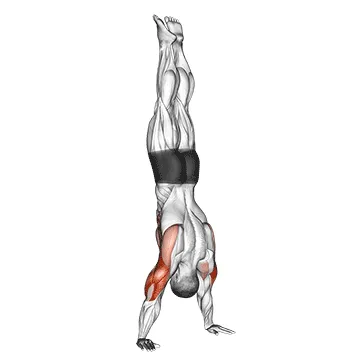
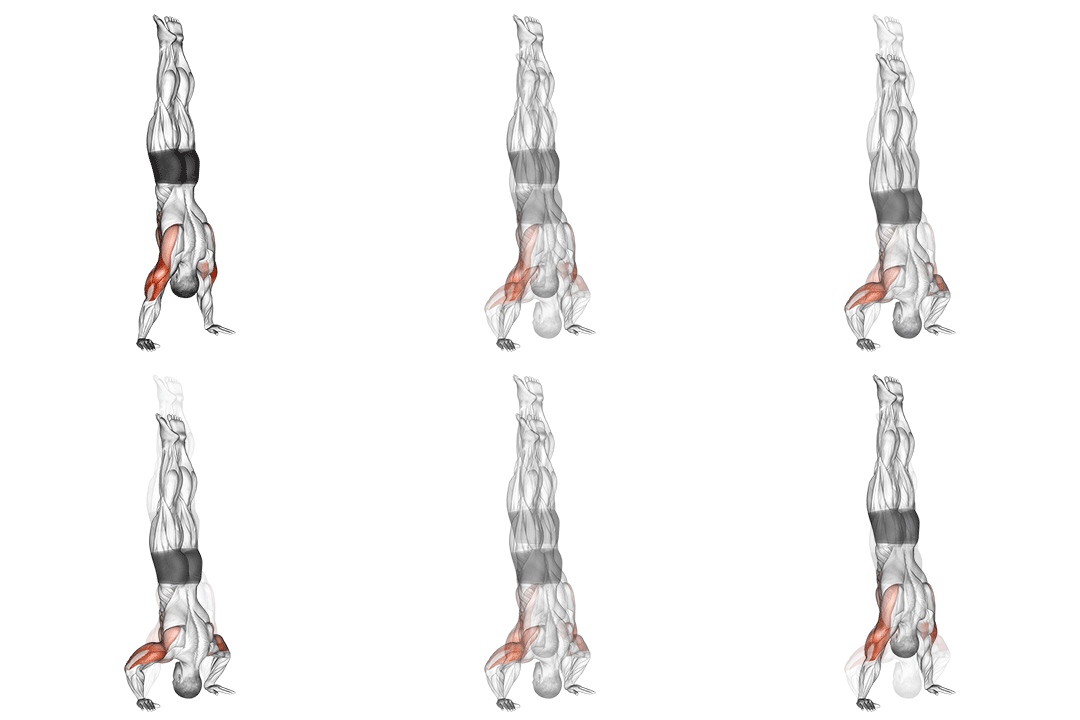
2. Handstand Push-up
55% match- Delts
- Bodyweight
- Advanced
- Compound
Use this when you have nothing to train with, because it works the delts with bodyweight alone.
How to perform this exercise
- Find a wall and face away from it, standing a few feet away.
- Place your hands on the ground shoulder-width apart and kick your feet up against the wall, coming into a handstand position.
- Bend your elbows and lower your head towards the ground, keeping your body in a straight line.
- Push through your hands and extend your arms to return to the starting position.
- Repeat for the desired number of repetitions.
Sets and reps: 3 or 4 sets of 6 to 10 reps.
Why this matches
- Primary muscle: delts, the same as the Kettlebell Two Arm Clean
- Equipment: bodyweight only, not free weights
- Body position: inverted, not standing
- Balance: harder to stay steady on than the Kettlebell Two Arm Clean
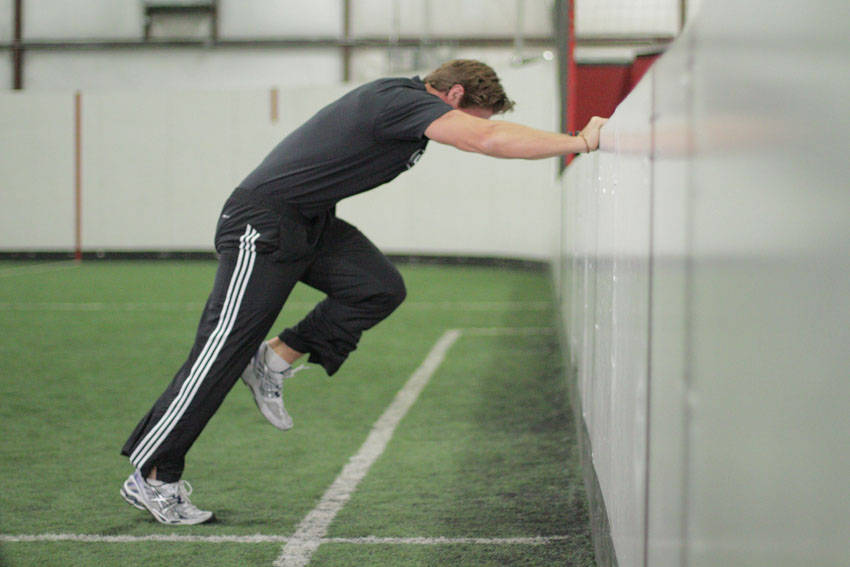
3. Linear Acceleration Wall Drill
53% match- Hamstrings
- Bodyweight
- Intermediate
- Compound
A looser match: it works the hamstrings rather than the delts.
How to perform this exercise
- Lean at around 45 degrees against a wall. Your feet should be together, glutes contracted.
- Begin by lifting your right knee quickly, pausing, and then driving it straight down into the ground.
- Switch legs, raising the opposite knee, and then attacking the ground straight down.
- Repeat once more with your right leg, and as soon as the right foot strikes the ground hammer them out rapidly, alternating left and right as fast as you can.
Sets and reps: 3 or 4 sets of 6 to 10 reps on each side.
Why this matches
- Primary muscle: hamstrings, not delts
- Equipment: bodyweight only, not free weights
- Body position: standing, the same as the Kettlebell Two Arm Clean
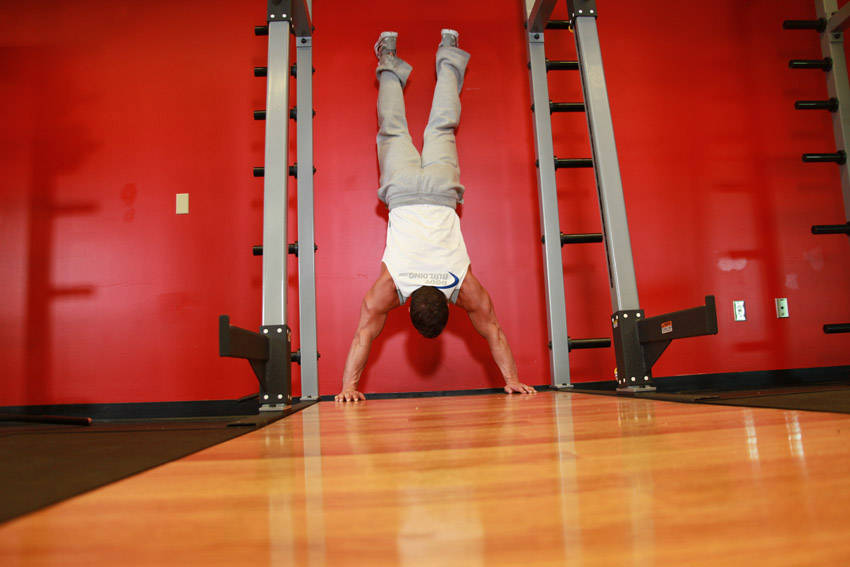
4. Handstand Push-ups
50% match- Delts
- Bodyweight
- Advanced
- Compound
How to perform this exercise
- With your back to the wall bend at the waist and place both hands on the floor at shoulder width.
- Kick yourself up against the wall with your arms straight. Your body should be upside down with the arms and legs fully extended. Keep your whole body as straight as possible. Tip: If doing this for the first time, have a spotter help you. Also, make sure that you keep facing the wall with your head, rather than looking down.
- Slowly lower yourself to the ground as you inhale until your head almost touches the floor. Tip: It is of utmost importance that you come down slow in order to avoid head injury.
- Push yourself back up slowly as you exhale until your elbows are nearly locked.
- Repeat for the recommended amount of repetitions.
Sets and reps: 3 or 4 sets of 6 to 10 reps.
Why this matches
- Primary muscle: delts, the same as the Kettlebell Two Arm Clean
- Equipment: bodyweight only, not free weights
- Body position: inverted, not standing
- Balance: harder to stay steady on than the Kettlebell Two Arm Clean
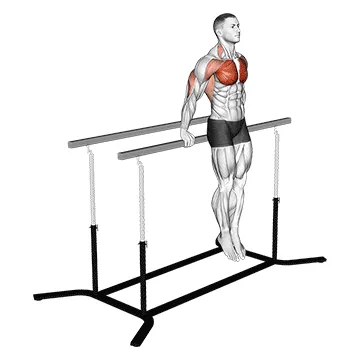
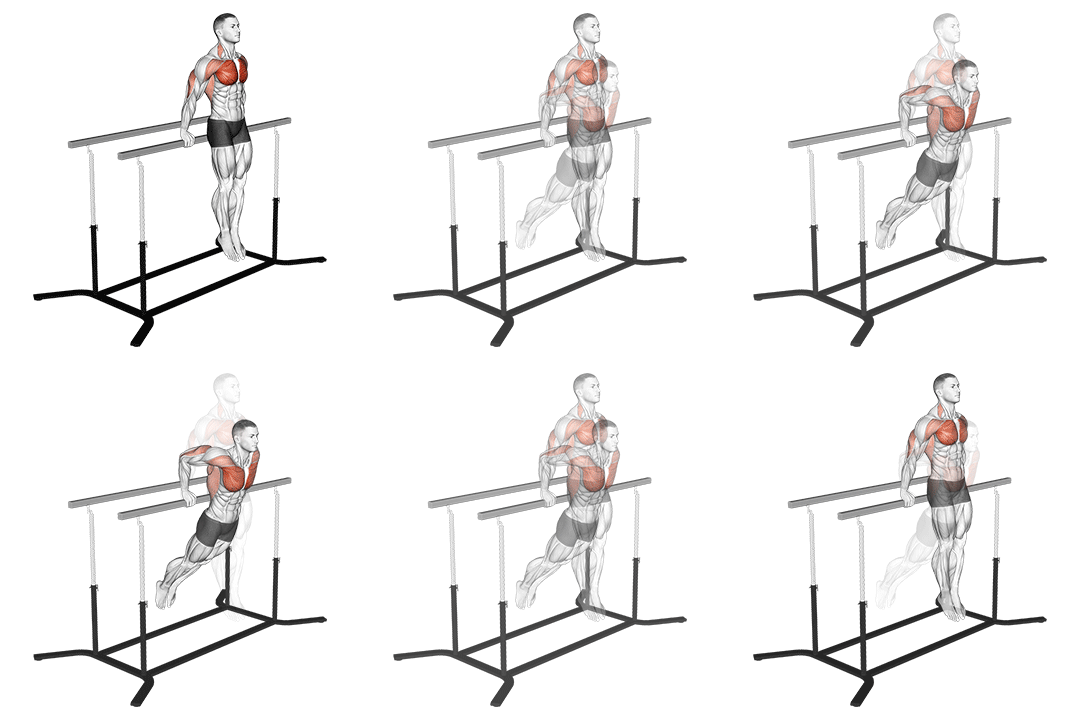
5. Korean Dips
49% match- Pectorals
- Bodyweight
- Advanced
- Compound
A looser match: it works the pectorals rather than the delts.
How to perform this exercise
- Position yourself between two parallel bars with your arms extended and supporting your body weight.
- Lower your body by bending your elbows until your upper arms are parallel to the ground.
- Pause for a moment, then push yourself back up to the starting position by straightening your arms.
- Repeat for the desired number of repetitions.
Sets and reps: 3 or 4 sets of 6 to 10 reps.
Why this matches
- Primary muscle: pectorals, not delts
- Equipment: bodyweight only, not free weights
- Body position: standing, the same as the Kettlebell Two Arm Clean
- Balance: harder to stay steady on than the Kettlebell Two Arm Clean
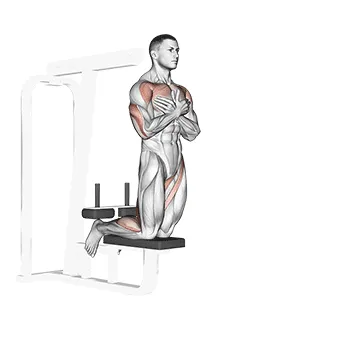
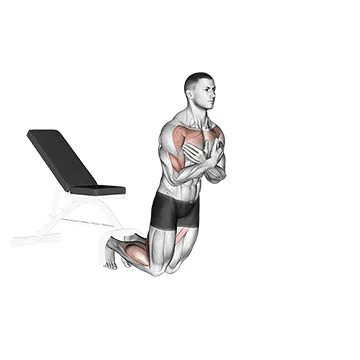
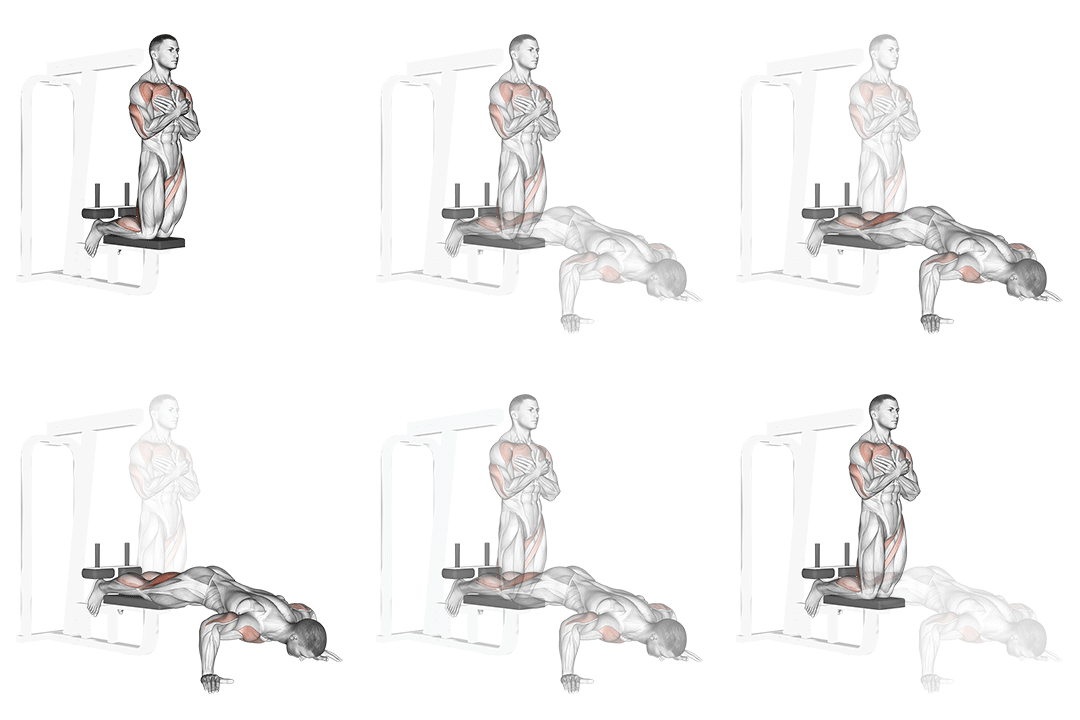
6. Self Assisted Inverse Leg Curl
47% match- Hamstrings
- Bodyweight
- Intermediate
- Isolation
How to perform this exercise
- Lie flat on your back on a mat or bench with your legs extended.
- Place your hands by your sides or under your glutes for support.
- Bend your knees and lift your feet off the ground, bringing your thighs towards your chest.
- Pause for a moment at the top, then slowly lower your legs back to the starting position.
- Repeat for the desired number of repetitions.
Sets and reps: 3 sets of 10 to 15 reps.
Why this matches
- Primary muscle: hamstrings, not delts
- Equipment: bodyweight only, not free weights
- Body position: kneeling, not standing
- Hamstrings
- Bodyweight
- Beginner
- Isolation
How to perform this exercise
- Lie flat on your back with your legs extended and your arms by your sides.
- Bend your knees and place your feet flat on the ground, hip-width apart.
- Lift your hips off the ground, engaging your glutes and hamstrings.
- Slowly curl your legs towards your glutes, keeping your hips lifted.
- Pause for a moment at the top, then slowly extend your legs back to the starting position.
- Lower your hips back down to the ground.
- Repeat for the desired number of repetitions.
Sets and reps: 3 sets of 8 to 12 reps, and add reps before you add load.
Why this matches
- Primary muscle: hamstrings, not delts
- Equipment: bodyweight only, not free weights
- Body position: kneeling, not standing
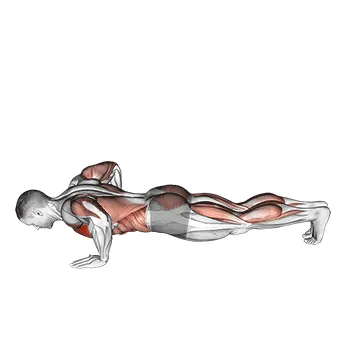
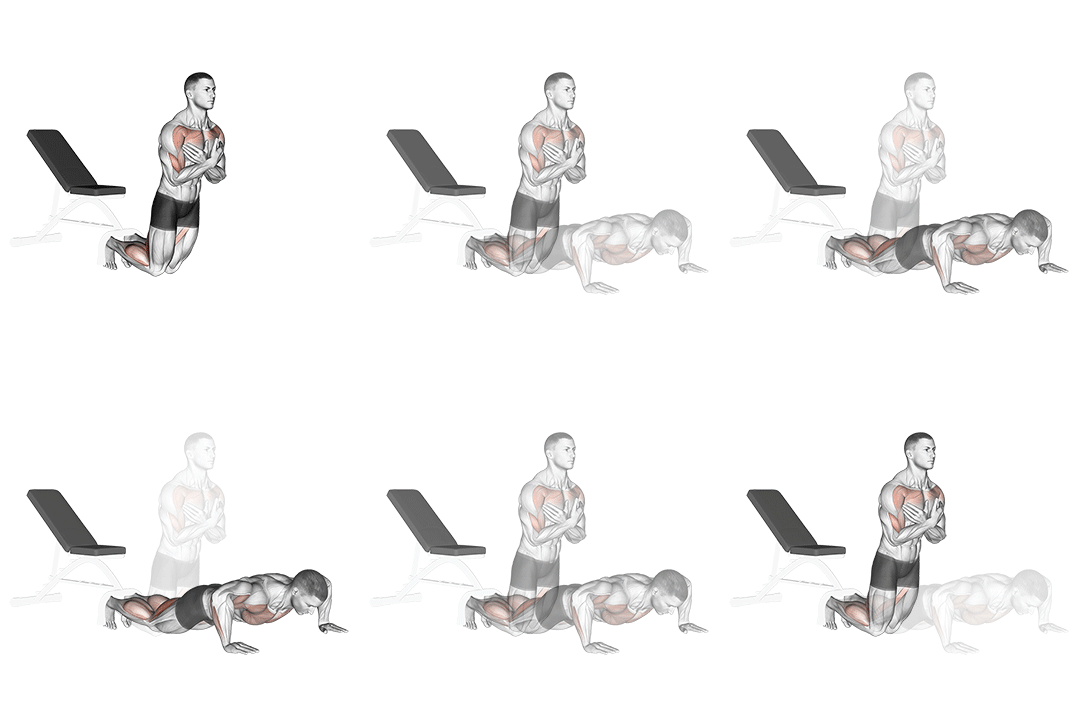
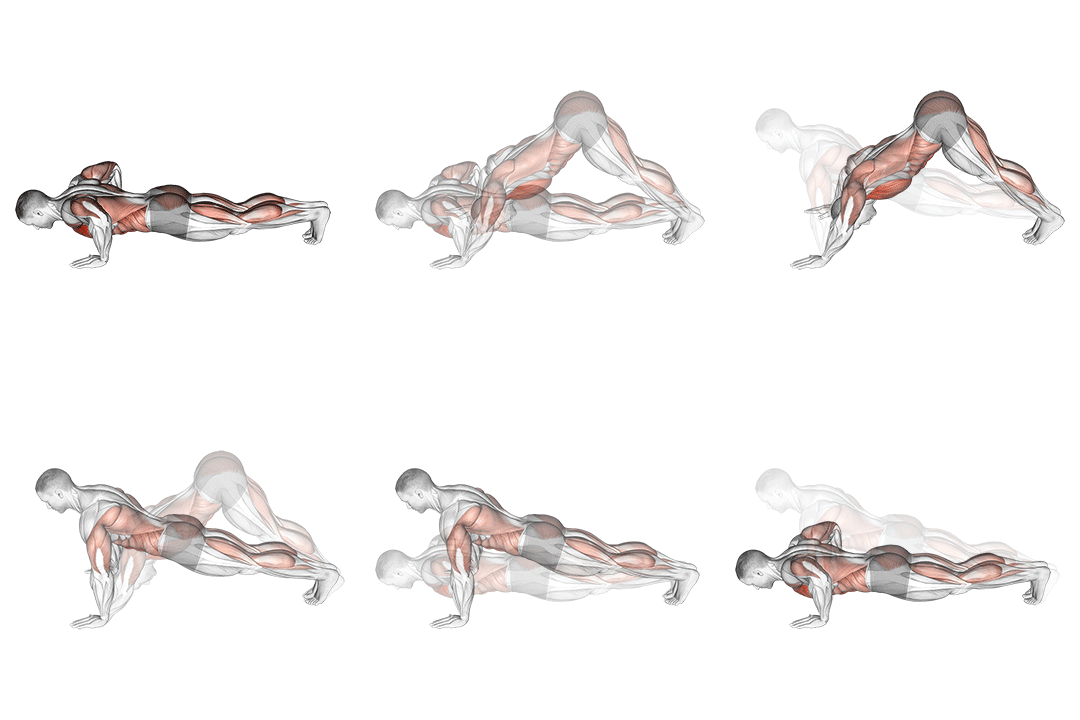
8. Modified Hindu Push-up
46% match- Pectorals
- Bodyweight
- Intermediate
- Compound
How to perform this exercise
- Start in a push-up position with your hands slightly wider than shoulder-width apart and your feet hip-width apart.
- Lower your body towards the ground, bending your elbows and keeping your core engaged.
- As you lower your body, shift your weight back and lift your hips up towards the ceiling, creating an inverted V shape with your body.
- Continue to lower your body until your chest is just above the ground, then reverse the movement, pushing your hips back down and extending your arms to return to the starting position.
- Repeat for the desired number of repetitions.
Sets and reps: 3 or 4 sets of 6 to 10 reps.
Why this matches
- Primary muscle: pectorals, not delts
- Equipment: bodyweight only, not free weights
- Body position: standing, the same as the Kettlebell Two Arm Clean
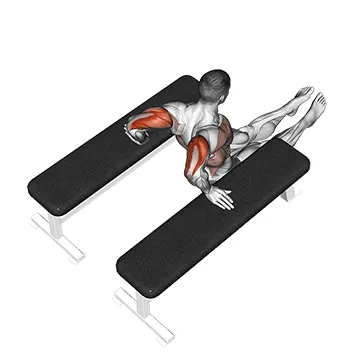
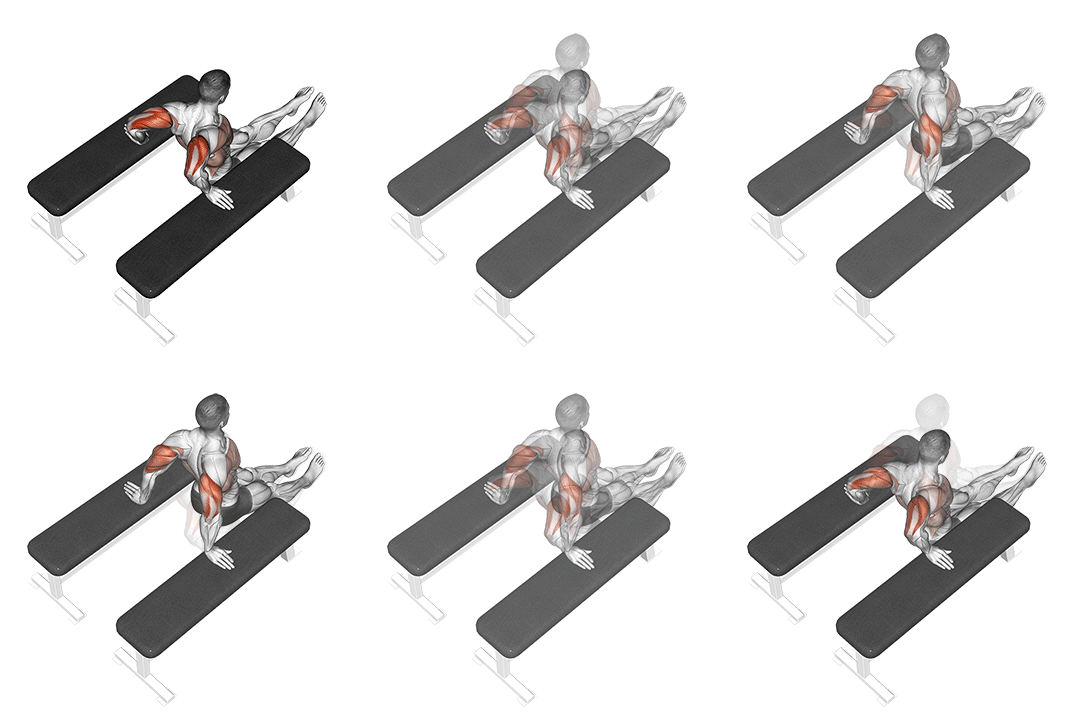
9. Triceps Dip (Between Benches)
45% match- Triceps
- Bodyweight
- Intermediate
- Compound
How to perform this exercise
- Sit on a bench with your hands gripping the edge of the bench, fingers pointing forward.
- Slide your butt off the bench, supporting your weight with your hands.
- Bend your elbows and lower your body towards the ground, keeping your back close to the bench.
- Pause for a moment at the bottom, then push yourself back up to the starting position.
- Repeat for the desired number of repetitions.
Sets and reps: 3 or 4 sets of 6 to 10 reps.
Why this matches
- Primary muscle: triceps, not delts
- Equipment: bodyweight only, not free weights
- Body position: standing, the same as the Kettlebell Two Arm Clean
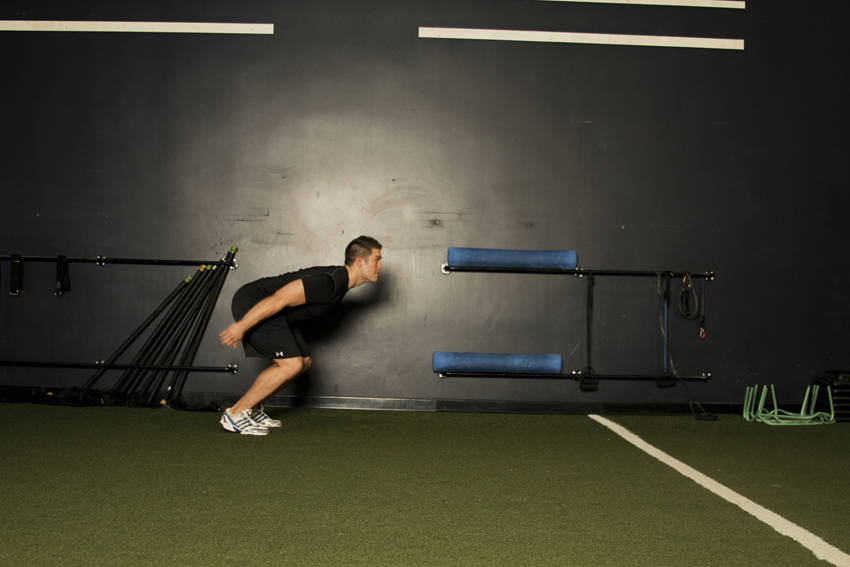
10. Standing Long Jump
44% match- Quadriceps
- Bodyweight
- Advanced
- Compound
How to perform this exercise
- This drill is best done in sand or other soft landing surface. Ensure that you are able to measure distance. Stand in a partial squat stance with feet shoulder width apart.
- Utilizing a big arm swing and a countermovement of the legs, jump forward as far as you can.
- Attempt to land with your feet out in front you, reaching as far as possible with your legs.
- Measure the distance from your landing point to the starting point and track results.
Sets and reps: 3 or 4 sets of 6 to 10 reps.
Why this matches
- Primary muscle: quadriceps, not delts
- Equipment: bodyweight only, not free weights
- Body position: standing, the same as the Kettlebell Two Arm Clean

Kettlebell Two Arm Clean FAQ
What muscles does Kettlebell Two Arm Clean work?
The movement primarily targets the deltoids, especially the anterior and lateral heads, while engaging the traps, upper back, and core. You also recruit posterior chain muscles, hamstrings and glutes, during the hip hinge and drive phase, so cue a strong hip extension and tight core to maximize force transfer.
Can I build muscle without doing Kettlebell Two Arm Clean?
Yes, you can build shoulder muscle with presses and unilateral variations that isolate the delts while allowing progressive overload. Use controlled eccentrics, incremental loading, and techniques like paused reps or slow negatives to increase time under tension and stimulate hypertrophy without the clean.
Find Alternatives for Any Exercise
Search the exercise database and filter the ranked substitutes by the equipment you own.
Similarity scores compare exercise metadata such as movement pattern, muscles, equipment and body position. They are not a safety rating or a check that you own the equipment. Learn about our methodology