

10 Best Lateral Cone Hops Alternatives for Rehab & Performance
Lateral Cone Hops are done standing. Ranked closest by our scoring: the Lateral Bound, the Lateral Box Jump and the Side Plank Hip Adduction.
If you can’t do Lateral Cone Hops, use exercises that train lateral power and adductor control: skater (lateral bound), Cossack squat, lateral lunge-to-jump, Copenhagen adduction, or side-to-side box jumps. Pick a progression and cue soft, hip-driven landings with knees tracking toes to preserve adductor loading and reduce impact.
Updated Ranked by our 12-factor similarity model How it works
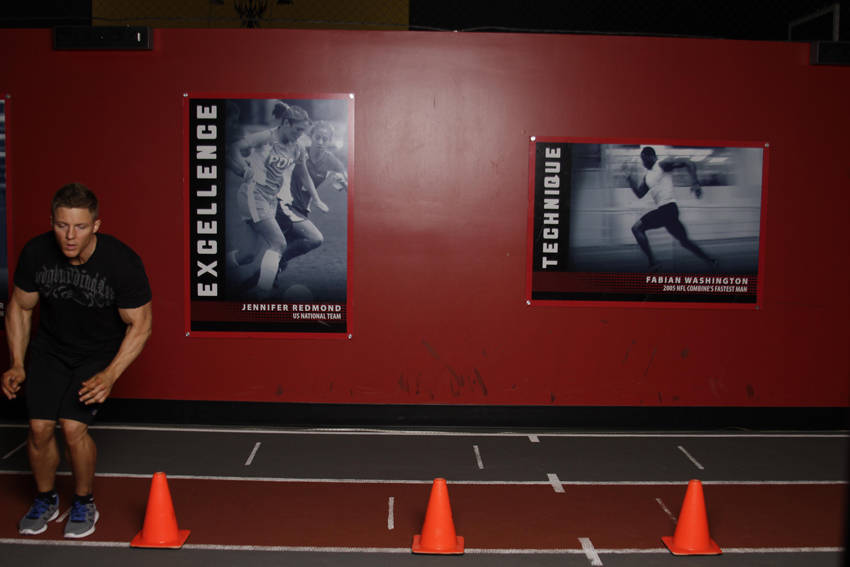
Original Exercise: Lateral Cone Hops
- Primary muscle
- Adductors
- Equipment
- Other
- Difficulty
- Intermediate
- Type
- Compound
Secondary muscles: Abductors, Calves, Glutes, Hamstrings, Quadriceps
How to perform Lateral Cone Hops
- Position a number of cones in a row several feet apart.
- Stand next to the end of the cones, facing 90 degrees to the direction of travel. This will be your starting position.
- Begin the jump by dipping with the knees to initiate a stretch reflex, and immediately reverse direction to push off the ground, jumping up and sideways over the cone.
- Use your legs to absorb impact upon landing, and rebound into the next jump, continuing down the row of cones.
Ranked Lateral Cone Hops Alternatives
10 substitutes, ranked by how closely each one matches Lateral Cone Hops on movement pattern, muscles worked, equipment and body position. The higher the score, the less you change. Open "How to perform this exercise" on a card for the steps; every card title links to that exercise's own alternatives page.
Best match 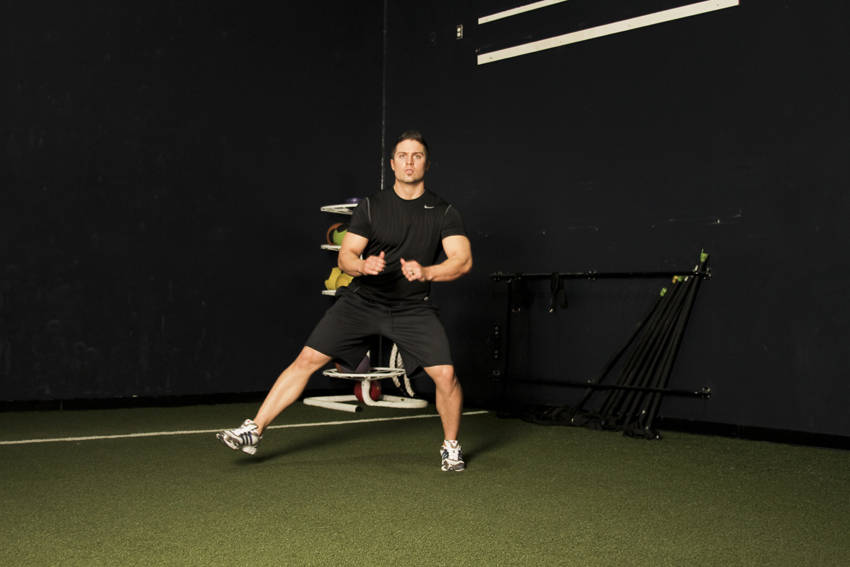
1. Lateral Bound
99% match- Adductors
- Bodyweight
- Advanced
- Compound
Pick this when you want a harder version that still works the adductors.
How to perform this exercise
- Assume a half squat position facing 90 degrees from your direction of travel. This will be your starting position.
- Allow your lead leg to do a countermovement inward as you shift your weight to the outside leg.
- Immediately push off and extend, attempting to bound to the side as far as possible.
- Upon landing, immediately push off in the opposite direction, returning to your original start position.
- Continue back and forth for several repetitions.
Sets and reps: 3 or 4 sets of 6 to 10 reps on each side.
Why this matches
- Primary muscle: adductors, the same as Lateral Cone Hops
- Equipment: bodyweight only, the same as Lateral Cone Hops
- Body position: standing, the same as Lateral Cone Hops
2. Lateral Box Jump
88% match- Adductors
- Other
- Advanced
- Compound
How to perform this exercise
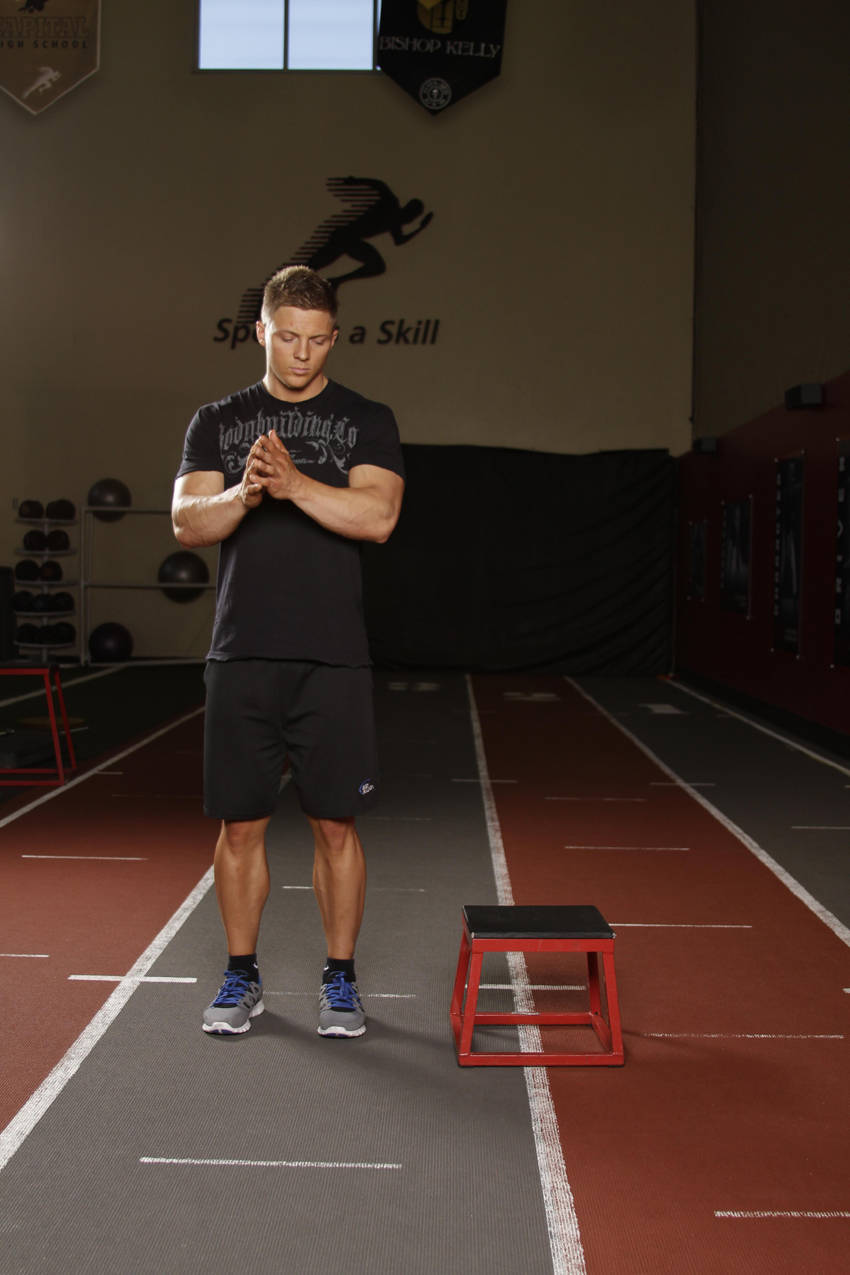
- Assume a comfortable standing position, with a short box positioned next to you. This will be your starting position.
- Quickly dip into a quarter squat to initiate the stretch reflex, and immediately reverse direction to jump up and to the side.
- Bring your knees high enough to ensure your feet have good clearance over the box.
- Land on the center of the box, using your legs to absorb the impact.
- Carefully jump down to the other side of the box, and continue going back and forth for several repetitions.
Sets and reps: 3 or 4 sets of 6 to 10 reps.
Why this matches
- Primary muscle: adductors, the same as Lateral Cone Hops
- Equipment: bodyweight only, the same as Lateral Cone Hops
- Body position: standing, the same as Lateral Cone Hops
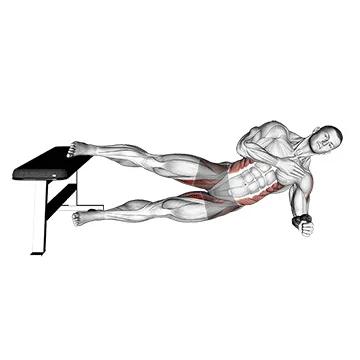
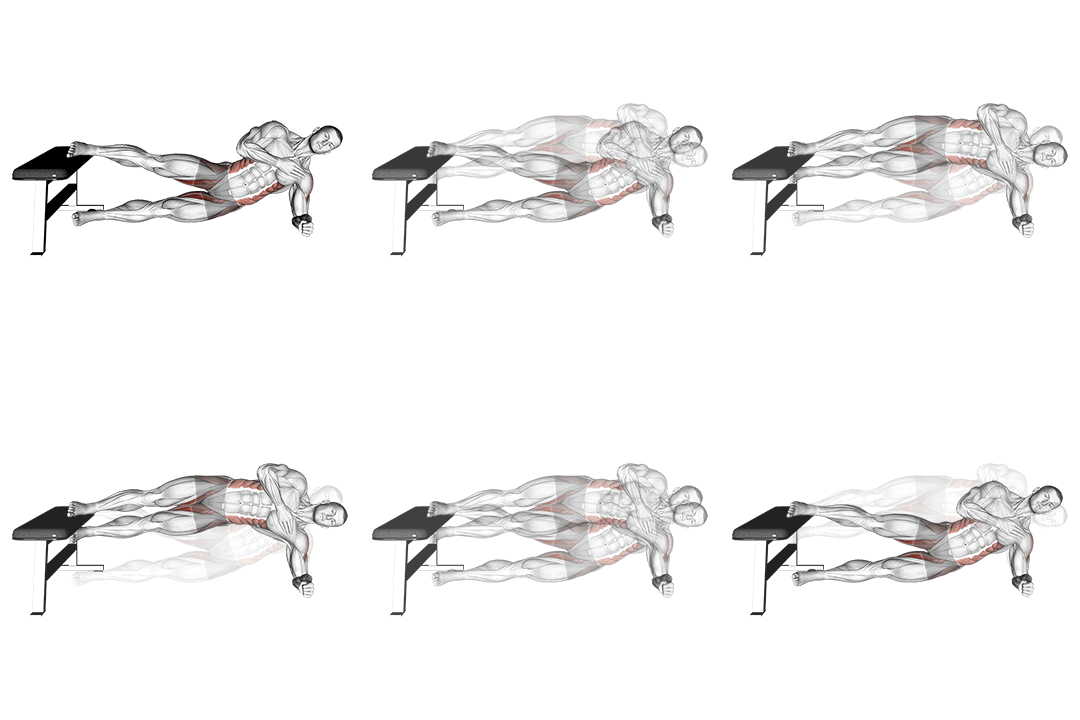
3. Side Plank Hip Adduction
80% match- Adductors
- Bodyweight
- Intermediate
- Compound
Pick this when you want an easier version that still works the adductors.
How to perform this exercise
- Start by lying on your side with your legs extended and stacked on top of each other.
- Prop yourself up on your forearm, keeping your elbow directly below your shoulder.
- Engage your core and lift your hips off the ground, creating a straight line from your head to your feet.
- While maintaining the side plank position, lift your top leg towards the ceiling, keeping it straight.
- Slowly lower your leg back down to the starting position.
- Repeat for the desired number of repetitions, then switch sides.
Sets and reps: 3 or 4 sets of 6 to 10 reps on each side.
Why this matches
- Primary muscle: adductors, the same as Lateral Cone Hops
- Equipment: bodyweight only, the same as Lateral Cone Hops
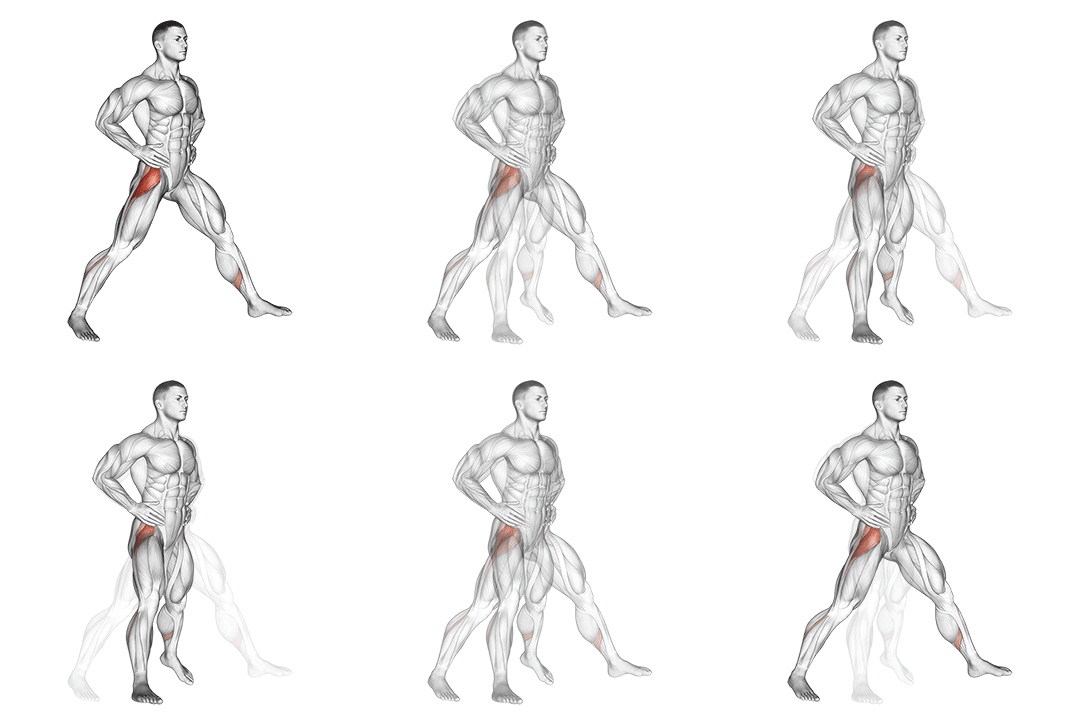
4. Monster Walk
79% match- Glutes
- Bodyweight
- Intermediate
- Compound
A looser match: it works the glutes rather than the adductors.
How to perform this exercise
- Place a resistance band around your ankles.
- Stand with your feet shoulder-width apart and slightly bend your knees.
- Take a step to the side with your right foot, maintaining tension on the resistance band.
- Follow with your left foot, stepping to the side to return to the starting position.
- Repeat for the desired number of repetitions, then switch sides.
Sets and reps: 3 or 4 sets of 6 to 10 reps on each side.
Why this matches
- Primary muscle: glutes, not adductors
- Equipment: bodyweight only, the same as Lateral Cone Hops
- Body position: standing, the same as Lateral Cone Hops
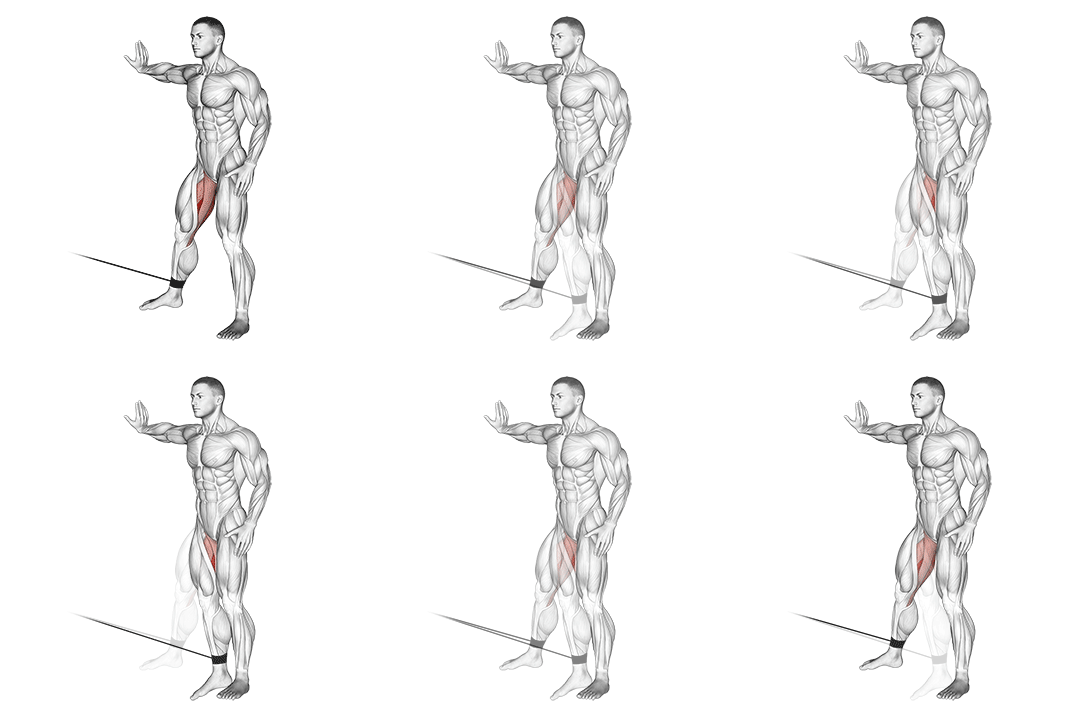
5. Band Hip Adductions
72% match- Adductors
- Band
- Beginner
- Isolation
How to perform this exercise
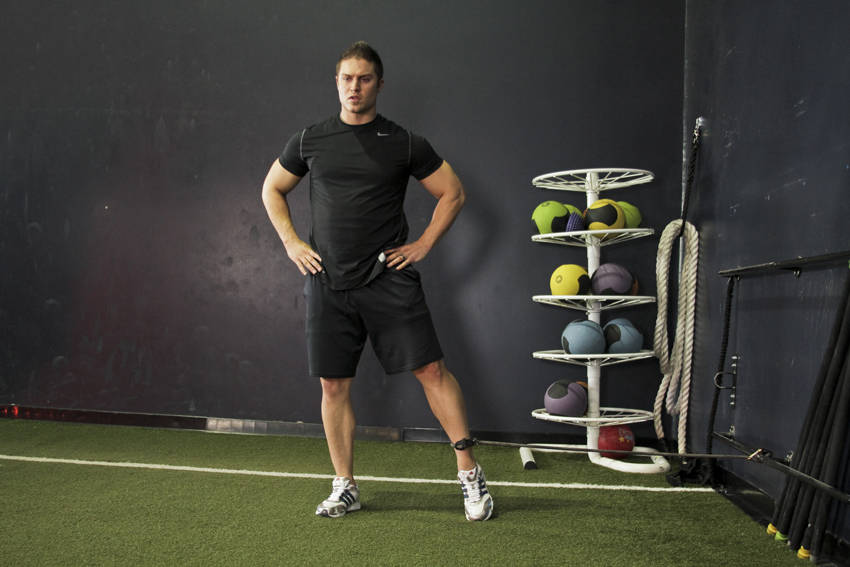
- Anchor a band around a solid post or other object.
- Stand with your left side to the post, and put your right foot through the band, getting it around the ankle.
- Stand up straight and hold onto the post if needed. This will be your starting position.
- Keeping the knee straight, raise your right legs out to the side as far as you can.
- Return to the starting position and repeat for the desired rep count.
- Switch sides.
Sets and reps: 3 sets of 10 to 15 reps on each side.
Why this matches
- Primary muscle: adductors, the same as Lateral Cone Hops
- Equipment: a band, not bodyweight only
- Body position: standing, the same as Lateral Cone Hops
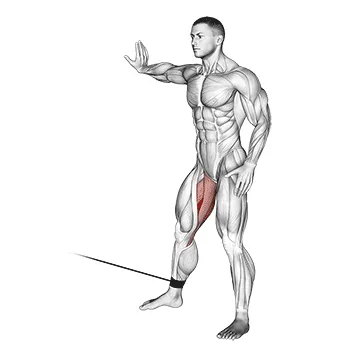
6. Cable Hip Adduction
72% match- Adductors
- Cable
- Beginner
- Isolation
How to perform this exercise
- Attach the ankle cuff to your ankle and stand facing the cable machine.
- Position yourself far enough away from the machine so that there is tension on the cable.
- Place your hands on the machine for support.
- Keeping your leg straight, slowly move your leg across your body towards the midline.
- Pause for a moment at the end of the movement, then slowly return to the starting position.
- Repeat for the desired number of repetitions.
Sets and reps: 3 sets of 10 to 15 reps on each side.
Why this matches
- Primary muscle: adductors, the same as Lateral Cone Hops
- Equipment: a cable, not bodyweight only
- Body position: standing, the same as Lateral Cone Hops
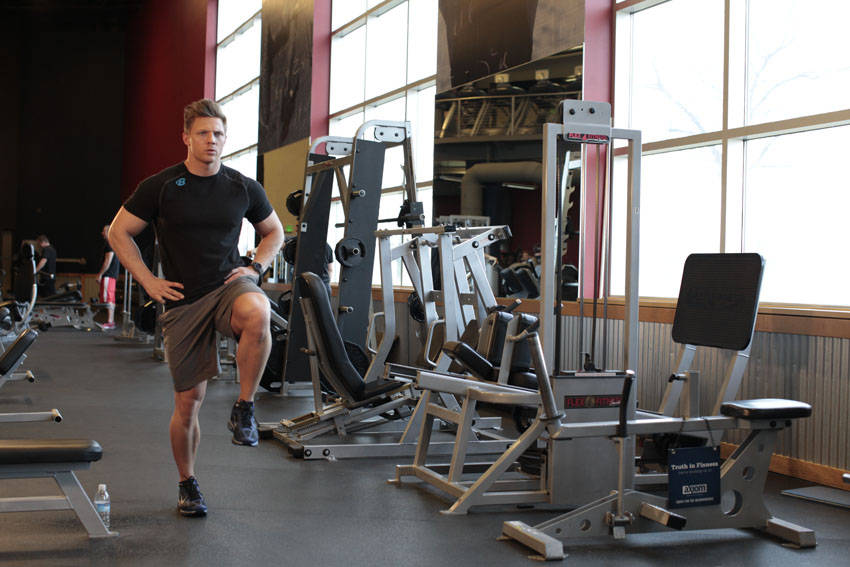
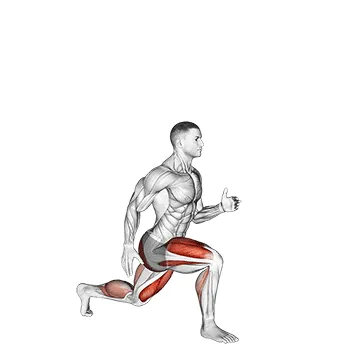
7. Bodyweight Walking Lunge
71% match- Quads
- Bodyweight
- Intermediate
- Compound
A looser match: it works the quads rather than the adductors.
How to perform this exercise
- Begin standing with your feet shoulder width apart and your hands on your hips.
- Step forward with one leg, flexing the knees to drop your hips. Descend until your rear knee nearly touches the ground. Your posture should remain upright, and your front knee should stay above the front foot.
- Drive through the heel of your lead foot and extend both knees to raise yourself back up.
- Step forward with your rear foot, repeating the lunge on the opposite leg.
Sets and reps: 3 or 4 sets of 6 to 10 reps on each side.
Why this matches
- Primary muscle: quads, not adductors
- Equipment: bodyweight only, the same as Lateral Cone Hops
- Body position: standing, the same as Lateral Cone Hops
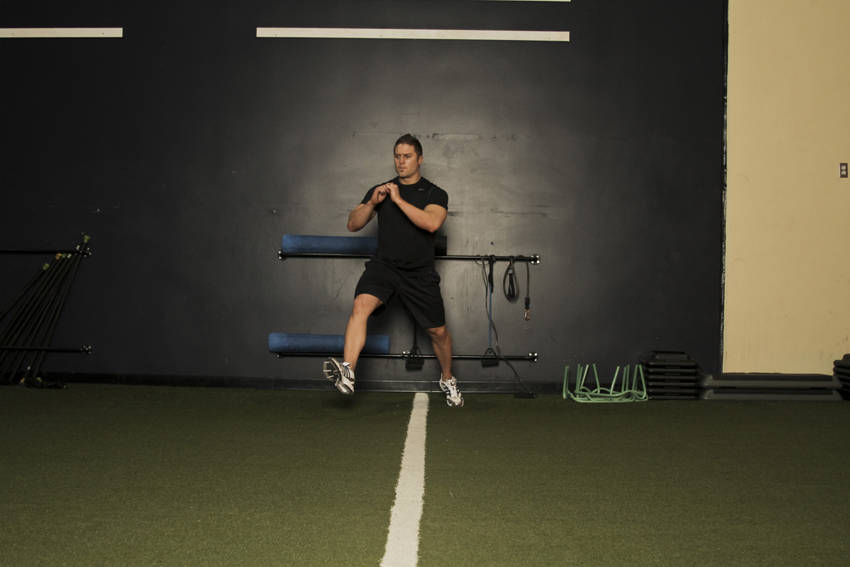
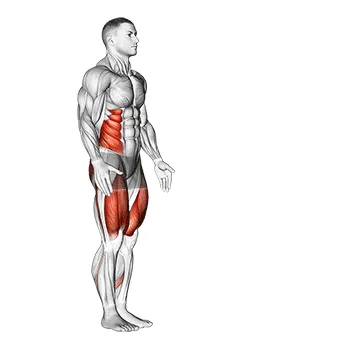
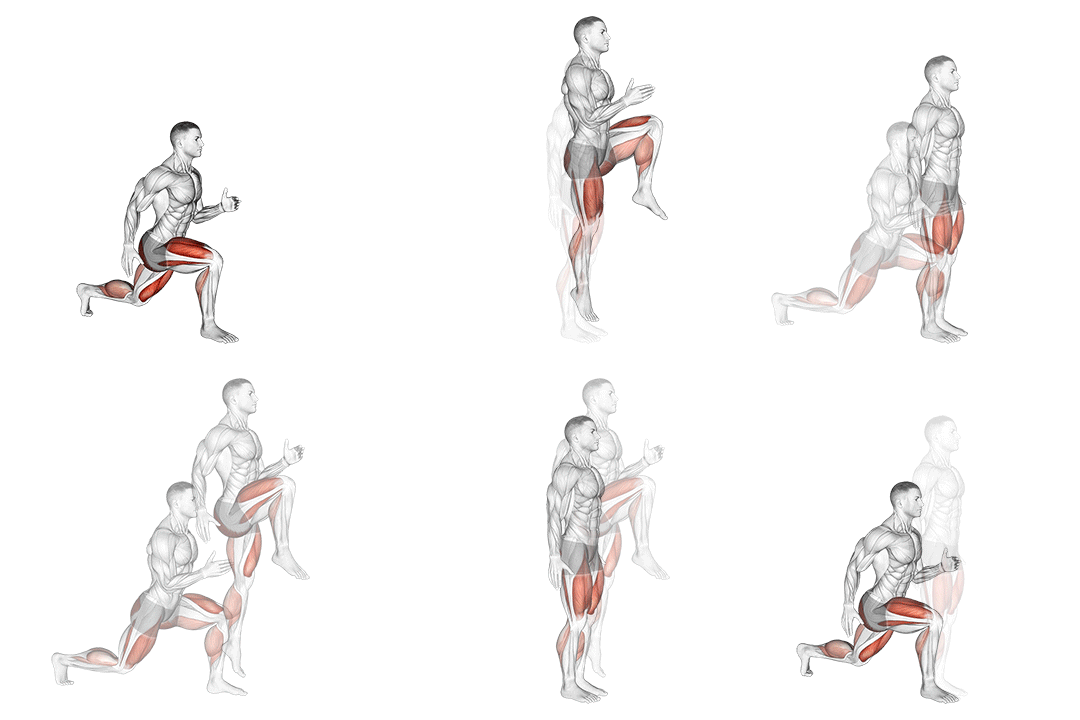
8. Alternate Leg Diagonal Bound
70% match- Quads
- Bodyweight
- Intermediate
- Compound
How to perform this exercise
- Assume a comfortable stance with one foot slightly in front of the other.
- Begin by pushing off with the front leg, driving the opposite knee forward and as high as possible before landing. Attempt to cover as much distance to each side with each bound.
- It may help to use a line on the ground to guage distance from side to side.
- Repeat the sequence with the other leg.
Sets and reps: 3 or 4 sets of 6 to 10 reps on each side.
Why this matches
- Primary muscle: quads, not adductors
- Equipment: bodyweight only, the same as Lateral Cone Hops
- Body position: standing, the same as Lateral Cone Hops
9. Lunge With Jump
70% match- Glutes
- Bodyweight
- Advanced
- Compound
How to perform this exercise
- Start by standing with your feet shoulder-width apart.
- Take a step forward with your right foot, lowering your body into a lunge position.
- Push off with your right foot and jump into the air, switching the position of your feet mid-air.
- Land softly with your left foot forward and immediately lower your body into a lunge position.
- Continue alternating between lunges and jumps for the desired number of repetitions.
Sets and reps: 3 or 4 sets of 6 to 10 reps on each side.
Why this matches
- Primary muscle: glutes, not adductors
- Equipment: bodyweight only, the same as Lateral Cone Hops
- Body position: standing, the same as Lateral Cone Hops
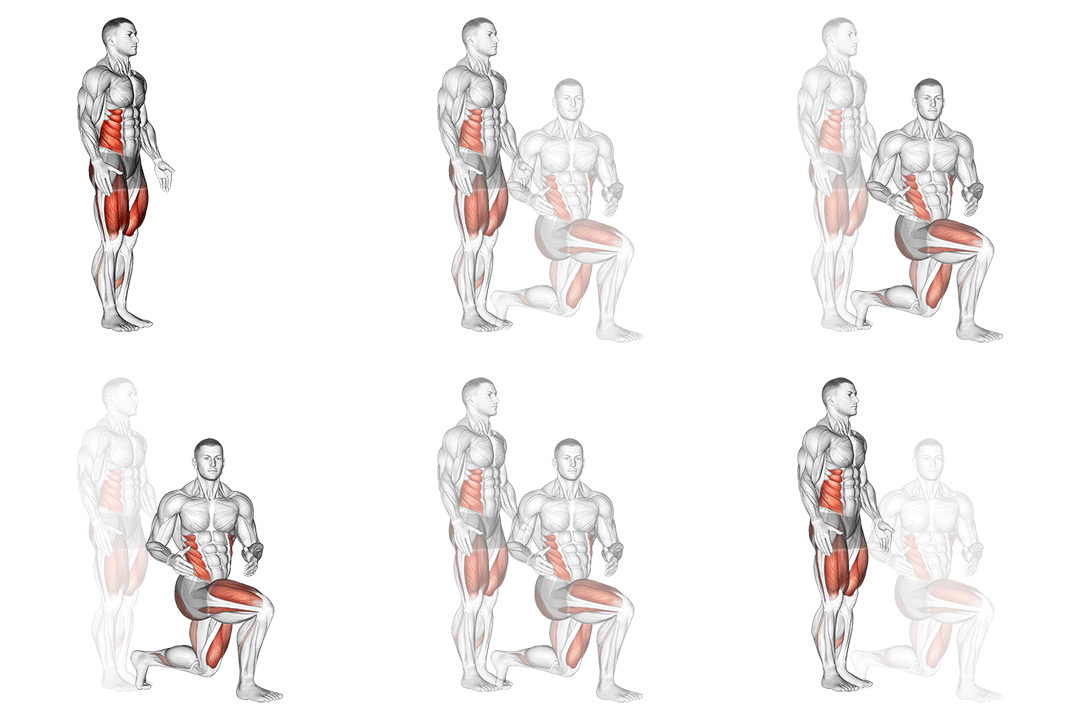
10. Lunge With Twist
70% match- Abs
- Bodyweight
- Intermediate
- Compound
How to perform this exercise
- Start by standing with your feet shoulder-width apart.
- Take a step forward with your right foot, lowering your body into a lunge position.
- As you lunge, twist your torso to the right, bringing your left elbow towards your right knee.
- Pause for a moment, then return to the starting position.
- Repeat on the other side, stepping forward with your left foot and twisting your torso to the left.
- Continue alternating sides for the desired number of repetitions.
Sets and reps: 3 or 4 sets of 6 to 10 reps on each side.
Why this matches
- Primary muscle: abs, not adductors
- Equipment: bodyweight only, the same as Lateral Cone Hops
- Body position: standing, the same as Lateral Cone Hops
Why You Might Need a Lateral Cone Hops Alternative
You might replace Lateral Cone Hops because of ankle/ACL risk, limited plyometric ability, lack of safe landing surface, or specific rehab needs. Substitutes let you isolate adductor strength, reduce impact, or emphasize eccentric control. For example, the Cossack squat loads the adductors through deep hip abduction/adduction with slow tempo, cue a controlled descent with weight on the heel of the working leg to maximize adductor tension. Skater bounds preserve lateral power but reduce vertical load if you shorten the flight and emphasize a low, land-and-absorb pattern.
How to Choose the Right Lateral Cone Hops Substitute
Select a substitute based on your goal: power, hypertrophy, rehab, or motor control. For power, choose skater bounds or side-to-side box jumps and cue an explosive hip extension drive and quick ground contact. For adductor strength or rehab, pick Copenhagen adduction or Cossack squats and use slow eccentric 3–4 second lowers to increase tendon load. Consider equipment, impact tolerance, and progression: regress hops to step-overs or band-resisted lateral walks, and progress by adding height, load, or single-leg variants while maintaining knee tracking and hip alignment.
Lateral Cone Hops FAQ
What muscles does Lateral Cone Hops work?
Lateral Cone Hops primarily target the adductors for medial stabilization and the hip extensors and abductors for propulsion. The exercise also requires eccentric control from the quads and glutes to absorb landing; cue soft knee flexion and land through the midfoot to distribute force across those muscles.
Can I build muscle without doing Lateral Cone Hops?
Yes. To grow adductors and upper-leg muscles, use loaded or high-tension alternatives like Cossack squats, Copenhagen adduction, or slow-tempo lateral lunges. Emphasize time under tension and progressive overload, cue controlled eccentrics and full range of motion to maximize muscle activation.
Find Alternatives for Any Exercise
Search the exercise database and filter the ranked substitutes by the equipment you own.
Similarity scores compare exercise metadata such as movement pattern, muscles, equipment and body position. They are not a safety rating or a check that you own the equipment. Learn about our methodology