

10 Best Rack Pull With Bands Alternatives for Limited Gear
Swap rack pulls with bands for Romanian deadlifts, snatch-grip deadlifts, GHD back extensions, deficit deadlifts, or single-leg Romanian deadlifts. Cue a hard hip hinge: push hips back, keep a neutral spine and brace your core to load the erector spinae and glutes while minimizing lumbar shear.
Original Exercise: Rack Pull With Bands
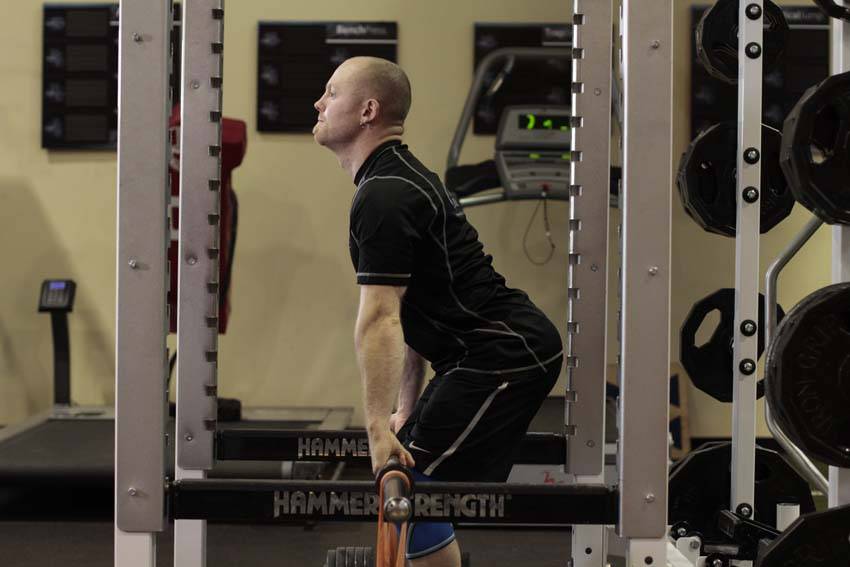
How to Perform Rack Pull With Bands
- Set up in a power rack with the bar on the pins. The pins should be set to the desired point; just below the knees, just above, or in the mid thigh position. Attach bands to the base of the rack, or secure them with dumbbells. Attach the other end to the bar. You may need to choke the bands to provide tension.
- Position yourself against the bar in proper deadlifting position. Your feet should be under your hips, your grip shoulder width, back arched, and hips back to engage the hamstrings. Since the weight is typically heavy, you may use a mixed grip, a hook grip, or use straps to aid in holding the weight.
- With your head looking forward, extend through the hips and knees, pulling the weight up and back until lockout. Be sure to pull your shoulders back as you complete the movement. Return the weight to the pins and repeat.
Pro Tips
- Category: Powerlifting
- Force: Pull
- Movement type: Compound
Ranked Rack Pull With Bands Alternatives
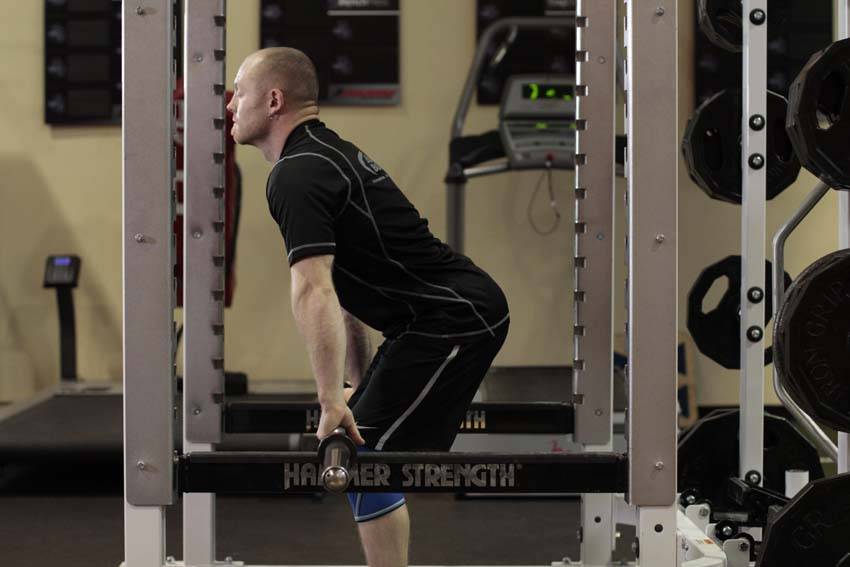
1. Rack Pulls
85% MatchHow to perform this exercise
- Set up in a power rack with the bar on the pins. The pins should be set to the desired point; just below the knees, just above, or in the mid thigh position. Position yourself against the bar in proper deadlifting position. Your feet should be under your hips, your grip shoulder width, back arched, and hips back to engage the hamstrings. Since the weight is typically heavy, you may use a mixed grip, a hook grip, or use straps to aid in holding the weight.
- With your head looking forward, extend through the hips and knees, pulling the weight up and back until lockout. Be sure to pull your shoulders back as you complete the movement.
- Return the weight to the pins and repeat.
2. Snatch Pull
66.1% MatchHow to perform this exercise
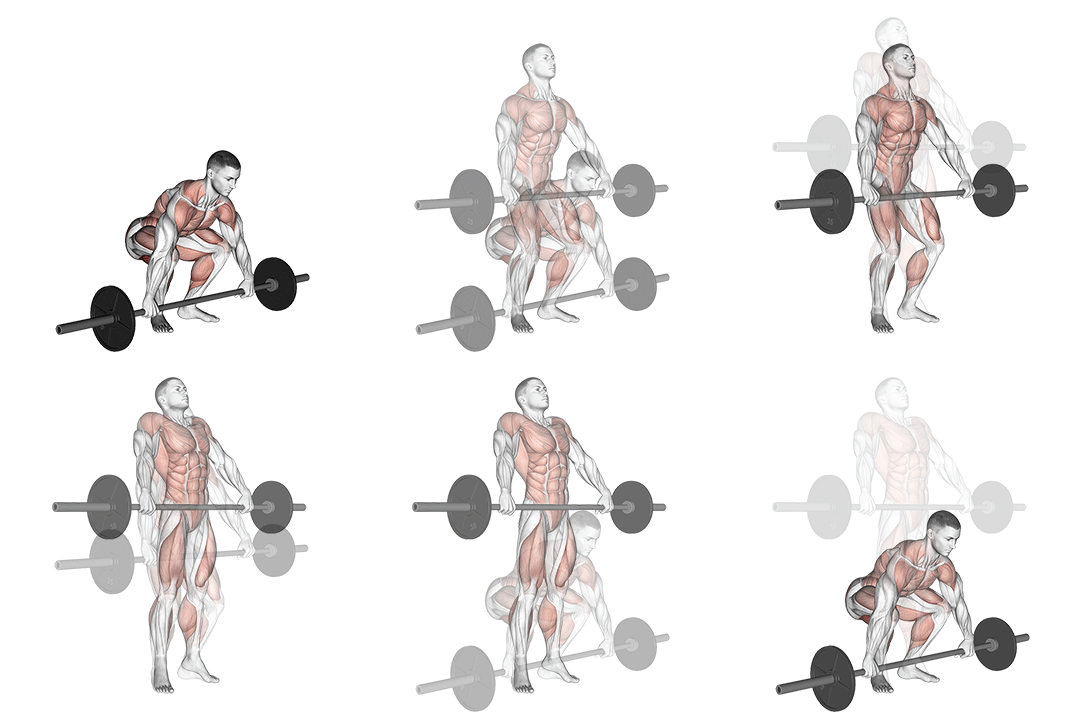
- Stand with your feet shoulder-width apart and the barbell on the ground in front of you.
- Bend your knees and hinge at the hips to lower into a squat position, gripping the barbell with an overhand grip.
- Keep your back straight and chest up as you drive through your heels to lift the barbell off the ground, extending your hips and knees.
- As the barbell reaches hip level, explosively pull it upwards, shrugging your shoulders and pulling your elbows high and to the sides.
- As the barbell reaches its highest point, quickly drop underneath it, pulling yourself into a deep squat position.
3. Clean Deadlift
66% MatchHow to perform this exercise
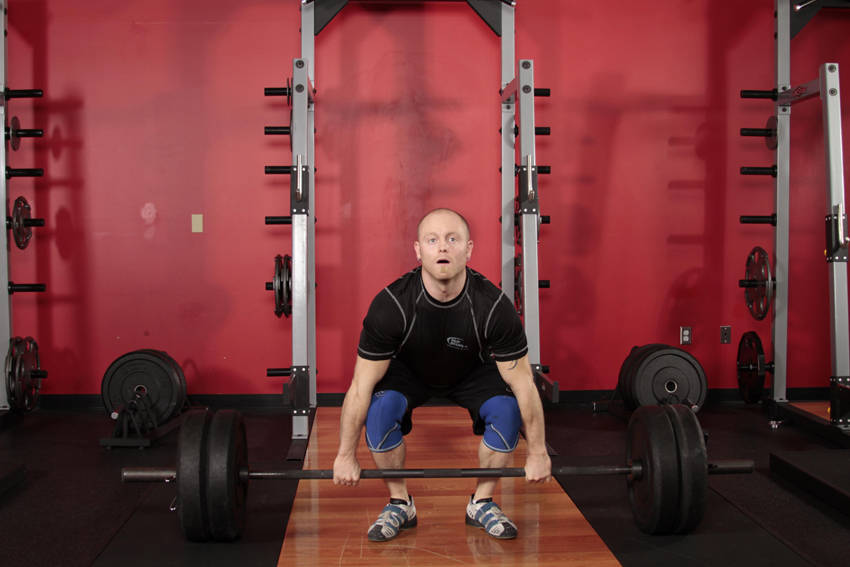
- Begin standing with a barbell close to your shins. Your feet should be directly under your hips with your feet turned out slightly. Grip the bar with a double overhand grip or hook grip, about shoulder width apart. Squat down to the bar. Your spine should be in full extension, with a back angle that places your shoulders in front of the bar and your back as vertical as possible.
- Begin by driving through the floor through the front of your heels. As the bar travels upward, maintain a constant back angle. Flare your knees out to the side to help keep them out of the bar's path.
- After the bar crosses the knees, complete the lift by driving the hips into the bar until your hips and knees are extended.
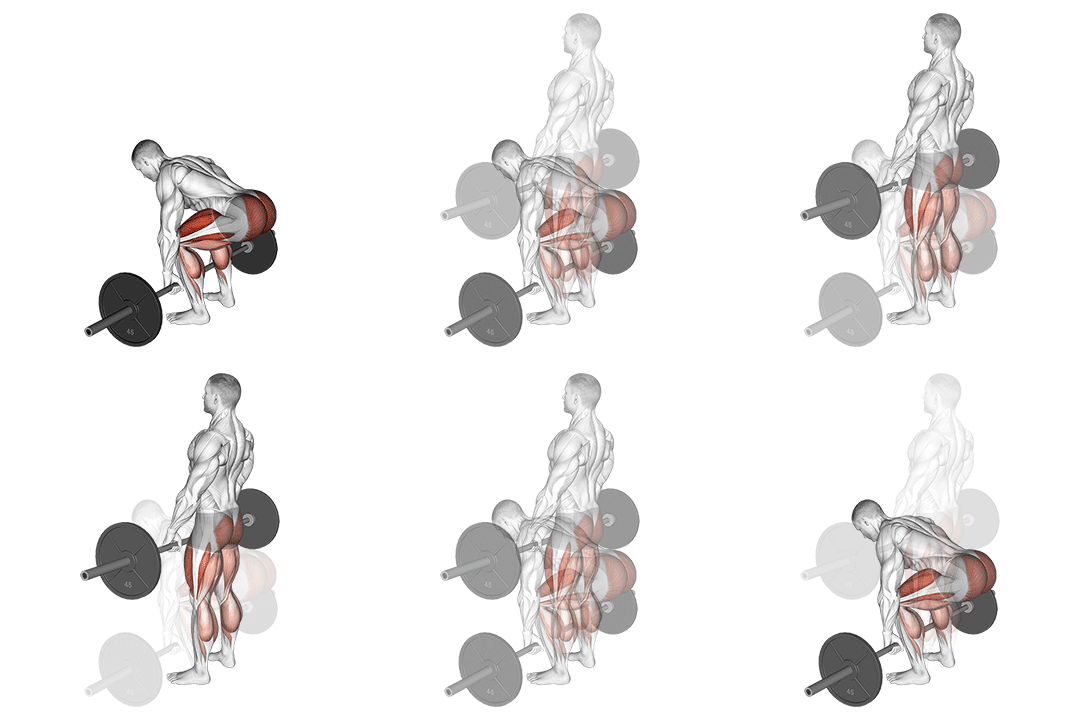
4. Barbell Deadlift
65.7% MatchHow to perform this exercise
- Stand with your feet shoulder-width apart and the barbell on the ground in front of you.
- Bend your knees and hinge at the hips to lower your torso and grip the barbell with an overhand grip, hands slightly wider than shoulder-width apart.
- Keep your back straight and chest lifted as you drive through your heels to lift the barbell off the ground, extending your hips and knees.
- As you stand up straight, squeeze your glutes and keep your core engaged.
- Lower the barbell back down to the ground by bending at the hips and knees, keeping your back straight.
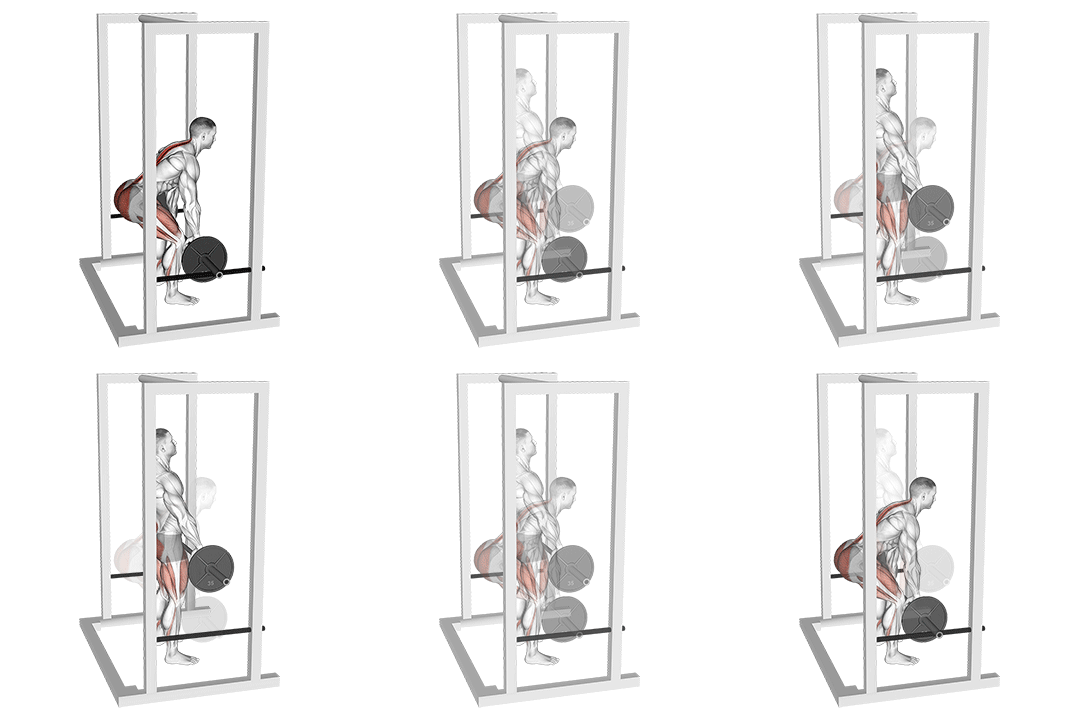
5. Barbell Rack Pull
65.2% MatchHow to perform this exercise
- Set up a barbell on a rack at knee height.
- Stand with your feet shoulder-width apart, toes pointing slightly outwards.
- Bend at the hips and knees to lower yourself down and grip the barbell with an overhand grip, hands shoulder-width apart.
- Engage your core and lift the barbell by extending your hips and knees, pulling your shoulders back and squeezing your glutes at the top.
- Lower the barbell back down to the starting position by bending at the hips and knees.
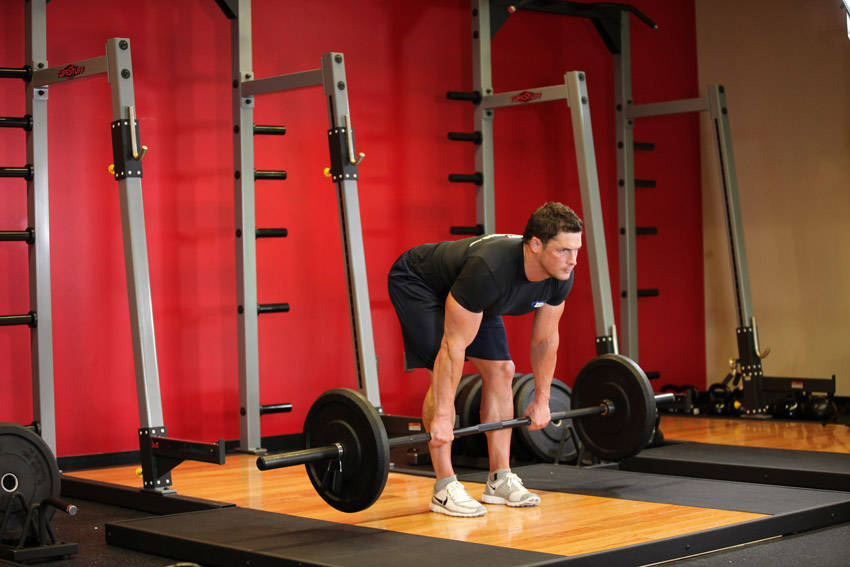
6. Stiff-Legged Barbell Deadlift
65.2% MatchHow to perform this exercise
- Grasp a bar using an overhand grip (palms facing down). You may need some wrist wraps if using a significant amount of weight.
- Stand with your torso straight and your legs spaced using a shoulder width or narrower stance. The knees should be slightly bent. This is your starting position.
- Keeping the knees stationary, lower the barbell to over the top of your feet by bending at the hips while keeping your back straight. Keep moving forward as if you were going to pick something from the floor until you feel a stretch on the hamstrings. Inhale as you perform this movement.
- Start bringing your torso up straight again by extending your hips until you are back at the starting position. Exhale as you perform this movement.
- Repeat for the recommended amount of repetitions.
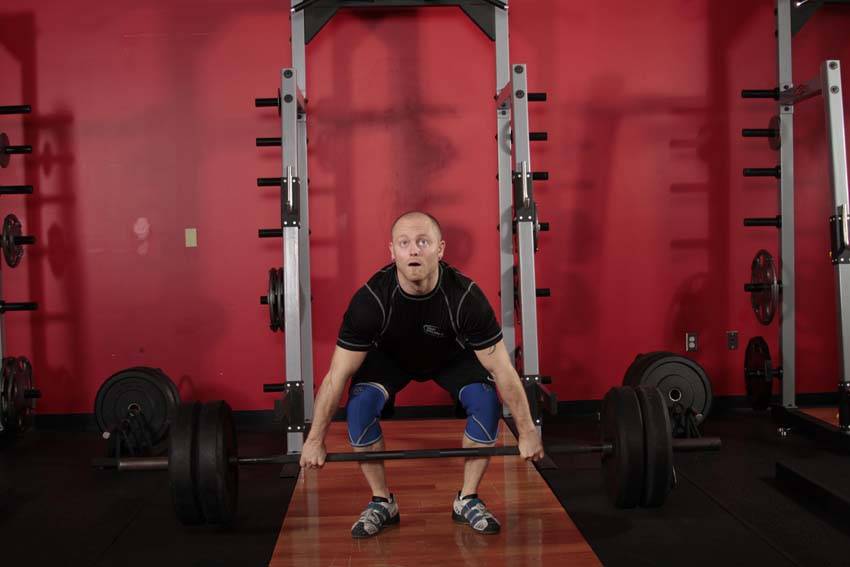
7. Clean Pull
64.7% MatchHow to perform this exercise
- With a barbell on the floor close to the shins, take an overhand or hook grip just outside the legs. Lower your hips with the weight focused on the heels, back straight, head facing forward, chest up, with your shoulders just in front of the bar. This will be your starting position.
- Begin the first pull by driving through the heels, extending your knees. Your back angle should stay the same, and your arms should remain straight and elbows out. Move the weight with control as you continue to above the knees.
- Next comes the second pull, the main source of acceleration for the clean. As the bar approaches the mid-thigh position, begin extending through the hips. In a jumping motion, accelerate by extending the hips, knees, and ankles, using speed to move the bar upward. There should be no need to actively pull through the arms to accelerate the weight; at the end of the second pull, the body should be fully extended, leaning slightly back, with the arms still extended. Full extension should be violent and abrupt, and ensure that you do not prolong the extension for longer than necessary.
8. Clean From Blocks
64.2% MatchHow to perform this exercise
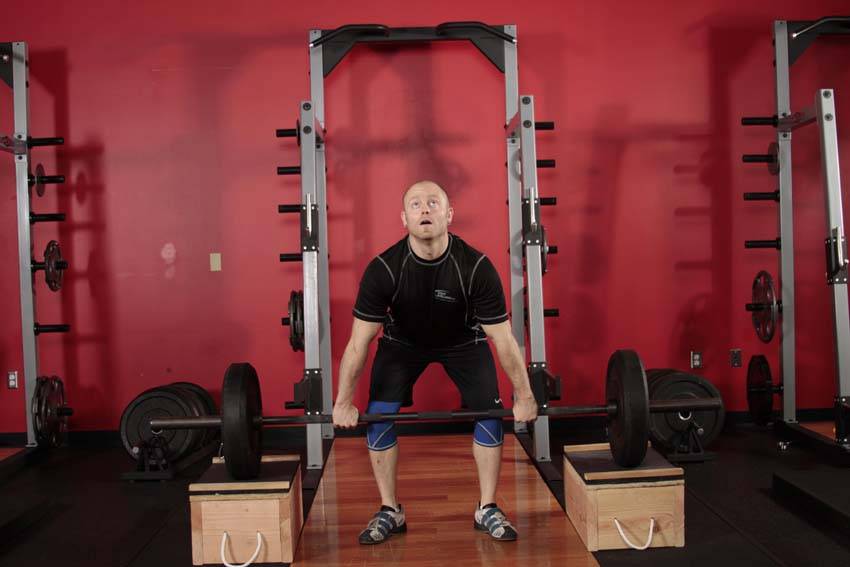
- With a barbell on boxes or stands of the desired height, take an overhand or hook grip just outside the legs. Lower your hips with the weight focused on the heels, back straight, head facing forward, chest up, with your shoulders just in front of the bar. This will be your starting position.
- Begin the first pull by driving through the heels, extending your knees. Your back angle should stay the same, and your arms should remain straight with the elbows pointed out.
- As full extension is achieved, transition into the receiving position by aggressively shrugging and flexing the arms with the elbows up and out. Aggressively pull yourself down, rotating your elbows under the bar as you do so. Receive the bar in a front squat position, the depth of which is dependent upon the height of the bar at the end of the third pull. The bar should be racked onto the protracted shoulders, lightly touching the throat with the hands relaxed. Continue to descend to the bottom squat position, which will help in the recovery.
- Immediately recover by driving through the heels, keeping the torso upright and elbows up. Continue until you have risen to a standing position. Return the weight to the boxes for the next rep.
9. Power Clean
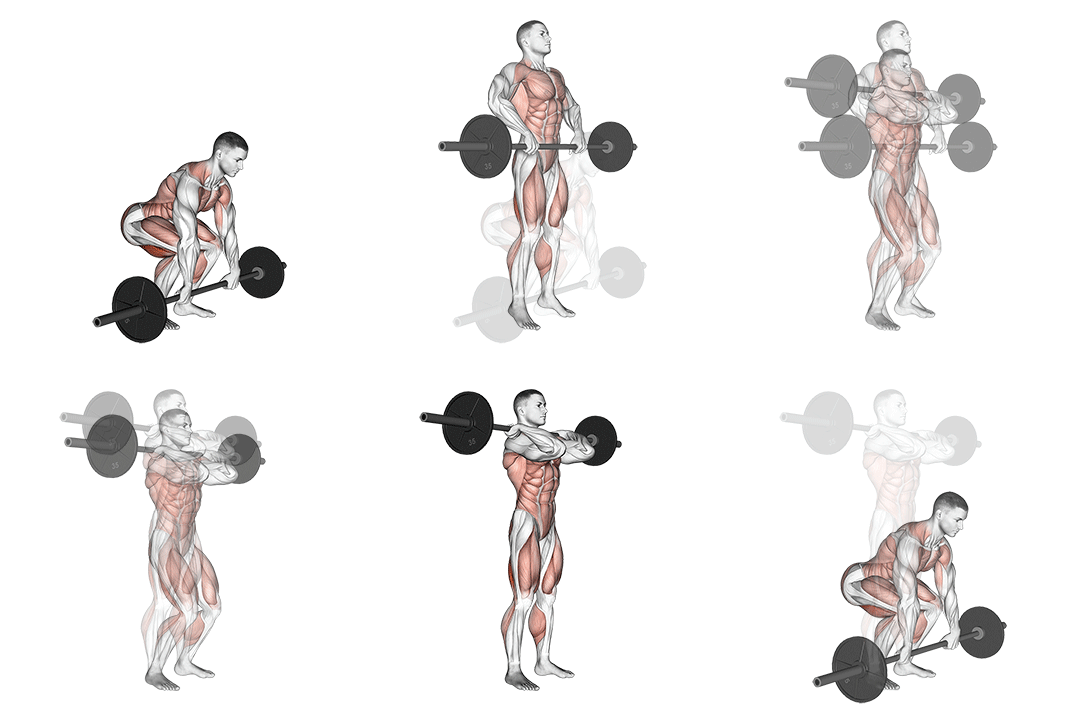
63% MatchHow to perform this exercise
- Start with the barbell on the ground in front of you, with your feet shoulder-width apart.
- Bend down and grip the barbell with an overhand grip, slightly wider than shoulder-width apart.
- Keep your back straight and chest up as you lift the barbell off the ground, extending your hips and knees.
- As the barbell reaches your mid-thigh, explosively pull it upwards, shrugging your shoulders and pulling your elbows high and to the sides.
- As the barbell reaches its highest point, quickly drop underneath it, rotating your elbows around and catching the barbell on your shoulders in a front squat position.
10. Reverse Band Sumo Deadlift
62% MatchHow to perform this exercise
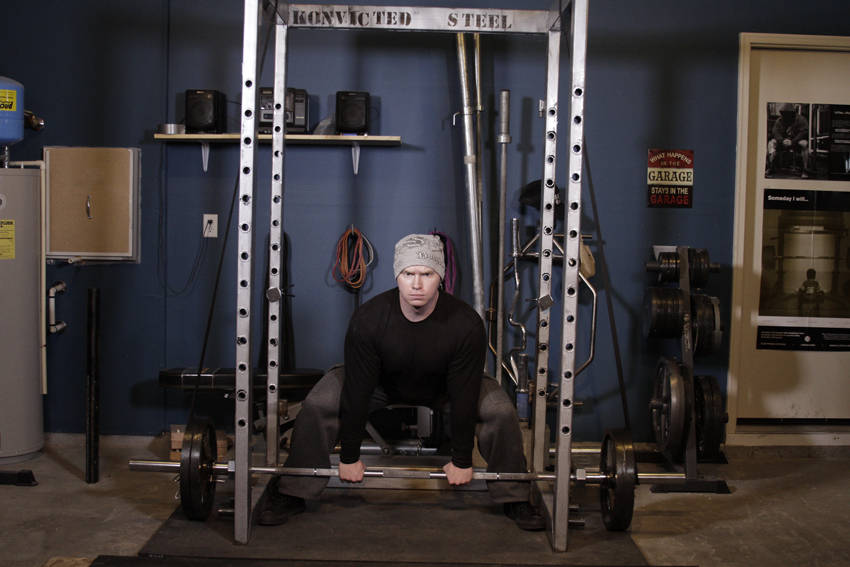
- Begin with a bar loaded on the floor inside of a power rack. Attach bands to the top of the rack, using either pegs or the frame itself. Attach the other end to the barbell.
- Approach the bar so that the bar intersects the middle of the feet. The feet should be set very wide, near the collars. Bend at the hips to grip the bar. The arms should be directly below the shoulders, inside the legs, and you can use a pronated grip, a mixed grip, or hook grip. Relax the shoulders, which in effect lengthens your arms.
- Take a breath, and then lower your hips, looking forward with your head with your chest up. Drive through the floor, spreading your feet apart, with your weight on the back half of your feet. Extend through the hips and knees.
- As the bar passes through the knees, lean back and drive the hips into the bar, pulling your shoulder blades together.
- Return the weight to the ground by bending at the hips and controlling the weight on the way down.
Why You Might Need a Rack Pull With Bands Alternative
You might substitute rack pulls with bands because of limited band or rack access, acute low-back pain, or a need to target different portions of the lift. Bands change the load curve and can increase shear at the lumbar spine; if that causes discomfort choose RDLs or GHD extensions to emphasize hip-hinge mechanics and controlled eccentrics. Technique cue: for RDLs push your hips back, keep a slight knee bend and feel tension through the hamstrings. Biomechanically, RDLs lengthen the posterior chain under tension and reduce peak spinal compression compared to partial high-tension pulls, which helps manage risk while maintaining posterior-chain stimulus.
How to Choose the Right Substitute
Base your substitute on your training goal, equipment, and lumbar tolerance. If you need lockout strength use partial deadlifts or snatch-grip deadlifts and cue drive the floor away to recruit traps and glutes. For hypertrophy or eccentric control choose RDLs or slow GHD extensions, lower for 3–4 seconds to increase hamstring and erector activation. If you lack a barbell select single-leg RDLs or weighted-vest extensions to force unilateral hip stability. Consider lever arms: deficits increase hamstring demand, rack pulls shorten ROM for upper-back emphasis. Progress via range, tempo, and load adjustments.
Frequently Asked Questions
What muscles does Rack Pull With Bands work?
Rack pulls with bands primarily target the erector spinae, glutes, and hamstrings, with secondary involvement of the lats and traps. Because the movement reduces range of motion and adds variable resistance it increases spinal extension torque and emphasizes lockout-specific hip and upper-back activation; cue: brace the core and retract the scapula.
What is the best bodyweight alternative to Rack Pull With Bands?
The best bodyweight alternative is the single-leg Romanian deadlift. Hinge from the hips with a soft bend in the standing knee, keep hips square and push them back to load the hamstrings and glutes while training core stability.
Can I build muscle without doing Rack Pull With Bands?
Yes, progressive overload and targeted posterior-chain work build muscle without banded rack pulls. Use RDLs, conventional deadlifts, GHD extensions, or slow eccentrics (3–4 second lowers) to increase time under tension and stimulate erectors, hamstrings, and glutes.
More Exercise Alternatives
Find Alternatives for Any Exercise
Use the exercise substitution finder to compare ranked alternatives for your available equipment and training preference.
Try the Exercise Substitution Finder →