

10 Best Recumbent Bike Alternatives for Low-Impact Cardio
The Recumbent Bike is done seated with a machine. Ranked closest by our scoring: the Star Jump, the Fast Skipping and Mountain Climbers.
Updated Ranked by our 12-factor similarity model How it works
Original Exercise: Recumbent Bike
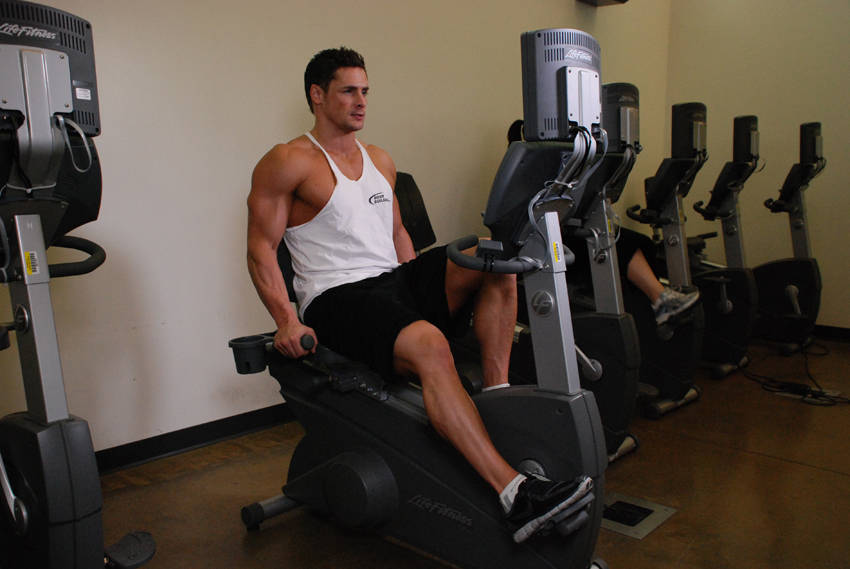
- Primary muscle
- Quads
- Equipment
- Machine
- Difficulty
- Beginner
- Type
- Compound
Secondary muscles: Calves, Glutes, Hamstrings
How to perform Recumbent Bike
- To begin, seat yourself on the bike and adjust the seat to your height.
- Select the desired option from the menu. You may have to start pedaling to turn it on. You can use the manual setting, or you can select a program to use. Typically, you can enter your age and weight to estimate the amount of calories burned during exercise. The level of resistance can be changed throughout the workout. The handles can be used to monitor your heart rate to help you stay at an appropriate intensity.
- Recumbent bikes offer convenience, cardiovascular benefits, and have less impact than other activities. A 150 lb person will burn about 230 calories cycling at a moderate rate for 30 minutes, compared to 450 calories or more running.
Ranked Recumbent Bike Alternatives
10 substitutes, ranked by how closely each one matches the Recumbent Bike on movement pattern, muscles worked, equipment and body position. The higher the score, the less you change. Open "How to perform this exercise" on a card for the steps; every card title links to that exercise's own alternatives page.
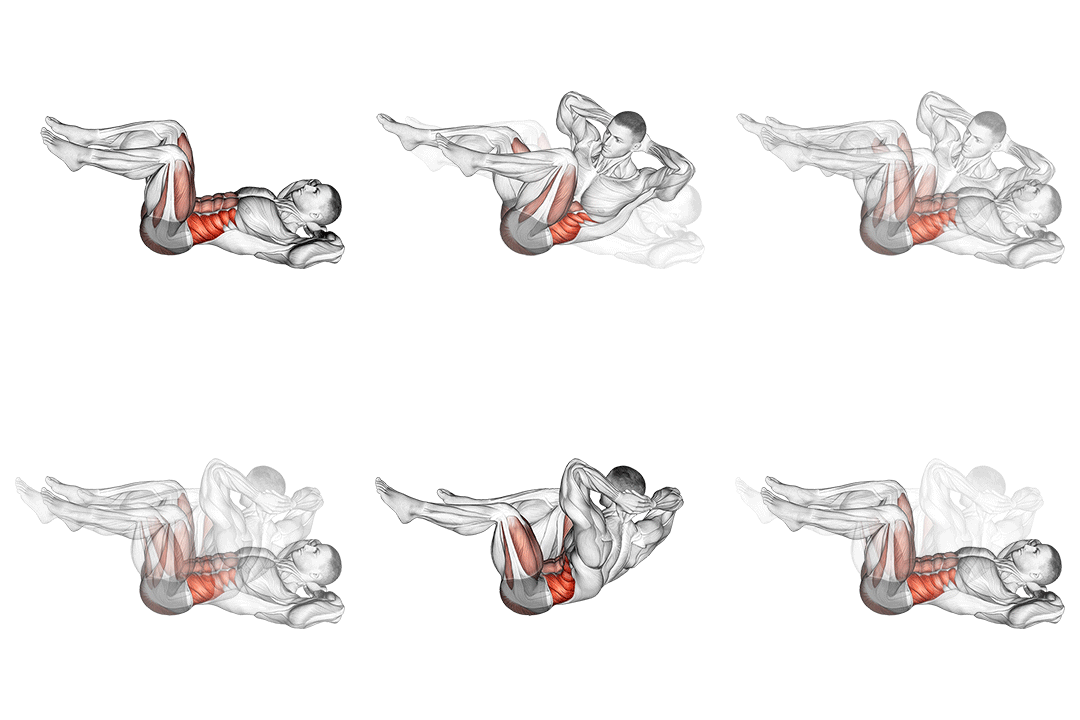
1. Air Bike
76% match- Abs
- Bodyweight
- Intermediate
- Compound
A looser match: it works the abs rather than the quads.
How to perform this exercise
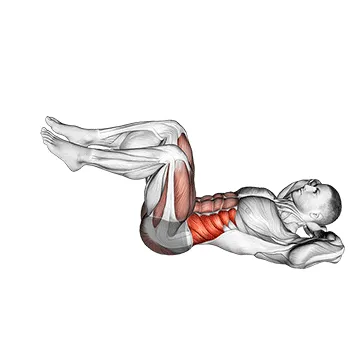
- Lie flat on your back with your hands placed behind your head.
- Lift your legs off the ground and bend your knees at a 90-degree angle.
- Bring your right elbow towards your left knee while simultaneously straightening your right leg.
- Return to the starting position and repeat the movement on the opposite side, bringing your left elbow towards your right knee while straightening your left leg.
- Continue alternating sides in a pedaling motion for the desired number of repetitions.
Sets and reps: Work for 30 to 60 seconds, rest as long as you worked, and repeat 6 to 10 times.
Why this matches
- Movement: cycling, the same as the Recumbent Bike
- Primary muscle: abs, not quads
- Equipment: a cardio machine, the same as the Recumbent Bike
- Body position: seated, the same as the Recumbent Bike
Best match 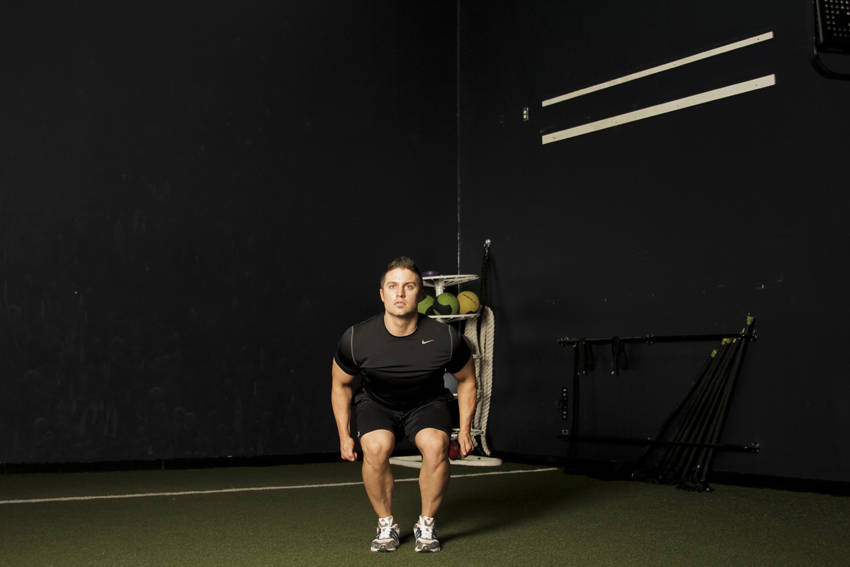
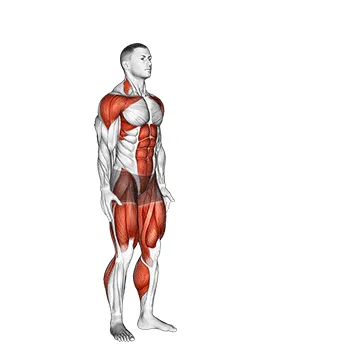
2. Star Jump
63% match- Quads
- Bodyweight
- Intermediate
- Compound
Use this when you have nothing to train with, because it works the quads with bodyweight alone.
How to perform this exercise
- Begin in a relaxed stance with your feet shoulder width apart and hold your arms close to the body.
- To initiate the move, squat down halfway and explode back up as high as possible. Fully extend your entire body, spreading your legs and arms away from the body.
- As you land, bring your limbs back in and absorb your impact through the legs.
Sets and reps: Work for 30 to 60 seconds, rest as long as you worked, and repeat 6 to 10 times.
Why this matches
- Primary muscle: quads, the same as the Recumbent Bike
- Equipment: bodyweight only, not a cardio machine
- Body position: standing, not seated
- Balance: harder to stay steady on than the Recumbent Bike
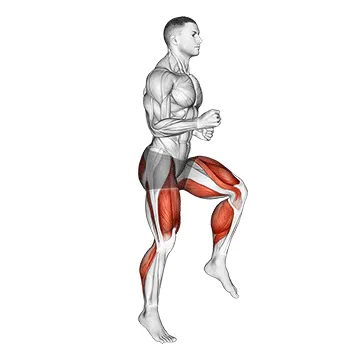
3. Fast Skipping
50% match- Quads
- Bodyweight
- Intermediate
- Compound
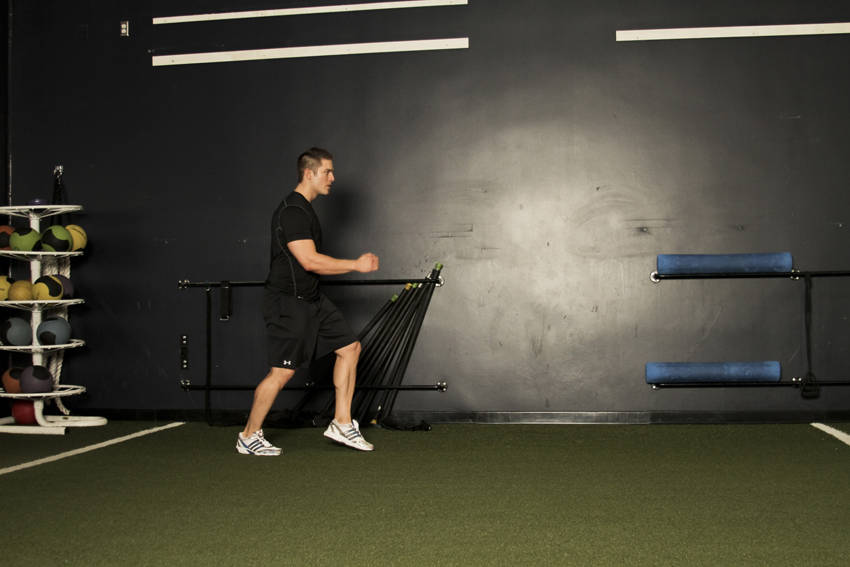
Pick this when you want a harder single-leg version that still works the quads.
How to perform this exercise
- Start in a relaxed position with one leg slightly forward. This will be your starting position.
- Skip by executing a step-hop pattern of right-right-step to left-left-step, and so on, alternating back and forth.
- Perform fast skips by maintaining close contact with the ground and reduce air time, moving as quickly as possible.
Sets and reps: Work for 30 to 60 seconds, rest as long as you worked, and repeat 6 to 10 times.
Why this matches
- Primary muscle: quads, the same as the Recumbent Bike
- Equipment: bodyweight only, not a cardio machine
- Body position: standing, not seated
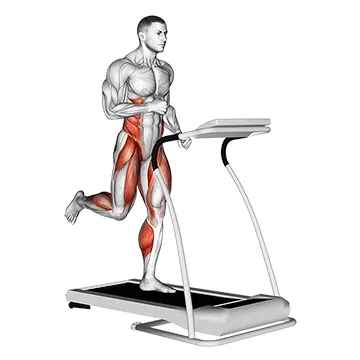
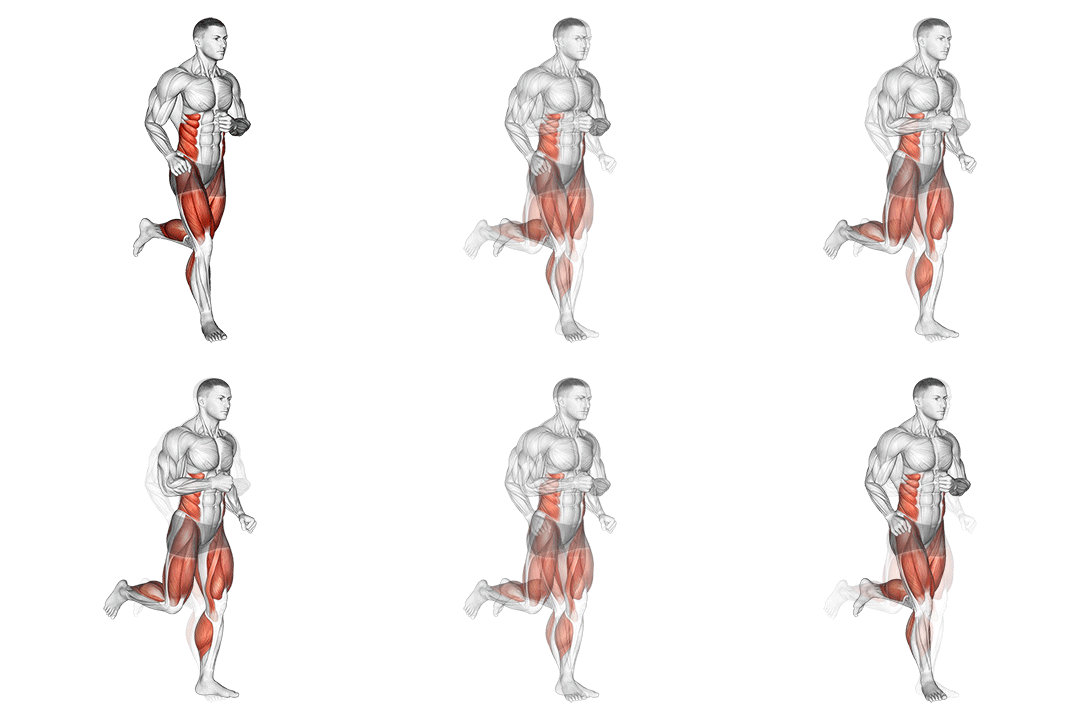
4. Run
48% match- Cardio
- Bodyweight
- Beginner
- Compound
A looser match: it works the heart and lungs rather than the quads.
How to perform this exercise
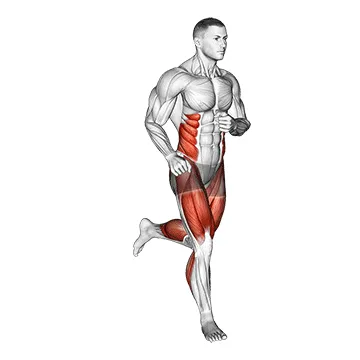
- Start by standing upright with your feet hip-width apart.
- Engage your core and keep your upper body relaxed.
- Begin jogging in place, lifting your knees up towards your chest and landing softly on the balls of your feet.
- Maintain a steady pace and continue jogging for the desired duration or distance.
- Remember to breathe deeply and maintain good posture throughout the exercise.
Sets and reps: Work for 30 to 60 seconds, rest as long as you worked, and repeat 6 to 10 times.
Why this matches
- Primary muscle: your heart and lungs, not quads
- Equipment: bodyweight only, not a cardio machine
- Body position: standing, not seated
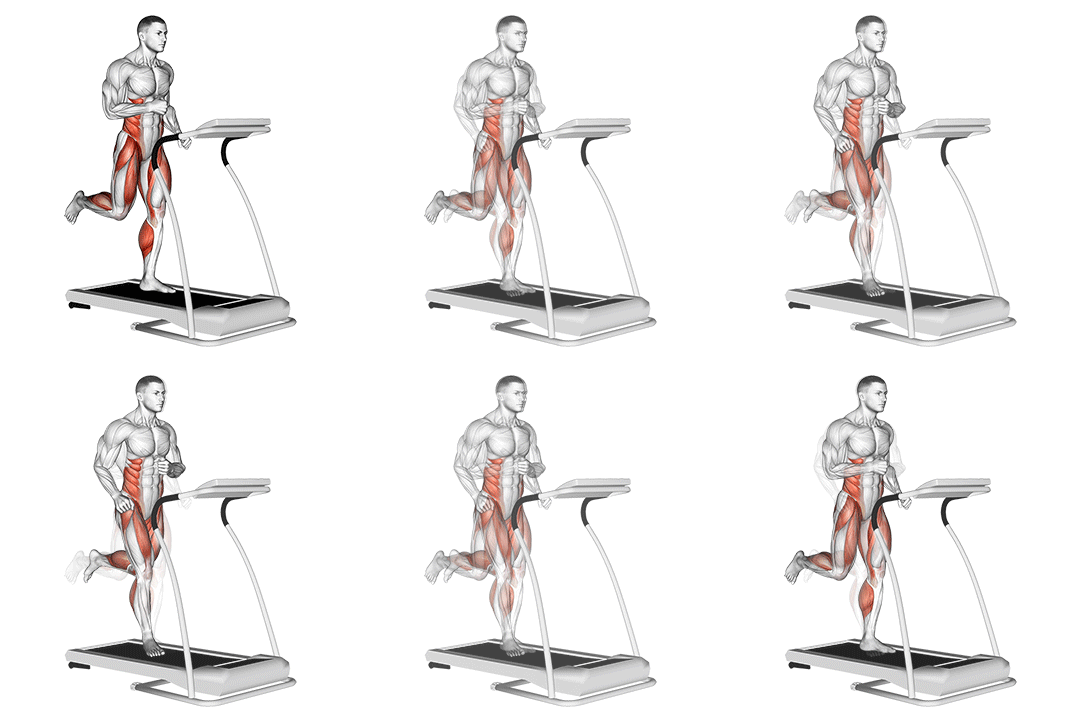
5. Run (Equipment)
48% match- Cardio
- Bodyweight
- Beginner
- Compound
How to perform this exercise
- Start by standing upright with your feet hip-width apart.
- Engage your core and keep your upper body relaxed.
- Begin jogging in place, lifting your knees up towards your chest and landing softly on the balls of your feet.
- Maintain a steady pace and continue jogging for the desired duration or distance.
- Remember to breathe deeply and maintain good posture throughout the exercise.
Sets and reps: Work for 30 to 60 seconds, rest as long as you worked, and repeat 6 to 10 times.
Why this matches
- Primary muscle: your heart and lungs, not quads
- Equipment: bodyweight only, not a cardio machine
- Body position: standing, not seated
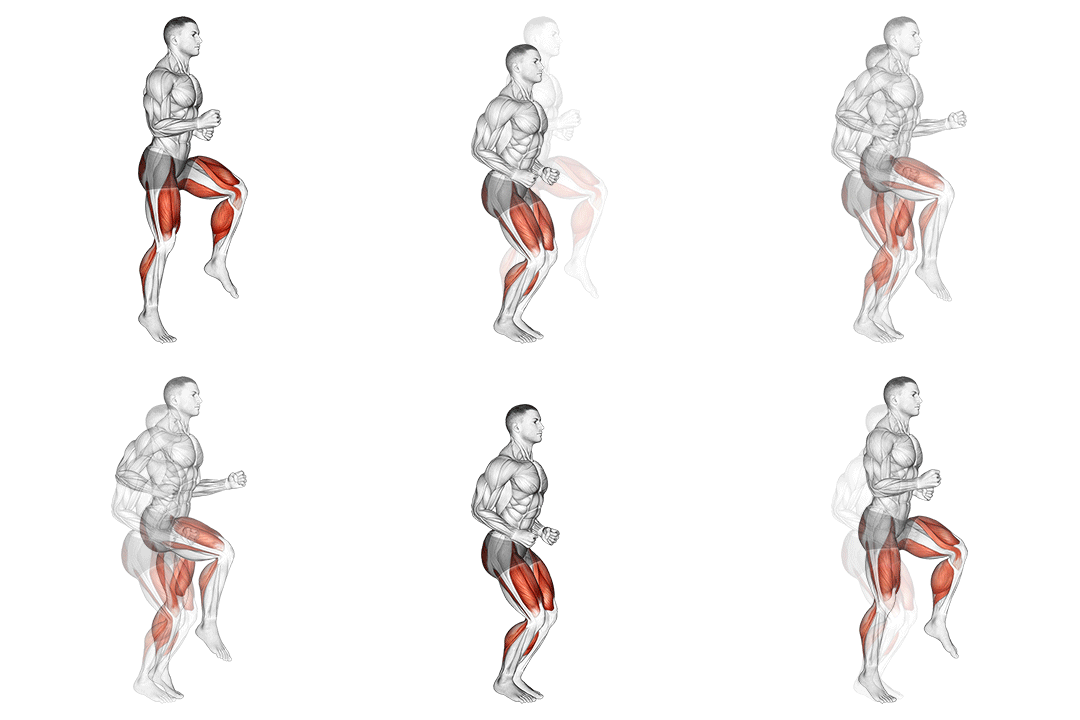
6. Half Knee Bends
45% match- Cardio
- Bodyweight
- Beginner
- Compound
How to perform this exercise
- Stand with your feet shoulder-width apart.
- Bend your knees and lower your body down as if you were sitting back into a chair.
- Keep your chest up and your weight in your heels.
- Pause for a moment at the bottom, then push through your heels to return to the starting position.
- Repeat for the desired number of repetitions.
Sets and reps: Work for 30 to 60 seconds, rest as long as you worked, and repeat 6 to 10 times.
Why this matches
- Primary muscle: your heart and lungs, not quads
- Equipment: bodyweight only, not a cardio machine
- Body position: standing, not seated
- Balance: harder to stay steady on than the Recumbent Bike
7. Mountain Climbers
45% match- Quads
- Bodyweight
- Intermediate
- Compound
How to perform this exercise
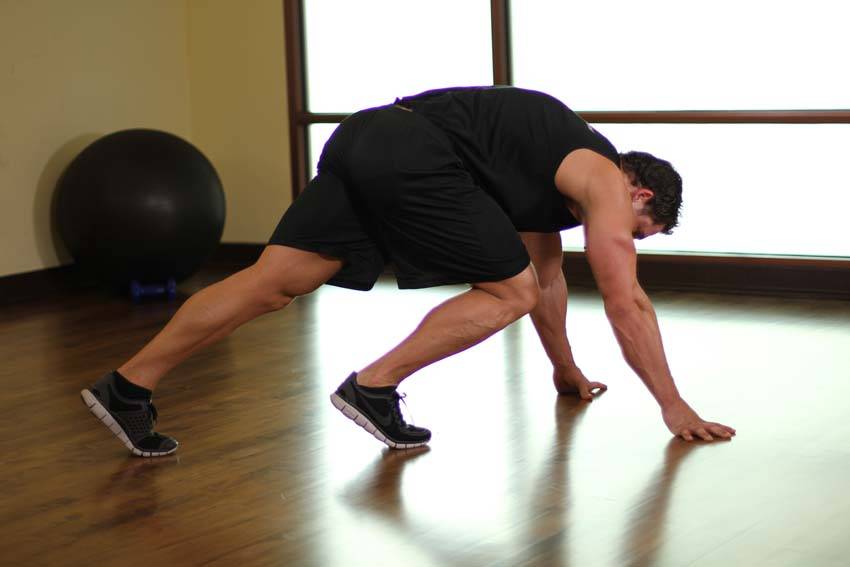
- Begin in a pushup position, with your weight supported by your hands and toes. Flexing the knee and hip, bring one leg until the knee is approximately under the hip. This will be your starting position.
- Explosively reverse the positions of your legs, extending the bent leg until the leg is straight and supported by the toe, and bringing the other foot up with the hip and knee flexed. Repeat in an alternating fashion for 20-30 seconds.
Sets and reps: Work for 30 to 60 seconds, rest as long as you worked, and repeat 6 to 10 times.
Why this matches
- Primary muscle: quads, the same as the Recumbent Bike
- Equipment: bodyweight only, not a cardio machine
- Body position: lying face down, not seated
- Balance: harder to stay steady on than the Recumbent Bike
8. Jack Jump
45% match- Cardio
- Bodyweight
- Beginner
- Compound
How to perform this exercise
- Stand with your feet together and your arms by your sides.
- Jump up, spreading your feet apart and raising your arms above your head.
- As you land, quickly jump back to the starting position.
- Repeat for the desired number of repetitions.
Sets and reps: Work for 30 to 60 seconds, rest as long as you worked, and repeat 6 to 10 times.
Why this matches
- Primary muscle: your heart and lungs, not quads
- Equipment: bodyweight only, not a cardio machine
- Body position: standing, not seated
- Balance: harder to stay steady on than the Recumbent Bike
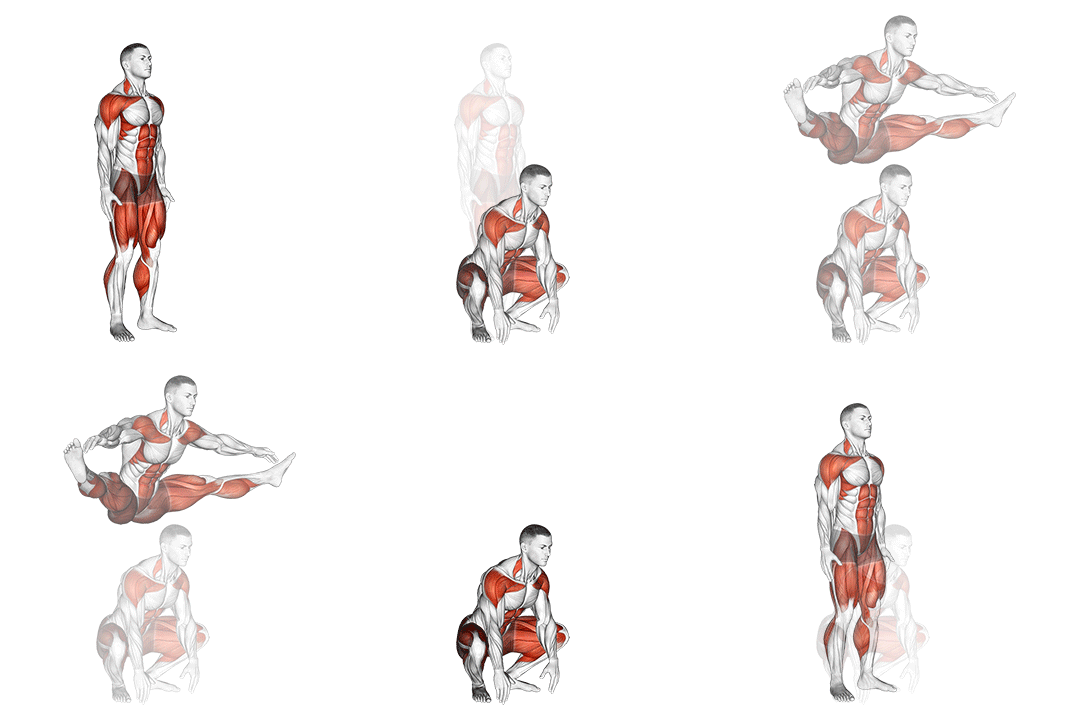
9. Side Standing Long Jump
45% match- Quadriceps
- Bodyweight
- Intermediate
- Compound
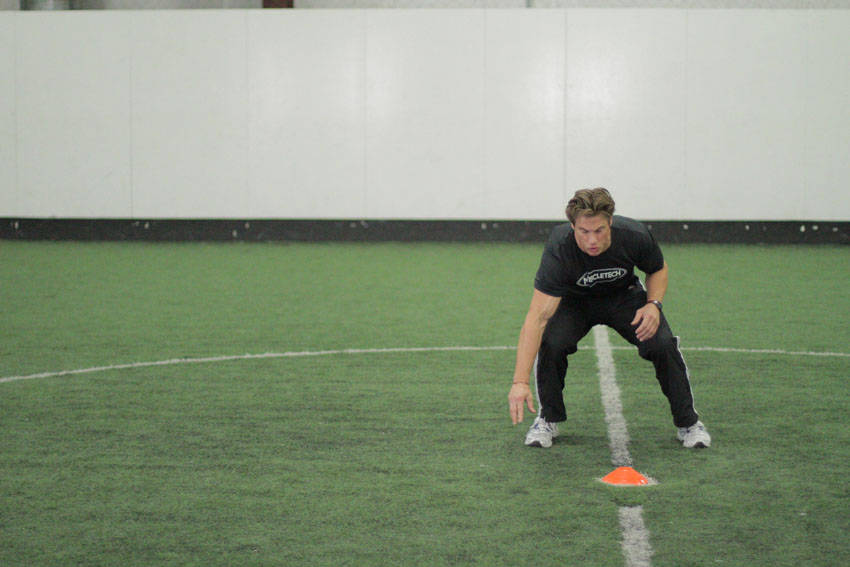
How to perform this exercise
- Begin standing with your feet hip width apart in an athletic stance. Your head and chest should be up, knees and hips slightly bent. This will be your starting position.
- Leaning to your right, extend through your hips, knees, and ankles to jump into the air. Block with the arms to lead the movement, jumping as far to your right as you can.
- Land facing the same direction with your feet hip width apart, absorbing the impact through your lower body.
Sets and reps: Work for 30 to 60 seconds, rest as long as you worked, and repeat 6 to 10 times.
Why this matches
- Primary muscle: quadriceps, not quads
- Equipment: bodyweight only, not a cardio machine
- Body position: standing, not seated
- Balance: harder to stay steady on than the Recumbent Bike
10. Freehand Jump Squat
44% match- Quads
- Bodyweight
- Intermediate
- Compound
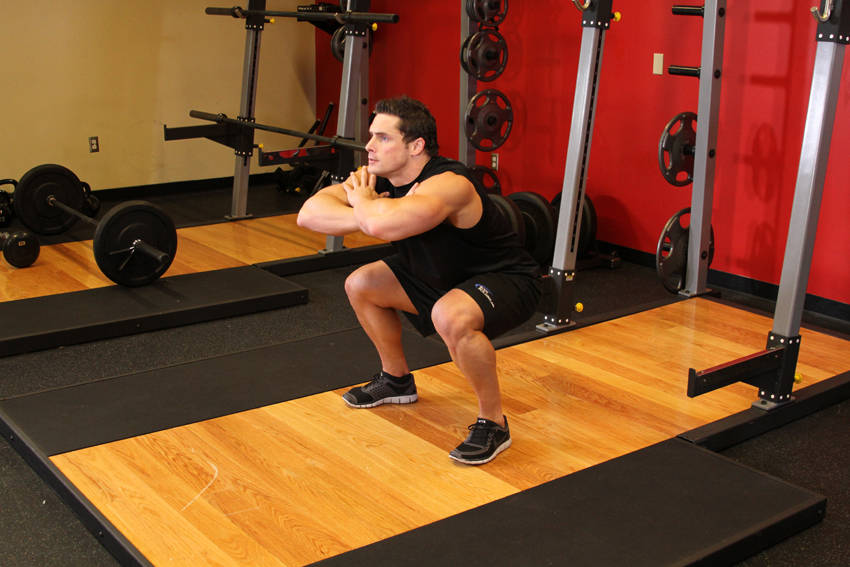
How to perform this exercise
- Cross your arms over your chest.
- With your head up and your back straight, position your feet at shoulder width.
- Keeping your back straight and chest up, squat down as you inhale until your upper thighs are parallel, or lower, to the floor.
- Now pressing mainly with the ball of your feet, jump straight up in the air as high as possible, using the thighs like springs. Exhale during this portion of the movement.
- When you touch the floor again, immediately squat down and jump again.
- Repeat for the recommended amount of repetitions.
Sets and reps: 3 or 4 sets of 6 to 10 reps.
Why this matches
- Primary muscle: quads, the same as the Recumbent Bike
- Equipment: bodyweight only, not a cardio machine
- Body position: standing, not seated
- Balance: harder to stay steady on than the Recumbent Bike
Recumbent Bike FAQ
Which Recumbent Bike alternative feels most similar?
Bicycling is the closest match. It keeps the same seated pedaling as the Recumbent Bike, so your legs do the same work. The one real difference is the setup: Bicycling skips the menu of programs and resistance settings the Recumbent Bike uses, so you just sit down and start pedaling.
Find Alternatives for Any Exercise
Search the exercise database and filter the ranked substitutes by the equipment you own.
Similarity scores compare exercise metadata such as movement pattern, muscles, equipment and body position. They are not a safety rating or a check that you own the equipment. Learn about our methodology