

10 Best Stationary Bike Run Alternatives for Limited Equipment
What can I do instead of Stationary Bike Run V. 3? Use alternatives that reproduce its cardiovascular load and pedal-like hip action: interval running, rowing, elliptical, sled pushes, or high-step intervals. Focus on cadence and power, for example, when rowing drive through the heels and snap the hips to mimic cycling’s leg drive and aerobic demand.
Original Exercise: Stationary Bike Run
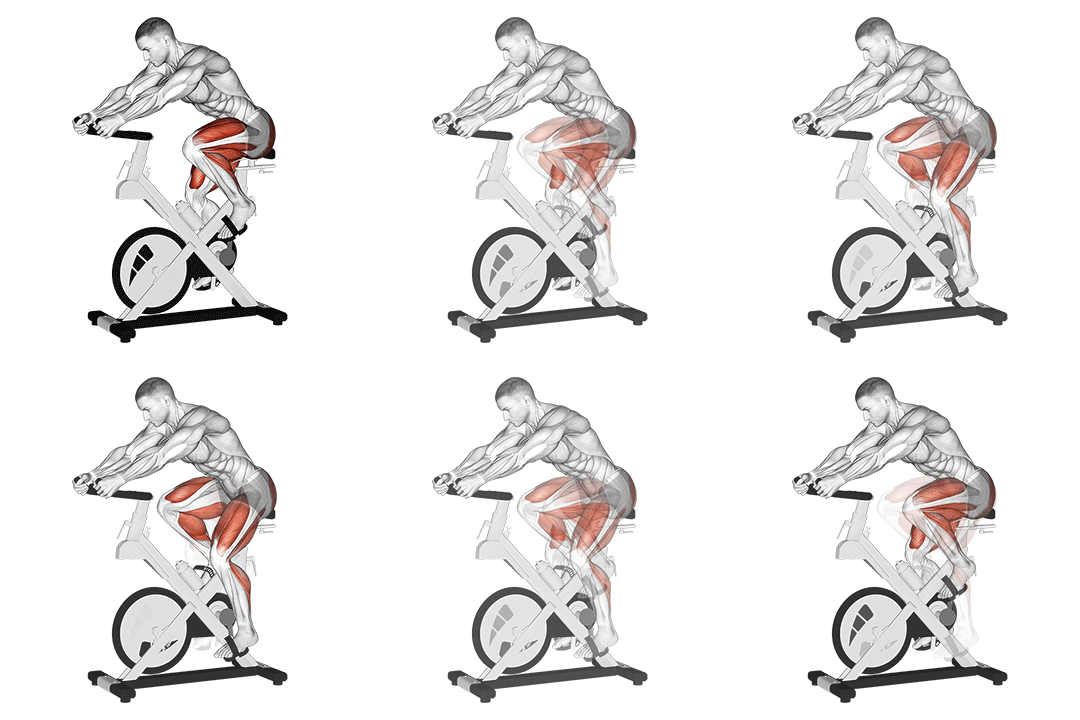
How to Perform Stationary Bike Run
- Adjust the seat height and position to ensure proper alignment.
- Place your feet on the pedals and secure them with the straps if available.
- Start pedaling at a comfortable pace.
- Maintain a steady rhythm and increase the resistance as desired.
- Engage your core muscles to maintain stability and proper posture.
- Continue pedaling for the desired duration of your workout.
- Gradually decrease the resistance and slow down before coming to a complete stop.
- Stretch your legs and cool down after the workout.
Ranked Stationary Bike Run Alternatives
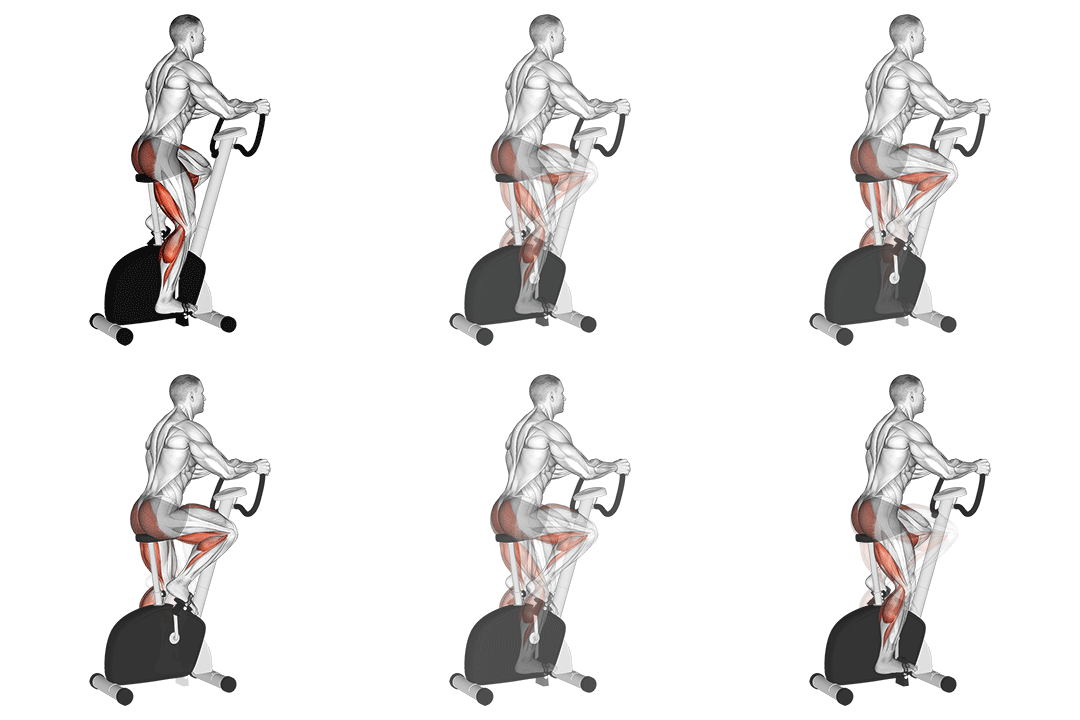
1. Stationary Bike Walk
84.2% MatchHow to perform this exercise
- Adjust the seat height and position on the stationary bike to ensure proper alignment.
- Place your feet on the pedals and secure them with the straps if available.
- Start pedaling at a comfortable pace, keeping your back straight and core engaged.
- Maintain a steady rhythm and increase the resistance level if desired.
- Continue pedaling for the desired duration of your cardio workout.
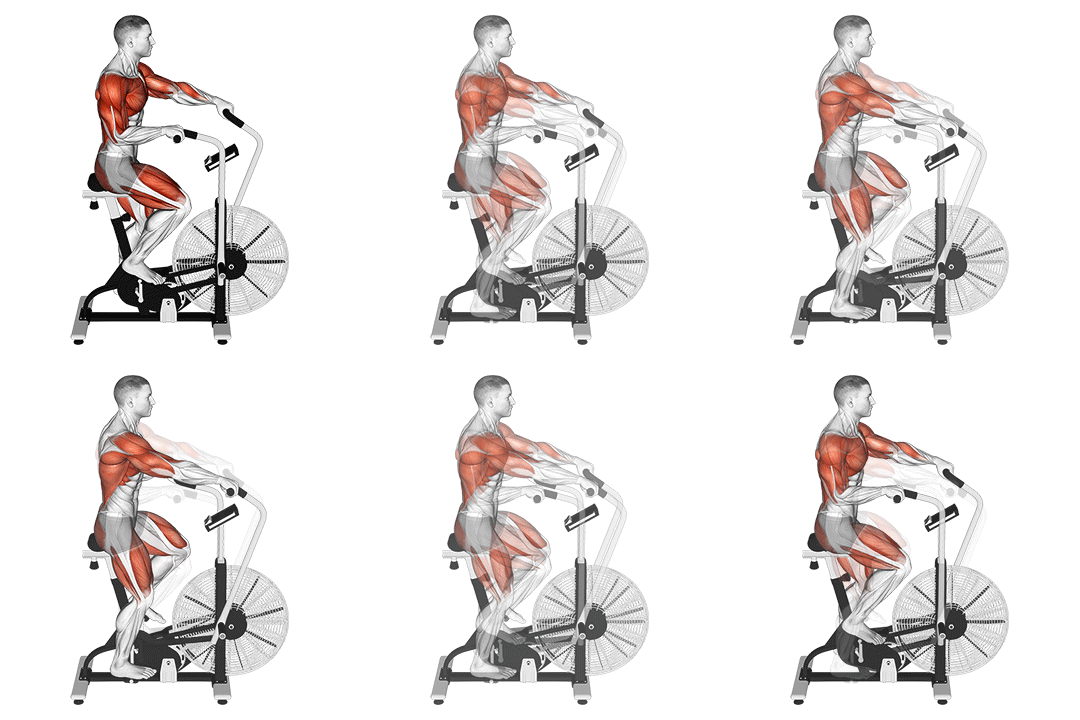
2. Cycle Cross Trainer
79.2% MatchHow to perform this exercise
- Adjust the seat height and position yourself on the cycle cross trainer.
- Place your feet on the pedals and grip the handlebars.
- Start pedaling in a smooth and controlled motion.
- Maintain a steady pace and increase the resistance if desired.
- Continue pedaling for the desired duration of your cardio workout.
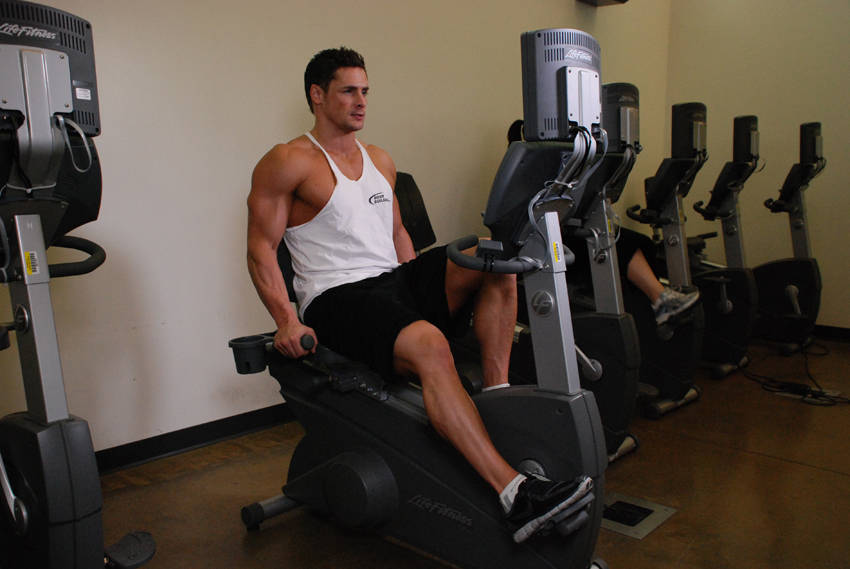
3. Recumbent Bike
75.2% MatchHow to perform this exercise
- To begin, seat yourself on the bike and adjust the seat to your height.
- Select the desired option from the menu. You may have to start pedaling to turn it on. You can use the manual setting, or you can select a program to use. Typically, you can enter your age and weight to estimate the amount of calories burned during exercise. The level of resistance can be changed throughout the workout. The handles can be used to monitor your heart rate to help you stay at an appropriate intensity.
- Recumbent bikes offer convenience, cardiovascular benefits, and have less impact than other activities. A 150 lb person will burn about 230 calories cycling at a moderate rate for 30 minutes, compared to 450 calories or more running.
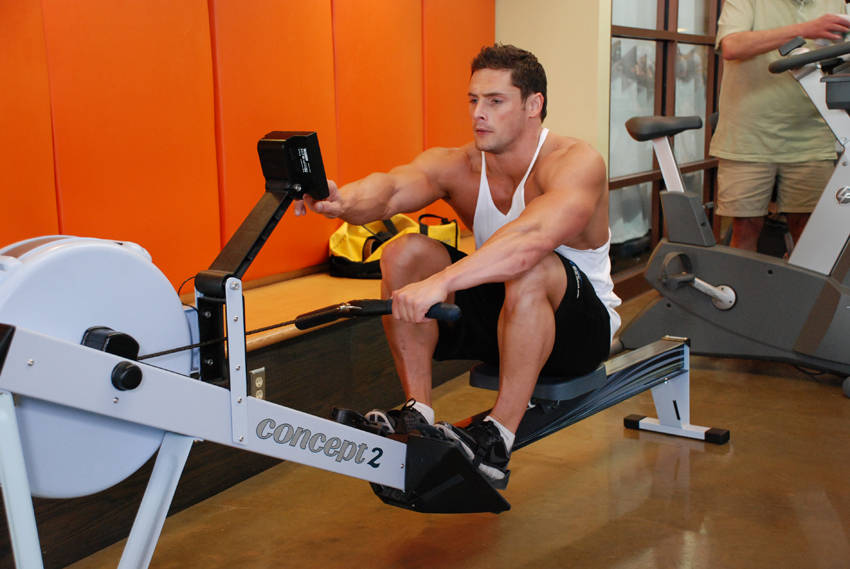
4. Rowing, Stationary
74.4% MatchHow to perform this exercise
- To begin, seat yourself on the rower. Make sure that your heels are resting comfortably against the base of the foot pedals and that the straps are secured. Select the program that you wish to use, if applicable. Sit up straight and bend forward at the hips.
- There are three phases of movement when using a rower. The first phase is when you come forward on the rower. Your knees are bent and against your chest. Your upper body is leaning slightly forward while still maintaining good posture. Next, push against the foot pedals and extend your legs while bringing your hands to your upper abdominal area, squeezing your shoulders back as you do so. To avoid straining your back, use primarily your leg and hip muscles.
- The recovery phase simply involves straightening your arms, bending the knees, and bringing your body forward again as you transition back into the first phase.
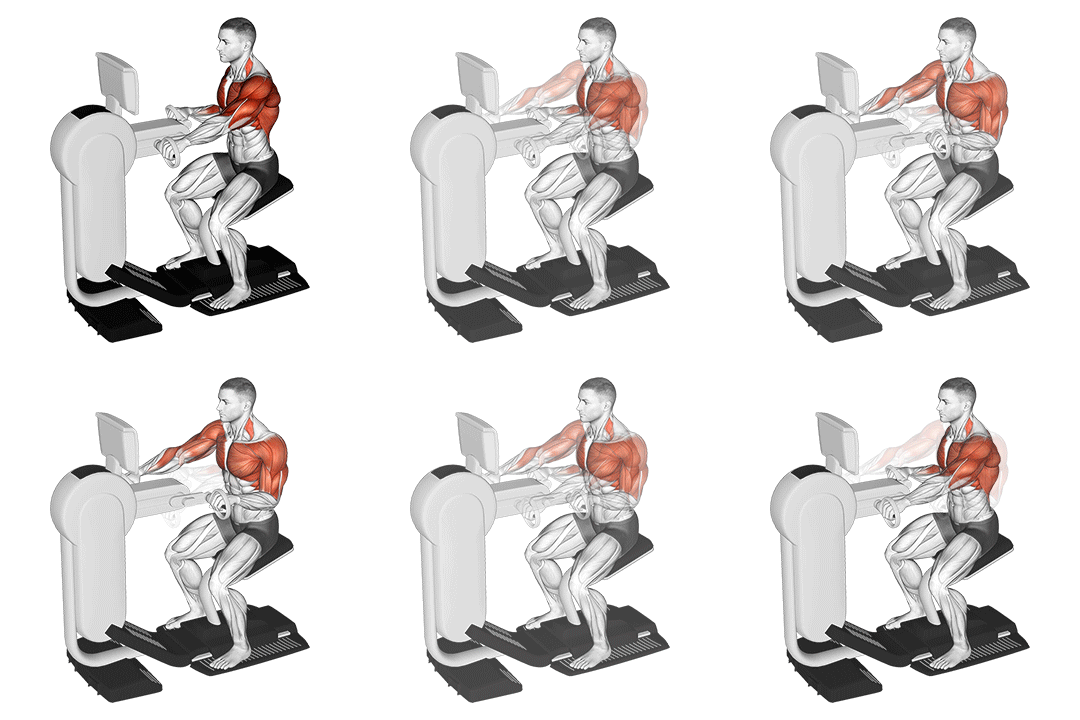
5. Hands Bike
73.7% MatchHow to perform this exercise
- Adjust the seat height and handlebar position to a comfortable level.
- Sit on the ergometer with your back straight and feet on the pedals.
- Grasp the handles with your hands and position your arms at a 90-degree angle.
- Start pedaling with your hands, pushing and pulling the handles in a controlled motion.
- Continue pedaling for the desired duration or number of repetitions.

6. Bicycling
72.4% MatchHow to perform this exercise
- To begin, seat yourself on the bike and adjust the seat to your height.
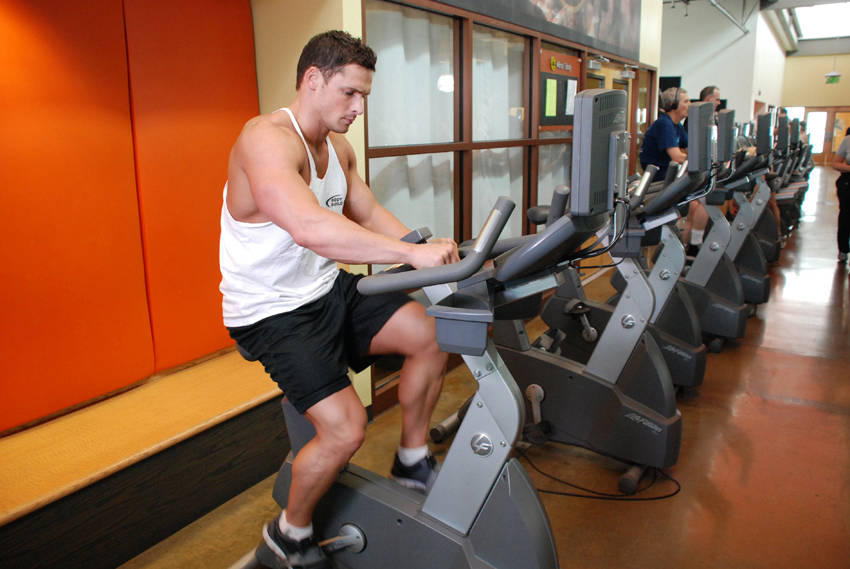
7. Bicycling, Stationary
72.4% MatchHow to perform this exercise
- To begin, seat yourself on the bike and adjust the seat to your height.
- Select the desired option from the menu. You may have to start pedaling to turn it on. You can use the manual setting, or you can select a program to use. Typically, you can enter your age and weight to estimate the amount of calories burned during exercise. The level of resistance can be changed throughout the workout. The handles can be used to monitor your heart rate to help you stay at an appropriate intensity.
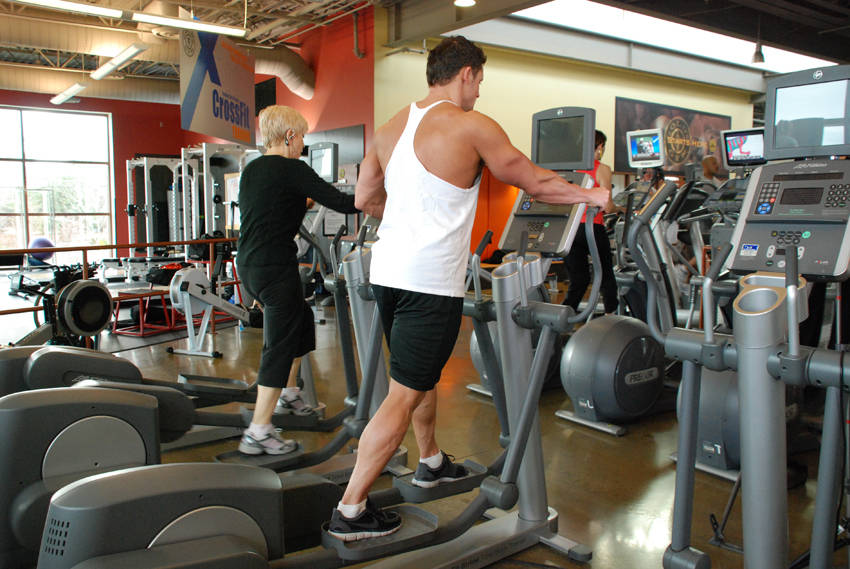
8. Elliptical Trainer
72% MatchHow to perform this exercise
- To begin, step onto the elliptical and select the desired option from the menu. Most ellipticals have a manual setting, or you can select a program to run. Typically, you can enter your age and weight to estimate the amount of calories burned during exercise. Elevation can be adjusted to change the intensity of the workout.
- The handles can be used to monitor your heart rate to help you stay at an appropriate intensity.
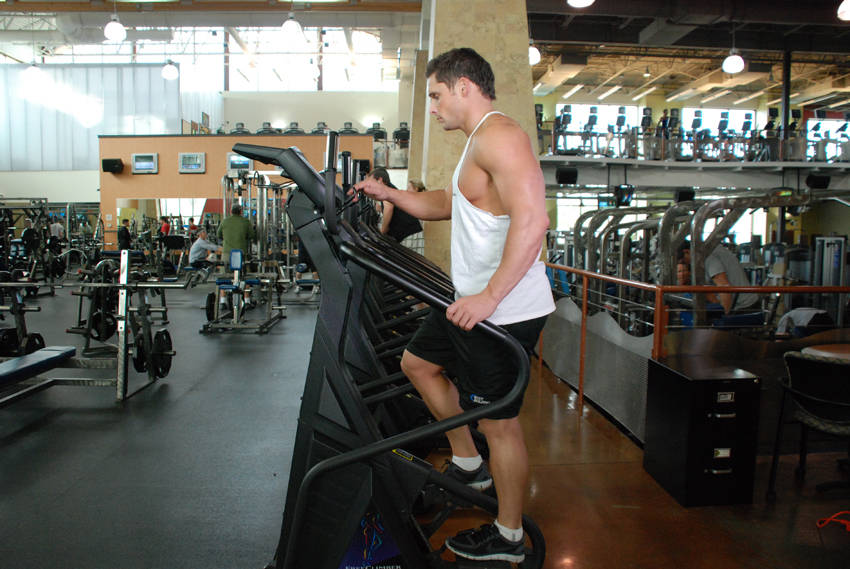
9. Stairmaster
72% MatchHow to perform this exercise
- To begin, step onto the stairmaster and select the desired option from the menu. You can choose a manual setting, or you can select a program to run. Typically, you can enter your age and weight to estimate the amount of calories burned during exercise.
- Pump your legs up and down in an established rhythm, driving the pedals down but not all the way to the floor. It is recommended that you maintain your grip on the handles so that you don't fall. The handles can be used to monitor your heart rate to help you stay at an appropriate intensity.
- Stairmasters offer convenience, cardiovascular benefits, and usually have less impact than running outside. They are typically much harder than other cardio equipment. A 150 lb person will typically burn over 300 calories in 30 minutes, compared to about 175 calories walking.
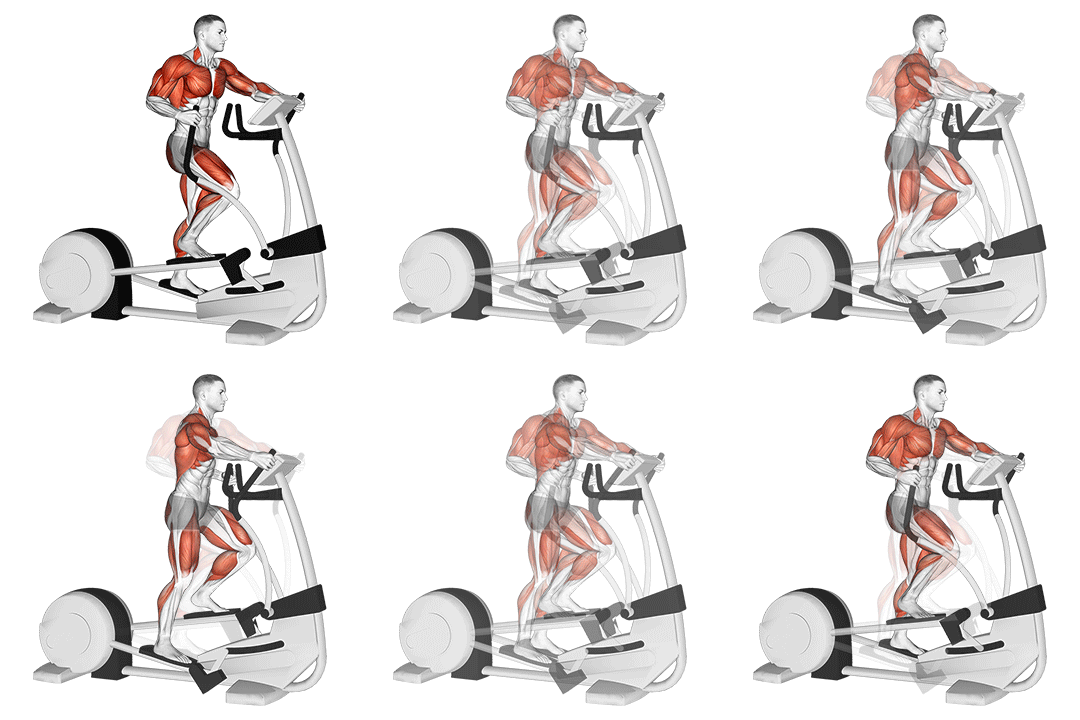
10. Walk Elliptical Cross Trainer
72% MatchHow to perform this exercise
- Adjust the resistance level and incline of the elliptical machine to your desired settings.
- Step onto the pedals of the machine and grip the handles lightly.
- Begin by pushing down with your feet and pulling the handles towards your body.
- Continue this motion, alternating between pushing and pulling, to simulate a walking or running motion.
- Maintain a steady pace and keep your core engaged throughout the exercise.
Why You Might Need a Stationary Bike Run Alternative
You may need a substitute for Stationary Bike Run V. 3 because of equipment limits, joint pain, travel, or training variety. Substitutes let you preserve cardiovascular stress while altering impact and muscle emphasis: rowing shifts load to hip extensors and back, running increases eccentric knee loading, and ellipticals reduce impact on the knees. Use technique cues to match the stimulus, e.g., maintain an aggressive hip drive and steady cadence on the rower, or land softly with knees tracking over toes in running intervals to protect joints while preserving aerobic intensity.
How to Choose the Right Substitute
Choose a substitute based on impact tolerance, desired muscle activation, and available gear. If you want low impact and similar posterior chain recruitment, pick rowing and cue a strong leg drive with hips opening; set the damper moderate and focus on legs first, then core and arms. For minimal equipment, use high-step intervals or sled pushes and drive through the heel to emphasize glutes and quads. Match intensity by using interval duration, cadence (e.g., 80–100 RPM-equivalent effort), or heart-rate zones to replicate the original session’s metabolic demand.
Frequently Asked Questions
What muscles does Stationary Bike Run V. 3 work?
Stationary Bike Run V. 3 primarily taxes your cardiovascular system while engaging the quads, glutes, hamstrings, calves, hip flexors, and core for stabilization. Cue a strong downstroke by driving through the midfoot and heel to recruit glutes and quads more, and keep a neutral spine to let the hips produce the majority of the power.
What is the best bodyweight alternative to Stationary Bike Run V. 3?
A high-step interval (alternating rapid step-ups onto a 12–18 inch box) is an effective bodyweight substitute that preserves aerobic load and leg drive. Push through the heel to fully extend the hip on each repetition and land softly with knees tracking over toes to maintain glute and quad activation while limiting impact.
Can I build muscle without doing Stationary Bike Run V. 3?
Yes, Stationary Bike Run V. 3 is primarily cardiovascular, so build muscle with resistance moves like weighted squats, Bulgarian split squats, and Romanian deadlifts. Emphasize slow eccentrics and full hip extension on each rep (e.g., descend 3 seconds, drive through the heel) to maximize muscle tension in quads and glutes.
More Exercise Alternatives
Find Alternatives for Any Exercise
Use the exercise substitution finder to compare ranked alternatives for your available equipment and training preference.
Try the Exercise Substitution Finder →