Assisted Kneeling Dips: Boost Your Triceps Strength with Ease

Isolate and Intensify Triceps Development with Controlled Movements

Ash, ACE, MSc
By
Ash, ACE, MSc
Ash is a highly respected fitness expert and certified personal trainer through the American Council on Exercise (ACE). With a B.A. in biology from Rutgers and...
6 Min Read
How to do Assisted Triceps Dip (Kneeling)

Assisted Kneeling Dips are an effective exercise for enhancing triceps strength, improving shoulder stability, and defining the upper body. This exercise specifically targets the triceps brachii, promoting muscle growth and endurance while also engaging the shoulders and chest, resulting in a comprehensive upper body workout. Incorporating this movement can significantly develop foundational strength essential for various daily activities and sports.

To achieve optimal results, it’s recommended to perform Assisted Kneeling Dips 2-3 times per week, allowing adequate recovery. Maintaining proper form is crucial; common mistakes, such as dipping too low or flaring elbows, can lead to injury or reduced effectiveness. Keep your core engaged and elbows tucked close throughout the motion for safety and better triceps engagement.

No special equipment is necessary beyond a standard leverage machine, which is available in most gyms. Modifications, such as reducing the range of motion or using resistance bands, can make the exercise more accessible for individuals with varying strength levels. This versatile exercise can also be performed at home using a bench or sturdy chair, making it easy to incorporate into any fitness regimen focused on building a stronger, more defined upper body.

Assisted Triceps Dip (Kneeling) Details
Basic Information
Body Part
Upper Arms
Primary Muscles
Secondary Muscles
Equipment
Leverage Machine
Exercise Characteristics
Exercise Type
Strength
Movement Pattern
Push
Force Type
Concentric
Unilateral/Bilateral
Bilateral
Compound/Isolation
Isolation
Bodyweight Exercise
Yes
Training Parameters
Difficulty Level
Beginner
Target Training Goals
Hypertrophy
Suitable Workout Phases
Main workout
Risk Level
Low
Weight Category
Bodyweight
Recommended Rep Ranges
GoalRep Range
Strength6-8
Hypertrophy8-12
Endurance15-20
Power1-5
Muscular endurance15-20
Stability core8-12
Flexibility mobility8-12

How to Do a Assisted Kneeling Dips

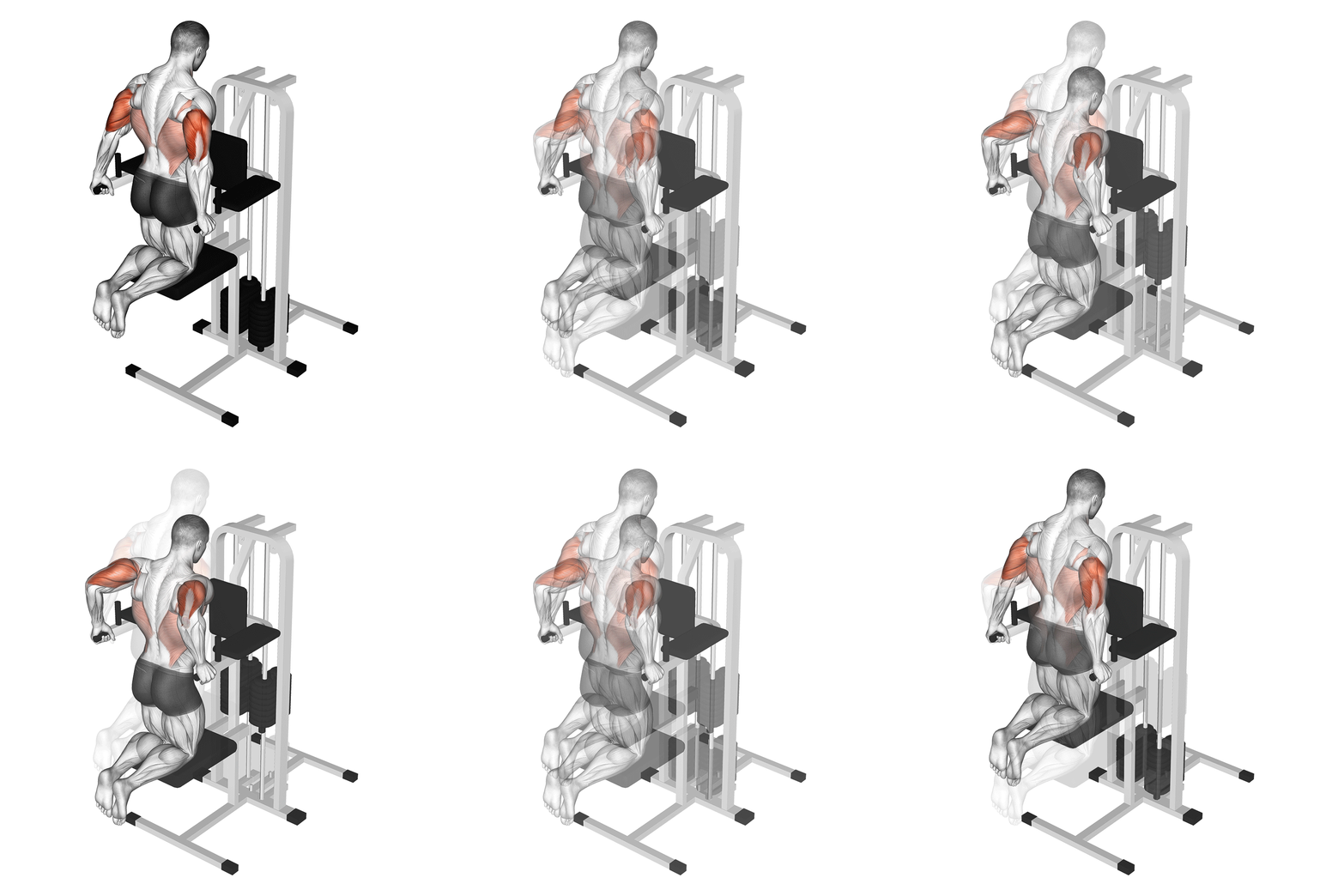
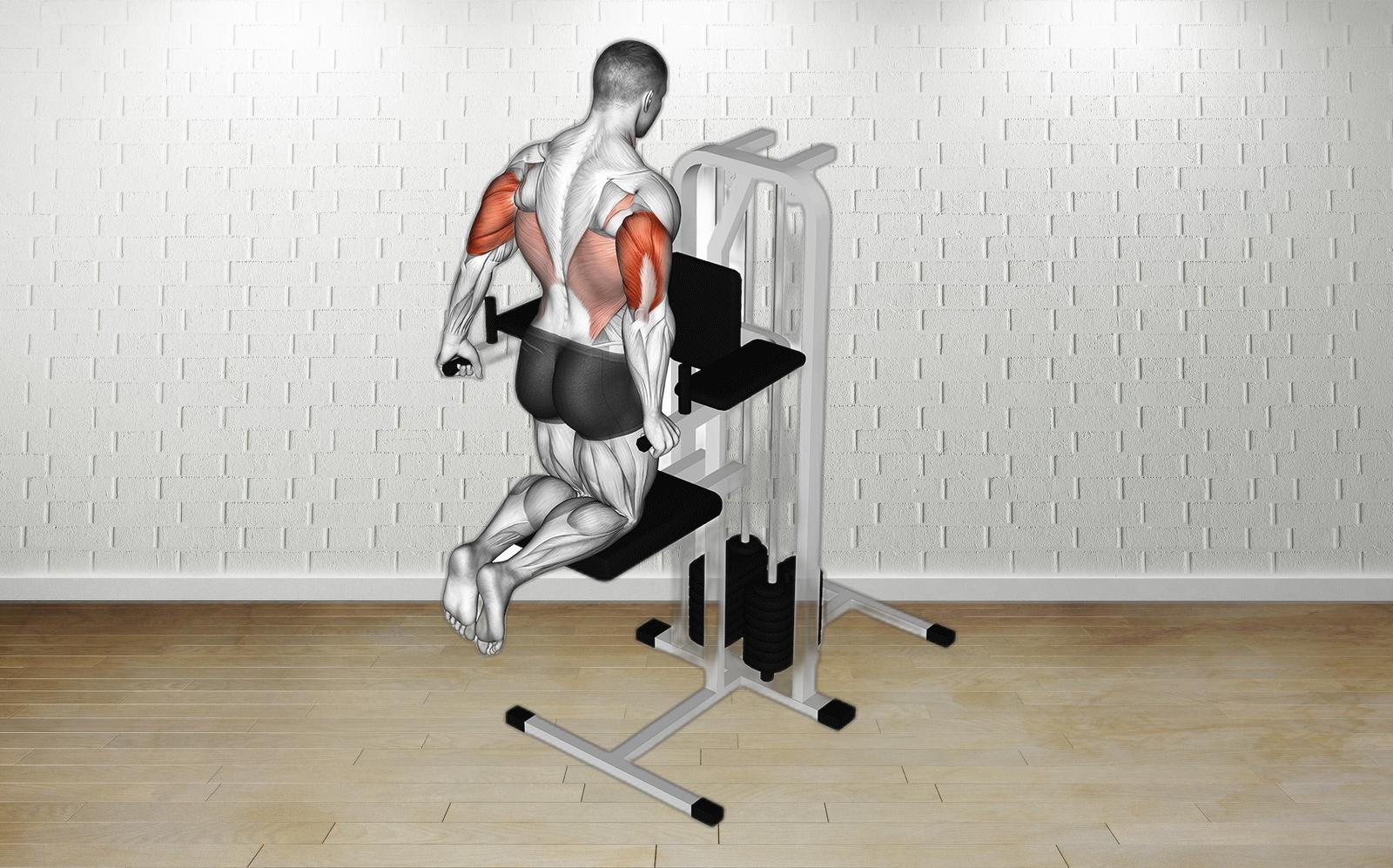
How to do a Assisted Triceps Dip (Kneeling) - Step by step Strength exercise demonstration targeting Triceps, Chest, Shoulders

Begin by kneeling on the floor, facing the leverage machine. Adjust the machine’s arm so that it is at shoulder height and grip the handles with your palms facing down.

Get Fitter, Faster

Level Up Your Fitness: Join our 💪 strong community in Fitness Volt Newsletter. Get daily inspiration, expert-backed workouts, nutrition tips, the latest in strength sports, and the support you need to reach your goals. Subscribe for free!

  1. Engage your core and maintain a straight posture from head to knees.
  2. Slowly lower your body by bending your elbows, allowing your upper arms to drop toward the floor.
  3. Continue lowering until your elbows are at approximately 90 degrees or your comfort level.
  4. Push through your palms to return to the starting position, fully extending your arms.

Inhale as you lower your body and exhale as you push back up to the starting position.

Common Mistakes in Assisted Triceps Dip (Kneeling)

  • Neglecting Core Engagement: Failing to engage the core can lead to poor posture and back strain. To avoid this, actively tighten your abdominal muscles throughout the exercise.
  • Dropping Heavily: Allowing the body to drop abruptly can cause excessive strain on the elbows. Instead, lower your body slowly and with control to maintain joint safety.
  • Incorrect Elbow Position: Flaring the elbows too far out can lead to shoulder discomfort and reduces the effectiveness of the exercise. Keep elbows tucked close to your body as you lower and push back up.
  • Insufficient Range of Motion: Stopping short of a full dip may hinder triceps development. Aim to lower to at least a 90-degree angle at the elbows for optimal engagement.
  • Inconsistent Breathing: Holding your breath can increase tension and reduce performance. Remember to inhale as you lower and exhale as you push up to maintain a steady rhythm.

Benefits

  • Enhanced Triceps Strength: Assisted kneeling dips effectively target the triceps, promoting muscle growth and strength in this critical upper body region.
  • Improved Stability: By engaging the core and maintaining a controlled posture, this exercise helps build stability, which is essential for overall upper body strength.
  • Injury Prevention: The assisted nature of the exercise allows beginners to practice proper form, reducing the risk of injury often associated with free weight exercises.
  • Joint Safety: Kneeling reduces strain on the shoulder joints while still delivering a robust triceps workout, making it suitable for individuals with previous shoulder issues.
  • Scalable Difficulty: The adjustable assistance allows users to tailor the challenge to their personal fitness levels, making it accessible for both beginners and advanced athletes.

Exercise Variations

  • Pike Push-Ups
    Level: Intermediate
    Targets: Core Muscles, Deltoids, Pectorals, Serratus Anterior, Triceps, Upper Trapezius, Rhomboids
    Equipment: None | Movement: Push | Type: Strength | Force Type: Concentric | Compound
  • Diamond Push-Up On Knees
    Level: Beginner
    Targets: Anterior Deltoids, Pectoralis major, Serratus Anterior, Triceps, Chest, Core, Shoulders
    Equipment: None | Movement: Push | Type: Strength | Force Type: Isotonic | Isolation
  • Pin Press
    Level: Intermediate
    Targets: Chest, Shoulders, Triceps, Deltoids, Pectoralis major, Rhomboids, Serratus Anterior, Trapezius, Triceps brachii
    Equipment: Barbell, Weight Plates, Bench, Squat Rack Or Power Rack. | Movement: Push | Type: Strength | Force Type: Isotonic | Isolation
  • Dumbbell Arnold Press
    Level: Intermediate
    Targets: Deltoids, Serratus Anterior, Trapezius, Triceps, Upper Pectorals, Deltoid, Pectoralis major, Rhomboids, Rotator Cuff Muscles, Triceps brachii
    Equipment: Dumbbells, Workout Bench | Movement: Push | Type: Strength | Force Type: Concentric | Compound
  • Cable Shoulder Press
    Level: Intermediate
    Targets: Deltoids, Serratus Anterior, Triceps, Upper Pectorals, Deltoid Anterior, Pectoralis major, Rhomboids, Supraspinatus, Trapezius, Triceps brachii
    Equipment: Cable Machine, Adjustable Bench, Cable Handles. | Movement: Push | Type: Strength | Force Type: Concentric | Compound
  • Barbell Overhead Press
    Level: Intermediate
    Targets: Core Muscles, Deltoids, Pectoralis major, Serratus Anterior, Trapezius, Triceps, Infraspinatus, Rhomboids, Teres Minor, Triceps brachii, Upper Trapezius
    Equipment: Barbell, Weight Plates, Weightlifting Bench Or Squat Rack, Lifting Belt, Wrist Wraps. | Movement: Push | Type: Strength | Force Type: Concentric | Compound
  • Kettlebell Seesaw Press
    Level: Intermediate
    Targets: Core, Deltoids, Pectorals, Stabilizer Muscles, Triceps, Upper Back, Core Muscles, Latissimus Dorsi, Rhomboids, Serratus Anterior, Trapezius
    Equipment: Kettlebell | Movement: Push | Type: Strength | Force Type: Concentric | Compound
  • Bradford Press
    Level: Intermediate
    Targets: Deltoids, Serratus Anterior, Trapezius, Triceps, Upper Pectorals, Rhomboids
    Equipment: Barbell, Weight Plates, Squat Rack, Bench, Collar Clamps, Wrist Wraps, Lifting Belt | Movement: Push | Type: Strength | Force Type: Isotonic | Compound
  • Jack Press
    Level: Intermediate
    Targets: Chest, Core, Legs, Shoulders, Triceps, Core Muscles, Deltoids, Serratus Anterior, Trapezius
    Equipment: Barbell, Weight Plates, Bench | Movement: Push | Type: Strength | Force Type: Isometric | Isolation
  • Twisting Cable Overhead Press
    Level: Intermediate
    Targets: Core, Deltoids, Latissimus Dorsi, Obliques, Triceps, Core Muscles, Rhomboids, Serratus Anterior, Trapezius
    Equipment: Cable Machine, Cable Handle Or Rope Attachment | Movement: Push | Type: Strength | Force Type: Concentric | Compound

Alternative Exercises

  • Dumbbell Around the World Exercise
    Level: Intermediate
    Targets: Chest, Core, Deltoids, Shoulders, Triceps, Upper Back, Core Muscles, Pectorals, Rhomboids, Serratus Anterior, Trapezius
    Equipment: Dumbbells | Movement: Rotation | Type: Strength | Force Type: Isotonic | Compound
  • Reverse Plank Exercise
    Level: Intermediate
    Targets: Core, Glutes, Hamstrings, Lower Back, Shoulders, Triceps, Deltoids, Erector Spinae, Gluteus Maximus, Obliques, Rectus Abdominis, Rhomboids, Trapezius
    Equipment: Exercise Mat, Yoga Mat, Or Soft Surface. | Movement: Brace | Type: Strength | Force Type: Isometric | Compound
  • Kettlebell Bent Press
    Level: Intermediate
    Targets: Deltoids, Erector Spinae, Latissimus Dorsi, Obliques, Quadratus lumborum, Trapezius, Triceps, Gluteus Maximus, Serratus Anterior
    Equipment: Kettlebell | Movement: Rotation | Type: Strength | Force Type: Concentric | Compound
  • Crab Walk
    Level: Beginner
    Targets: Core Muscles, Deltoids, Gluteus Maximus, Hamstrings, Hip Abductors, Quadriceps, Triceps, Calves, Gluteus Medius, Hip Flexors, Trapezius
    Equipment: None | Movement: Locomotion | Type: Strength | Force Type: Isometric | Isolation
  • Barbell Rollout
    Level: Intermediate
    Targets: Hip Flexors, Latissimus Dorsi, Obliques, Rectus Abdominis, Shoulders, Transverse abdominis, Triceps
    Equipment: Barbell, Weight Plates, Floor Mat | Movement: Brace | Type: Stability | Force Type: Isometric | Compound
  • Burpees
    Level: Intermediate
    Targets: Calves, Chest, Core, Glutes, Hamstrings, Quadriceps, Shoulders, Triceps, Core Muscles, Deltoids, Hip Flexors, Lower Back, Pectorals
    Equipment: None | Movement: Jump | Type: Plyometric | Force Type: Plyometric | Compound
  • Battle Ropes Exercise
    Level: Intermediate
    Targets: Back, Biceps, Core, Forearms, Legs, Shoulders, Triceps
    Equipment: Battle Ropes | Movement: Pull | Type: Cardio | Force Type: Isotonic | Compound
  • Crunch Exercise
    Level: Intermediate
    Targets: Hip Flexors, Obliques, Rectus Abdominis, Rectus Femoris, Serratus Anterior, Transverse abdominis
    Equipment: Mat | Movement: Hinge | Type: Strength | Force Type: Concentric | Isolation
  • Cross-Body Crunch
    Level: Intermediate
    Targets: Hip Flexors, Obliques, Rectus Abdominis, Transverse abdominis, Quadratus lumborum
    Equipment: Exercise Mat | Movement: Rotation | Type: Strength | Force Type: Concentric | Isolation
  • Cable Wrist Curl
    Level: Intermediate
    Targets: Flexor carpi radialis, Flexor carpi ulnaris, Flexor digitorum profundus, Flexor digitorum superficialis, Palmaris longus, Brachioradialis, Pronator Teres
    Equipment: Cable Machine, Cable Attachment (Wrist Strap Or Handle), Weight Plates. | Movement: Pull | Type: Strength | Force Type: Concentric | Isolation

Safety Precautions

When performing assisted triceps dips, it’s crucial to ensure proper body alignment to avoid unnecessary strain. Begin by establishing a sturdy base with your knees and core engaged. Always keep your shoulders relaxed and away from your ears, preventing excessive shoulder elevation. This alignment minimizes the risk of injury and enhances your ability to effectively target the triceps.

Moreover, pay attention to the equipment settings before each session. Ensure that the machine’s arm is adjusted at the correct height for your comfort and build. Check that all components of the machine are secure and functioning properly to avoid accidents while exercising. It’s advisable to start with a lighter assist level, gradually increasing as your strength improves, allowing your body to adapt without overexertion.

Finally, listen to your body during the exercise. If you experience any sharp pain or discomfort in your shoulders, elbows, or wrists, immediately stop the movement. Adjust the depth of your dip to match your current strength level by limiting how far you lower your body. Consulting a fitness professional when trying the exercise for the first time can also provide guidance and validate your form.

Interested in measuring your progress? Check out our strength standards for Dips.

Stay on top of the latest fitness news and updates by adding Fitness Volt to your Google News feed: Follow us on Google News You can also follow us on Twitter, Facebook, Instagram, and YouTube for even more content.

If you have any questions or need further clarification about this article, please leave a comment below, and Ash will get back to you as soon as possible.

Stay Updated with FitnessVolt Get the latest fitness news, workouts & nutrition tips delivered to your feed
Follow on Google News
Share This Article
Ash is a highly respected fitness expert and certified personal trainer through the American Council on Exercise (ACE). With a B.A. in biology from Rutgers and an M.S. in Exercise Science (Kinesiology) from CBU, she brings a wealth of knowledge and expertise to her work. Ash is dedicated to helping people achieve their fitness and health goals through personalized training and nutrition plans. With a passion for fitness and a deep understanding of the science behind healthy living, she is able to create effective and sustainable programs that deliver real results. Whether you're looking to lose weight, build muscle, or just feel better in your own skin, Ash is the expert you can trust to guide you on your journey to a healthier and happier life.
Leave a Comment