

Band Assisted Wheel Rollerout vs Band Jack Knife Sit-up: Complete Comparison Guide
Band Assisted Wheel Rollerout vs Band Jack Knife Sit-up — if you're choosing between two tough band-based core moves, you're in the right place. You'll get clear, actionable comparisons of muscle activation, biomechanics, equipment needs, technique cues, and which exercise fits your goal: core strength, muscle growth, or home training. I'll point out specific joint angles, rep ranges, and progressions so you can pick the exercise that gives you measurable progress and stays safe as you train.
Exercise Comparison
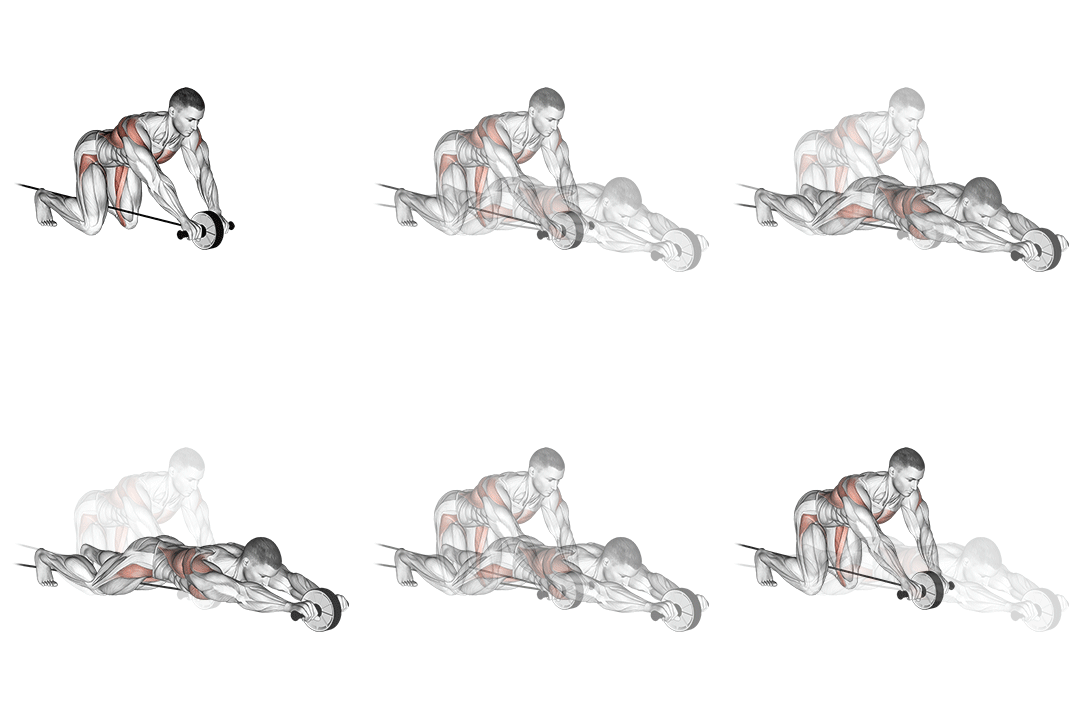
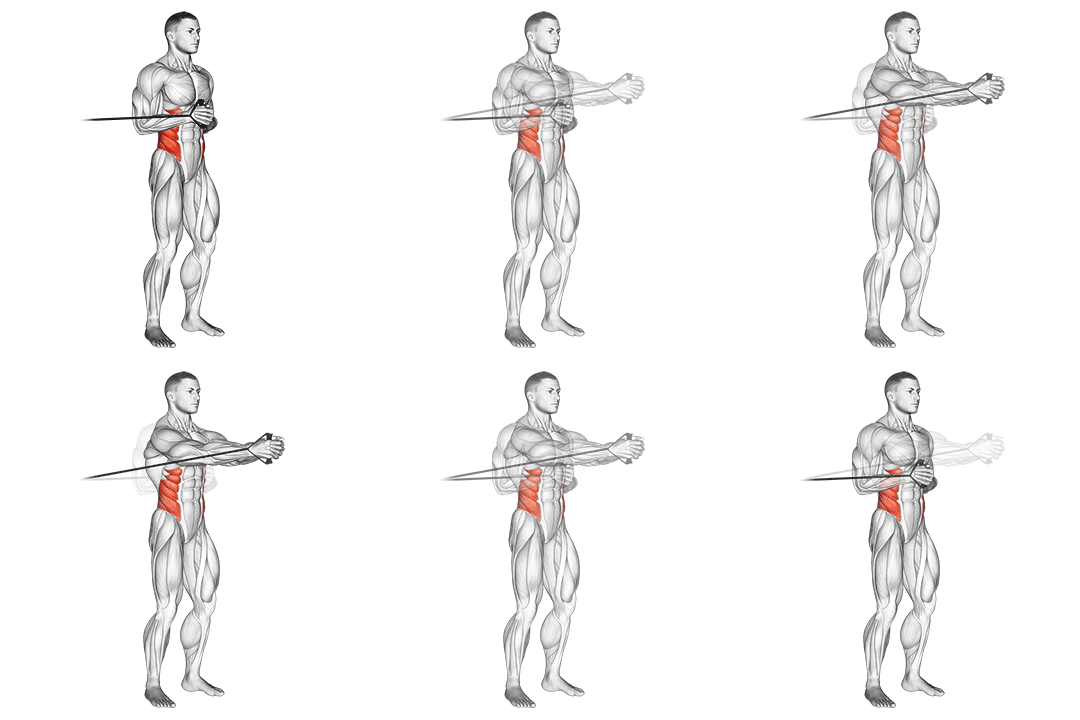
Band Assisted Wheel Rollerout
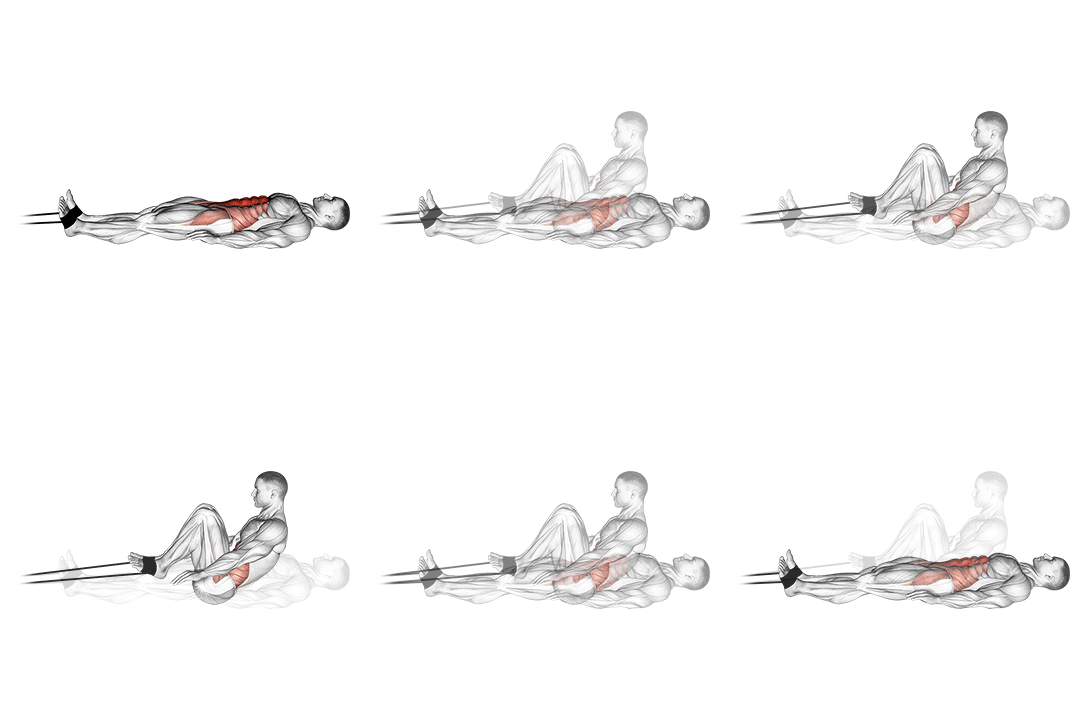
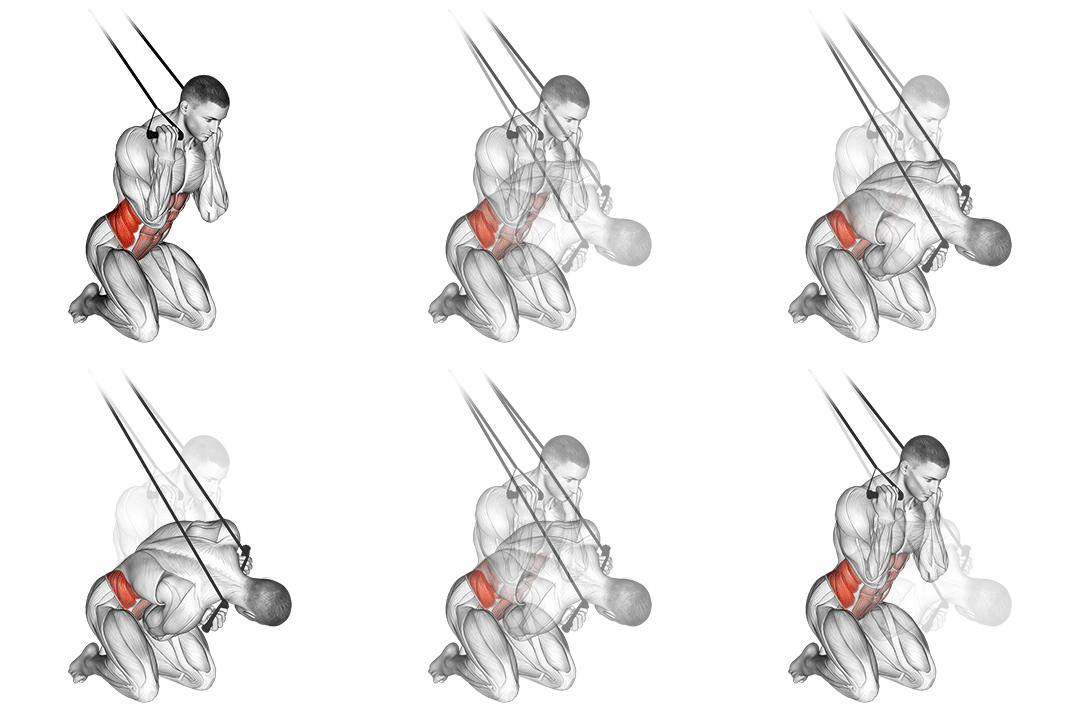
Band Jack Knife Sit-up
Head-to-Head Comparison
| Attribute | Band Assisted Wheel Rollerout | Band Jack Knife Sit-up |
|---|---|---|
| Target Muscle |
Abs
|
Abs
|
| Body Part |
Waist
|
Waist
|
| Equipment |
Band
|
Band
|
| Difficulty |
Intermediate
|
Advanced
|
| Movement Type |
Isolation
|
Isolation
|
| Secondary Muscles |
1
|
1
|
Secondary Muscles Activated
Band Assisted Wheel Rollerout
Band Jack Knife Sit-up
Visual Comparison
Overview
Band Assisted Wheel Rollerout vs Band Jack Knife Sit-up — if you're choosing between two tough band-based core moves, you're in the right place. You'll get clear, actionable comparisons of muscle activation, biomechanics, equipment needs, technique cues, and which exercise fits your goal: core strength, muscle growth, or home training. I'll point out specific joint angles, rep ranges, and progressions so you can pick the exercise that gives you measurable progress and stays safe as you train.
Key Differences
- Difficulty levels differ: Band Assisted Wheel Rollerout is intermediate, while Band Jack Knife Sit-up is advanced.
- Both exercises target the Abs using Band. The main differences are in their movement patterns and muscle activation angles.
Pros & Cons
Band Assisted Wheel Rollerout
+ Pros
- High anti-extension demand builds durable anterior core strength and resistance to spinal hyperextension
- Easy to scale assistance via band tension or shorter range-of-motion
- Transfers well to anti-extension sport tasks (e.g., overhead pressing, throwing)
- Allows strength-focused loading with low rep ranges (3–8) or tempo work
− Cons
- Requires an ab wheel or anchored band setup for ideal mechanics
- Can overload shoulders if you reach too far without scapular control
- Risks lumbar hyperextension if core brace fails at end ranges
Band Jack Knife Sit-up
+ Pros
- Minimal equipment — you only need a band and floor space
- Strong concentric-eccentric stimulus for rectus abdominis and time-under-tension for hypertrophy
- Great for higher-rep metabolic core work (10–20 reps)
- Simple to modify resistance by changing band length or thickness
− Cons
- High hip-flexor involvement can limit pure abdominal focus
- Greater compressive load on the lumbar spine when performed aggressively
- Technically demanding — coordination between hip and spine flexion often limits reps
When Each Exercise Wins
The jack knife produces repeated concentric-eccentric contractions and longer time under tension across the rectus abdominis and obliques (10–20 rep ranges), which favors hypertrophy when you control tempo and increase band resistance.
Rollouts tax anti-extension strength and allow low-rep heavy stimulus (3–8 reps) and progressive overload through reduced band assistance, making them superior for building core strength and stability.
With band assistance and short ranges, rollerouts are easier to scale and teach core bracing and neutral spine under load, whereas jack knives require coordinated hip-spine timing that beginners often lack.
The jack knife needs only a band and floor space, so it’s simpler to perform at home without extra tools like an ab wheel or anchor points.
Frequently Asked Questions
Can I do both Band Assisted Wheel Rollerout and Band Jack Knife Sit-up in the same workout?
Yes. Pair them strategically: use rollerouts early in a session for low-rep strength (3–6 reps) and follow with jack knives for hypertrophy or volume (10–15 reps). Space them across 3–4 sets each and monitor fatigue to maintain technique.
Which exercise is better for beginners?
Band Assisted Wheel Rollerout is generally more beginner-friendly because you can scale assistance and limit range-of-motion while teaching anti-extension bracing. Start with partial rollouts and progress range before attempting jack knives.
How do the muscle activation patterns differ?
Rollouts emphasize isometric and eccentric control of the rectus and transverse abdominis against an extension torque (anti-extension). Jack knives produce concentric-eccentric contractions of the rectus with heavy hip-flexor recruitment, so the load shifts from sustained stabilization to dynamic shortening.
Can Band Jack Knife Sit-up replace Band Assisted Wheel Rollerout?
Not perfectly. If your goal is anti-extension core strength and transfer to heavier lifts, the jack knife won’t replicate the isometric resistance demands of a rollout. For hypertrophy or limited-equipment sessions, the jack knife can substitute effectively.
Expert Verdict
Use the Band Assisted Wheel Rollerout when your priority is anti-extension core strength, transfer to overhead or loaded lifts, and progressive strength overload. Work in low-to-moderate reps (3–8) with strict bracing and controlled range; reduce band assistance slowly. Choose the Band Jack Knife Sit-up when you want higher time under tension and focused rectus hypertrophy in 10–20 rep ranges, or when equipment is limited. For safety, always cue neutral spine, brace through the transverse abdominis, and limit end-range lumbar flexion — prefer the exercise that matches your goal: strength and stability (rollerout) or muscular development and accessibility (jack knife).
Also Compare
More comparisons with Band Assisted Wheel Rollerout
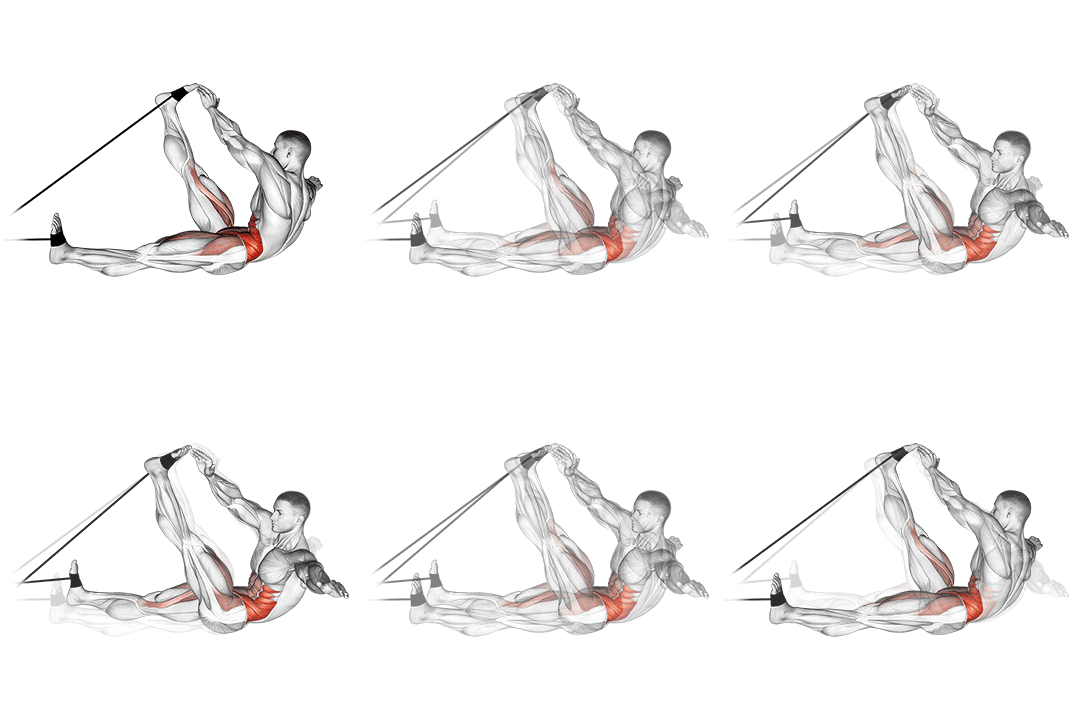
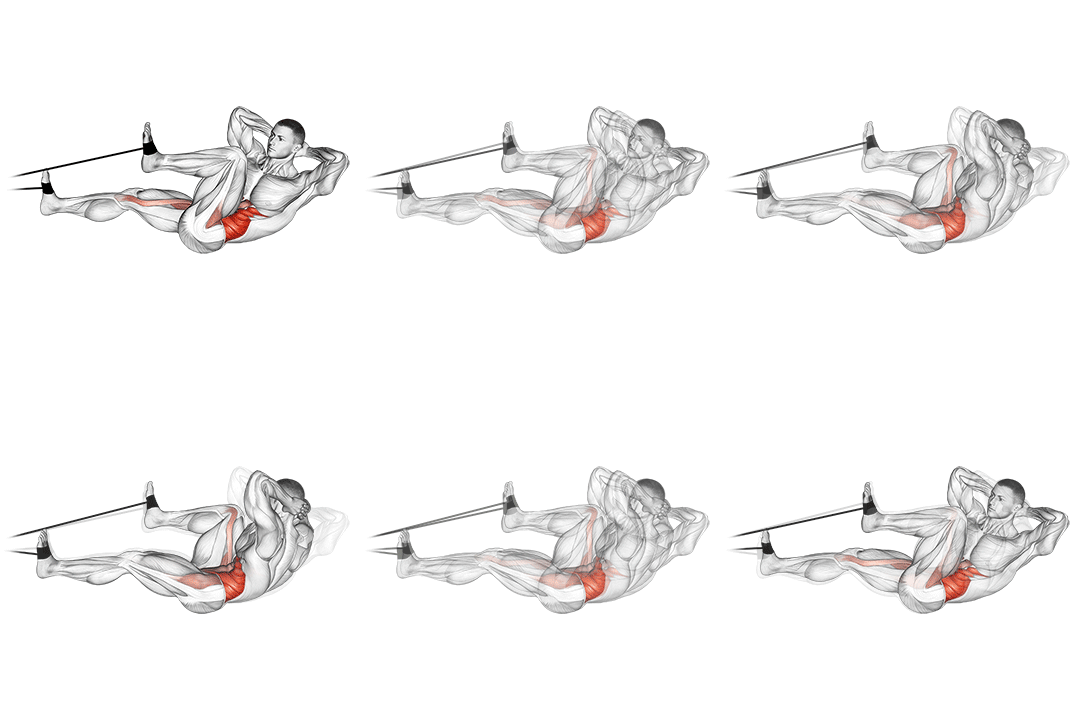
More comparisons with Band Jack Knife Sit-up
Compare More Exercises
Use our free comparison tool to analyze any two exercises head-to-head.
Compare Exercises