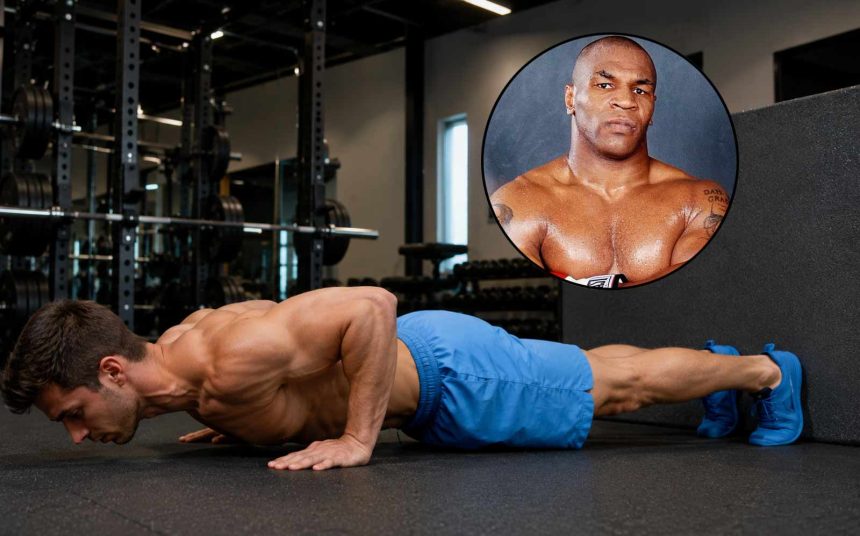
Regular push-ups are great until they are not. Once you can cruise through clean sets of 25 or 30, the exercise can turn into a rep-count game: more reps, more boredom, more sloppy lockouts, and not much new stimulus for your shoulders or core.
That is where the Mike Tyson push-up earns its place. It keeps the simplicity of a bodyweight push-up, then adds a wall-braced rock-back that forces your shoulders, triceps, chest, abs, quads, and breathing to work together. One good rep feels like a push-up, a loaded plank, and a short conditioning burst rolled into one.
This article gives you the workout version: a 10-minute test, a 20-minute circuit, a 4-week progression, regressions, advanced finishers, and clear skip rules. If you need the step-by-step form tutorial and our original 30-day experience first, start with our Mike Tyson push-up guide and results, then come back here for the programming.
Why Regular Push-Ups Stop Being Enough
Regular push-ups stop being enough when the limiting factor becomes patience instead of strength. If you can do long sets without losing position, more reps may still build endurance, but they usually stop feeling like a meaningful shoulder, chest, or core challenge.
The first sign is that your set quality starts drifting. You chase 40 or 50 reps, but your hips sag, your elbows flare, your head drops, and the last half of the set looks nothing like the first half. That is not progression. That is just fatigue with a nicer name.
The second sign is that your heart rate barely moves until the set gets very long. If you want a bodyweight movement that feels athletic, a standard push-up often needs help from tempo, pauses, deficit work, bands, rings, or a harder variation.
Mike Tyson push-ups solve that problem without equipment. The wall-braced rock changes the path of the rep, increases time under tension, and makes your trunk work harder to keep the movement clean. It is not magic, but it is a much better use of five to 20 minutes than another loose max-rep push-up set.
What Mike Tyson Push-Ups Change Mechanically
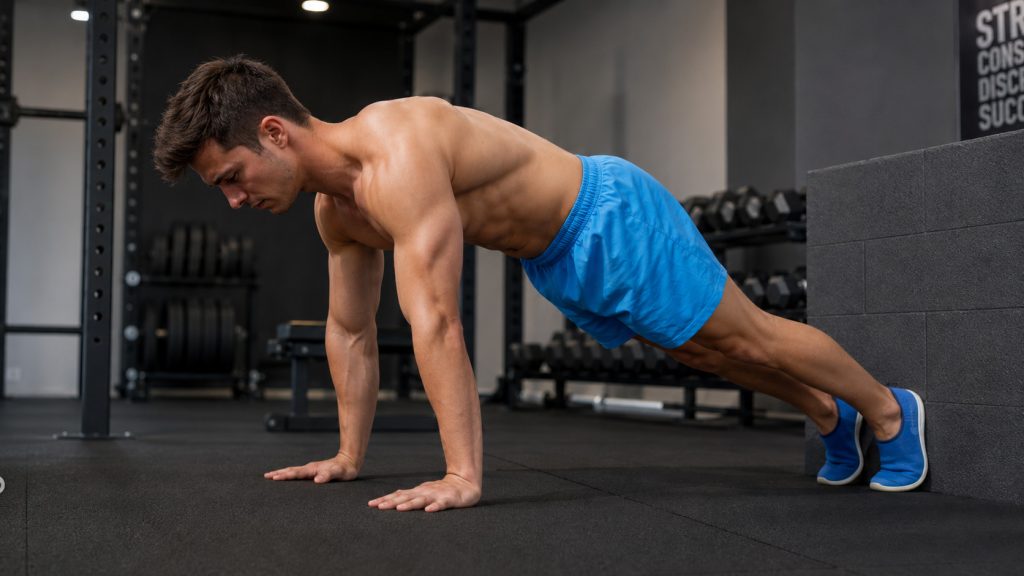
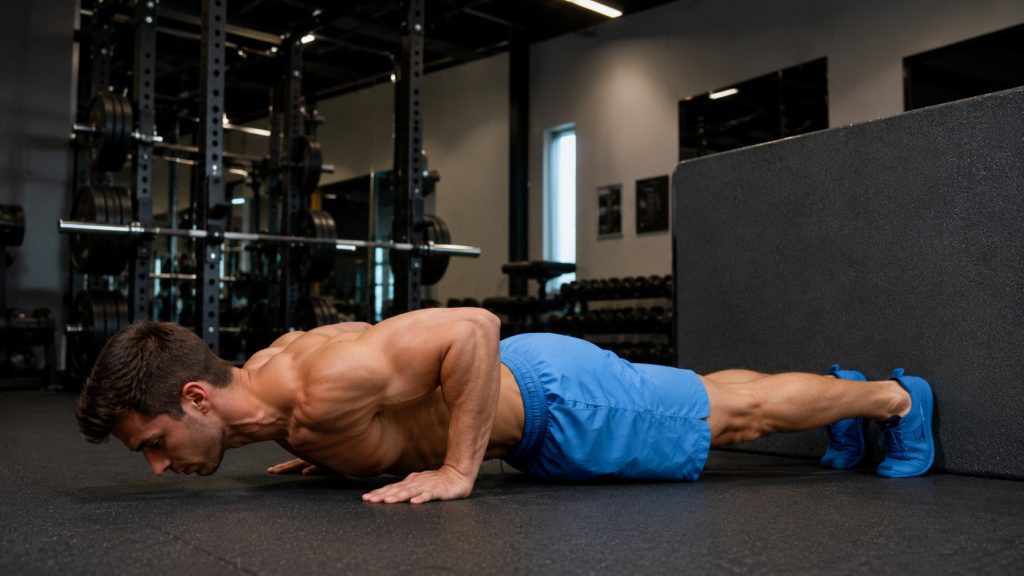
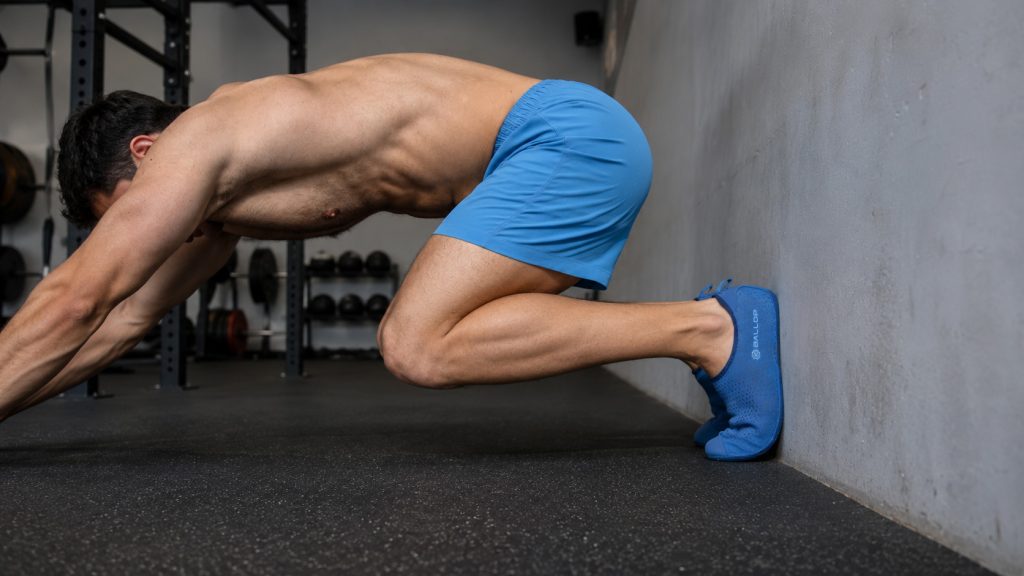
A Mike Tyson push-up changes the exercise by adding a backward rock before the forward press. Your feet stay at the wall-floor corner, your hips travel back toward your heels, your knees hover close to the floor, and then you glide forward into the push-up.
That extra movement changes the job. A regular push-up mostly asks you to lower and press from a plank. The Tyson version asks you to control a moving plank, keep wall contact, brace through the abs and glutes, and transition from a crouched loaded position into a push-up without dumping into the shoulders.
Push-up research supports the bigger idea here: small changes in body angle, support, hand position, and setup can change the demand on the upper body and trunk. Freeman and colleagues reported different muscle and spine-loading patterns across push-up variations, while Snarr and colleagues found that unstable or suspended push-up setups can increase muscle activation demands compared with a traditional push-up. The takeaway for this workout is simple: the variation matters, and the cleaner your position, the more useful the exercise becomes.
Use this as a shoulder and core endurance builder, not as a complete shoulder hypertrophy plan. It can help create the “3D shoulder” look by building pressing endurance and front-delt/stabilizer control, but you still need pulling, rear-delt work, lateral-raise patterns, and overhead or pike pressing if physique is the goal.

Who Should Try This Workout?
This workout is best for lifters who already own clean regular push-ups. A good entry point is 15 to 20 controlled reps without sagging hips, flared elbows, shrugged shoulders, or wrist pain.
You are a good fit if you want:
- A harder no-equipment push-up variation
- A short workout that makes your shoulders and core work fast
- A bodyweight finisher that raises your heart rate without burpees
- A push-up drill that rewards rhythm, control, and trunk stiffness
- A movement you can pair with rows, squats, planks, or boxing-style conditioning
Do not use this as your only upper-body exercise. The smartest setup is to treat Mike Tyson push-ups as the main push pattern for the day, then balance them with pulling work such as rows, pull-ups, band pull-aparts, or rear-delt work.
Who Should Skip Mike Tyson Push-Ups?
Skip Mike Tyson push-ups for now if the movement causes sharp wrist, elbow, shoulder, or low-back pain. Also skip them if regular push-ups already break down, because the wall-supported rock adds coordination and shoulder demand.
Use a regression instead if you have:
- Current wrist pain or poor wrist extension tolerance
- Shoulder impingement symptoms or pain at the bottom of push-ups
- Elbow pain that worsens with high-rep pressing
- Low-back sagging during planks or regular push-ups
- Poor ankle or toe tolerance against the wall-floor corner
The rule is simple: if you cannot keep the feet connected, knees low, core braced, and elbows controlled, you are not ready to make it a conditioning test. Use the beginner regressions below and build the pattern first.
The 5-Point Form Checklist
A good Mike Tyson push-up looks smooth. Keep your feet fixed at the wall-floor corner, rock your hips back under control, glide forward into the push-up, then press up and back in one connected motion.
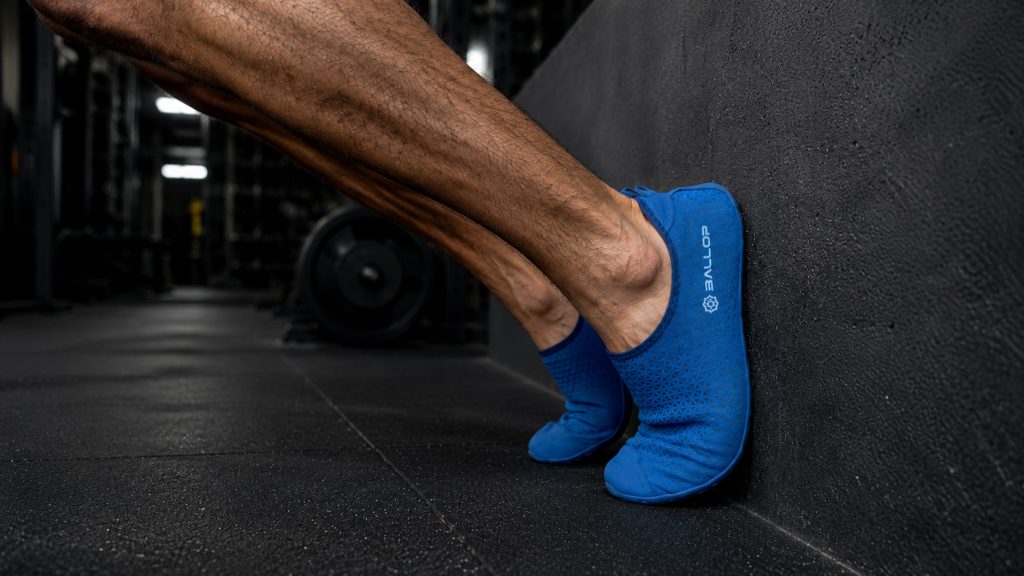
- Feet stay connected: Keep the forefoot on the floor and the heels/back of the shoes touching the wall. If your feet slide, reset.
- Hands stay under the shoulders: Set your palms under or slightly wider than your shoulders, with the fingers spread.
- Hips move back first: Sit toward your heels while keeping the knees close to the floor and the shins almost parallel.
- Elbows stay controlled: Keep them about 30 to 45 degrees from your torso instead of flaring wide.
- Press up and back together: Do not do a push-up, pause, then shove backward. Make it one connected rep.

The 10-Minute Mike Tyson Push-Up Workout
The best short Mike Tyson push-up workout is a 10-minute EMOM: every minute on the minute, perform a clean set, then rest for whatever time remains. This makes the workout hard without letting the form fall apart.
Workout: 10 minutes EMOM
| Level | Reps Each Minute | Total Reps | Goal |
|---|---|---|---|
| Beginner regression | 4 to 6 incline reps | 40 to 60 | Learn rhythm without shoulder collapse |
| Intermediate | 5 to 8 floor reps | 50 to 80 | Build shoulder and core endurance |
| Advanced | 8 to 12 floor reps | 80 to 120 | Turn the move into a conditioning test |
Pick a rep target that leaves two good reps in reserve during the first five minutes. If minute six already looks ugly, you started too high. Drop the target, keep the quality, and earn the harder version next week.
The 20-Minute Shoulder, Core, and Conditioning Circuit
This 20-minute circuit turns one push-up variation into a complete bodyweight session. The Mike Tyson push-up is the main event, but the rows, squats, and trunk work keep the session balanced.
Perform four rounds. Rest only as needed to keep clean technique.
| Exercise | Reps or Time | Coaching Target |
|---|---|---|
| Mike Tyson push-up | 6 to 12 reps | Smooth up-and-back rhythm |
| Inverted row, band row, or towel row | 8 to 15 reps | Balance the pressing volume |
| Bodyweight squat | 15 to 25 reps | Keep the workout athletic without pretending the push-up is leg day |
| Hollow-body hold or plank | 20 to 40 seconds | Lock in the trunk position you need during the push-up |
| Mountain climber | 30 seconds | Finish with conditioning after the quality reps are done |
If you want a broader no-equipment plan, pair this with our bodyweight shoulder exercises guide or the 12-week bodyweight training plan.
The 4-Week Mike Tyson Push-Up Progression
Progress Mike Tyson push-ups by adding reps first, density second, and difficulty last. Do not add all three at once. A cleaner four-week plan beats a random daily max-rep challenge.
| Week | Sessions | Main Assignment | Progression Rule |
|---|---|---|---|
| 1 | 2 | 5 sets of 5 to 8 reps | Stop each set before form slows |
| 2 | 2 to 3 | 8-minute EMOM, 5 to 8 reps per minute | Add one rep per minute only if every rep matches |
| 3 | 3 | 10-minute EMOM or 4-round circuit | Add a minute or round, not max-rep chaos |
| 4 | 2 to 3 | Test: max clean reps in 2 minutes | Count only reps that keep foot contact and elbow control |
Retest with the same standards you used on day one. A good result is not just more reps. It is more clean reps, less shoulder panic, better breathing control, and fewer breaks in the movement.
Beginner Regressions That Still Build the Pattern
If the floor version is too hard, regress the leverage without changing the movement idea. The goal is to practice the rock-back-to-forward pattern while your shoulders, wrists, and trunk adapt.
- Incline Mike Tyson push-up: Hands on a bench or box, feet at the wall-floor corner. Best first step.
- Partial-range Mike Tyson push-up: Rock back and forward, then do a shallow push-up. Increase depth gradually.
- Wall-supported push-up rock: Skip the push-up and practice the back-to-forward rhythm for 10 to 15 reps.
- Tempo regular push-up: Use a three-second lowering phase to build strength before returning to the Tyson version.
Beginners should chase the movement before fatigue. Once you can perform three sets of 10 incline reps with consistent rhythm, the floor version usually becomes easier to learn.
Advanced Finishers for Stronger Athletes
Advanced lifters can make Mike Tyson push-ups harder by changing density, tempo, or pairings. Add intensity only after the base version is clean, because this exercise already stresses the shoulders and wrists more than many regular push-up variations.
Finisher 1: The 5-Minute Density Test
Set a timer for five minutes and complete as many clean reps as possible. Rest when form drops. Record total reps and your largest unbroken set. Next time, beat one number, not both.
Finisher 2: Tyson Push-Up Plus Hollow Hold
Alternate 8 to 12 Mike Tyson push-ups with a 20-second hollow hold for five rounds. This keeps the core honest and exposes athletes who can press but cannot brace.
Finisher 3: Boxing-Round Format
Perform 20 seconds of Mike Tyson push-ups, 20 seconds of shadow boxing, and 20 seconds of rest for three to five rounds. This gives you a boxing-flavored conditioning hit without pretending the push-up alone builds punching power.
For more athlete-style bodyweight conditioning, see our Mike Tyson bodyweight circuit and Mike Tyson workout and diet plan.
Common Mistakes That Kill the Exercise
The most common Mike Tyson push-up mistakes are losing foot contact, rushing the rock, flaring the elbows, sagging the hips, and treating every set like a max-rep test.
- Letting the feet climb or slide: The basic version should use the wall-floor corner. If the feet drift, reset.
- Exploding forward too hard: The forward drive should be athletic, not reckless. Control the shoulder angle.
- Flaring the elbows: Wide elbows can irritate the shoulders and make the press less efficient.
- Sagging the low back: Brace like a plank before you glide forward.
- Turning it into cardio too soon: If you only have five good reps, it is a strength-skill drill. It becomes conditioning when you can repeat clean sets under fatigue.
What Results Can You Expect?
Mike Tyson push-ups can improve upper-body endurance, shoulder control, trunk stiffness, and conditioning, especially if you progress them over several weeks instead of testing max reps every day.
Expect your shoulders, triceps, chest, and upper back to fatigue first. Your abs and glutes work to hold position. Your quads will help during the rock, but this is not a replacement for squats, lunges, or sled pushes.
The honest advantage is efficiency. This movement gives you a lot from one exercise, but it still needs smart programming. Use it as a push-up upgrade, a circuit centerpiece, or a finisher. Do not force it to become your entire training plan.
Best Weekly Placement
Most lifters should do Mike Tyson push-ups two or three times per week. Put them early in a bodyweight push session if strength-skill is the goal, or near the end as a conditioning finisher if endurance is the goal.
| Goal | Best Placement | Weekly Dose |
|---|---|---|
| Strength skill | After warm-up, before other push-up work | 3 to 5 sets, 2 times per week |
| Shoulder/core endurance | Main bodyweight push exercise | 8 to 12 total work sets per week |
| Conditioning | End of workout | 1 to 2 finishers per week |
Balance the pressing with rows, pull-ups, band pull-aparts, or rear-delt work. If your shoulders feel cranky after two sessions, the answer is not more grit. Reduce volume, improve the rock, and add pulling volume.
Bottom Line
Regular push-ups are still useful, but they are not always the best tool once you outgrow them. Mike Tyson push-ups make one bodyweight move feel like a shoulder, core, and conditioning test.
Start with the 10-minute EMOM. Keep two clean reps in reserve. Build over four weeks. Once the movement feels smooth, use the 20-minute circuit when you want a tougher no-equipment session that regular push-ups cannot match.
FAQs
Are Mike Tyson push-ups better than regular push-ups?
Mike Tyson push-ups are better when you want a harder, more dynamic push-up variation that challenges shoulders, triceps, core, coordination, and conditioning. Regular push-ups are better for beginners, higher-quality volume, and simpler chest-focused training.
Do Mike Tyson push-ups build 3D shoulders?
They can help build shoulder endurance and front-delt/stabilizer control, but they should not be your only shoulder exercise. Pair them with pike push-ups, lateral-raise patterns, rear-delt work, and rows if your goal is complete shoulder development.
How many Mike Tyson push-ups should I do?
Start with 3 to 5 sets of 5 to 8 clean reps. Once you can keep form consistent, use a 10-minute EMOM with 5 to 8 reps each minute. Advanced athletes can push toward 80 to 120 total reps if technique holds.
Can beginners do Mike Tyson push-ups?
Most beginners should start with incline Mike Tyson push-ups or regular push-ups first. The wall-supported rock adds coordination and shoulder demand, so the full floor version is better for people who already own clean standard push-ups.
Are Mike Tyson push-ups good for boxing?
They can support boxing conditioning by training shoulder endurance, trunk stiffness, and repeated upper-body effort. They do not replace bag work, footwork, rotational power drills, or explosive push-up variations. Use them as one tool, not the whole boxing plan.
Sources
- Freeman, S., Karpowicz, A., Gray, J., & McGill, S. (2006). Quantifying muscle patterns and spine load during various forms of the push-up. Medicine & Science in Sports & Exercise, 38(3), 570-577. DOI: 10.1249/01.mss.0000189317.08635.1b. PMID: 16540847.
- Snarr, R. L., Esco, M. R., Witte, E. V., Jenkins, C. T., & Brannan, R. M. (2013). Electromyographic comparison of traditional and suspension push-ups. Journal of Human Kinetics. PMID: 24511343.
- Schoenfeld, B. J., Grgic, J., Van Every, D. W., & Plotkin, D. L. (2021). Loading recommendations for muscle strength, hypertrophy, and local endurance: A re-examination of the repetition continuum. Sports, 9(2), 32. DOI: 10.3390/sports9020032. PMID: 33671664.
- Dun, Y., Smith, J. R., Liu, S., & Olson, T. P. (2019). High-intensity interval training in cardiac rehabilitation. Clinics in Geriatric Medicine, 35(4), 469-487. DOI: 10.1016/j.cger.2019.07.011. PMID: 31543179.