



The Texas Method is a three-day intermediate strength program built around one demanding volume session, one lighter recovery session, and one heavy intensity session each week. It fits lifters who have exhausted simple workout-to-workout progression but can still add weight on a weekly schedule.
The basic plan looks simple on paper. Monday builds enough training stress to drive adaptation, Wednesday lets fatigue recede without taking the week off, and Friday tests that adaptation with a new or near-new five-rep maximum. The difficult part is choosing loads that make Friday productive instead of turning Monday into a weekly recovery crisis.
This guide gives you the original framework, a two-week press rotation, a worked loading example, and specific adjustments for missed reps. If you can still add weight every session, start with a simpler 5×5 strength program. If progress has shifted from daily to weekly, the Texas Method becomes a logical next step.
How the Texas Method Works
The Texas Method organizes training stress across a week. Volume day supplies most of the workload, recovery day keeps the lifts practiced at lower stress, and intensity day concentrates the heaviest work into one top set. Mark Rippetoe’s original description uses the squat, bench press, standing press, deadlift, chin-up, back extension or glute-ham raise, and an Olympic-lift variation.
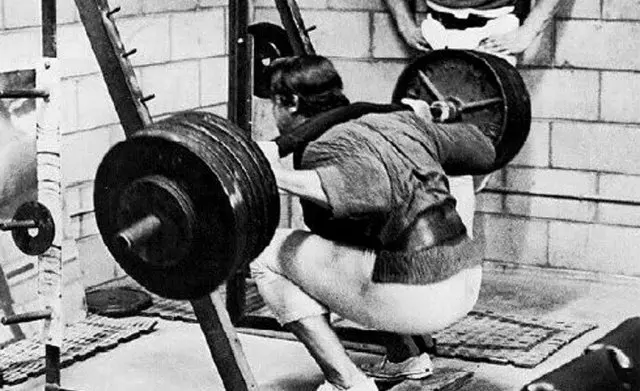
This is an intermediate program in the training sense. An intermediate lifter needs roughly a week to recover from enough training stress to produce another performance increase. Training age alone does not determine readiness. A person with several years in the gym may still benefit from a simpler progression if their current lifts are increasing from session to session.
Canonical Three-Day Texas Method Program
Train on three nonconsecutive days, such as Monday, Wednesday, and Friday. The weekday names can change, but keep a rest day between sessions and protect the longer break after intensity day.
| Session | Canonical work | Loading target | Purpose |
|---|---|---|---|
| Day 1: Volume | Squat 5 x 5 Bench press or standing press 5 x 5 Deadlift 1 x 5 |
Squat and upper-body lift at about 90% of the current 5RM. Use one heavy deadlift set; the original program does not assign it a universal percentage. | Accumulate enough quality work to drive the week’s adaptation. |
| Day 2: Recovery | Squat 2 x 5 Opposite upper-body lift 3 x 5 Chin-ups 3 sets to failure in the original template Back extensions or glute-ham raises up to 5 x 10 |
Squat at 80% of Monday’s work weight. Keep the upper-body lift lighter than its previous 5 x 5 exposure. Controlled non-failure chin-up sets are a practical modification when failure work disrupts recovery. | Practice the lifts and maintain training rhythm while allowing fatigue to drop. |
| Day 3: Intensity | Squat 1 x 5 Same upper-body lift used on Day 1 for 1 x 5 Power clean 5 x 3 or power snatch 6 x 2 |
A new 5RM or a load within about 2% of it, with sound technique. Friday’s squat and press or bench should be heavier than Monday’s work weight. | Express the strength developed across the week and set the next weekly target. |
The 90% figure is a starting point, not a command to force a load you cannot complete. Rippetoe’s practical test is completion quality: if Monday’s five sets require failed reps or more than roughly eight to ten minutes between sets, the load is too heavy for productive volume work.
Two-Week Bench and Press Rotation
The bench press and standing barbell press alternate so each lift receives a volume exposure and an intensity exposure in the same week. The other lift appears on recovery day.
| Week | Day 1: Volume | Day 2: Recovery | Day 3: Intensity |
|---|---|---|---|
| Week A | Bench press 5 x 5 | Standing press 3 x 5, light | Bench press 1 x 5 |
| Week B | Standing press 5 x 5 | Bench press 3 x 5, light | Standing press 1 x 5 |
Do not calculate Wednesday’s press from Monday’s bench weight, or Wednesday’s bench from Monday’s press weight. They are different lifts. Base the recovery load on that lift’s previous successful exposure, then keep it easy enough to preserve recovery for Friday.
Who the Texas Method Fits
The program works best for a technically competent post-novice whose strength can still improve from week to week. It also demands a predictable schedule and enough recovery capacity to handle a long 5 x 5 session.
- Good fit: You can no longer add weight every workout, but performance records can still improve on a roughly weekly schedule.
- Good fit: Your priority is barbell strength in the squat, bench press, standing press, and deadlift.
- Good fit: You can perform the core lifts consistently and have access to a rack, bench, barbell, and plates.
- Poor fit: You are a beginner who can still progress with a simpler linear plan.
- Poor fit: Your sport, job, conditioning work, or calorie deficit already creates substantial fatigue.
- Poor fit: You mainly want bodybuilding volume, exercise variety, or balanced isolation work for every muscle group.
- Poor fit: You need more than a week to recover and improve, which calls for a more advanced loading schedule.
Age does not create an automatic cutoff. Recovery history matters more. Many older recreational lifters find a lower-volume heavy-light-medium setup easier to sustain, especially when sleep, work stress, or joint tolerance limits Monday’s workload.
Choosing Your Starting Weights
Build the first week from successful training, not from a failed max attempt. Your initial Friday target should be a five-rep load you can complete with stable technique, usually near your most recent successful five-rep performance. A lifter leaving a 3 x 5 novice progression can use the last fully completed workout as the anchor.
Use these steps:
- Choose Friday’s squat and upper-body target. Start with a repeatable 5RM or a small increase over your last clean five-rep set.
- Set Monday at about 90% of that 5RM. Round to plates you can load and adjust downward if five sets would require grinding or excessive rest.
- Set Wednesday’s squat at 80% of Monday. The recovery session should feel controlled from the first rep to the last.
- Choose the opposite upper-body lift conservatively. Use its recent training history, not the weight from Monday’s different lift.
- Program one heavy deadlift set of five. Choose a load you can complete after squats without losing position. The original template does not require 90% of a deadlift 5RM.
Worked Squat Example
Assume your current clean squat 5RM is 315 pounds (143 kilograms).
| Day | Calculation | Practical load |
|---|---|---|
| Monday volume | 315 x 0.90 = 283.5 lb | 285 lb for 5 x 5 |
| Wednesday recovery | 285 x 0.80 = 228 lb | 225 or 230 lb for 2 x 5 |
| Friday intensity | Current 5RM plus a manageable increase | 315 to 320 lb for 1 x 5 |
Choose 315 again if the previous set was slow or technically uneven. Choose 320 only when recent training supports it. A calculated percentage cannot see your bar speed, depth, sleep, or accumulated fatigue.
Weekly Progression
Friday is the main progression point. Attempt a small five-rep record when the previous week was clean and Monday’s work was completed without turning every set into a maximum effort. The cited sources prescribe no universal weekly increment, so use the smallest increase that preserves a technically sound set.
Monday usually rises after Friday confirms the new strength level. Recalculate from the new 5RM or add the smallest sensible load while preserving completion quality. Add weight to the deadlift set when the previous week remained technically sound.
Progress does not require training to muscular failure. A systematic review of failure and non-failure training found no consistent strength advantage from taking every set to failure. Leave room for repeatable technique, especially on Monday’s high-volume squat and press work.
Missed Reps and Stall Decisions
One missed set is information, not a reason to rebuild the entire program. Identify where the week failed before changing volume, intensity, and assistance work at the same time.
| Problem | Likely issue | Next adjustment |
|---|---|---|
| Monday 5 x 5 is incomplete | The volume load is too high, rests are too short, or fatigue is already elevated. | Repeat with better rest if the miss was logistical. Otherwise reduce Monday by 5% to 10% and rebuild. |
| Monday succeeds, Friday misses once | The target may be too aggressive, or the week included unusual fatigue. | Do not raise Monday’s workload. Choose a smaller Friday target the next week. This is a practical coaching adjustment, not a fixed rule from the original template. |
| Friday misses repeatedly | Monday may be suppressing recovery, or weekly five-rep progression has run its course. | Reduce Monday from 5 x 5 to 4 x 5 or 3 x 5, or lower its percentage to roughly 80% to 85%. Change one variable and reassess. |
| Deadlift stalls while squat progresses | Monday’s combined squat and pull stress may be too high. | Hold the deadlift load or use a smaller increase before adding sets. Treat this as a coaching adjustment, since the canonical template gives no universal deadlift-stall rule. |
| Several lifts regress across repeated weeks | Recovery, illness, calorie intake, schedule, or program fit may be limiting performance. | Review those factors first. A deload or reset can be an individual coaching choice. Move to a different intermediate structure if weekly adaptation does not return. |
Later-stage intensity work can move from a five-rep set to triples, doubles, and singles. Andy Baker’s intensity-day guidance explains how these rep ranges can be organized after weekly fives stop progressing. That is a progression beyond the basic template, not the first response to one difficult week. When repeated adjustments fail and good performances require longer than seven days, the lifter has outgrown the standard Texas Method.
Technique Prerequisites for the Main Lifts
The Texas Method adds stress to familiar lifts; it is a poor place to learn several complex barbell movements at once. Warm up with progressively heavier sets that prepare you for the working load without tiring you. Use the same setup and range of motion across weeks so the logbook reflects real strength changes.
Back Squat
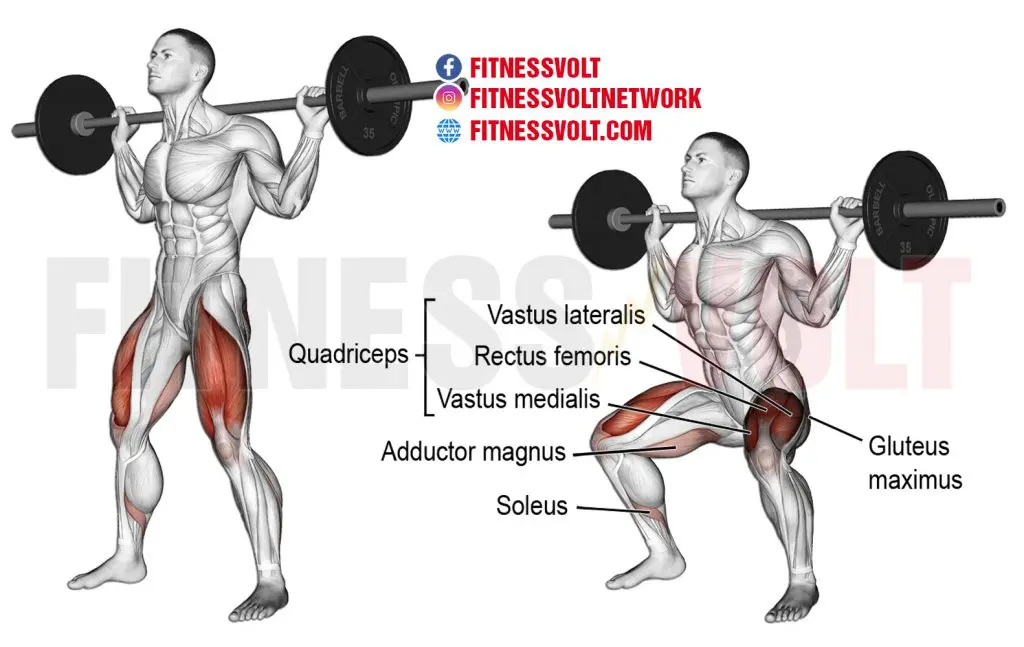
Brace before each rep, keep the bar balanced over the midfoot, and use a depth you can repeat under load. Review the full barbell squat guide before starting if your stance, depth, or bar path changes from set to set.
Bench Press
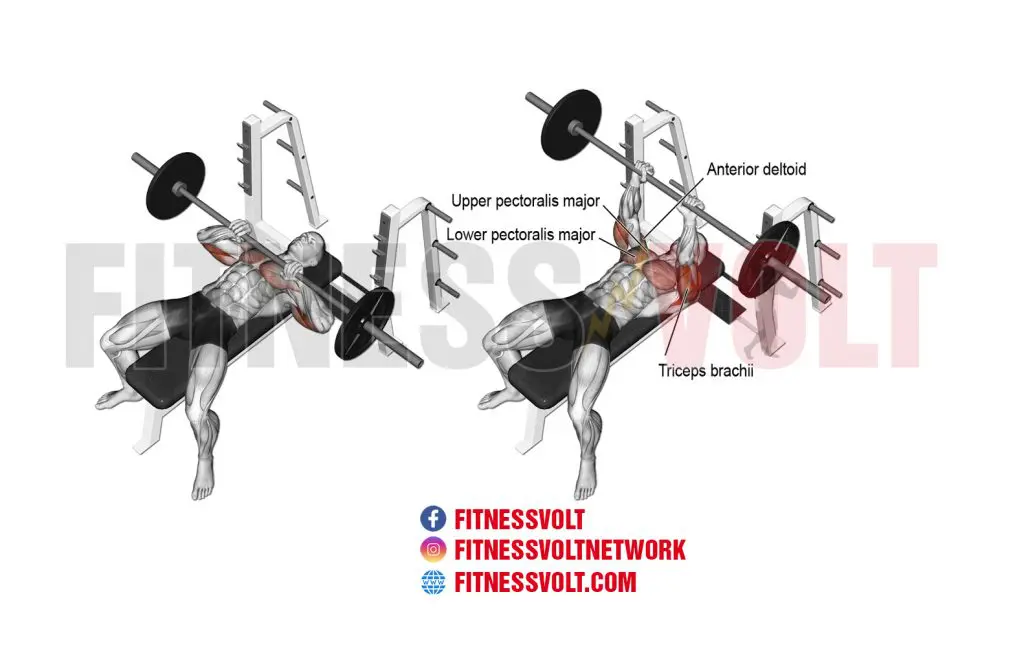
Use a stable upper back, planted feet, stacked wrists, and rack safeties or a competent spotter. The close-grip press shown below is an archive technique example. The canonical Texas Method calls for the standard bench press, so treat close-grip work as a deliberate substitution rather than the default.
Standing Press
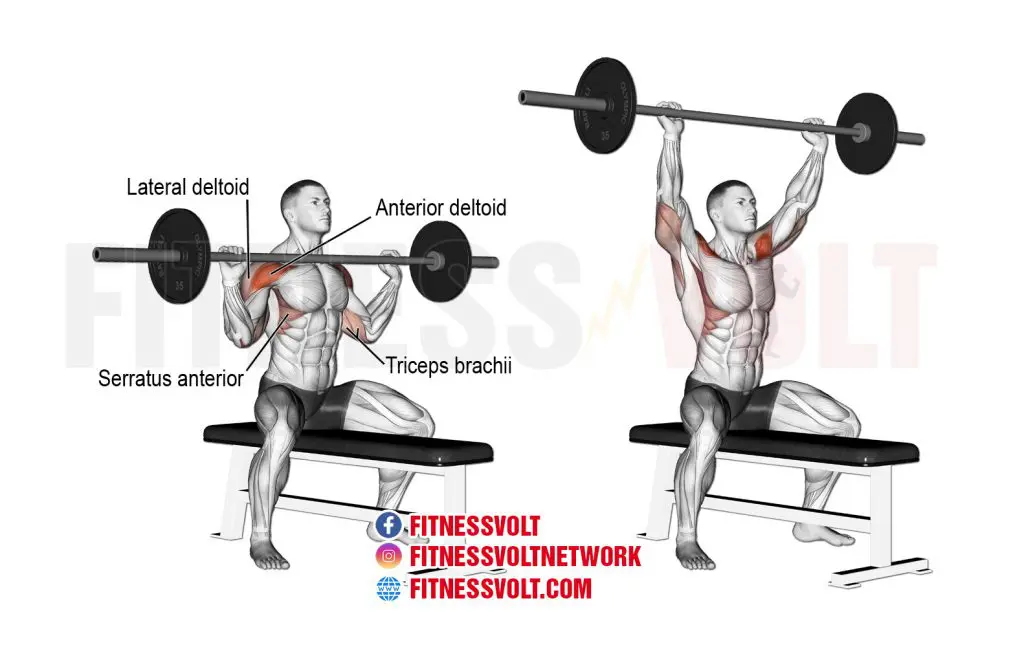
The original program uses a standing barbell press. Brace the trunk, keep the bar close to the face, and finish with the bar balanced over the middle of the foot. The archive image below shows a seated press variation; use our standing barbell overhead press tutorial for the lift prescribed by this program.
Deadlift
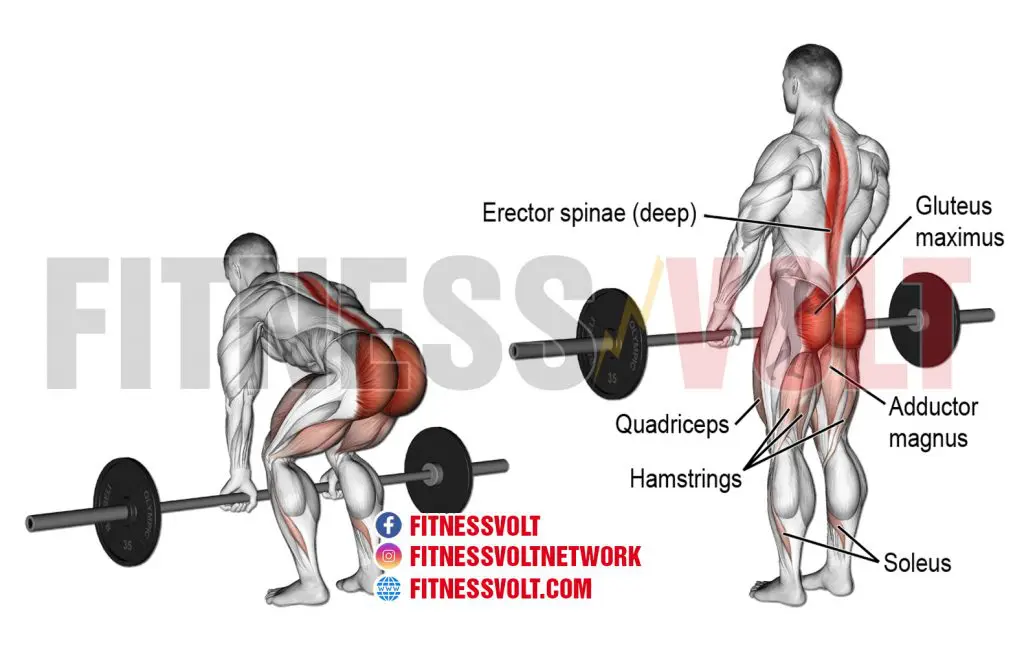
Set the bar over the midfoot, brace before it leaves the floor, and keep it close through lockout. Monday’s single work set comes after substantial squat volume, so load it according to the position you can maintain that day. The complete barbell deadlift guide covers setup and bar path in more detail.
Chin-Ups and Posterior-Chain Assistance
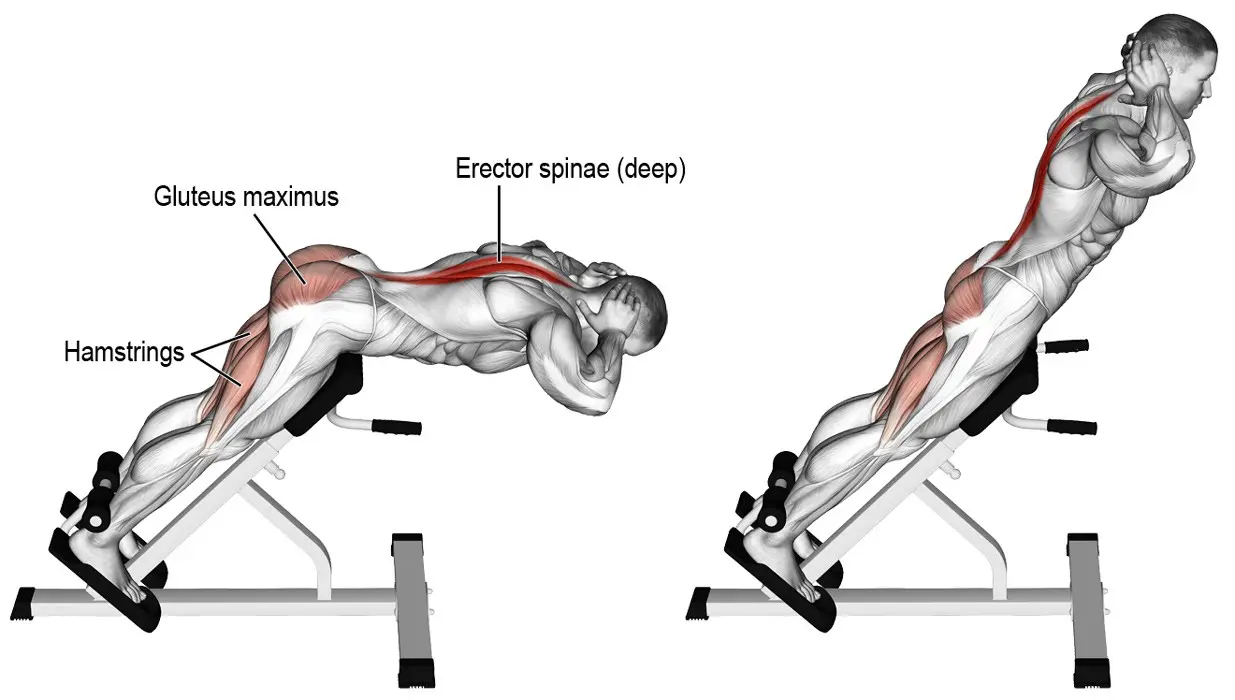
Keep assistance work subordinate to recovery. Three controlled chin-up sets are enough for many lifters. Back extensions or glute-ham raises can support the posterior chain, but five sets of ten are optional when Monday’s deadlifts or Friday’s Olympic lifts already challenge recovery.
Power cleans and power snatches require timing, mobility, and competent coaching. Learn the chosen lift before loading it for repeated triples or doubles. Lifters who cannot perform either movement safely should use a coach-approved substitution that matches their goal rather than improvising a heavy explosive exercise.
Recovery, Food, and Sleep
The program’s limiting factor is often recovery from Monday, not willingness to work harder. Protect the rest days, keep extra conditioning predictable, and avoid adding bodybuilding volume until the basic week is stable.

Eat enough total calories and protein to support your goal. A mixed meal containing carbohydrate and protein before training can be useful when sessions run long, but no special sugar, amino-acid, or supplement protocol is required for the Texas Method to work. Hydration and a meal pattern you can repeat matter more than chasing a narrow post-workout window.

Sleep needs vary, but consistently short or disrupted sleep can make Monday’s workload harder to recover from. Track sleep, appetite, soreness, motivation, and warm-up performance alongside the weights. A sudden decline across several markers supports holding or reducing the load rather than forcing a planned increase.
Supplements are optional. Creatine monohydrate has a substantial evidence base for supporting high-intensity training, while protein powder is simply a convenient way to meet protein needs. Neither one rescues a program with poorly chosen loads, inadequate food, or insufficient rest.
Safety Rules
Use rack safeties for squats and bench presses, and ask for a spotter when appropriate. Heavy sets should end when technique breaks down. Sharp pain, neurological symptoms, or persistent joint pain calls for load reduction and assessment by a qualified clinician.
Stop training and seek medical evaluation for chest pain or pressure, faintness, unusual shortness of breath, or palpitations. The American Heart Association’s resistance-training statement supports individualized screening and prescription for people with cardiovascular disease. People with cardiovascular disease or exercise-related cardiovascular symptoms should seek individualized medical guidance before beginning a demanding barbell plan.
Texas Method FAQ
Is the Texas Method for beginners?
Usually no. Beginners who can add weight every workout can progress with less complexity and less fatigue. The Texas Method becomes useful when strength gains occur on a weekly timeline.
How long should you run the Texas Method?
Run the basic version while Friday performance continues to improve and Monday remains recoverable. There is no mandatory number of weeks. Some lifters need adjustments within a few months; others can use the structure longer.
Does Monday have to be exactly 90% of a 5RM?
No. About 90% is the canonical starting target. Completion quality decides whether the load is appropriate. Reduce it when five sets require failed reps, severe technique loss, or impractically long rests.
Can you replace power cleans or power snatches?
Yes, when you lack the coaching, mobility, or skill to perform them safely. The substitute should reflect your training goal and should not create more fatigue than the exercise it replaces. A qualified strength coach can make that decision without distorting the rest of the week.
Can you add arm and bodybuilding work?
Small amounts can fit after the main work once recovery is stable. Begin with the unmodified program, then add one or two low-fatigue movements. Remove them first if Friday stalls or Monday’s volume quality declines.
Is the Texas Method proven superior to other strength programs?
No controlled trial has established the named program as superior. Its heavy loading, progressive resistance, and repeated practice align with established strength-training principles. Its main value is the practical weekly organization of stress and recovery for an intermediate lifter.
Sources
- Rippetoe, M. (2013). The Texas Method. Starting Strength. Accessed July 17, 2026.
- Baker, A. (2017). Understanding the Texas Method Intensity Day. Starting Strength. Accessed July 17, 2026.
- Grgic, J., Schoenfeld, B. J., Orazem, J., & Sabol, F. (2022). Effects of resistance training performed to repetition failure or non-failure on muscular strength and hypertrophy: A systematic review and meta-analysis. Journal of Sport and Health Science, 11(2), 202-211. https://doi.org/10.1016/j.jshs.2021.01.007.
- Paluch, A. E., et al. (2024). Resistance exercise training in individuals with and without cardiovascular disease: 2023 update: A scientific statement from the American Heart Association. Circulation, 149(3), e217-e231. https://doi.org/10.1161/CIR.0000000000001189.






Very informative and helpful tips to do exercises correctly. Proper method of doing workout is essential to prevent negative effect. Thanks