

10 Best Dumbbell Squat Alternatives for Home & Rehab
The Dumbbell Squat is done standing with dumbbells. Ranked closest by our scoring: the Jump Squat, the Potty Squat With Support and the Bodyweight Drop Jump Squat.
Updated Ranked by our 12-factor similarity model How it works
Original Exercise: Dumbbell Squat
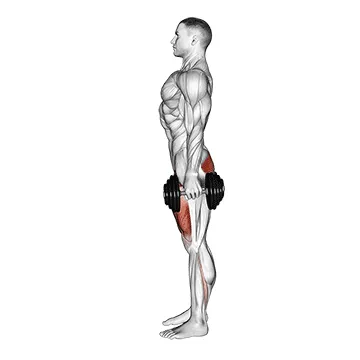
- Primary muscle
- Glutes
- Equipment
- Dumbbell
- Difficulty
- Intermediate
- Type
- Compound
Secondary muscles: Quadriceps, Hamstrings, Calves
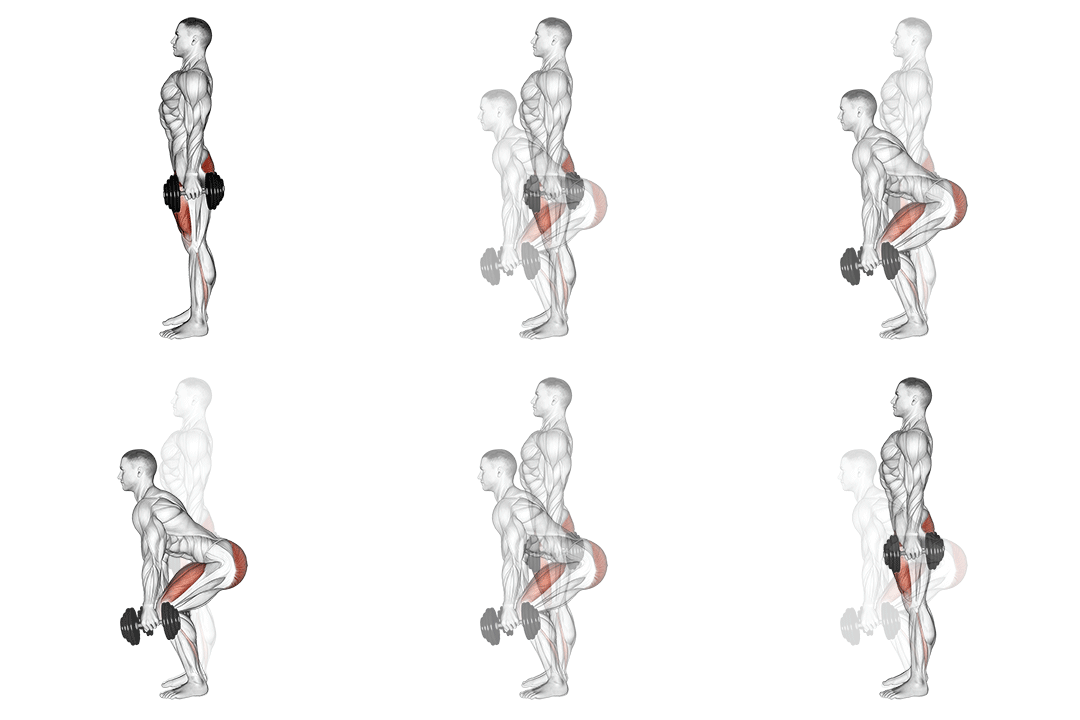
How to perform Dumbbell Squat
- Stand with your feet shoulder-width apart, holding a dumbbell in each hand at your sides.
- Keeping your chest up and core engaged, lower your body down by bending at the knees and hips, as if sitting back into a chair.
- Continue lowering until your thighs are parallel to the ground, or as low as you can comfortably go.
- Pause for a moment at the bottom, then push through your heels to return to the starting position.
- Repeat for the desired number of repetitions.
Ranked Dumbbell Squat Alternatives
10 substitutes, ranked by how closely each one matches the Dumbbell Squat on movement pattern, muscles worked, equipment and body position. The higher the score, the less you change. Open "How to perform this exercise" on a card for the steps; every card title links to that exercise's own alternatives page.
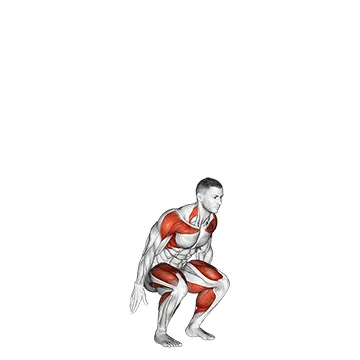
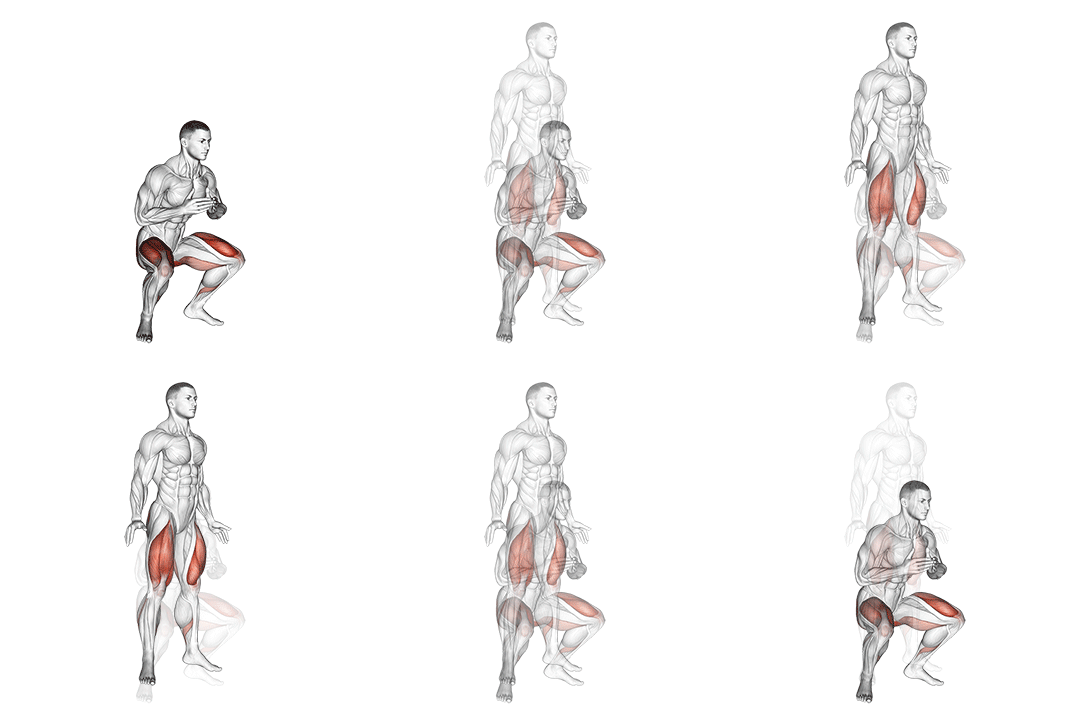
Best match 1. Jump Squat
79% match- Glutes
- Bodyweight
- Intermediate
- Compound
Use this when you have nothing to train with, because it works the glutes with bodyweight alone.
How to perform this exercise
- Stand with your feet shoulder-width apart.
- Lower your body into a squat position by bending your knees and pushing your hips back.
- Jump explosively off the ground, extending your hips, knees, and ankles.
- While in mid-air, quickly bring your arms forward for balance.
- Land softly on the balls of your feet and immediately go into the next repetition.
- Repeat for the desired number of repetitions.
Sets and reps: 3 or 4 sets of 6 to 10 reps.
Why this matches
- Movement: two-legged squat, the same as the Dumbbell Squat
- Primary muscle: glutes, the same as the Dumbbell Squat
- Equipment: bodyweight only, not free weights
- Body position: standing, the same as the Dumbbell Squat
- Balance: harder to stay steady on than the Dumbbell Squat
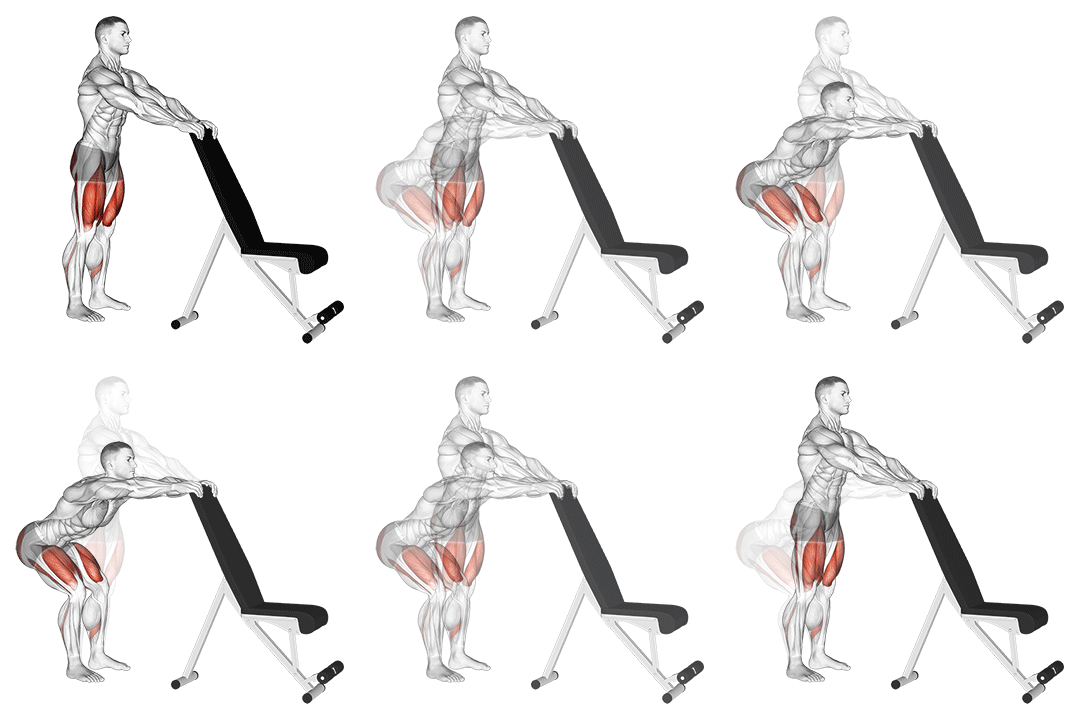
2. Potty Squat With Support
78% match- Glutes
- Bodyweight
- Beginner
- Compound
How to perform this exercise
- Stand with your feet shoulder-width apart, toes pointing slightly outward.
- Hold onto a stable support, such as a chair or wall, for balance.
- Lower your body down into a squat position by bending your knees and pushing your hips back.
- Keep your chest up and your back straight throughout the movement.
- Pause for a moment at the bottom, then push through your heels to return to the starting position.
- Repeat for the desired number of repetitions.
Sets and reps: 3 sets of 8 to 12 reps, and add reps before you add load.
Why this matches
- Movement: two-legged squat, the same as the Dumbbell Squat
- Primary muscle: glutes, the same as the Dumbbell Squat
- Equipment: bodyweight only, not free weights
- Body position: standing, the same as the Dumbbell Squat
- Balance: easier to stay steady on than the Dumbbell Squat
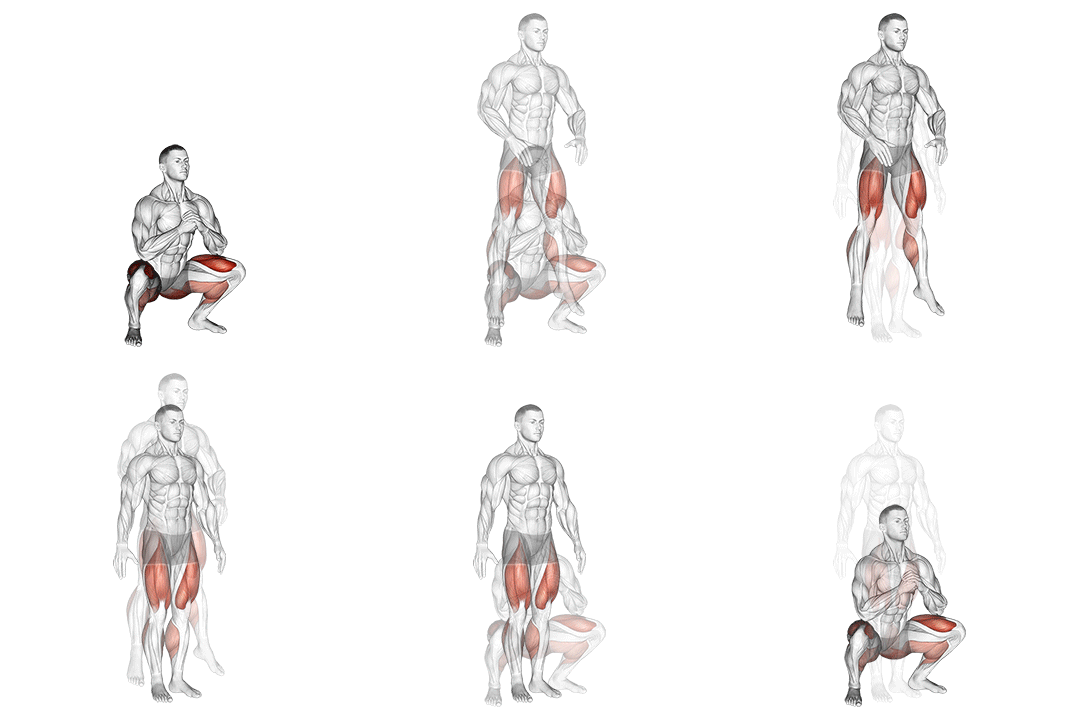
3. Bodyweight Drop Jump Squat
78% match- Glutes
- Bodyweight
- Intermediate
- Compound
How to perform this exercise
- Stand with your feet shoulder-width apart.
- Lower your body into a squat position by bending your knees and pushing your hips back.
- Jump up explosively, extending your hips, knees, and ankles.
- While in mid-air, quickly bring your feet together.
- Land softly on the balls of your feet and immediately drop back into a squat position.
- Repeat for the desired number of repetitions.
Sets and reps: 3 or 4 sets of 6 to 10 reps.
Why this matches
- Movement: two-legged squat, the same as the Dumbbell Squat
- Primary muscle: glutes, the same as the Dumbbell Squat
- Equipment: bodyweight only, not free weights
- Body position: standing, the same as the Dumbbell Squat
- Balance: harder to stay steady on than the Dumbbell Squat
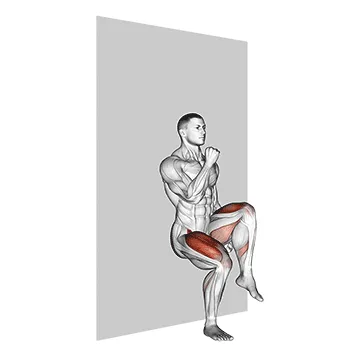
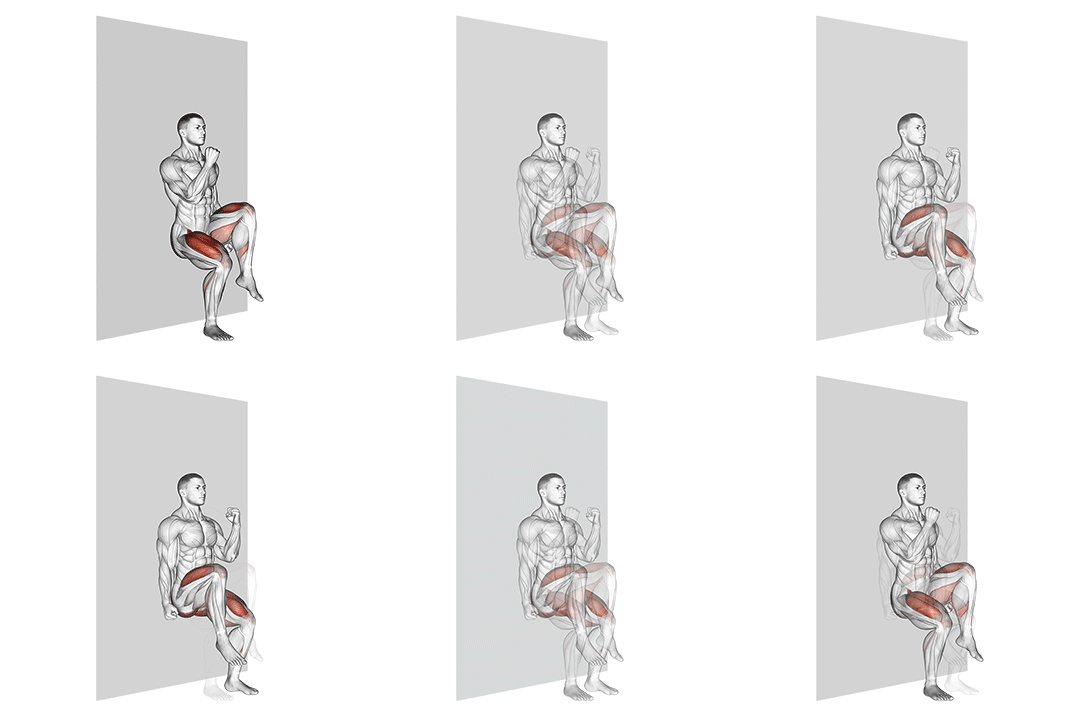
4. March Sit (Wall)
77% match- Glutes
- Bodyweight
- Beginner
- Compound
Pick this when you want an easier version that works the glutes one side at a time.
How to perform this exercise
- Stand with your back against a wall and your feet hip-width apart.
- Slowly slide your back down the wall until your knees are bent at a 90-degree angle.
- Lift your right foot off the ground and bring your knee towards your chest.
- Lower your right foot back down and lift your left foot off the ground, bringing your knee towards your chest.
- Continue alternating between lifting your right and left foot for the desired number of repetitions.
Sets and reps: 3 sets of 8 to 12 reps on each side, and add reps before you add load.
Why this matches
- Primary muscle: glutes, the same as the Dumbbell Squat
- Equipment: bodyweight only, not free weights
- Body position: standing, the same as the Dumbbell Squat
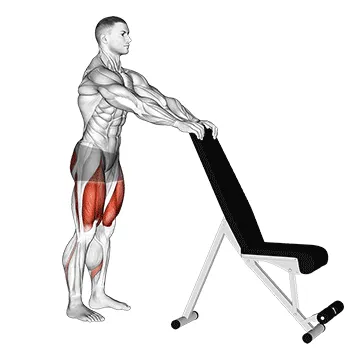
5. Quads
73% match- Quads
- Bodyweight
- Beginner
- Compound
A looser match: it works the quads rather than the glutes.
How to perform this exercise
- Stand with your feet shoulder-width apart.
- Lower your body by bending your knees and pushing your hips back as if sitting on a chair.
- Keep your chest up and your back straight.
- Lower yourself until your thighs are parallel to the ground.
- Push through your heels to return to the starting position.
- Repeat for the desired number of repetitions.
Sets and reps: 3 sets of 8 to 12 reps, and add reps before you add load.
Why this matches
- Primary muscle: quads, not glutes
- Equipment: bodyweight only, not free weights
- Body position: standing, the same as the Dumbbell Squat
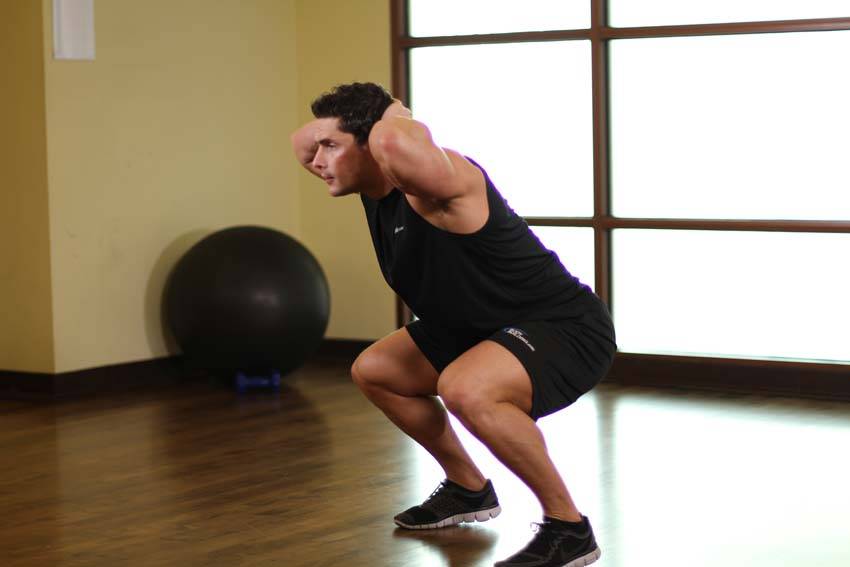
6. Frog Hops
70% match- Quads
- Bodyweight
- Intermediate
- Compound
How to perform this exercise
- Stand with your hands behind your head, and squat down keeping your torso upright and your head up. This will be your starting position.
- Jump forward several feet, avoiding jumping unnecessarily high. As your feet contact the ground, absorb the impact through your legs, and jump again. Repeat this action 5-10 times.
Sets and reps: 3 or 4 sets of 6 to 10 reps.
Why this matches
- Primary muscle: quads, not glutes
- Equipment: bodyweight only, not free weights
- Body position: standing, the same as the Dumbbell Squat
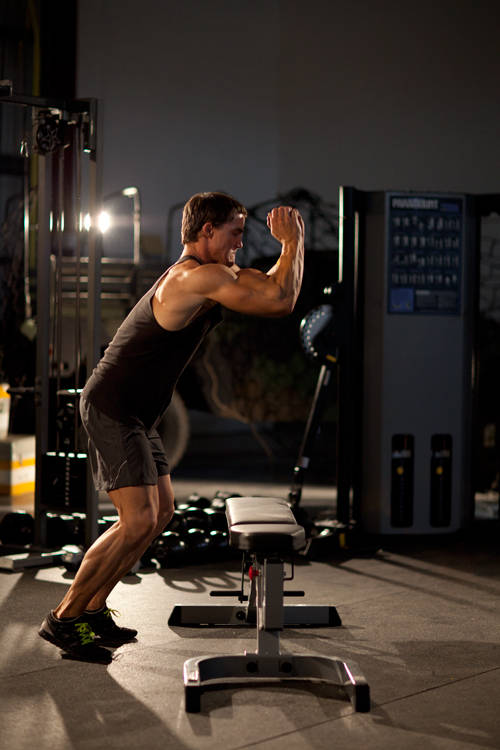
7. Bench Jump
69% match- Quads
- Bodyweight
- Intermediate
- Compound
How to perform this exercise
- Begin with a box or bench 1-2 feet in front of you. Stand with your feet shoulder width apart. This will be your starting position.
- Perform a short squat in preparation for the jump; swing your arms behind you.
- Rebound out of this position, extending through the hips, knees, and ankles to jump as high as possible. Swing your arms forward and up.
- Jump over the bench, landing with the knees bent, absorbing the impact through the legs.
- Turn around and face the opposite direction, then jump back over the bench.
Sets and reps: 3 or 4 sets of 6 to 10 reps.
Why this matches
- Primary muscle: quads, not glutes
- Equipment: bodyweight only, not free weights
- Body position: standing, the same as the Dumbbell Squat
- Balance: harder to stay steady on than the Dumbbell Squat
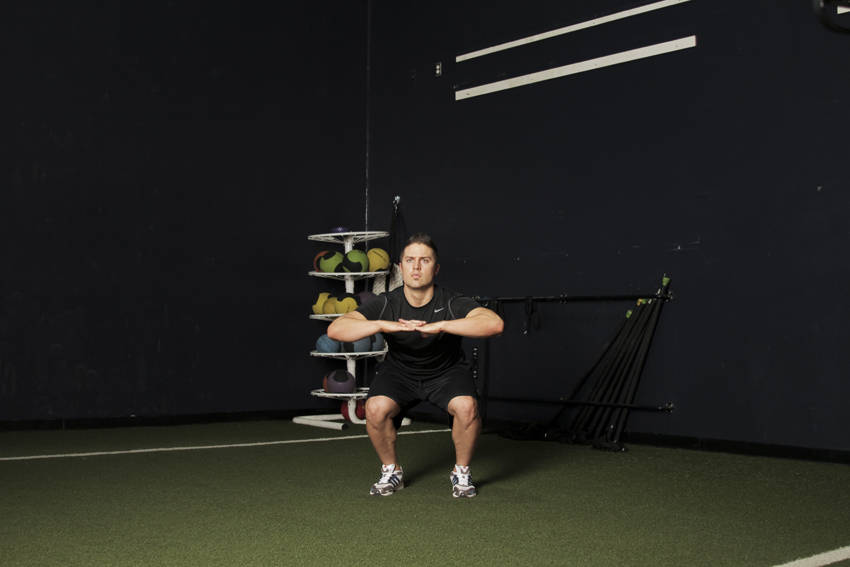
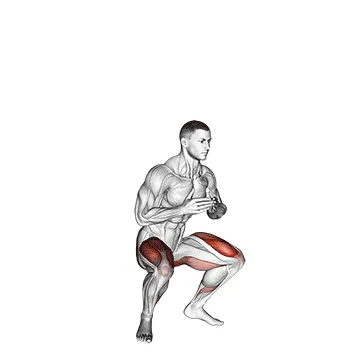
8. Knee Tuck Jump
69% match- Hamstrings
- Bodyweight
- Intermediate
- Compound
How to perform this exercise
- Begin in a comfortable standing position with your knees slightly bent. Hold your hands in front of you, palms down with your fingertips together at chest height. This will be your starting position.
- Rapidly dip down into a quarter squat and immediately explode upward. Drive the knees towards the chest, attempting to touch them to the palms of the hands.
- Jump as high as you can, raising your knees up, and then ensure a good land be re-extending your legs, absorbing impact through be allowing the knees to rebend.
Sets and reps: 3 or 4 sets of 6 to 10 reps.
Why this matches
- Primary muscle: hamstrings, not glutes
- Equipment: bodyweight only, not free weights
- Body position: standing, the same as the Dumbbell Squat
- Balance: harder to stay steady on than the Dumbbell Squat
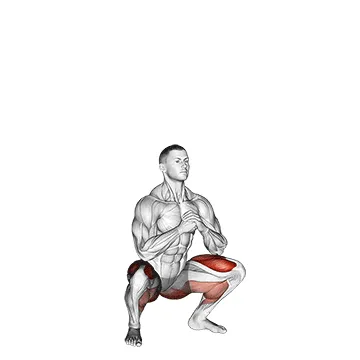
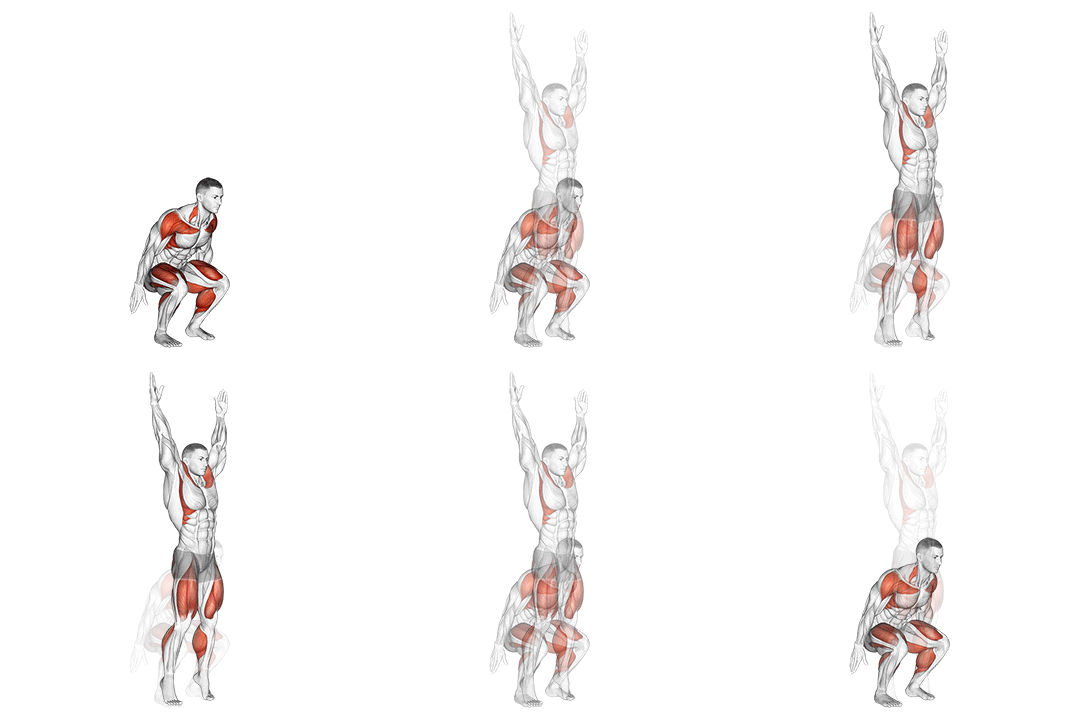
9. Squat To Overhead Reach
69% match- Quads
- Bodyweight
- Beginner
- Compound
How to perform this exercise
- Stand with your feet shoulder-width apart and toes slightly turned out.
- Lower your body down into a squat position by bending your knees and pushing your hips back.
- As you come up from the squat, extend your arms overhead, reaching towards the ceiling.
- Return to the starting position by lowering your arms and bending your knees to squat down again.
- Repeat for the desired number of repetitions.
Sets and reps: 3 sets of 8 to 12 reps, and add reps before you add load.
Why this matches
- Primary muscle: quads, not glutes
- Equipment: bodyweight only, not free weights
- Body position: standing, the same as the Dumbbell Squat
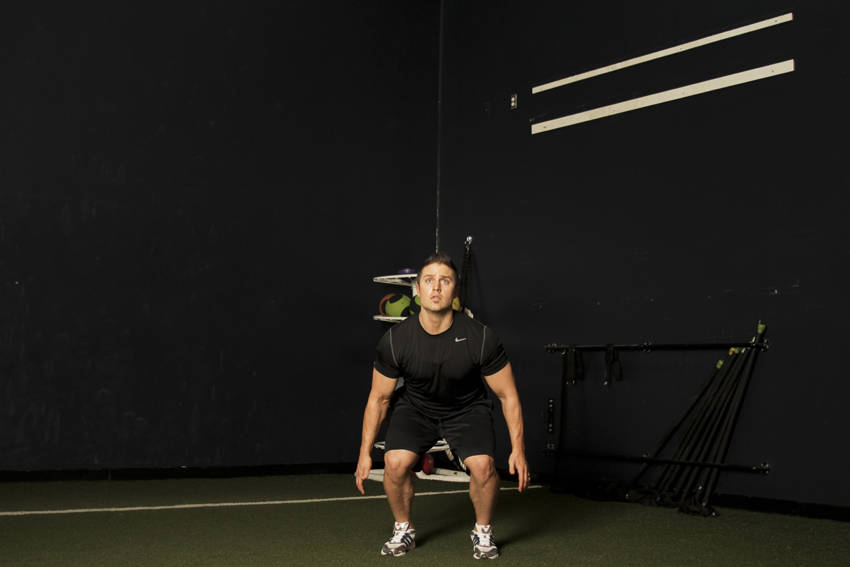
10. Rocket Jump
69% match- Quads
- Bodyweight
- Advanced
- Compound
How to perform this exercise
- Begin in a relaxed stance with your feet shoulder width apart and hold your arms close to the body.
- To initiate the move, squat down halfway and explode back up as high as possible.
- Fully extend your entire body, reaching overhead as far as possible. As you land, absorb your impact through the legs.
Sets and reps: 3 or 4 sets of 6 to 10 reps.
Why this matches
- Primary muscle: quads, not glutes
- Equipment: bodyweight only, not free weights
- Body position: standing, the same as the Dumbbell Squat
- Balance: harder to stay steady on than the Dumbbell Squat
Why You Might Need a Dumbbell Squat Alternative
You might substitute the Dumbbell Squat because of knee or low-back pain, limited equipment, or a need for unilateral strength work. Joint pain often requires reducing bilateral compressive and shear forces; switching to split-stance moves or deadlift variations lowers spinal flexion while maintaining hip-extension torque for the glutes. Limited dumbbell load calls for higher-leverage exercises like step-ups or trap-bar lifts that increase hip moment without heavier handheld weight. For technique, push through the posterior heel and fully extend the hip to maximize glute recruitment while protecting vulnerable joints.
Dumbbell Squat FAQ
What muscles does Dumbbell Squat work?
The Dumbbell Squat primarily targets the glutes and quadriceps, with secondary activation of the hamstrings and spinal erectors. To maximize glute recruitment, sit back slightly and drive through the heels so the hip extensors produce the concentric force.
What is the best bodyweight alternative to Dumbbell Squat?
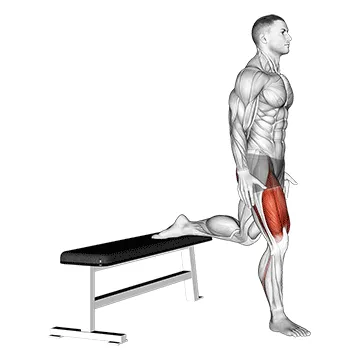
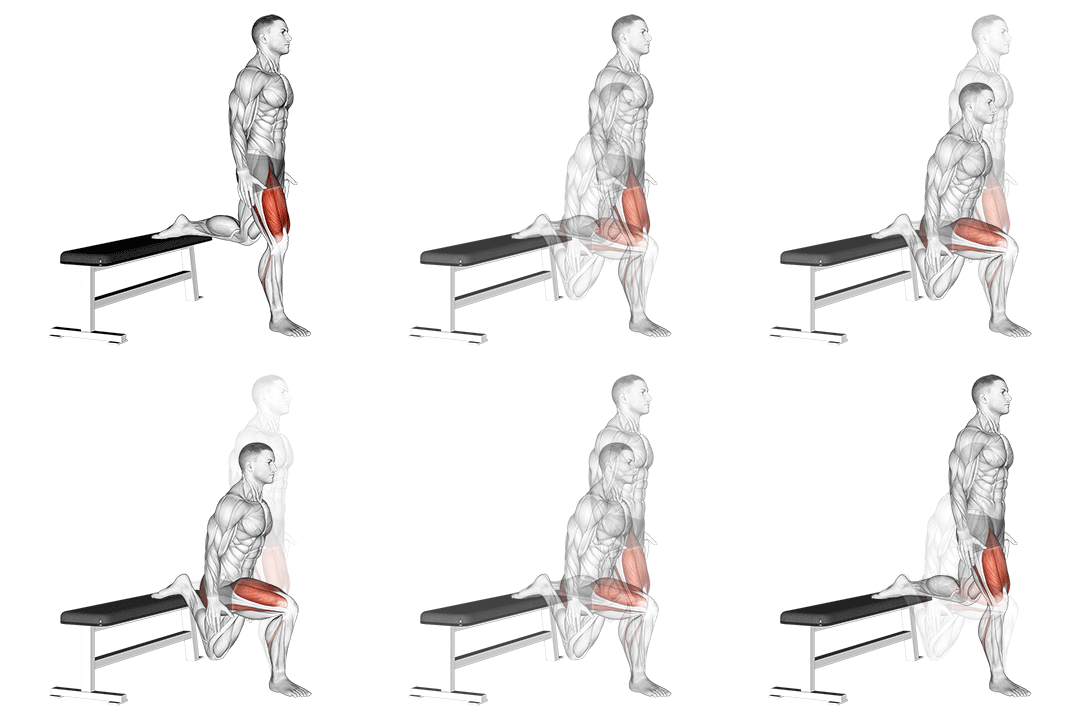
The Bulgarian split squat is the top bodyweight alternative because it loads the glute and quad unilaterally and increases hip-extension demand. Use a bench for the rear foot, keep the torso upright, and drive the front heel into the floor to emphasize glute activation.
Work Up or Down From This Exercise
Harder progressions
Find Alternatives for Any Exercise
Search the exercise database and filter the ranked substitutes by the equipment you own.
Similarity scores compare exercise metadata such as movement pattern, muscles, equipment and body position. They are not a safety rating or a check that you own the equipment. Learn about our methodology