

10 Best Kettlebell Pirate Supper Legs Alternatives for Shoulder Strength
If you can't do Kettlebell Pirate Supper Legs, use vertical pressing and controlled shoulder-abduction alternatives, single-arm kettlebell press, seated dumbbell press, landmine press, banded lateral raises, or strict overhead barbell press. Cue: brace your core, stack the wrist over the elbow, and press through the center of the shoulder to emphasize anterior and medial deltoid activation.
Original Exercise: Kettlebell Pirate Supper Legs
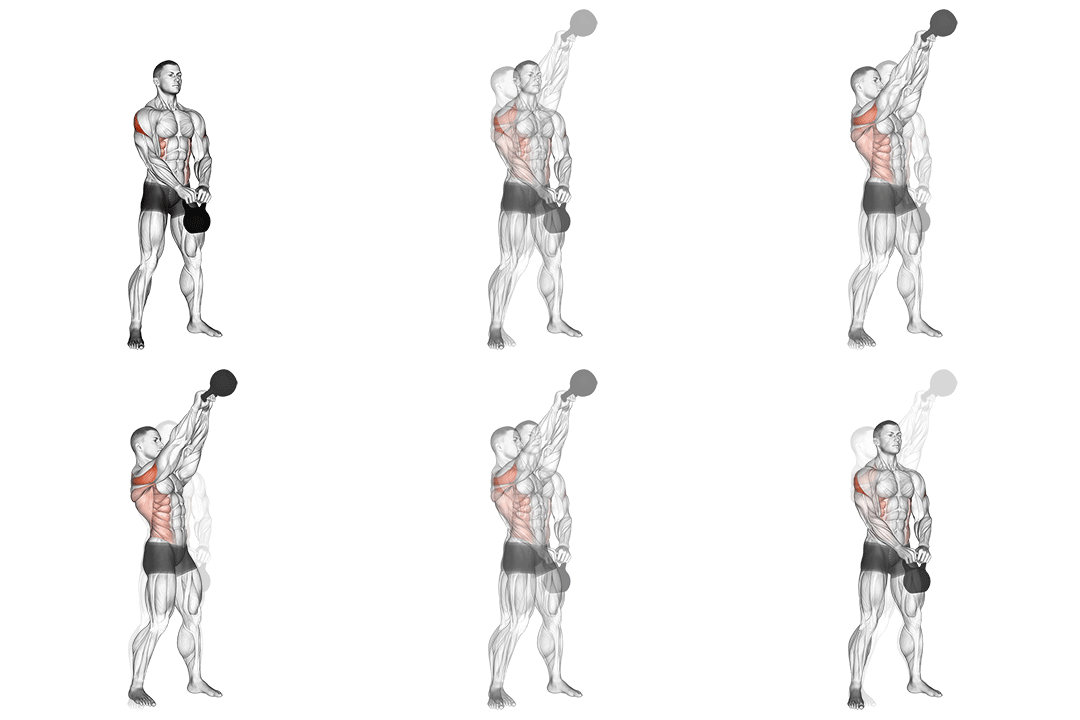
How to Perform Kettlebell Pirate Supper Legs
- Stand with your feet shoulder-width apart, holding a kettlebell in one hand.
- Bend your knees slightly and hinge forward at the hips, keeping your back straight.
- Raise the kettlebell up to shoulder height, keeping your elbow close to your body.
- Extend your arm fully overhead, straightening your elbow.
- Lower the kettlebell back down to shoulder height, then return to the starting position.
- Repeat for the desired number of repetitions, then switch sides.
Ranked Kettlebell Pirate Supper Legs Alternatives
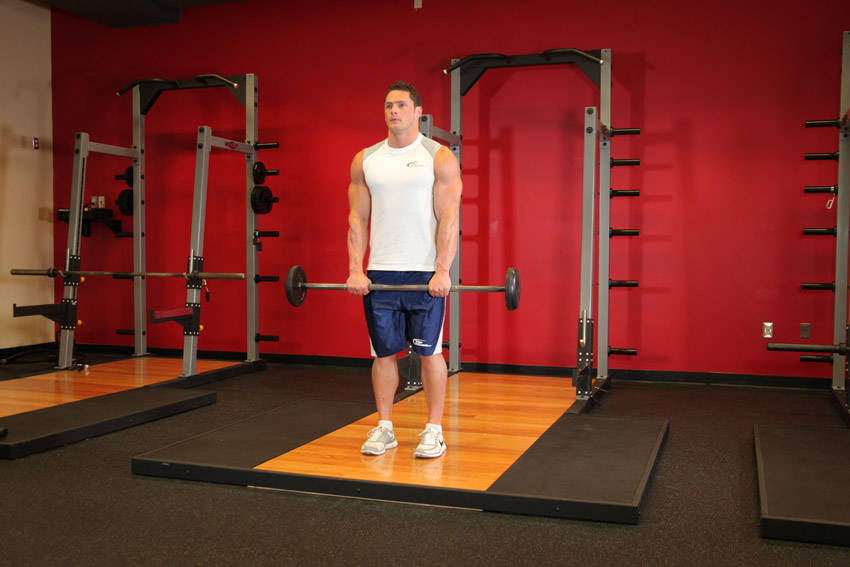
1. Standing Front Barbell Raise Over Head
95.4% MatchHow to perform this exercise
- To begin, stand straight with a barbell in your hands. You should grip the bar with palms facing down and a closer than shoulder width grip apart from each other.
- Your feet should be shoulder width apart from each other. Your elbows should be slightly bent. This is the starting position.
- Lift the barbell up until it is directly over your head while exhaling. Make sure to keep your elbows slightly bent when performing each repetition.
- Once you feel the contraction, begin to lower the barbell back down to the starting position as you inhale.
- Repeat for the recommended amount of repetitions.
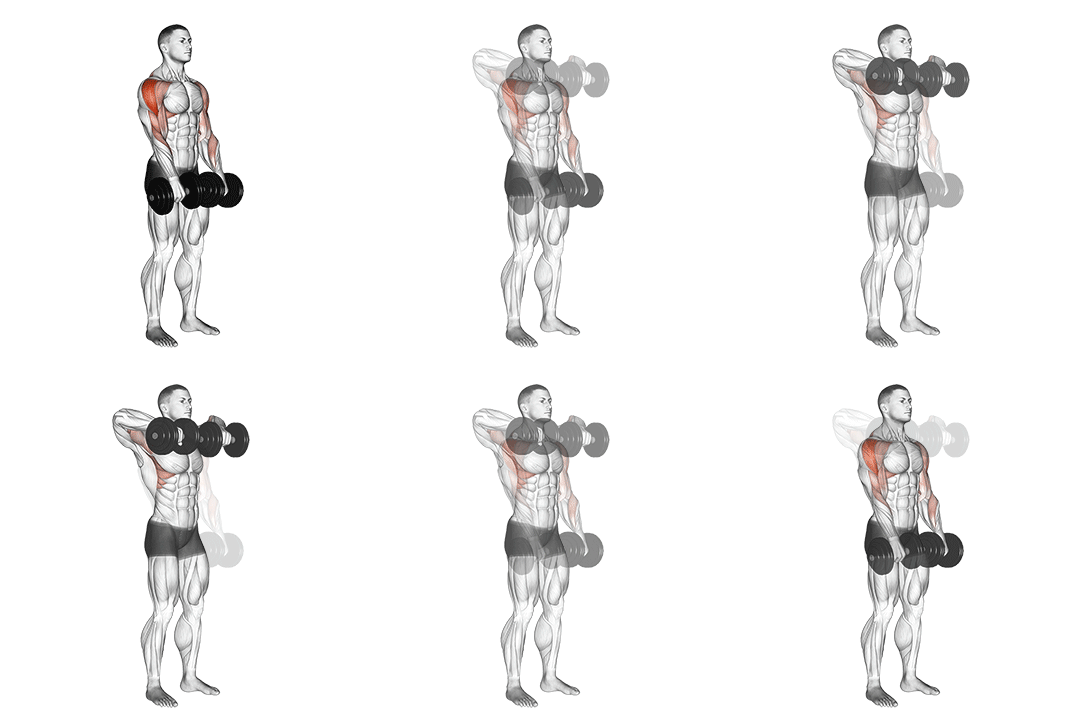
2. Dumbbell Upright Row
94.7% MatchHow to perform this exercise
- Stand with your feet shoulder-width apart, holding a dumbbell in each hand with an overhand grip.
- Let the dumbbells hang in front of your thighs, with your arms fully extended.
- Keeping your back straight and your core engaged, exhale and lift the dumbbells straight up towards your chin, leading with your elbows.
- Pause for a moment at the top, then inhale and slowly lower the dumbbells back down to the starting position.
- Repeat for the desired number of repetitions.
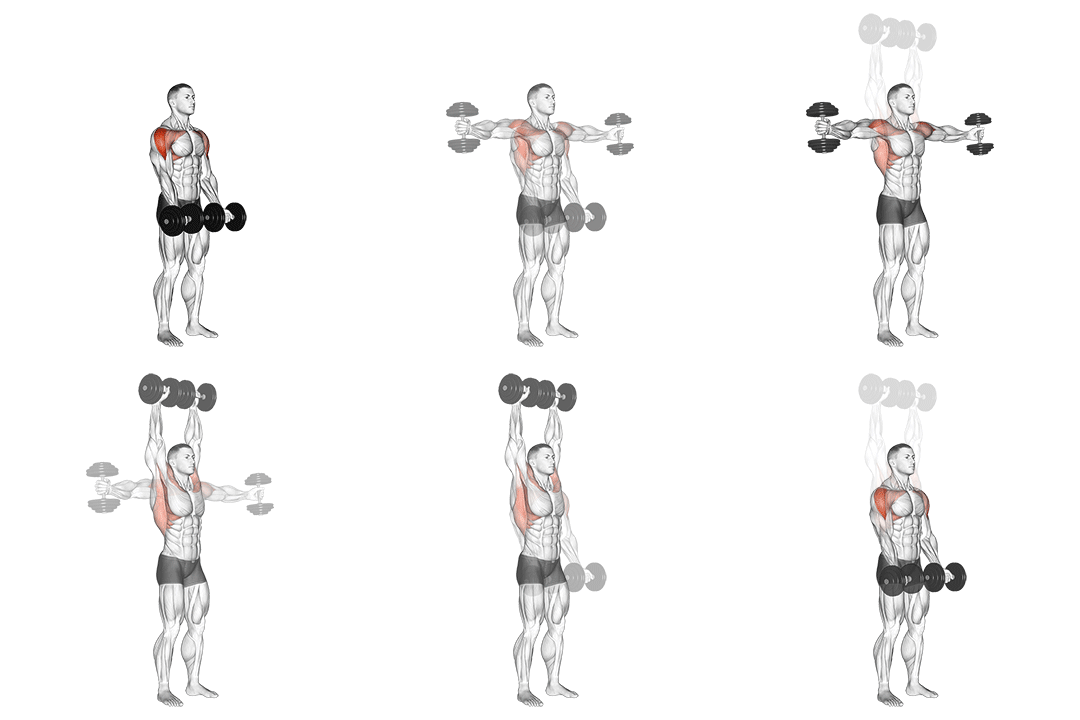
3. Dumbbell Standing Around World
94.4% MatchHow to perform this exercise
- Stand with your feet shoulder-width apart and hold a dumbbell in each hand.
- Extend your arms straight out to the sides at shoulder height, palms facing down.
- Keeping your arms straight, slowly rotate your arms in a circular motion, bringing the dumbbells in front of your body and then overhead.
- Continue the circular motion, bringing the dumbbells back down to the starting position.
- Repeat for the desired number of repetitions.
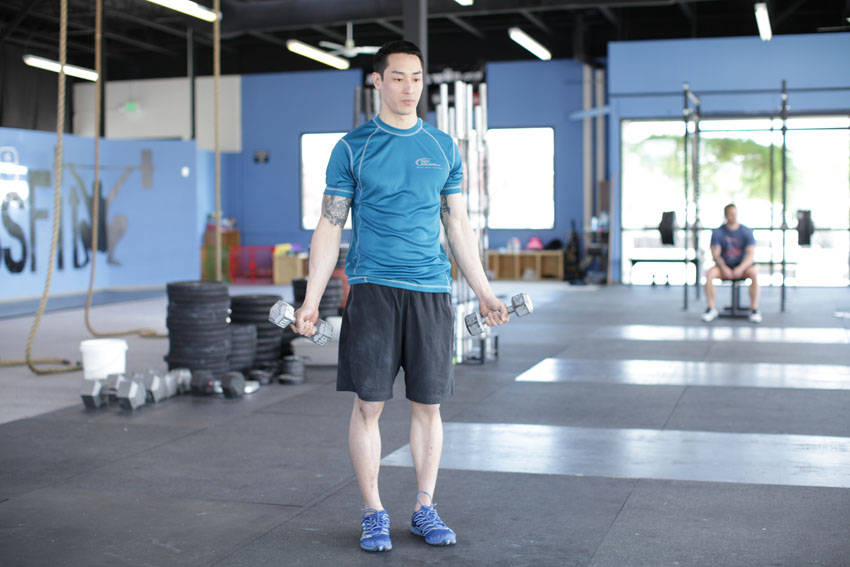
4. Dumbbell Scaption
93.9% MatchHow to perform this exercise
- This corrective exercise strengthens the muscles that stabilize your shoulder blade. Hold a light weight in each hand, hanging at your sides. Your thumbs should pointing up.
- Begin the movement raising your arms out in front of you, about 30 degrees off center. Your arms should be fully extended as you perform the movement.
- Continue until your arms are parallel to the ground, and then return to the starting position.
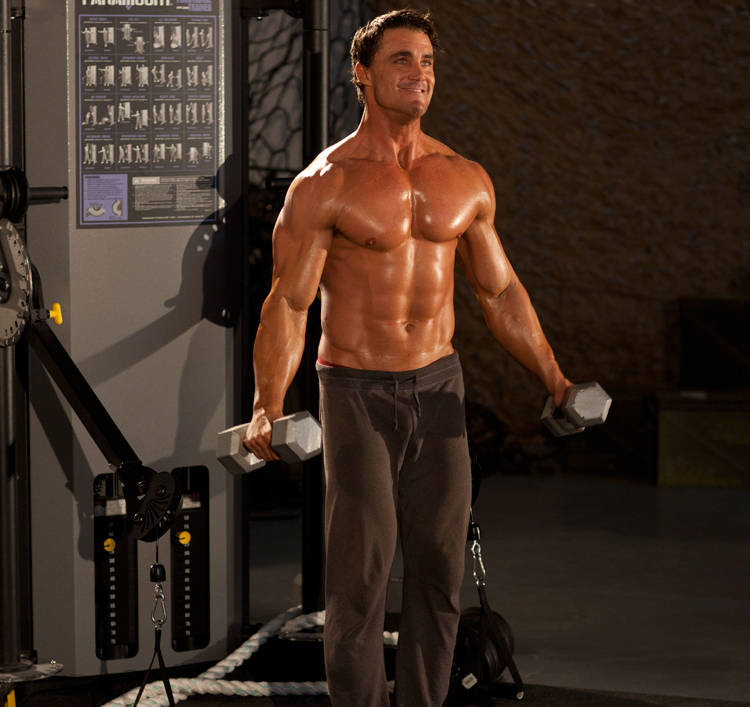
5. Side Laterals To Front Raise
93.1% MatchHow to perform this exercise
- In a standing position, hold a pair of dumbbells at your side. This will be your starting position.
- Keeping your elbows slightly bent, raise the weights directly in front of you to shoulder height, avoiding any swinging or cheating.
- At the top of the exercise move the weights out in front of you, keeping your arms extended.
- Lower the weights with a controlled motion.
- On the next repetition, raise the weights in front of you to shoulder height before moving the weights laterally to your sides.
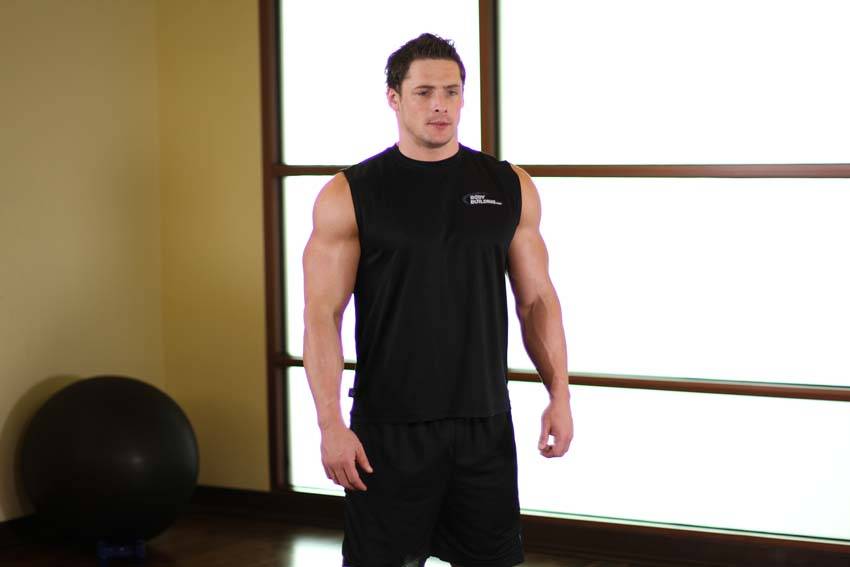
6. Shoulder Raise
92.6% MatchHow to perform this exercise
- Relax your arms to your sides and raise your shoulders up toward your ears, then back down.
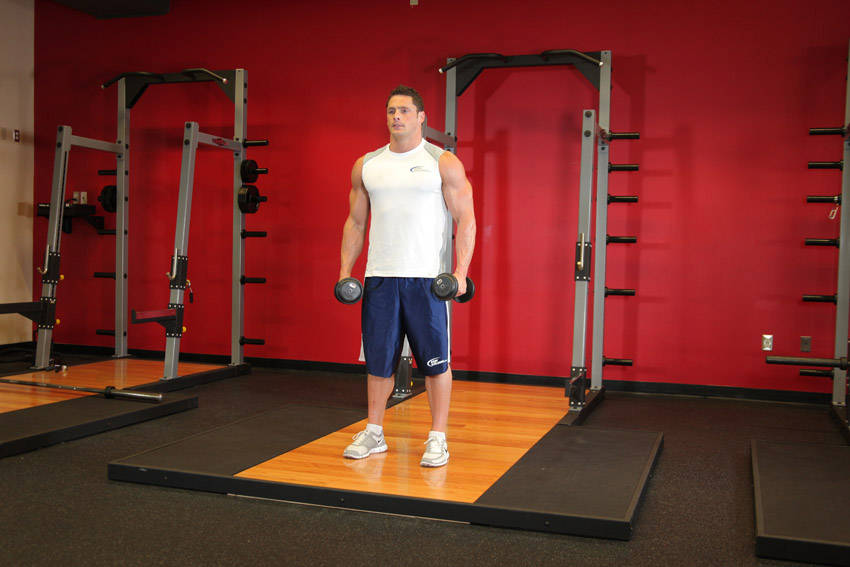
7. Side Lateral Raise
92.6% MatchHow to perform this exercise
- Pick a couple of dumbbells and stand with a straight torso and the dumbbells by your side at arms length with the palms of the hand facing you. This will be your starting position.
- While maintaining the torso in a stationary position (no swinging), lift the dumbbells to your side with a slight bend on the elbow and the hands slightly tilted forward as if pouring water in a glass. Continue to go up until you arms are parallel to the floor. Exhale as you execute this movement and pause for a second at the top.
- Lower the dumbbells back down slowly to the starting position as you inhale.
- Repeat for the recommended amount of repetitions.
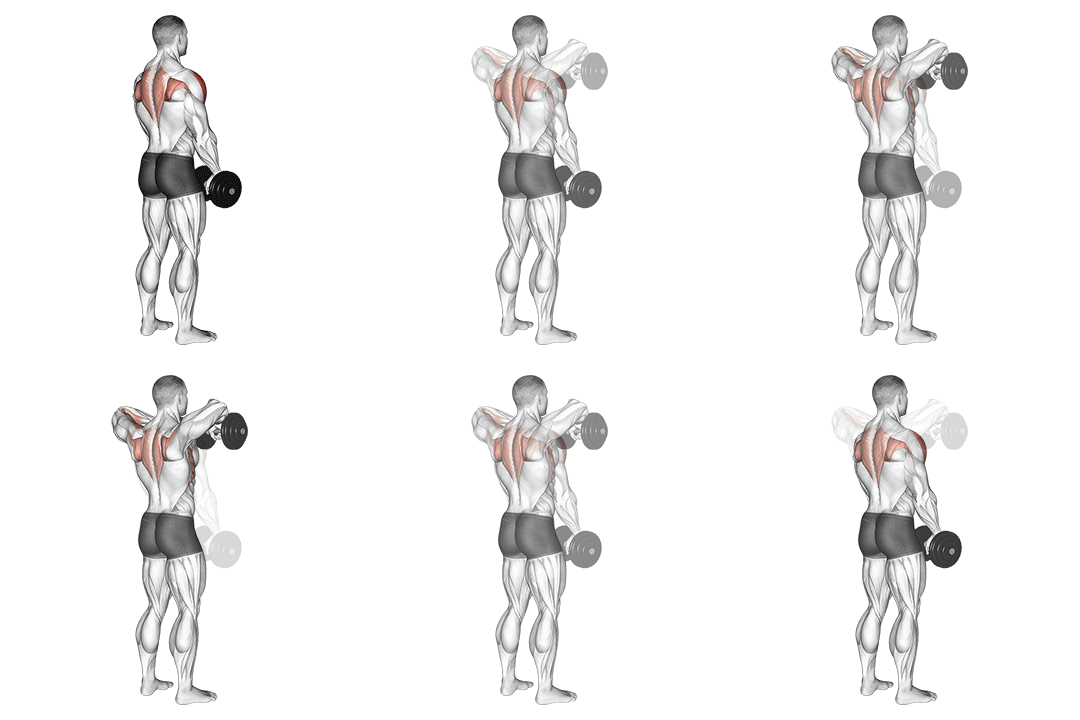
8. Dumbbell Upright Row (back Pov)
90.1% MatchHow to perform this exercise
- Stand with your feet shoulder-width apart, holding a dumbbell in each hand with an overhand grip.
- Let the dumbbells hang in front of your thighs, with your arms fully extended and your palms facing your body.
- Keeping your back straight and your core engaged, exhale and lift the dumbbells straight up towards your chin, leading with your elbows.
- Continue lifting until the dumbbells are at shoulder height, with your elbows pointing out to the sides.
- Pause for a moment at the top, then inhale and slowly lower the dumbbells back down to the starting position.
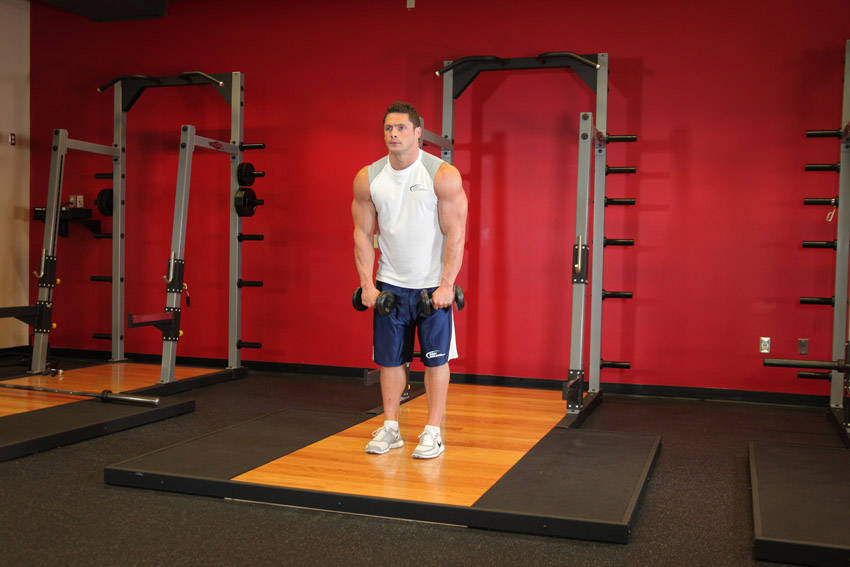
9. Standing Dumbbell Straight-Arm Front Delt Raise Above Head
89.1% MatchHow to perform this exercise
- Hold the dumbbells in front of your thighs, palms facing your thighs.
- Keep your arms straight with a slight bend at the elbows but keep them locked. This will be your starting position.
- Raise the dumbbells in a semicircular motion to arm's length overhead as you exhale.
- Slowly return to the starting position using the same path as you inhale.
- Repeat for the recommended amount of repetitions.
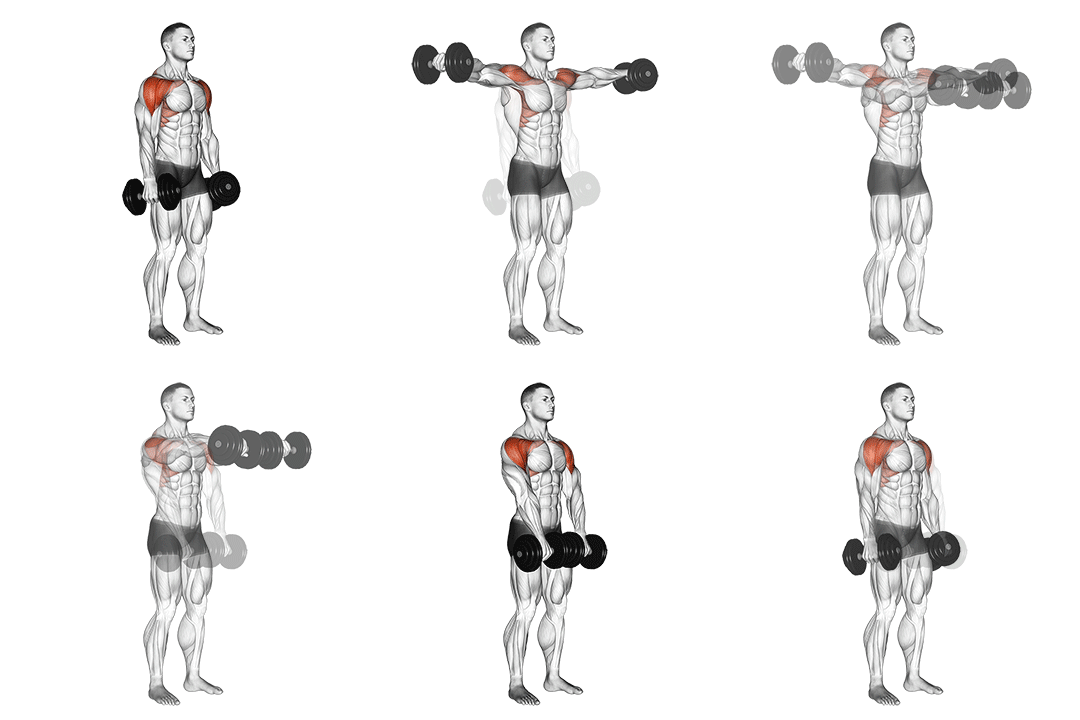
10. Dumbbell Lateral To Front Raise
88.7% MatchHow to perform this exercise
- Stand with your feet shoulder-width apart, holding a dumbbell in each hand with your palms facing your body.
- Keep your back straight and engage your core.
- Raise your arms out to the sides until they are parallel to the ground, keeping a slight bend in your elbows.
- Pause for a moment at the top, then slowly lower your arms back down to the starting position.
- Next, raise your arms in front of you until they are parallel to the ground, again keeping a slight bend in your elbows.
Why You Might Need a Kettlebell Pirate Supper Legs Alternative
You may substitute Kettlebell Pirate Supper Legs for shoulder pain, lack of kettlebells, or to vary the neural and mechanical demands. Different options change loading patterns: seated dumbbell presses isolate the delts by reducing torso drive, while landmine presses shift the vector and reduce external rotation stress on the glenohumeral joint. Banded lateral raises keep constant tension on the medial head to improve hypertrophy and motor control. Substitute to protect the rotator cuff, control impingement risk, or emphasize a specific delt head; cue: maintain scapular stability and avoid shrugging to keep the load on the deltoids rather than the traps.
How to Choose the Right Substitute
Choose a substitute by matching the movement plane, loading capacity, and your shoulder tolerance. If you want heavy compound load, pick strict overhead barbell or single-arm kettlebell presses and brace the ribcage to prevent lumbar extension. For limited equipment, use banded lateral raises with an elbow-leading lift to hit the medial delt. If mobility or pain limits overhead work, select landmine or incline pressing to reduce external rotation and range of motion. Track perceived delt activation, range of motion, and progressive overload to ensure the substitute drives the same muscle stimulus.
Frequently Asked Questions
What muscles does Kettlebell Pirate Supper Legs work?
It primarily targets the deltoids, especially the anterior and medial heads, while recruiting the upper traps, triceps, and rotator cuff for stabilization. The compound pressing pattern produces shoulder flexion and abduction; cue: press with the elbow slightly forward and keep the scapula stable to maximize deltoid activation and limit trap dominance.
What is the best bodyweight alternative to Kettlebell Pirate Supper Legs?
Pike push-ups are the best bodyweight substitute because they load the deltoids through a vertical pressing pattern similar to an overhead press. Cue: elevate your feet, keep hips high, and lead with the elbows to shift demand onto the anterior and lateral delts while maintaining scapular control.
Can I build muscle without doing Kettlebell Pirate Supper Legs?
Yes. You can hypertrophy your shoulders with other compound and isolation lifts that provide progressive overload, overhead barbell presses, dumbbell presses, landmine presses, and banded lateral raises all work. Cue: prioritize full range of motion, controlled eccentrics, and steady increases in load or volume to stimulate all deltoid heads.
More Exercise Alternatives
Find Alternatives for Any Exercise
Use the exercise substitution finder to compare ranked alternatives for your available equipment and training preference.
Try the Exercise Substitution Finder →