

10 Best Lever Incline Chest Press Alternatives
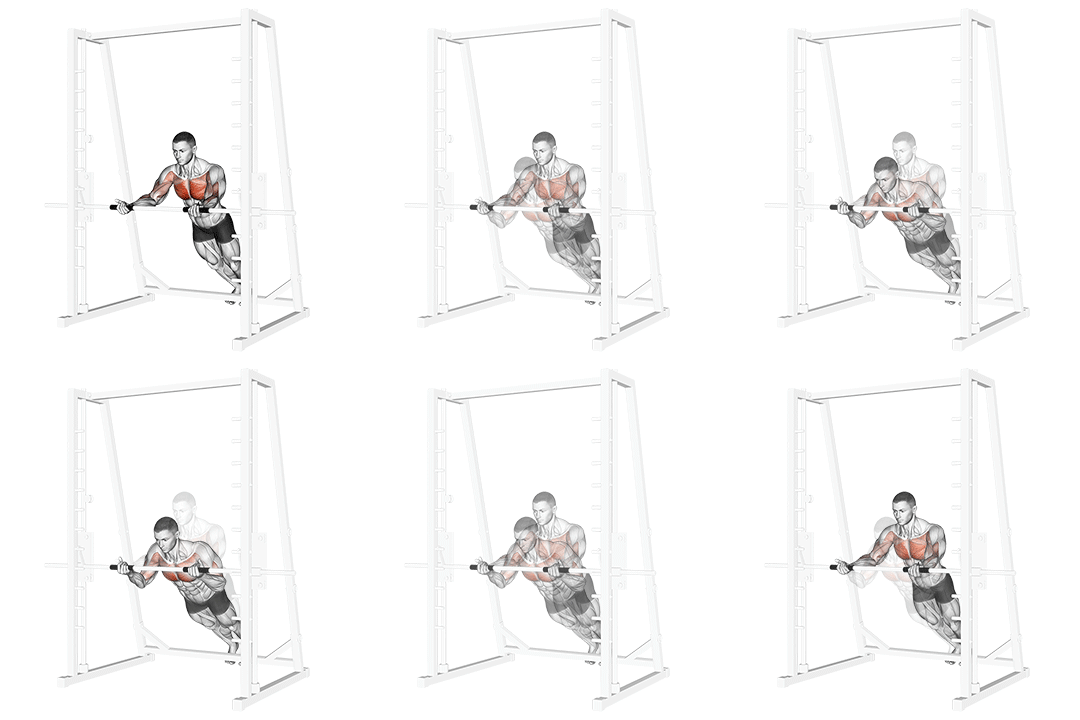
The Lever Incline Chest Press is done lying on your back with a lever machine. Ranked closest by our scoring: the Incline Push-up, the Incline Push-up (On Box) and the Kneeling Push-up.
Updated Ranked by our 12-factor similarity model How it works
Original Exercise: Lever Incline Chest Press
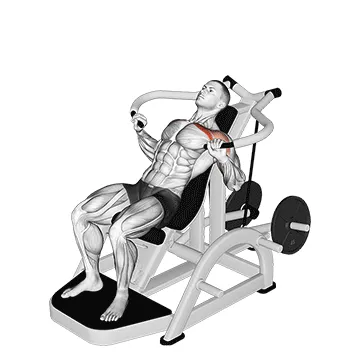
- Primary muscle
- Pectorals
- Equipment
- Lever
- Difficulty
- Intermediate
- Type
- Compound
Secondary muscles: Triceps, Shoulders
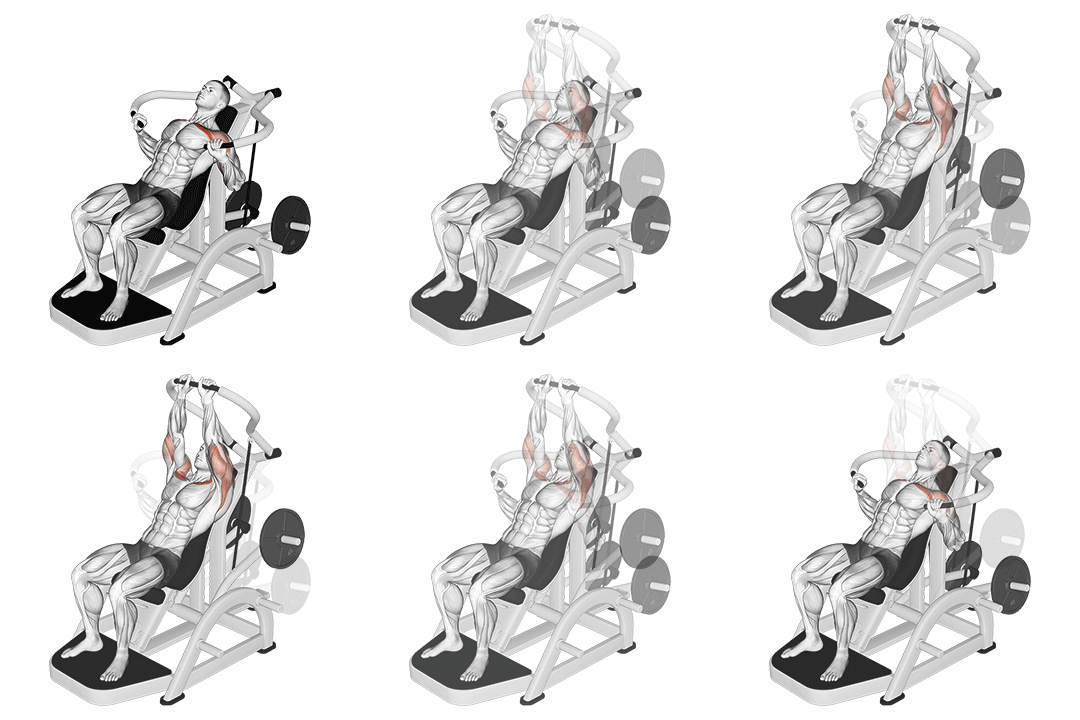
How to perform Lever Incline Chest Press
- Adjust the seat height and backrest angle on the leverage machine to a comfortable position.
- Sit on the machine with your back against the backrest and your feet flat on the floor.
- Grasp the handles with an overhand grip and position your hands slightly wider than shoulder-width apart.
- Push the handles forward and away from your body until your arms are fully extended, but without locking your elbows.
- Pause for a moment at the fully extended position, then slowly bend your elbows and lower the handles back towards your chest.
- Repeat for the desired number of repetitions.
Ranked Lever Incline Chest Press Alternatives
10 substitutes, ranked by how closely each one matches the Lever Incline Chest Press on movement pattern, muscles worked, equipment and body position. The higher the score, the less you change. Open "How to perform this exercise" on a card for the steps; every card title links to that exercise's own alternatives page.
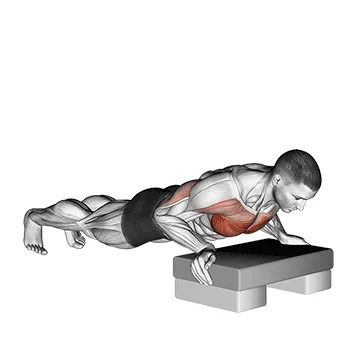
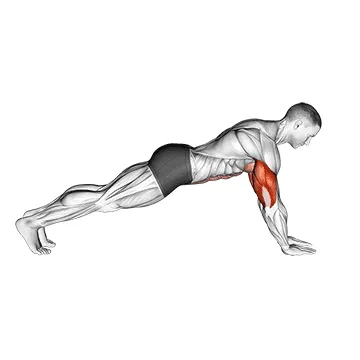
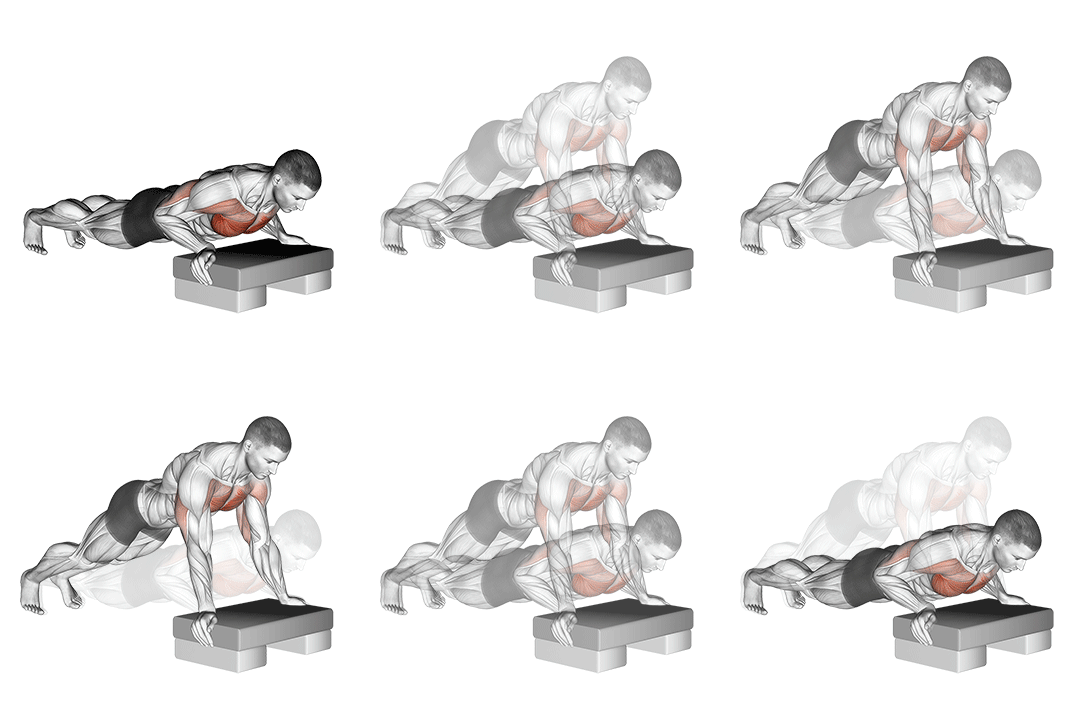
Best match 1. Incline Push-up
65% match- Pectorals
- Bodyweight
- Beginner
- Compound
Use this when you have nothing to train with, because it works the pectorals with bodyweight alone.
How to perform this exercise
- Place your hands on an elevated surface, such as a bench or step, slightly wider than shoulder-width apart.
- Extend your legs behind you, resting on the balls of your feet, creating a straight line from your head to your heels.
- Lower your chest towards the elevated surface by bending your elbows, keeping your body in a straight line.
- Pause for a moment at the bottom, then push yourself back up to the starting position by straightening your arms.
- Repeat for the desired number of repetitions.
Sets and reps: 3 sets of 8 to 12 reps, and add reps before you add load.
Why this matches
- Primary muscle: pectorals, the same as the Lever Incline Chest Press
- Equipment: bodyweight only, not a machine
- Body position: lying face down, not lying on your back
- Balance: harder to stay steady on than the Lever Incline Chest Press
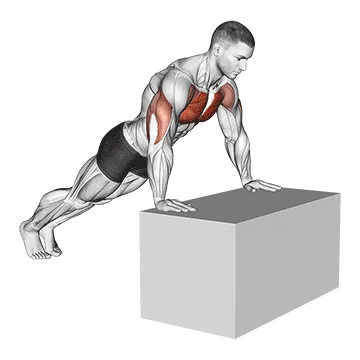
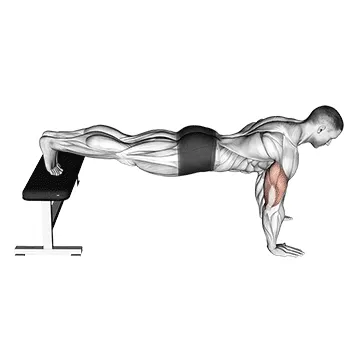
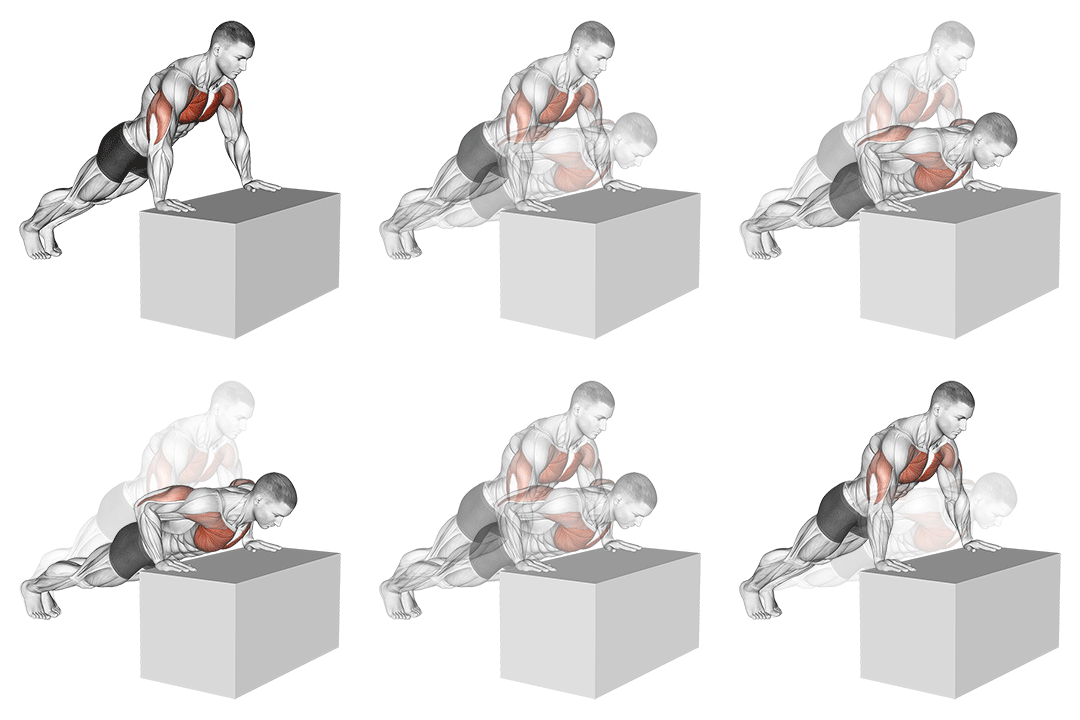
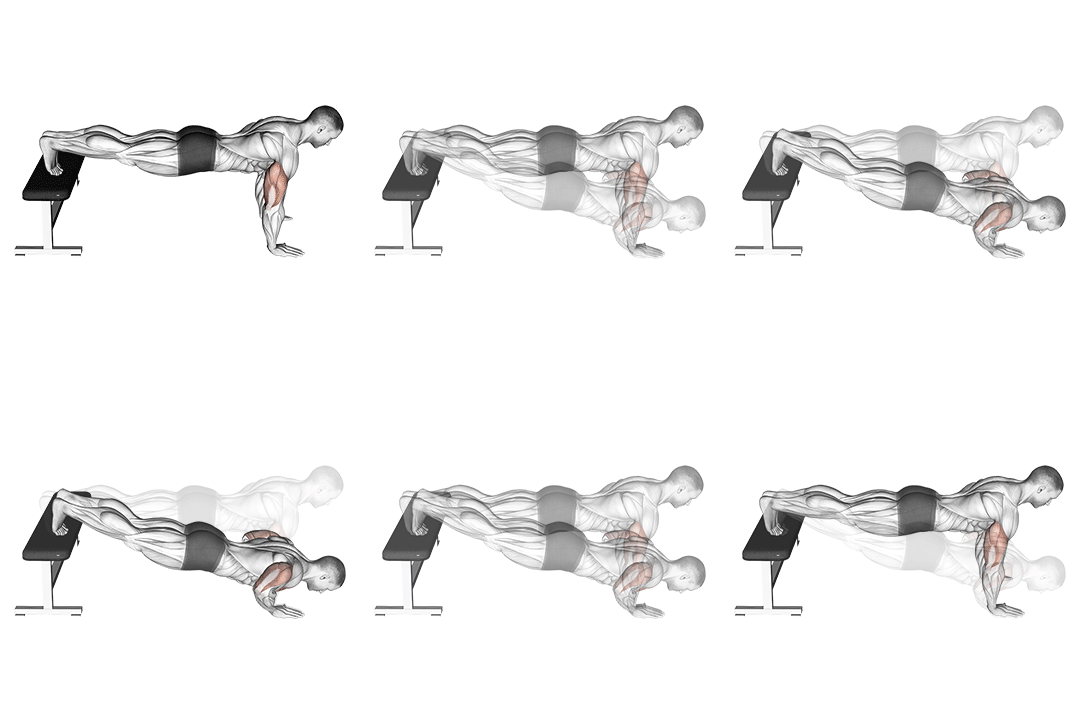
2. Incline Push-up (On Box)
65% match- Pectorals
- Bodyweight
- Beginner
- Compound
How to perform this exercise
- Place your hands on the edge of a box or elevated surface, slightly wider than shoulder-width apart.
- Extend your legs behind you, resting on the balls of your feet, creating a straight line from your head to your heels.
- Lower your chest towards the box by bending your elbows, keeping your body in a straight line.
- Pause for a moment at the bottom, then push yourself back up to the starting position by straightening your arms.
- Repeat for the desired number of repetitions.
Sets and reps: 3 sets of 8 to 12 reps, and add reps before you add load.
Why this matches
- Primary muscle: pectorals, the same as the Lever Incline Chest Press
- Equipment: bodyweight only, not a machine
- Body position: standing, not lying on your back
- Balance: harder to stay steady on than the Lever Incline Chest Press
3. Kneeling Push-up
64% match- Pectorals
- Bodyweight
- Beginner
- Compound
How to perform this exercise
- Start by kneeling on the ground with your hands shoulder-width apart, fingers pointing forward.
- Extend your legs behind you, resting on the balls of your feet, so that your body forms a straight line from head to heels.
- Engage your core and lower your body towards the ground by bending your elbows, keeping them close to your sides.
- Continue lowering until your chest is just above the ground, then push back up to the starting position by straightening your arms.
- Repeat for the desired number of repetitions.
Sets and reps: 3 sets of 8 to 12 reps, and add reps before you add load.
Why this matches
- Primary muscle: pectorals, the same as the Lever Incline Chest Press
- Equipment: bodyweight only, not a machine
- Body position: kneeling, not lying on your back
- Balance: harder to stay steady on than the Lever Incline Chest Press
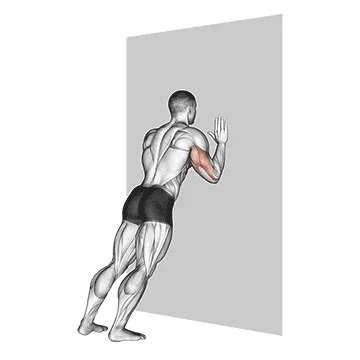
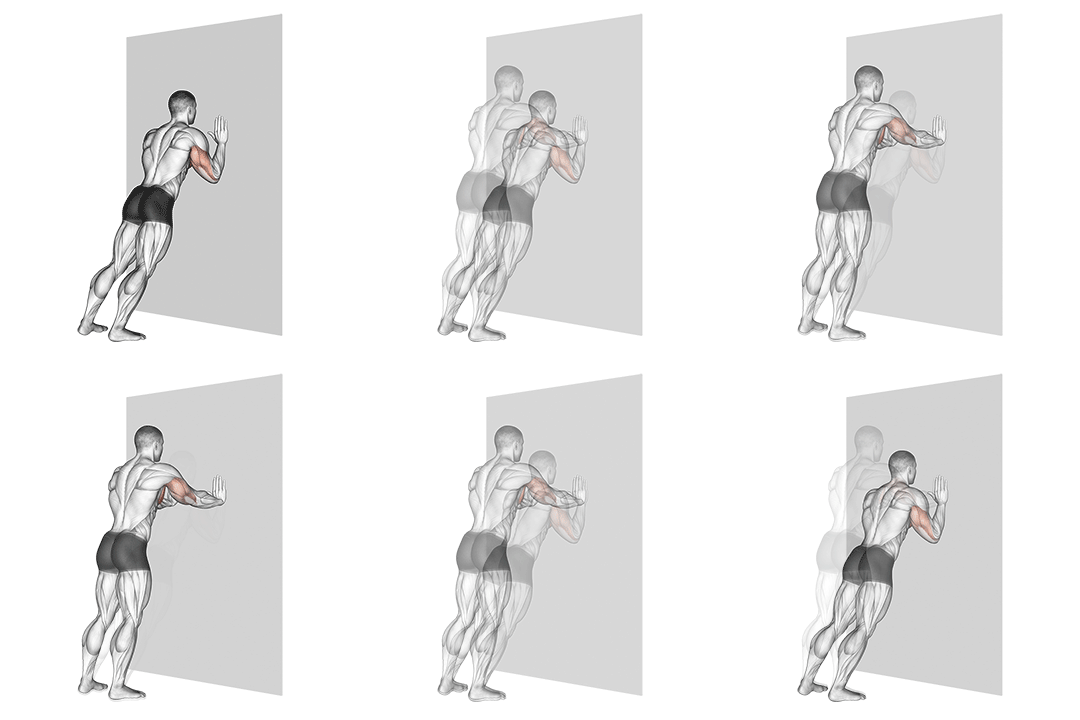
4. Push-up (Wall)
63% match- Pectorals
- Bodyweight
- Beginner
- Compound
How to perform this exercise
- Stand facing a wall, about arm's length away.
- Place your hands on the wall at shoulder height, slightly wider than shoulder-width apart.
- Step back a few feet, keeping your body straight and your feet hip-width apart.
- Bend your elbows and lower your chest towards the wall, keeping your body in a straight line.
- Push back up to the starting position, straightening your arms.
- Repeat for the desired number of repetitions.
Sets and reps: 3 sets of 8 to 12 reps, and add reps before you add load.
Why this matches
- Primary muscle: pectorals, the same as the Lever Incline Chest Press
- Equipment: bodyweight only, not a machine
- Body position: standing, not lying on your back
5. Incline Reverse Grip Push-up
60% match- Pectorals
- Bodyweight
- Intermediate
- Compound
How to perform this exercise
- Place your hands on the edge of a bench or elevated surface, slightly wider than shoulder-width apart.
- Extend your legs behind you, resting on the balls of your feet, creating a straight line from your head to your heels.
- Lower your chest towards the bench by bending your elbows, keeping them close to your sides.
- Pause for a moment at the bottom, then push yourself back up to the starting position by extending your arms.
- Repeat for the desired number of repetitions.
Sets and reps: 3 or 4 sets of 6 to 10 reps.
Why this matches
- Primary muscle: pectorals, the same as the Lever Incline Chest Press
- Equipment: bodyweight only, not a machine
- Body position: lying face down, not lying on your back
- Balance: harder to stay steady on than the Lever Incline Chest Press
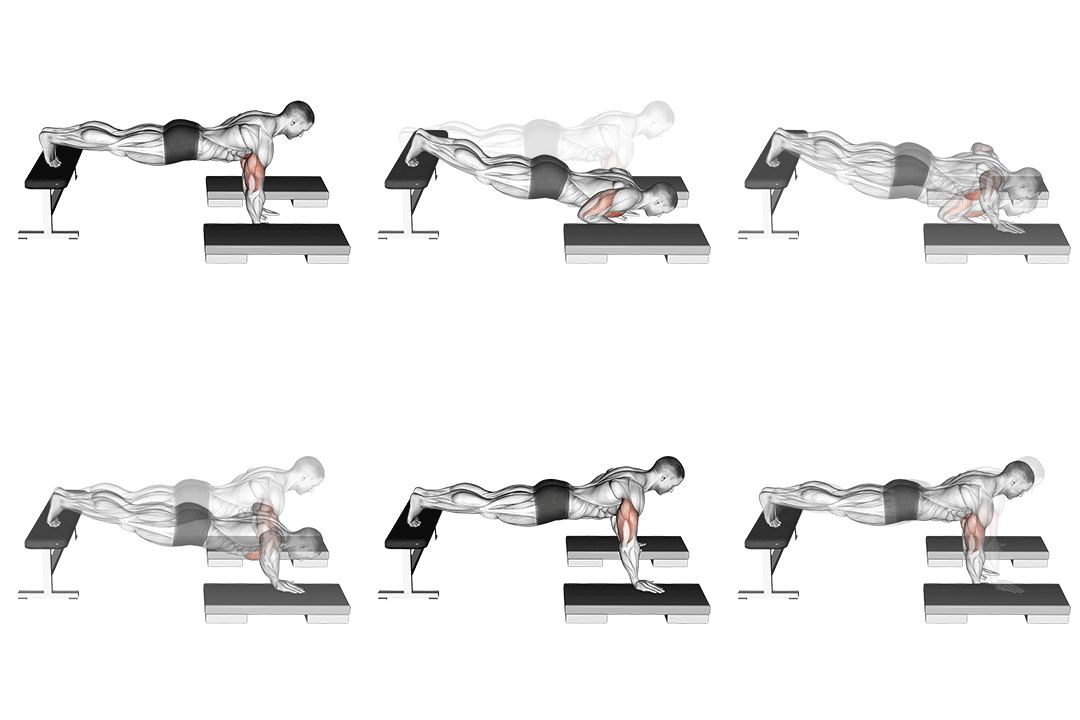
6. Incline Push Up Depth Jump
57% match- Pectorals
- Bodyweight
- Advanced
- Compound
How to perform this exercise
- Find an elevated surface, such as a bench or step, and place your hands shoulder-width apart on the edge.
- Step your feet back, keeping your body in a straight line from head to heels.
- Lower your chest towards the edge of the surface, bending your elbows and keeping your body aligned.
- Push through your palms to extend your arms and return to the starting position.
- Jump off the edge of the surface, landing softly with your knees slightly bent.
- Repeat the push-up and depth jump for the desired number of repetitions.
Sets and reps: 3 or 4 sets of 6 to 10 reps.
Why this matches
- Primary muscle: pectorals, the same as the Lever Incline Chest Press
- Equipment: bodyweight only, not a machine
- Body position: lying face down, not lying on your back
- Balance: harder to stay steady on than the Lever Incline Chest Press
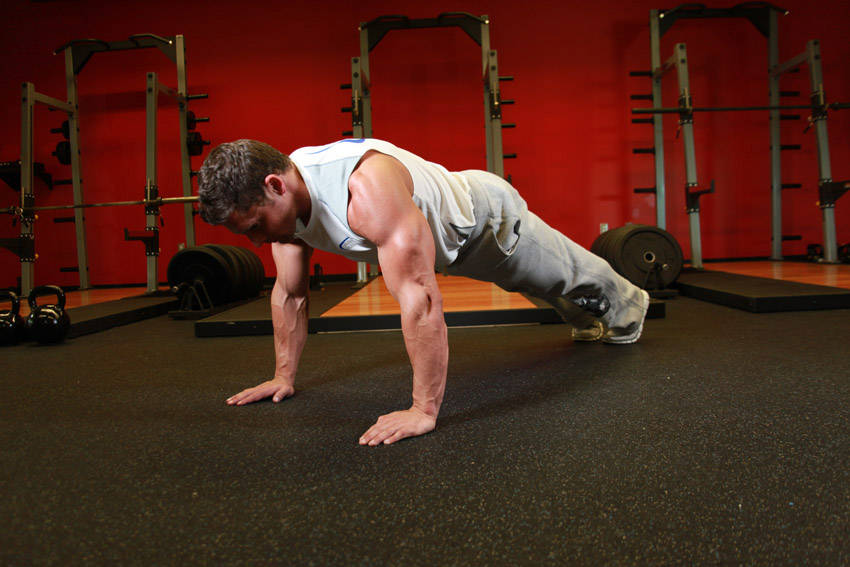
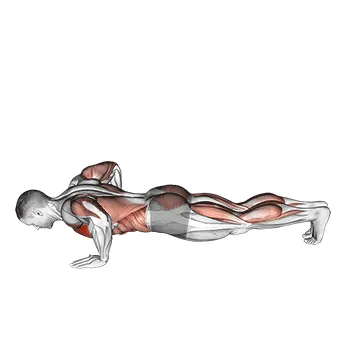
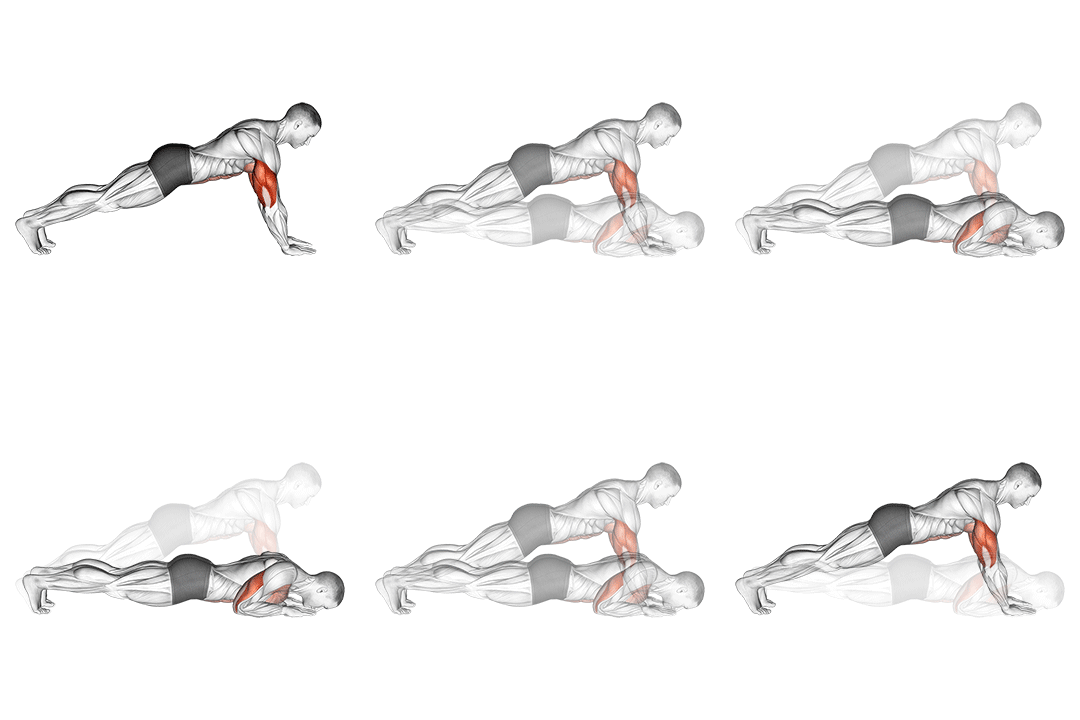
7. Pushups
54% match- Pectorals
- Bodyweight
- Beginner
- Compound
How to perform this exercise
- Lie on the floor face down and place your hands about 36 inches apart while holding your torso up at arms length.
- Next, lower yourself downward until your chest almost touches the floor as you inhale.
- Now breathe out and press your upper body back up to the starting position while squeezing your chest.
- After a brief pause at the top contracted position, you can begin to lower yourself downward again for as many repetitions as needed.
Sets and reps: 3 sets of 8 to 12 reps, and add reps before you add load.
Why this matches
- Primary muscle: pectorals, the same as the Lever Incline Chest Press
- Equipment: bodyweight only, not a machine
- Body position: lying face down, not lying on your back
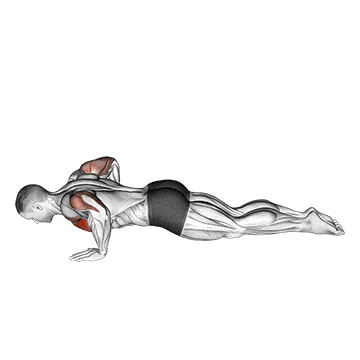
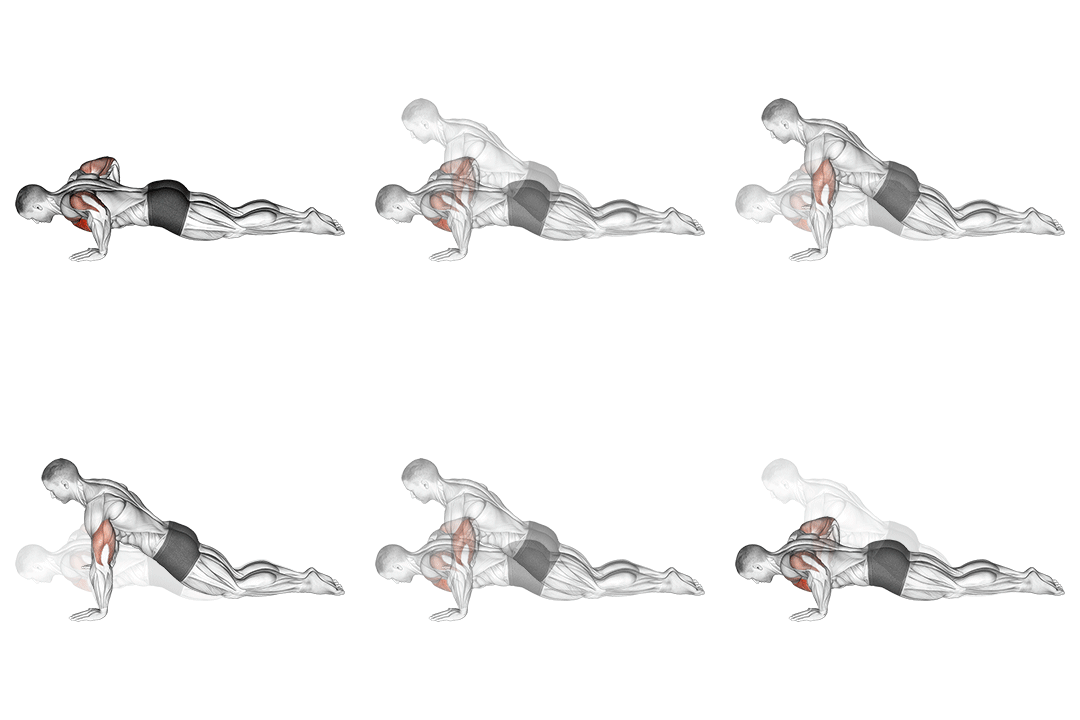
8. Push-up On Lower Arms
53% match- Pectorals
- Bodyweight
- Beginner
- Compound
How to perform this exercise
- Start in a plank position with your forearms on the ground and elbows directly below your shoulders.
- Engage your core and keep your body in a straight line from head to toe.
- Lower your chest towards the ground by bending your elbows, keeping them close to your body.
- Pause for a moment at the bottom, then push yourself back up to the starting position.
- Repeat for the desired number of repetitions.
Sets and reps: 3 sets of 8 to 12 reps, and add reps before you add load.
Why this matches
- Primary muscle: pectorals, the same as the Lever Incline Chest Press
- Equipment: bodyweight only, not a machine
- Body position: lying face down, not lying on your back
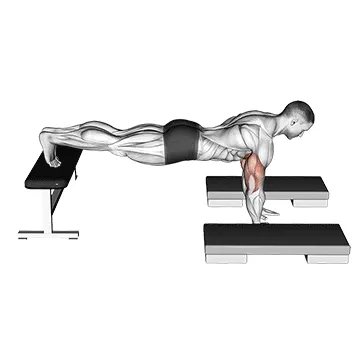
9. Decline Push-up
52% match- Pectorals
- Bodyweight
- Intermediate
- Compound
How to perform this exercise
- Place your hands on the ground slightly wider than shoulder-width apart, with your feet elevated on a stable surface.
- Keep your body in a straight line from head to toe, engaging your core muscles.
- Lower your chest towards the ground by bending your elbows, keeping them close to your body.
- Push through your palms to extend your arms and return to the starting position.
- Repeat for the desired number of repetitions.
Sets and reps: 3 or 4 sets of 6 to 10 reps.
Why this matches
- Primary muscle: pectorals, the same as the Lever Incline Chest Press
- Equipment: bodyweight only, not a machine
- Body position: lying face down, not lying on your back
- Balance: harder to stay steady on than the Lever Incline Chest Press
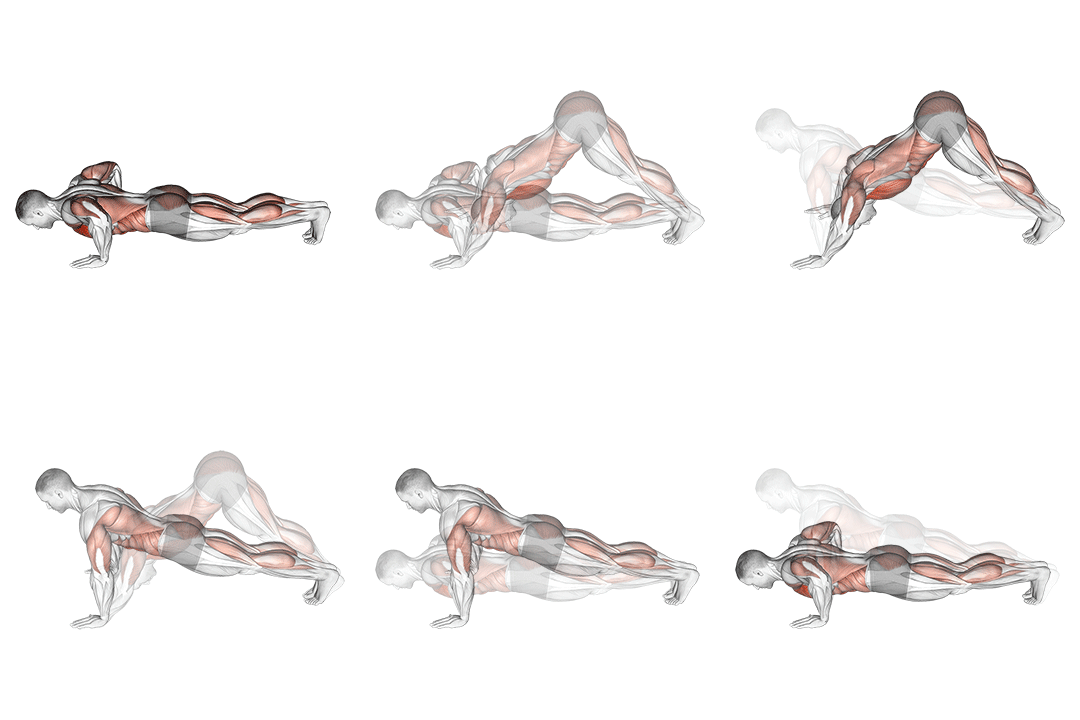
10. Modified Hindu Push-up
52% match- Pectorals
- Bodyweight
- Intermediate
- Compound
How to perform this exercise
- Start in a push-up position with your hands slightly wider than shoulder-width apart and your feet hip-width apart.
- Lower your body towards the ground, bending your elbows and keeping your core engaged.
- As you lower your body, shift your weight back and lift your hips up towards the ceiling, creating an inverted V shape with your body.
- Continue to lower your body until your chest is just above the ground, then reverse the movement, pushing your hips back down and extending your arms to return to the starting position.
- Repeat for the desired number of repetitions.
Sets and reps: 3 or 4 sets of 6 to 10 reps.
Why this matches
- Primary muscle: pectorals, the same as the Lever Incline Chest Press
- Equipment: bodyweight only, not a machine
- Body position: standing, not lying on your back
- Balance: harder to stay steady on than the Lever Incline Chest Press
Why You Might Need a Lever Incline Chest Press Alternative
Lifters swap the Lever Incline Chest Press V. 2 for several reasons: machine unavailability, shoulder pain from a fixed arc, or the need for unilateral correction and variety. Fixed-path levers can increase shoulder torque; switching to dumbbells or cables lets you rotate the wrist and reduce impingement, keep elbows at roughly 45 degrees to lower shoulder stress. Equipment limits force bodyweight or cable options, which change stability demands and continuous tension. Goal-specific choices matter too: barbell incline best serves maximal strength, while dumbbells and cables increase range of motion and pec stretch, preserving clavicular head activation while altering recruitment patterns.
How to Choose the Right Lever Incline Chest Press Substitute
Match the substitute to your goal, equipment, and injury profile. Prioritize an incline angle near 30° to target the clavicular head; drop to 15° if the steeper angle provokes shoulder pain and use a neutral grip to reduce torque. For hypertrophy choose controlled eccentrics and full stretch with 8–12 reps; for strength favor heavier barbell sets and lower reps. Consider stability: dumbbells increase unilateral demand and pec activation, cables maintain constant tension, and bodyweight decline push-ups require higher reps and tempo control. Always monitor how the change alters muscle activation and shoulder load.
Lever Incline Chest Press FAQ
What muscles does Lever Incline Chest Press V. 2 work?
It primarily targets the pectoralis major, especially the clavicular (upper) head, with secondary work from the anterior deltoid and triceps. The inclined pressing vector shifts load upward; drive through the palms and finish with a deliberate pec squeeze to maximize upper-pec activation.
Can I build muscle without doing Lever Incline Chest Press V. 2?
Yes. Use progressive overload through incline dumbbell or barbell presses, cable flyes, or high-quality bodyweight work while increasing load, reps, or time under tension. Emphasize full range of motion, controlled eccentrics, and deliberate pec contraction to ensure consistent upper-pectoral stimulation.
Find Alternatives for Any Exercise
Search the exercise database and filter the ranked substitutes by the equipment you own.
Similarity scores compare exercise metadata such as movement pattern, muscles, equipment and body position. They are not a safety rating or a check that you own the equipment. Learn about our methodology