

10 Best Leverage Decline Chest Press Alternatives for Lower-Pec Development
If you can't use the leverage decline chest press, swap to exercises that load the lower pecs: decline dumbbell press, decline barbell press, decline push-ups with feet elevated, cable low-to-high press, and leaning dips. Keep scapula retracted and press with elbows at about 45° to maximize pectoral loading and protect the shoulders.
Original Exercise: Leverage Decline Chest Press
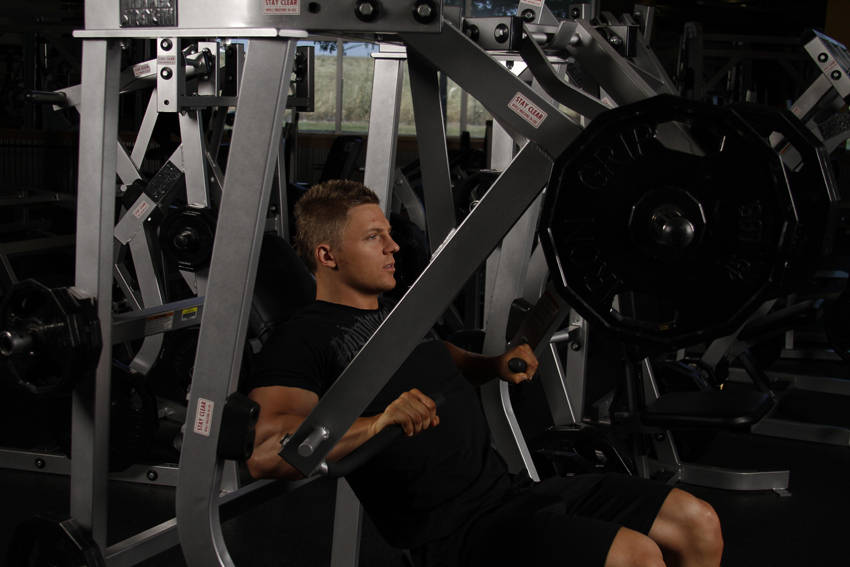
How to Perform Leverage Decline Chest Press
- Load an appropriate weight onto the pins and adjust the seat for your height. The handles should be near the bottom of the pectorals at the beginning of the motion. Your chest and head should be up and your shoulder blades retracted. This will be your starting position.
- Press the handles forward by extending through the elbow.
- After a brief pause at the top, return the weight just above the start position, keeping tension on the muscles by not returning the weight to the stops until the set is complete.
Pro Tips
- Category: Strength
- Force: Push
- Movement type: Compound
Ranked Leverage Decline Chest Press Alternatives
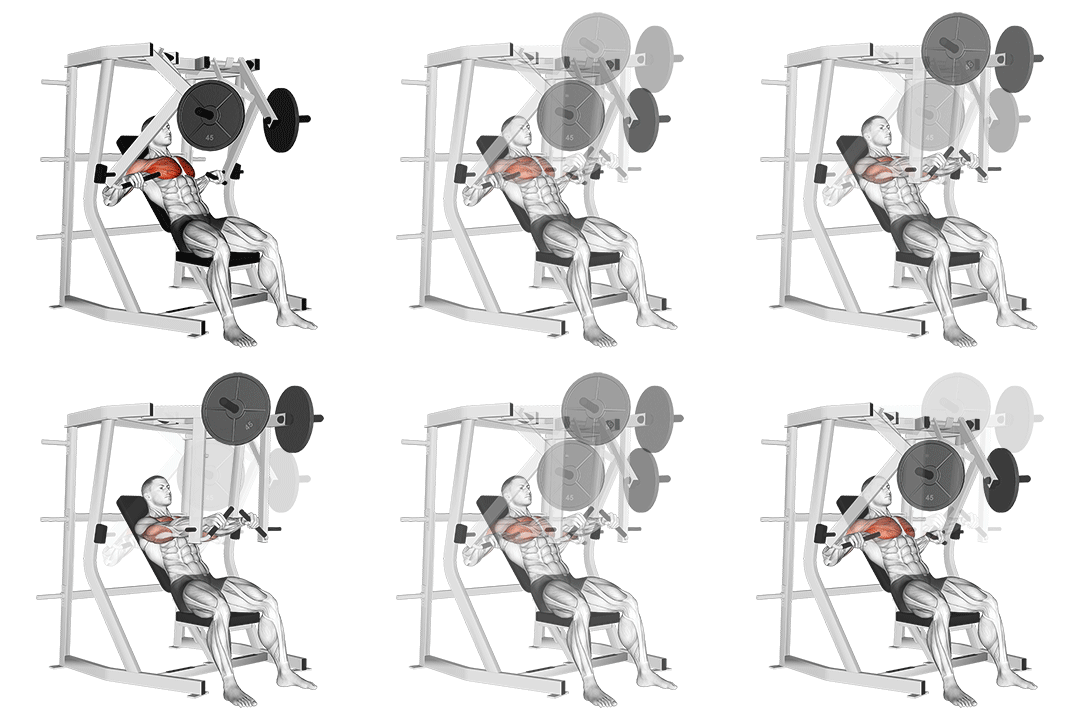
1. Lever Decline Chest Press
99.9% MatchHow to perform this exercise
- Adjust the seat height and backrest of the leverage machine to a comfortable position.
- Sit on the machine with your back against the backrest and your feet flat on the floor.
- Grasp the handles with an overhand grip and position your hands slightly wider than shoulder-width apart.
- Push the handles forward and away from your body until your arms are fully extended.
- Slowly lower the handles back towards your chest, keeping your elbows slightly bent.
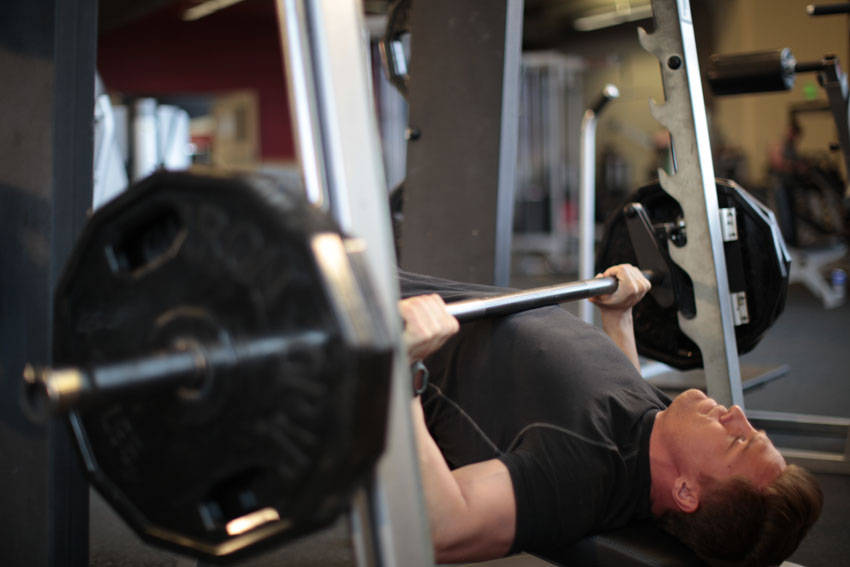
2. Smith Machine Decline Press
99.4% MatchHow to perform this exercise
- Position a decline bench in the rack so that the bar will be above your chest. Load an appropriate weight and take your place on the bench.
- Rotate the bar to unhook it from the rack and fully extend your arms. Your back should be slightly arched and your shoulder blades retracted. This will be your starting position.
- Begin the movement by flexing your arms, lowering the bar to your chest.
- Pause briefly, and then extend your arms to push the weight back to the starting position.
- After completing the desired number of repetitions, rotate the bar to rack the weight.
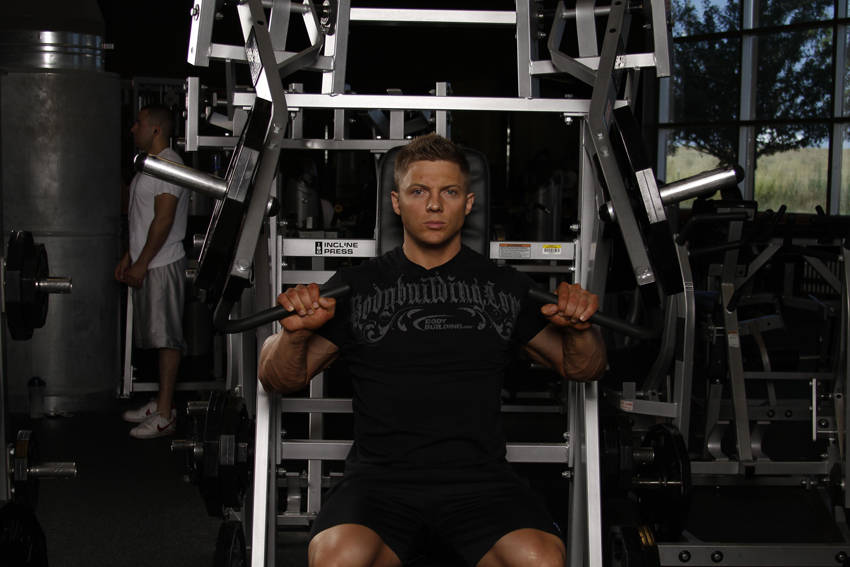
3. Leverage Incline Chest Press
90% MatchHow to perform this exercise
- Load an appropriate weight onto the pins and adjust the seat for your height. The handles should be near the top of the pectorals at the beginning of the motion. Your chest and head should be up and your shoulder blades retracted. This will be your starting position.
- Press the handles forward by extending through the elbow.
- After a brief pause at the top, return the weight just above the start position, keeping tension on the muscles by not returning the weight to the stops until the set is complete.
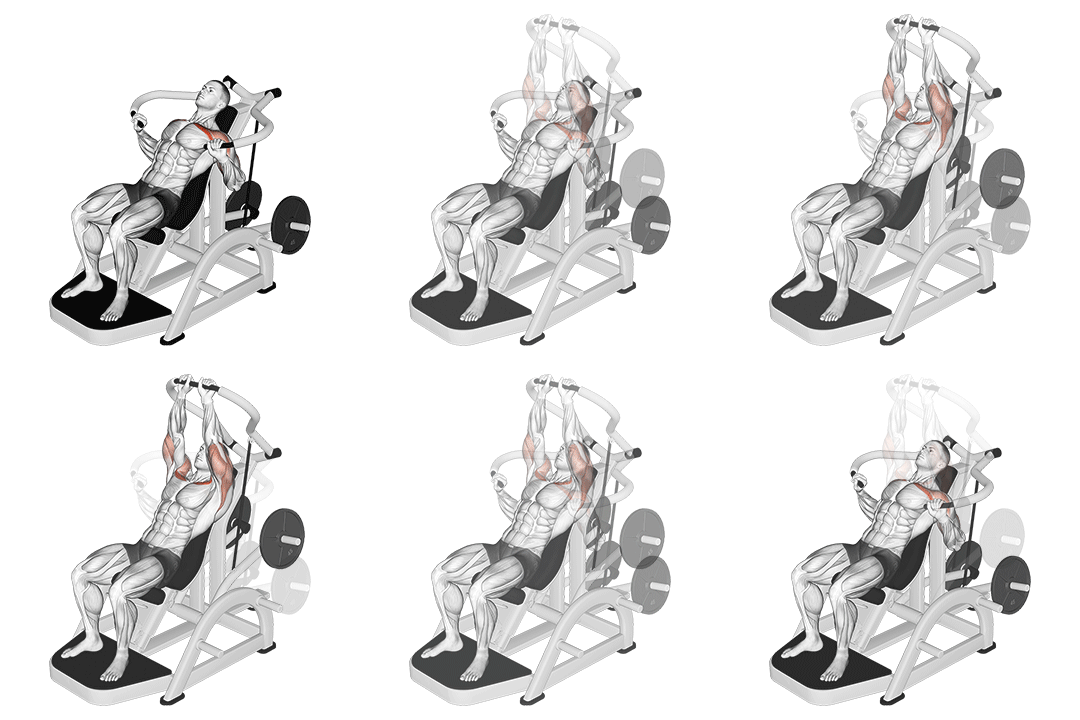
4. Lever Incline Chest Press V. 2
90% MatchHow to perform this exercise
- Adjust the seat height and backrest angle on the leverage machine to a comfortable position.
- Sit on the machine with your back against the backrest and your feet flat on the floor.
- Grasp the handles with an overhand grip and position your hands slightly wider than shoulder-width apart.
- Push the handles forward and away from your body until your arms are fully extended, but without locking your elbows.
- Pause for a moment at the fully extended position, then slowly bend your elbows and lower the handles back towards your chest.
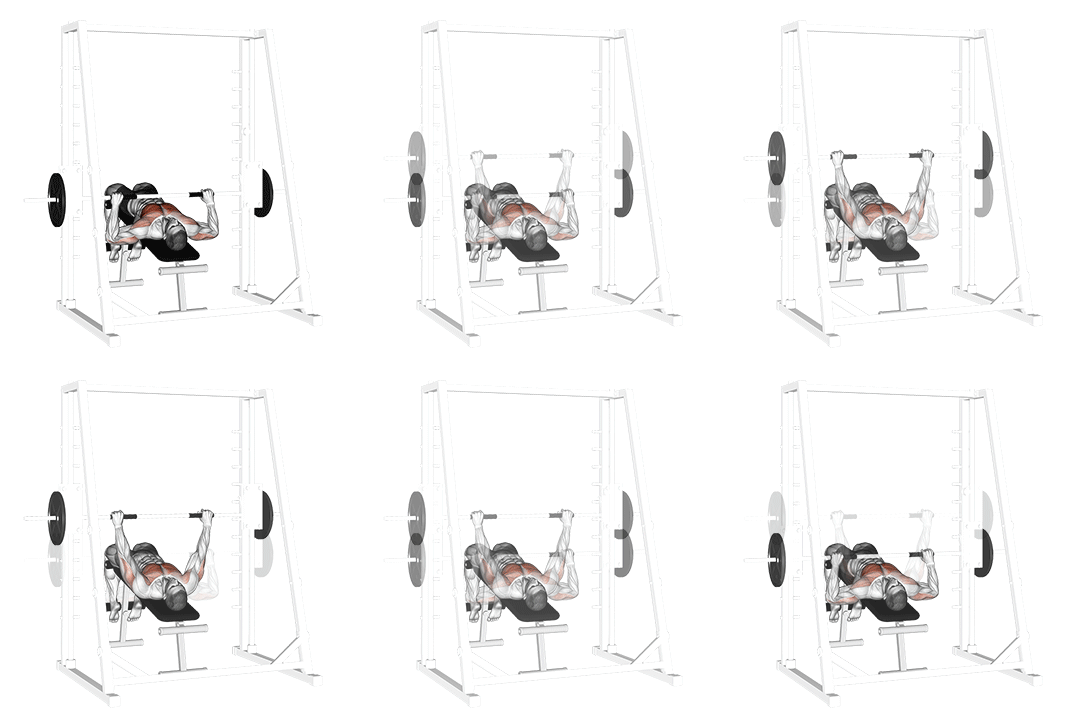
5. Smith Decline Bench Press
84.4% MatchHow to perform this exercise
- Adjust the decline bench to the desired angle.
- Lie down on the bench with your feet secured under the foot pads.
- Grasp the barbell with an overhand grip slightly wider than shoulder-width apart.
- Unrack the barbell and lower it slowly towards your chest, keeping your elbows tucked in.
- Pause for a moment at the bottom, then push the barbell back up to the starting position.
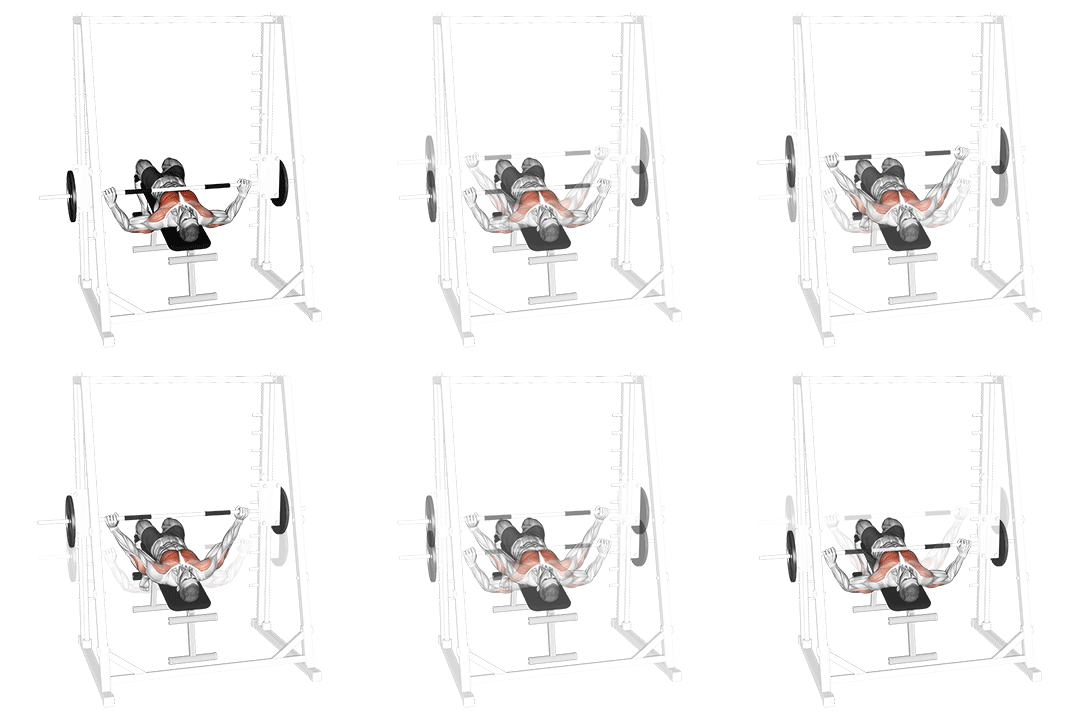
6. Smith Wide Grip Decline Bench Press
83% MatchHow to perform this exercise
- Adjust the decline bench to the desired angle.
- Lie down on the bench with your feet secured under the foot pads.
- Grasp the barbell with a wide grip, slightly wider than shoulder-width apart.
- Unrack the barbell and lower it slowly towards your chest, keeping your elbows pointed outwards.
- Pause for a moment when the barbell touches your chest.
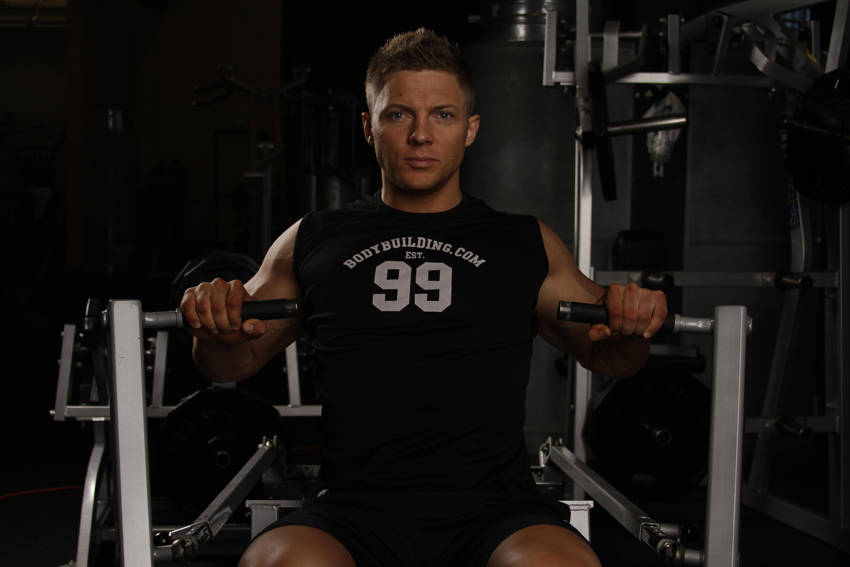
7. Leverage Chest Press
82% MatchHow to perform this exercise
- Load an appropriate weight onto the pins and adjust the seat for your height. The handles should be near the bottom or middle of the pectorals at the beginning of the motion.
- Your chest and head should be up and your shoulder blades retracted. This will be your starting position.
- Press the handles forward by extending through the elbow.
- After a brief pause at the top, return the weight just above the start position, keeping tension on the muscles by not returning the weight to the stops until the set is complete.
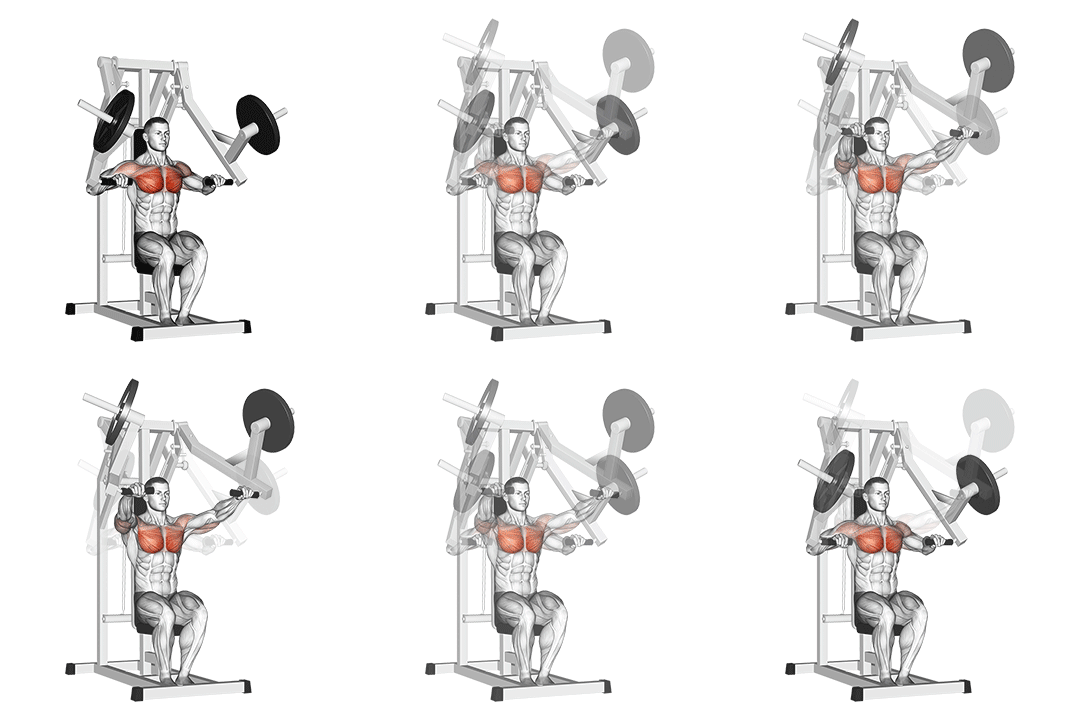
8. Lever Chest Press
82% MatchHow to perform this exercise
- Adjust the seat height and position yourself on the machine with your back flat against the pad.
- Grasp the handles with an overhand grip and position your elbows at a 90-degree angle.
- Push the handles forward until your arms are fully extended, exhaling during the movement.
- Pause briefly at the end of the movement, then slowly return to the starting position, inhaling as you do so.
- Repeat for the desired number of repetitions.
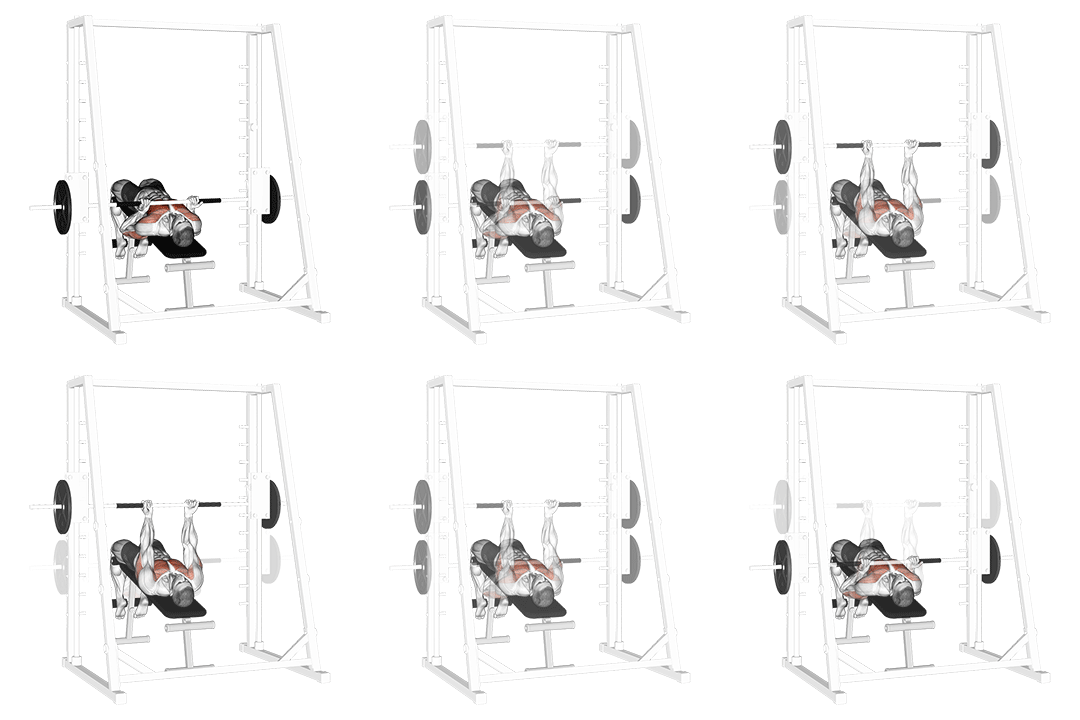
9. Smith Machine Reverse Decline Close Grip Bench Press
80.4% MatchHow to perform this exercise
- Adjust the smith machine to a decline position.
- Lie down on the bench with your feet secured under the foot pads.
- Grasp the barbell with a close grip, slightly narrower than shoulder-width apart.
- Unrack the barbell and lower it slowly towards your chest, keeping your elbows tucked in.
- Pause for a moment at the bottom, then push the barbell back up to the starting position.
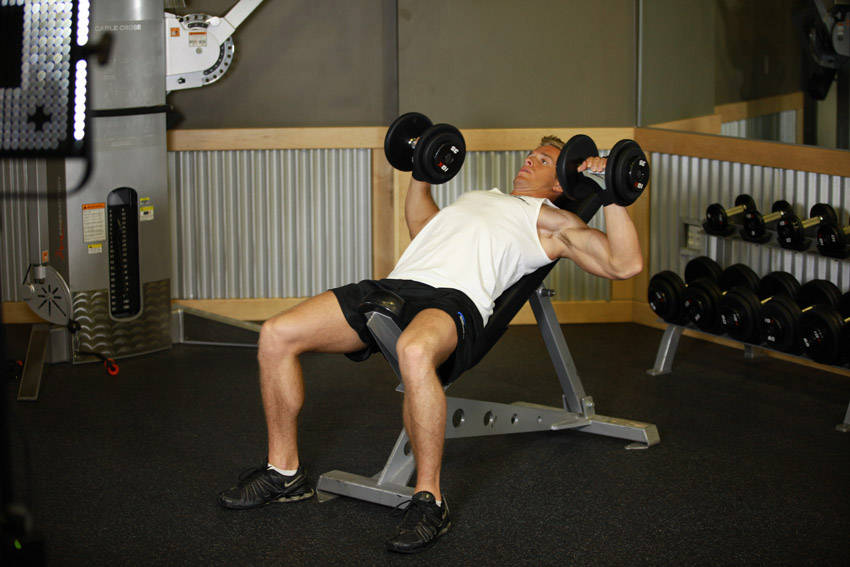
10. Incline Dumbbell Press
75.2% MatchHow to perform this exercise
- Lie back on an incline bench with a dumbbell in each hand atop your thighs. The palms of your hands will be facing each other.
- Then, using your thighs to help push the dumbbells up, lift the dumbbells one at a time so that you can hold them at shoulder width.
- Once you have the dumbbells raised to shoulder width, rotate your wrists forward so that the palms of your hands are facing away from you. This will be your starting position.
- Be sure to keep full control of the dumbbells at all times. Then breathe out and push the dumbbells up with your chest.
- Lock your arms at the top, hold for a second, and then start slowly lowering the weight. Tip Ideally, lowering the weights should take about twice as long as raising them.
Why You Might Need a Leverage Decline Chest Press Alternative
You may substitute the leverage decline chest press for several practical reasons: machine unavailability, persistent shoulder pain from the fixed path, or a preference for free-weight stabilization. The decline angle shifts emphasis to the sternal (lower) portion of the pectoralis major and reduces clavicular involvement. Free-weight options require greater scapular stability and core tension, increasing motor unit recruitment. For shoulder-sensitive athletes, choose exercises that allow you to set elbow flare and scapular position (tuck elbows to ~45°, maintain scapular retraction) so you preserve pectoral activation while unloading painful joint positions.
How to Choose the Right Substitute
Select a substitute based on your goal, available equipment, and tolerance for instability. For maximal lower-pec hypertrophy choose a 15–30° decline bench with heavy dumbbells and controlled 2–3 second eccentrics; cue a full scapular pinch and drive the elbows down and in. If you lack a bench, elevate your feet 12–18 inches for decline push-ups and lean the torso forward to bias the sternum. Prioritize exercises that allow progressive overload, preserve a safe elbow path (about 45° from the torso), and enable consistent volume for growth.
Frequently Asked Questions
What muscles does Leverage Decline Chest Press work?
The leverage decline chest press targets the sternal head of the pectoralis major (lower pecs) while also engaging the anterior deltoid and triceps brachii. The decline angle reduces clavicular (upper-pec) activation and shifts force vectors so the lower pec fibers contribute more during the concentric press; keep scapulae retracted to maximize chest recruitment.
What is the best bodyweight alternative to Leverage Decline Chest Press?
Decline push-ups (feet elevated 12–18 inches) are the top bodyweight substitute because they increase load on the lower pecs and require no equipment. Lean your torso slightly forward, pinch the shoulder blades, and lower with elbows tracking ~45° to maintain pectoral emphasis and shoulder safety.
Can I build muscle without doing Leverage Decline Chest Press?
Yes, you can build chest size using other compound pressing movements and progressive overload. Use decline dumbbell/barbell presses, weighted dips with a forward lean, or cable variations and manipulate volume, load, and eccentric tempo (2–3 second negatives) to stimulate hypertrophy without that specific machine.
More Exercise Alternatives
Find Alternatives for Any Exercise
Use the exercise substitution finder to compare ranked alternatives for your available equipment and training preference.
Try the Exercise Substitution Finder →