

10 Best Posterior Step To Overhead Reach Alternatives for Home Workouts
The Posterior Step To Overhead Reach is done standing. Ranked closest by our scoring: the Lunge With Twist, the Step-up With Knee Raise and the Crossover Reverse Lunge.
If you can’t perform the Posterior Step To Overhead Reach, use exercises that preserve anti-rotation and hip stability while targeting the abs and obliques. Effective options include Pallof-style anti-rotation holds, reverse lunge-to-reach, plank reaches, and single-leg deadbugs. Cue: brace your core, keep a neutral spine, and move with controlled tempo to maintain abdominal activation.
Updated Ranked by our 12-factor similarity model How it works
Original Exercise: Posterior Step To Overhead Reach
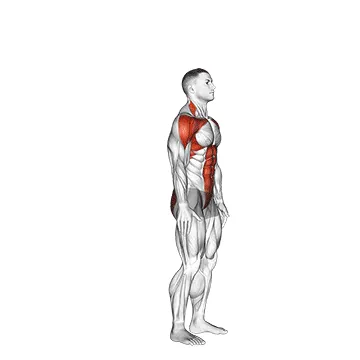
- Primary muscle
- Abs
- Equipment
- Bodyweight
- Difficulty
- Intermediate
- Type
- Compound
Secondary muscles: Glutes, Hamstrings, Quadriceps, Shoulders
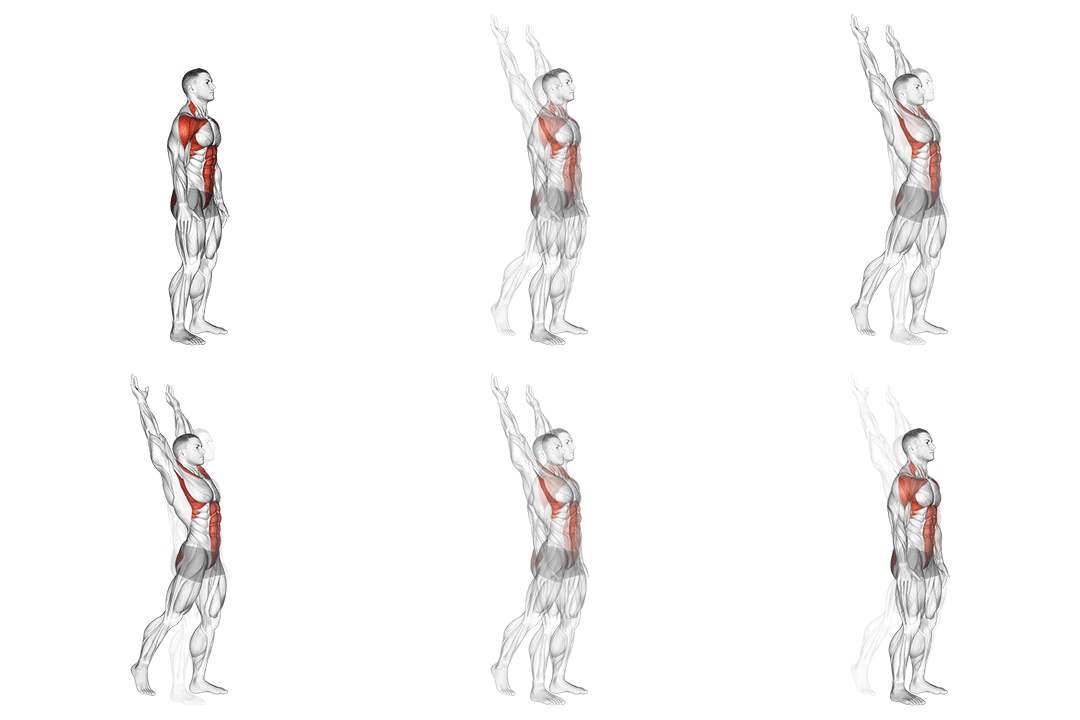
How to perform Posterior Step To Overhead Reach
- Stand with your feet hip-width apart and your arms by your sides.
- Take a step back with your right foot, landing on the ball of your foot.
- Bend your left knee and lower your body into a lunge position.
- As you lower into the lunge, simultaneously reach your arms overhead.
- Pause for a moment at the bottom of the lunge, then return to the starting position by pushing through your left heel and bringing your right foot forward.
- Repeat the movement on the other side, stepping back with your left foot and bending your right knee.
- Continue alternating sides for the desired number of repetitions.
Ranked Posterior Step To Overhead Reach Alternatives
10 substitutes, ranked by how closely each one matches the Posterior Step To Overhead Reach on movement pattern, muscles worked, equipment and body position. The higher the score, the less you change. Open "How to perform this exercise" on a card for the steps; every card title links to that exercise's own alternatives page. Harder versions are tagged as progressions and kept out of the top spot even when they score higher.
Progression
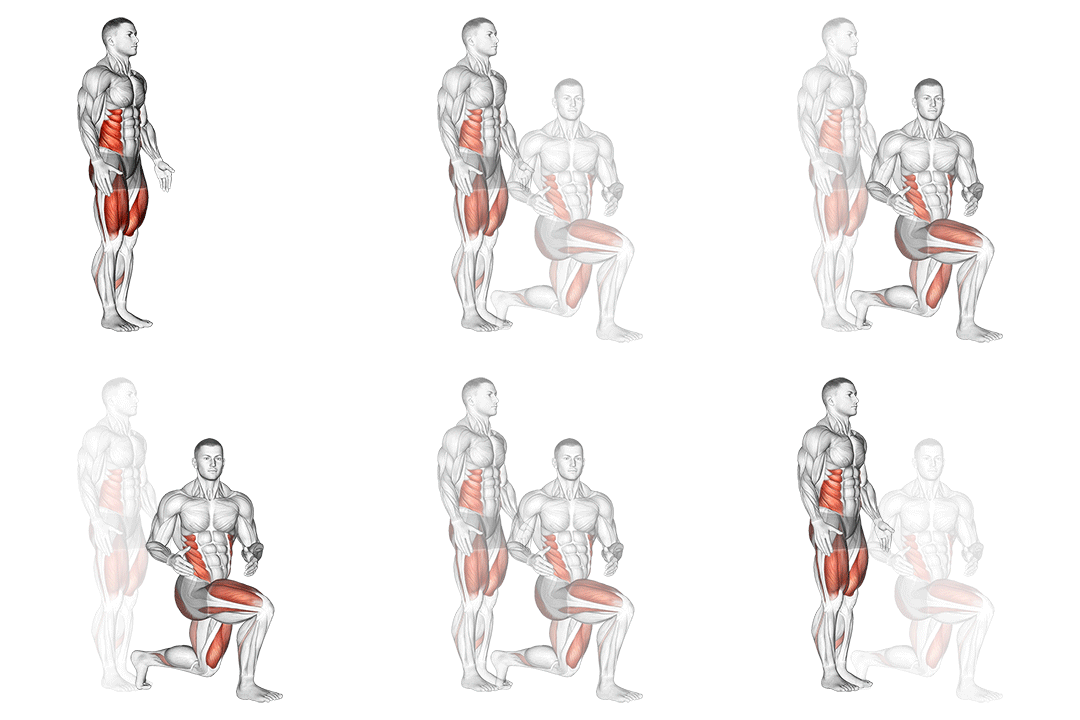
1. Lunge With Twist
84% match- Abs
- Bodyweight
- Intermediate
- Compound
Pick this when you want a harder version that still works the abs.
How to perform this exercise
- Start by standing with your feet shoulder-width apart.
- Take a step forward with your right foot, lowering your body into a lunge position.
- As you lunge, twist your torso to the right, bringing your left elbow towards your right knee.
- Pause for a moment, then return to the starting position.
- Repeat on the other side, stepping forward with your left foot and twisting your torso to the left.
- Continue alternating sides for the desired number of repetitions.
Sets and reps: 3 or 4 sets of 6 to 10 reps on each side.
Why this matches
- Primary muscle: abs, the same as the Posterior Step To Overhead Reach
- Equipment: bodyweight only, the same as the Posterior Step To Overhead Reach
- Body position: standing, the same as the Posterior Step To Overhead Reach
Progression
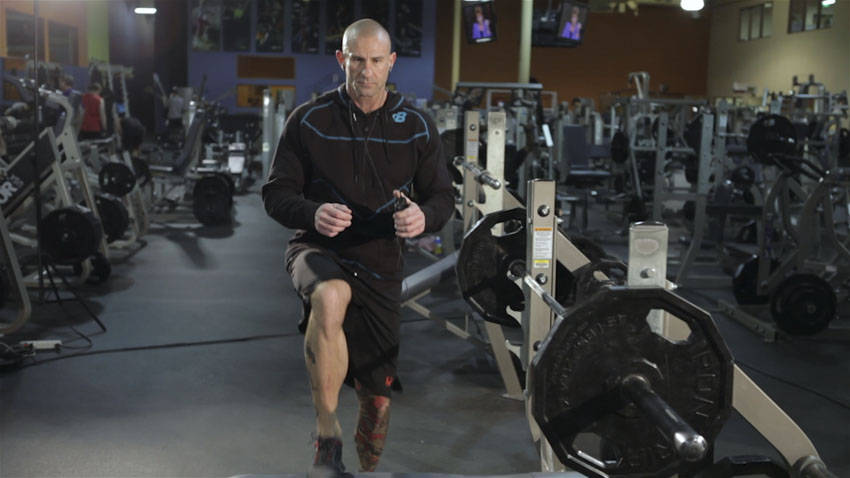
2. Step-up With Knee Raise
75% match- Glutes
- Bodyweight
- Intermediate
- Compound
A looser match: it uses the same equipment, but it works the glutes rather than the abs.
How to perform this exercise
- Stand facing a box or bench of an appropriate height with your feet together. This will be your starting position.
- Begin the movement by stepping up, putting your left foot on the top of the bench. Extend through the hip and knee of your front leg to stand up on the box. As you stand on the box with your left leg, flex your right knee and hip, bringing your knee as high as you can.
- Reverse this motion to step down off the box, and then repeat the sequence on the opposite leg.
Sets and reps: 3 or 4 sets of 6 to 10 reps on each side.
Why this matches
- Primary muscle: glutes, not abs
- Equipment: bodyweight only, the same as the Posterior Step To Overhead Reach
- Body position: standing, the same as the Posterior Step To Overhead Reach
Progression
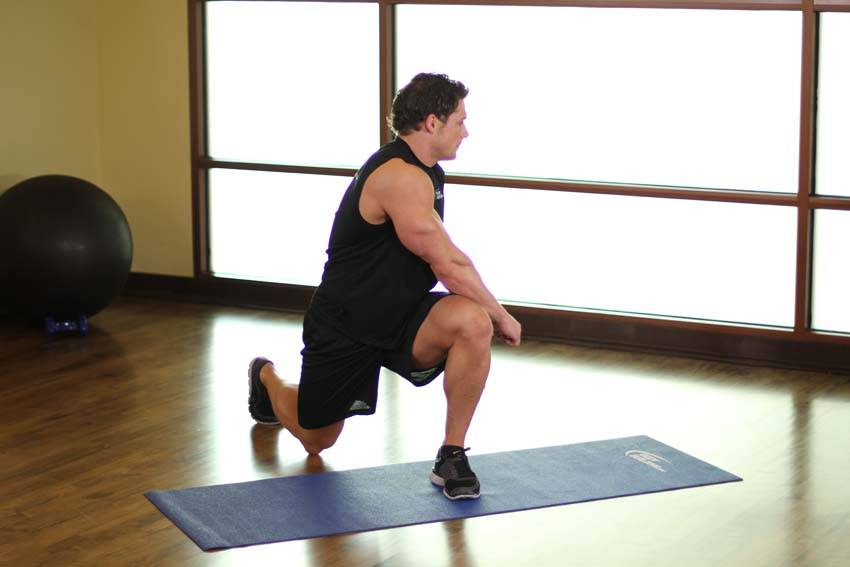
3. Crossover Reverse Lunge
72% match- Glutes
- Bodyweight
- Intermediate
- Compound
How to perform this exercise
- Stand with your feet shoulder width apart. This will be your starting position.
- Perform a rear lunge by stepping back with one foot and flexing the hips and front knee. As you do so, rotate your torso across the front leg.
- After a brief pause, return to the starting position and repeat on the other side, continuing in an alternating fashion.
Sets and reps: 3 or 4 sets of 6 to 10 reps on each side.
Why this matches
- Primary muscle: glutes, not abs
- Equipment: bodyweight only, the same as the Posterior Step To Overhead Reach
- Body position: standing, the same as the Posterior Step To Overhead Reach
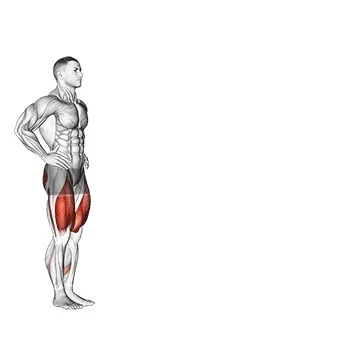
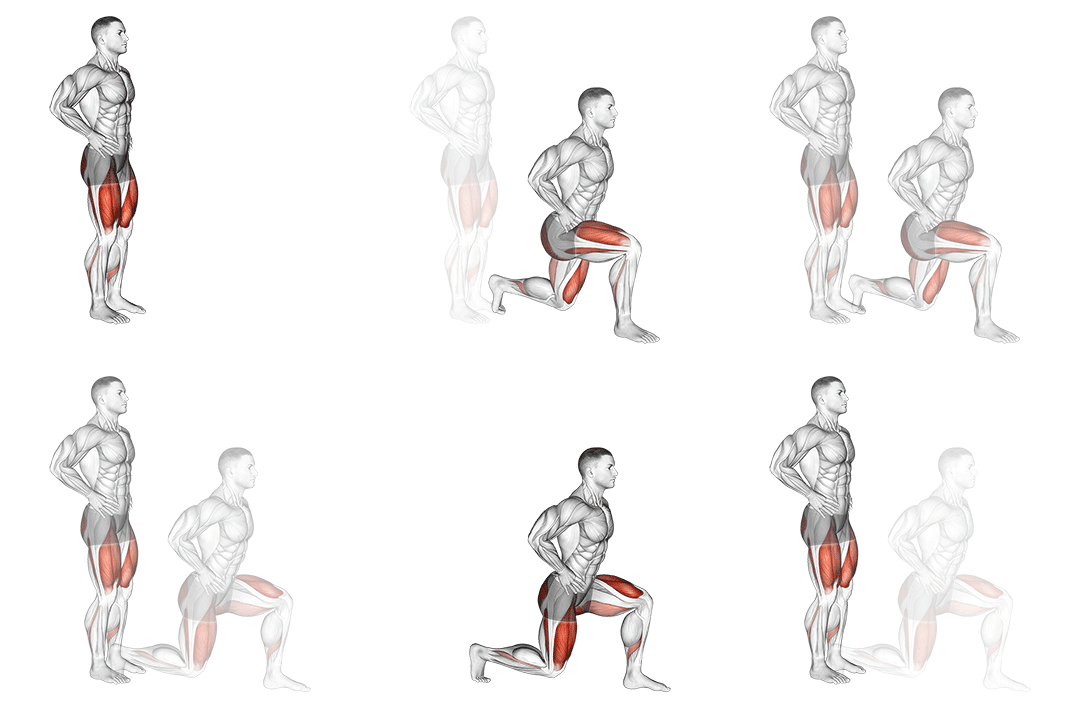
4. Forward Lunge
70% match- Glutes
- Bodyweight
- Beginner
- Compound
How to perform this exercise
- Stand with your feet hip-width apart and hands on your hips.
- Take a big step forward with your right foot, lowering your body into a lunge position.
- Bend your right knee to about 90 degrees, keeping your knee aligned with your ankle.
- Push off with your right foot and return to the starting position.
- Repeat with your left leg, alternating sides for the desired number of repetitions.
Sets and reps: 3 sets of 8 to 12 reps on each side, and add reps before you add load.
Why this matches
- Primary muscle: glutes, not abs
- Equipment: bodyweight only, the same as the Posterior Step To Overhead Reach
- Body position: standing, the same as the Posterior Step To Overhead Reach
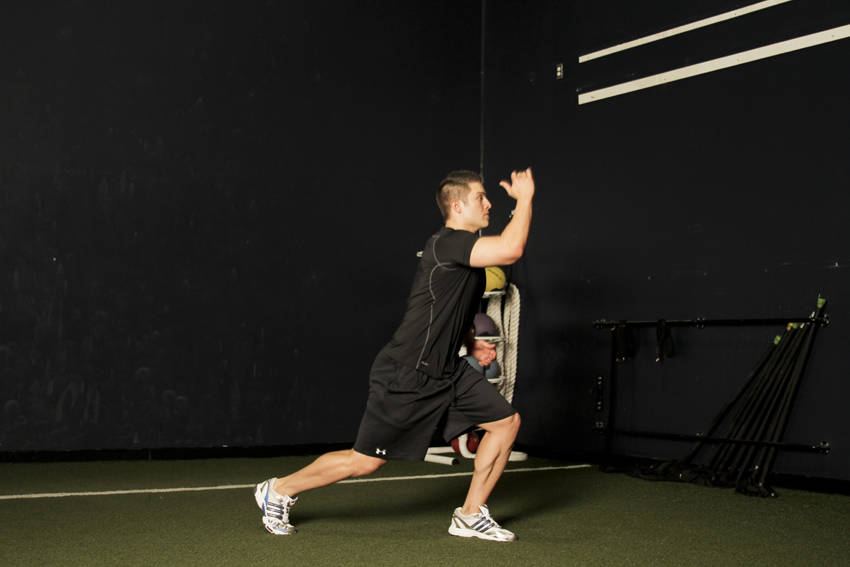
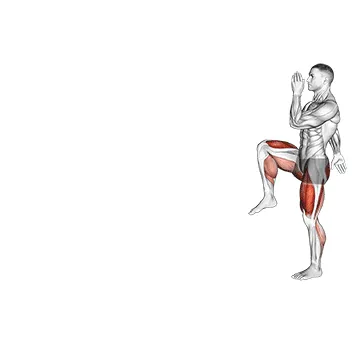
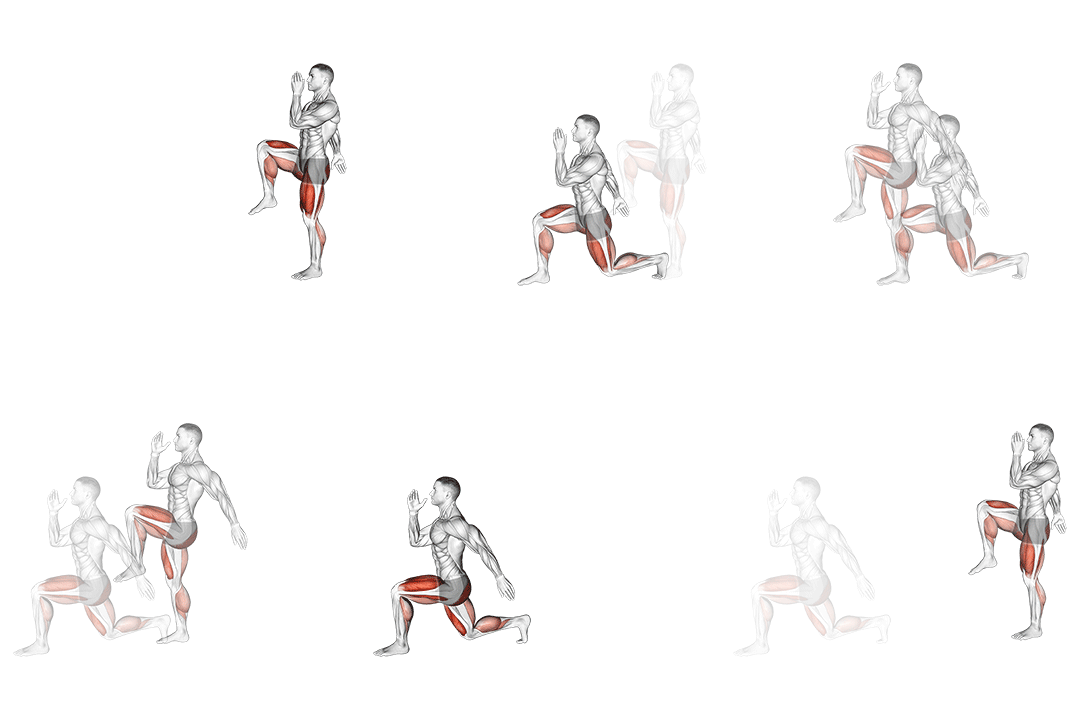
5. Walking High Knees Lunge
70% match- Cardio
- Bodyweight
- Beginner
- Compound
A looser match: it uses the same equipment, but it works the heart and lungs rather than the abs.
How to perform this exercise
- Stand with your feet hip-width apart.
- Lift your right knee up towards your chest as high as you can while balancing on your left leg.
- Step forward with your right foot and lower your body into a lunge position, bending both knees to a 90-degree angle.
- Push off with your right foot and bring your left knee up towards your chest.
- Step forward with your left foot and lower your body into a lunge position.
- Continue alternating legs and lunging forward, keeping your core engaged and maintaining a steady pace.
- Repeat for the desired number of repetitions.
Sets and reps: 3 sets of 8 to 12 reps on each side, and add reps before you add load.
Why this matches
- Primary muscle: your heart and lungs, not abs
- Equipment: bodyweight only, the same as the Posterior Step To Overhead Reach
- Body position: standing, the same as the Posterior Step To Overhead Reach
Progression
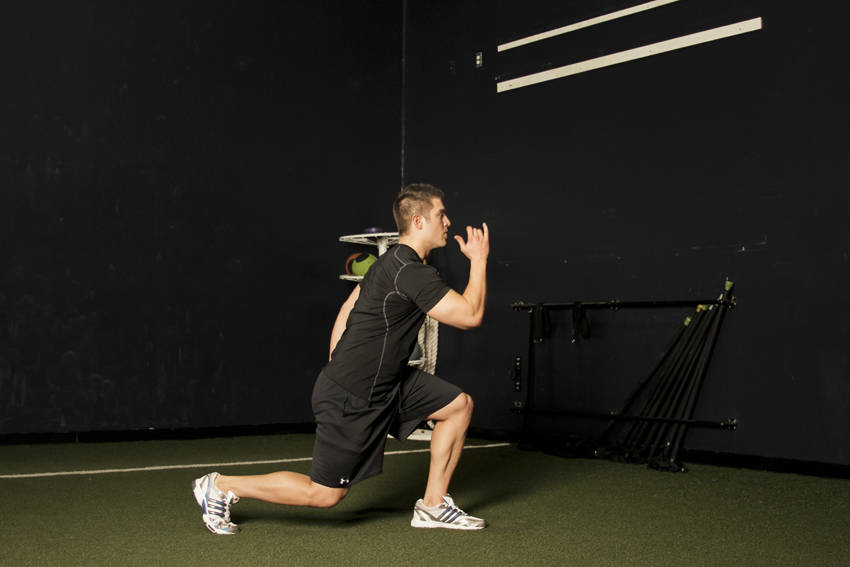
6. Scissors Jump
70% match- Quads
- Bodyweight
- Advanced
- Compound
A looser match: it uses the same equipment, but it works the quads rather than the abs.
How to perform this exercise
- Assume a lunge stance position with one foot forward with the knee bent, and the rear knee nearly touching the ground.
- Ensure that the front knee is over the midline of the foot. Extending through both legs, jump as high as possible, swinging your arms to gain lift.
- As you jump as high as you can, switch the position of your legs, moving your front leg to the back and the rear leg to the front.
- As you land, absorb the impact through the legs by adopting the lunge position, and repeat.
Sets and reps: 3 or 4 sets of 6 to 10 reps on each side.
Why this matches
- Primary muscle: quads, not abs
- Equipment: bodyweight only, the same as the Posterior Step To Overhead Reach
- Body position: standing, the same as the Posterior Step To Overhead Reach
Progression
7. Split Jump
70% match- Quads
- Bodyweight
- Intermediate
- Compound
How to perform this exercise
- Assume a lunge stance position with one foot forward with the knee bent, and the rear knee nearly touching the ground.
- Ensure that the front knee is over the midline of the foot.
- Extending through both legs, jump as high as possible, swinging your arms to gain lift.
- As you jump, bring your feet together, and move them back to their initial positions as you land.
- Absorb the impact by reverting back to the starting position.
Sets and reps: 3 or 4 sets of 6 to 10 reps on each side.
Why this matches
- Primary muscle: quads, not abs
- Equipment: bodyweight only, the same as the Posterior Step To Overhead Reach
- Body position: standing, the same as the Posterior Step To Overhead Reach
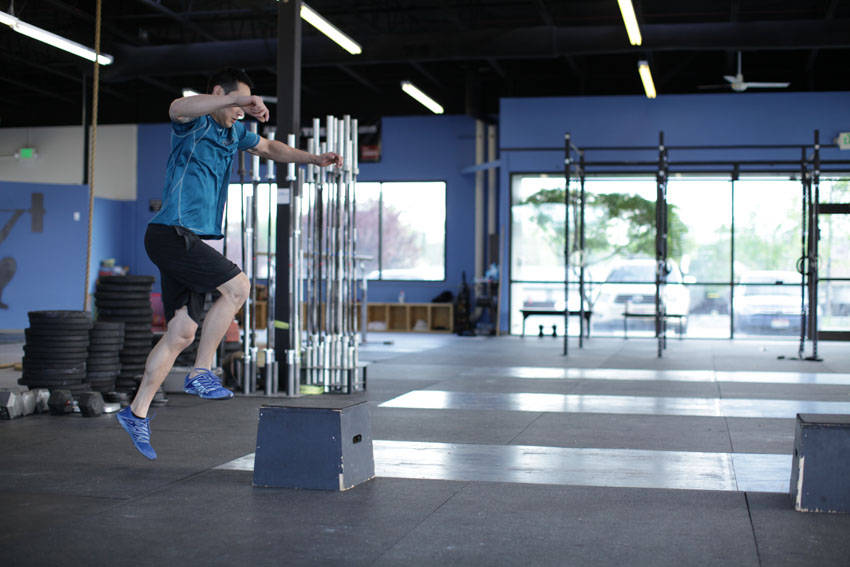
8. Box Skip
70% match- Glutes
- Other
- Intermediate
- Compound
How to perform this exercise
- You will need several boxes lined up about 8 feet apart.
- Begin facing the first box with one leg slightly behind the other.
- Drive off the back leg, attempting to gain as much height with the hips as possible.
- Immediately upon landing on the box, drive the other leg forward and upward to gain height and distance, leaping from the box. Land between the first two boxes with the same leg that landed on the first box.
- Then, step to the next box and repeat.
Sets and reps: 3 or 4 sets of 6 to 10 reps on each side.
Why this matches
- Primary muscle: glutes, not abs
- Equipment: bodyweight only, the same as the Posterior Step To Overhead Reach
- Body position: standing, the same as the Posterior Step To Overhead Reach
Progression
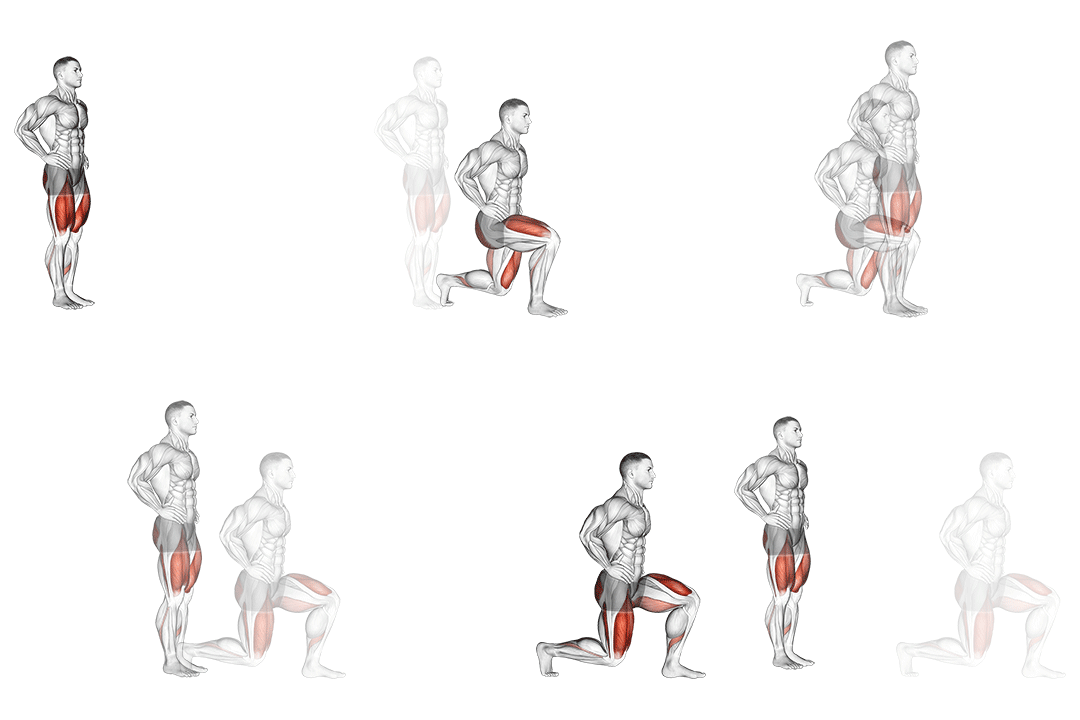
9. Walking Lunge
69% match- Glutes
- Bodyweight
- Intermediate
- Compound
How to perform this exercise
- Stand with your feet shoulder-width apart.
- Take a step forward with your right leg, lowering your body into a lunge position.
- Keep your torso upright and your front knee aligned with your ankle.
- Push off with your right foot and bring your left foot forward, stepping into a lunge position with your left leg.
- Continue alternating legs and walking forward, maintaining a controlled and steady pace.
- Repeat for the desired number of repetitions.
Sets and reps: 3 or 4 sets of 6 to 10 reps on each side.
Why this matches
- Primary muscle: glutes, not abs
- Equipment: bodyweight only, the same as the Posterior Step To Overhead Reach
- Body position: standing, the same as the Posterior Step To Overhead Reach
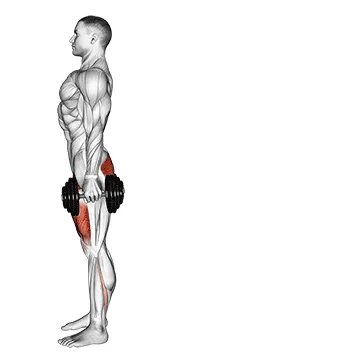
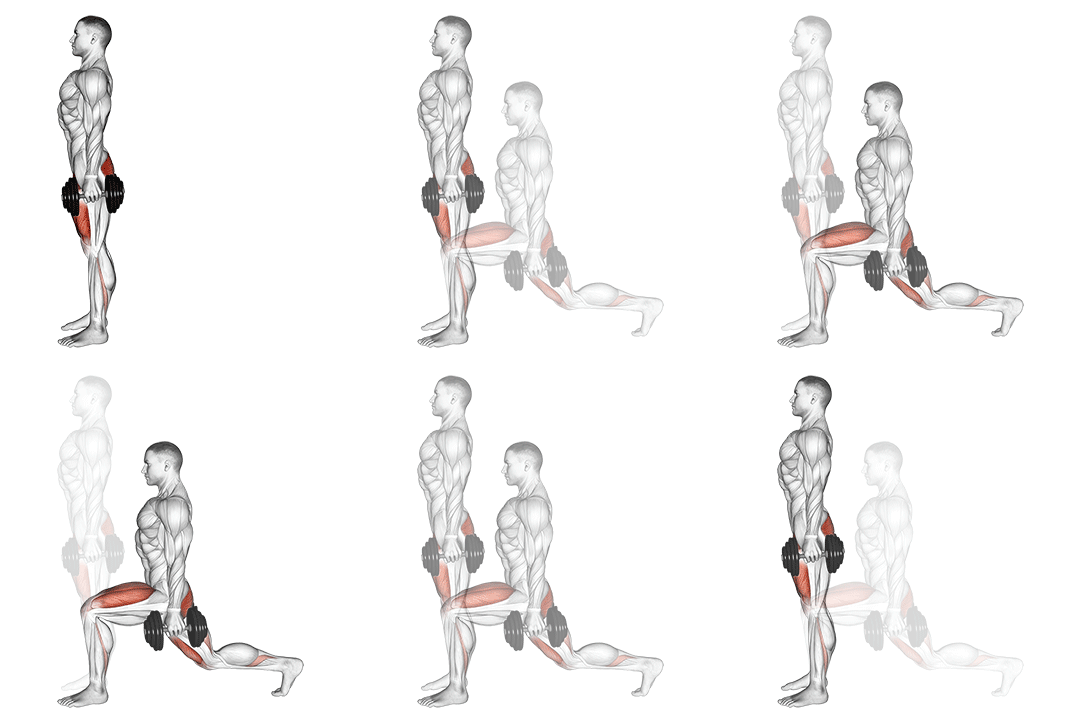
10. Dumbbell Rear Lunge
68% match- Glutes
- Dumbbell
- Intermediate
- Compound
How to perform this exercise
- Stand with your feet shoulder-width apart, holding a dumbbell in each hand.
- Take a step backward with your right foot, lowering your body into a lunge position.
- Bend your left knee and lower your body until your left thigh is parallel to the ground.
- Pause for a moment, then push through your left heel to return to the starting position.
- Repeat on the other side, stepping back with your left foot.
Sets and reps: 3 or 4 sets of 6 to 10 reps on each side.
Why this matches
- Primary muscle: glutes, not abs
- Equipment: free weights, not bodyweight only
- Body position: standing, the same as the Posterior Step To Overhead Reach
Why You Might Need a Posterior Step To Overhead Reach Alternative
You may substitute this move because of shoulder or knee pain, poor balance, limited space, or the need to scale difficulty. The Posterior Step To Overhead Reach blends hip extension, anti-rotation, and scapular control; if a joint or mobility limitation prevents safe loading, pick a variation that reduces torque while keeping core demand. For rehab or low-impact work, choose deadbugs or tall-kneeling anti-rotation holds to preserve rectus abdominis and oblique activation. Cue: limit hip extension, keep ribs stacked over the pelvis, and work at a slow 2-0-2 tempo to retain consistent abdominal recruitment.
How to Choose the Right Posterior Step To Overhead Reach Substitute
Select a substitute based on your training goal, pain profile, and available equipment. For transverse-plane control and anti-rotation pick Pallof holds or plank reaches; for unilateral hip stability and posterior-chain emphasis choose reverse lunges or single-leg deadbugs. Adjust intensity with tempo changes, isometric holds, or unilateral loading rather than adding ballistic motion. Check biomechanics: maintain a neutral spine, allow a proper hip hinge when targeting glutes, and avoid excessive lumbar extension. Cue: keep shoulders down, squeeze glutes at hip extension, and sustain abdominal bracing to maximize targeted muscle activation.
Posterior Step To Overhead Reach FAQ
What muscles does Posterior Step To Overhead Reach work?
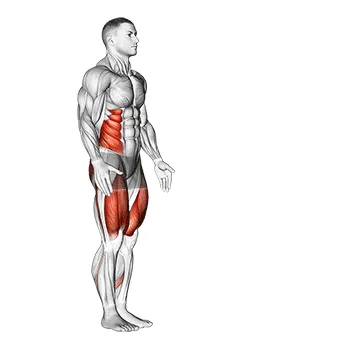
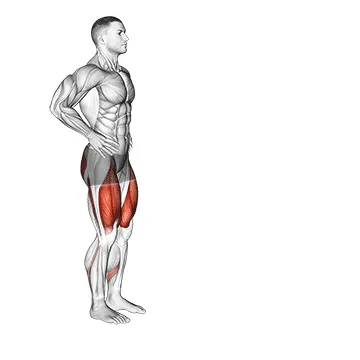
The Posterior Step To Overhead Reach primarily targets the abs, rectus abdominis and internal/external obliques, through anti-extension and anti-rotation. It also recruits hip extensors (gluteus maximus) during the posterior step and scapular stabilizers during the overhead reach; cue: maintain a neutral pelvis and brace the core on every rep to ensure the abs bear the load.
What is the best bodyweight alternative to Posterior Step To Overhead Reach?
A plank reach (alternating arm reach from a forearm or high plank) is the best bodyweight substitute for preserving anti-rotation and core load without a stepping pattern. Cue: keep hips square, press through the supporting forearm, reach slowly with controlled shoulder elevation, and focus on oblique and rectus abdominis activation throughout the reach.
Can I build muscle without doing Posterior Step To Overhead Reach?
Yes. You can build core and hip musculature with progressive overload via increased time under tension, higher volume, unilateral variations, or added isometric holds. Example progressions include slow single-leg deadbugs, extended plank holds with arm lifts, or weighted reverse lunges; cue: emphasize a full hip hinge and a firm glute squeeze at top to maximize muscle recruitment.
Find Alternatives for Any Exercise
Search the exercise database and filter the ranked substitutes by the equipment you own.
Similarity scores compare exercise metadata such as movement pattern, muscles, equipment and body position. They are not a safety rating or a check that you own the equipment. Learn about our methodology