

10 Best Step Mill Alternatives for Gym & Home Workouts
The Step Mill is done standing with a machine. Ranked closest by our scoring: the Star Jump, the Fast Skipping and Frog Hops.
Updated Ranked by our 12-factor similarity model How it works
Original Exercise: Step Mill
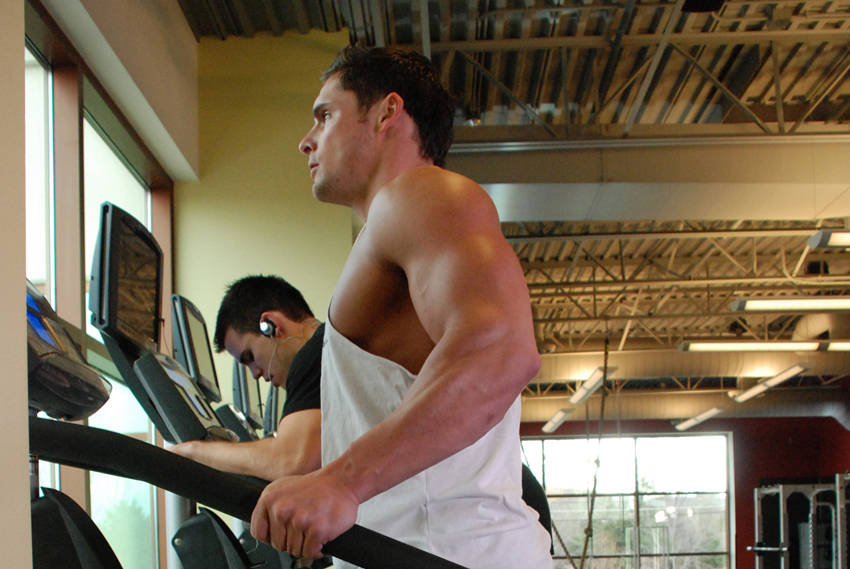
- Primary muscle
- Quads
- Equipment
- Machine
- Difficulty
- Beginner
- Type
- Compound
Secondary muscles: Calves, Glutes, Hamstrings
How to perform Step Mill
- To begin, step onto the stepmill and select the desired option from the menu. You can choose a manual setting, or you can select a program to run. Typically, you can enter your age and weight to estimate the amount of calories burned during exercise. Use caution so that you don't trip as you climb the stairs. It is recommended that you maintain your grip on the handles so that you don't fall.
- Stepmills offer convenience, cardiovascular benefits, and usually have less impact than running outside while offering a similar rate of calories burned. They are typically much harder than other cardio equipment. A 150 lb person will typically burn over 300 calories in 30 minutes, compared to about 175 calories walking.
Ranked Step Mill Alternatives
10 substitutes, ranked by how closely each one matches the Step Mill on movement pattern, muscles worked, equipment and body position. The higher the score, the less you change. Open "How to perform this exercise" on a card for the steps; every card title links to that exercise's own alternatives page.
Best match 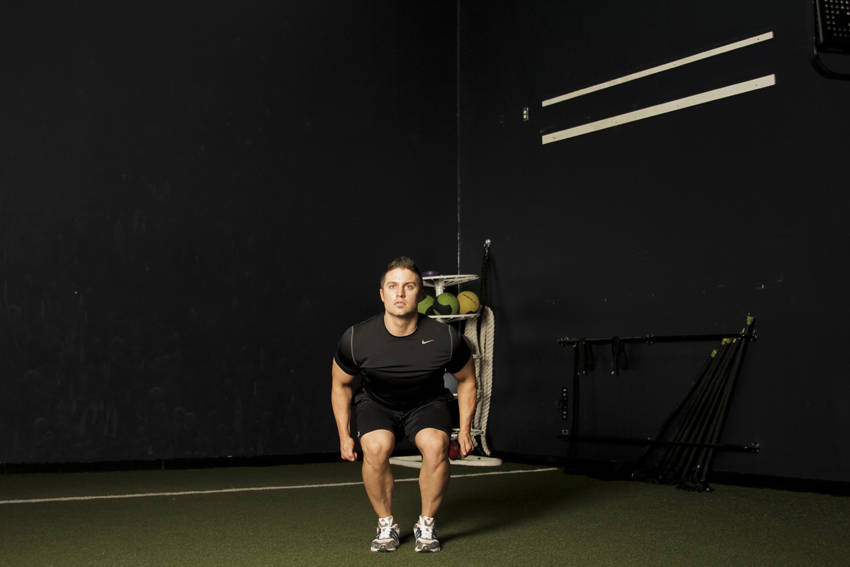
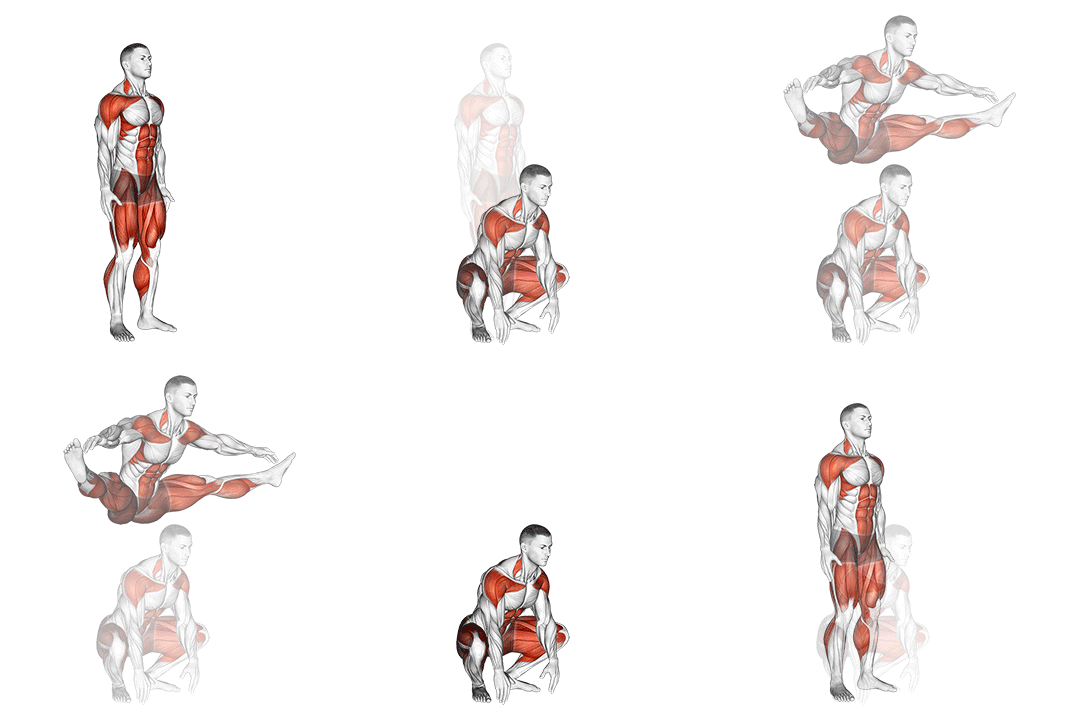
1. Star Jump
77% match- Quads
- Bodyweight
- Intermediate
- Compound
Use this when you have nothing to train with, because it works the quads with bodyweight alone.
How to perform this exercise
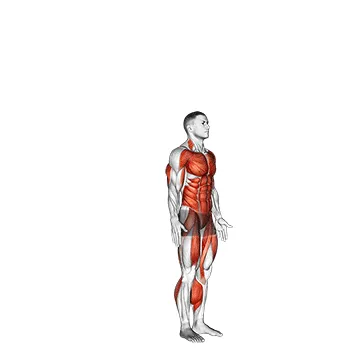
- Begin in a relaxed stance with your feet shoulder width apart and hold your arms close to the body.
- To initiate the move, squat down halfway and explode back up as high as possible. Fully extend your entire body, spreading your legs and arms away from the body.
- As you land, bring your limbs back in and absorb your impact through the legs.
Sets and reps: Work for 30 to 60 seconds, rest as long as you worked, and repeat 6 to 10 times.
Why this matches
- Primary muscle: quads, the same as the Step Mill
- Equipment: bodyweight only, not a cardio machine
- Body position: standing, the same as the Step Mill
- Balance: harder to stay steady on than the Step Mill
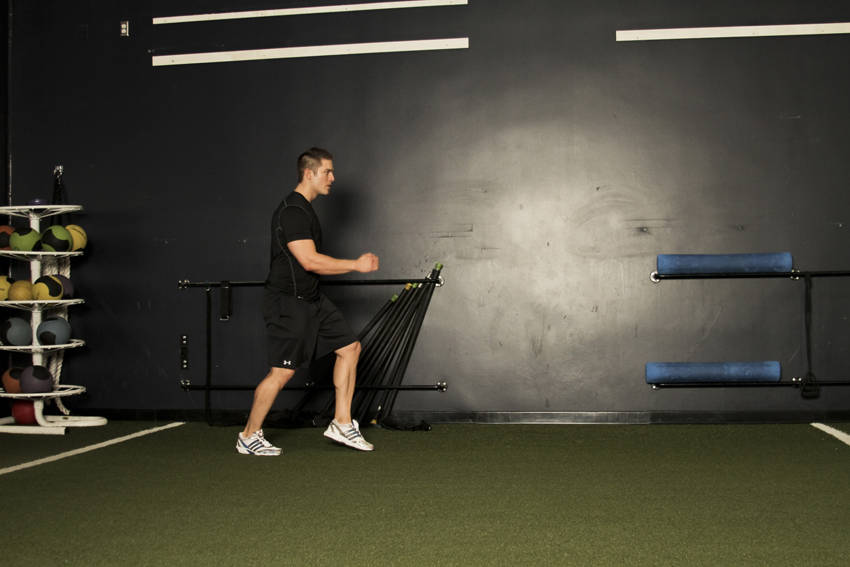
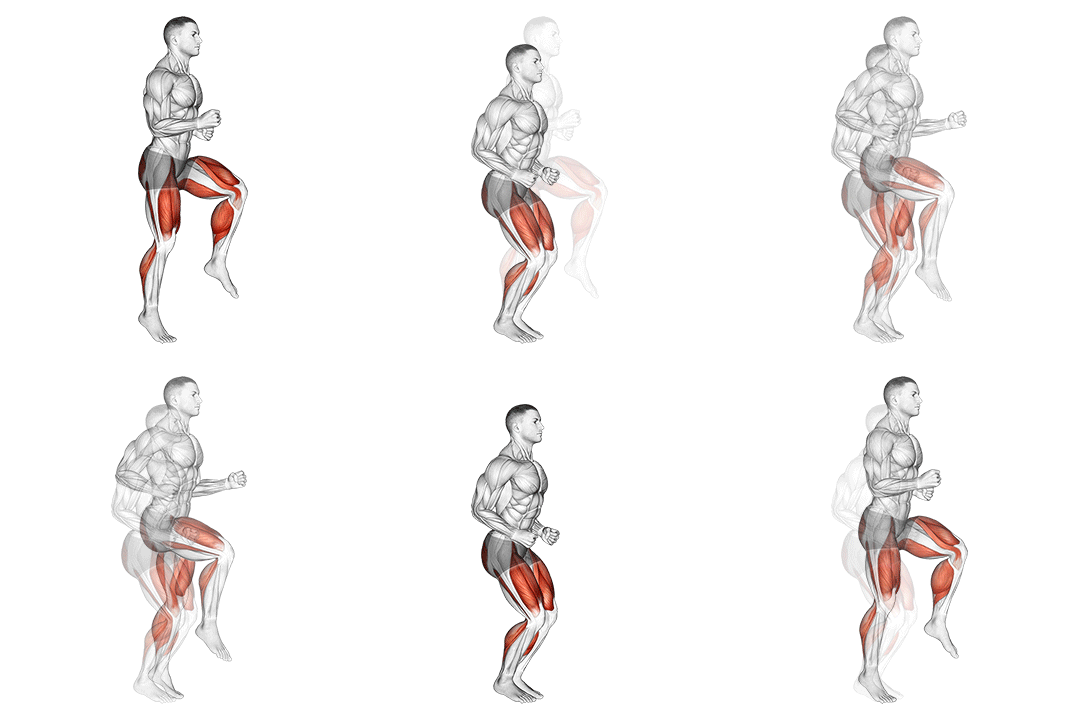
2. Fast Skipping
64% match- Quads
- Bodyweight
- Intermediate
- Compound
Pick this when you want a harder single-leg version that still works the quads.
How to perform this exercise
- Start in a relaxed position with one leg slightly forward. This will be your starting position.
- Skip by executing a step-hop pattern of right-right-step to left-left-step, and so on, alternating back and forth.
- Perform fast skips by maintaining close contact with the ground and reduce air time, moving as quickly as possible.
Sets and reps: Work for 30 to 60 seconds, rest as long as you worked, and repeat 6 to 10 times.
Why this matches
- Primary muscle: quads, the same as the Step Mill
- Equipment: bodyweight only, not a cardio machine
- Body position: standing, the same as the Step Mill
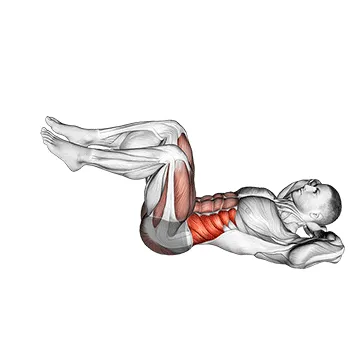
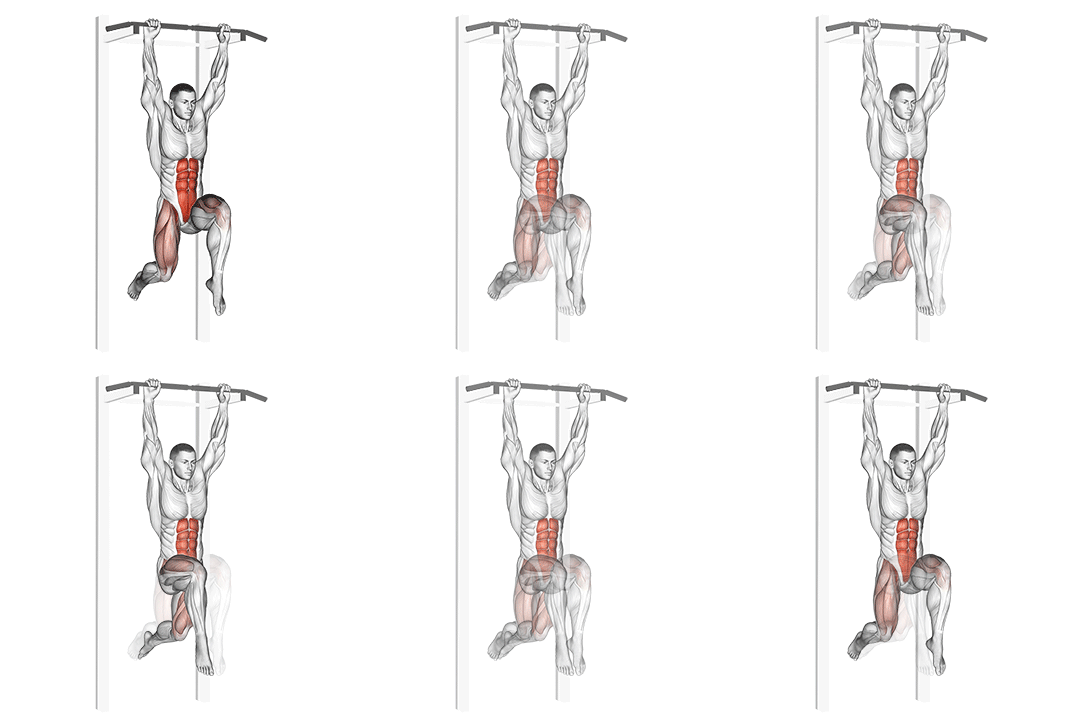
3. Air Bike
64% match- Abs
- Bodyweight
- Intermediate
- Compound
A looser match: it works the abs rather than the quads.
How to perform this exercise
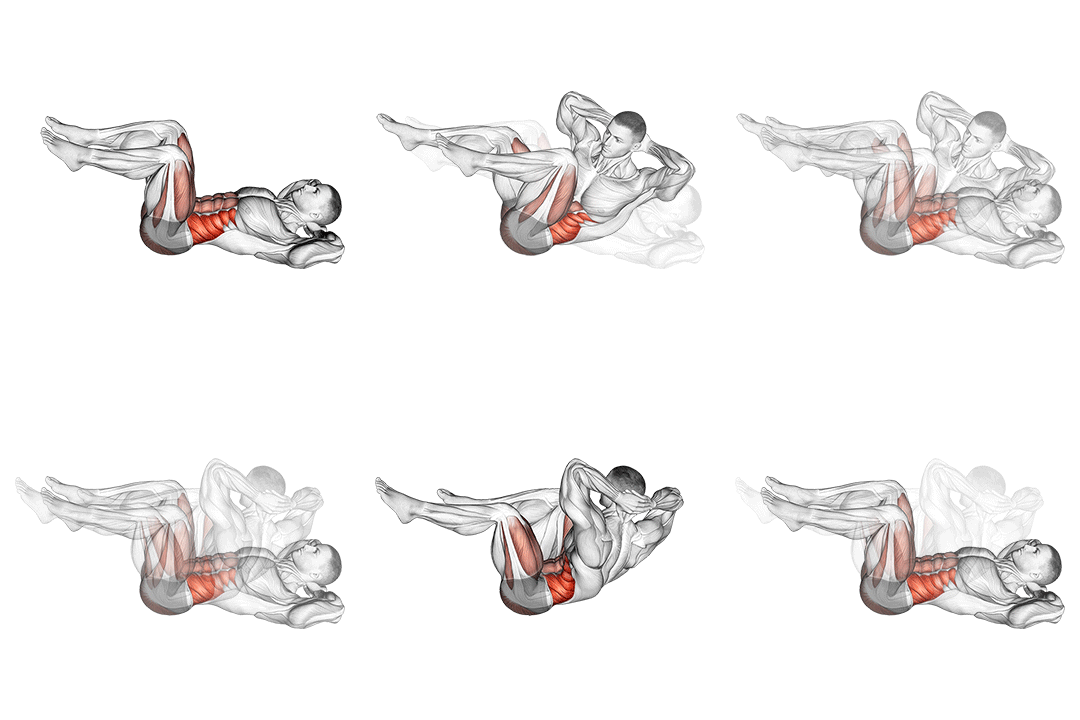
- Lie flat on your back with your hands placed behind your head.
- Lift your legs off the ground and bend your knees at a 90-degree angle.
- Bring your right elbow towards your left knee while simultaneously straightening your right leg.
- Return to the starting position and repeat the movement on the opposite side, bringing your left elbow towards your right knee while straightening your left leg.
- Continue alternating sides in a pedaling motion for the desired number of repetitions.
Sets and reps: Work for 30 to 60 seconds, rest as long as you worked, and repeat 6 to 10 times.
Why this matches
- Primary muscle: abs, not quads
- Equipment: a cardio machine, the same as the Step Mill
- Body position: seated, not standing
4. Half Knee Bends
59% match- Cardio
- Bodyweight
- Beginner
- Compound
A looser match: it works the heart and lungs rather than the quads.
How to perform this exercise
- Stand with your feet shoulder-width apart.
- Bend your knees and lower your body down as if you were sitting back into a chair.
- Keep your chest up and your weight in your heels.
- Pause for a moment at the bottom, then push through your heels to return to the starting position.
- Repeat for the desired number of repetitions.
Sets and reps: Work for 30 to 60 seconds, rest as long as you worked, and repeat 6 to 10 times.
Why this matches
- Primary muscle: your heart and lungs, not quads
- Equipment: bodyweight only, not a cardio machine
- Body position: standing, the same as the Step Mill
- Balance: harder to stay steady on than the Step Mill
5. Jack Jump
59% match- Cardio
- Bodyweight
- Beginner
- Compound
A looser match: it works the cardiovascular rather than the quads.
How to perform this exercise
- Stand with your feet together and your arms by your sides.
- Jump up, spreading your feet apart and raising your arms above your head.
- As you land, quickly jump back to the starting position.
- Repeat for the desired number of repetitions.
Sets and reps: Work for 30 to 60 seconds, rest as long as you worked, and repeat 6 to 10 times.
Why this matches
- Primary muscle: your heart and lungs, not quads
- Equipment: bodyweight only, not a cardio machine
- Body position: standing, the same as the Step Mill
- Balance: harder to stay steady on than the Step Mill
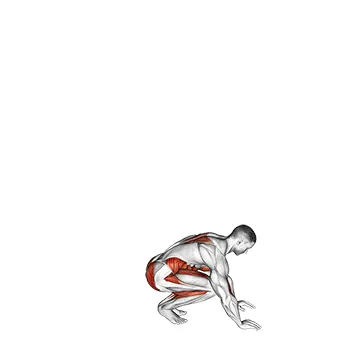
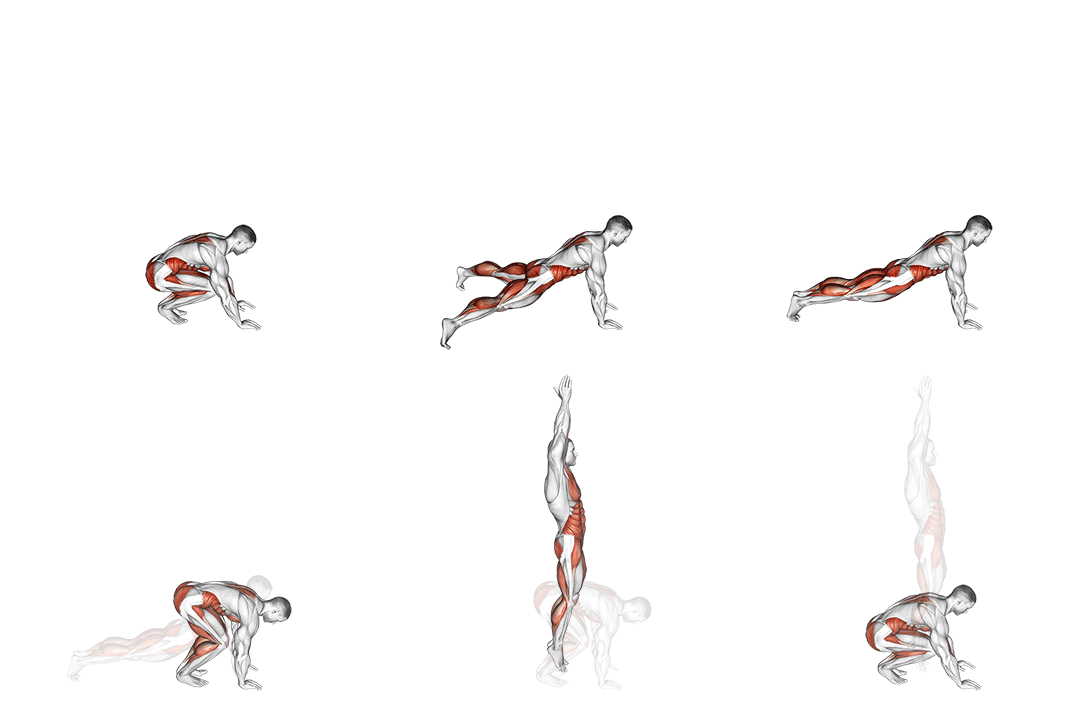
6. Jack Burpee
57% match- Cardio
- Bodyweight
- Intermediate
- Compound
How to perform this exercise
- Start in a standing position with your feet shoulder-width apart.
- Lower your body into a squat position, placing your hands on the ground in front of you.
- Kick your feet back, landing in a push-up position.
- Perform a push-up, lowering your chest to the ground and then pushing back up.
- Jump your feet forward, landing in a squat position.
- Jump up explosively, reaching your arms overhead.
- Land softly and immediately lower back into the squat position to begin the next repetition.
Sets and reps: Work for 30 to 60 seconds, rest as long as you worked, and repeat 6 to 10 times.
Why this matches
- Primary muscle: your heart and lungs, not quads
- Equipment: bodyweight only, not a cardio machine
- Body position: standing, the same as the Step Mill
- Balance: harder to stay steady on than the Step Mill
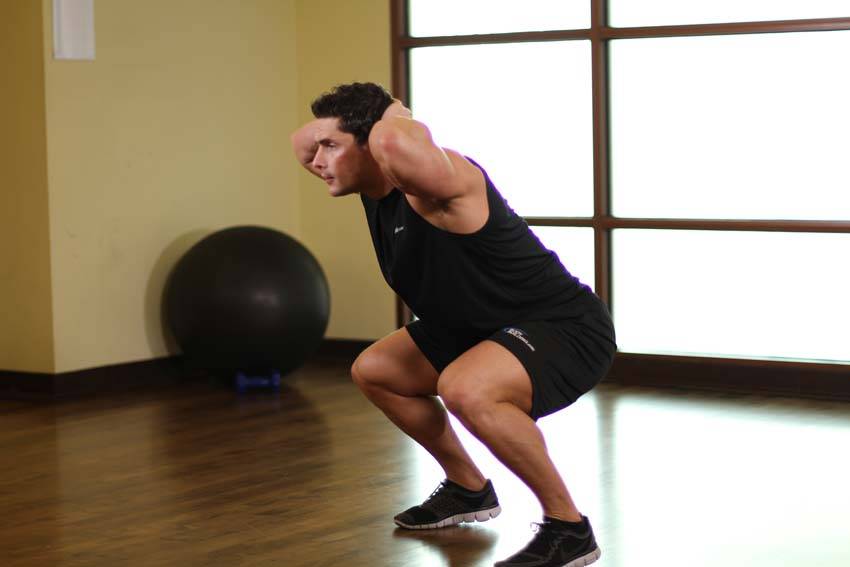
7. Frog Hops
57% match- Quads
- Bodyweight
- Intermediate
- Compound
How to perform this exercise
- Stand with your hands behind your head, and squat down keeping your torso upright and your head up. This will be your starting position.
- Jump forward several feet, avoiding jumping unnecessarily high. As your feet contact the ground, absorb the impact through your legs, and jump again. Repeat this action 5-10 times.
Sets and reps: 3 or 4 sets of 6 to 10 reps.
Why this matches
- Primary muscle: quads, the same as the Step Mill
- Equipment: bodyweight only, not a cardio machine
- Body position: standing, the same as the Step Mill
- Balance: harder to stay steady on than the Step Mill
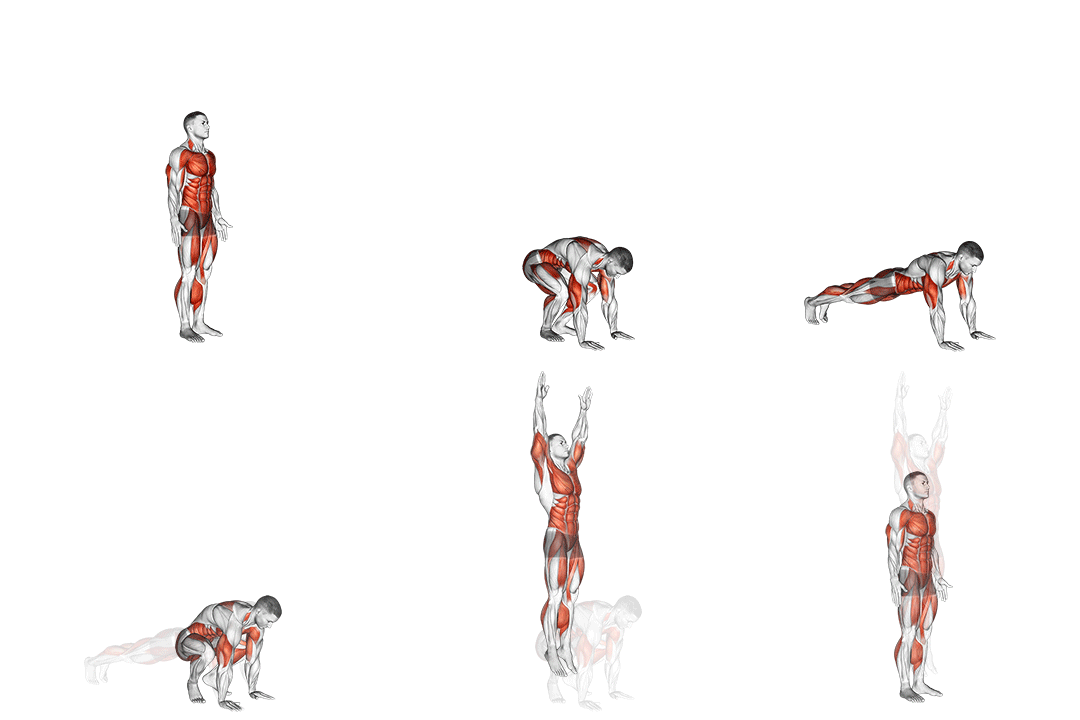
8. Burpee
56% match- Cardio
- Bodyweight
- Intermediate
- Compound
How to perform this exercise
- Start in a standing position with your feet shoulder-width apart.
- Lower your body into a squat position by bending your knees and placing your hands on the floor in front of you.
- Kick your feet back into a push-up position.
- Perform a push-up, keeping your body in a straight line.
- Jump your feet back into the squat position.
- Jump up explosively, reaching your arms overhead.
- Land softly and immediately lower back into a squat position to begin the next repetition.
Sets and reps: Work for 30 to 60 seconds, rest as long as you worked, and repeat 6 to 10 times.
Why this matches
- Primary muscle: your heart and lungs, not quads
- Equipment: bodyweight only, not a cardio machine
- Balance: harder to stay steady on than the Step Mill
9. Wind Sprints
56% match- Abs
- Bodyweight
- Advanced
- Compound
How to perform this exercise
- Find an open space or a track to perform the exercise.
- Start by standing with your feet shoulder-width apart.
- Begin running as fast as you can, pumping your arms and driving your knees up.
- Continue sprinting for a specific distance or time period.
- Rest and repeat for the desired number of repetitions.
Sets and reps: Work for 30 to 60 seconds, rest as long as you worked, and repeat 6 to 10 times.
Why this matches
- Primary muscle: abs, not quads
- Equipment: bodyweight only, not a cardio machine
- Body position: standing, the same as the Step Mill
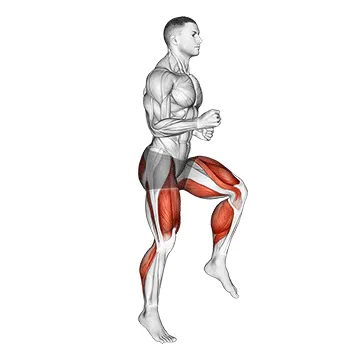
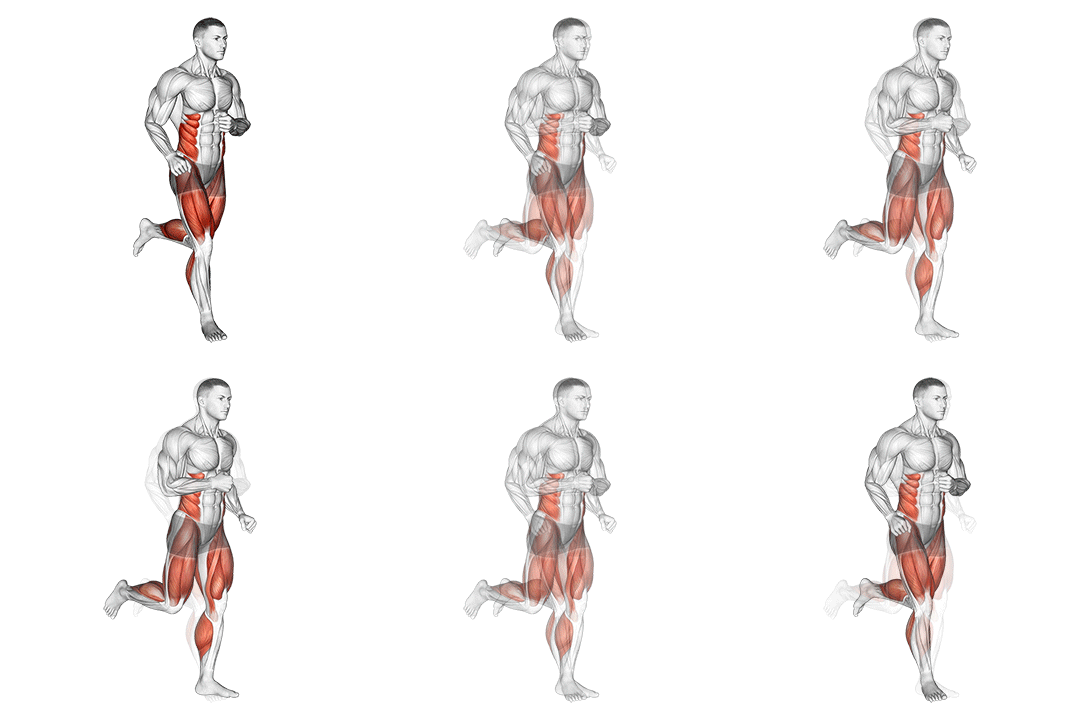
10. Run
55% match- Cardio
- Bodyweight
- Beginner
- Compound
How to perform this exercise
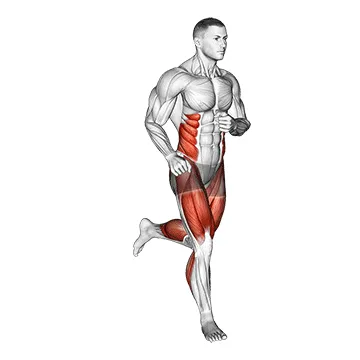
- Start by standing upright with your feet hip-width apart.
- Engage your core and keep your upper body relaxed.
- Begin jogging in place, lifting your knees up towards your chest and landing softly on the balls of your feet.
- Maintain a steady pace and continue jogging for the desired duration or distance.
- Remember to breathe deeply and maintain good posture throughout the exercise.
Sets and reps: Work for 30 to 60 seconds, rest as long as you worked, and repeat 6 to 10 times.
Why this matches
- Primary muscle: your heart and lungs, not quads
- Equipment: bodyweight only, not a cardio machine
- Body position: standing, the same as the Step Mill
Step Mill FAQ
What muscles does Step Mill work?
The Step Mill primarily targets the quadriceps through repeated knee extension, with secondary involvement of the glutes, hamstrings, and calves for hip stability and ankle push-off. Maintain an upright posture and drive through the ball and heel of the foot to emphasize quad recruitment and minimize excessive hip-dominant movement.
What is the best bodyweight alternative to Step Mill?
Slow, controlled step-ups to a 12–18 inch box best replicate the Step Mill’s single-leg and knee-extension emphasis without equipment. Cue: place the whole foot on the box, push through the heel, fully extend the knee at the top, and lower with a controlled eccentric to maximize quad activation.
Find Alternatives for Any Exercise
Search the exercise database and filter the ranked substitutes by the equipment you own.
Similarity scores compare exercise metadata such as movement pattern, muscles, equipment and body position. They are not a safety rating or a check that you own the equipment. Learn about our methodology