

10 Best Two-arm Kettlebell Jerk Alternatives for Shoulder Strength
You can replace the two-arm kettlebell jerk with movements like the barbell push jerk, dumbbell push press, single-arm kettlebell jerk, strict dumbbell shoulder press, or landmine press. For each, cue a powerful hip drive, active scapular upward rotation, and a full triceps lockout to reproduce the jerk's shoulder loading and power transfer.
Original Exercise: Two-arm Kettlebell Jerk
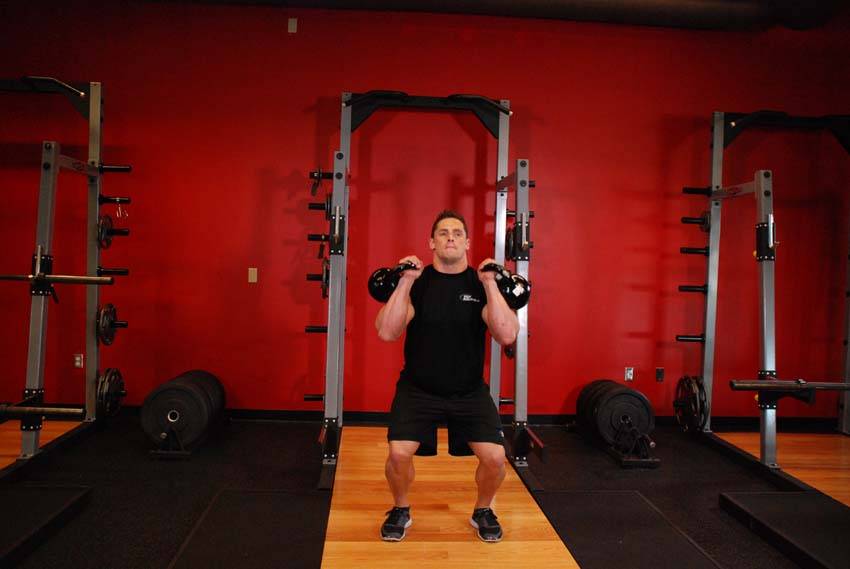
How to Perform Two-arm Kettlebell Jerk
- Clean two kettlebells to your shoulders. Clean the kettlebells to your shoulders by extending through the legs and hips as you swing the kettlebells towards your shoulders. Rotate your wrists as you do so, so that the palms face forward. Squat down a few inches and reverse the motion rapidly driving both kettlebells overhead. Immediately after the initial push, squat down again and get under the kettlebells. Once the kettlebells are locked out, stand upright to complete the exercise.
Pro Tips
- Category: Strength
- Force: Push
- Movement type: Compound
Ranked Two-arm Kettlebell Jerk Alternatives
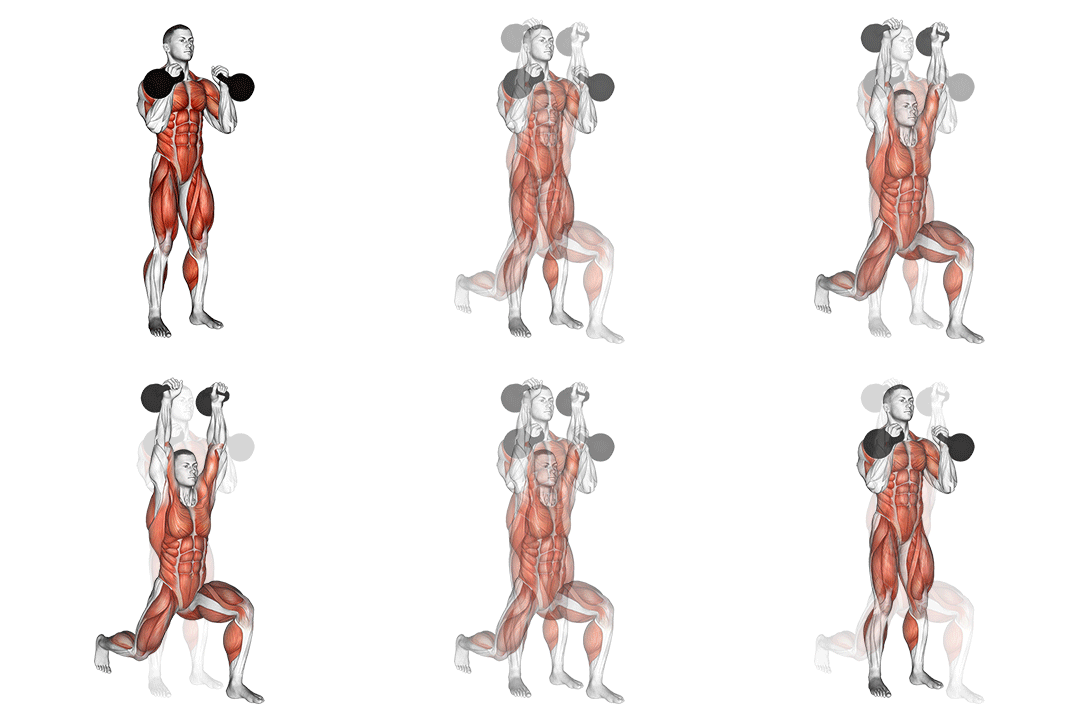
1. Kettlebell Double Jerk
85% MatchHow to perform this exercise
- Stand with your feet shoulder-width apart, holding a kettlebell in each hand at shoulder height.
- Bend your knees slightly and engage your core.
- Press the kettlebells overhead, fully extending your arms.
- Bend your knees and quickly drop into a partial squat.
- Explosively extend your hips and knees, driving the kettlebells overhead.
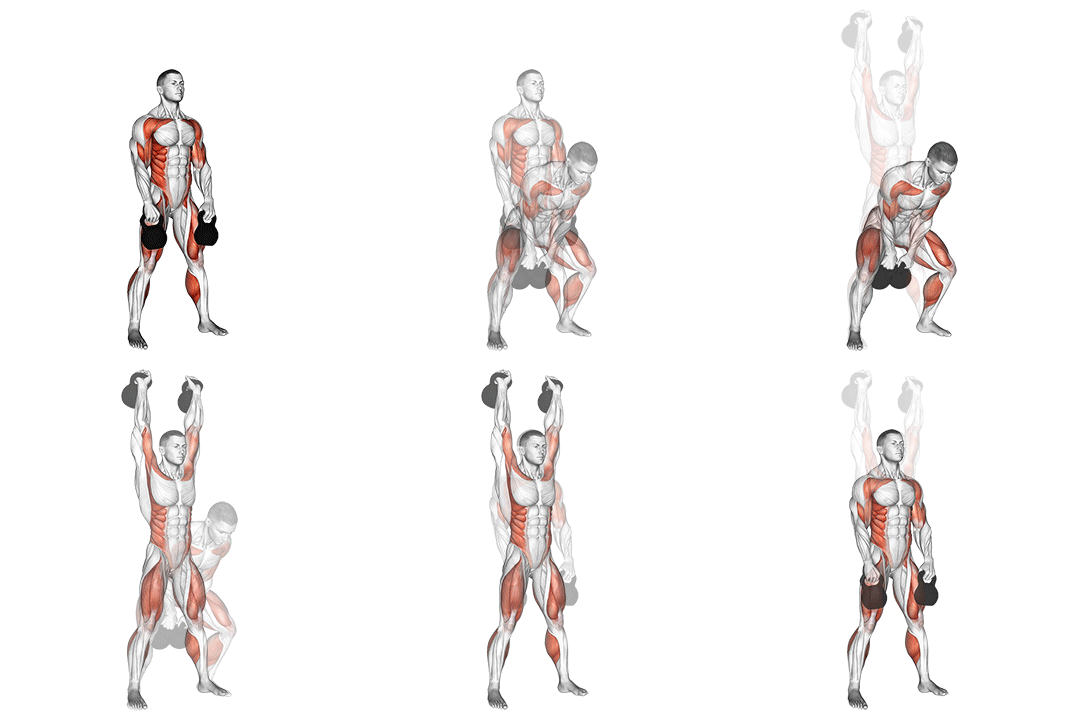
2. Kettlebell Double Snatch
85% MatchHow to perform this exercise
- Stand with your feet shoulder-width apart, holding a kettlebell in each hand at arm's length in front of your thighs.
- Bend your knees slightly and hinge forward at the hips, keeping your back flat and chest up.
- In one explosive motion, extend your hips, knees, and ankles, and simultaneously pull the kettlebells up towards your shoulders.
- As the kettlebells reach shoulder level, rotate your wrists and punch the kettlebells overhead, fully extending your arms.
- Lower the kettlebells back down to the starting position and repeat for the desired number of repetitions.
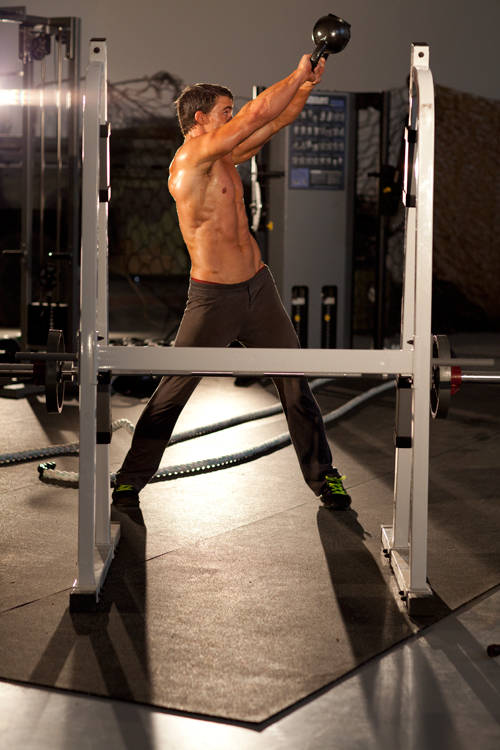
3. Kettlebell Pirate Ships
77.9% MatchHow to perform this exercise
- With a wide stance, hold a kettlebell with both hands. Allow it to hang at waist level with your arms extended. This will be your starting position.
- Initiate the movement by turning to one side, swinging the kettlebell to head height. Briefly pause at the top of the motion.
- Allow the bell to drop as you rotate to the opposite side, again raising the kettlebell to head height.
- Repeat for the desired amount of repetitions.
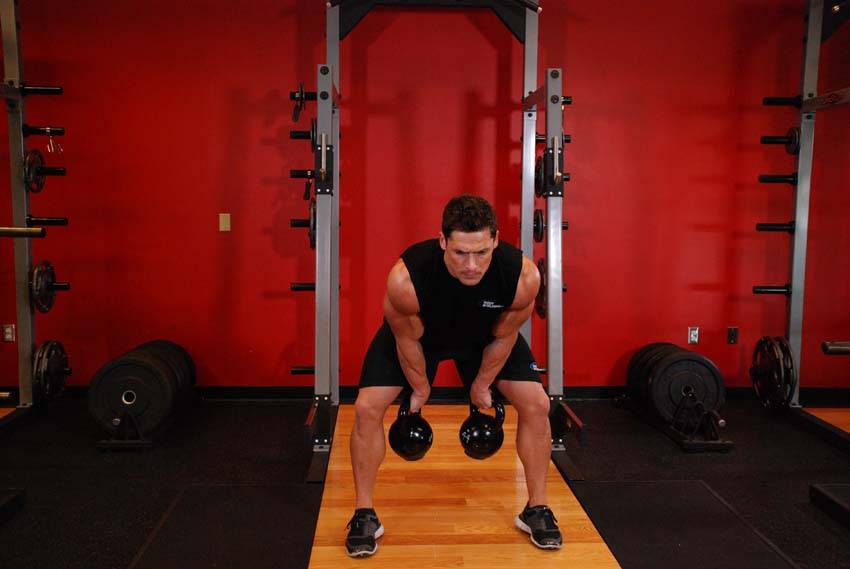
4. Two-Arm Kettlebell Clean
77.9% MatchHow to perform this exercise
- Place two kettlebells between your feet. To get in the starting position, push your butt back and look straight ahead.
- Clean the kettlebells to your shoulders by extending through the legs and hips as you raise the kettlebells towards your shoulders. Rotate your wrists as you do so.
- Lower the kettlebells back to the starting position and repeat.
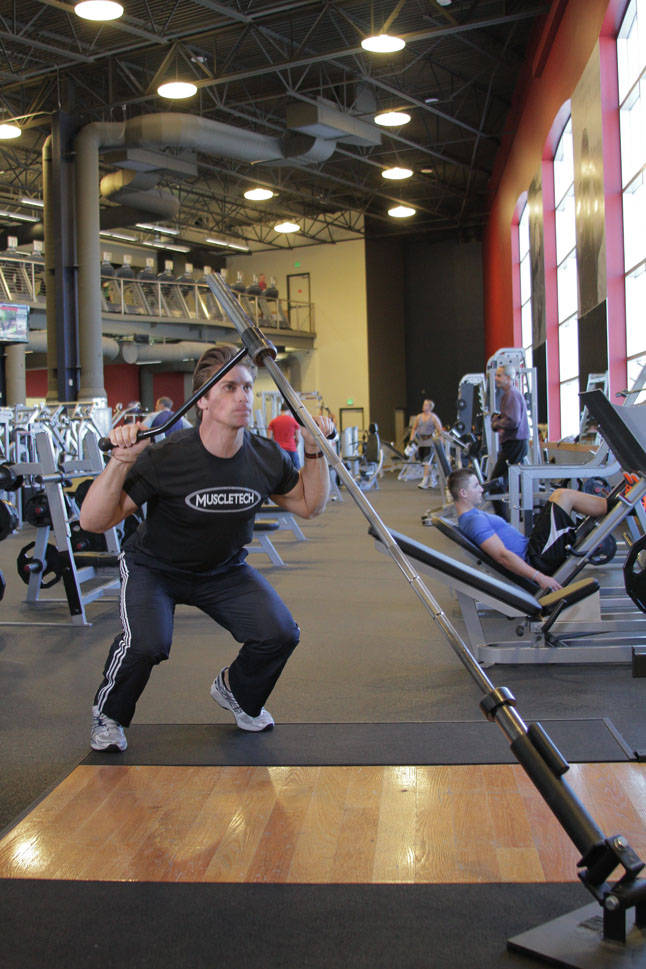
5. Landmine Linear Jammer
77.3% MatchHow to perform this exercise
- Position a bar into landmine or, lacking one, securely anchor it in a corner. Load the bar to an appropriate weight and position the handle attachment on the bar.
- Raise the bar from the floor, taking the handles to your shoulders. This will be your starting position.
- In an athletic stance, squat by flexing your hips and setting your hips back, keeping your arms flexed.
- Reverse the motion by powerfully extending through the hips, knees, and ankles, while also extending the elbows to straighten the arms. This movement should be done explosively, coming out of the squat to full extension as powerfully as possible.
- Return to the starting position.
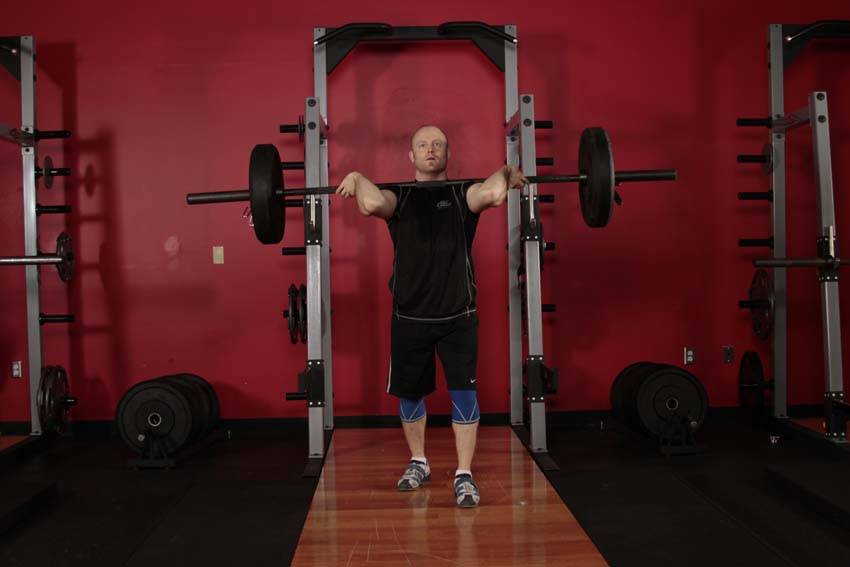
6. Jerk Balance
77% MatchHow to perform this exercise
- This drill helps you learn to drive yourself low enough during the jerk and corrects those who move backward during the movement. Begin with the bar racked in the jerk position, with the shoulders forward, torso upright, and the feet split slightly apart.
- Initiate the movement as you would a normal jerk, dipping at the knees while keeping your torso vertical, and driving back up forcefully, using momentum and not your arms to elevate the weight.
- Keep the rear foot in place, using it to drive your body forward into a full split as you jerk the weight. Recover by standing up with the weight overhead.
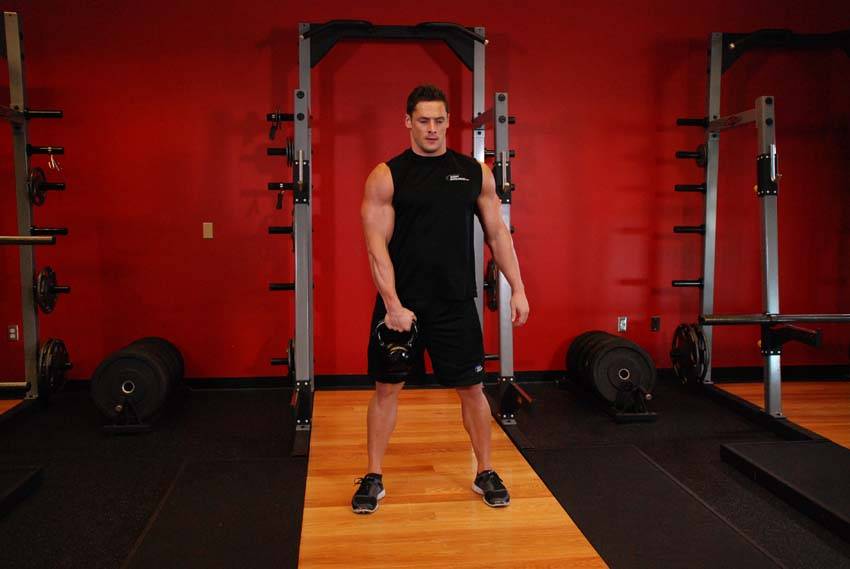
7. One-Arm Kettlebell Snatch
76.7% MatchHow to perform this exercise
- Place a kettlebell between your feet. Bend your knees and push your butt back to get in the proper starting position.
- Look straight ahead and swing the kettlebell back between your legs.
- Immediately reverse the direction and drive through with your hips and knees, accelerating the kettlebell upward. As the kettlebell rises to your shoulder rotate your hand and punch straight up, using momentum to receive the weight locked out overhead.
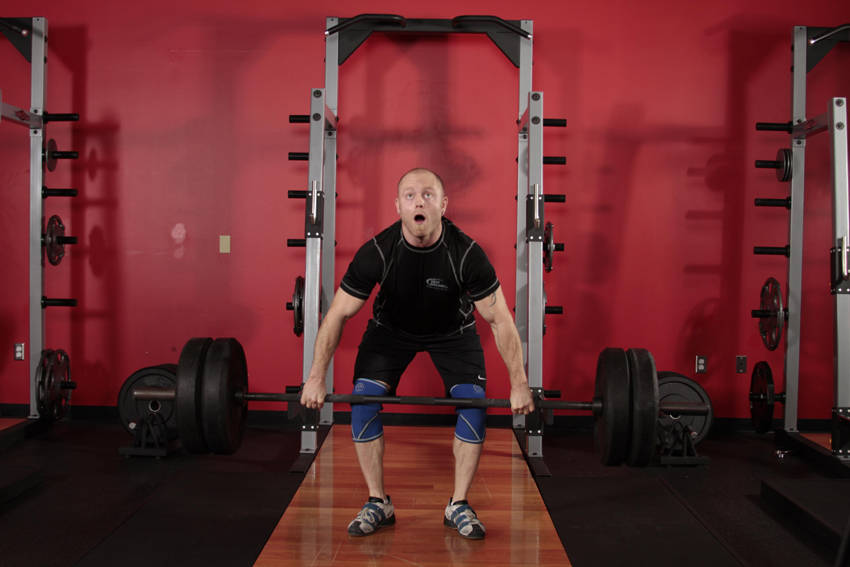
8. Clean And Jerk
75.9% MatchHow to perform this exercise
- With a barbell on the floor close to the shins, take an overhand or hook grip just outside the legs. Lower your hips with the weight focused on the heels, back straight, head facing forward, chest up, with your shoulders just in front of the bar. This will be your starting position.
- Begin the first pull by driving through the heels, extending your knees. Your back angle should stay the same, and your arms should remain straight. Move the weight with control as you continue to above the knees.
- Next comes the second pull, the main source of acceleration for the clean. As the bar approaches the mid-thigh position, begin extending through the hips. In a jumping motion, accelerate by extending the hips, knees, and ankles, using speed to move the bar upward. There should be no need to actively pull through the arms to accelerate the weight; at the end of the second pull, the body should be fully extended, leaning slightly back, with the arms still extended.
- As full extension is achieved, transition into the third pull by aggressively shrugging and flexing the arms with the elbows up and out. At peak extension, aggressively pull yourself down, rotating your elbows under the bar as you do so. Receive the bar in a front squat position, the depth of which is dependent upon the height of the bar at the end of the third pull. The bar should be racked onto the protracted shoulders, lightly touching the throat with the hands relaxed. Continue to descend to the bottom squat position, which will help in the recovery.
- Immediately recover by driving through the heels, keeping the torso upright and elbows up. Continue until you have risen to a standing position.
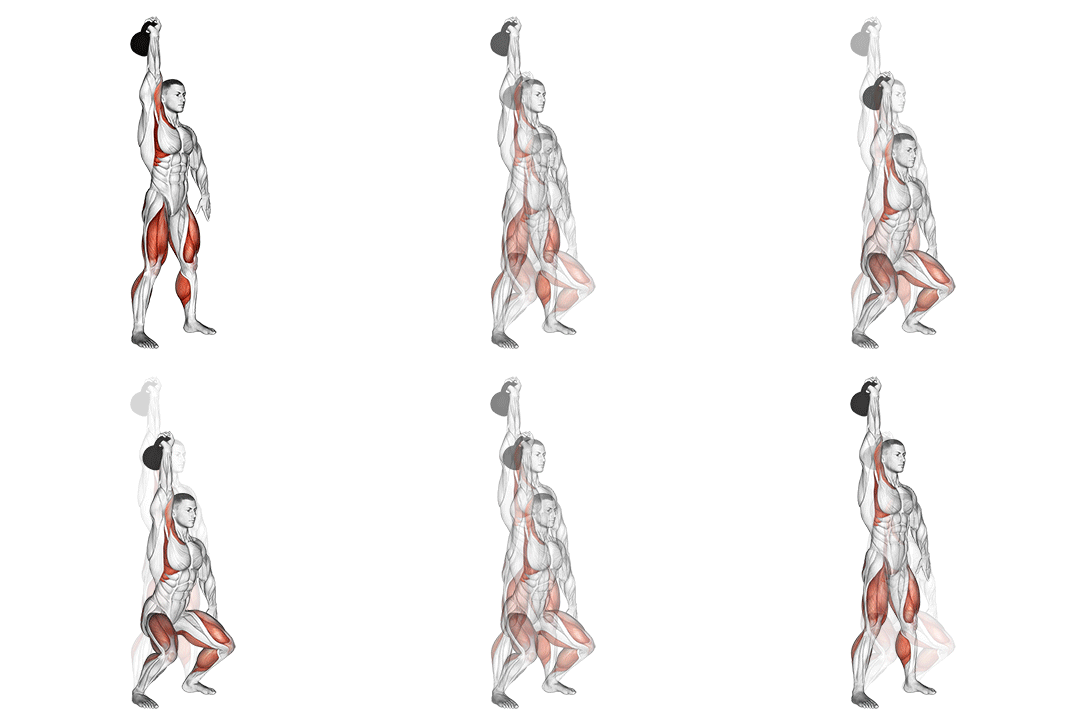
9. Kettlebell One Arm Jerk
74% MatchHow to perform this exercise
- Stand with your feet shoulder-width apart, holding a kettlebell in one hand at shoulder height.
- Bend your knees slightly and engage your core.
- Press the kettlebell overhead in a straight line, fully extending your arm.
- As you press the kettlebell overhead, simultaneously dip your knees and quickly straighten them to generate momentum.
- As the kettlebell reaches its highest point, quickly drop underneath it by bending your knees and hips.
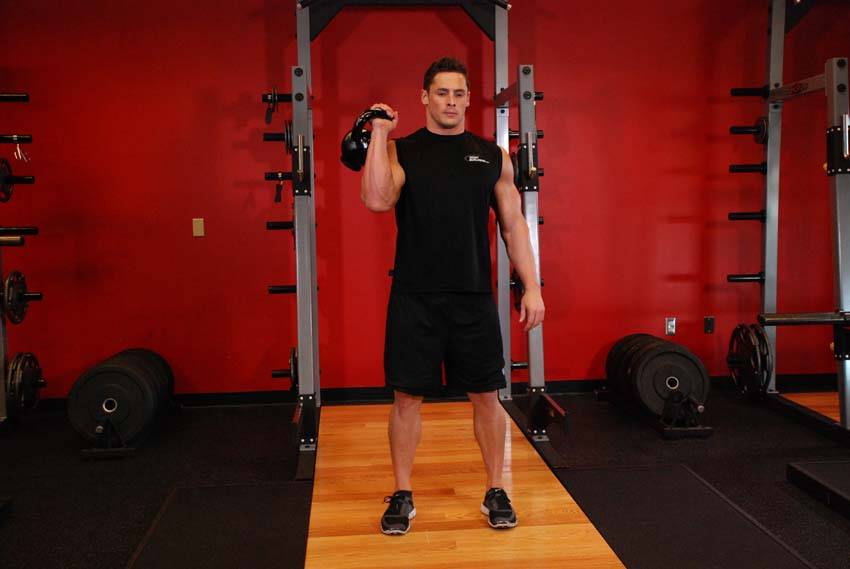
10. One-Arm Kettlebell Split Jerk
74% MatchHow to perform this exercise
- Hold a kettlebell by the handle. Clean the kettlebell to your shoulder by extending through the legs and hips as you pull the kettlebell towards your shoulder. Rotate your wrist as you do so, so that the palm faces forward. This will be your starting position.
- Dip your body by bending the knees, keeping your torso upright.
- Immediately reverse direction, driving through the heels, in essence jumping to create momentum. As you do so, press the kettlebell overhead to lockout by extending the arms, using your body's momentum to move the weight.
- Receive the weight overhead by returning to a squat position underneath the weight, positioning one leg in front of you and one leg behind you.
- Keeping the weight overhead, return to a standing position and bring your feet together. Lower the weight to perform the next repetition.
Why You Might Need a Two-arm Kettlebell Jerk Alternative
People substitute the two-arm kettlebell jerk for injury, equipment limits, or specific training goals. Shoulder pain or rotator cuff irritation often requires lower-impact vertical presses, choose a strict dumbbell press and cue a slow eccentric with scapular retraction to reduce impingement risk. If you lack kettlebells, barbell or dumbbell push jerks preserve explosive triple extension (ankle, knee, hip) while shifting load distribution. Programmers favor unilateral jerks or landmine presses to reduce rotational stress and improve shoulder stability; cue controlled core bracing and a soft catch to protect the glenohumeral joint. Each swap changes activation patterns for deltoids, traps, triceps and the posterior chain.
How to Choose the Right Substitute
Match the substitute to your primary goal: for power, pick barbell or single-arm jerks and cue an aggressive hip drive to maximize glute and hamstring recruitment. For strict strength or hypertrophy, use seated or strict dumbbell presses with controlled eccentrics to isolate anterior and lateral deltoids and triceps. If equipment or mobility is limited, use landmine presses or deficit pike push-ups to maintain vertical load while reducing shoulder shear, keep a neutral spine and emphasize scapular upward rotation. For imbalance correction, select unilateral jerks to increase core anti-rotation demand and shoulder stabilizer activation.
Frequently Asked Questions
What muscles does Two-arm Kettlebell Jerk work?
The two-arm kettlebell jerk primarily targets the anterior and lateral deltoids, triceps, and upper traps, while the hip extensors (glutes and hamstrings) and quads generate the explosive drive. Cue a rapid triple extension and upward scapular rotation to see how power transfers from the legs into shoulder elevation.
What is the best bodyweight alternative to Two-arm Kettlebell Jerk?
A deficit pike push-up or handstand push-up progression is the best bodyweight alternative; keep hips high and drive the crown of your head toward the floor to bias the deltoids and triceps. Increase difficulty with a small deficit to increase vertical loading while preserving scapular upward rotation and shoulder stability.
Can I build muscle without doing Two-arm Kettlebell Jerk?
Yes, you can build shoulder muscle with pressing variations like strict dumbbell or barbell presses, push presses, and progressive overload. Emphasize full range of motion, controlled eccentrics, and periodic explosive work (cue deliberate hip drive on push presses) to recruit both deltoid fibers and supporting stabilizers.
More Exercise Alternatives
Find Alternatives for Any Exercise
Use the exercise substitution finder to compare ranked alternatives for your available equipment and training preference.
Try the Exercise Substitution Finder →