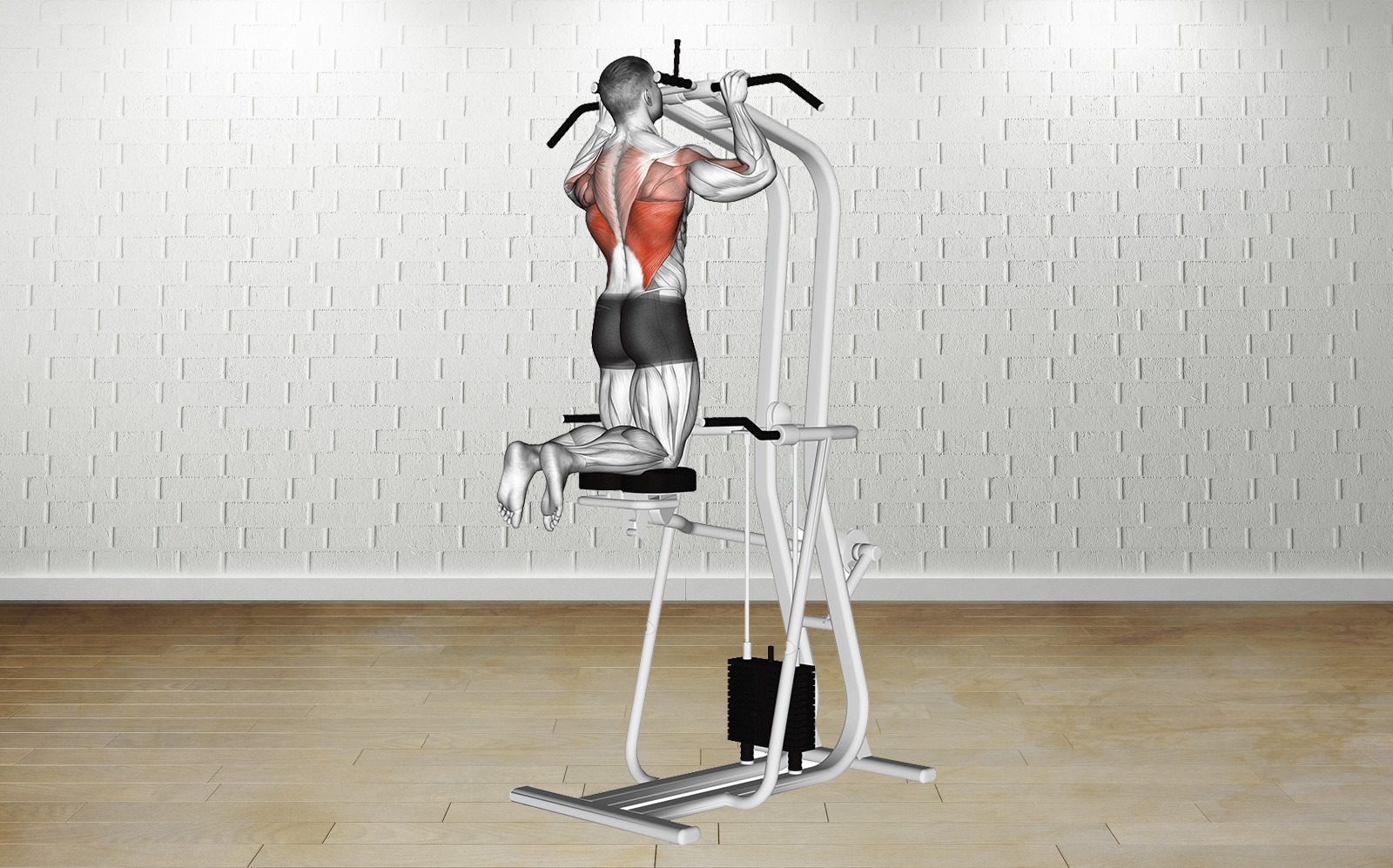
Master Assisted Pull‑Ups: Build Powerful Lats Effortlessly

Enhance Lat Strength with Controlled, Joint‑Friendly Movement

Ash, ACE, MSc
By
Ash, ACE, MSc
Ash is a highly respected fitness expert and certified personal trainer through the American Council on Exercise (ACE). With a B.A. in biology from Rutgers and...
6 Min Read
Assisted Pull‑ups Guide

Transform your upper body strength with Assisted Pull-Ups! Master the technique, build powerful lats, and progress towards traditional pull-ups with ease.

Assisted Pull-Up Details
Basic Information
Body Part
Back
Primary Muscles
Secondary Muscles
Equipment
Leverage Machine
Exercise Characteristics
Exercise Type
Strength
Movement Pattern
Pull
Force Type
Concentric
Unilateral/Bilateral
Bilateral
Compound/Isolation
Compound
Bodyweight Exercise
Yes
Training Parameters
Difficulty Level
Intermediate
Target Training Goals
Strength
Suitable Workout Phases
Main workout
Risk Level
Low
Weight Category
Bodyweight
Recommended Rep Ranges
GoalRep Range
Strength6-8
Hypertrophy8-12
Endurance12-15
Power1-5
Muscular endurance12-20
Stability core8-12
Flexibility mobility8-12

What Are Assisted Pull-Ups?

Assisted Pull-Ups are a versatile exercise that helps build powerful lats and improve upper body strength without the initial challenge of unassisted pull-ups. They are particularly beneficial for those who struggle with traditional pull-ups, offering support and control while maintaining muscle engagement.

By using a machine or resistance bands, Assisted Pull-Ups reduce the lifting load, allowing beginners and advanced athletes to practice the pull-up motion effectively. This movement primarily targets the latissimus dorsi, while also engaging the biceps, shoulders, and core. Incorporating them 2-3 times per week at the beginning of your workout can maximize results, as energy levels are highest during the first exercise.

How to Do Assisted Pull-Ups
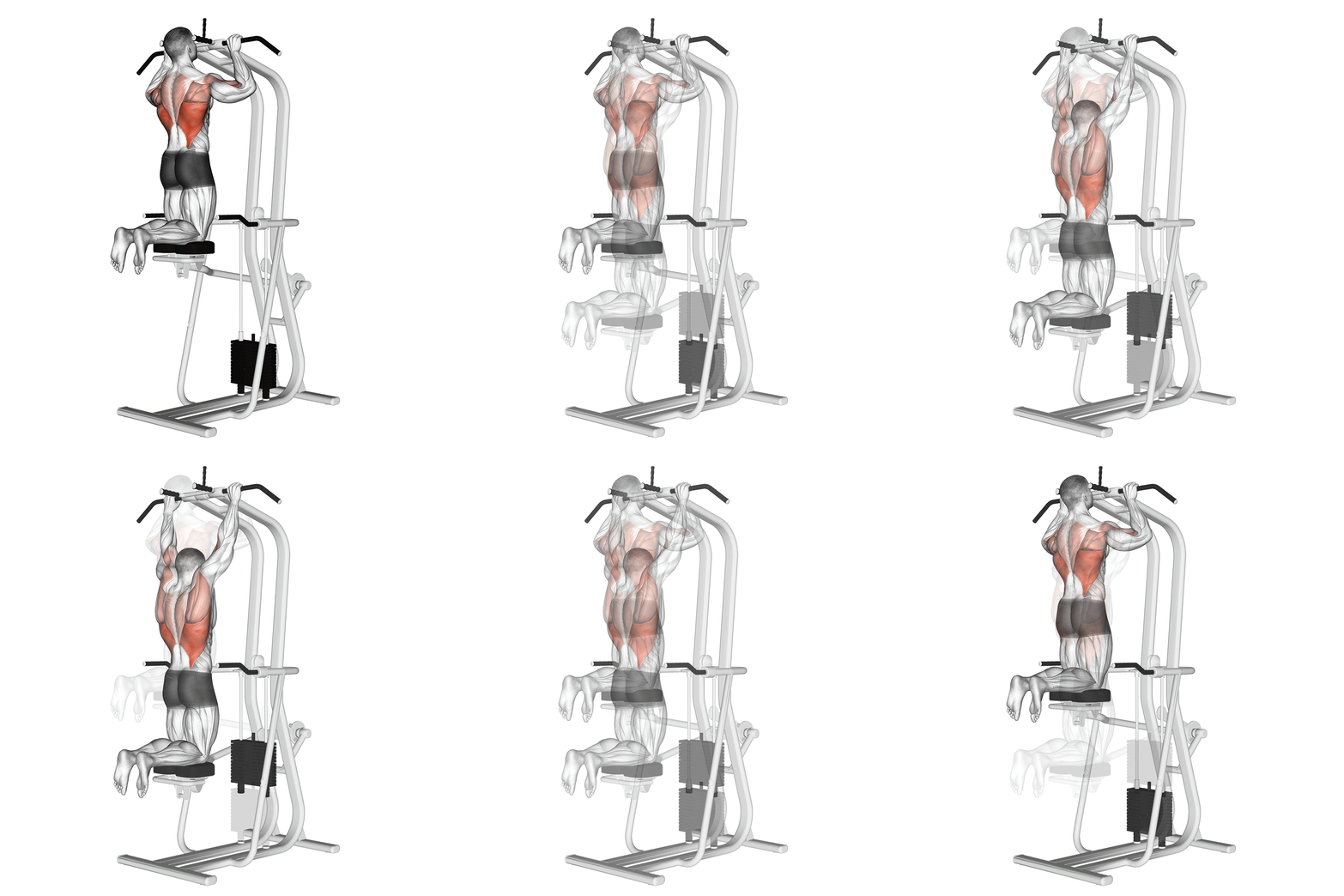
How to do a Assisted Pull-Up - Step by step Strength exercise demonstration targeting Lats, Biceps, Forearms

Setup:

  1. Adjust the assistance level on the pull-up machine to match your strength.
  2. Sit on the machine, placing your knees on the pad (or stand if using bands).
  3. Grasp the handles with an overhand grip, slightly wider than shoulder-width.

Execution:

  1. Engage your core and keep your back straight.
  2. Pull yourself up by driving your elbows down towards your ribs, focusing on your lats.
  3. Pause briefly at the top, ensuring your chin is above the bar.
  4. Lower yourself slowly back to the starting position, maintaining control.
  5. Repeat for 8-12 reps per set, aiming for 3-4 sets per workout.

Breathing:

  1. Inhale as you lower yourself.
  2. Exhale as you pull up.

Common Mistakes and How to Avoid Them

  1. Skipping Core Engagement:
    • Problem: Not tightening your core can lead to poor posture and potential lower back strain.
    • Solution: Actively contract your abdominal muscles before and during each repetition.
  2. Using Incorrect Grip Width:
    • Problem: A grip too wide or narrow can strain the shoulders and reduce lat activation.
    • Solution: Position your hands slightly wider than shoulder-width for optimal muscle engagement.
  3. Relying on Arm Strength:
    • Problem: Pulling primarily with your biceps neglects the lats.
    • Solution: Focus on driving your elbows down and back to activate your back muscles.
  4. Jerky Movements:
    • Problem: Fast, uncontrolled reps can reduce effectiveness and increase injury risk.
    • Solution: Perform the exercise with a slow and controlled tempo, emphasizing muscle contraction.
  5. Incomplete Range of Motion:
    • Problem: Not lowering yourself fully limits muscle activation.
    • Solution: Extend your arms completely at the bottom while keeping tension on your lats.

Advanced Tips for Mastery

  • Gradually Reduce Assistance: As your strength increases, lower the assistance to challenge your muscles more.
  • Practice Negatives: Focus on the eccentric (lowering) phase by slowly descending after reaching the top position. This builds the strength needed for unassisted pull-ups.
  • Add Weight: Once proficient, perform the movement with a weight belt to build even greater lat strength.

Safety Precautions

  • Warm-Up Thoroughly: Prepare your upper body with dynamic stretches, such as arm circles and scapular pull-ups, to activate the lats and shoulders.
  • Focus on Form: Never sacrifice form for reps. Improper technique can lead to shoulder impingement and lat strains.
  • Listen to Your Body: Stop immediately if you feel sharp pain, especially in your shoulders or lower back.
  • Avoid Overtraining: Allow at least 48 hours of rest between sessions to prevent overuse injuries.

Exercise Variations

  • Dumbbell Armpit Row
    Level: Intermediate
    Targets: Biceps brachii, Deltoids, Latissimus Dorsi, Rhomboids, Teres Major, Trapezius, Rear deltoids
    Equipment: Dumbbells, Exercise Mat | Movement: Pull | Type: Strength | Force Type: Concentric | Compound
  • Front Lever Raises
    Level: Advanced
    Targets: Biceps brachii, Core Muscles, Latissimus Dorsi, Pectoralis major, Rhomboids, Shoulders, Trapezius, Hip Flexors, Teres Major
    Equipment: Pull-Up Bar, Gymnastic Rings, Resistance Bands, Ab Mat | Movement: Pull | Type: Strength | Force Type: Concentric | Compound
  • Weighted Inverted Row
    Level: Intermediate
    Targets: Biceps brachii, Core Muscles, Latissimus Dorsi, Posterior deltoids, Rhomboids, Teres Major, Trapezius, Brachialis, Rear deltoids
    Equipment: Barbell, Weight Plates, Squat Rack Or Smith Machine, Suspension Trainer Or TRX, Gym Bench Or Sturdy Surface. | Movement: Pull | Type: Strength | Force Type: Isotonic | Compound
  • Yates Row
    Level: Intermediate
    Targets: Biceps brachii, Latissimus Dorsi, Rear deltoids, Rhomboids, Teres Major, Trapezius, Core Muscles, Infraspinatus, Teres Minor
    Equipment: Barbell, Weight Plates, Rowing Machine, Bench | Movement: Pull | Type: Strength | Force Type: Isotonic | Isolation
  • Standing Twisting Cable Row
    Level: Intermediate
    Targets: Biceps brachii, Erector Spinae, Latissimus Dorsi, Obliques, Rhomboids, Trapezius, Core Stabilizers
    Equipment: Cable Machine, Handle Attachment | Movement: Pull | Type: Strength | Force Type: Concentric | Compound
  • One-Arm Lat Pull-Down
    Level: Intermediate
    Targets: Biceps brachii, Infraspinatus, Latissimus Dorsi, Lower Pectorals, Rhomboids, Teres Major, Trapezius, Core Muscles, Posterior Deltoid
    Equipment: Lat Pull-Down Machine, Single Handle Attachment. | Movement: Pull | Type: Strength | Force Type: Concentric | Isolation
  • Straight-Back Seated Cable Row
    Level: Intermediate
    Targets: Biceps brachii, Latissimus Dorsi, Posterior deltoids, Rhomboids, Teres Major, Trapezius, Core Muscles, Infraspinatus, Rear deltoids
    Equipment: Cable Machine, Seated Row Attachment, Adjustable Seat, Footplate. | Movement: Pull | Type: Strength | Force Type: Concentric | Compound
  • Landmine Row
    Level: Intermediate
    Targets: Biceps brachii, Core Muscles, Latissimus Dorsi, Posterior deltoids, Rhomboids, Teres Major, Trapezius, Erector Spinae, Rear deltoids
    Equipment: Landmine Attachment, Barbell, Weight Plates, Handle Or Grip Attachment | Movement: Pull | Type: Strength | Force Type: Isometric | Compound
  • Australian Pull-Ups
    Level: Intermediate
    Targets: Biceps brachii, Core Muscles, Latissimus Dorsi, Pectoralis major, Rhomboids, Teres Major, Trapezius, Infraspinatus
    Equipment: Pull-Up Bar Or Low Bar, Gymnastic Rings Or TRX Straps, Resistance Bands | Movement: Pull | Type: Strength | Force Type: Concentric | Compound
  • Single-Arm Cable Row
    Level: Intermediate
    Targets: Biceps brachii, Latissimus Dorsi, Posterior Deltoid, Rhomboids, Teres Major, Trapezius, Core Stabilizers, Infraspinatus
    Equipment: Cable Machine, Single Handle Attachment. | Movement: Pull | Type: Strength | Force Type: Concentric | Compound

Alternative Exercises

  • Kettlebell Turkish Get Up
    Level: Intermediate
    Targets: Chest, Core, Glutes, Hamstrings, Lats, Lower Back, Obliques, Quadriceps, Shoulders, Adductors, Forearms, Hips, Trapezius
    Equipment: Kettlebell, Exercise Mat | Movement: Carry | Type: Strength | Force Type: Isometric | Compound
  • Rollouts
    Level: Intermediate
    Targets: Hip Flexors, Lats, Obliques, Rectus Abdominis, Shoulders, Transverse abdominis, Latissimus Dorsi, Serratus Anterior, Triceps
    Equipment: Ab Wheel, Exercise Mat | Movement: Locomotion | Type: Agility | Force Type: Isometric | Compound
  • Rope Climbs
    Level: Intermediate
    Targets: Biceps brachii, Core Muscles, Deltoids, Forearm muscles, Latissimus Dorsi, Pectoralis major, Rhomboids, Trapezius, Abdominal Muscles, Gluteus Maximus, Obliques, Teres Major
    Equipment: Climbing Rope, Climbing Harness, Climbing Carabiner, Gymnastic Chalk, Pull-Up Bar | Movement: Climb | Type: Strength | Force Type: Concentric | Compound
  • Standing Dumbbell One-Leg Calf Raise
    Level: Intermediate
    Targets: Tibialis posterior, Flexor digitorum longus, Flexor hallucis longus, Peroneus brevis, Peroneus longus, Tibialis anterior
    Equipment: Dumbbells, Exercise Mat | Movement: Push | Type: Strength | Force Type: Concentric | Isolation
  • Cable Incline Pushdown
    Level: Intermediate
    Targets: Anconeus, Deltoids, Pectoralis major, Triceps brachii, Anterior Deltoid, Rhomboids, Serratus Anterior
    Equipment: Cable Machine, Rope Attachment Or Straight Bar Attachment. | Movement: Push | Type: Strength | Force Type: Concentric | Isolation
  • Cable Side Bend
    Level: Intermediate
    Targets: Erector Spinae, Obliques, Rectus Abdominis, Quadratus lumborum
    Equipment: Cable Machine, Handle Attachment. | Movement: Rotation | Type: Strength | Force Type: Isotonic | Isolation
  • Cable Russian Twists
    Level: Intermediate
    Targets: Erector Spinae, Hip Flexors, Obliques, Rectus Abdominis, Transverse abdominis, Latissimus Dorsi, Shoulders
    Equipment: Cable Machine, Adjustable Cable Handle, Mats | Movement: Rotation | Type: Strength | Force Type: Isotonic | Isolation
  • Cable Shoulder Press
    Level: Intermediate
    Targets: Deltoids, Serratus Anterior, Triceps, Upper Pectorals, Deltoid Anterior, Pectoralis major, Rhomboids, Supraspinatus, Trapezius, Triceps brachii
    Equipment: Cable Machine, Adjustable Bench, Cable Handles. | Movement: Push | Type: Strength | Force Type: Concentric | Compound
  • Wall Sit Exercise
    Level: Intermediate
    Targets: Calves, Core, Glutes, Hamstrings, Quadriceps, Abdominals, Erector Spinae, Gastrocnemius, Gluteus Medius, Gluteus Minimus, Hip Flexors, Quadratus lumborum, Soleus
    Equipment: None | Movement: Squat | Type: Strength | Force Type: Isometric | Isolation
  • Cable Shrug
    Level: Intermediate
    Targets: Levator Scapulae, Rhomboids, Serratus Anterior, Trapezius, Deltoids, Upper Trapezius
    Equipment: Cable Machine, Cable Attachment (Such As A Straight Bar Or Rope). | Movement: Brace | Type: Strength | Force Type: Isometric | Isolation

Benefits of Assisted Pull-Ups

Enhanced Lat Strength:

Get Fitter, Faster

Level Up Your Fitness: Join our 💪 strong community in Fitness Volt Newsletter. Get daily inspiration, expert-backed workouts, nutrition tips, the latest in strength sports, and the support you need to reach your goals. Subscribe for free!

  • The primary benefit of Assisted Pull-Ups is the development of the latissimus dorsi, which contributes to a broader, more muscular back.
  • By reducing the resistance, beginners can focus on proper form and full range of motion, essential for activating the lats effectively.

Improved Muscle Endurance:

  • Regular practice builds muscular endurance, allowing you to perform more repetitions over time, which translates into improved performance in traditional pull-ups.

Progressive Overload Capability:

  • The adjustable assistance feature allows gradual reduction of support, helping you build strength progressively without risking injury.
  • As you advance, decrease the assistance to challenge your muscles further.

Full-Body Engagement:

  • While targeting the lats, the exercise also activates the biceps, trapezius, and core, offering a compound movement that enhances overall upper body development.
  • Maintaining core tension helps stabilize your body, promoting a strong, balanced physique.

Reduced Injury Risk:

  • Traditional pull-ups can strain the shoulders and lower back if performed with poor form. Assisted Pull-Ups help you build strength safely, minimizing joint stress.
  • Ideal for beginners, the controlled motion reduces the risk of muscle strains and injuries.

Final Thoughts

Assisted Pull-Ups are an invaluable exercise for building the strength and confidence needed to perform unassisted pull-ups. By mastering this technique, you lay the foundation for advanced bodyweight movements while sculpting a powerful upper body.

Get Fitter, Faster

Level Up Your Fitness: Join our 💪 strong community in Fitness Volt Newsletter. Get daily inspiration, expert-backed workouts, nutrition tips, the latest in strength sports, and the support you need to reach your goals. Subscribe for free!

Whether you’re a beginner aiming to complete your first pull-up or an advanced lifter looking to build endurance, Assisted Pull-Ups offer the perfect blend of strength and support. With consistent practice, you’ll soon progress to performing traditional pull-ups with ease.

Ready to transform your lats and upper body? Start incorporating Assisted Pull-Ups into your routine today!

Interested in measuring your progress? Check out our strength standards for Pull Ups.

Stay on top of the latest fitness news and updates by adding Fitness Volt to your Google News feed: Follow us on Google News You can also follow us on Twitter, Facebook, Instagram, and YouTube for even more content.

If you have any questions or need further clarification about this article, please leave a comment below, and Ash will get back to you as soon as possible.

Stay Updated with FitnessVolt Get the latest fitness news, workouts & nutrition tips delivered to your feed
Follow on Google News
Share This Article
Ash is a highly respected fitness expert and certified personal trainer through the American Council on Exercise (ACE). With a B.A. in biology from Rutgers and an M.S. in Exercise Science (Kinesiology) from CBU, she brings a wealth of knowledge and expertise to her work. Ash is dedicated to helping people achieve their fitness and health goals through personalized training and nutrition plans. With a passion for fitness and a deep understanding of the science behind healthy living, she is able to create effective and sustainable programs that deliver real results. Whether you're looking to lose weight, build muscle, or just feel better in your own skin, Ash is the expert you can trust to guide you on your journey to a healthier and happier life.
Leave a Comment