
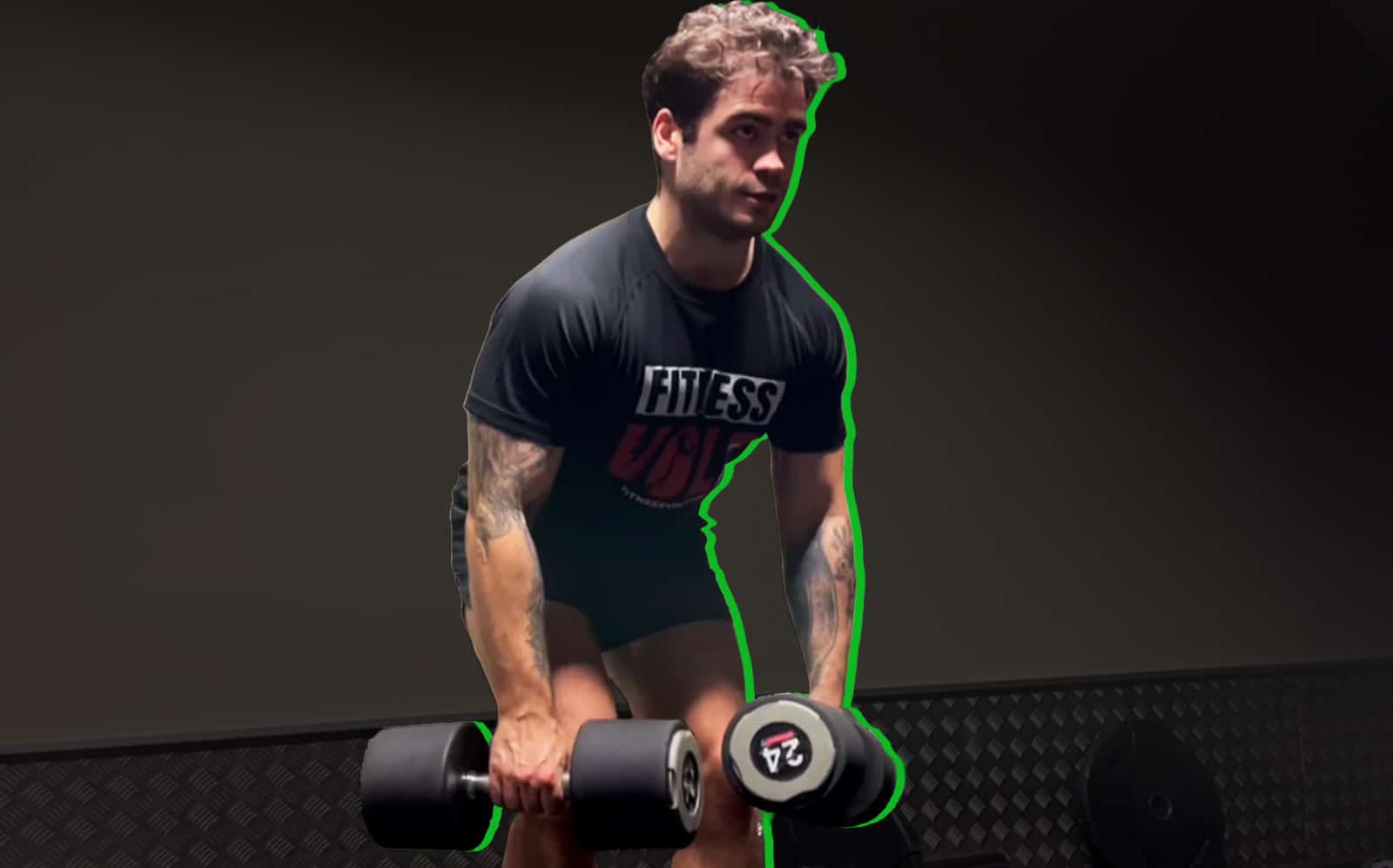
The bent-over two-arm dumbbell row is an excellent back exercise because of its effectiveness for building muscle and strength. It’s a variation of the ‘row’ which is a commonly-used type of movement that is arguably the best overall for back development.
Having a strong, well-developed back is important for lifting, pulling, preventing injuries and it’s imperative for looking aesthetic; which is why you’ll often see bodybuilders performing this movement. But another advantage of using dumbbells is that you can train each side separately which helps to identify and correct left-to-right imbalances. Plus, it helps to improve overall muscle stabilization.
In this guide, we’ve explained how to do it with tips, variations, and how to effectively include it in your workouts.
Here’s a guide to this exercise…
Related: Bent Over Rows – Benefits, Muscles Worked and Variations
Muscles Worked/Involved
The row works more than just the back muscle which is good because you can kill multiple birds with one stone (not literally).
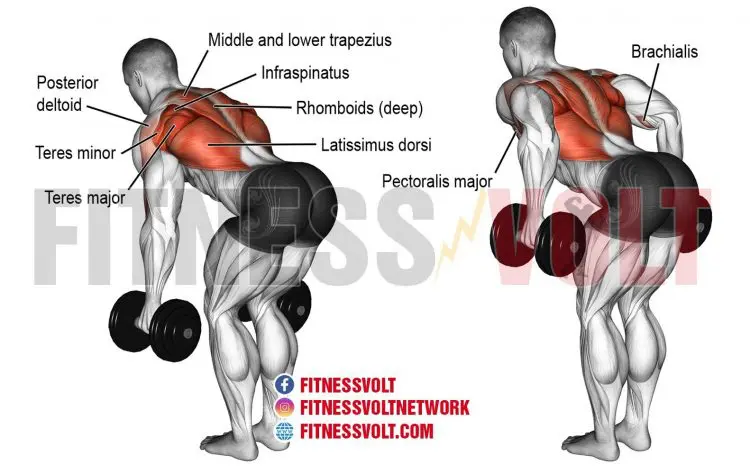
Back muscles
The back muscles consist of the latissimus dorsi, trapezius, erector spinae, rhomboids, and levator scapulae, and more. These muscles are responsible for posture, supporting the trunk, scapular/shoulders and neck movements, and coordination between movements involving limbs and the trunk.
Rows are excellent for working the overall back.
Biceps
The biceps is a two-headed muscle located on the anterior upper arm. Its main function is supination of the forearm and it’s also an elbow flexor. Every pulling movement heavily involves the biceps muscles.
Forearms
Like the biceps, the forearm muscles are also very important during pulling/ rowing movements. Without a strong grip, you’ll sell yourself short on progress.
Core
The core muscles involve the abs and obliques. We need a strong core for all activities whether it’s exercising, competing in sports, or doing regular everyday activities. These muscles are responsible for stabilizing the spine and facilitating various trunk movements.
Pectoralis sternal head
Also known as the lower chest muscles, the pectoralis sternal head has its own section of fibers. These muscles help with movement of the upper limbs (pulls arms downward).
Exercise Instructions
- Hold dumbbells at your sides with a neutral or overhand grip and a slightly wider than shoulder-width stance. Then bend the knees while bringing the torso downward (Just above parallel) while keeping your back straight and core tight.
- Keep your elbows at a 45-degree angle to your body.
- Pull the dumbbells upward toward and slightly past the lats while contracting the back muscles and inhaling.
- Then lower the dumbbells slowly while exhaling to the starting position.
- Repeat until reps are complete.
Here’s a video example by our training editor:
Barbell bent-over row tips
- You can perform this movement while seated on a bench.
- Always keep the back straight, knees bent, head in line with the torso, and core tight to prevent injury.
- Start with light weights and work your way up.
- If you don’t feel the back muscles working then lighten up the weight and practice good form.
3 Variations
There are tons of row variations but here are three that we highly recommend.
Barbell bent-over row
The barbell row is the variation that you use when you want to lift heavy poundages and maximize your strength. Not that you can’t row heavy or build lots of strength using dumbbells, but a barbell is superior where strength-building is concerned because it’s bilateral (affecting both sides).
You want to start light, get your form down first, and then progressively increase the weights with this movement. Going too heavy can place a lot of strain on your back.
T-bar or landmine row
The T-bar row or the landmine row can either be done chest-supported or freestanding. Both of these exercises are sometimes used as interchangeable terms and movements but there are so many different variations of this variation!
Cable bent-over row
You can also use cables to do the bent-over row and it makes for an excellent variation. There are various grips that you can use from an EZ bar to a straight bar, handles, ropes, etc. Not to mention, cables maintain a constant tension and so you can use various angles too.
How To Incorporate The dumbbell Bent-Over Row Into Your Training Routine
The dumbbell bent-over row makes for the perfect addition to your back workouts. But what’s the best way to include it?
There’s no right or wrong answer here, however, we can offer our best recommendations.
Now, keep in mind that there are several muscles that make up the back or upper posterior chain. Therefore, it’s important to utilize exercises that emphasize each muscle if you plan to have a well-developed back.
So for example, if we wanted to target the traps, we’d do a form of shoulder shrugs. For lats, studies have shown that the pull-up is superior, and the same research found the bent-over row to have the best overall activation of the back muscles symmetrically from top to bottom (1).
Therefore, the dumbbell bent-over row is a very good overall back exercise. But dumbbells have their benefits as mentioned such as allowing for natural movement and being able to maximize the muscle contraction as a result.
A good example of an effective back exercise that includes the dumbbell bent-over row would be something like this.
| Exercise | Sets | Reps |
|---|---|---|
| Dumbbell bent-over row | 3 sets | 8-12 reps |
| Pull-ups | 2 sets | to failure |
| Chin-ups | 2 sets | to failure |
| I-Y-T raise | 3 sets | 10-12 reps |
| Barbell or dumbbell shrugs | 2 sets | (not specified) |
| Face pulls | 2 sets | 15-20 reps |
Sets/reps
We recommend doing anywhere from 8-20 reps and sticking to this rep range. You don’t want to go too heavy but you still want to challenge the muscles and take your sets to failure.
Wrapping Up
The dumbbell bent-over row is perfect as an alternative to the barbell row, although you should definitely include both in your workouts. It allows you to utilize natural movement, focus on the contractions, and identify and fix left-to-right strength imbalances.
We hope you found this guide helpful and now it’s time to get out there and train!
Interested in measuring your progress? Check out our strength standards for Chin Ups, Pendlay Row, Pull Ups, and more exercises.