

Assisted Prone Lying Quads Stretch vs Iron Crosses (stretch): Complete Comparison Guide
Assisted Prone Lying Quads Stretch vs Iron Crosses (stretch) — two beginner isolation stretches that target your quads but use different leverage and joint positions. You’ll learn how each stretch loads the rectus femoris and vasti, what secondary muscles assist, key technique cues, typical hold times (30–60 seconds), and which choice fits goals like mobility, recovery, or sport-specific prep. I’ll give clear winners for common scenarios, practical setup tips (strap vs partner), and simple progressions so you can pick the right option for your routine.
Exercise Comparison
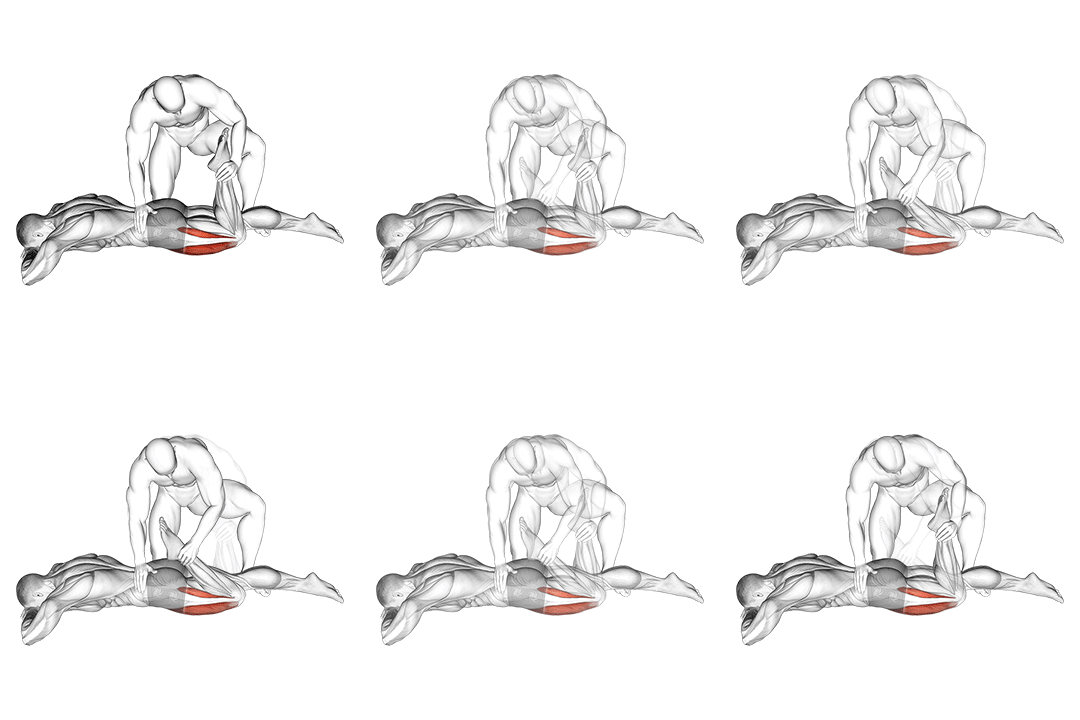
Assisted Prone Lying Quads Stretch
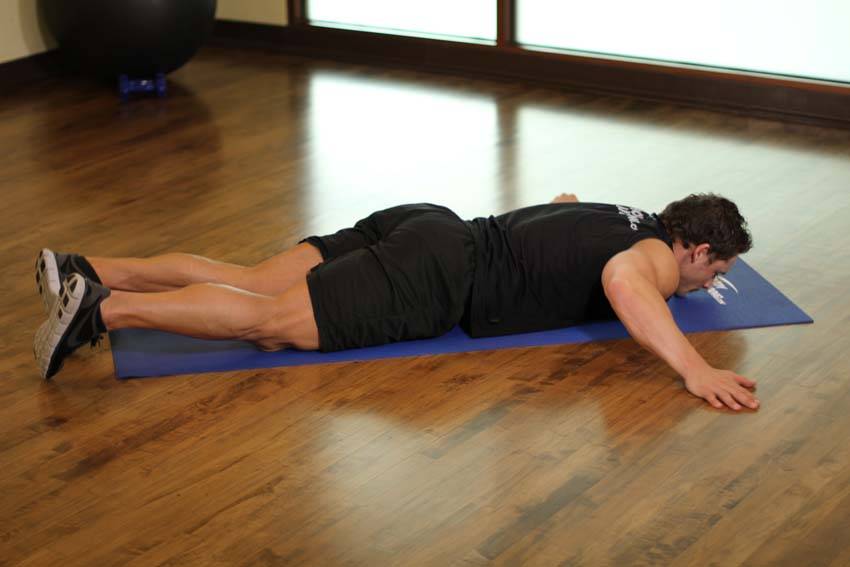
Iron Crosses (stretch)
Head-to-Head Comparison
| Attribute | Assisted Prone Lying Quads Stretch | Iron Crosses (stretch) |
|---|---|---|
| Target Muscle |
Quads
|
Quads
|
| Body Part |
Upper-legs
|
Upper-legs
|
| Equipment |
Other
|
Other
|
| Difficulty |
Beginner
|
Beginner
|
| Movement Type |
Isolation
|
Isolation
|
| Secondary Muscles |
2
|
0
|
Secondary Muscles Activated
Assisted Prone Lying Quads Stretch
Iron Crosses (stretch)
Visual Comparison
Overview
Assisted Prone Lying Quads Stretch vs Iron Crosses (stretch) — two beginner isolation stretches that target your quads but use different leverage and joint positions. You’ll learn how each stretch loads the rectus femoris and vasti, what secondary muscles assist, key technique cues, typical hold times (30–60 seconds), and which choice fits goals like mobility, recovery, or sport-specific prep. I’ll give clear winners for common scenarios, practical setup tips (strap vs partner), and simple progressions so you can pick the right option for your routine.
Key Differences
- Both exercises target the Quads using Other. The main differences are in their movement patterns and muscle activation angles.
Pros & Cons
Assisted Prone Lying Quads Stretch
+ Pros
- Directly targets rectus femoris through simultaneous hip extension and knee flexion
- Easy to regress or progress with a strap, partner, or ankle weight
- Low technical demand—quick to learn for beginners
- Better pelvic control reduces compensatory lumbar extension
− Cons
- Requires a strap or partner if you lack ankle reach
- Can create anterior knee discomfort if you pull too aggressively
- Less transverse-plane mobility work compared with cross-style stretches
Iron Crosses (stretch)
+ Pros
- Adds transverse-plane mobility and addresses lateral quad tissues
- Often requires no equipment if you can reach the ankle
- Useful for athletes needing hip rotation and adductor flexibility
- Can be combined with light dynamic movement to improve ROM
− Cons
- Harder to scale precisely—intensity depends on limb position
- Higher potential for knee or hip irritation if forced
- Less direct tension on rectus femoris when hip position is suboptimal
When Each Exercise Wins
While neither stretch drives hypertrophy like loaded training, assisted prone better primes the rectus femoris and allows progressive tension (added ankle weight or stretch-load protocols). Use 30–60 second holds and pair with eccentric quad work to support muscle growth.
Strength gains require force production through ranges. Assisted prone improves sagittal-plane quad length-tension relationships and can be loaded incrementally, making it the more useful accessory to protect and prepare quads for heavy lifts.
Its simple position, easy cueing (keep pelvis pressed, pull ankle to glute), and ability to scale with a strap make assisted prone the safer, faster-to-learn option for newcomers.
You only need a mat and a strap or towel. The controlled sagittal movement is easier to perform alone and less likely to irritate joints compared with the multi-plane demands of Iron Crosses.
Frequently Asked Questions
Can I do both Assisted Prone Lying Quads Stretch and Iron Crosses (stretch) in the same workout?
Yes. Start with Assisted Prone Lying Quads Stretch to safely load the rectus femoris (30–60 s), then include a single set of Iron Crosses to add transverse-plane mobility. Keep total quad stretch time under 6 minutes per session to avoid overstretch-induced soreness.
Which exercise is better for beginners?
Assisted Prone Lying Quads Stretch is better for beginners due to its straightforward setup, clear cues (press pelvis, pull ankle to glute), and easy scaling with a strap or partner.
How do the muscle activation patterns differ?
Assisted prone places rectus femoris at a longer length by combining hip extension with knee flexion, increasing sagittal-plane tension. Iron Crosses shifts some load laterally and into the hip rotators by adding abduction and transverse rotation, reducing pure rectus femoris peak tension by an estimated 10–20%.
Can Iron Crosses (stretch) replace Assisted Prone Lying Quads Stretch?
Not entirely. Iron Crosses can supplement rotational mobility needs, but it does not consistently produce the same direct rectus femoris tension or the same easy progression options; keep assisted prone as your primary quad lengthening tool if you need predictable results.
Expert Verdict
Use Assisted Prone Lying Quads Stretch when your goal is reliable anterior thigh tension, safe progression, and easy scaling—especially if you pair 30–60 second holds with light ankle loading or follow-up eccentric work. Choose Iron Crosses when you need added transverse-plane mobility, lateral quad and hip rotation work, or sport-specific prep that mimics crossing motions; perform it cautiously and avoid forcing hip rotation. Both can appear in a program: prioritize assisted prone for mobility and recovery, and add Iron Crosses selectively for rotational range-of-motion and lateral tissue conditioning.
Also Compare
More comparisons with Assisted Prone Lying Quads Stretch
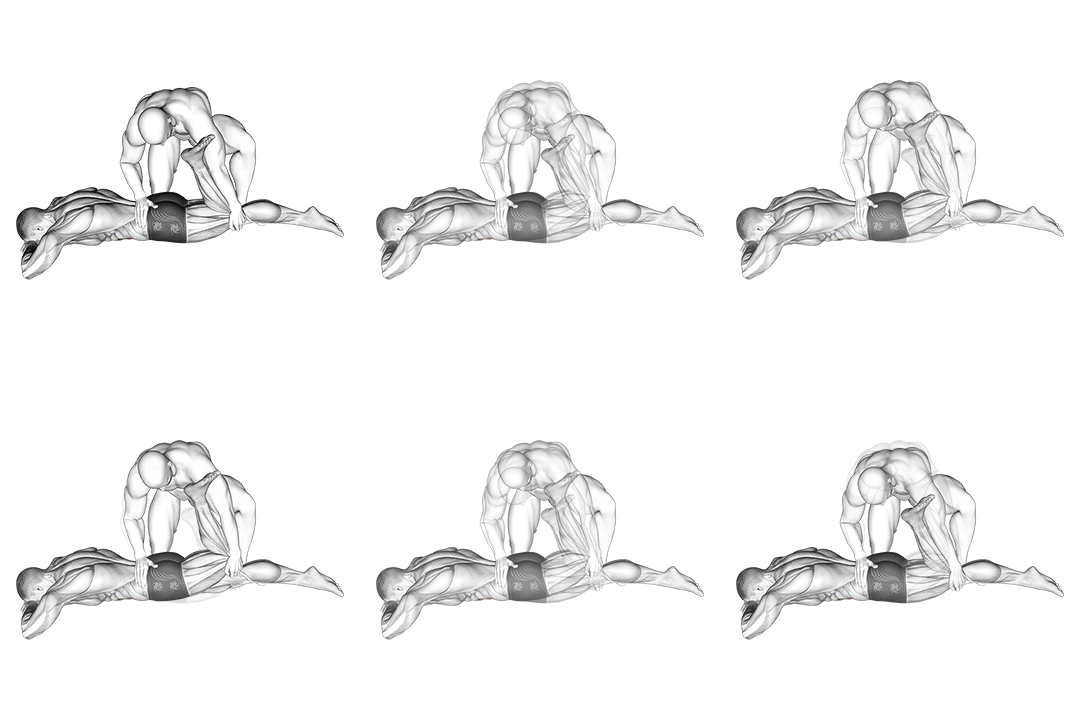
More comparisons with Iron Crosses (stretch)
Compare More Exercises
Use our free comparison tool to analyze any two exercises head-to-head.
Compare Exercises