

Iron Crosses (stretch) vs Linear Depth Jump: Complete Comparison Guide
Iron Crosses (stretch) vs Linear Depth Jump — if you're focused on quad development, you need to know when to pick isolation work over explosive plyometrics. I’ll walk you through biomechanics, muscle activation, equipment needs, risk, and practical programming so you can choose exercises that match your goals. You'll get clear cues for each move, rep and progression suggestions (8–15 reps for Iron Crosses, 3–8 explosive reps for depth jumps), and specific differences in how force vectors and the stretch-shortening cycle change quad loading. Read on to match each exercise to your training phase and ability level.
Exercise Comparison
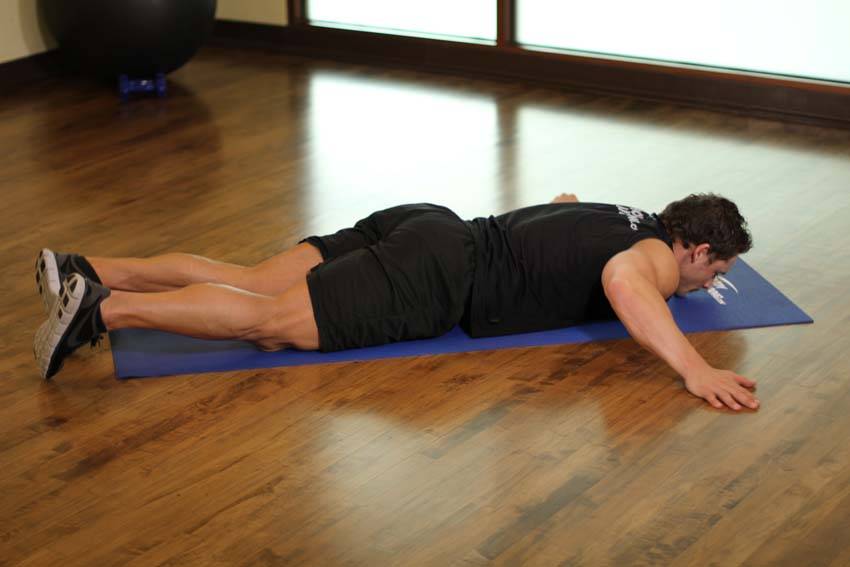
Iron Crosses (stretch)

Linear Depth Jump
Head-to-Head Comparison
| Attribute | Iron Crosses (stretch) | Linear Depth Jump |
|---|---|---|
| Target Muscle |
Quads
|
Quads
|
| Body Part |
Upper-legs
|
Upper-legs
|
| Equipment |
Other
|
Other
|
| Difficulty |
Beginner
|
Advanced
|
| Movement Type |
Isolation
|
Compound
|
| Secondary Muscles |
0
|
3
|
Secondary Muscles Activated
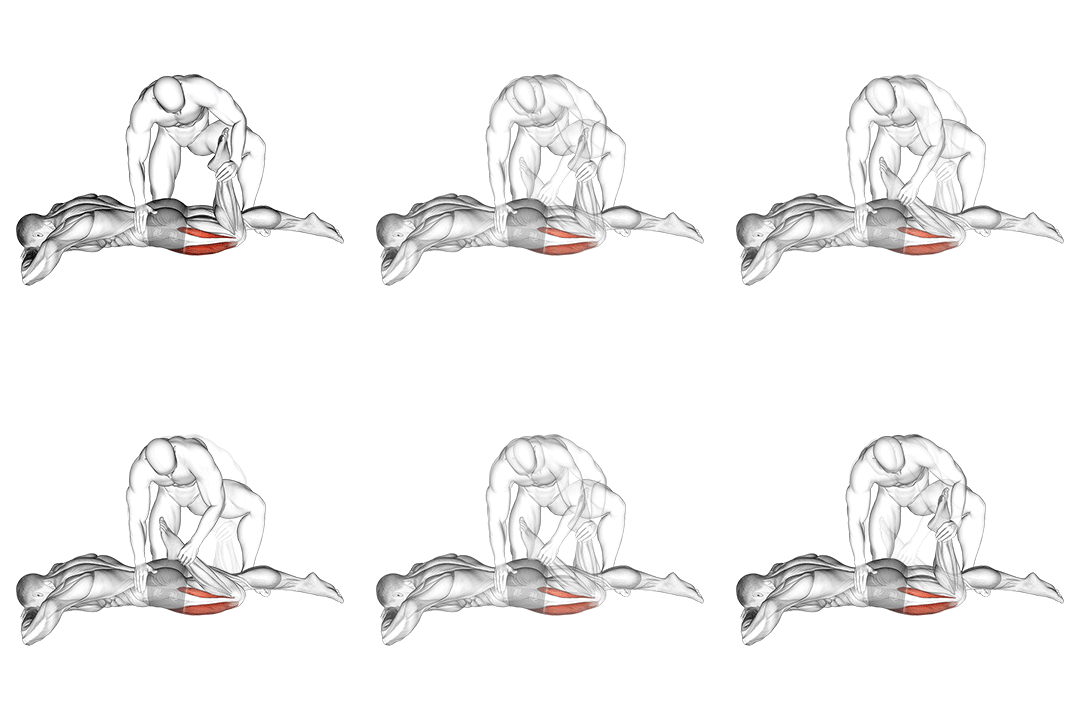
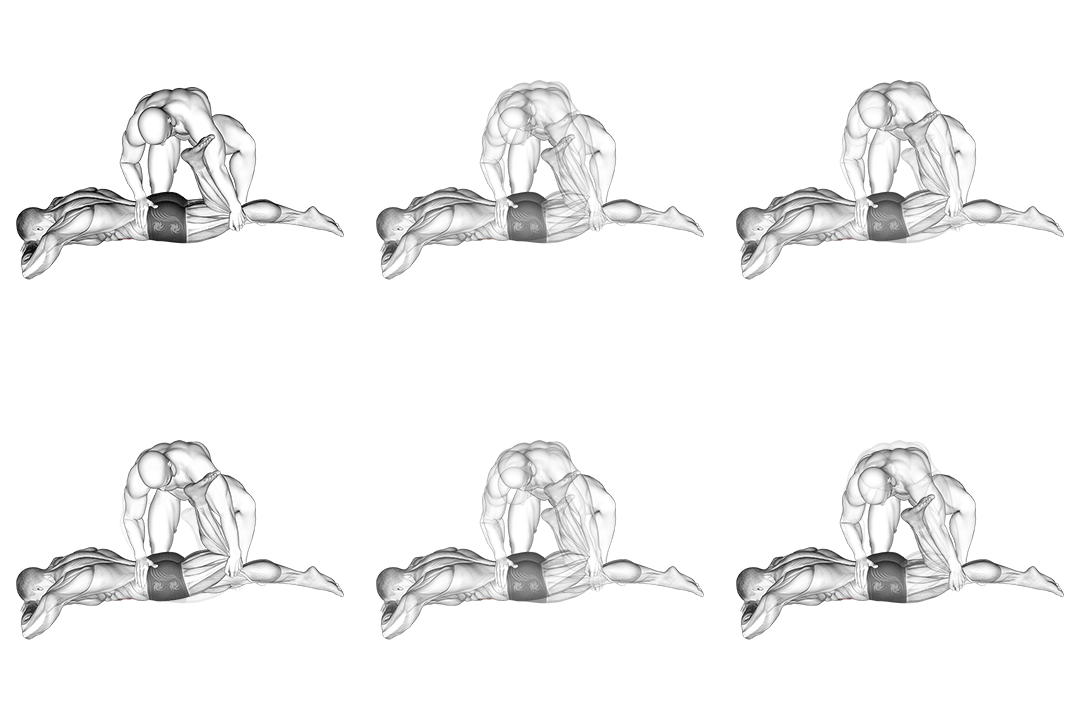
Iron Crosses (stretch)
Linear Depth Jump
Visual Comparison
Overview
Iron Crosses (stretch) vs Linear Depth Jump — if you're focused on quad development, you need to know when to pick isolation work over explosive plyometrics. I’ll walk you through biomechanics, muscle activation, equipment needs, risk, and practical programming so you can choose exercises that match your goals. You'll get clear cues for each move, rep and progression suggestions (8–15 reps for Iron Crosses, 3–8 explosive reps for depth jumps), and specific differences in how force vectors and the stretch-shortening cycle change quad loading. Read on to match each exercise to your training phase and ability level.
Key Differences
- Iron Crosses (stretch) is an isolation exercise, while Linear Depth Jump is a compound movement.
- Difficulty levels differ: Iron Crosses (stretch) is beginner, while Linear Depth Jump is advanced.
- Both exercises target the Quads using Other. The main differences are in their movement patterns and muscle activation angles.
Pros & Cons
Iron Crosses (stretch)
+ Pros
- Direct quad isolation improves targeted muscle growth and symmetry
- Low-impact and beginner-friendly with simple mechanics
- Requires minimal equipment—suitable for home workouts
- Easy to control tempo and increase time-under-tension (2–4s eccentrics)
− Cons
- Limited carryover to explosive power or sprint performance
- Less multi-joint coordination and lower total-body stimulus
- May underload fast-twitch fibers unless you add high resistance or tempo variations
Linear Depth Jump
+ Pros
- Develops rate of force development and explosive knee extension
- Strong transfer to jump and sprint performance via SSC training
- Engages calves, glutes, and hamstrings for real-world power outputs
- Progressions available by adjusting box height and contact time
− Cons
- High-impact movement with greater injury risk if technique is poor
- Requires specific equipment and space (30–60 cm box recommended)
- Not ideal for pure hypertrophy—limited time-under-tension for quads
When Each Exercise Wins
Iron Crosses let you control time-under-tension (2–4 second eccentrics) and isolate the quads, which is ideal for muscle growth. Use 8–15 reps and progressive overload with added resistance or pauses at end-range.
For improving rate of force development and explosive knee extension, depth jumps win—especially for athletes needing power. They drive rapid motor-unit recruitment and high peak forces that transfer to dynamic strength tasks.
Iron Crosses have simpler mechanics and lower impact, so you can learn effective quad loading without mastering landing mechanics or risking high ground reaction forces. Start with bodyweight and 8–12 reps.
Iron Crosses require minimal gear—a bench or chair and a band or strap suffice—making them ideal for home training. Depth jumps need a safe plyo box and more landing space.
Frequently Asked Questions
Can I do both Iron Crosses (stretch) and Linear Depth Jump in the same workout?
Yes—put depth jumps at the start of a session when you’re fresh to prioritize explosive quality (3–6 reps, 3–5 sets). Follow with Iron Crosses later for targeted quad volume (3–4 sets of 8–15 reps) once power work is complete.
Which exercise is better for beginners?
Iron Crosses (stretch) are better for beginners because they’re low-impact and easier to coach, allowing you to learn quad-loading mechanics. Depth jumps require landing control and should be introduced only after mastering basic strength and technique.
How do the muscle activation patterns differ?
Iron Crosses emphasize sustained quad activation at longer muscle lengths and slow concentric contractions, increasing time-under-tension. Depth jumps use a rapid eccentric-to-concentric SSC, producing higher peak forces and faster Type II fiber recruitment, plus greater calf and glute involvement.
Can Linear Depth Jump replace Iron Crosses (stretch)?
Not fully. Depth jumps improve power and neuromuscular drive but offer limited time-under-tension for hypertrophy. If your goal is quad muscle growth or safe, high-volume training, keep Iron Crosses in your program alongside plyometrics.
Expert Verdict
Use Iron Crosses (stretch) when your priority is quad hypertrophy, joint-safe isolation, or training with limited equipment. They let you manipulate muscle length, tempo, and time-under-tension (8–15 reps, 2–4s eccentrics) to drive targeted growth. Choose Linear Depth Jump when you need to develop power, rate of force development, and multi-joint coordination; use controlled box heights (30–60 cm), land with ~30–45° knee flexion, and program short sets of 3–6 reps for quality. If you train both, sequence depth jumps early for power and finish with Iron Crosses for metabolic and hypertrophic stimulus.
Also Compare
More comparisons with Iron Crosses (stretch)

More comparisons with Linear Depth Jump
Compare More Exercises
Use our free comparison tool to analyze any two exercises head-to-head.
Compare Exercises