

Backward Drag vs Linear Depth Jump: Complete Comparison Guide
Backward Drag vs Linear Depth Jump — which move should you add to your lower-body work? You want clear answers: which targets quads better, which builds power, which is safer, and what reps, heights, and loads to use. I'll compare primary and secondary muscle activation, show how biomechanics change between a slow, loaded drag and a fast reactive drop, and give practical cues and progressions. Read on if you want specific technique tips, rep ranges (3–12), box heights (30–60 cm) and loading strategies to match your goals.
Exercise Comparison

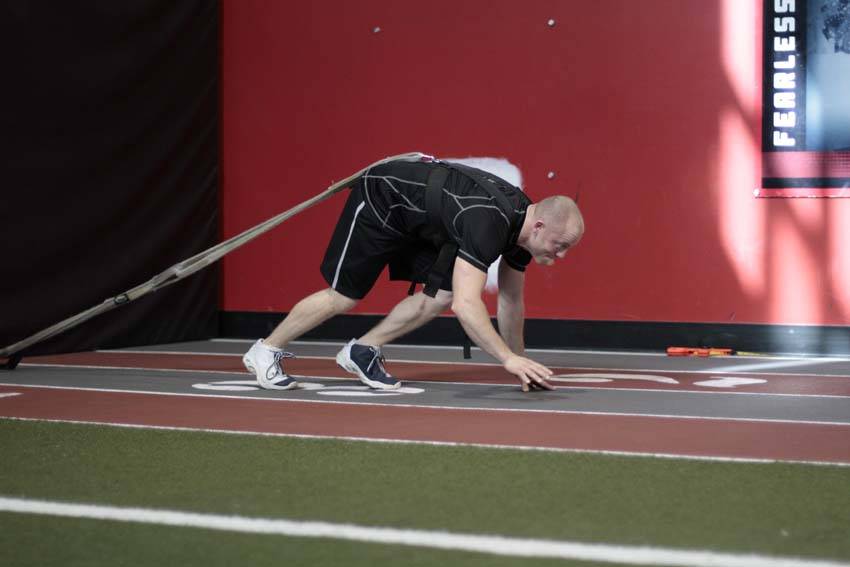
Backward Drag
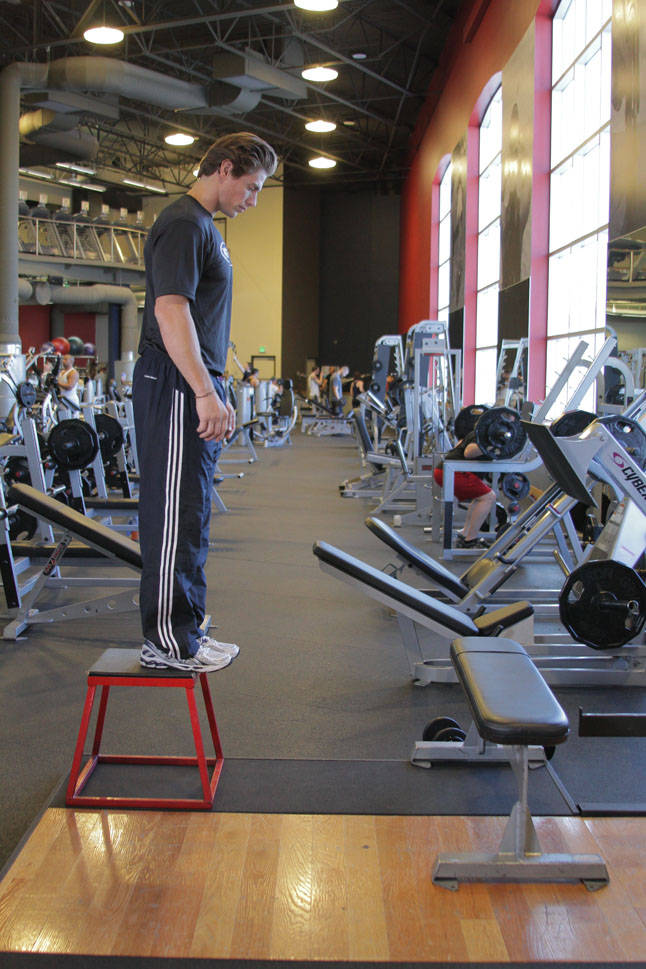
Linear Depth Jump
Head-to-Head Comparison
| Attribute | Backward Drag | Linear Depth Jump |
|---|---|---|
| Target Muscle |
Quads
|
Quads
|
| Body Part |
Upper-legs
|
Upper-legs
|
| Equipment |
Other
|
Other
|
| Difficulty |
Intermediate
|
Advanced
|
| Movement Type |
Compound
|
Compound
|
| Secondary Muscles |
5
|
3
|
Secondary Muscles Activated
Backward Drag
Linear Depth Jump
Visual Comparison
Overview
Backward Drag vs Linear Depth Jump — which move should you add to your lower-body work? You want clear answers: which targets quads better, which builds power, which is safer, and what reps, heights, and loads to use. I'll compare primary and secondary muscle activation, show how biomechanics change between a slow, loaded drag and a fast reactive drop, and give practical cues and progressions. Read on if you want specific technique tips, rep ranges (3–12), box heights (30–60 cm) and loading strategies to match your goals.
Key Differences
- Difficulty levels differ: Backward Drag is intermediate, while Linear Depth Jump is advanced.
- Both exercises target the Quads using Other. The main differences are in their movement patterns and muscle activation angles.
Pros & Cons
Backward Drag
+ Pros
- Loads quads under sustained tension for hypertrophy and strength
- Easy to scale by adding weight or changing tempo
- Develops posterior-chain stability and grip strength
- Teaches controlled knee-extension mechanics across a large ROM
− Cons
- Requires sled or heavy object, less home-friendly
- Can load the lower back if technique or load is poor
- Less emphasis on explosive reactive power and RFD
Linear Depth Jump
+ Pros
- Maximizes rate of force development and reactive strength
- Minimal equipment: just a stable box and space
- High calf and glute recruitment during rebound
- Quick sets (3–6 reps) give big power adaptations with low volume
− Cons
- High impact and greater injury risk without sound landing mechanics
- Advanced technique; not suitable until basic strength and control are established
- Limited direct hypertrophy stimulus due to short time-under-tension
When Each Exercise Wins
Backward Drag keeps the quads under longer time-under-tension and lets you progressively load with heavier resistance. Use 6–12 controlled reps with 2–3 second eccentrics to target cross-sectional muscle growth.
For maximal force and joint torque development, heavy-loaded drags (3–6 reps) let you increase absolute load and joint moments. This produces greater mechanical tension at longer muscle lengths compared with short-contact plyometrics.
Backward Drag has a steadier learning curve: you can teach posture, knee tracking, and load control before adding speed. Start with light load and 8–12 reps to build technique and strength.
Linear Depth Jump requires only a solid box and space, making it easier to implement at home. Keep box height to 30 cm or less until you master landing mechanics to reduce injury risk.
Frequently Asked Questions
Can I do both Backward Drag and Linear Depth Jump in the same workout?
Yes—you can combine them but sequence matters. Do depth jumps early when your nervous system is fresh (low reps, 3–6), then follow with backward drags for loaded strength or hypertrophy. This preserves reactive quality and reduces fatigue-driven landing breakdown.
Which exercise is better for beginners?
Backward Drag is better for most beginners because it teaches load management and knee-extension mechanics with lower impact. Start light, focus on upright torso and knee tracking, and only progress to depth jumps after achieving consistent strength and balance.
How do the muscle activation patterns differ?
Backward Drag produces longer-duration quad activation with greater time-under-tension and sustained knee-extension torque. Linear Depth Jump produces a rapid eccentric-to-concentric burst, recruiting more fast-twitch fibers and higher calf and glute activation during the rebound due to the stretch-shortening cycle.
Can Linear Depth Jump replace Backward Drag?
No—depth jumps can complement but not fully replace drags. Depth jumps build power and reactive strength, while backward drags provide progressive mechanical tension needed for hypertrophy and maximal strength. Choose based on whether you prioritize RFD or load-driven adaptation.
Expert Verdict
Choose Backward Drag when your goal is quad-focused hypertrophy or raw strength: it supplies long time-under-tension, precise loading control, and clear progression by weight (3–12 reps depending on goal). Use Linear Depth Jump when you want to improve rate of force development, reactive strength, and vertical power—keep sets short (3–6 reps), contact times <250 ms, and box heights between 30–60 cm. If you train at home or need a minimal-equipment plyometric, use depth jumps with strict landing cues; if you need progressive overload and safer learning, prioritize backward drags in the gym.
Also Compare
More comparisons with Backward Drag

More comparisons with Linear Depth Jump
Compare More Exercises
Use our free comparison tool to analyze any two exercises head-to-head.
Compare Exercises