

Preparation for meet day begins well before the event. Confirm your registration and check that your singlet meets federation standards - most require it to be a one-piece with no supportive material. Bring proof of membership for your federation if required.
Pack your kit bag with essentials: singlet, belt, knee sleeves or wraps, chalk (if allowed), wrist wraps, lifting shoes, deadlift socks (many federations require them to prevent shin abrasions), water, and food. Arrive at least 90 minutes before your session. Meets can run ahead of schedule, and rushing your warm-up is one of the most common beginner mistakes.
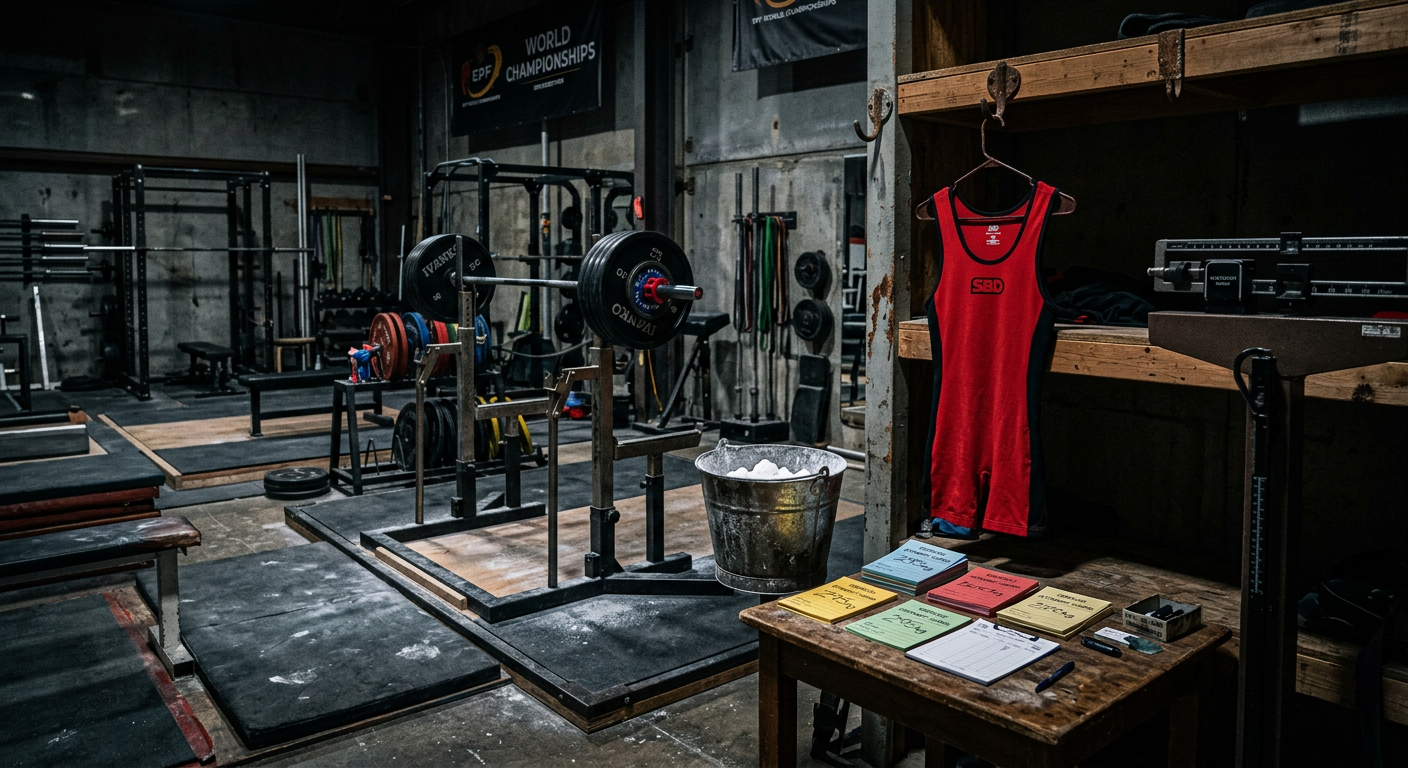
Meet Day Guide: Everything You Need to Know Before Competing
A complete walkthrough of powerlifting meet day - from weigh-ins and equipment checks to warm-up strategy, attempt selection, and reading the scoreboard. Know exactly what to expect.
Updated March 1, 2024Before You Arrive
Weigh-Ins
Weigh-ins determine your weight class for the day. Most federations conduct weigh-ins the morning of the meet, typically 1-2 hours before the session starts. Some major federations (including IPF) conduct weigh-ins the day before, giving lifters 24 hours to rehydrate after a cut.
You weigh in naked or in minimal clothing. If you come in over your weight class limit, you can choose to move up a class (if one is available) or be disqualified. Coming in significantly under is fine.
At weigh-ins, you also submit your opening attempt for all three lifts. These are written on the entry card and given to the meet director. Choose openers you can make on any day - typically 90-92% of your planned third attempt.
Equipment Checks
Before lifting, equipment is inspected by meet officials. They check that your singlet, belt, knee sleeves/wraps, wrist wraps, and shoes all meet federation specifications. Banned items (supportive shorts, non-approved belts, etc.) must be removed.
Knee sleeves and wraps are distinct items. Sleeves (neoprene cylinders) are permitted in the 'raw with wraps' or 'classic raw' division in most federations. Knee wraps (elastic wraps that provide greater rebound) are permitted only in the 'equipped' or 'wraps' division. Entering the wrong division is a common mistake - read your federation's rulebook carefully.
The Warm-Up Room
Most meets provide a dedicated warm-up area with several barbells and platforms. A handler or experienced training partner is invaluable here to help load plates, time your warm-ups, and give you cues.
General warm-up structure for each lift:
- Empty bar: 2-3 sets
- 50% of opener: 2 sets of 3
- 70% of opener: 1-2 sets of 2
- 85-90% of opener: 1 single
- Optional: 95% of opener, 1 single, about 5 minutes before you lift
Monitor the flight sheet (the list of lifters and their current attempts) to time your warm-ups. You want your heaviest warm-up about 5-10 minutes before you take the platform.
On the Platform
When your name is called, you have 60 seconds (in most federations) to start the lift after the bar is loaded. Walk out, set up, and wait for the head referee's commands.
Squat: Wait for the 'squat' command, descend, ascend, and wait for 'rack' before stepping back. Do not rack early.
Bench press: After the head referee's 'start' command, lower the bar to your chest, wait for 'press', complete the rep, and wait for 'rack'.
Deadlift: After 'start', lift the bar and hold your lockout until 'down' is given. Do not lower the bar until commanded.
After each lift, check the scoreboard immediately. Three white lights = pass. Two or more red lights = no lift. Judges may show cards with the reason for red lights. You have a short window (typically 1 minute after the flight's last lifter) to change your next attempt.
Attempt Selection Strategy
Attempt selection is a skill that improves with experience. The general framework:
Opener (1st attempt): Should be a weight you can make three times, even on a bad day. A failed opener puts immediate pressure on the rest of the meet. Conservative openers build confidence and give you a total to build on.
Second attempt: After a successful opener, take a moderate jump - typically 3-5% for beginners, 2-3% for experienced lifters. Your goal is to set yourself up for a strong third.
Third attempt: Go for your goal. This is where you chase a personal record, a competition total, a qualification standard, or a podium placement. Use our Attempt Planner tool to model different scenarios before your meet.
Adjusting attempts: You can change your next attempt once after submitting it. If you struggle on a lift, don't be afraid to take the same weight again. A triple at your opener beats a bomb-out every time.
Reading the Scoreboard
Flight sheets and scoreboards list lifters in attempt order (lightest weight goes first within each flight). As the session progresses, you can see where you stand relative to competitors in your weight class.
Key terms:
- Flight: A group of lifters who lift together in each round. Large sessions are split into multiple flights.
- Lot number: A random number assigned at weigh-ins, used to break ties when two lifters attempt the same weight.
- Total: Your running sum of best attempts. A lifter who fails all three attempts in any lift receives no total (DNF).
- Bomb-out: Failing all three attempts in a lift. You cannot continue the meet.
- Good lift / No lift: The outcome of each attempt.
After the Meet
Results are usually posted the same day and submitted to federation databases within days. Your results will eventually appear in online databases like OpenPowerlifting, which powers this site's athlete profiles.
Take notes while the day is fresh: what went well, what attempts you'd change, any technique feedback from judges or experienced lifters. A post-meet reflection is one of the most valuable tools for improvement.
Most importantly: every powerlifter remembers their first meet. The nerves, the community, the feeling of seeing your total on the scoreboard. Welcome to the sport.