

Powerlifting competitions divide athletes not only by bodyweight and age but also by the type of supportive equipment they are permitted to use. Understanding these divisions is essential before you enter your first meet.
At the broadest level, there are two categories: raw (also called 'classic' in some federations) and equipped. Within each, there are sub-divisions based on knee wraps vs sleeves and single-ply vs multi-ply gear. Different federations use different terminology, which creates confusion for new lifters.
Raw vs Equipped Powerlifting: Understanding the Divisions
A clear breakdown of the differences between raw, classic raw, single-ply, and multi-ply powerlifting divisions - what gear is allowed, how it affects performance, and how to choose the right division for you.
Updated March 1, 2024The Division Landscape
Raw / Classic Raw
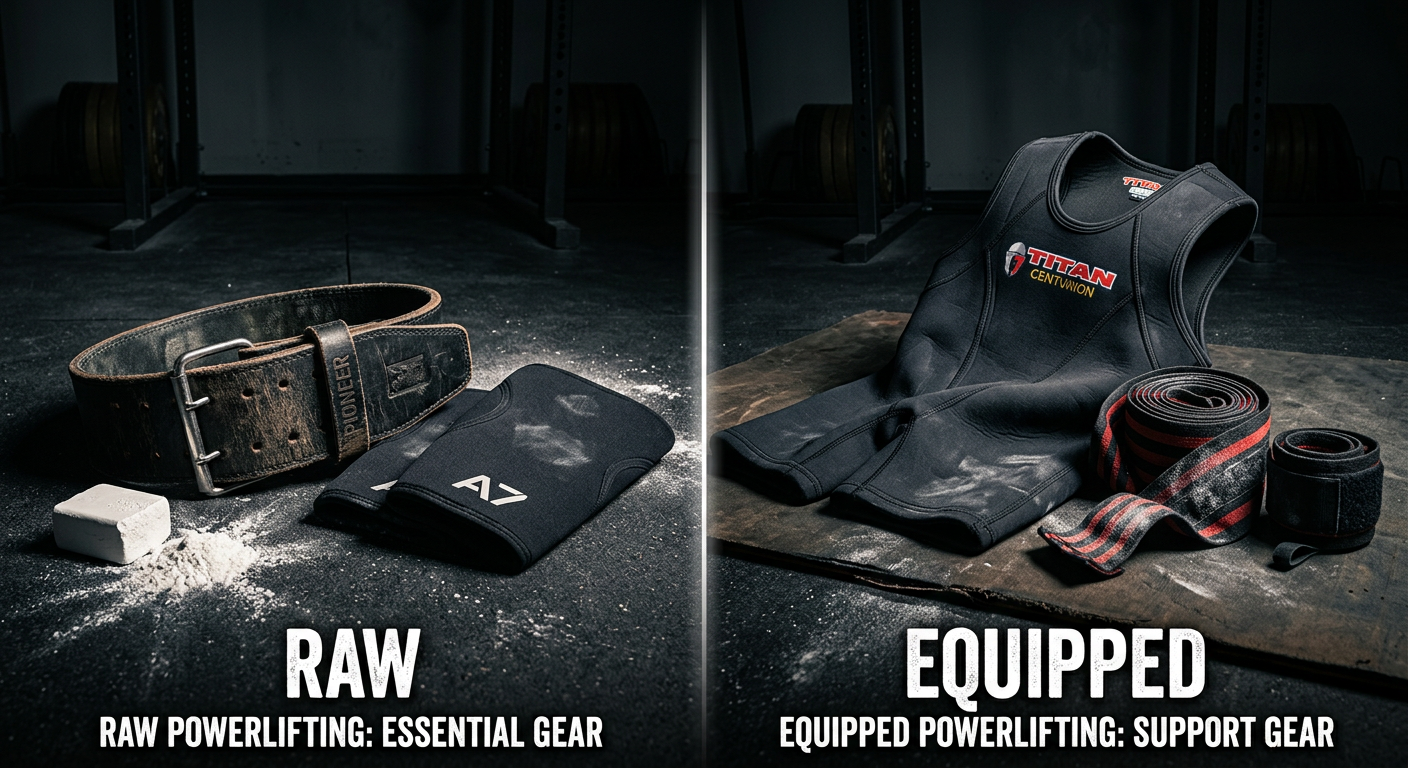
Raw lifting allows only a belt, knee sleeves or wraps (depending on the sub-division), and wrist wraps. No supportive suit, no bench shirt.
Raw (knee sleeves): The most common division. Belt, knee sleeves (neoprene, non-elastic), and wrist wraps. This is what most people mean when they say 'raw powerlifting.'
Raw with wraps / Classic with wraps: Belt, knee wraps (elastic, providing more rebound than sleeves), and wrist wraps. The wraps can add 10-30 kg to the squat for experienced lifters.
The IPF calls its raw division 'Classic Powerlifting' and its equipped division 'Equipped Powerlifting.' Most other federations use 'Raw' and 'Equipped' terminology.
Who competes raw: The majority of powerlifters worldwide. Raw lifting is more accessible, has lower equipment cost, and is widely considered the purer test of strength.
Single-Ply Equipped
Single-ply equipped lifting adds a squat suit, deadlift suit, and/or bench shirt made from a single layer of polyester material. The gear stores elastic energy and provides support, directly assisting the lift.
Single-ply squat suit: A tight-fitting suit that provides support at the hip crease and a significant rebound from the bottom of the squat. Well-fitted single-ply suits can add 30-60 kg to the squat at elite levels.
Single-ply bench shirt: A very tight shirt made from polyester. The material stretches as the bar descends, creating 'pop' off the chest. Touch weight is often higher than in raw lifting - you may need more than your raw max just to touch the chest, and then the shirt assists the press.
Learning curve: Single-ply equipment requires 3-6 months of dedicated practice to use effectively. The movement patterns change significantly from raw lifting.
Multi-Ply Equipped
Multi-ply lifting uses suits and shirts made from multiple layers of fabric (denim, canvas, or multiple polyester layers). These provide far more support and assistance than single-ply gear.
At elite multi-ply levels, the total can be 50-100% higher than a lifter's raw total. The gear fundamentally changes the lift - some multi-ply squatters barely touch depth before the suit forces them back up.
Who competes multi-ply: A small subset of the powerlifting community, concentrated in specific federations (APF, WPO-affiliated meets, some IPA events). The IPF does not recognise multi-ply. Most newer lifters do not start in multi-ply.
Cost: Multi-ply gear costs significantly more than single-ply and requires regular replacement as the fabric loses elasticity.
How Equipment Affects Performance Numbers
Equipped lifting produces higher totals than raw lifting. This creates comparison challenges when evaluating historical records or cross-federation results.
Approximate carry-over of supportive gear:
- Knee wraps vs sleeves: 10-30 kg on the squat
- Single-ply squat suit: 20-60 kg on the squat
- Single-ply bench shirt: 20-80 kg on the bench press
- Single-ply deadlift suit: 10-30 kg on the deadlift
- Multi-ply gear: significantly higher, varies by lifter and gear
This is why raw and equipped records are kept separately, and why bodyweight-adjusted scoring formulas (Wilks, DOTS, IPF GL) are calculated within divisions rather than across them.
Choosing Your Division
For most new lifters, the answer is straightforward: start raw (knee sleeves division).
Raw lifting requires minimal equipment investment, is available at virtually every federation and competition level, and develops a strong foundation that transfers to equipped lifting later if you choose to pursue it.
Consider wraps if: You have existing knee issues that benefit from additional support, or you specifically want to compete in the raw-with-wraps division and your federation supports it.
Consider equipped lifting if: You have been competing raw for 2+ years and want a new challenge, you have access to an experienced equipped coach or training partner, and you are willing to invest the time and money to learn the gear.
Federation matters: Check what divisions your target federation offers before buying any equipment. Some federations are raw-only, some have limited equipped divisions, and a few are primarily equipped.
Cross-Division and Cross-Federation Comparisons
Comparing performance across divisions requires care. A 700 kg total in equipped and a 700 kg total in raw represent very different levels of raw strength.
Online databases like OpenPowerlifting track division in each result, allowing accurate within-division comparisons. When you look at your percentile rank or strength standards on this site, the calculations account for your division.
Federation differences also matter. Some federations have stricter judging standards (depth, command timing) than others, which affects what totals are comparable. IPF judging is generally considered the strictest standard globally.