

Powerlifting divides competitors into weight classes so that heavier athletes (who have more absolute strength potential) do not always outcompete lighter athletes. Within each weight class, the lifter with the highest total wins. Cross-weight-class comparisons use bodyweight-adjusted scoring formulas (Wilks, DOTS, IPF GL).
You must make weight by the time weigh-ins close. If you are over the limit, you can attempt to move up a class (if available) or withdraw. If you are significantly under, you simply lift in your class with a disadvantage in absolute terms - though your formula score may benefit.
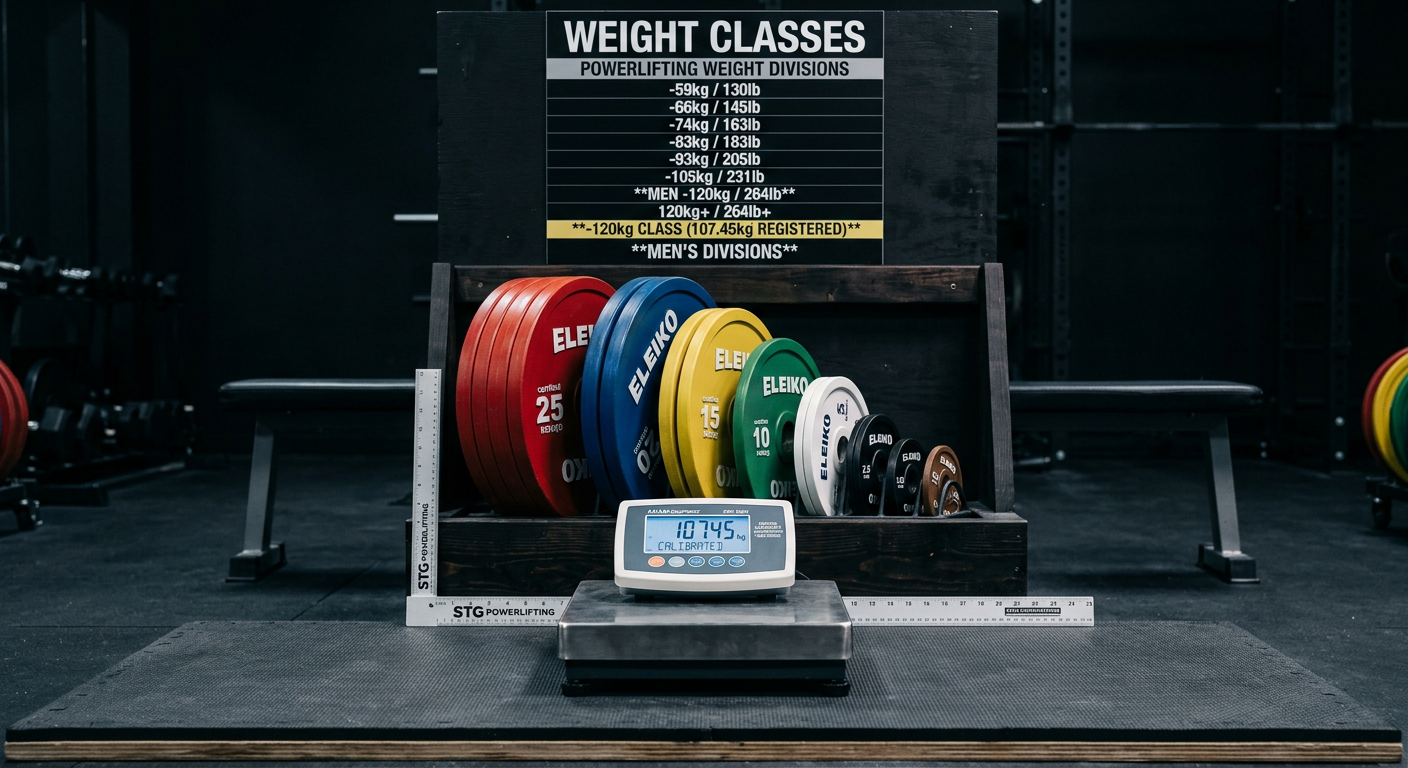
Powerlifting Weight Classes: How to Find Your Best Division
Everything you need to know about powerlifting weight classes - how they work, current classes for all major federations, how to cut weight safely, and how to find the class where you'll compete best.
Updated March 1, 2024How Weight Classes Work
IPF Weight Classes (Current)
The IPF restructured its weight classes in 2019. These are now the standard for IPF, USAPL, CPU, and most major international tested federations:
Men (Classic/Raw and Equipped):
- 59 kg (up to and including 59.0 kg)
- 66 kg
- 74 kg
- 83 kg
- 93 kg
- 105 kg
- 120 kg
- 120+ kg (Super heavyweight)
Women (Classic/Raw and Equipped):
- 47 kg
- 52 kg
- 57 kg
- 63 kg
- 69 kg
- 76 kg
- 84 kg
- 84+ kg (Super heavyweight)
The 2019 restructuring removed the 56 kg, 60 kg, 67.5 kg, 75 kg, 82.5 kg, 90 kg, 100 kg, and 110 kg classes that were used historically. Many older records reference these legacy classes.
Weight Classes in Other Federations
Not all federations have adopted the 2019 IPF structure. Many US federations (USPA, APF, RPS, etc.) continue to use older weight class structures that include different or additional classes.
Older American weight classes (men): 52 kg, 56 kg, 60 kg, 67.5 kg, 75 kg, 82.5 kg, 90 kg, 100 kg, 110 kg, 125 kg, 140 kg, 140+ kg
This matters if you compete in multiple federations or compare records across eras. A 75 kg class record from 2015 was set under different conditions than a 74 kg class record from 2020.
Always verify the weight classes for your specific federation and competition year.
Choosing Your Weight Class
For beginners, the answer is simple: compete at your natural walking weight. Do not cut weight for your first meet. Worrying about making weight adds stress and complexity to an already new experience.
Once you have some competition experience, you can think more strategically. The main considerations:
Compete at your natural weight: The most common and recommended approach. No water cut, full performance.
Cut to a lower class: If you are close to a weight class limit, a small cut (within about 2-3% of body weight) is manageable for most lifters. Larger cuts hurt performance and carry health risks.
Bulk to a higher class: If you are significantly under the limit and have room to add muscle, moving up a class gives you more room to grow without cutting.
Formula score consideration: Your DOTS or Wilks score changes based on your weight. A 92 kg lifter dropping to 83 kg needs to maintain the same total to keep the same DOTS score - but if their total drops with the cut, they come out behind. Use our Weight Class Analyzer to model this.
Water Cutting: What You Should Know
Water cutting - rapidly losing water weight to make a weight class, then rehydrating before competing - is practiced at all levels of powerlifting. Done correctly, it allows a lifter to compete at a lower weight class with little performance cost. Done incorrectly, it can be dangerous.
Small cuts (1-2 kg over 24 hours): Generally safe and very common. Usually achieved by reducing food and water intake and possibly a light sweat session.
Moderate cuts (2-4 kg): Require more aggressive water restriction. Some lifters use saunas, diuretics (check your federation's banned list), or extended periods of restriction. Requires careful rehydration protocols.
Large cuts (5+ kg): Not recommended, particularly for tested competitions (extreme cuts can affect test results) or for beginners. Severe dehydration impairs strength significantly even with optimal rehydration.
Important: If your federation weighs in the day before, you have the full 24-hour refeed window, which dramatically changes what is practical. Same-day weigh-ins with only 2 hours until lifting leave almost no time to rehydrate effectively.
Using Data to Find Your Best Class
Raw data from 1,000,000+ competition lifters on this site can show you exactly where you sit within your current weight class and what the competitive landscape looks like in adjacent classes.
Our Weight Class Advisor tool analyses your current lifts and weight, then shows you:
- Your current percentile rank in your weight class
- How your DOTS score changes if you move up or down a class (at the same total)
- Average totals by weight class so you can see how competitive each class is
- The density of competition in each class (some classes have far more competitors)
Use this data before making any decision about cutting or bulking. A small cut to a less-competed class might be worth more than staying in a deeper class at your natural weight.
Age Categories
Weight classes intersect with age categories, which further divide competition. Most federations recognise:
- Sub-Junior: Under 23 (varies by federation; some use under 18 and under 23 separately)
- Junior: 19-23 years old
- Open: No age restriction - the main competitive division
- Masters: 40+, with subdivisions (Masters 1: 40-49, Masters 2: 50-59, Masters 3: 60-69, Masters 4: 70+)
Competing in an age category means you can earn separate records and trophies within that category, even if your total would not be competitive in the open division. Masters competition is particularly popular - many lifters only begin powerlifting in their 40s and 50s.
Use our Age Curves tool to see how performance typically changes across the lifespan in powerlifting, broken down by weight class and sex.