

10 Best Barbell Front Raise & Pullover Alternatives for Limited Gear
If you can't do the Barbell Front Raise And Pullover, pick movements that still load the pectorals via long-axis pull or horizontal adduction. Use dumbbell pullover, cable chest fly, decline push-up, landmine press, or single-arm bench press. Keep a slight elbow bend and actively squeeze the pecs at peak contraction.
Original Exercise: Barbell Front Raise And Pullover
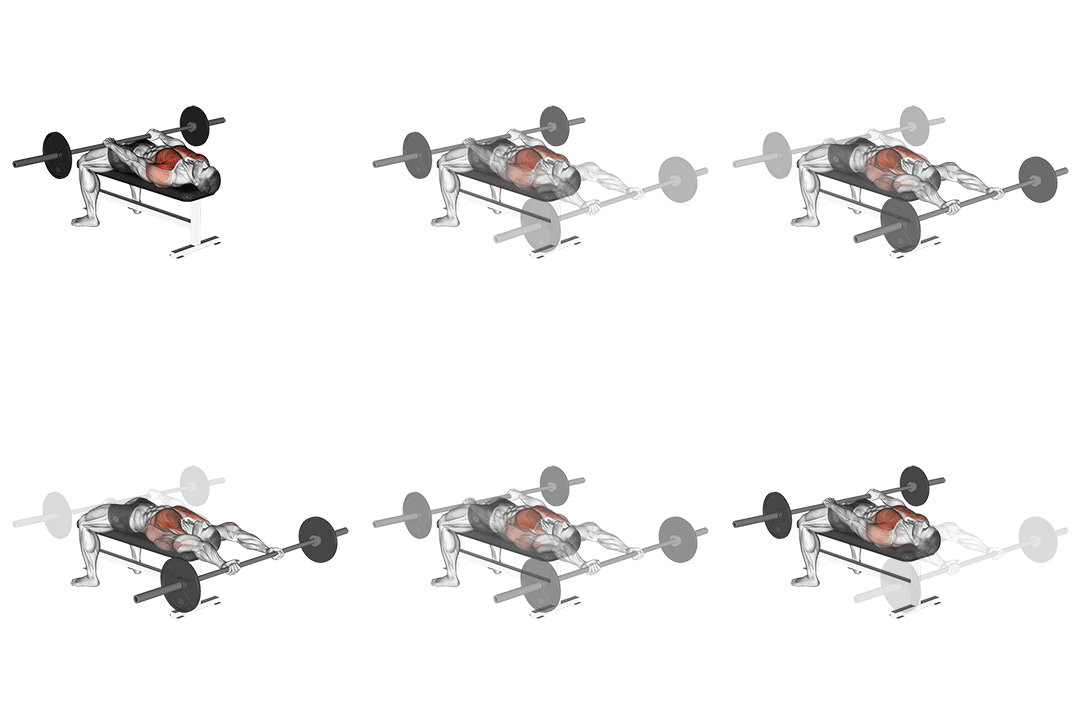
How to Perform Barbell Front Raise And Pullover
- Stand with your feet shoulder-width apart and hold a barbell with an overhand grip, palms facing down.
- Keep your arms straight and raise the barbell in front of you until it reaches shoulder height.
- Pause for a moment at the top, then slowly lower the barbell back down to the starting position.
- Next, lower the barbell behind your head, keeping your arms straight.
- Pause for a moment at the bottom, then raise the barbell back up to the starting position.
- Repeat for the desired number of repetitions.
Ranked Barbell Front Raise And Pullover Alternatives
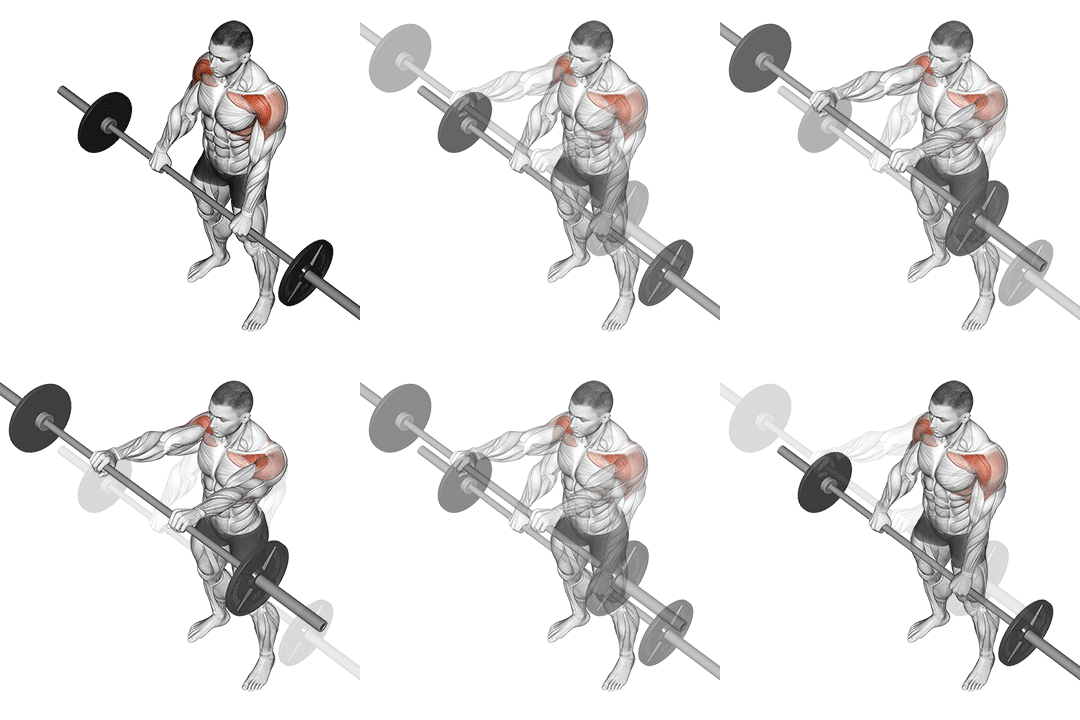
1. Barbell Front Raise
79.4% MatchHow to perform this exercise
- Stand with your feet shoulder-width apart and hold a barbell in front of your thighs with an overhand grip.
- Keep your arms straight and lift the barbell forward and upward until it reaches shoulder level.
- Pause for a moment at the top, then slowly lower the barbell back down to the starting position.
- Repeat for the desired number of repetitions.
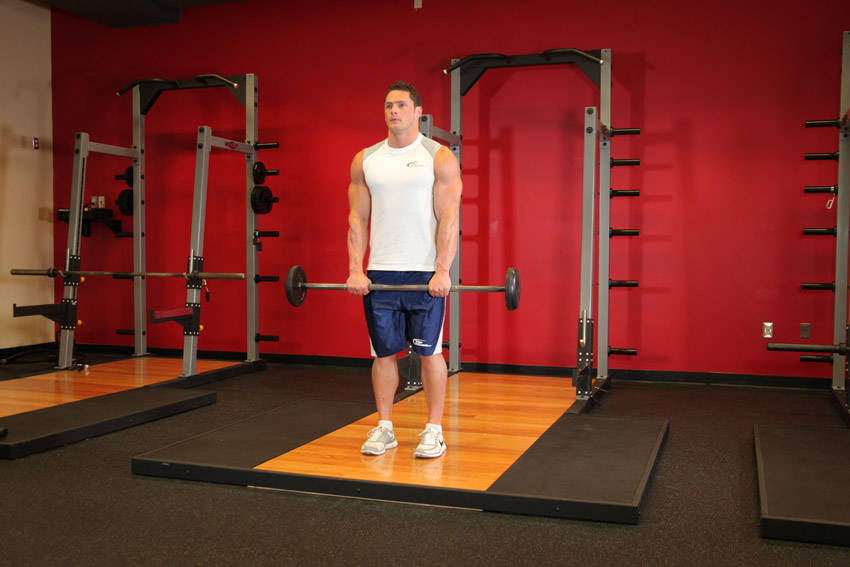
2. Standing Front Barbell Raise Over Head
72.9% MatchHow to perform this exercise
- To begin, stand straight with a barbell in your hands. You should grip the bar with palms facing down and a closer than shoulder width grip apart from each other.
- Your feet should be shoulder width apart from each other. Your elbows should be slightly bent. This is the starting position.
- Lift the barbell up until it is directly over your head while exhaling. Make sure to keep your elbows slightly bent when performing each repetition.
- Once you feel the contraction, begin to lower the barbell back down to the starting position as you inhale.
- Repeat for the recommended amount of repetitions.
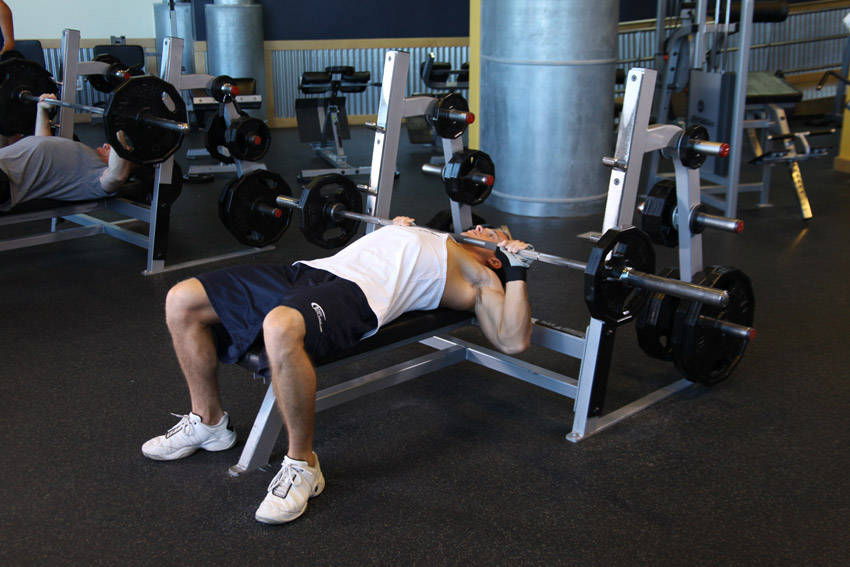
3. Neck Press
72.3% MatchHow to perform this exercise
- Lie back on a flat bench. Using a medium-width grip (a grip that creates a 90-degree angle in the middle of the movement between the forearms and the upper arms), lift the bar from the rack and hold it straight over your neck with your arms locked. This will be your starting position.
- As you breathe in, come down slowly until you feel the bar on your neck.
- After a second pause, bring the bar back to the starting position as you breathe out and push the bar using your chest muscles. Lock your arms and squeeze your chest in the contracted position, hold for a second and then start coming down slowly again. Tip: It should take at least twice as long to go down than to come up).
- Repeat the movement for the prescribed amount of repetitions.
- When you are done, place the bar back in the rack.
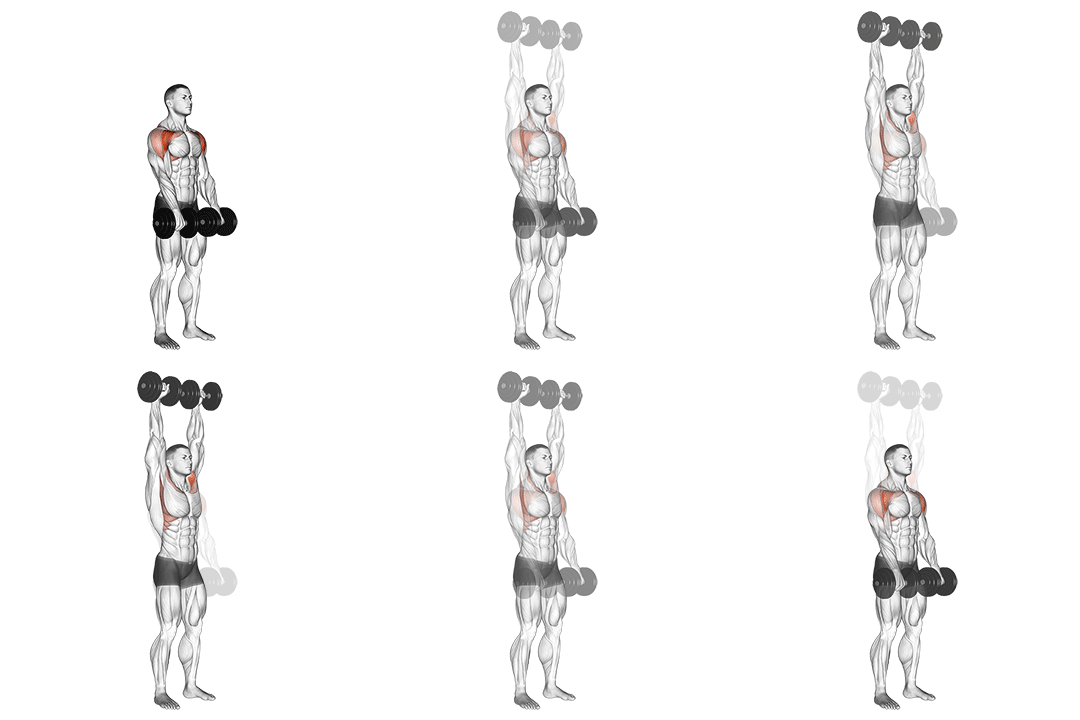
4. Dumbbell Standing Front Raise Above Head
70.8% MatchHow to perform this exercise
- Stand with your feet shoulder-width apart, holding a dumbbell in each hand with an overhand grip.
- Keep your arms straight and lift the dumbbells in front of you, raising them above your head.
- Pause for a moment at the top, then slowly lower the dumbbells back to the starting position.
- Repeat for the desired number of repetitions.
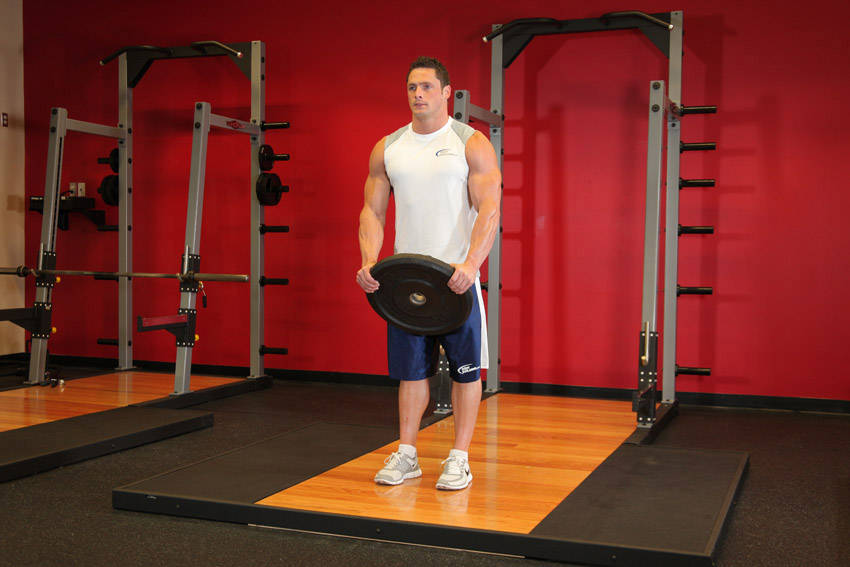
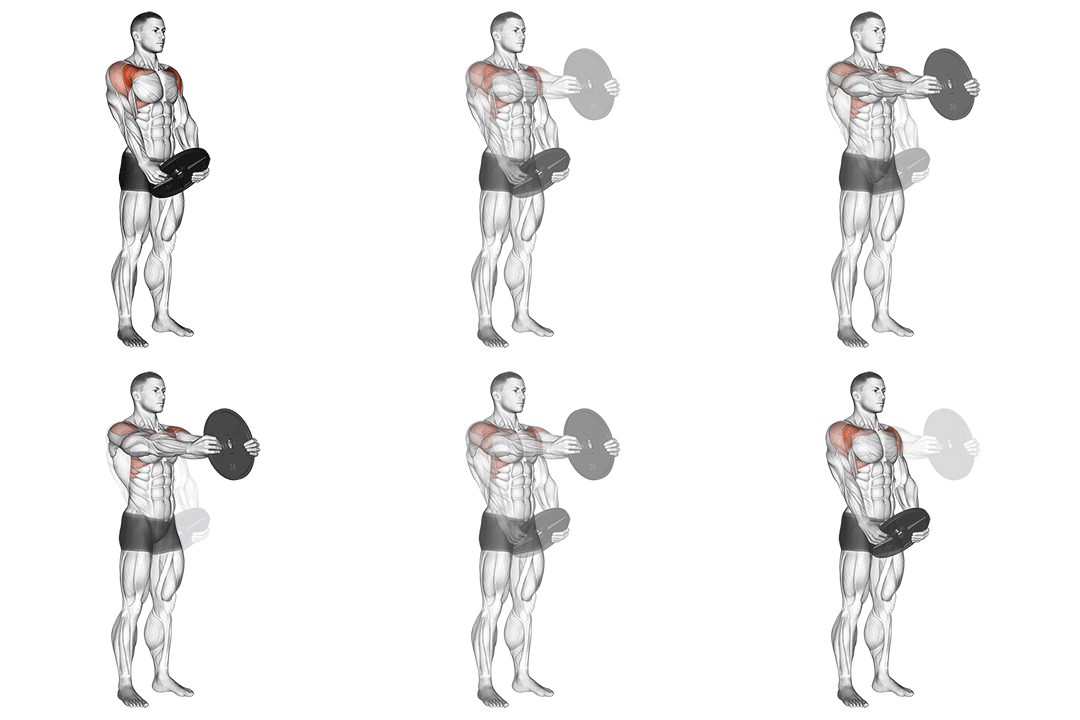
5. Front Plate Raise
68.7% MatchHow to perform this exercise
- While standing straight, hold a barbell plate in both hands at the 3 and 9 o'clock positions. Your palms should be facing each other and your arms should be extended and locked with a slight bend at the elbows and the plate should be down near your waist in front of you as far as you can go. Tip: The arms will remain in this position throughout the exercise. This will be your starting position.
- Slowly raise the plate as you exhale until it is a little above shoulder level. Hold the contraction for a second. Tip: make sure that you do not swing the weight or bend at the elbows. Your torso should remain stationary throughout the movement as well.
- As you inhale, slowly lower the plate back down to the starting position.
- Repeat for the recommended amount of repetitions.
6. Weighted Front Raise
68.7% MatchHow to perform this exercise
- Stand with your feet shoulder-width apart, holding a dumbbell in each hand with your palms facing your thighs.
- Keeping your arms straight, exhale and lift the dumbbells in front of you until they are at shoulder level.
- Pause for a moment at the top, then inhale and slowly lower the dumbbells back down to the starting position.
- Repeat for the desired number of repetitions.
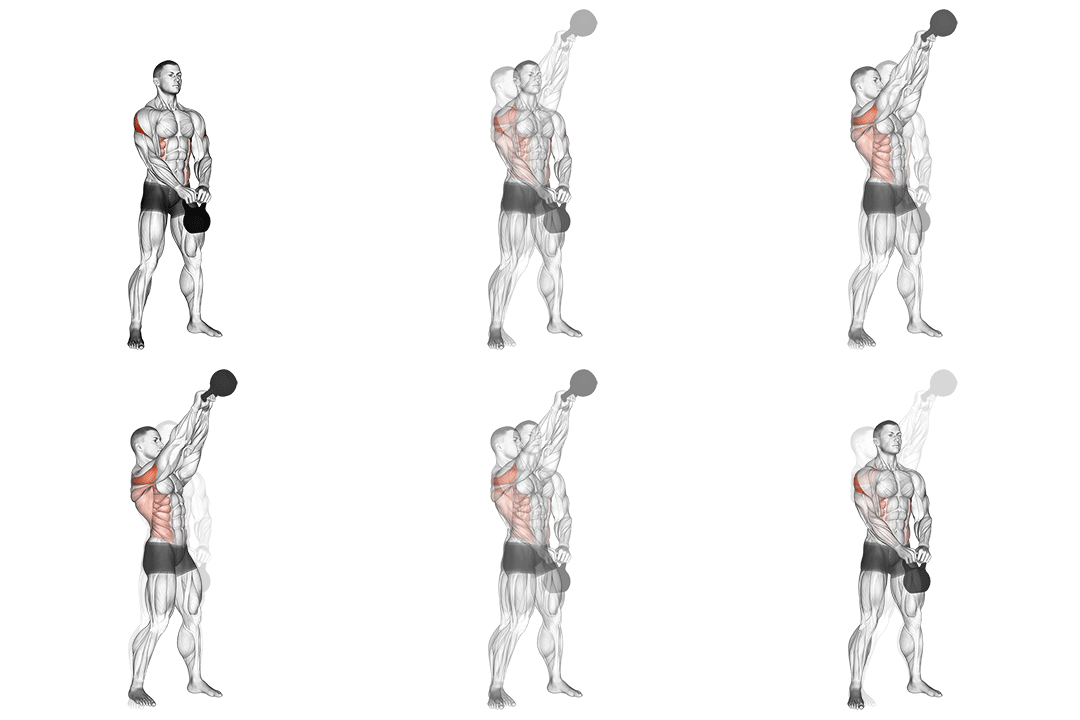
7. Kettlebell Pirate Supper Legs
68.3% MatchHow to perform this exercise
- Stand with your feet shoulder-width apart, holding a kettlebell in one hand.
- Bend your knees slightly and hinge forward at the hips, keeping your back straight.
- Raise the kettlebell up to shoulder height, keeping your elbow close to your body.
- Extend your arm fully overhead, straightening your elbow.
- Lower the kettlebell back down to shoulder height, then return to the starting position.
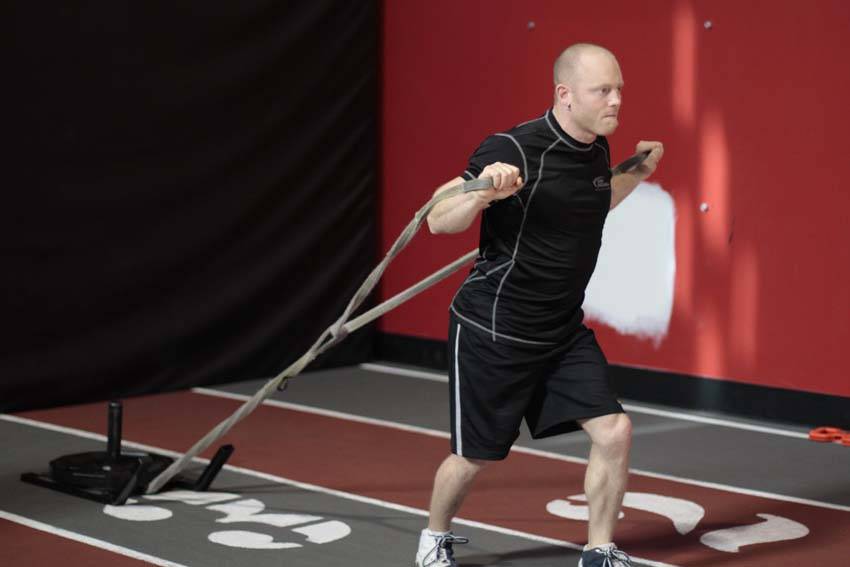
8. Forward Drag With Press
67.6% MatchHow to perform this exercise
- Attach a dual handled chain or rope attachment to the sled. You should be facing away from the sled, holding a handle in each hand.
- Begin the movement by moving forward for one step. Leaning forward, extend through the legs and hips to move, pausing with each step to extend through the elbows, pressing your hands forward. Step forward until you return to the start position prepared to press.
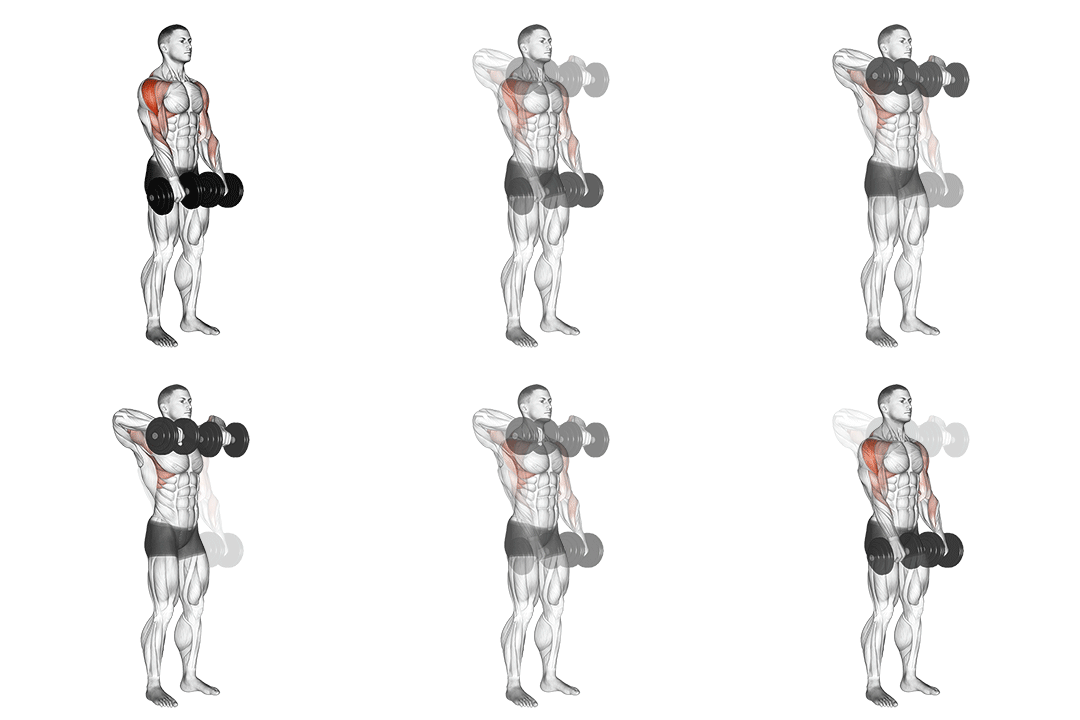
9. Dumbbell Upright Row
66.3% MatchHow to perform this exercise
- Stand with your feet shoulder-width apart, holding a dumbbell in each hand with an overhand grip.
- Let the dumbbells hang in front of your thighs, with your arms fully extended.
- Keeping your back straight and your core engaged, exhale and lift the dumbbells straight up towards your chin, leading with your elbows.
- Pause for a moment at the top, then inhale and slowly lower the dumbbells back down to the starting position.
- Repeat for the desired number of repetitions.
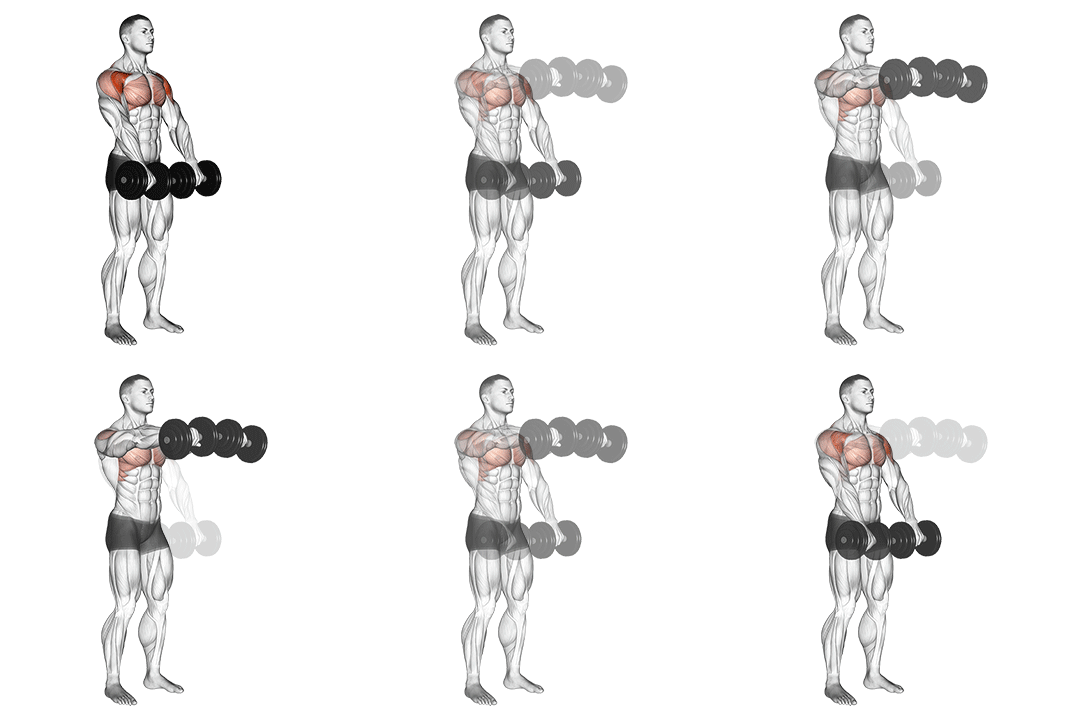
10. Dumbbell Front Raise
66.3% MatchHow to perform this exercise
- Stand with your feet shoulder-width apart, holding a dumbbell in each hand with your palms facing your thighs.
- Keeping your arms straight, exhale and lift the dumbbells in front of you until they are at shoulder level.
- Pause for a moment at the top, then inhale and slowly lower the dumbbells back down to the starting position.
- Repeat for the desired number of repetitions.
Why You Might Need a Barbell Front Raise And Pullover Alternative
You might substitute the Barbell Front Raise And Pullover for several reasons: shoulder pain from repeated overhead motion, limited access to a barbell, or a goal to bias the sternal vs. clavicular head of the pecs. The pullover pattern also recruits the lats and can place lumbar strain with long levers; swapping to a dumbbell pullover or cable fly shifts load onto the pecs while reducing lat or spinal involvement. For shoulder-friendly loading, lead the movement with your elbows, keep the scapula retracted, and avoid excessive lumbar extension. Choosing an alternative can preserve pectoral tension and isolate horizontal adduction or long-axis pull as needed.
How to Choose the Right Substitute
Match the substitute to your constraint: equipment, joint health, and desired pec emphasis. If you lack a barbell, pick unilateral dumbbell or cable options to maintain comparable range of motion. For shoulder issues, prioritize movements that keep the humerus closer to the torso and reduce end-range external rotation. Use progressive overload through added reps, slower eccentrics, or heavier holds. Technique cue: preserve a 10–20° elbow bend and pause 0.5–1 second at peak contraction to maximize pectoralis activation while limiting compensatory lat or anterior deltoid recruitment.
Frequently Asked Questions
What muscles does Barbell Front Raise And Pullover work?
The combined pattern primarily targets the pectoralis major (both sternal and clavicular regions) while also recruiting the anterior deltoid and latissimus dorsi, especially on the pullover portion. To bias the chest more than the lats, shorten the arc and lead with the elbows, keeping scapular retraction through the movement.
What is the best bodyweight alternative to Barbell Front Raise And Pullover?
Chest-focused parallel-bar dips are the best bodyweight substitute for pectoral development; they load the sternal head and anterior deltoid effectively. Cue: lean your torso forward, flare the elbows slightly, and lower until you feel a full chest stretch to maximize pec activation.
Can I build muscle without doing Barbell Front Raise And Pullover?
Yes, you can build chest muscle using other compound and isolation movements that produce similar mechanical tension and range of motion. Use progressive overload with exercises like dumbbell pullover, cable flyes, and pressing variations, and emphasize slow eccentrics and peak contraction holds to increase pectoral stimulus.
More Exercise Alternatives
Find Alternatives for Any Exercise
Use the exercise substitution finder to compare ranked alternatives for your available equipment and training preference.
Try the Exercise Substitution Finder →