

10 Best Cable Standing Up Straight Crossovers Alternatives for Chest Development
Cable Standing Up Straight Crossovers are done standing with a cable machine. Ranked closest by our scoring: the Isometric Chest Squeeze, the Incline Push-up (On Box) and Korean Dips.
Updated Ranked by our 12-factor similarity model How it works
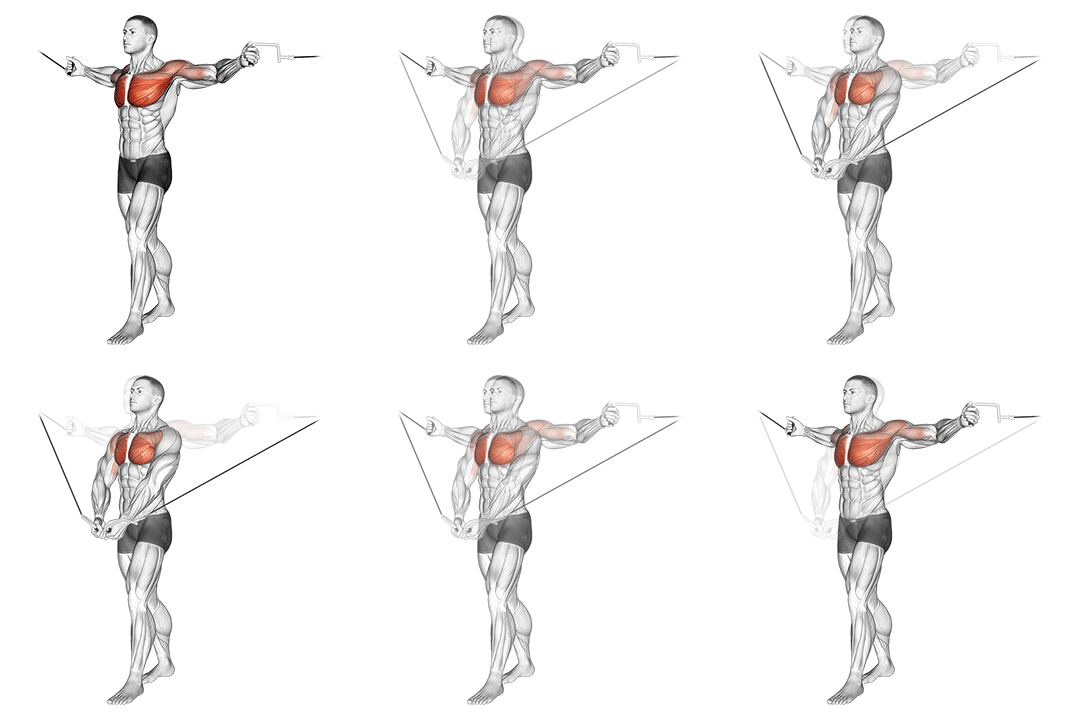
Original Exercise: Cable Standing Up Straight Crossovers
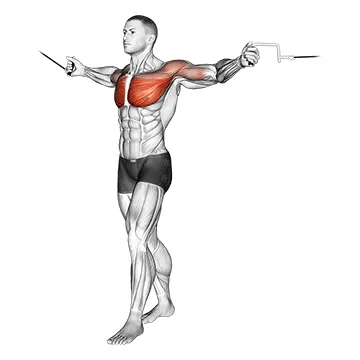
- Primary muscle
- Pectorals
- Equipment
- Cable
- Difficulty
- Intermediate
- Type
- Isolation
Secondary muscles: Deltoids, Triceps
How to perform Cable Standing Up Straight Crossovers
- Stand in the middle of a cable machine with your feet shoulder-width apart.
- Hold the handles of the cables with your palms facing down and your arms extended straight out to the sides.
- Keeping your arms straight, bring your hands together in front of your body, crossing them over each other.
- Pause for a moment, then slowly return to the starting position, keeping your arms extended.
- Repeat for the desired number of repetitions.
Ranked Cable Standing Up Straight Crossovers Alternatives
10 substitutes, ranked by how closely each one matches Cable Standing Up Straight Crossovers on movement pattern, muscles worked, equipment and body position. The higher the score, the less you change. Open "How to perform this exercise" on a card for the steps; every card title links to that exercise's own alternatives page.
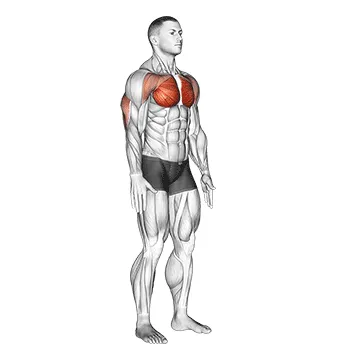
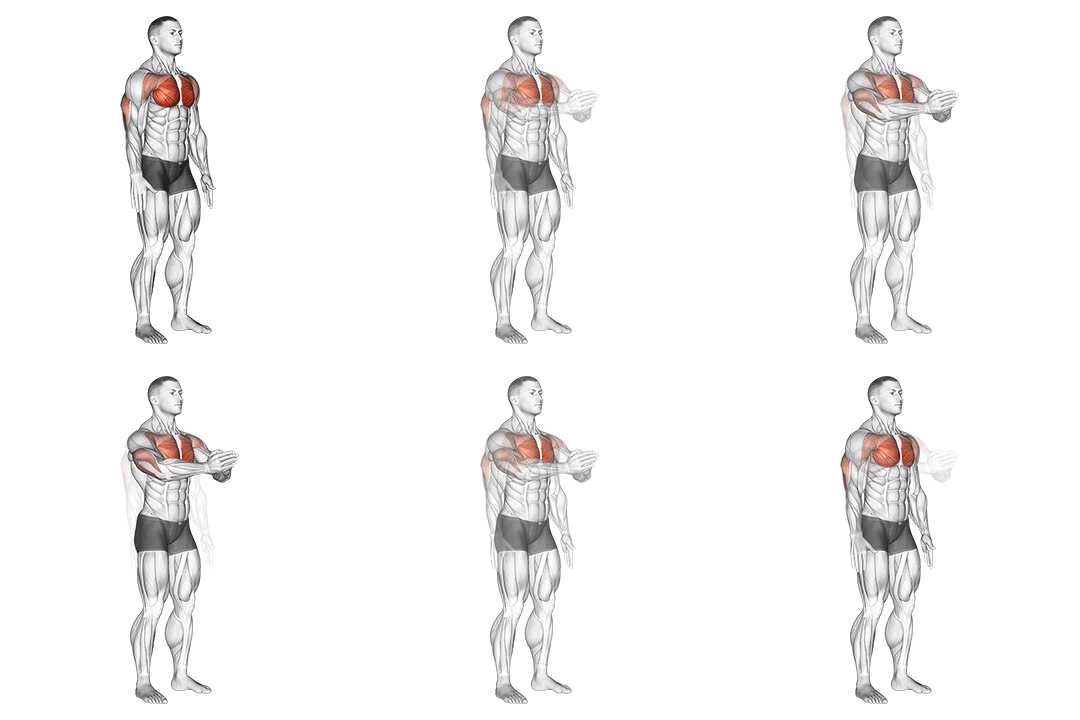
Best match 1. Isometric Chest Squeeze
80% match- Pectorals
- Bodyweight
- Beginner
- Isolation
Use this when you have nothing to train with, because it works the pectorals with bodyweight alone.
How to perform this exercise
- Stand with your feet shoulder-width apart and your knees slightly bent.
- Extend your arms straight out in front of you, parallel to the ground, with your palms facing each other.
- Squeeze your chest muscles together as hard as you can, while keeping your arms straight.
- Hold this position for a few seconds, focusing on contracting your chest muscles.
- Release the squeeze and relax your chest muscles.
- Repeat for the desired number of repetitions.
Sets and reps: 3 sets of 8 to 12 reps, and add reps before you add load.
Why this matches
- Primary muscle: pectorals, the same as Cable Standing Up Straight Crossovers
- Equipment: bodyweight only, not a cable
- Body position: standing, the same as Cable Standing Up Straight Crossovers
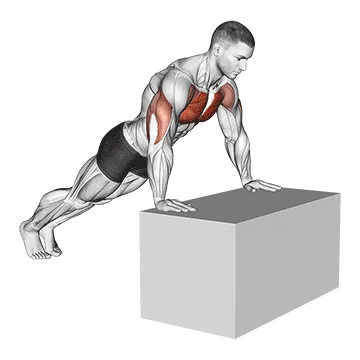
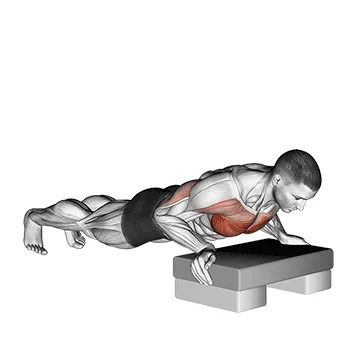
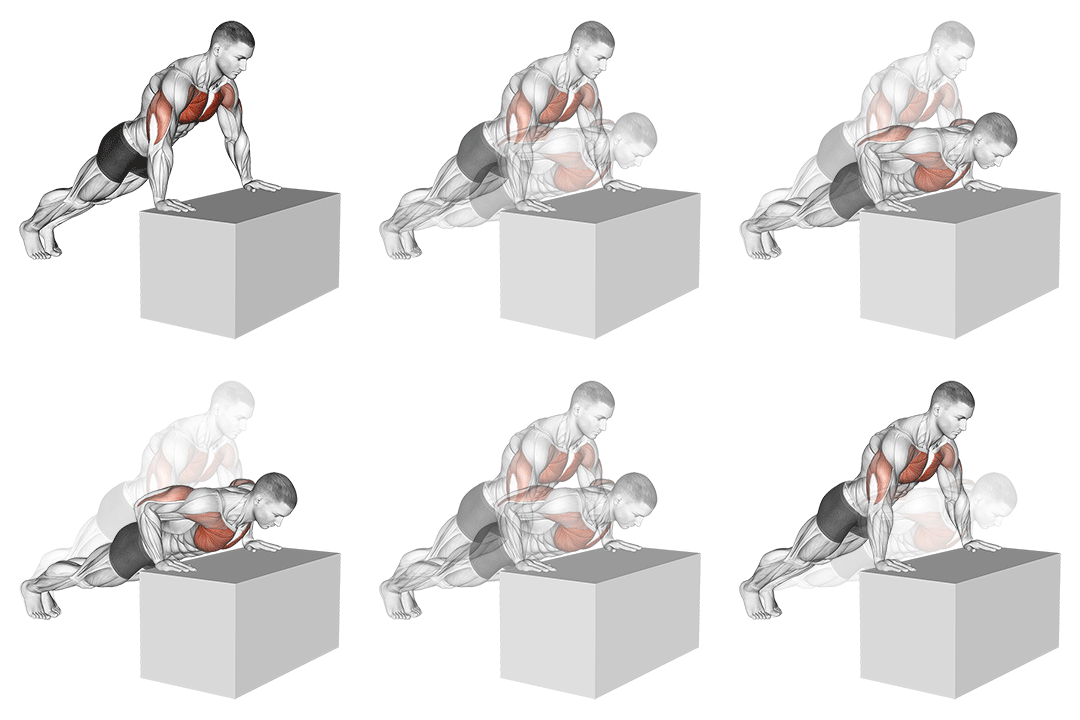
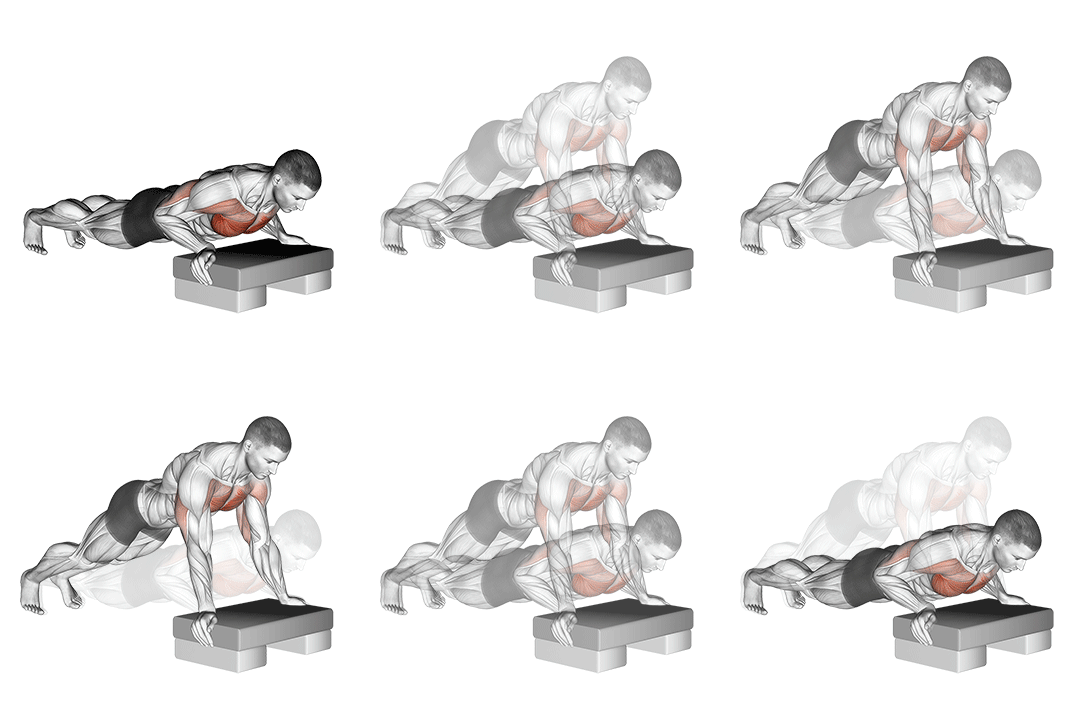
2. Incline Push-up (On Box)
70% match- Pectorals
- Bodyweight
- Beginner
- Compound
How to perform this exercise
- Place your hands on the edge of a box or elevated surface, slightly wider than shoulder-width apart.
- Extend your legs behind you, resting on the balls of your feet, creating a straight line from your head to your heels.
- Lower your chest towards the box by bending your elbows, keeping your body in a straight line.
- Pause for a moment at the bottom, then push yourself back up to the starting position by straightening your arms.
- Repeat for the desired number of repetitions.
Sets and reps: 3 sets of 8 to 12 reps, and add reps before you add load.
Why this matches
- Primary muscle: pectorals, the same as Cable Standing Up Straight Crossovers
- Equipment: bodyweight only, not a cable
- Body position: standing, the same as Cable Standing Up Straight Crossovers
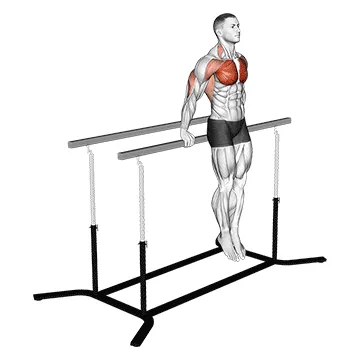
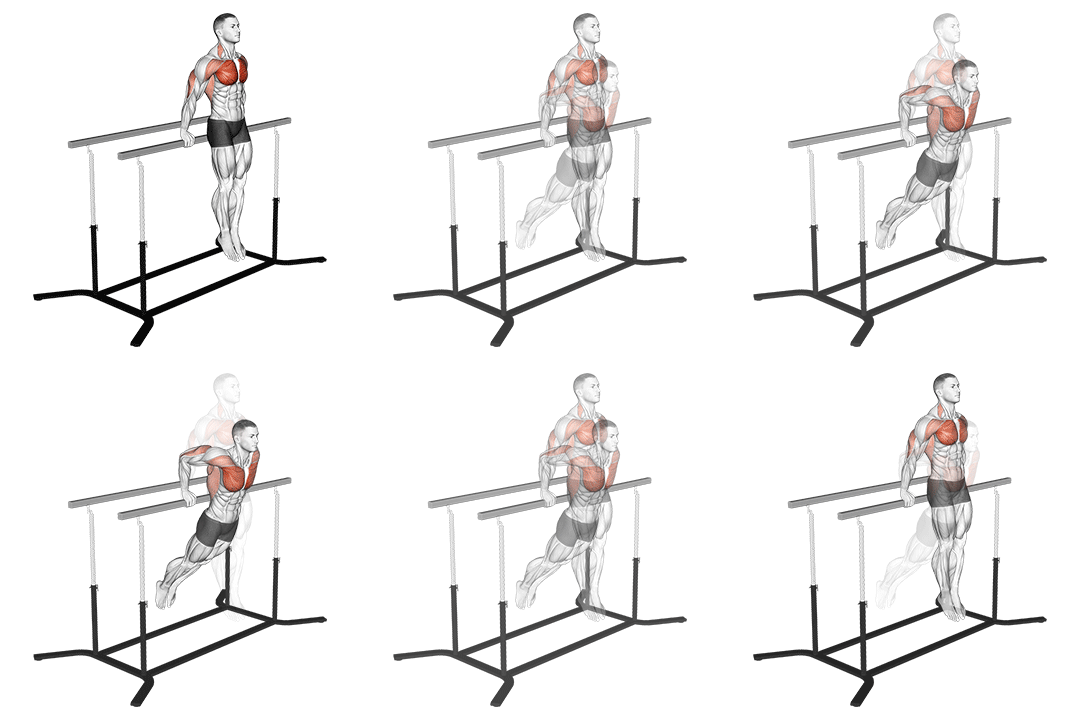
3. Korean Dips
70% match- Pectorals
- Bodyweight
- Advanced
- Compound
How to perform this exercise
- Position yourself between two parallel bars with your arms extended and supporting your body weight.
- Lower your body by bending your elbows until your upper arms are parallel to the ground.
- Pause for a moment, then push yourself back up to the starting position by straightening your arms.
- Repeat for the desired number of repetitions.
Sets and reps: 3 or 4 sets of 6 to 10 reps.
Why this matches
- Primary muscle: pectorals, the same as Cable Standing Up Straight Crossovers
- Equipment: bodyweight only, not a cable
- Body position: standing, the same as Cable Standing Up Straight Crossovers
- Balance: harder to stay steady on than Cable Standing Up Straight Crossovers
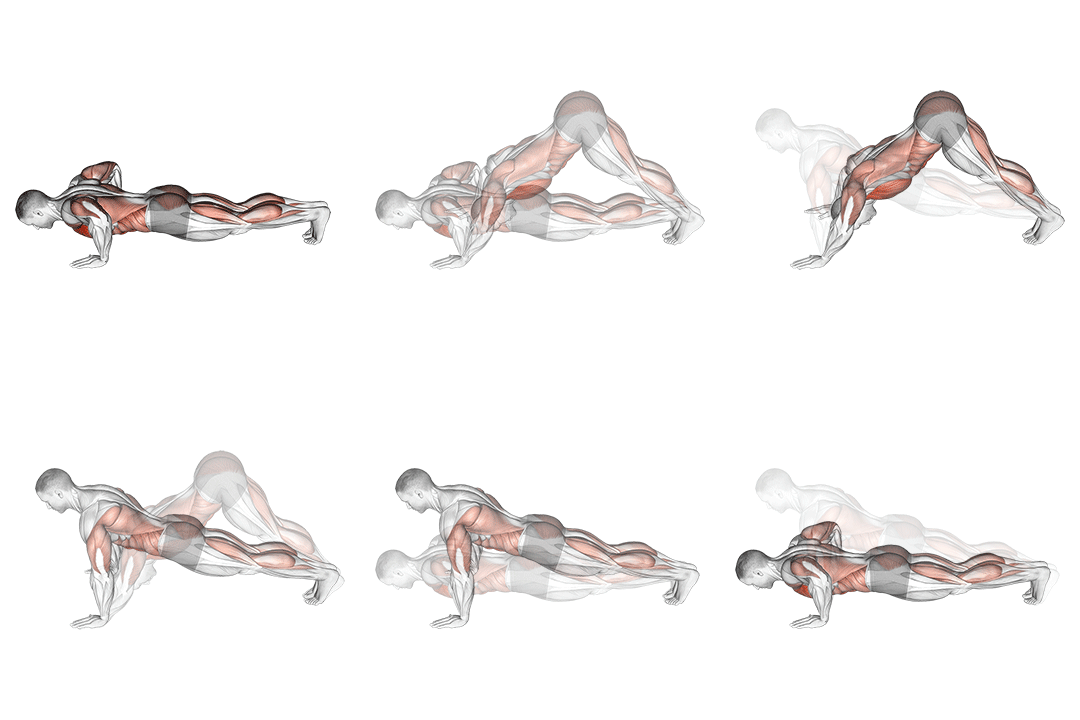
4. Modified Hindu Push-up
69% match- Pectorals
- Bodyweight
- Intermediate
- Compound
How to perform this exercise
- Start in a push-up position with your hands slightly wider than shoulder-width apart and your feet hip-width apart.
- Lower your body towards the ground, bending your elbows and keeping your core engaged.
- As you lower your body, shift your weight back and lift your hips up towards the ceiling, creating an inverted V shape with your body.
- Continue to lower your body until your chest is just above the ground, then reverse the movement, pushing your hips back down and extending your arms to return to the starting position.
- Repeat for the desired number of repetitions.
Sets and reps: 3 or 4 sets of 6 to 10 reps.
Why this matches
- Primary muscle: pectorals, the same as Cable Standing Up Straight Crossovers
- Equipment: bodyweight only, not a cable
- Body position: standing, the same as Cable Standing Up Straight Crossovers
- Balance: harder to stay steady on than Cable Standing Up Straight Crossovers
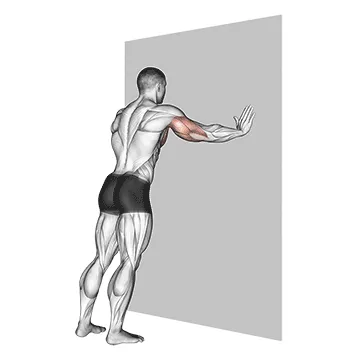
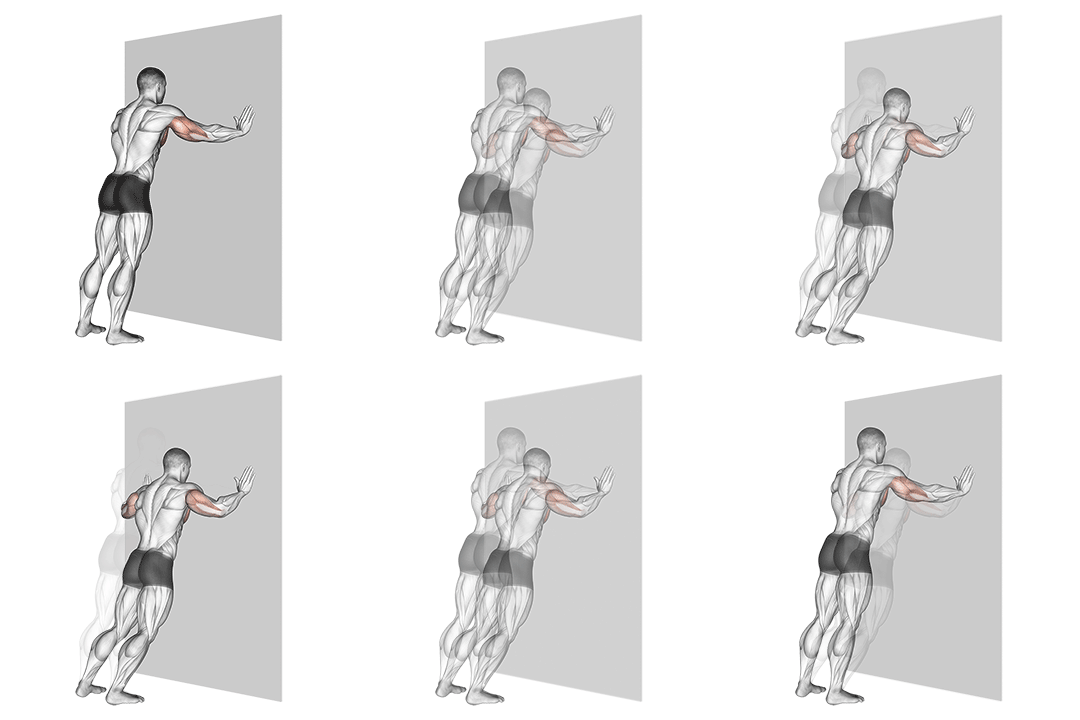
5. Push-up (Wall)
65% match- Pectorals
- Bodyweight
- Beginner
- Compound
How to perform this exercise
- Stand facing a wall, about arm's length away.
- Place your hands on the wall at shoulder height, slightly wider than shoulder-width apart.
- Step back with your feet, keeping them hip-width apart.
- Engage your core and keep your body in a straight line from head to heels.
- Bend your elbows and lower your chest towards the wall, keeping your body straight.
- Pause for a moment, then push yourself back to the starting position.
- Repeat for the desired number of repetitions.
Sets and reps: 3 sets of 8 to 12 reps, and add reps before you add load.
Why this matches
- Primary muscle: pectorals, the same as Cable Standing Up Straight Crossovers
- Equipment: bodyweight only, not a cable
- Body position: standing, the same as Cable Standing Up Straight Crossovers
6. Isometric Wipers
65% match- Pectorals
- Bodyweight
- Intermediate
- Compound
How to perform this exercise
- Start by lying flat on your back on a mat or bench.
- Extend your arms straight out to the sides, perpendicular to your body.
- Engage your core and lift both legs off the ground, keeping them together and straight.
- Slowly lower your legs to one side, aiming to touch the ground with your feet while maintaining control.
- Pause for a moment, then use your core to lift your legs back to the starting position.
- Repeat the movement, this time lowering your legs to the opposite side.
- Continue alternating sides for the desired number of repetitions.
Sets and reps: 3 or 4 sets of 6 to 10 reps.
Why this matches
- Primary muscle: pectorals, the same as Cable Standing Up Straight Crossovers
- Equipment: bodyweight only, not a cable
- Body position: lying face down, not standing
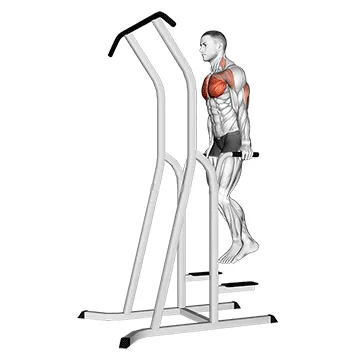
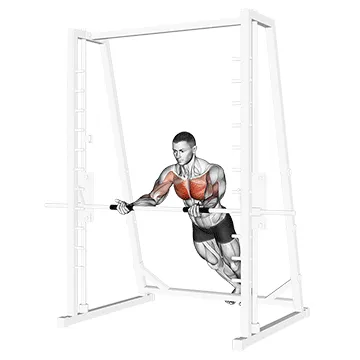
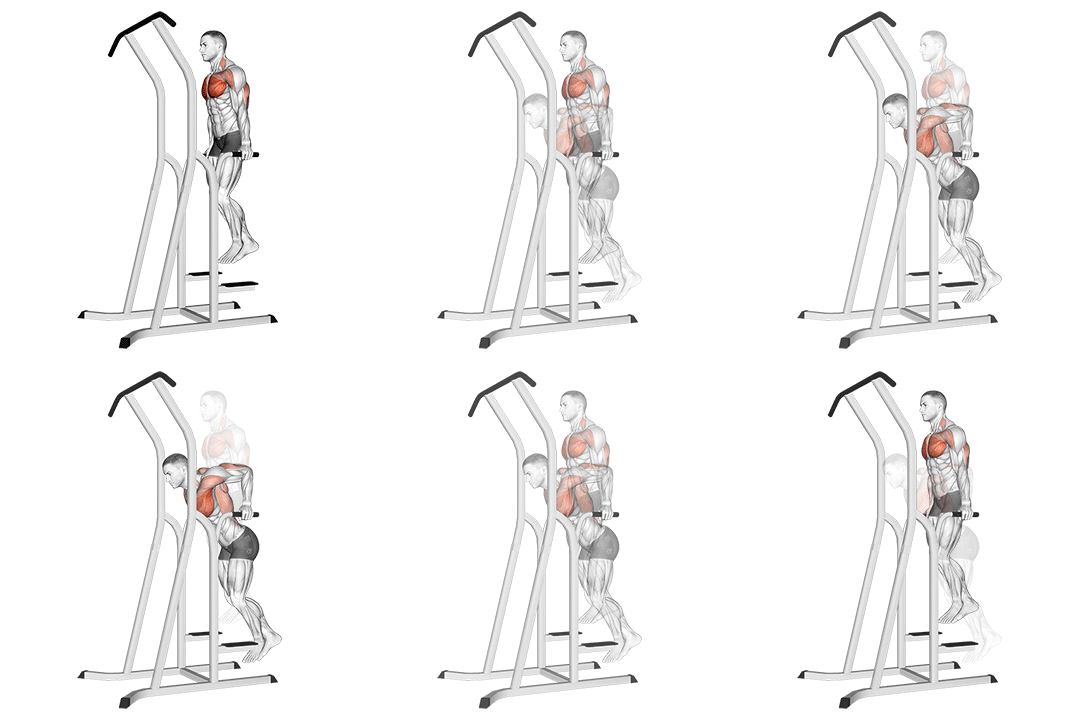
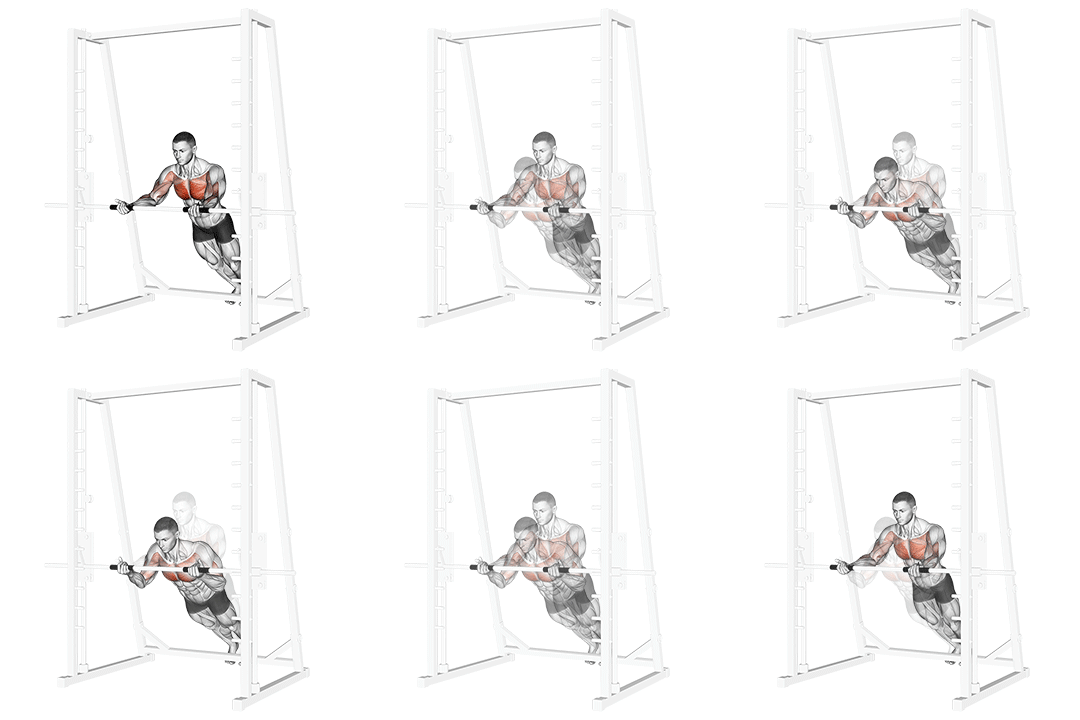
7. Chest Dip (On Dip-pull-up Cage)
64% match- Pectorals
- Bodyweight
- Intermediate
- Compound
How to perform this exercise
- Adjust the dip bars to a height that allows you to comfortably grip them.
- Stand between the bars and place your hands on each bar, slightly wider than shoulder-width apart.
- Jump up and straighten your arms, supporting your body weight on the bars.
- Bend your knees and cross your ankles behind you.
- Lower your body by bending your elbows, keeping your chest up and your shoulders down.
- Continue lowering until your shoulders are below your elbows or until you feel a stretch in your chest.
- Push through your palms and extend your elbows to raise your body back up to the starting position.
- Repeat for the desired number of repetitions.
Sets and reps: 3 or 4 sets of 6 to 10 reps.
Why this matches
- Primary muscle: pectorals, the same as Cable Standing Up Straight Crossovers
- Equipment: bodyweight only, not a cable
- Body position: hanging, not standing
- Balance: harder to stay steady on than Cable Standing Up Straight Crossovers
8. Incline Push-up
62% match- Pectorals
- Bodyweight
- Beginner
- Compound
How to perform this exercise
- Place your hands on an elevated surface, such as a bench or step, slightly wider than shoulder-width apart.
- Extend your legs behind you, resting on the balls of your feet, creating a straight line from your head to your heels.
- Lower your chest towards the elevated surface by bending your elbows, keeping your body in a straight line.
- Pause for a moment at the bottom, then push yourself back up to the starting position by straightening your arms.
- Repeat for the desired number of repetitions.
Sets and reps: 3 sets of 8 to 12 reps, and add reps before you add load.
Why this matches
- Primary muscle: pectorals, the same as Cable Standing Up Straight Crossovers
- Equipment: bodyweight only, not a cable
- Body position: lying face down, not standing
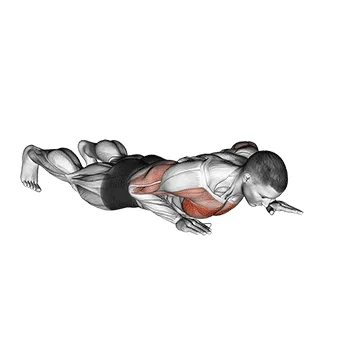
9. Incline Reverse Grip Push-up
62% match- Pectorals
- Bodyweight
- Intermediate
- Compound
How to perform this exercise
- Place your hands on the edge of a bench or elevated surface, slightly wider than shoulder-width apart.
- Extend your legs behind you, resting on the balls of your feet, creating a straight line from your head to your heels.
- Lower your chest towards the bench by bending your elbows, keeping them close to your sides.
- Pause for a moment at the bottom, then push yourself back up to the starting position by extending your arms.
- Repeat for the desired number of repetitions.
Sets and reps: 3 or 4 sets of 6 to 10 reps.
Why this matches
- Primary muscle: pectorals, the same as Cable Standing Up Straight Crossovers
- Equipment: bodyweight only, not a cable
- Body position: lying face down, not standing
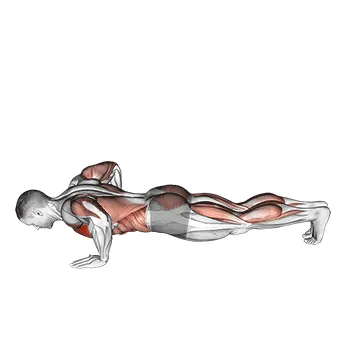
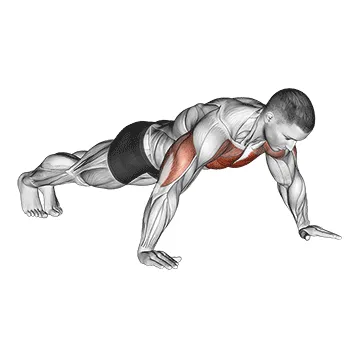
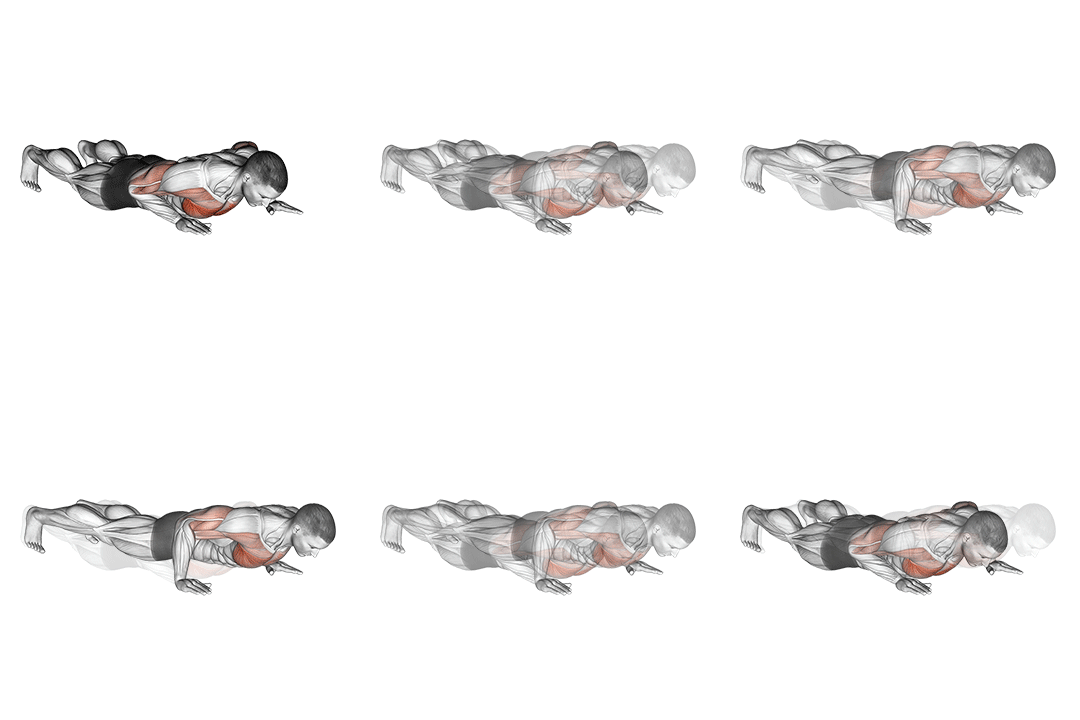
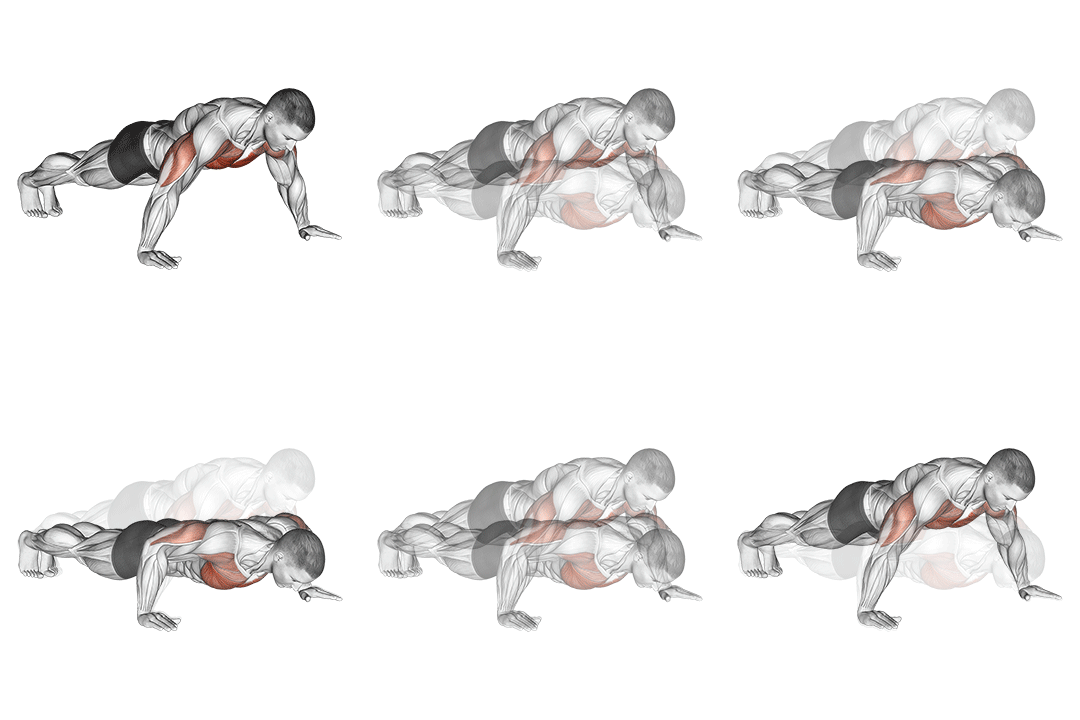
10. Wide Hand Push Up
62% match- Pectorals
- Bodyweight
- Beginner
- Compound
How to perform this exercise
- Start in a high plank position with your hands wider than shoulder-width apart.
- Keep your body in a straight line from head to toe.
- Lower your chest towards the ground by bending your elbows, keeping them close to your sides.
- Push through your palms to extend your arms and return to the starting position.
- Repeat for the desired number of repetitions.
Sets and reps: 3 sets of 8 to 12 reps, and add reps before you add load.
Why this matches
- Primary muscle: pectorals, the same as Cable Standing Up Straight Crossovers
- Equipment: bodyweight only, not a cable
- Body position: lying face down, not standing
How to Choose the Right Cable Standing Up Straight Crossovers Substitute
Match the substitute to your constraint: use dumbbells if you lack cables but still want isolated horizontal adduction and controlled eccentric loading. Pick the pec-deck if you need fixed range and scapular support; choose single-arm flyes or band crossovers for unilateral correction and constant tension. Consider available loading increments for progressive overload and whether you need an incline plane to bias the clavicular head. Technique cue: avoid full elbow lockout to keep tension on the pecs, and pause 1–2 seconds at peak contraction to ensure muscular recruitment instead of momentum.
Cable Standing Up Straight Crossovers FAQ
What muscles does Cable Standing Up Straight Crossovers work?
Cable standing crossovers primarily target the pectoralis major (sternal and clavicular heads) through horizontal adduction of the humerus. The anterior deltoid assists and the serratus anterior and scapular stabilizers control shoulder blade position to maintain an efficient line of pull.
Find Alternatives for Any Exercise
Search the exercise database and filter the ranked substitutes by the equipment you own.
Similarity scores compare exercise metadata such as movement pattern, muscles, equipment and body position. They are not a safety rating or a check that you own the equipment. Learn about our methodology