

10 Best Vertical Swing Alternatives for Hamstring Strength
What can I do instead of Vertical Swing? Use Romanian deadlifts, single-leg RDLs, dumbbell swings, glute-ham raises, or hip thrusts to target hamstrings and hip extension. Cue a strong hip hinge: push hips back, maintain a neutral spine, and drive through the heels to emphasize hamstring eccentric control and posterior-chain activation.
Original Exercise: Vertical Swing
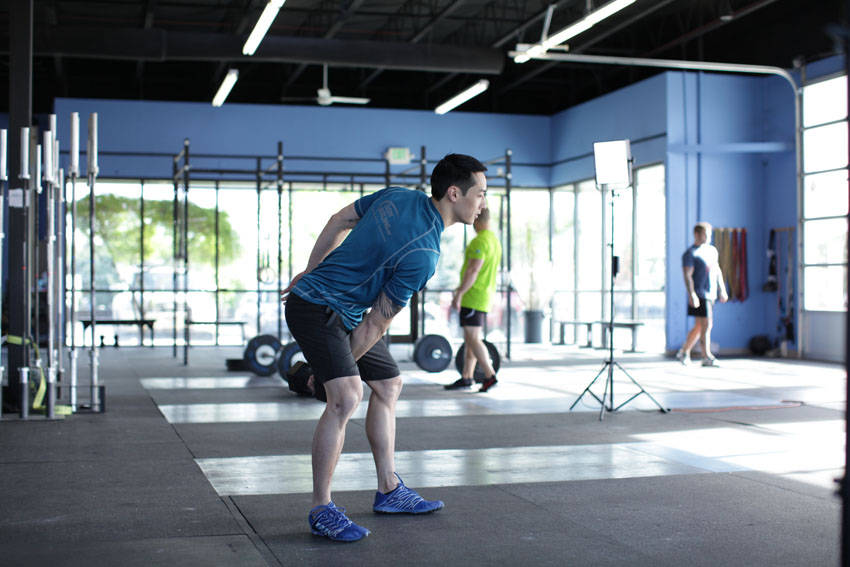
How to Perform Vertical Swing
- Allow the dumbbell to hang at arms length between your legs, holding it with both hands. Keep your back straight and your head up.
- Swing the dumbbell between your legs, flexing at the hips and bending the knees slightly.
- Powerfully reverse the motion by extending at the hips, knees, and ankles to propel yourself upward, swinging the dumbell over your head.
- As you land, absorb the impact through your legs and draw the dumbbell to your torso before the next repetition.
Pro Tips
- Category: Plyometrics
- Force: Pull
- Movement type: Compound
Ranked Vertical Swing Alternatives
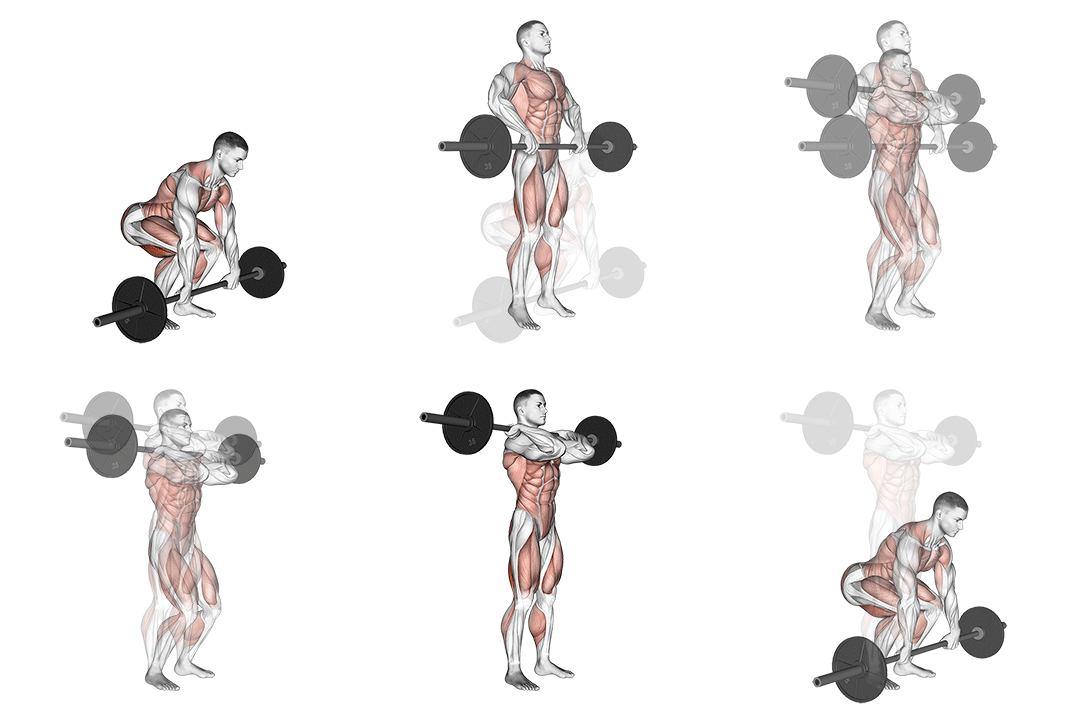
1. Power Clean
87.6% MatchHow to perform this exercise
- Start with the barbell on the ground in front of you, with your feet shoulder-width apart.
- Bend down and grip the barbell with an overhand grip, slightly wider than shoulder-width apart.
- Keep your back straight and chest up as you lift the barbell off the ground, extending your hips and knees.
- As the barbell reaches your mid-thigh, explosively pull it upwards, shrugging your shoulders and pulling your elbows high and to the sides.
- As the barbell reaches its highest point, quickly drop underneath it, rotating your elbows around and catching the barbell on your shoulders in a front squat position.
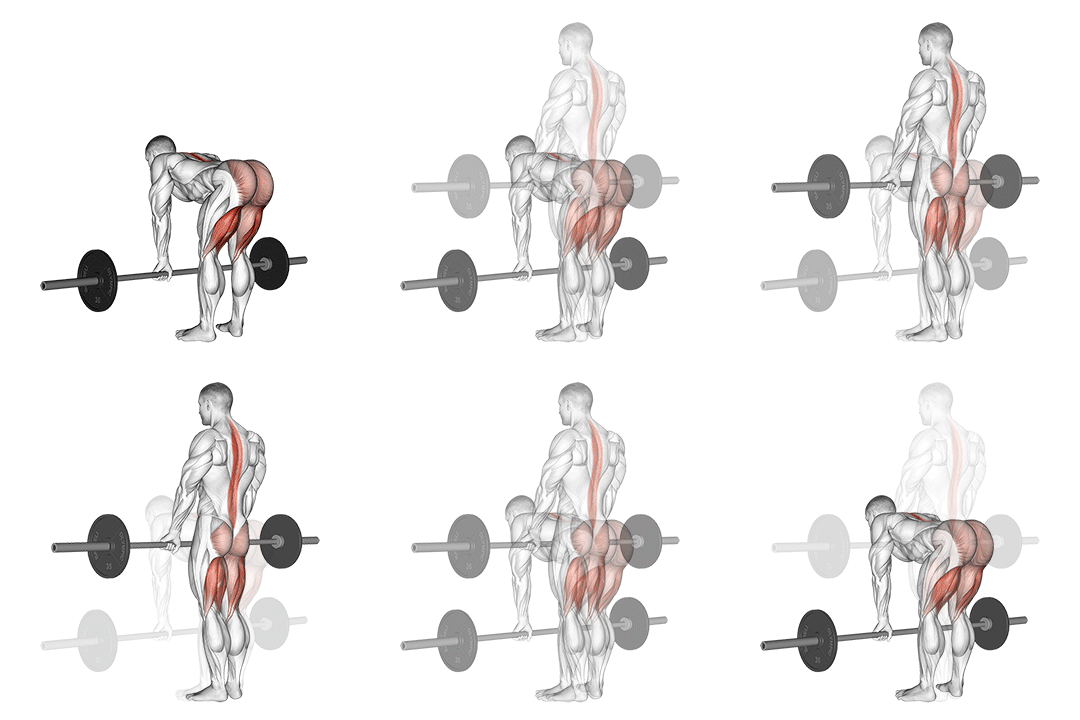
2. Barbell Straight Leg Deadlift
85.2% MatchHow to perform this exercise
- Stand with your feet shoulder-width apart and your toes pointing forward.
- Hold the barbell with an overhand grip, hands slightly wider than shoulder-width apart.
- Bend at your hips and lower the barbell towards the ground, keeping your back straight and your knees slightly bent.
- Lower the barbell until you feel a stretch in your hamstrings.
- Engage your hamstrings and glutes to lift the barbell back up to the starting position.
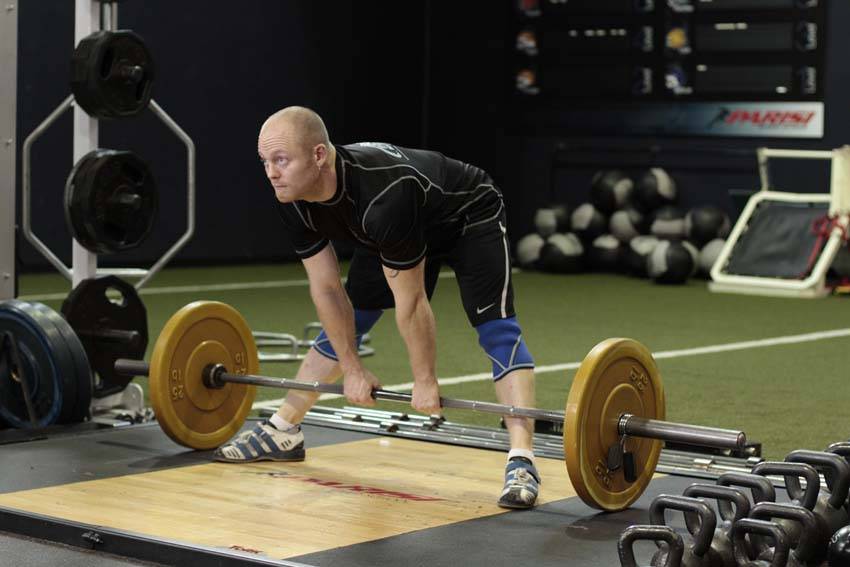
3. Wide Stance Stiff Legs
85.2% MatchHow to perform this exercise
- Begin with a barbell loaded on the floor. Adopt a wide stance, and then bend at the hips to grab the bar. Your hips should be as far back as possible, and your legs nearly straight. Keep your back straight, and your head and chest up. This will be your starting position.
- Begin the movement be engaging the hips, driving them forward as you allow the arms to hang straight. Continue until you are standing straight up, and then slowly return the weight to the starting position. For successive reps, the weight need not touch the floor.
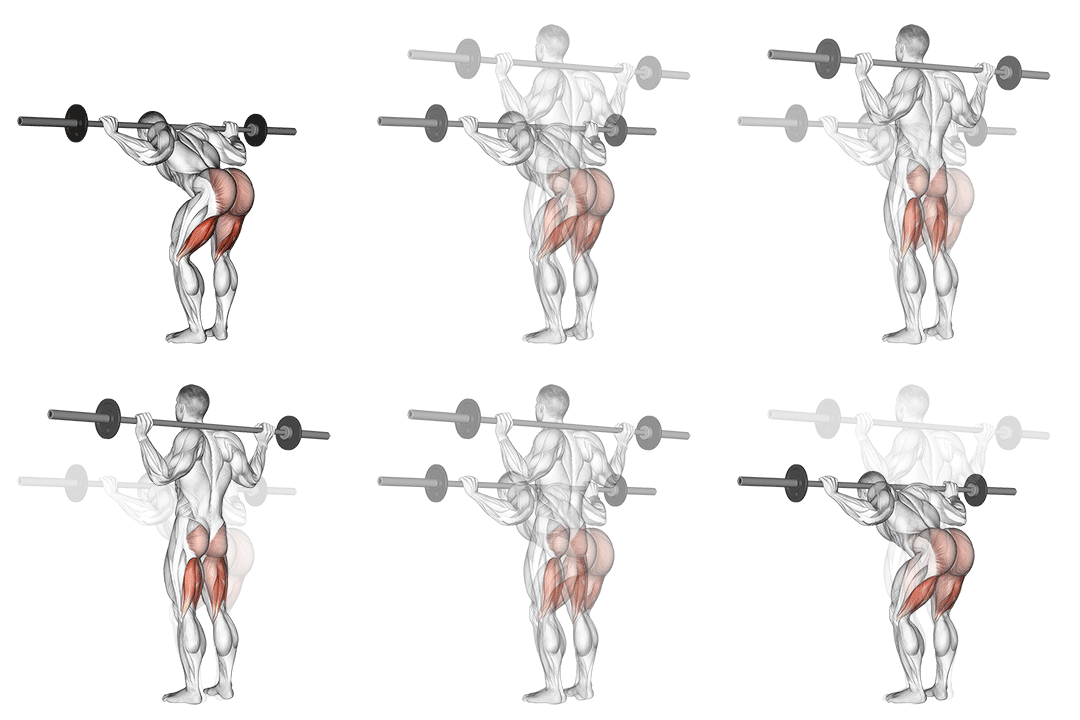
4. Barbell Good Morning
81% MatchHow to perform this exercise
- Start by standing with your feet shoulder-width apart and the barbell resting on your upper back.
- Keeping your back straight and your core engaged, hinge forward at the hips, pushing your buttocks back as if you were trying to touch the wall behind you with your glutes.
- Lower your torso until it is parallel to the ground, feeling a stretch in your hamstrings.
- Pause for a moment, then return to the starting position by squeezing your glutes and pushing your hips forward.
- Repeat for the desired number of repetitions.
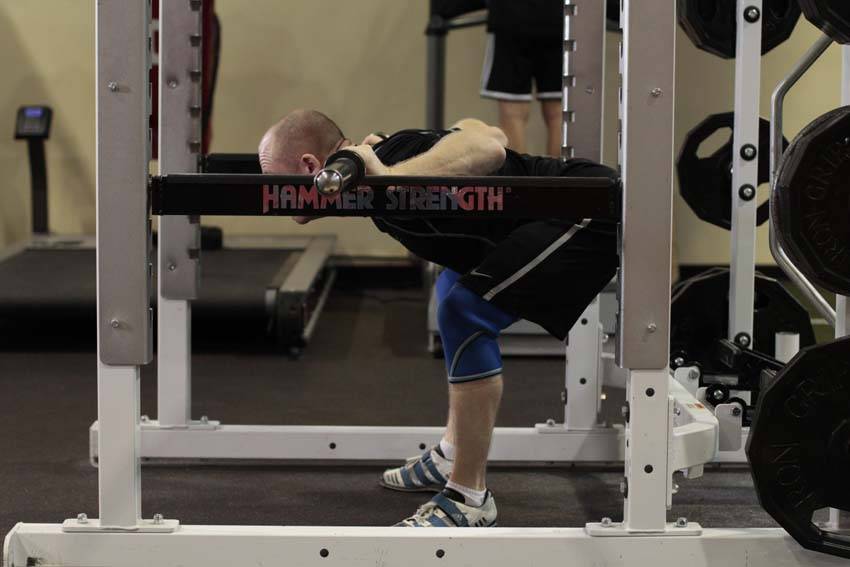
5. Good Morning Off Pins
80.2% MatchHow to perform this exercise
- Begin with a bar on a rack at about the same height as your stomach. Bend over underneath the bar and rack the bar across the rear of your shoulders as you would a power squat, not on top of your shoulders. At the proper height, you should be near parallel to the floor when bent over. Keep your back tight, shoulder blades pinched together, and your knees slightly bent. Keep your back arched and your cervical spine in proper alignment.
- Begin the motion by extending through the hips with your glutes and hamstrings, and you are standing with the weight. Slowly lower the weight back to the pins returning to the starting position.
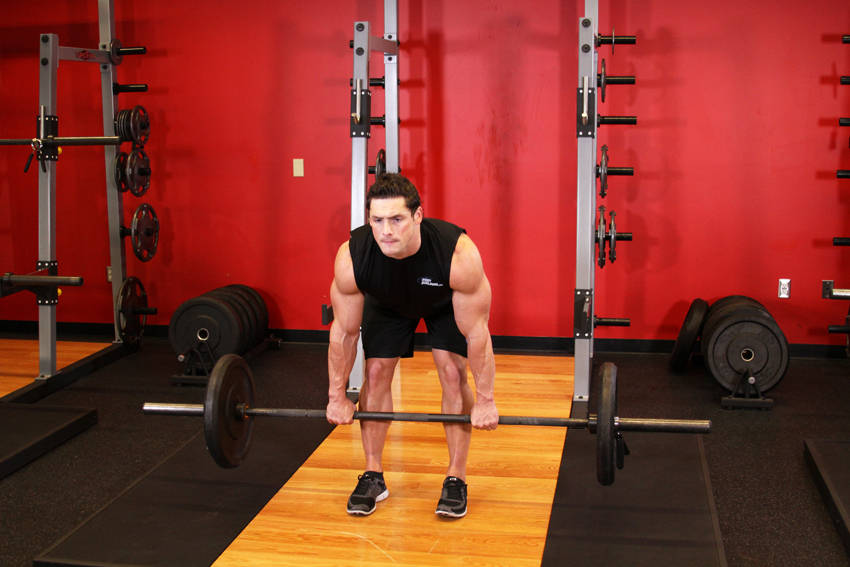
6. Romanian Deadlift
80.2% MatchHow to perform this exercise
- Put a barbell in front of you on the ground and grab it using a pronated (palms facing down) grip that a little wider than shoulder width. Tip: Depending on the weight used, you may need wrist wraps to perform the exercise and also a raised platform in order to allow for better range of motion.
- Bend the knees slightly and keep the shins vertical, hips back and back straight. This will be your starting position.
- Keeping your back and arms completely straight at all times, use your hips to lift the bar as you exhale. Tip: The movement should not be fast but steady and under control.
- Once you are standing completely straight up, lower the bar by pushing the hips back, only slightly bending the knees, unlike when squatting. Tip: Take a deep breath at the start of the movement and keep your chest up. Hold your breath as you lower and exhale as you complete the movement.
- Repeat for the recommended amount of repetitions.
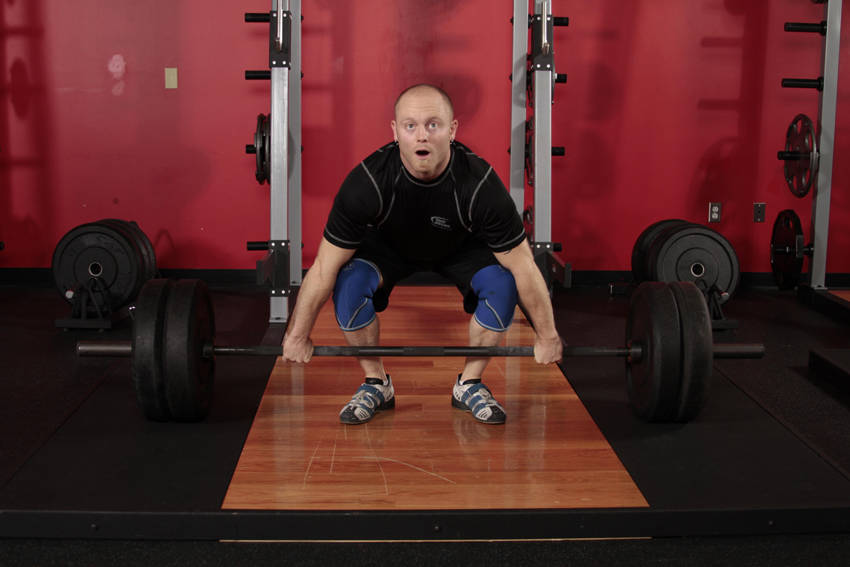
7. Clean
80.1% MatchHow to perform this exercise
- With a barbell on the floor close to the shins, take an overhand (or hook) grip just outside the legs. Lower your hips with the weight focused on the heels, back straight, head facing forward, chest up, with your shoulders just in front of the bar. This will be your starting position.
- Begin the first pull by driving through the heels, extending your knees. Your back angle should stay the same, and your arms should remain straight. Move the weight with control as you continue to above the knees.
- Next comes the second pull, the main source of acceleration for the clean. As the bar approaches the mid-thigh position, begin extending through the hips. In a jumping motion, accelerate by extending the hips, knees, and ankles, using speed to move the bar upward. There should be no need to actively pull through the arms to accelerate the weight; at the end of the second pull, the body should be fully extended, leaning slightly back, with the arms still extended.
- As full extension is achieved, transition into the third pull by aggressively shrugging and flexing the arms with the elbows up and out. At peak extension, aggressively pull yourself down, rotating your elbows under the bar as you do so. Receive the bar in a front squat position, the depth of which is dependent upon the height of the bar at the end of the third pull. The bar should be racked onto the protracted shoulders, lightly touching the throat with the hands relaxed. Continue to descend to the bottom squat position, which will help in the recovery.
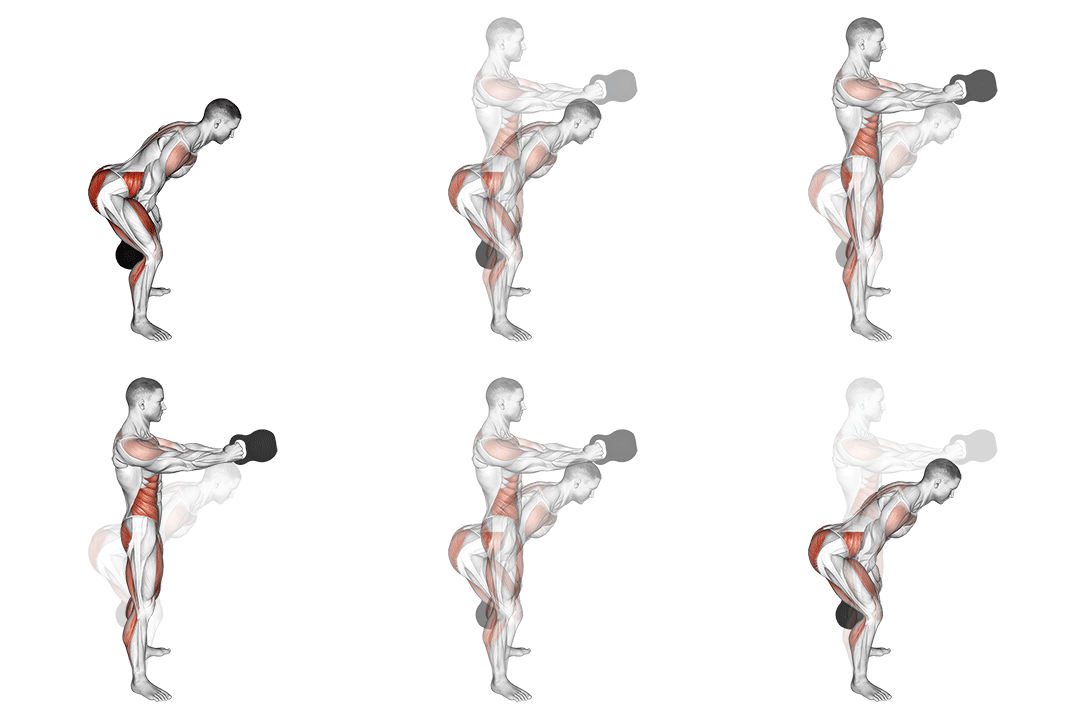
8. Kettlebell Swing
79.7% MatchHow to perform this exercise
- Stand with your feet shoulder-width apart, toes pointed slightly outward.
- Hold the kettlebell with both hands in front of your body, arms extended.
- Bend your knees slightly and hinge at the hips, pushing your butt back.
- Swing the kettlebell back between your legs, keeping your arms straight and maintaining a flat back.
- Drive your hips forward and swing the kettlebell up to shoulder height, using the momentum generated by your hips.
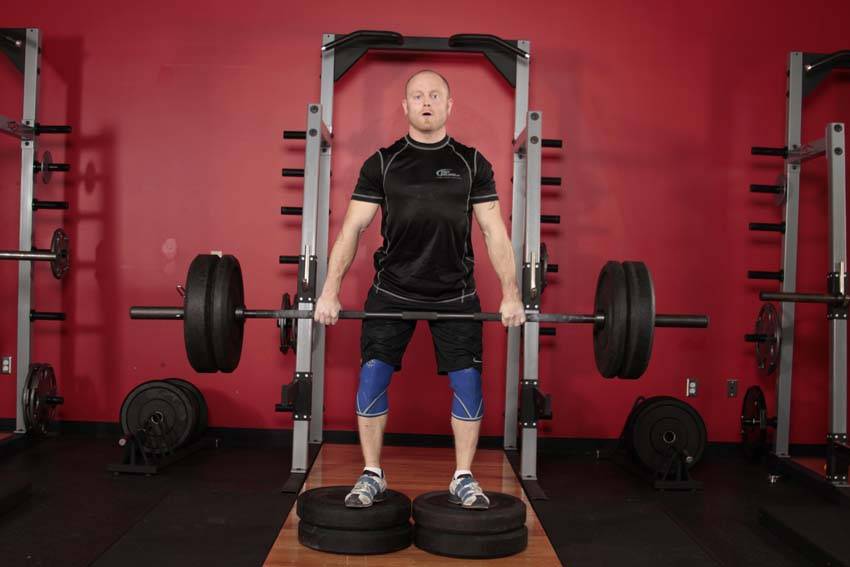
9. Romanian Deadlift From Deficit
79.7% MatchHow to perform this exercise
- Begin standing while holding a bar at arm's length in front of you. You can stand on a raised platform to increase the range of motion.
- Begin by flexing the knees slightly, and then flex at the hip, moving your butt back as far as possible, lowering the torso as far as flexibility allows. The back should remain in absolute extension at all times, and the bar should remain in contact with the legs. If done properly, there should be heavy tension felt in the hamstrings.
- Reverse the motion to return to the starting position.
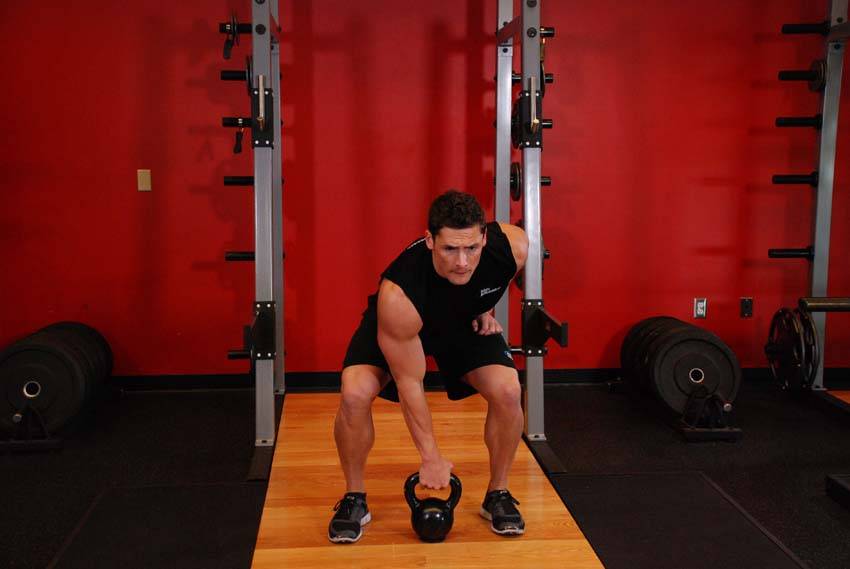
10. Kettlebell Dead Clean
79% MatchHow to perform this exercise
- Place kettlebell between your feet. To get in the starting position, push your butt back and look straight ahead.
- Clean the kettlebell to your shoulder. Clean the kettlebell to your shoulders by extending through the legs and hips as you raise the kettlebell towards your shoulder. The wrist should rotate as you do so.
- Lower the kettlebell, keeping the hamstrings loaded by keeping your back straight and your butt out.
Why You Might Need a Vertical Swing Alternative
You may substitute the Vertical Swing because of pain, missing equipment, or a need for more targeted loading. Low-back or shoulder discomfort often requires reducing dynamic hip-hinge stress; opt for an RDL with lighter load and cue a neutral spine and a slight knee bend to shift force into the hamstrings rather than the lumbar spine. If you lack a dumbbell or need unilateral correction, single-leg RDLs improve neuromuscular control while glute-ham raises raise eccentric hamstring activation. Choose based on your pain profile, available gear, and whether you need tension (RDL) or power (swing).
How to Choose the Right Substitute
Match the substitute to movement pattern, equipment, and training goal. For hypertrophy pick exercises that preserve long time under tension like Romanian deadlifts or weighted hip thrusts; cue a long hip hinge with weight over the midfoot and a controlled eccentric. For power or conditioning use dumbbell swings with an explosive hip drive and short ground contact. For imbalance correction choose single-leg RDLs and cue a straight line from crown to heel to maintain pelvic alignment. Also consider grip limits and your ability to maintain spinal neutrality under load.
Frequently Asked Questions
What muscles does Vertical Swing work?
The Vertical Swing primarily loads the hamstrings via hip extension and eccentric control, with secondary activation of the glutes and erector spinae. Your core stabilizes the trunk during the hinge; cue full hip extension to maximize posterior-chain recruitment.
What is the best bodyweight alternative to Vertical Swing?
The Nordic hamstring curl is the best bodyweight alternative because it emphasizes eccentric hamstring strength and hypertrophy. Anchor your feet and lean forward slowly, resisting the descent with the hamstrings to replicate the swing's eccentric demand without external load.
Can I build muscle without doing Vertical Swing?
Yes. You can build hamstring and posterior-chain muscle with Romanian deadlifts, hip thrusts, and single-leg RDLs while applying progressive overload and tempo. Prioritize a deep hip hinge, slow eccentrics, and consistent loading to stimulate hypertrophy without the Vertical Swing.
More Exercise Alternatives
Find Alternatives for Any Exercise
Use the exercise substitution finder to compare ranked alternatives for your available equipment and training preference.
Try the Exercise Substitution Finder →