

10 Best Behind Head Chest Stretch Alternatives for Limited Mobility
Use targeted pec stretches and activation drills such as the doorway pec stretch, band-assisted chest opener, supine foam-roll chest stretch, standing band pull-apart, or prone T-spine opener. For the doorway stretch, place your forearm on the frame at 90° and step forward until you feel a controlled anterior-chest stretch.
Original Exercise: Behind Head Chest Stretch
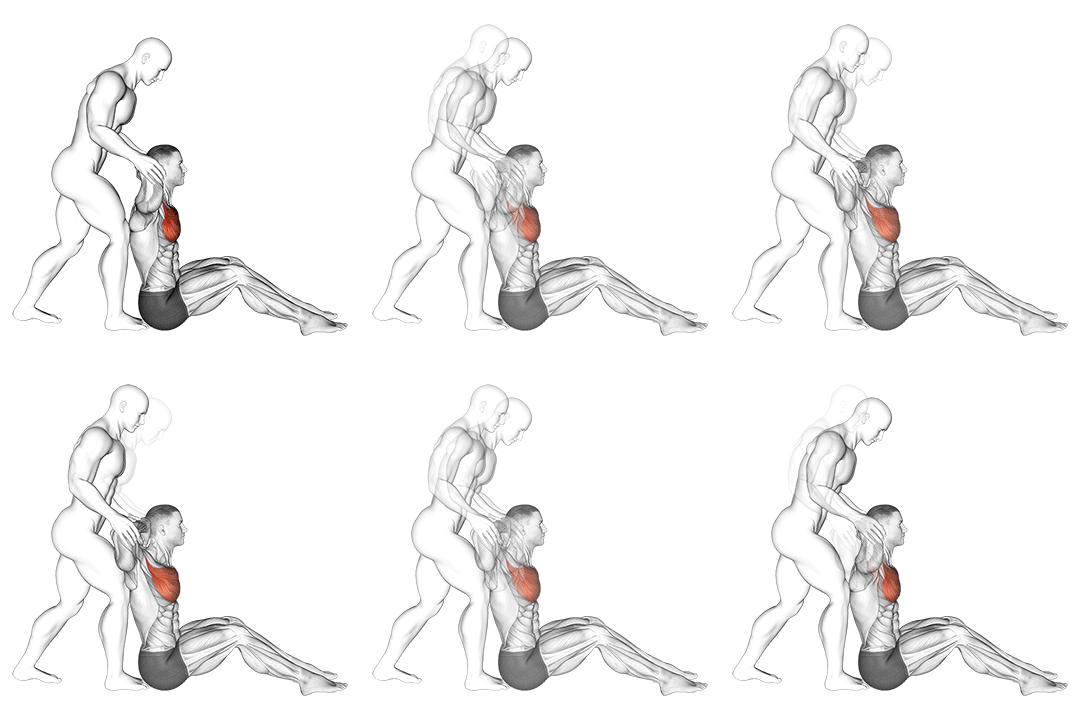
How to Perform Behind Head Chest Stretch
- Stand tall with your feet shoulder-width apart.
- Interlace your fingers behind your head with your elbows pointing outwards.
- Slowly squeeze your shoulder blades together and push your chest forward.
- Hold the stretch for 15-30 seconds.
- Release the stretch and repeat as desired.
Ranked Behind Head Chest Stretch Alternatives
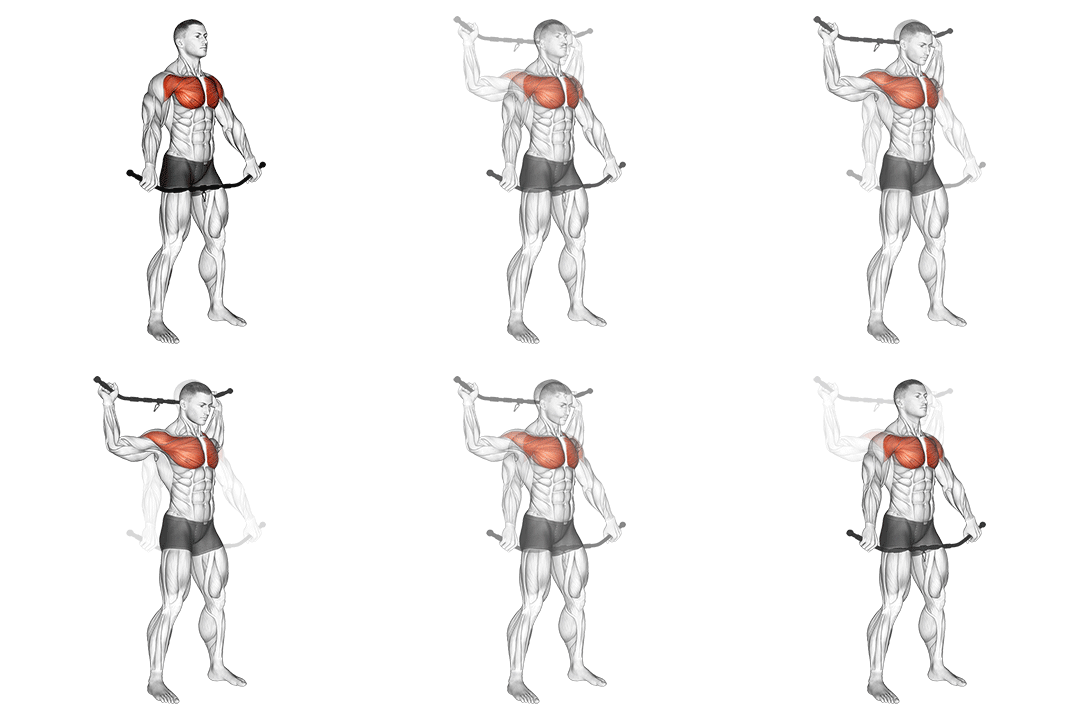
1. Chest And Front Of Shoulder Stretch
99.2% MatchHow to perform this exercise
- Stand tall with your feet shoulder-width apart.
- Extend your arms straight out in front of you at shoulder height.
- Cross your arms in front of your body, with your right arm on top of your left arm.
- Interlace your fingers and press your palms together.
- Gently squeeze your shoulder blades together and push your hands forward, feeling a stretch in your chest and front of your shoulders.
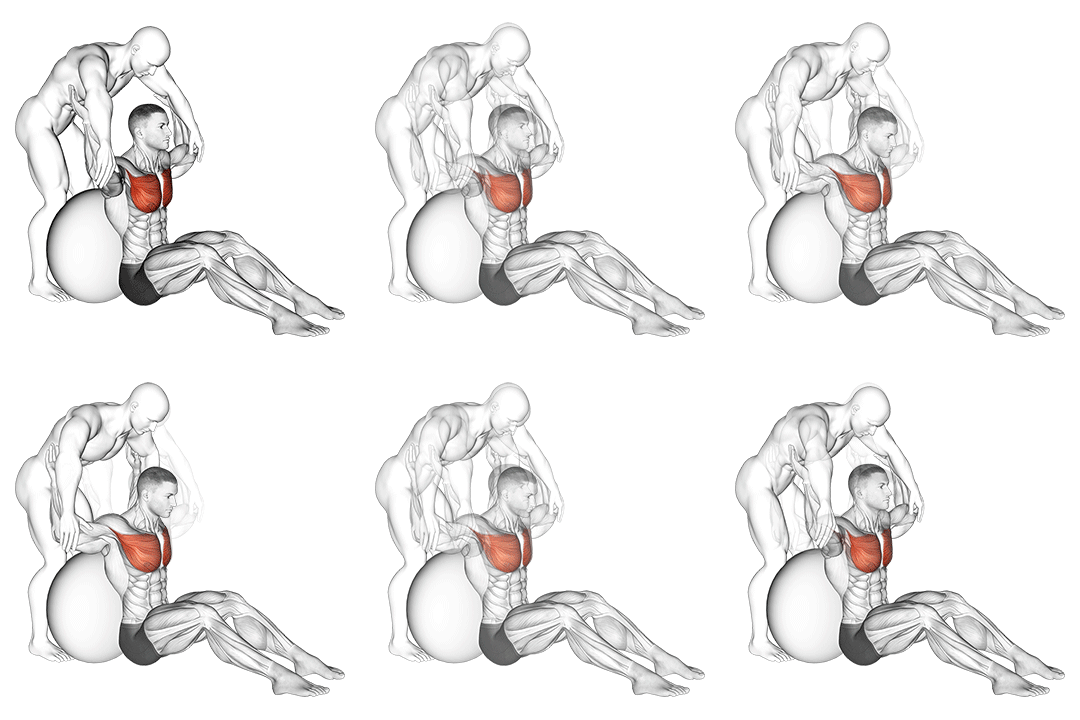
2. Assisted Seated Pectoralis Major Stretch With Stability Ball
88.3% MatchHow to perform this exercise
- Sit on a stability ball with your feet flat on the ground and your back straight.
- Hold a stability ball with both hands and extend your arms straight out in front of you.
- Slowly lower the stability ball towards your chest, feeling a stretch in your pectoral muscles.
- Hold the stretch for a few seconds, then slowly return to the starting position.
- Repeat for the desired number of repetitions.
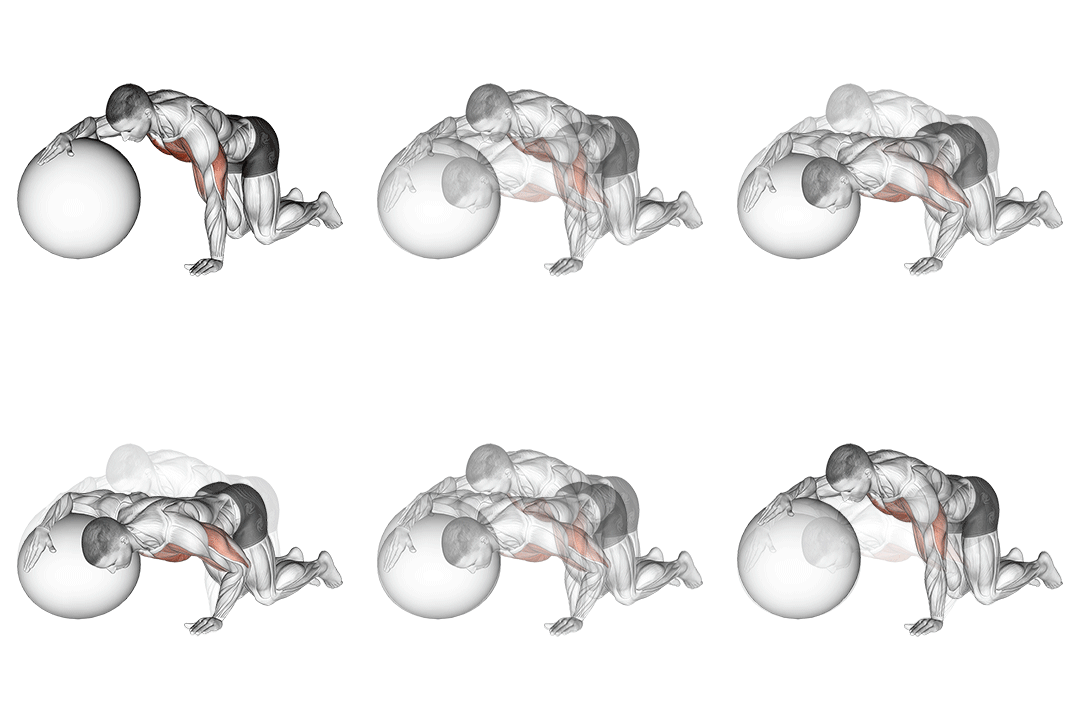
3. Chest Stretch With Exercise Ball
87.6% MatchHow to perform this exercise
- Sit on the stability ball with your feet flat on the ground and your back straight.
- Hold the exercise ball with both hands and extend your arms straight out in front of you.
- Slowly bring the exercise ball towards your chest, feeling a stretch in your chest muscles.
- Hold the stretch for a few seconds, then slowly return to the starting position.
- Repeat for the desired number of repetitions.
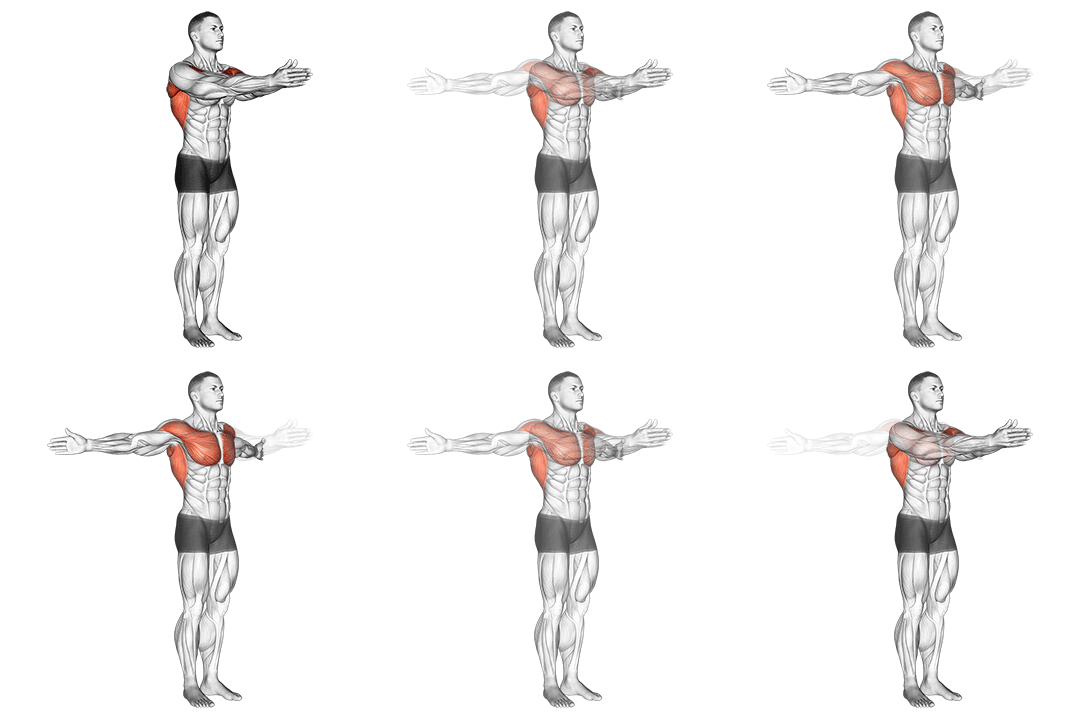
4. Dynamic Chest Stretch (male)
86% MatchHow to perform this exercise
- Stand tall with your feet shoulder-width apart.
- Extend your arms straight out to the sides, parallel to the ground.
- Slowly bring your arms forward, crossing them in front of your body.
- Feel the stretch in your chest muscles.
- Hold the stretch for 10-30 seconds.
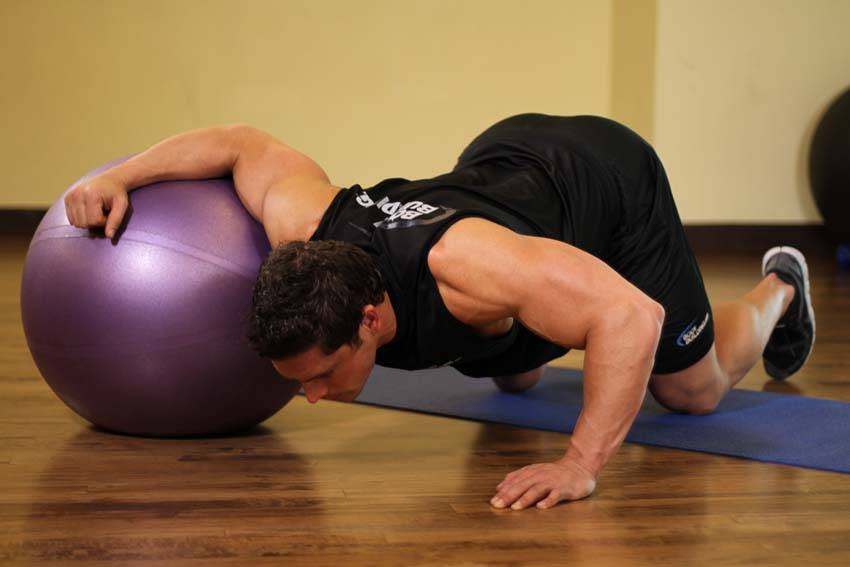
5. Chest Stretch On Stability Ball
85.9% MatchHow to perform this exercise
- Get on your hands and knees next to an exercise ball.
- Place your elbows on top of the ball, keeping your arm out to your side. This will be your starting position.
- Lower your torso towards the floor, keeping your elbow on top of the ball. Hold the stretch for 20-30 seconds, and repeat with the other arm.
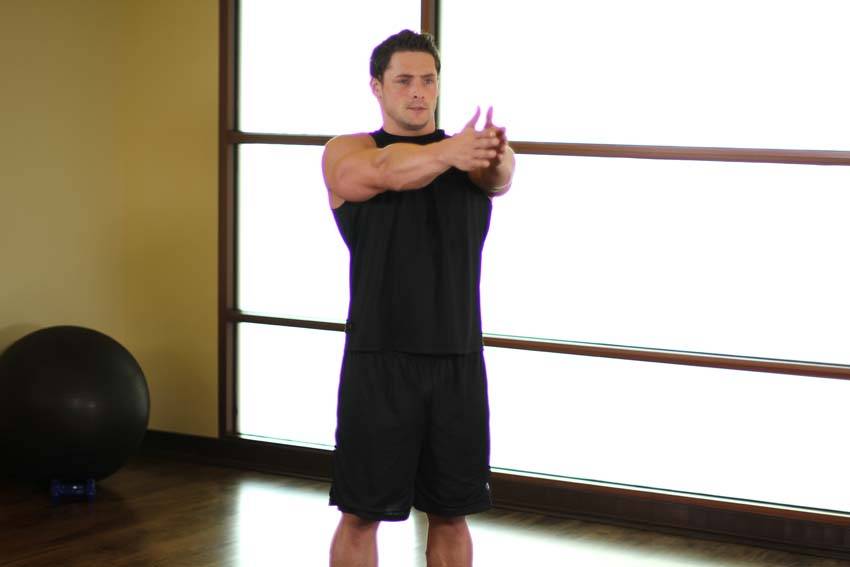
6. Dynamic Chest Stretch
85.2% MatchHow to perform this exercise
- Stand with your hands together, arms extended directly in front of you. This will be your starting position.
- Keeping your arms straight, quickly move your arms back as far as possible and back in again, similar to an exaggerated clapping motion. Repeat 5-10 times, increasing speed as you do so.
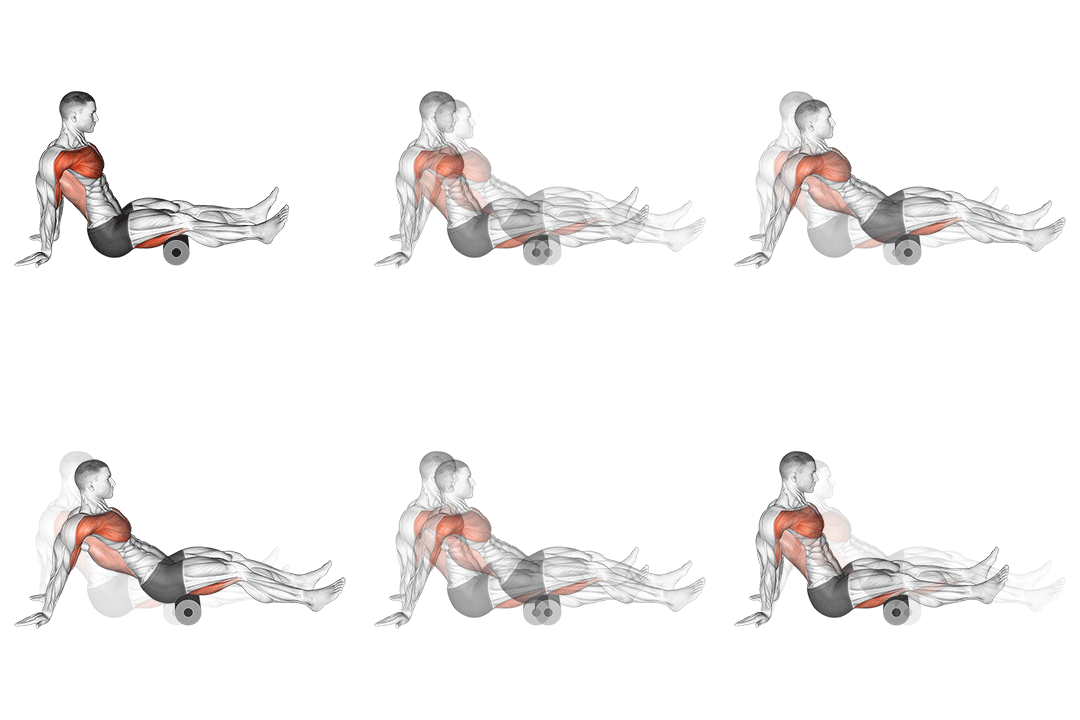
7. Roller Seated Shoulder Flexor Depresor Retractor
77.4% MatchHow to perform this exercise
- Sit on a flat surface with your legs extended in front of you.
- Hold the roller with both hands, palms facing down, and place it on your thighs.
- Lean forward slightly and roll the roller away from your body, extending your arms straight in front of you.
- Pause for a moment, then slowly roll the roller back towards your body, bending your arms and bringing the roller back to your thighs.
- Repeat for the desired number of repetitions.
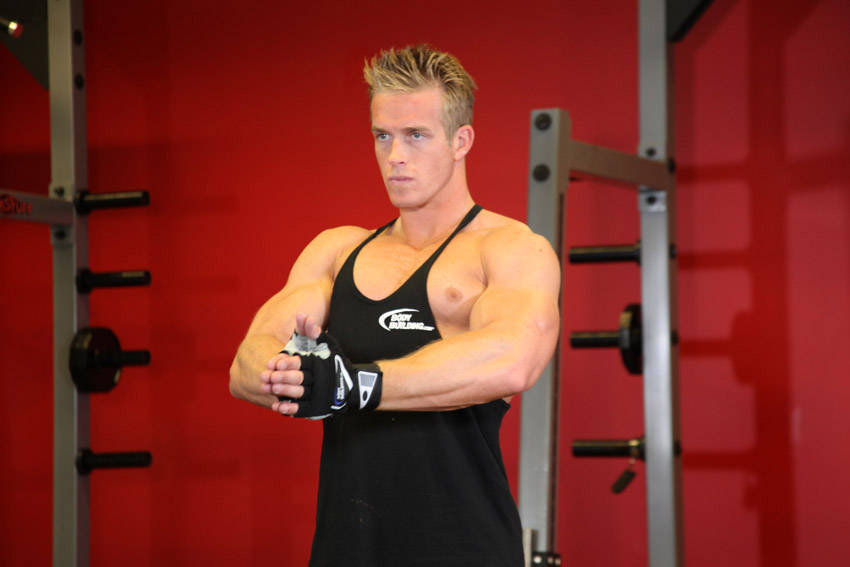
8. Isometric Chest Squeezes
75.4% MatchHow to perform this exercise
- While either seating or standing, bend your arms at a 90-degree angle and place the palms of your hands together in front of your chest. Tip: Your hands should be open with the palms together and fingers facing forward (perpendicular to your torso).
- Push both hands against each other as you contract your chest. Start with slow tension and increase slowly. Keep breathing normally as you execute this contraction.
- Hold for the recommended number of seconds.
- Now release the tension slowly.
- Rest for the recommended amount of time and repeat.
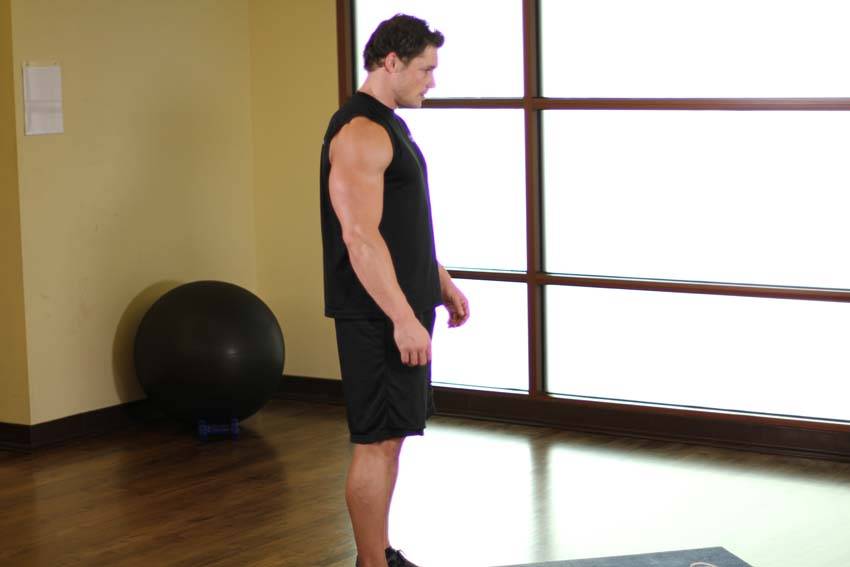
9. Elbows Back
74.7% MatchHow to perform this exercise
- Stand up straight.
- Place both hands on your lower back, fingers pointing downward and elbows out.
- Then gently pull your elbows back aiming to touch them together.
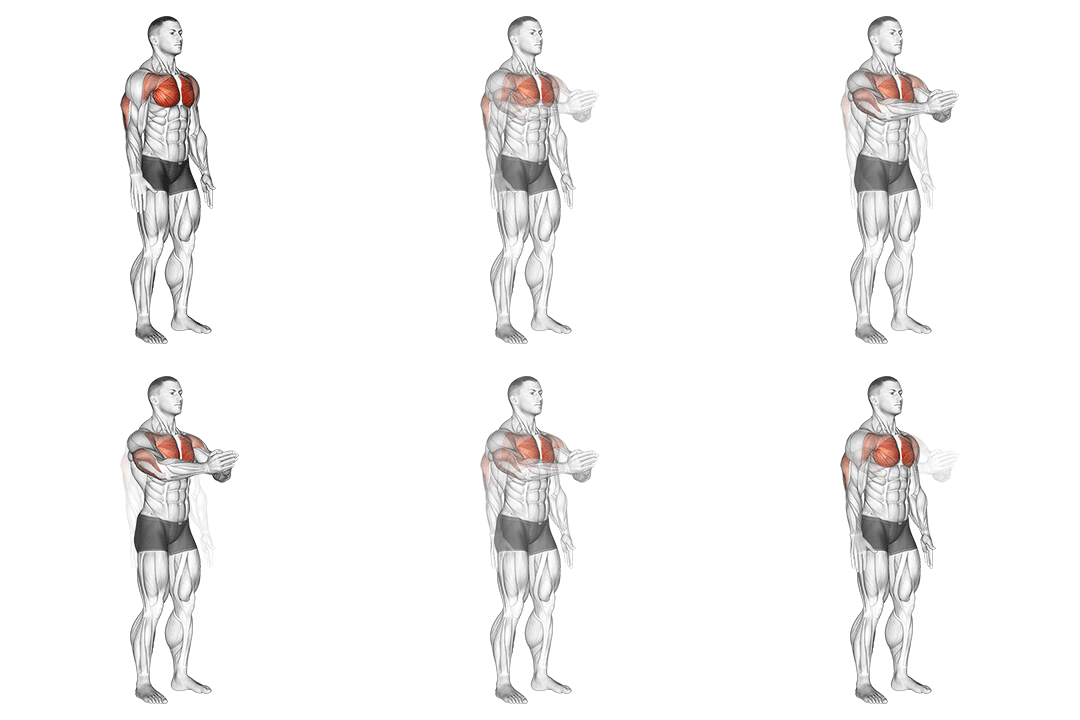
10. Isometric Chest Squeeze
74.7% MatchHow to perform this exercise
- Stand with your feet shoulder-width apart and your knees slightly bent.
- Extend your arms straight out in front of you, parallel to the ground, with your palms facing each other.
- Squeeze your chest muscles together as hard as you can, while keeping your arms straight.
- Hold this position for a few seconds, focusing on contracting your chest muscles.
- Release the squeeze and relax your chest muscles.
Why You Might Need a Behind Head Chest Stretch Alternative
You may need substitutes because behind-head chest stretches place the glenohumeral joint into extension and horizontal abduction, which can aggravate anterior shoulder impingement, rotator cuff issues, or limited external rotation. Alternatives reduce shear on the anterior capsule while still lengthening the pectoralis major and minor or improving scapular mobility. For example, a band-assisted chest opener keeps the humerus near neutral to limit anterior glide; cue: retract the scapula and hinge through the thoracic spine to isolate the pecs. Choose movements that maintain pain-free range and avoid excessive external rotation or elbow elevation above shoulder height to protect the shoulder complex.
How to Choose the Right Substitute
Prioritize substitutes based on your restriction: if you lack shoulder ROM, pick doorway or supine foam-roll stretches that keep the humerus lower and emphasize thoracic extension; cue: keep the elbow at or below shoulder height and avoid anterior translation. If you need activation before pressing, use band pull-aparts or horizontal-band chest presses to engage the pectoralis major and scapular retractors; focus on slow eccentrics and full scapular retraction. For acute pain or instability, favor low-load, pain-free positions that target pec minor length (e.g., supine shoulder protraction holds). Match the substitute to whether your goal is mobility, muscle activation, or pain reduction.
Frequently Asked Questions
What muscles does Behind Head Chest Stretch work?
The stretch primarily lengthens the pectoralis major (clavicular and sternal fibers) and pectoralis minor, while placing tension on the anterior deltoid and anterior capsule. Biomechanically it increases length across the anterior shoulder by combining horizontal abduction with slight extension of the humerus.
What is the best bodyweight alternative to Behind Head Chest Stretch?
The doorway pec stretch is the best bodyweight option: place your forearm on the doorframe at 90° elbow height and step forward until you feel the stretch across the anterior chest. Keep your scapula gently depressed and avoid rotating the shoulder into painful external rotation to target the pec major safely.
Can I build muscle without doing Behind Head Chest Stretch?
Yes. Building pectoral muscle requires progressive overload through resistance work such as bench presses, incline presses, and controlled push-ups rather than static stretches. Use stretches or mobility drills like band-assisted openers to improve range of motion, then load the muscle with progressive sets, reps, and eccentric control for hypertrophy.
More Exercise Alternatives
Find Alternatives for Any Exercise
Use the exercise substitution finder to compare ranked alternatives for your available equipment and training preference.
Try the Exercise Substitution Finder →