

10 Best Deadlift With Chains Alternatives for Strength & Safety
What can you do instead of Deadlift With Chains? Use conventional deadlifts, Romanian deadlifts, rack pulls, barbell good mornings, or weighted back extensions to target the erector spinae and posterior chain. Hinge at the hips, maintain a neutral spine, and drive through the heels to maximize erector-spinae recruitment and preserve spinal alignment.
Original Exercise: Deadlift With Chains
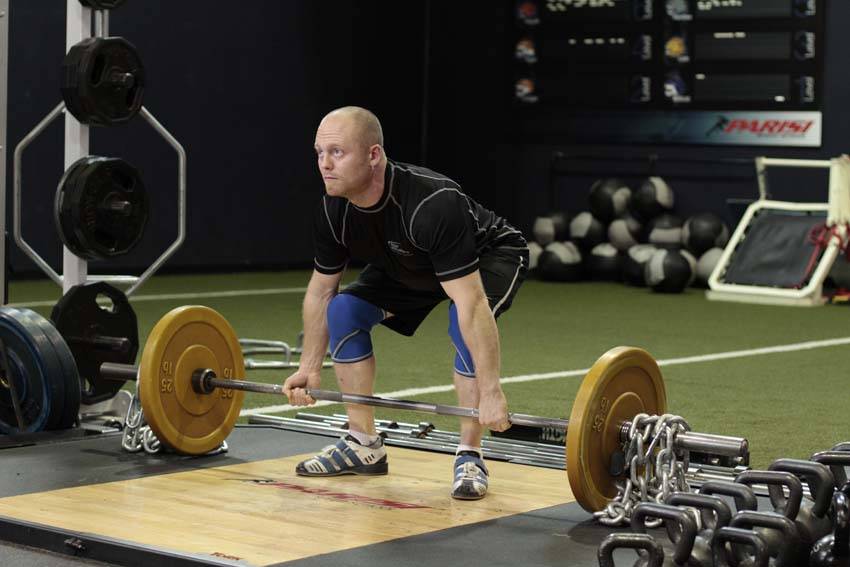
How to Perform Deadlift With Chains
- You can attach the chains to the sleeves of the bar, or just drape the middle over the bar so there is a greater weight increase as you lift.
- Approach the bar so that it is centered over your feet. You feet should be about hip width apart. Bend at the hip to grip the bar at shoulder width, allowing your shoulder blades to protract. Typically, you would use an overhand grip or an over/under grip on heavier sets. With your feet, and your grip set, take a big breath and then lower your hips and bend the knees until your shins contact the bar.
- Look forward with your head, keep your chest up and your back arched, and begin driving through the heels to move the weight upward. After the bar passes the knees, aggressively pull the bar back, pulling your shoulder blades together as you drive your hips forward into the bar.
- Lower the bar by bending at the hips and guiding it to the floor.
Pro Tips
- Category: Powerlifting
- Force: Pull
- Movement type: Compound
Ranked Deadlift With Chains Alternatives
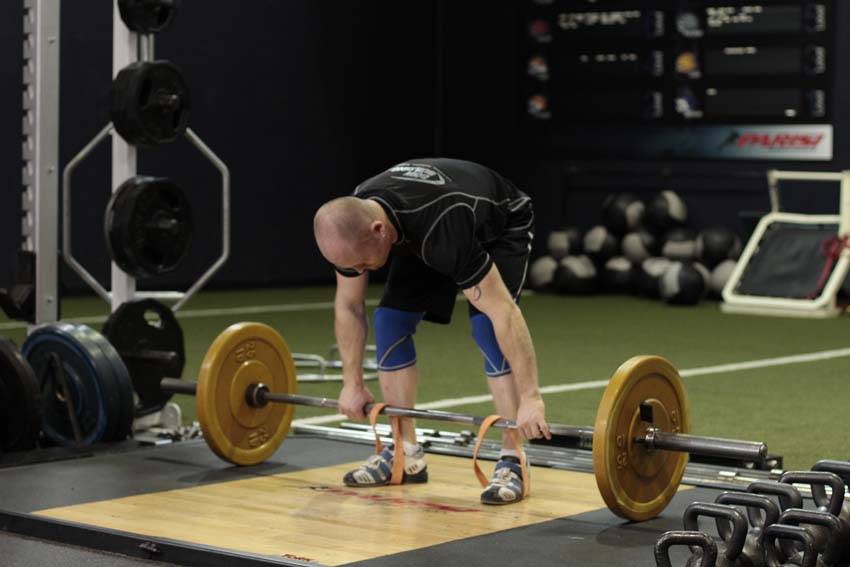
1. Deadlift With Bands
99.9% MatchHow to perform this exercise
- To deadlift with short bands, simply loop them over the bar before you start, and step into them to set up. For long bands, they will need to be anchored to a secure base, such as heavy dumbbells or a rack.
- With your feet, and your grip set, take a big breath and then lower your hips and bend the knees until your shins contact the bar. Look forward with your head, keep your chest up and your back arched, and begin driving through the heels to move the weight upward. After the bar passes the knees, aggressively pull the bar back, pulling your shoulder blades together as you drive your hips forward into the bar.
- Lower the bar by bending at the hips and guiding it to the floor.
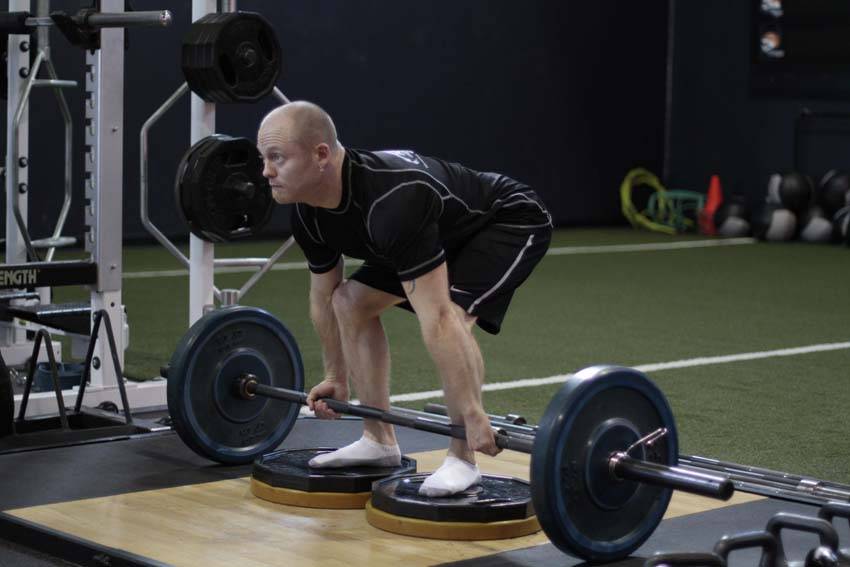
2. Deficit Deadlift
99.9% MatchHow to perform this exercise
- Begin by having a platform or weight plates that you can stand on, usually 1-3 inches in height. Approach the bar so that it is centered over your feet. You feet should be about hip width apart. Bend at the hip to grip the bar at shoulder width, allowing your shoulder blades to protract. Typically, you would use an overhand grip or an over/under grip on heavier sets.
- With your feet, and your grip set, take a big breath and then lower your hips and bend the knees until your shins contact the bar. Look forward with your head, keep your chest up and your back arched, and begin driving through the heels to move the weight upward. After the bar passes the knees, aggressively pull the bar back, pulling your shoulder blades together as you drive your hips forward into the bar.
- Lower the bar by bending at the hips and guiding it to the floor.
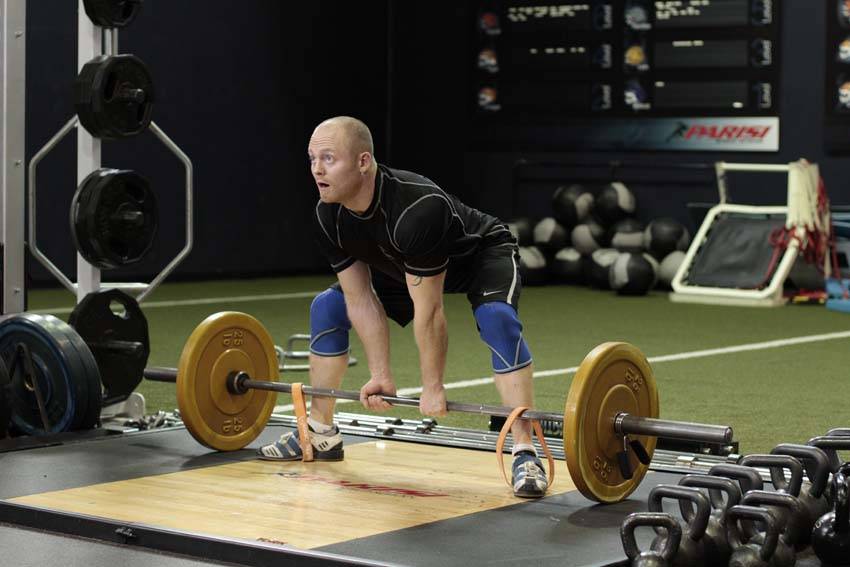
3. Sumo Deadlift With Bands
84.7% MatchHow to perform this exercise
- To deadlift with short bands, simply loop them over the bar before you start, and step into them to set up. Ensure that they under the back half of your foot, directly where you are driving into the floor.
- Begin with a bar loaded on the ground. Approach the bar so that the bar intersects the middle of the feet. The feet should be set very wide, near the collars. Bend at the hips to grip the bar. The arms should be directly below the shoulders, inside the legs, and you can use a pronated grip, a mixed grip, or hook grip.
- Take a breath, and then lower your hips, looking forward with your head with your chest up. Drive through the floor, spreading your feet apart, with your weight on the back half of your feet. Extend through the hips and knees.
- As the bar passes through the knees, lean back and drive the hips into the bar, pulling your shoulder blades together.
- Return the weight to the ground by bending at the hips and controlling the weight on the way down.
4. Sumo Deadlift With Chains
84.7% MatchHow to perform this exercise
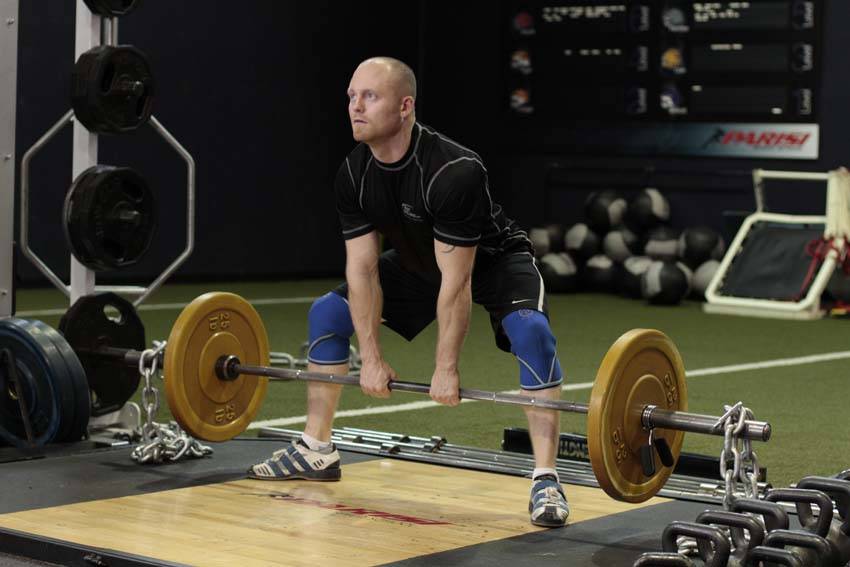
- You can attach the chains to the sleeves of the bar, or just drape the middle over the bar so there is a greater weight increase as you lift. Attempt to keep the ends of the chains away from the plates so you don't hit them when you lower the weight.
- Begin with a bar loaded on the ground. Approach the bar so that the bar intersects the middle of the feet. The feet should be set very wide, near the collars. Bend at the hips to grip the bar. The arms should be directly below the shoulders, inside the legs, and you can use a pronated grip, a mixed grip, or hook grip. Relax the shoulders, which in effect lengthens your arms.
- Take a breath, and then lower your hips, looking forward with your head with your chest up. Drive through the floor, spreading your feet apart, with your weight on the back half of your feet. Extend through the hips and knees.
- As the bar passes through the knees, lean back and drive the hips into the bar, pulling your shoulder blades together.
- Return the weight to the ground by bending at the hips and controlling the weight on the way down.
5. Reverse Band Deadlift
84.4% MatchHow to perform this exercise
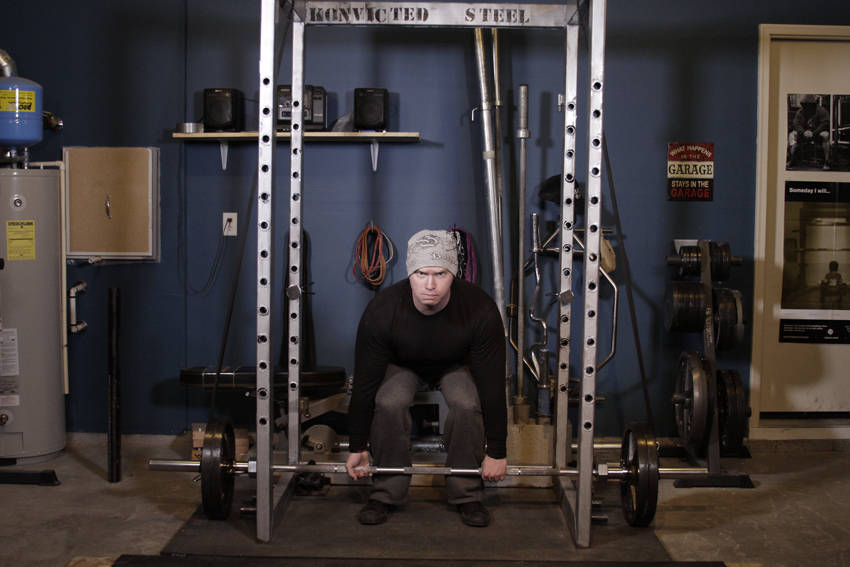
- Set the bar up in a power rack. Attach bands to the top of the rack, using either bands pegs or the frame itself. Attach the other end of the bands to the bar.
- Approach the bar so that it is centered over your feet. You feet should be about hip width apart. Bend at the hip to grip the bar at shoulder width, allowing your shoulder blades to protract. Typically, you would use an overhand grip or an over/under grip on heavier sets.
- With your feet, and your grip set, take a big breath and then lower your hips and bend the knees until your shins contact the bar. Look forward with your head, keep your chest up and your back arched, and begin driving through the heels to move the weight upward.
- After the bar passes the knees, aggressively pull the bar back, pulling your shoulder blades together as you drive your hips forward into the bar.
- Lower the bar by bending at the hips and guiding it to the floor.
6. Sumo Deadlift
84.4% MatchHow to perform this exercise
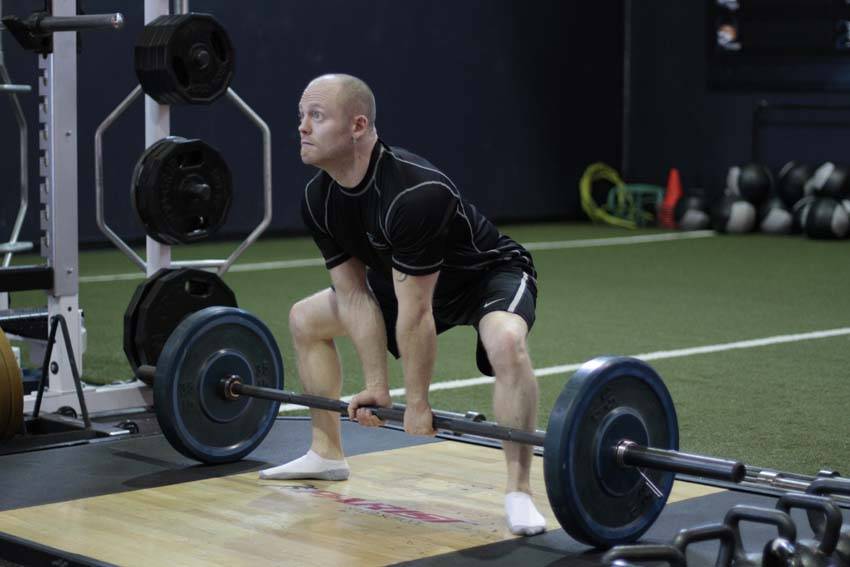
- Begin with a bar loaded on the ground. Approach the bar so that the bar intersects the middle of the feet. The feet should be set very wide, near the collars. Bend at the hips to grip the bar. The arms should be directly below the shoulders, inside the legs, and you can use a pronated grip, a mixed grip, or hook grip. Relax the shoulders, which in effect lengthens your arms.
- Take a breath, and then lower your hips, looking forward with your head with your chest up. Drive through the floor, spreading your feet apart, with your weight on the back half of your feet. Extend through the hips and knees.
- As the bar passes through the knees, lean back and drive the hips into the bar, pulling your shoulder blades together.
- Return the weight to the ground by bending at the hips and controlling the weight on the way down.
7. Reverse Band Sumo Deadlift
83.7% MatchHow to perform this exercise
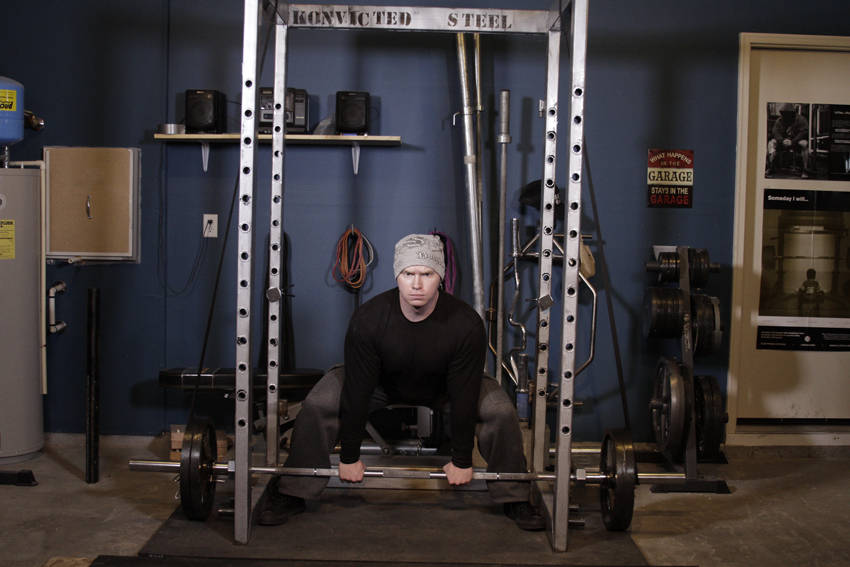
- Begin with a bar loaded on the floor inside of a power rack. Attach bands to the top of the rack, using either pegs or the frame itself. Attach the other end to the barbell.
- Approach the bar so that the bar intersects the middle of the feet. The feet should be set very wide, near the collars. Bend at the hips to grip the bar. The arms should be directly below the shoulders, inside the legs, and you can use a pronated grip, a mixed grip, or hook grip. Relax the shoulders, which in effect lengthens your arms.
- Take a breath, and then lower your hips, looking forward with your head with your chest up. Drive through the floor, spreading your feet apart, with your weight on the back half of your feet. Extend through the hips and knees.
- As the bar passes through the knees, lean back and drive the hips into the bar, pulling your shoulder blades together.
- Return the weight to the ground by bending at the hips and controlling the weight on the way down.
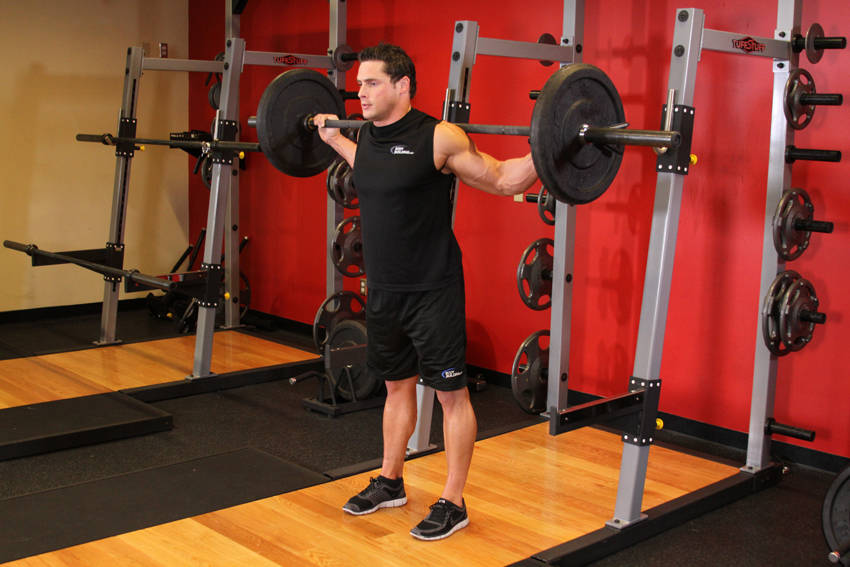
8. Stiff Leg Barbell Good Morning
82% MatchHow to perform this exercise
- This exercise is best performed inside a squat rack for safety purposes. To begin, first set the bar on a rack that best matches your height. Once the correct height is chosen and the bar is loaded, step under the bar and place the back of your shoulders (slightly below the neck) across it.
- Hold on to the bar using both arms at each side and lift it off the rack by first pushing with your legs and at the same time straightening your torso.
- Step away from the rack and position your legs using a shoulder width medium stance. Keep your head up at all times as looking down will get you off balance and also maintain a straight back. This will be your starting position.
- Keeping your legs stationary, move your torso forward by bending at the hips while inhaling. Lower your torso until it is parallel with the floor.
- Begin to raise the bar as you exhale by elevating your torso back to the starting position.
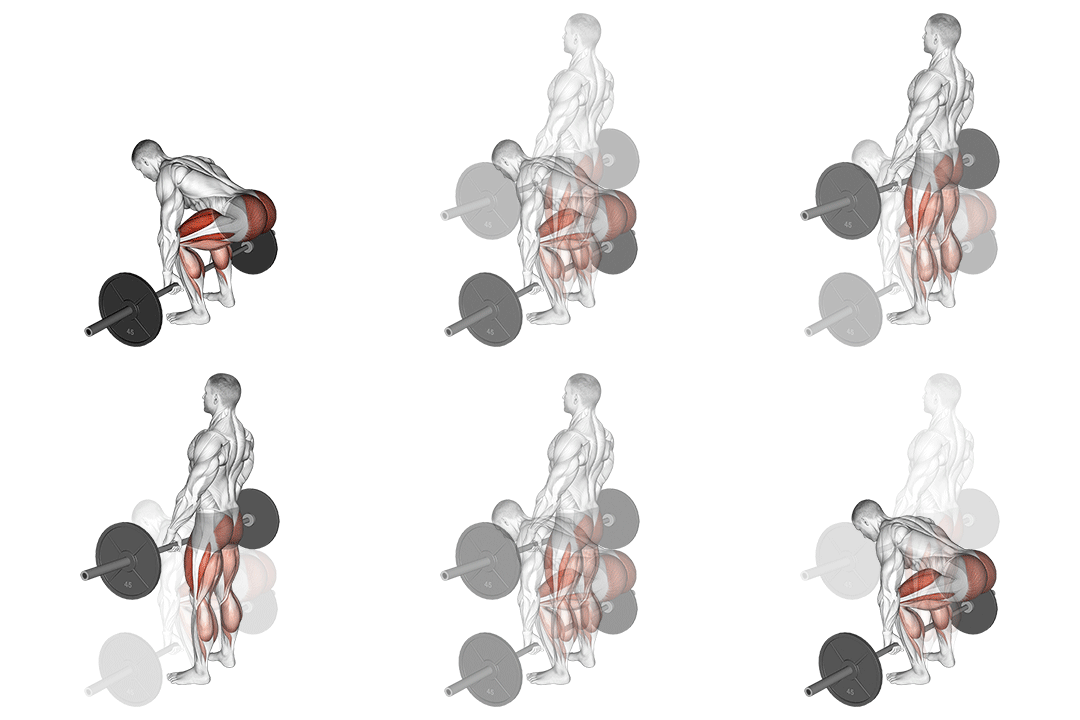
9. Barbell Deadlift
80% MatchHow to perform this exercise
- Stand with your feet shoulder-width apart and the barbell on the ground in front of you.
- Bend your knees and hinge at the hips to lower your torso and grip the barbell with an overhand grip, hands slightly wider than shoulder-width apart.
- Keep your back straight and chest lifted as you drive through your heels to lift the barbell off the ground, extending your hips and knees.
- As you stand up straight, squeeze your glutes and keep your core engaged.
- Lower the barbell back down to the ground by bending at the hips and knees, keeping your back straight.
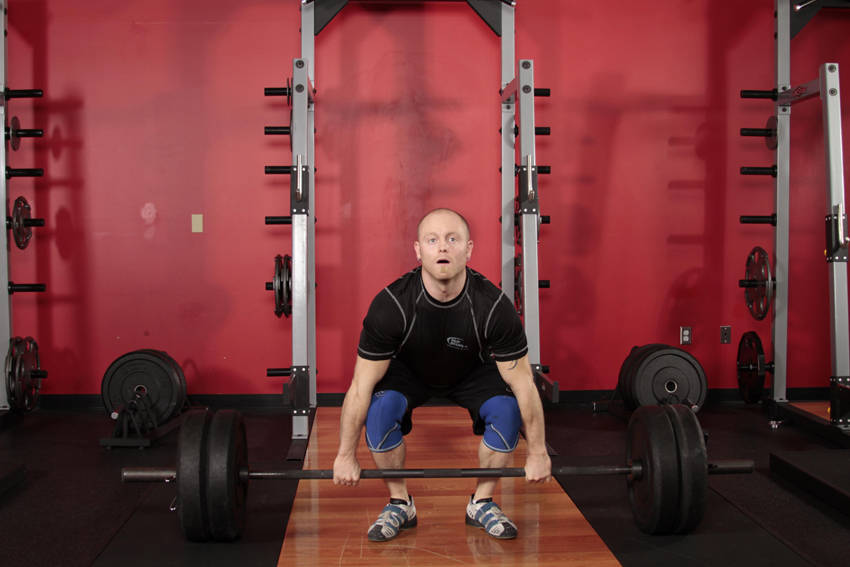
10. Clean Deadlift
79.7% MatchHow to perform this exercise
- Begin standing with a barbell close to your shins. Your feet should be directly under your hips with your feet turned out slightly. Grip the bar with a double overhand grip or hook grip, about shoulder width apart. Squat down to the bar. Your spine should be in full extension, with a back angle that places your shoulders in front of the bar and your back as vertical as possible.
- Begin by driving through the floor through the front of your heels. As the bar travels upward, maintain a constant back angle. Flare your knees out to the side to help keep them out of the bar's path.
- After the bar crosses the knees, complete the lift by driving the hips into the bar until your hips and knees are extended.
Why You Might Need a Deadlift With Chains Alternative
You might substitute Deadlift With Chains because you lack chains or accommodating-resistance equipment, you’re managing low-back discomfort, or you want a different strength curve. Chains shift load toward lockout; alternatives let you recreate that progressive demand or reduce lumbar shear by changing range of motion. For example, rack pulls emphasize top-end extension with less lumbar flexion, while Romanian deadlifts increase eccentric tension on hamstrings and erectors. Cue: sit back into the hips and keep the chest up to load the posterior chain. Choose substitutes that preserve the hip-hinge pattern and the targeted erector-spinae activation if your goal is back strength and spinal extension capacity.
How to Choose the Right Substitute
Pick a substitute by matching movement pattern, load profile, and your spinal tolerance. If you want the same lockout overload, choose rack pulls or lockout-focused deadlifts and cue a short pull with scapular retraction. If you want more eccentric hypertrophy, use Romanian deadlifts and emphasize a controlled 3–4 second descent to increase erector-spinae and hamstring tension. Consider equipment (barbell, trap bar, bands), desired range of motion, and whether you need reduced lumbar shear; exercises that shorten the moment arm at the lumbar spine reduce shear but keep hip-hinge mechanics. Always maintain a neutral spine and drive through the heels to preserve erector-spinae loading.
Frequently Asked Questions
What muscles does Deadlift With Chains work?
Deadlift With Chains primarily targets the erector spinae along with the glutes and hamstrings as prime movers. The lats and core act as stabilizers to maintain a neutral spine, and the chains change the load curve so the erectors face heavier resistance through lockout.
What is the best bodyweight alternative to Deadlift With Chains?
A bodyweight single-leg Romanian deadlift is an excellent alternative because it preserves the hip-hinge and forces erector-spinae engagement through stabilization. Hinge at the hips with a long spine and drive the standing heel into the floor to feel the posterior chain working.
Can I build muscle without doing Deadlift With Chains?
Yes, you can build back and erector-spinae muscle with other compound lifts like Romanian deadlifts, rack pulls, heavy back extensions, and good mornings. Prioritize progressive overload, controlled eccentrics, and consistent hip-hinge mechanics (neutral spine, hips back) to stimulate hypertrophy without chains.
More Exercise Alternatives
Find Alternatives for Any Exercise
Use the exercise substitution finder to compare ranked alternatives for your available equipment and training preference.
Try the Exercise Substitution Finder →