

10 Best Depth Jump Leap Alternatives for Explosive Leg Power
The Depth Jump Leap drops you off a box, rebounds off the floor, then launches you onto a second, higher box. The Standing Long Jump is the closest swap because it keeps the big arm swing and full-effort two-foot takeoff, aimed forward for distance from a standing start instead of rebounding out of a drop, and it needs no box at all. If you still own a bench, the Bench Jump keeps a similar jump-and-land shape, clearing it over and back instead of landing on top.
Original Exercise: Depth Jump Leap
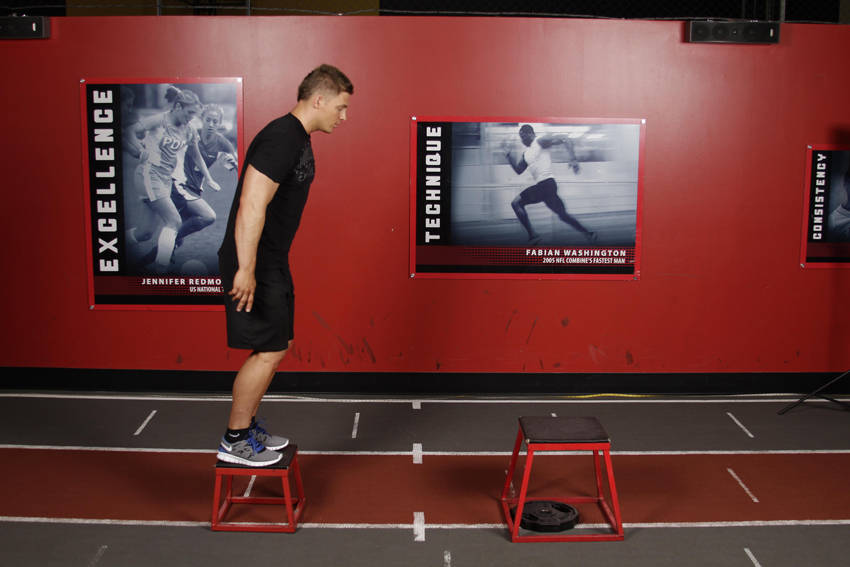
How to Perform Depth Jump Leap
- For this drill you will need two boxes or benches, one 12 to 16 inches high and the other 22 to 26 inches high.
- Stand on one of the two boxes with arms at the sides; feet should be together and slightly off the edge as in the depth jump. Place the other box approximately two or three feet in front of and facing the performer.
- Begin by dropping off the initial box, landing and simultaneously taking off with both feet.
- Rebound by driving upward and outward as intensely as possible, using the arms and full extension of the body to jump onto the higher box. Again, allow the legs to absorb the impact.
Pro Tips
- Category: Plyometrics
- Force: Push
- Movement type: Compound
Ranked Depth Jump Leap Alternatives
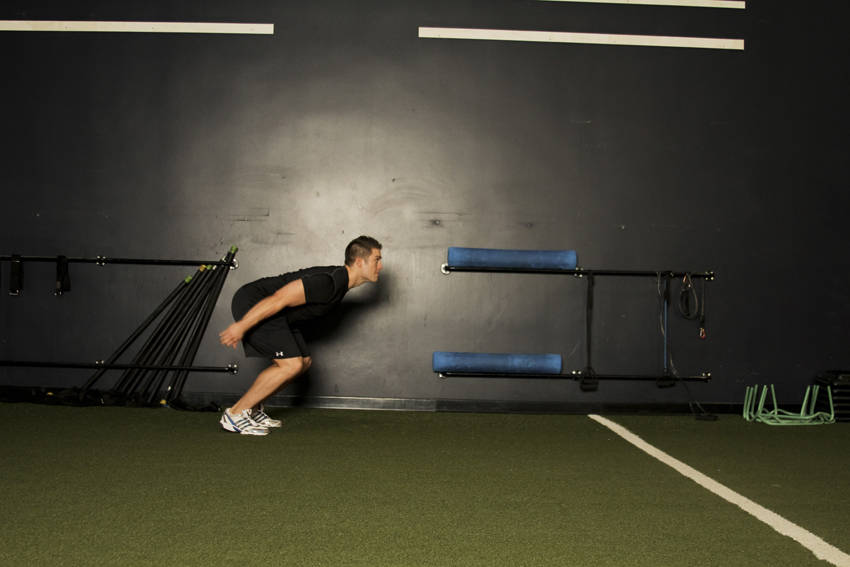
1. Standing Long Jump
90.4% MatchHow to perform this exercise
- This drill is best done in sand or other soft landing surface. Ensure that you are able to measure distance. Stand in a partial squat stance with feet shoulder width apart.
- Utilizing a big arm swing and a countermovement of the legs, jump forward as far as you can.
- Attempt to land with your feet out in front you, reaching as far as possible with your legs.
- Measure the distance from your landing point to the starting point and track results.
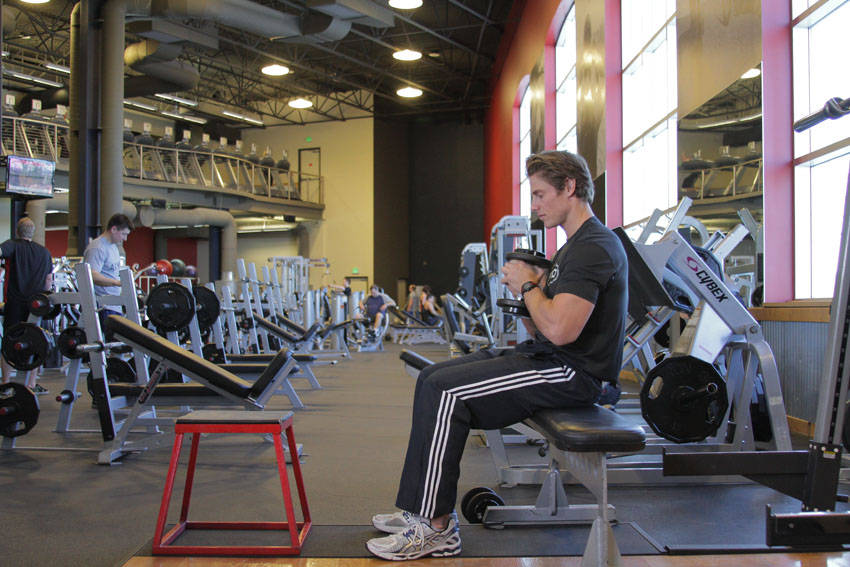
2. Dumbbell Seated Box Jump
85.4% MatchHow to perform this exercise
- Position a box a couple feet to the side of a bench. Hold a dumbbell to your chest with both hands and seat yourself on the bench facing the box. This will be your starting position.
- Plant your feet firmly on the ground as you lean forward, extending through the hips and knees to jump up and forward.
- Land on the box with both feet, absorbing the impact by allowing the hips and knees to bend.
- Step down and return to the starting position.
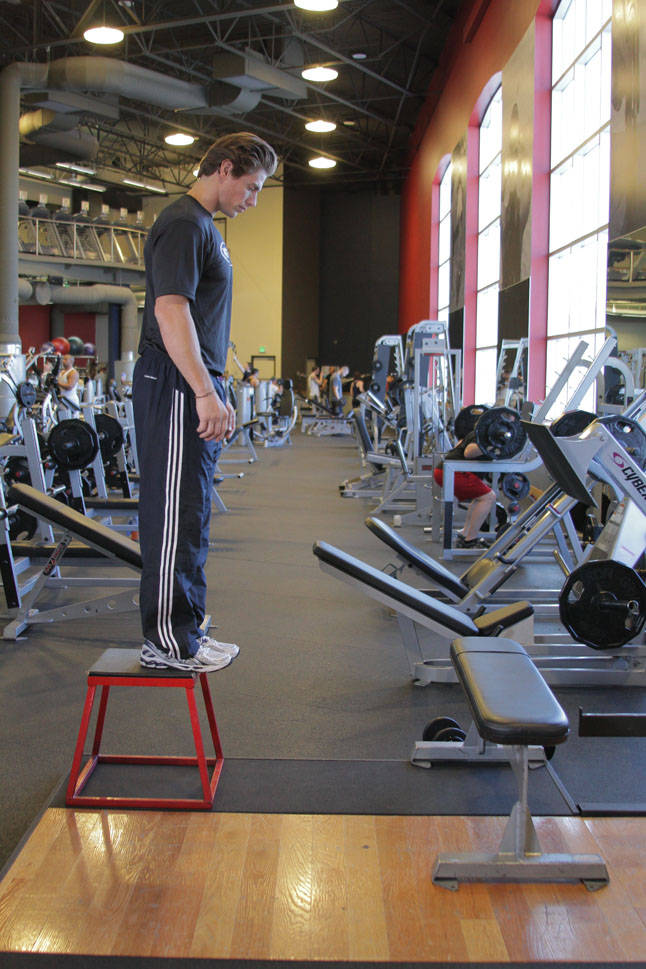
3. Linear Depth Jump
85% MatchHow to perform this exercise
- You will need two boxes or benches spaced a few feet away from each other. Begin by standing on one box facing towards the other platform.
- To initiate the movement, gently drop down to the ground between your platforms, allowing the knees and hips to flex.
- Reverse the motion by exploding, extending through the hips, knees, and ankles to jump onto the other platform.
- Land softly, asborbing the impact through the legs.
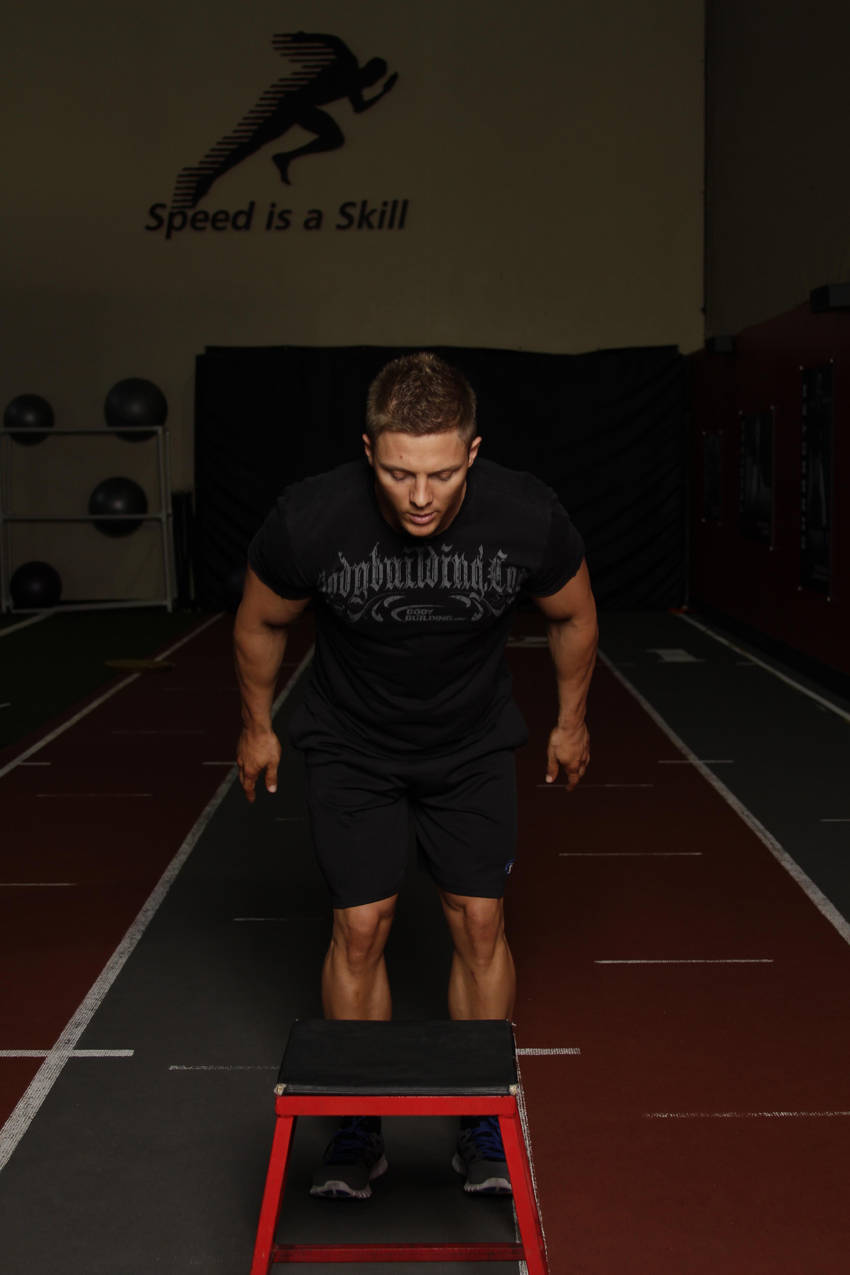
4. Box Jump (Multiple Response)
81% MatchHow to perform this exercise
- Assume a relaxed stance facing the box or platform approximately an arm's length away. Arms should be down at the sides and legs slightly bent.
- Using the arms to aid in the initial burst, jump upward and forward, landing with feet simultaneously on top of the box or platform.
- Immediately drop or jump back down to the original starting place; then repeat the sequence.
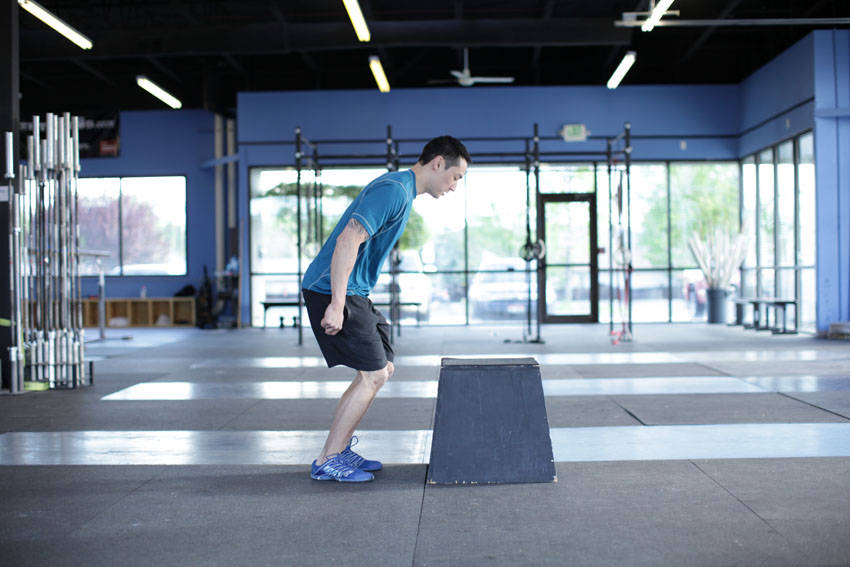
5. Front Box Jump
81% MatchHow to perform this exercise
- Begin with a box of an appropriate height 1-2 feet in front of you. Stand with your feet should width apart. This will be your starting position.
- Perform a short squat in preparation for jumping, swinging your arms behind you.
- Rebound out of this position, extending through the hips, knees, and ankles to jump as high as possible. Swing your arms forward and up.
- Land on the box with the knees bent, absorbing the impact through the legs. You can jump from the box back to the ground, or preferably step down one leg at a time.
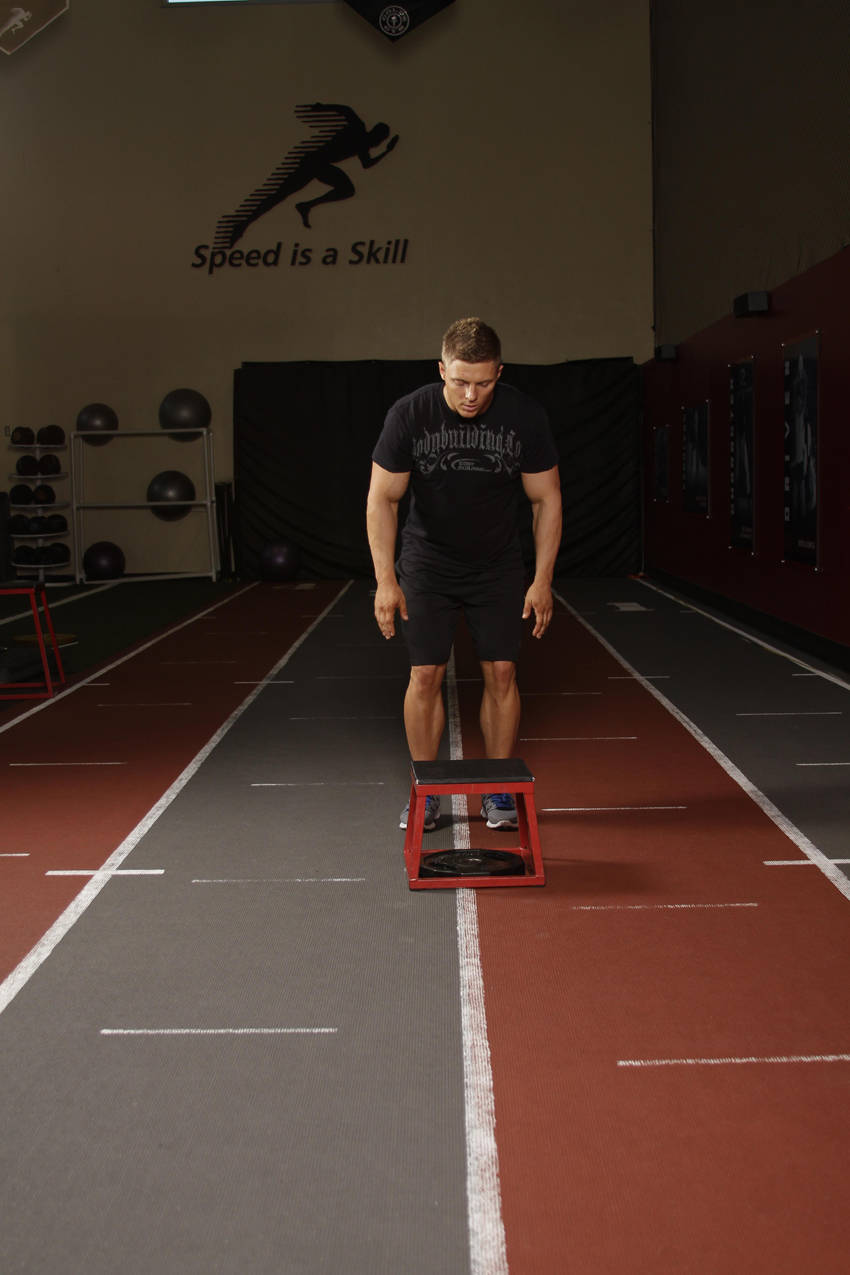
6. Quick Leap
81% MatchHow to perform this exercise
- You will need a box for this exerise.
- Begin facing the box standing 1-2 feet from its edge.
- By utilizing your hips, hop onto the box, landing on both legs. Ensure that you land with your legs bent and your feet flat.
- Immediately upon landing, fully extend through the entire body and swing your arms overhead to explode off of the box. Use your legs to absorb the impact of landing.
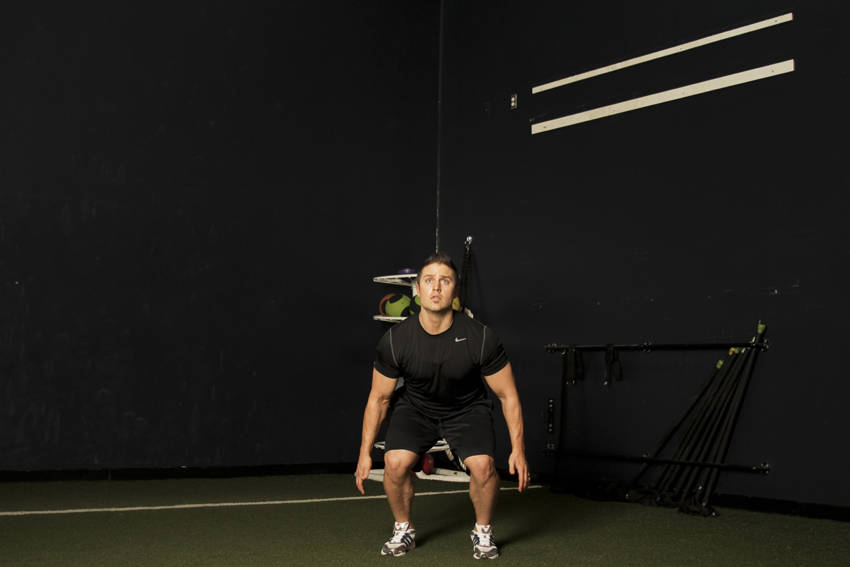
7. Rocket Jump
81% MatchHow to perform this exercise
- Begin in a relaxed stance with your feet shoulder width apart and hold your arms close to the body.
- To initiate the move, squat down halfway and explode back up as high as possible.
- Fully extend your entire body, reaching overhead as far as possible. As you land, absorb your impact through the legs.
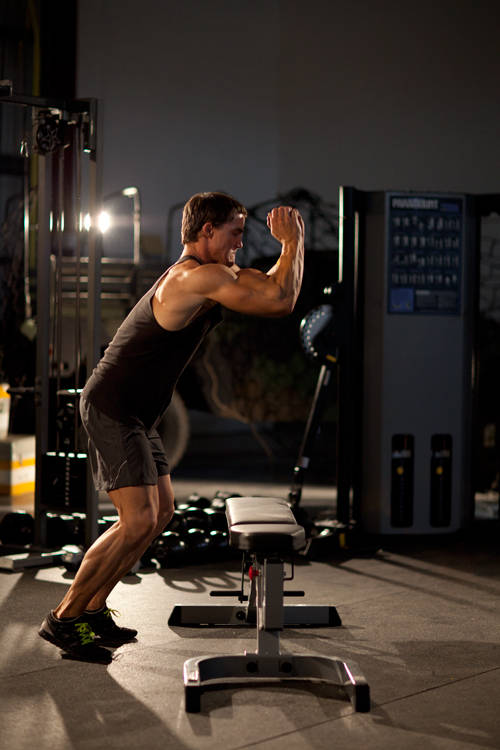
8. Bench Jump
80.4% MatchHow to perform this exercise
- Begin with a box or bench 1-2 feet in front of you. Stand with your feet shoulder width apart. This will be your starting position.
- Perform a short squat in preparation for the jump; swing your arms behind you.
- Rebound out of this position, extending through the hips, knees, and ankles to jump as high as possible. Swing your arms forward and up.
- Jump over the bench, landing with the knees bent, absorbing the impact through the legs.
- Turn around and face the opposite direction, then jump back over the bench.
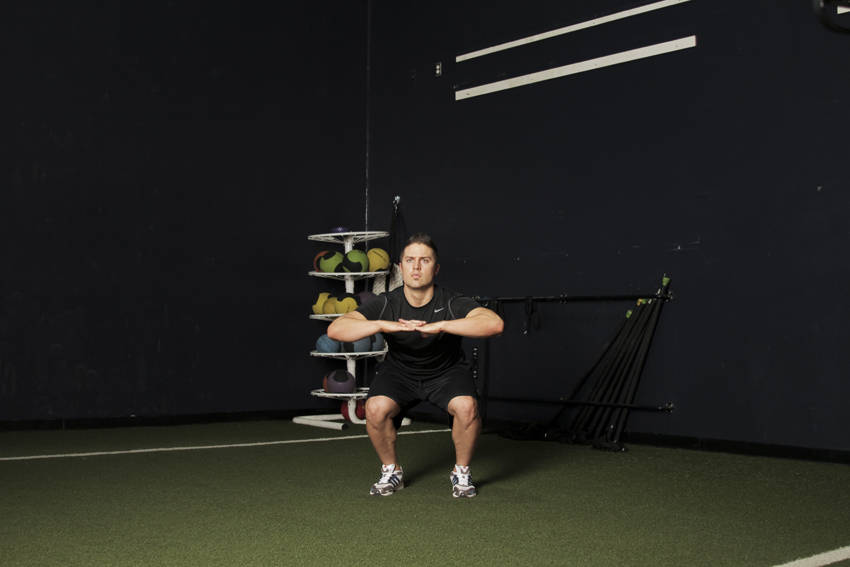
9. Knee Tuck Jump
80.4% MatchHow to perform this exercise
- Begin in a comfortable standing position with your knees slightly bent. Hold your hands in front of you, palms down with your fingertips together at chest height. This will be your starting position.
- Rapidly dip down into a quarter squat and immediately explode upward. Drive the knees towards the chest, attempting to touch them to the palms of the hands.
- Jump as high as you can, raising your knees up, and then ensure a good land be re-extending your legs, absorbing impact through be allowing the knees to rebend.
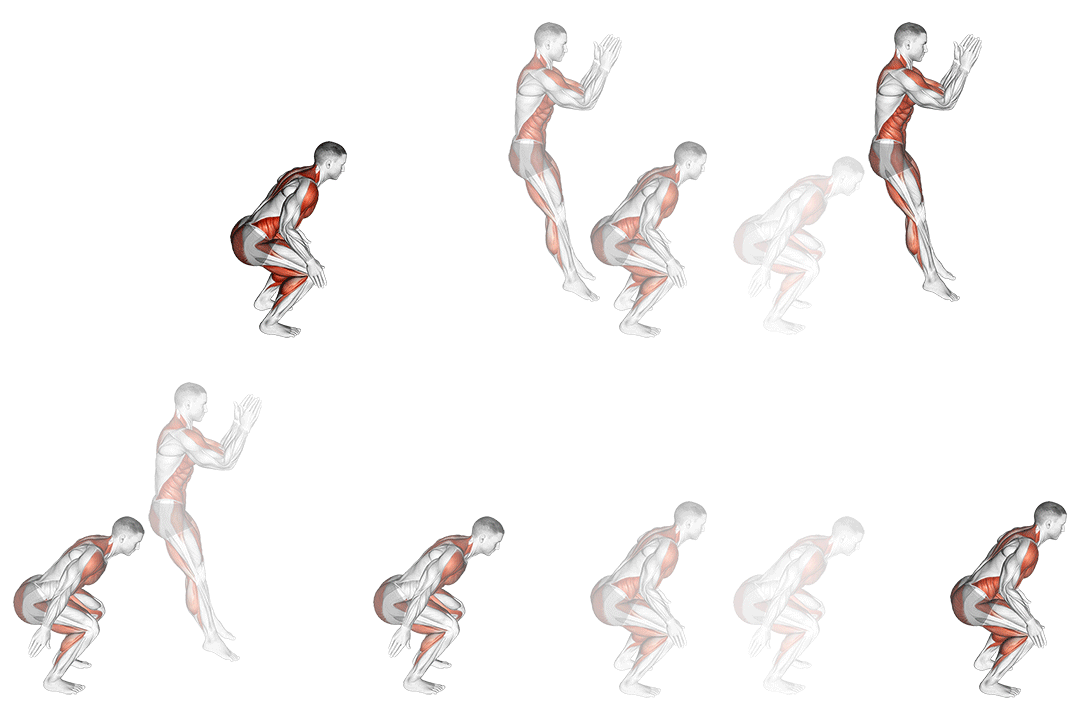
10. Backward Jump
79.7% MatchHow to perform this exercise
- Stand with your feet shoulder-width apart.
- Bend your knees slightly and jump backwards, pushing off with both feet.
- Land softly on the balls of your feet, bending your knees to absorb the impact.
- Repeat for the desired number of repetitions.
Why You Might Need a Depth Jump Leap Alternative
The Depth Jump Leap needs two boxes at set heights with floor between them to land and rebound, so it disappears once either box is missing or the space is busy. Most of the swaps keep the legs doing explosive jump work with one box or none; only the Linear Depth Jump keeps the two-box drop-and-rebound setup. The Standing Long Jump strips the setup down to a stand and a jump, needing only a stretch of floor. The Dumbbell Seated Box Jump keeps one box in the picture, seating you on a bench beside it with a dumbbell held to your chest before you jump onto it. Bench Jump trades the matched pair for a single bench cleared by jumping over and back, and the Knee Tuck Jump drops boxes altogether, driving your knees toward your chest.
How to Choose the Right Substitute
Standing Long Jump suits you if you have floor space and nothing else, since it needs no boxes at all and still asks for a full-effort two-foot takeoff with a big arm swing, aimed forward for distance rather than up onto a box. Still own a box and a bench? The Dumbbell Seated Box Jump seats you beside the box while you hold one dumbbell to your chest, then has you jump onto it, loading the jump instead of clearing a second landing point. Bench Jump suits a single bench, clearing it over and back instead of landing on top, so the matched pair is not required. Knee Tuck Jump drops boxes entirely and drives your knees to your chest, and Backward Jump needs nothing but a patch of floor, so either one is a no-box option.
Frequently Asked Questions
Which alternative needs no boxes at all?
The Standing Long Jump and the Backward Jump both work from bare floor, no box or bench involved. Both push off with both feet from a standing start rather than a drop off a box, so either one covers you if boxes are not an option today.
Can I add weight to a Depth Jump Leap alternative?
Yes. The Dumbbell Seated Box Jump seats you on a bench beside a box, has you hold one dumbbell to your chest with both hands, then has you jump up onto the box. It is the only alternative here that uses added weight, so reach for it once bodyweight jumps stop feeling like enough.
What if my gym only has one box or bench instead of two?
The Bench Jump works off a single bench rather than the matched pair the Depth Jump Leap calls for, jumping over it and back instead of landing on top. If you have one box, the Front Box Jump, Quick Leap and Box Jump (Multiple Response) each have you jump onto it from the floor, no second platform needed. Any of these lets you train without the second, higher box the original drill sets up.
Can I do a Depth Jump Leap alternative at home?
Yes. The Standing Long Jump, Dumbbell Seated Box Jump, Rocket Jump, Bench Jump, Knee Tuck Jump and Backward Jump all fit a home setup, since none of them need the matched pair of boxes the Depth Jump Leap calls for. Most need only floor space; the Dumbbell Seated Box Jump adds load, but at home it still needs a dumbbell, a box to land on and a bench to sit on.
More Exercise Alternatives
Find Alternatives for Any Exercise
Use the exercise substitution finder to compare ranked alternatives for your available equipment and training preference.
Try the Exercise Substitution Finder →