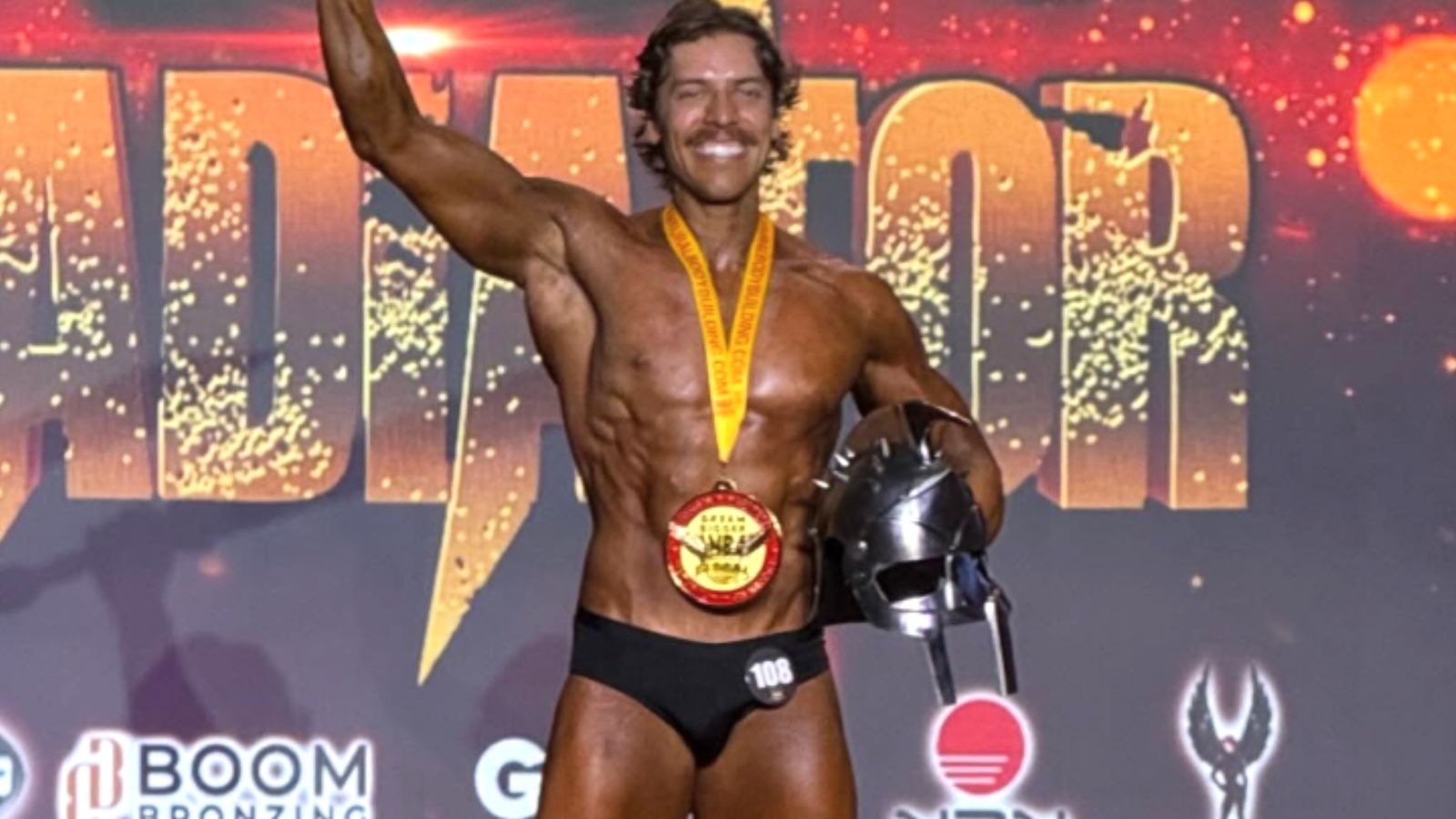
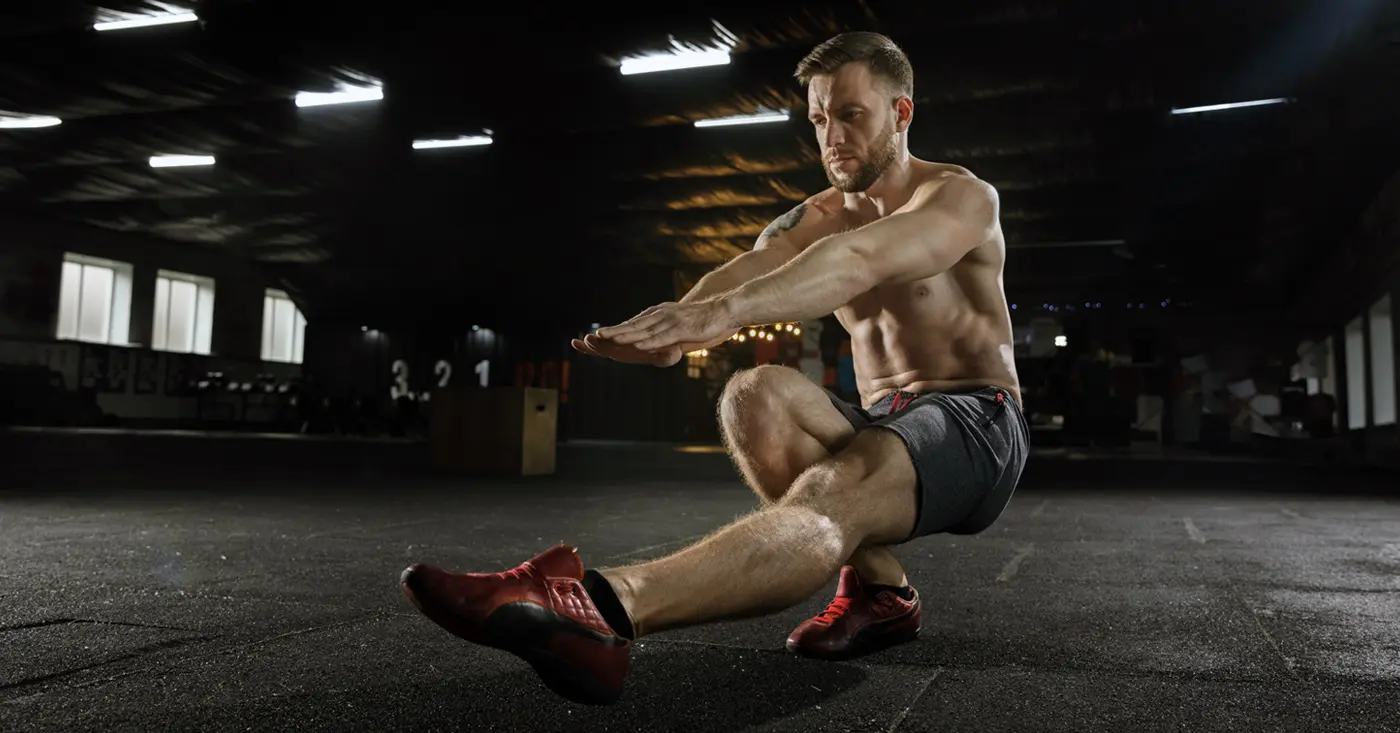
Ask a bodybuilder how many exercises you should do per workout, and they’ll probably tell you it’s somewhere between 4-8. In contrast, an Olympic lifter or powerlifter might tell you the answer is as low as 1-2 exercises.
As with almost everything related to training, the ideal number of exercises per workout depends on the objective of your training, your personal preferences, and the time and equipment available for your workout.
That being said, how many sets per workout? To answer how many exercises per workout session should you do? A general guideline is to include 3 to 5 exercises per workout session.
In this article, instead of telling you how many exercises to do per workout, we explore your options. That way, you can choose the one that’s best for you.
One Exercise Per Workout
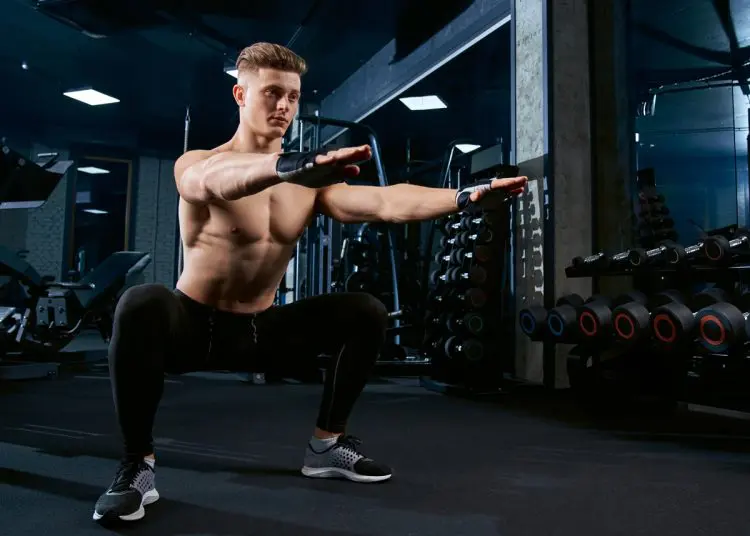
One of the guiding principles of successful training is specificity. Specificity means you are fit for what you do. That’s why different training goals are usually associated with different training methods. Your workouts should match what you are trying to achieve.
Doing just one exercise per workout is an extreme form of specificity. But, if you want to get really good at a particular exercise, dedicating an entire training session to it could be the way to go.
For example, if you are a powerlifter, you might spend your whole workout doing nothing but squats. After all, one of the best ways to get better at squats is to do a lot of squatting. An example of this is the Bulgarian method, where you squat every training day. Using just one exercise per workout, your training week could end up looking like this:
- Monday – Squats
- Wednesday – Bench press
- Friday – Deadlifts
Similarly, if you are a weightlifter, you may dedicate an entire training session to just one of the Olympic lifts – the snatch or the clean and jerk. Each lift would then be done a couple of times a week, like this:
- Monday – Snatch
- Tuesday – Clean and jerk
- Thursday – Snatch
- Saturday – Clean and jerk
The one lift a day (ONLAD) is a powerbuilding program that, as the name implies, involves doing a single exercise per workout. For example:
- Monday – Squats
- Tuesday – Pull-ups
- Wednesday – Bench press
- Thursday – Deadlifts
- Friday – Overhead press
Doing one exercise per workout forces you to choose the most effective and efficient way to reach your training goals. The exercise will probably be a compound movement, and you’ll need to do a lot of sets to accumulate enough training volume for this type of workout to be effective.
While doing just one exercise per workout can work, it’s not always ideal. Specializing in just a few movements per week could lead to overuse injuries, muscle imbalances, and boredom. You’ll also only be able to train one muscle group/movement pattern per workout.
One exercise per workout can undoubtedly work for building strength and power but is less useful for hypertrophy. After all, you won’t be able to train your muscles from a variety of angles, and that may undermine your progress.
That said, if you want a “no brainer” workout and just want to focus on working hard, a single exercise workout can be very freeing.
Two Exercises Per Workout
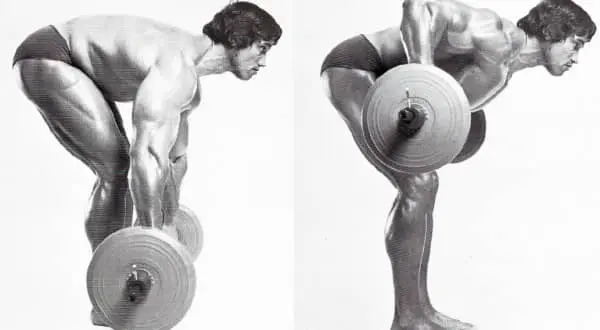
Doubling up to two exercises per workout gives you several more training options. You could:
- Do two different exercises for the same muscle group, e.g., flat and incline bench press
- Perform a primary exercise and an accessory exercise, e.g., squats and good mornings
- Train your upper body and your lower body, e.g., deadlifts and shoulder press
- Train two different muscle groups, e.g., bench press and Pendlay rows
- Do a compound followed by an isolation exercise, e.g., squats and leg extensions
Two exercises per workout still mean that you’ll have to choose your movements carefully, making sure you use the most productive exercises. However, your workouts have the potential to be a little more balanced and less boring. Two exercises also mean that you can train for strength, power, OR hypertrophy, although you still won’t be able to hit your muscles from lots of different angles.
Three Exercises Per Workout
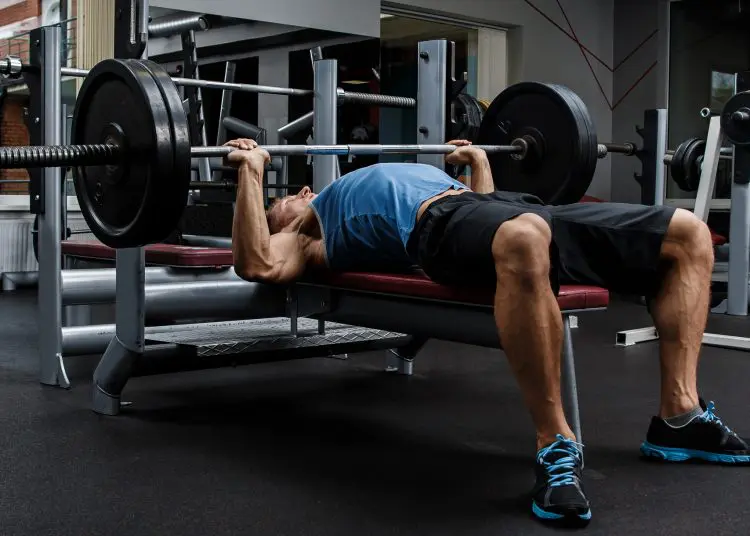
While one and two exercises per workout can work, such a minimalist approach to training is not always ideal. Using a shortlist of exercises will appeal to some exercisers, but others will find it too restrictive.
Three exercises per workout open up lots of additional options that will make your workouts more varied. With three exercises per workout, you’ll be able to:
- Do an abbreviated whole-body workout, e.g., leg press, bench press, and seated rows
- Train a muscle group from several different angles, e.g., bench press, incline dumbbell flyes, and dips
- Train multiple strength components, e.g., one heavy strength exercise, one explosive power exercise, and one higher-rep endurance/hypertrophy exercise
- Do a primary lift, followed by a secondary and then an assistance exercise, e.g., deadlifts, deficit deadlifts, and reverse hypers
- Train the same muscle with different training tools, e.g., barbell back squats, leg press machine, Nordic bodyweight leg curls
Limiting yourself to just three exercises per workout is still a fairly minimalistic approach to movement selection, but whatever your training goal, it should provide you with just enough variety to keep your workouts interesting. However, your workouts will still be quite simplistic, but that can be helpful when you don’t have a lot of training time or equipment.
Four Exercises Per Workout
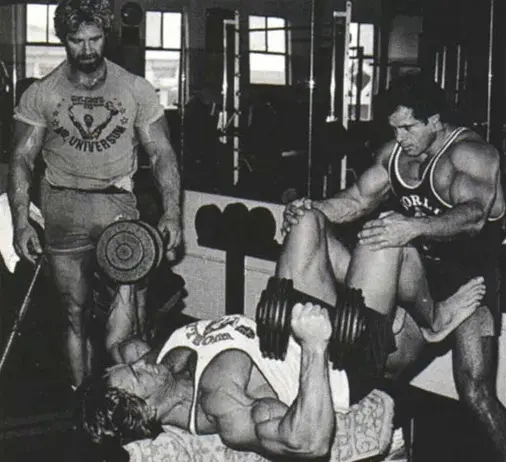
A lot of lifters still consider four exercises per workout to be a very minimalist approach to training. However, it’s more than enough to achieve most training goals. Doing four exercises per workout opens up several additional training possibilities, including:
- Train two muscle groups per workout, e.g., bench press and incline dumbbell bench press, and pull-ups and bent-over rows
- Hammer the same muscle group using all four exercise and from all available angles, e.g., barbell shoulder press, dumbbell lateral raises, upright rows, and reverse flyes
- Train a primary and a secondary muscle group, e.g., back and biceps, or chest and triceps
Five Exercises Per Workout
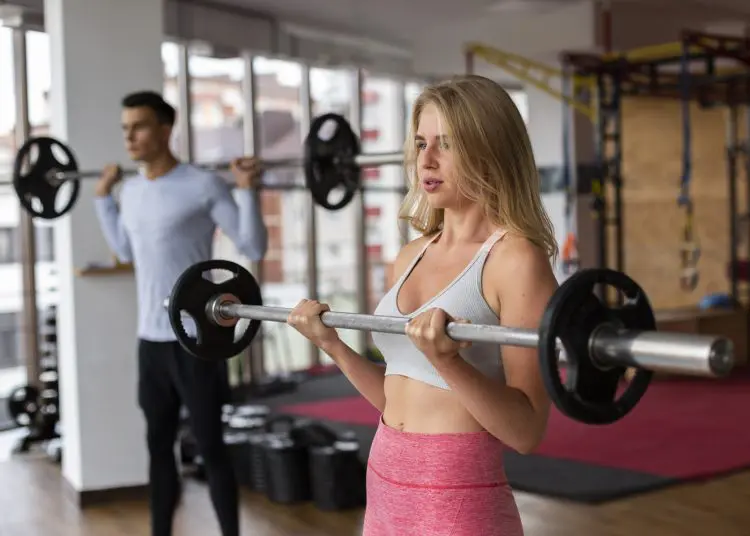
Five exercises per workout is a fairly standard approach for a lot of lifters. Even if you do several sets of each exercise, your workout should still last around an hour. Five exercises per workout mean you’ve got more than enough variety to keep your workouts interesting and have plenty of training options to choose from:
- Train your main muscle group using three exercises and the secondary muscle group with two, e.g., Pull-ups, single-arm dumbbell rows, chest-supported rows, followed by barbell biceps curls and dumbbell curls
- Do fewer sets of more exercises to train your target muscle group with lots of variety, e.g., Leg press, lunges, Bulgarian split squats, leg extensions, leg curls
- Do a short but effective whole-body workout, e.g., squats, bench press, bent-over rows, shoulder press, and lat pulldowns
Six (Or More) Exercises Per Workout
You probably won’t need or have time for many more than six exercises per workout unless you do relatively few sets or are prepared for a long workout. Six exercises per muscle group is probably unnecessary. You’ll just end up doing lots of sets of very similar movement patterns. After all, there are only so many angles you can use to train a muscle group.
However, with six (or more) exercises per workout, you could:
- Train two muscle groups using a variety of angles, e.g., incline bench press, dumbbell bench press, decline cable flyes, pull-ups, bent-over row, and single-arm rows
- Train three muscle groups in one workout, e.g., chest, shoulders, and triceps
Considerations
Think about the following when deciding how many exercises to do per workout:
The fewer exercises you do, the more sets you’ll probably need
If you do just 1-3 exercises per workout, expect to do five or more sets to fully stimulate the target muscles.
The fewer exercises you do per workout, the more often you’ll probably need to work out
If you do just 1-2 exercises per workout, you’ll need to train 5-6 days a week to make sure your program is balanced and that you train all muscle groups fairly evenly.
Fewer exercises are best for strength
Focusing on just 1-2 exercises per workout is an excellent way to build strength. You’ll become more technically proficient, which will allow you to lift more weight. It’s a case of practice makes perfect.
Beginners often do well with fewer exercises
As a beginner, everything you do is new, and you don’t need a lot of variety to get bigger or stronger. Just 1-2 exercises per workout will produce great results. As you move toward being an intermediate or advanced lifter, you’ll probably find that you need more variety in your workouts to keep making progress. Increase the number of exercises per workout as you gain training experience.
Variety and volume are important for hypertrophy
If you want to focus on muscle size, more exercises per workout are usually best. This will allow you to hit the target muscle group from several different angles with the volume necessary for optimal hypertrophy.
More is not always better
Doing more exercises won’t automatically produce better results, especially if your workout includes lots of overlapping or redundant exercises. For example, barbell bench presses, dumbbell bench presses, cable chest press, push-ups, and the chest press machine all involve a very similar movement pattern. Doing all these exercises may not offer much of an advantage over doing just 2-3 of them.
Get yourself out of a rut by trying something new
If you are currently doing 5-6 exercises per workout, but your progress has ground to a halt, try doing the opposite for a while and training with just 1-2 exercises per workout. When it comes to workout ruts, the best solution is often to do something completely different.
Different muscle groups may need a different number of exercises
Don’t feel you have to do the same number of exercises for all your body parts and workouts. You might need five exercises for your legs, but only three for your shoulders or back and 1-2 for your arms. It’s OK to do five exercises for one workout and only two or three the next.
One exercise is always better than none!
If you are short on time, energy, or equipment, one exercise per workout is better than not training at all. At the very least, such a minimalistic approach to training will preserve your current strength and muscle mass.
Related: How Many Exercises Should You Do Per Muscle Group?
In Summary… How Many Exercises Per Workout?
If you came here looking to discover how many exercises you should do per workout, you are probably disappointed. There is no one-size-fits-all, definitive answer. Anywhere from one exercise to six or more can work.
That’s because we’re all individuals and respond to training differently. Some will thrive on workouts consisting of just 1-3 exercises per workout. However, others may do better when they do five or more.
Experiment with 1-2, 3-4, and 5-6 exercises per workout to see which approach works best for you.