Do a search on YouTube for calisthenic training, and invariably you’ll get a lot of results featuring exercises like planches, front levers, muscle ups, human flags, and other impressive feats of gymnastic strength.
And while those exercises are great ways to demonstrate strength, they’re not always the best way to develop it.
That’s because they involve a lot of skill, and a lack of skill could mean you can’t do them properly and therefore will be unable to reap many of their benefits. Trying to do these exercises may even lead to injuries.
Continue your search, and you’ll eventually come across what are often called basic calisthenics exercises. These are low-skill moves that almost anyone can do. Because you don’t need to be a gymnast to perform them, you can focus more on pushing your muscles harder without a lack of mobility, balance, or skill holding you back.
Basic calisthenic exercises include push-ups, pull-ups, lunges and squats.
And speaking of squats, there are several variations you can use to develop your lower body, all of which are straightforward and accessible.
In this article, we explain why and how to do prisoner squats and reveal the best variations and alternatives.
Prisoner Squat – Muscles Worked
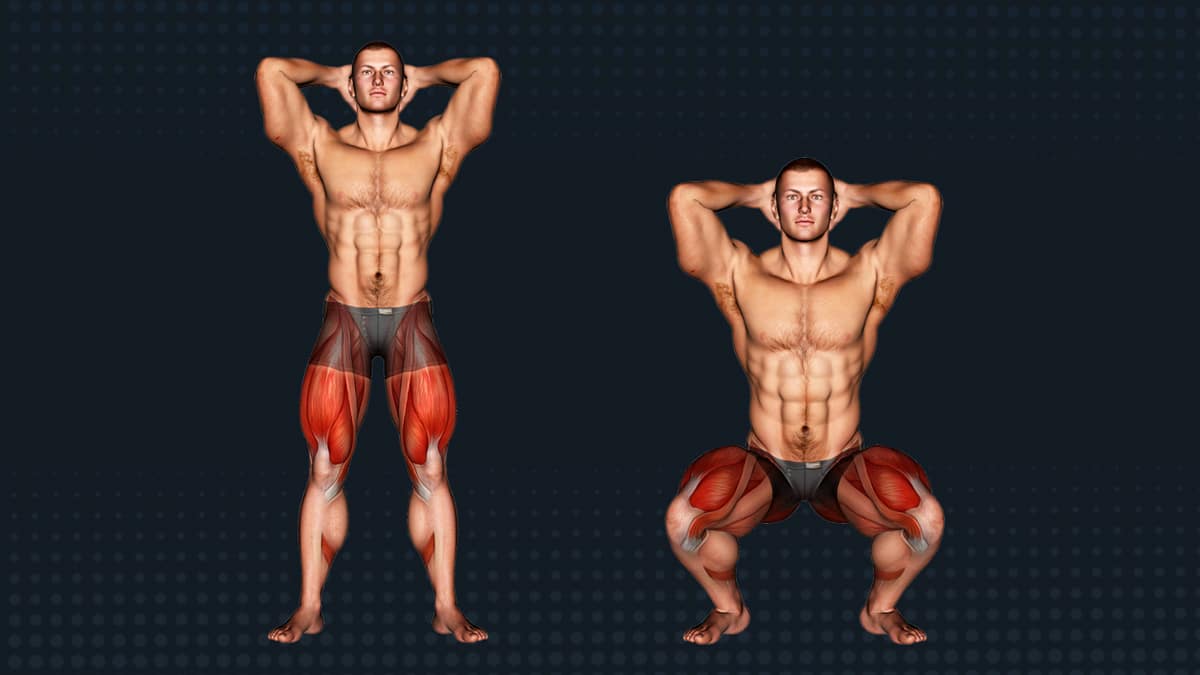
Prisoner squats are a lower body compound exercise, meaning they involve two or more joints and several muscles all working together. In addition, the prisoner squat involves a modest amount of upper body muscle activation.
The main muscles involved in prisoner squats are:
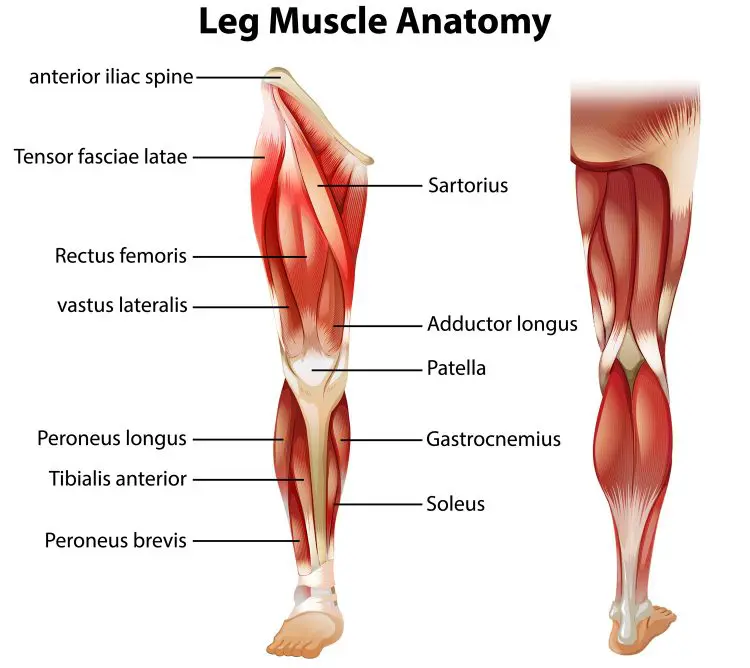
Quadriceps – located on the front of the thighs and known as the quads for short, these muscles extend your knees during prisoner squats. You’ll probably feel this exercise the most in your quads. The four quadriceps are the rectus femoris, vastus lateralis, vastus medialis, and vastus intermedius.
Hamstrings – the hamstrings oppose your quadriceps and are responsible for knee flexion and hip extension. The three hamstring muscles are semimembranosus, semitendinosus, and biceps femoris. The deeper you squat, the more active these muscles become.
Gluteus maximus – better known as your glutes or butt, this muscle is your prime hip extender. The glutes are the largest and most powerful muscle in the human body. Working with your hammies, the deeper you squat, the harder your glutes have to work.
Abductors – located on the outside of your hips and thighs, the abductors lift your leg out and away from the midline of your body. The abductors are gluteus minimus and medius and the tensor fascia latae or TFL.
Adductors – the adductors draw your leg into the midline of your body. The three adductors are longus, brevis, and magnus, meaning longest, shortest, and thickest. The adductors are sometimes known as the groin muscles.
During prisoner squats, the abductors and adductors work together to stabilize your hips and knees.
Core – this is the collective term for the muscles of your midsection, including the rectus abdominis, obliques, transverse abdominis, and erector spinae. During prisoner squats, these muscles contract inward to create intra-abdominal pressure and support your spine.
Trapezius – located across and between your scapulae or shoulder blades, this large triangular muscle helps to hold your shoulders down and back during prisoner squats. While it is only working against the tension generated by the muscles on the front of your body, you will still feel your traps working during this exercise.
Rhomboids – the rhomboids work with your traps to hold your shoulders back. The rhomboids are located beneath your traps and between your spine and scapulae.
Posterior deltoids – located on the back of your shoulders, the posterior or rear deltoids work with your traps and rhomboids to keep your arms raised and back.
How to Do Prisoner Squat
Get more from prisoner squats while keeping your risk of injury to a minimum by following these guidelines:
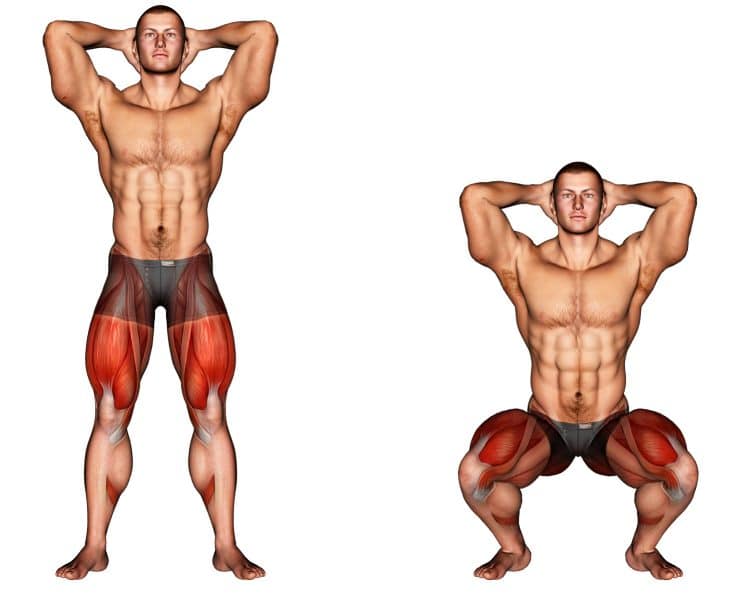
- Stand with your feet about shoulder-width apart, toes turned slightly outward. Raise your hands and clasp them behind your head. Push your elbows back to open your chest. Pull your shoulders down and back and brace your core.
- Bend your knees, push your hips back, and descend until your thighs are roughly parallel to the floor, taking care not to round your lower back. Keep your torso relatively upright and your elbows back throughout.
- Drive your feet into the floor and stand back up.
- That’s one – keep going!
Prisoner Squat Benefits
Not sure if prisoner squats deserve a place in your workouts? Check out these benefits and then decide!
1. Anywhere, anytime
With no equipment required, you can do prisoner squats anywhere and anytime. Do them at home, work, in your garden, at the park, at the gym…you get the idea!
Lack of time and equipment are two of the most common barriers to exercise, so prisoner squats are the ultimate excuse-free lower body workout. Pair with push-ups to train almost your entire body in just a few square feet of space.
2. Good for your posture
Long periods of sitting can weaken the muscles on the back of your body while making those on the front of your body tight. As a result, a lot of people look like they’re sitting even when they’re standing and have a kyphotic or hunched posture.
Prisoner squats help open and stretch your chest while mobilizing your lower body. This can help reduce the damaging effect of long-term sitting and improve your posture. Prisoner squats are an excellent exercise for office workers.
3. Easy to learn
Prisoner squats are pretty straightforward to learn. While keeping your arms back and your chest open may prove difficult initially, you’ll soon get the hang of it, and your mobility will quickly improve. This is an ideal exercise for beginners.
4. Very functional
A functional exercise mirrors the movements of everyday life or sport. Squats are one of the most functional exercises around because the squat is a movement that most of us do many times a day. Sitting down and standing up, getting in and out of your car, bending down to pick up your kids or a bag of groceries, and even climbing a flight of stairs are all examples of squats.
Practicing and getting better at prisoner squats should have a positive impact on your ability to perform these movements and activities away from training, as well as toning and conditioning your legs.
Prisoner Squat Drawbacks
While prisoner squats are a mostly beneficial exercise, there are also a few drawbacks to consider:
1. Lack of mobility may be a limiting factor
If you have very tight muscles, you may not be able to perform prisoner squats properly. You may be unable to hold your arms back to keep your chest open, or you could find that you lean forward too much instead of staying reasonably upright.
Don’t worry; there are plenty of exercises you can do instead that require less mobility. That said, if you are so immobile that you cannot do prisoner squats, you should probably start working on your flexibility so you can do this awesome exercise.
2. Lack of overload
The best thing about bodyweight exercises is also their biggest drawback – your bodyweight. As you get stronger, you’ll find yourself doing more and more reps to fatigue your muscles. This is not the best use of your training time.
You can make bodyweight exercises more challenging by wearing a weighted vest or using resistance bands. Still, it may be necessary to progress to a more demanding exercise variation.
7 Prisoner Squat Variations and Alternatives
Prisoner squats are a highly effective lower body exercise, but that doesn’t mean you need to do them all the time. There are several variations and alternatives you can use to keep your workouts productive and interesting:
1. Wall facing prisoner squat
This prisoner squat variation forces you to maintain a more upright posture. If you lean forward, you’ll end up grazing your nose on the wall! If you find yourself leaning forward during prisoner squats, this exercise could be the solution. Start by standing a couple of feet away from the wall and then move in closer as your mobility and posture improve.
How to do it:
- Stand in front of a smooth wall with your feet about shoulder-width apart, toes turned slightly outward. Raise your hands and clasp them behind your head. Push your elbows back to open your chest. Pull your shoulders down and back and brace your core.
- Bend your knees, push your hips back, and descend until your thighs are roughly parallel to the floor, taking care not to round your lower back or lean toward the wall. Keep your torso upright and your elbows out and back throughout.
- Drive your feet into the floor and stand back up.
- That’s one – keep going!
2. Air squat
Air squats are another bodyweight squat. Popular with CrossFit, this exercise works the same lower body muscles as prisoner squats but doesn’t affect your postural muscles much. Air squat are more of a “no-brainer” exercise, making them useful for HIIT and circuit training.
How to do it:
- Stand with your feet roughly shoulder-width apart, toes turned very slightly outward. Hold your arms down by your sides, look straight ahead, and pull your shoulders down and back. Brace your core.
- Bend your knees, push your hips back, and squat down until your hips are at least level with your knees and your thighs are parallel to the floor. Raise your arms forward to shoulder height for balance.
- Descend further if your mobility and knee health allow. Do not round your lower back. Make sure your heels stay firmly planted on the floor.
- Stand back up, fully extending your knees and hips at the top of each rep. Lower your arms as you ascend.
- Reset your core, breathe, and repeat.
3. Hindu squats
Where Prisoner squats involve your upper body, your muscles must work statically to maintain your posture. Hindu squats also work your arms, back, and shoulders but, in this case, those muscles work dynamically. Hindu squats are a traditional Indian exercise originating in yoga and Indian wrestling.
How to do it:
- Stand with your feet about hip-width apart, toes pointing forward. Raise your arms in front of you, so they’re parallel to the floor. Lengthen your neck and look straight ahead.
- Breathe in and “row” your hands into your shoulders.
- Next, bend your legs and squat down as deep as possible while simultaneously reaching down and back with your arms. Allow your heels to lift off the floor as you descend.
- Raise your arms forward and back up to parallel as you drive your feet into the floor and stand back up. Lower your heels back to the floor as you ascend. Exhale as you return to standing.
- Repeat without pausing.
- Hindu squats should be performed smoothly and in time with your breaths.
4. Sissy squat
Prisoner squats are a good lower body conditioning exercise for most people but less useful for building muscle size or strength. They just aren’t challenging enough. Sissy squats put your muscles and joints in a much less biomechanically advantageous position, making them far more demanding.
As such, even done with just your body weight, sissy squats are a challenging bodybuilding exercise.
How to do it:
- Stand next to a wall or some other object you can use for balance.
- Rise up onto your tiptoes.
- Push your hips and knees forward and squat down as you simultaneously lean back. Descend as far as you can, ideally until your knees are just above the floor.
- Drive your toes into the floor and stand back up.
- Tense your quads and glutes at the top of each rep and repeat.
Related: Weighted Sissy Squat
5. Prisoner walking lunges
Lunges, like prisoner squats, can be done using nothing more than body weight for resistance. However, lunges increase the load on your front leg, which makes them a little more challenging. Lunges are also good for improving coordination, hip mobility, and balance.
You can do most types of lunges “prisoner style” with your hands clasped behind your head, but walking prisoner lunges are particularly effective.
How to do it:
- Stand with your feet together, your hands clasped behind your head, and your elbows pressed outward. Pull your shoulders down and back and look straight ahead.
- Take a big step forward, bend your legs, and lower your back knee down to within an inch of the floor. Keep your front shin and torso as vertical as possible.
- Push off your back foot and step forward into another lunge.
- Alternate legs for the required number of reps or distance.
6. Prisoner squat jumps
Turn regular old prisoner squats into an explosive exercise! This exercise will improve leg power and speed, making it ideal for athletes from all sports. Also, done for high reps, prisoner jump squats will drive your heart and breathing rate through the roof, making it ideal for HIIT and circuit training.
How to do it:
- Stand with your feet about shoulder-width apart, toes turned slightly outward. Raise your hands and clasp them behind your head. Push your elbows back to open your chest. Pull your shoulders down and back and brace your core.
- Bend your knees, push your hips back, and descend until your thighs are roughly parallel to the floor, taking care not to round your lower back. Keep your torso relatively upright and your elbows back throughout.
- Drive your feet into the floor and explode upward, so your feet leave the floor.
- Land on slightly bent knees to absorb the shock and then repeat.
7. Dowel overhead squat
If prisoner squats no longer challenge your mobility, it’s time to step things up a little with dowel overhead squats. This exercise will challenge and develop your upper body flexibility and mobility more than prisoner squats.
While you can do this exercise with a barbell, it’s best to practice and master it using a lightweight pole, such as a PVC pipe, a wooden dowel, or a broomstick.
How to do it:
- Hold your stick with an overhand, slightly wider than shoulder-width grip. The wider your hands are, the easier this exercise is, so adjust your grip accordingly. Raise the bar above your head and pull your shoulders down and back.
- Adopt your normal squat stance, i.e., feet shoulder-width apart and toes turned slightly outward. Brace your core and look straight ahead.
- Bend your legs and squat down as deep as you can without rounding your lower back. Also, take care not to hyperextend your lower back either. Keep your arms vertical throughout.
- Stand back up and repeat.
Prisoner Squat – Wrapping Up
So, you may be wondering where the prisoner squat gets its name. It’s because, with your hands clasped behind your head, it looks like you are waiting for someone to come and slap the cuffs on you and lead you off to jail!
Slightly unsavory name aside, the prisoner squat is an excellent exercise for conditioning your legs and improving your upper body mobility and posture. It makes a great warm-up for regular squats and reminds you to keep your chest up and shoulders back.
Make prisoner squats a part of your workouts. If you are immobile and tight, they’ll probably be difficult at first, but that’s precisely why you need to do them!
Interested in measuring your progress? Check out our strength standards for Burpees, Behind The Back Deadlift, Flutter Kicks, and more exercises.