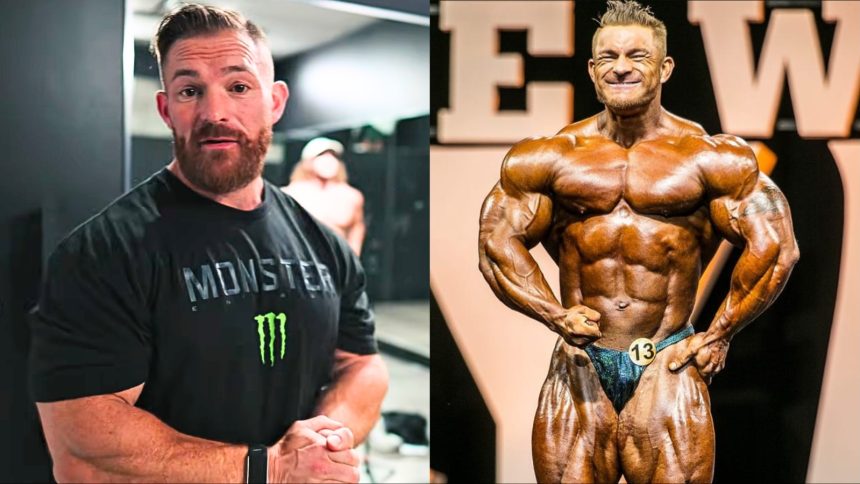
Flex Lewis is speaking up for the bodybuilding division that turned him into a star. In an August 8 Instagram post, he said the 212 division is not a handicapped version of the Men’s Open class and explained why it’s needed in the IFBB Pro League.
“There’s a different kind of anger when you disrespect a division I damn near died to win and defend,” he said. “Disrespect the 212 and I’m going to speak on it.
From 2012 to 2018, Flex Lewis dominated the Men’s 212 Bodybuilding landscape. On his way to building an all-time great legacy, he defeated top-tier talent, including Jose Raymond, Derek Lunsford, and Shaun Clarida. While it’s been years since he stepped onstage, Lewis still advocates for the division and follows the sport closely.
Flex Lewis Defends 212 Division After Being Called ‘Handicapped’ Men’s Open
In the Instagram reel, Lewis explained why the 212 is not a handicapped version of the Men’s Open. He also made it clear that the 212 Olympia prize money has remained the same since 2023.
“It’s been brought to my attention that a bunch of sausages in their mom’s basement, shooting a podcast, want to talk shit about the 212 class, calling it a handicapped class.”
“I just want to revisit the handicapped [statement], such a disrespectful comment,” he said. “Let’s get the facts straight and the truth. I am more qualified than anybody else. Number one, misquoted truth: you said the Olympia reduced the 212 prize money; no, it hasn’t. It hasn’t increased and it hasn’t decreased. It’s been $50,000 since 2023 to 2025. Frozen isn’t reduced. Words matter when you’re pretending to use facts.”
Lewis argues that just because prize money hasn’t increased doesn’t mean there’s a lack of value or interest in the division:
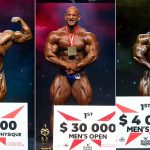
“Should it increase? Absolutely. I am one who advocated for that, and in my era, it increased. The Open went from $400,000 to $600,000 while the 212 stayed at $50,000. Don’t confuse less money invested with less value produced.”
He also believes that winning an Open show as a 212 competitor isn’t a valid reason for eliminating the class.
“You can win an Open show and still get beaten in the 212 this year by Keone. That doesn’t weaken the argument. It just proves how deep and competitive this class really is. That’s all respect to Shaun.”
In contrast, Lewis stressed that the 212 division helps create future Mr. Olympia champions, like Lunsford.
“Derek Lunsford, 212 Mr. Olympia in 2021. Mr. Olympia in 2023, first athlete to win two weight divisions. Doesn’t that go to show how unnecessary or necessary in my world it is, it just produces Mr. Olympia champions. Derek didn’t bypass the 212, he was built by it.”
“This is where your whole handicapped argument falls apart,” he adds. “A 135 champion [in other sports] isn’t looked at as handicapped. Only in bodybuilding do you look down to a person with height and weight. There’s a class for everyone; that’s why these divisions were created.”
Some bodybuilders, including Lee Priest, believe there’s no need for a 212 division. He emphasized that the best competitors always rise to the top, as was the case before 212 existed. During the 1990s, Priest’s shorter stature presented challenges, but he found ways to defeat his taller rivals.
Flex Lewis refuses to dismiss what the 212 division has done for him and the sport as a whole. He looks forward to seeing if Keone Pearson can win a fourth title when the event returns from September 24-27 in Las Vegas, Nevada.